Dr. Alejandro Jadad and Jose Vergara


Much thanks to Jose Vergara  for sending me a link to an article on Dr. Alejandro Jadad.  Jose Vergara, aka Frankie Jazz, as some readers may remember, is a Cartagena native and talented artist in his own right.

Frankie Jazz/ Jose Vergara

Frankie Jazz/ Jose Vergara

We try to keep up with each other – so he knows all about my interest in Colombian medicine and surgery, and I love his new album (so I try not to gush and be too much of a groupie when I hear from him) but he recently sent me a link to one of his more recent projects.   The Voxxi article by Silvia Casablanca is pretty interesting, so I wanted to share it with readers.

For starters – Jose Vergara is the photographer for the article..

Dr. Alejandro Jadad, MD, PhD

But it’s the life of Dr. Alejandro Jadad that is so inspiring..  Dr. Jadad is a Colombian anesthesiologist, textbook author and founder of the Centre for Global eHealth Innovation in Toronto, Canada (among other things).  He has been credited with being one of the major innovators in the fields of clinical research, medicine and information technology.

While at Oxford, as a research fellow in Anesthesiology, he developed a validation tool (the Jadad scale) to critically evaluate and analyze clinical research studies.  This is an important tool to distinguish the quality (and value) of individual research studies – or how much weight a study (and its findings) should have.   We talk about the importance of objective scales and measures quite a bit here at Bogotá Surgery, and the Jadad scale is one of the best known and most widely used scales for clinical research.

Clinical research is how surgeons know whether a patient has a better chance for survival with surgery or chemotherapy/ radiation, for example.

So as you can imagine – having a tool like this is particularly vital when talking about clinical medicine / or health research where the findings of research studies are used to guide and determine medical decisions – aka the medical treatments for people like in our example above.

As the Casablanca article points out – Dr. Jadad didn’t stop with writing textbooks and creating the Jadad scale.  After completing his fellowship in the United Kingdom, he moved to Ontario, Canada to continue his research at McMaster University.   Since then, he has continued to innovate and create tools to help both clinicians and the public.  One of the ways he helps clinicians is by further creating and refining tools to evaluate medical research.

He has also been a major creator and contributor to the development of internet and computer based applications to connect doctors and their patients.  His efforts are based on more that the patient – provider dyad, and are part of a larger, global framework for reforming and transforming healthcare.

More about Dr. Alejandro Jadad, MD, PhD

Casablanca, Silvia (2013, January).  Dr. Alejandro Jadad: Redefining health and  making it global.  Voxxi [on-line article].

(Canadian) Pioneers for Change

Making Longer Life Worth Living“, lecture by Dr. Jedad at Singularity webblog as part of the ‘Singularity University lecture’ series.

More about Jose Vergara / Frankie Jazz

Frankie Jazz – wikipedia page

Vimeo page

Let Me Take My Way – which is one of my personal favorites…

Techo por mi pais with Team Sanabria


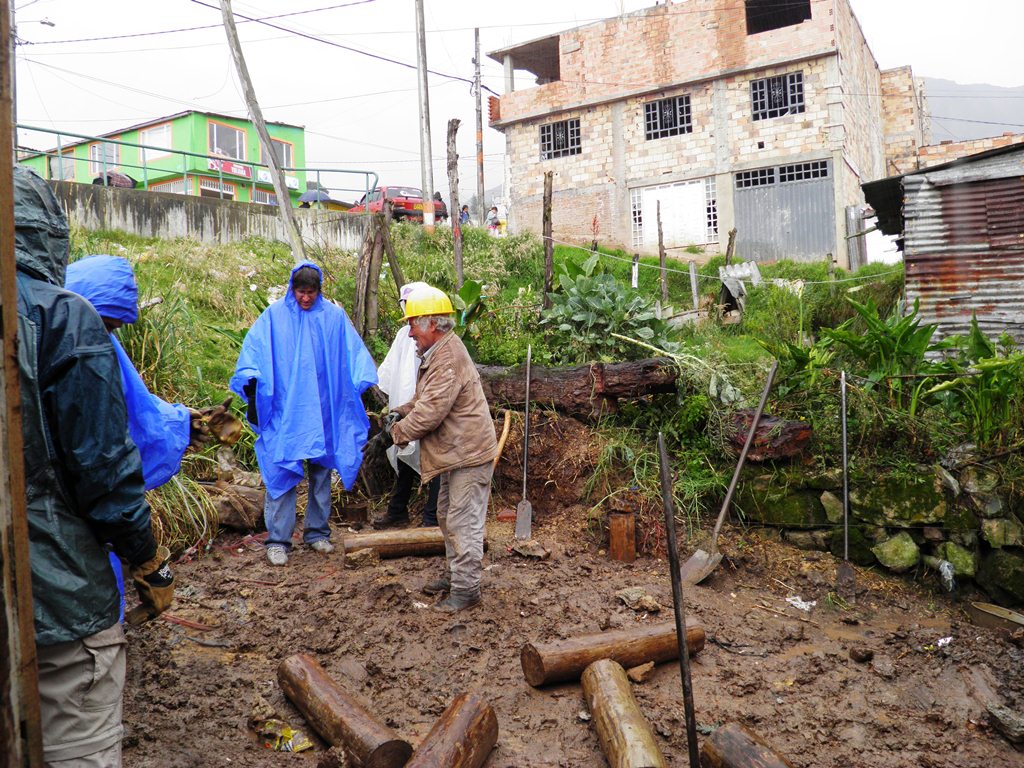
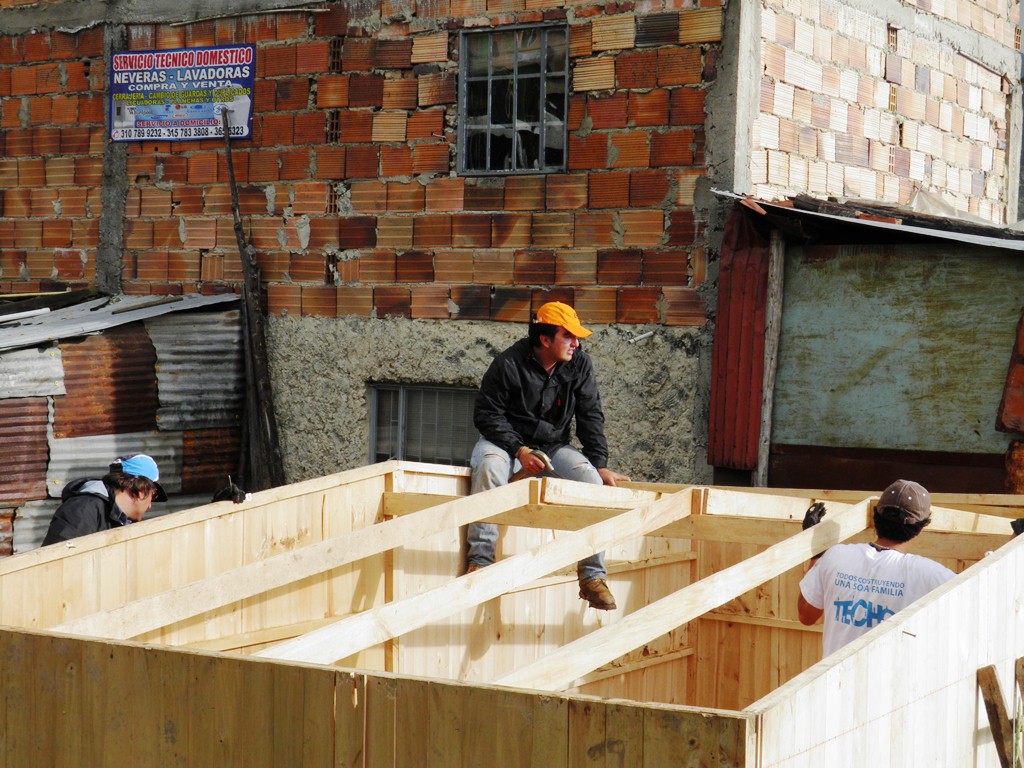
Just a week ago, I was ankle-deep in mud in the southern-most reaches of Bogotá, with ‘Team Sanabria’ as they completed another house as part of “Techo por mi pais”, which is an organization very similar to Habitat for Humanity.

O

A couple of weekends each year, they donate their time (and hard labor) to build homes for many of Bogotá’s poorest residents.

O

It’s arduous work – which is more difficult given the frequent rain and adverse weather conditions in the hills above Bogotá.

O

I wrote a short story about their efforts over at Examiner.com  – but I wasn’t able to include all of the pictures, so I wanted to post some of them here.

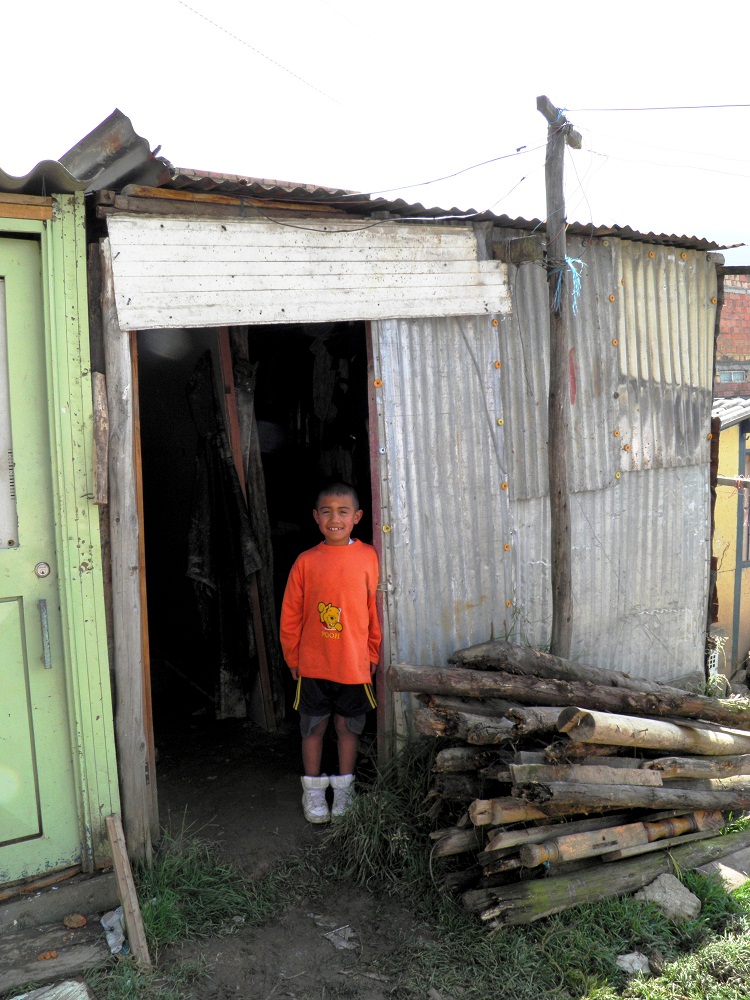
Juan Jesus' grandson stands in the doorway of his modest home

Juan Jesus’ grandson stands in the doorway of his modest home

The family they were building the house for on this occasion was exceedingly sweet, gracious – and willing to wade into the muck with the rest of the team.

OThe organization, is much bigger than just Team Sanabria, so all in all – about fifty houses were built that weekend.

Volunteers carrying supplies to another site

Volunteers carrying supplies to another site

O

laying foundation for Juan Jesus' new house

laying foundation for Juan Jesus’ new house

O

It costs about 1500 dollars to construct one of the basic 3 meter X 6 meter homes.

O

Here the foundation, and flooring has been completed – and they are getting the walls into place.

O

Luckily, the rain didn’t start again until most of the walls were completed.

O

It was an excellent chance to see a side of Bogota that most visitors never to get see – and to meet many of the residents of the neighborhood, so I was very glad they invited me to join them.

a group of beauty school students stop by to check on the progress.

a group of beauty school students stop by to check on the progress.

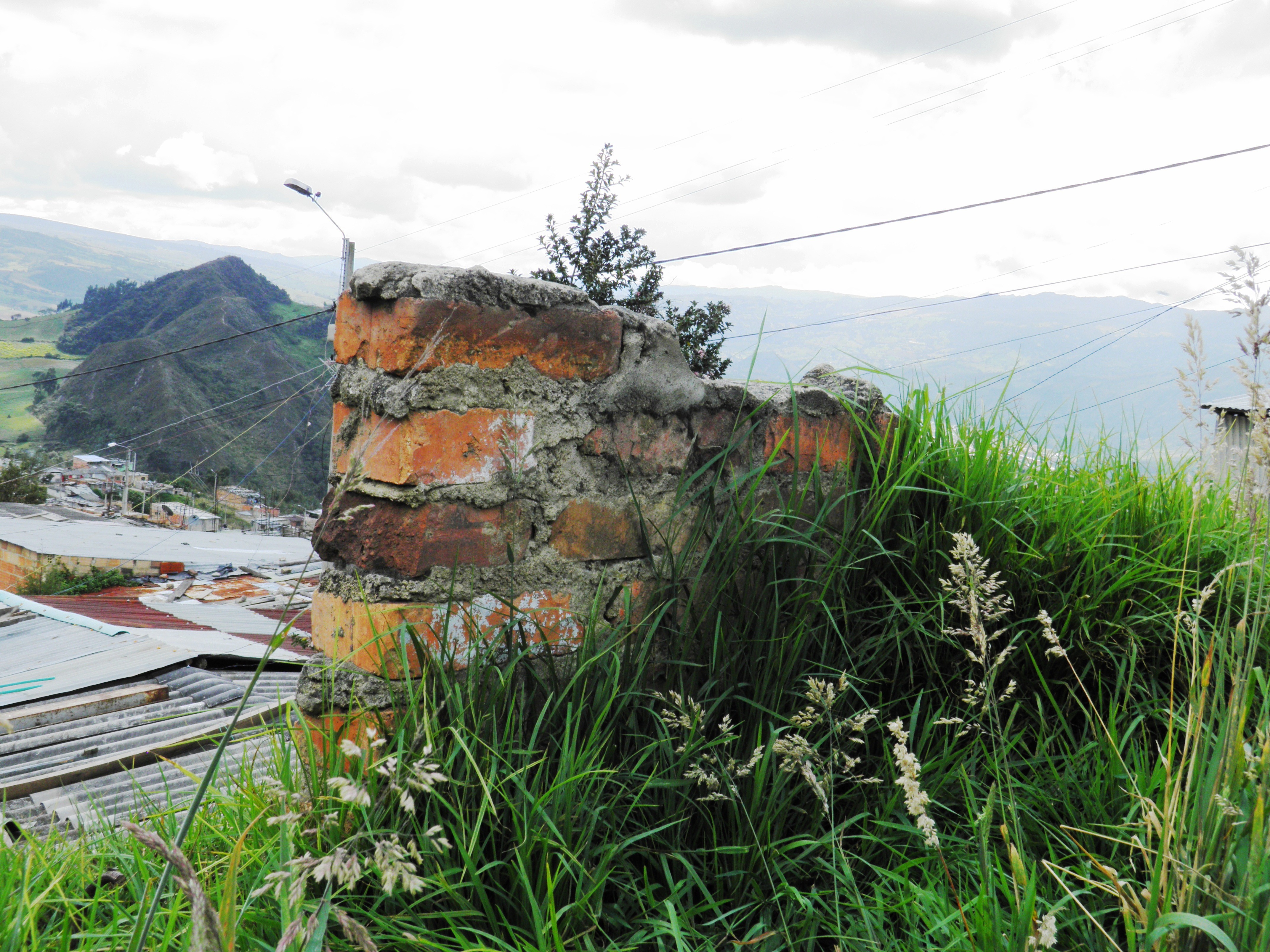
It also gave me a chance to get some other pictures of the neighborhood – of things we don’t often think about when we see or hear about poorer neighborhoods (or slums).

O

Like the rose bushes that residents plant to brighten and beautify their homes.

well kept home with flowers

well kept home with flowers

O

Or the full herb garden, Juan Jesus’ neighbor planted (and shared with us) in her immaculately kept and fenced yard.

O

I think sometimes, the overwhelming poverty makes it hard for outsiders to notice the little spots of beauty in places like this.  But it gives me hope – and it shows the resilience of human nature.

O

I think it’s also important right now, while our own country is hurting too.. With all of the divisions and politics – particularly in the aftermath of the elections, sometimes we forget to put a face on the people who are living in more marginal circumstances – due to unemployment, etc.

OLYMPUS DIGITAL CAMERA

We hear so much about fraud, waste and abuse of social programs that we forget about the real people who desperately need these services.  Now, I am not some hippie advocating for radical political change.

I am just a nurse, trying to find the people who sometimes get forgotten in the middle of all this.

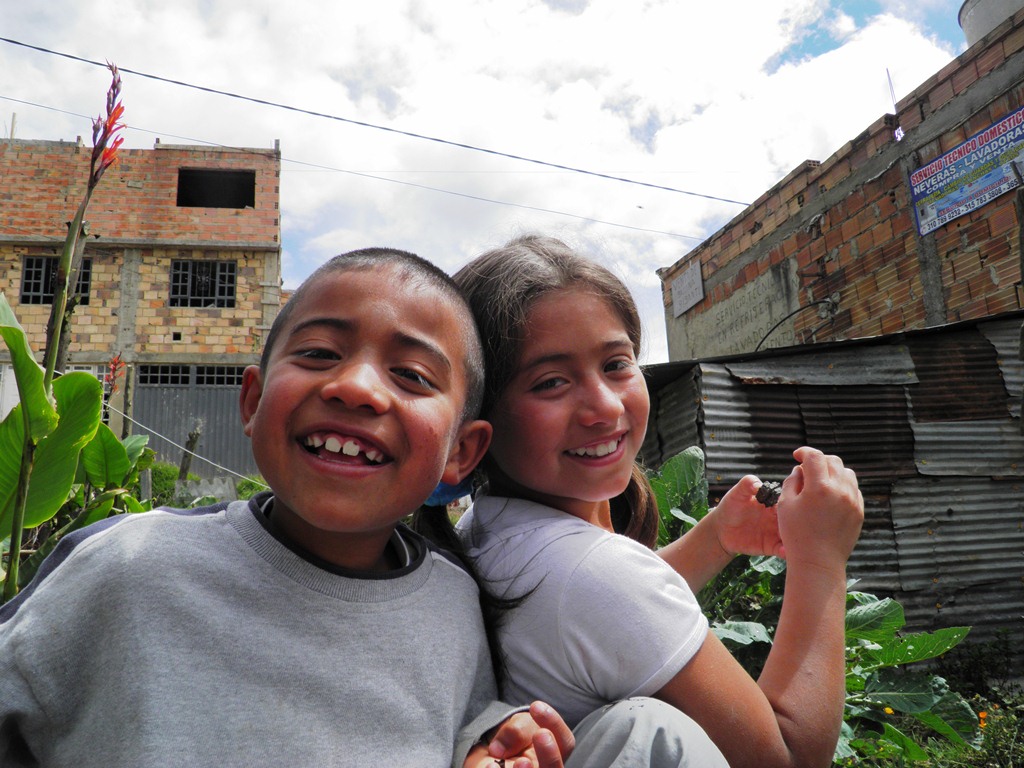
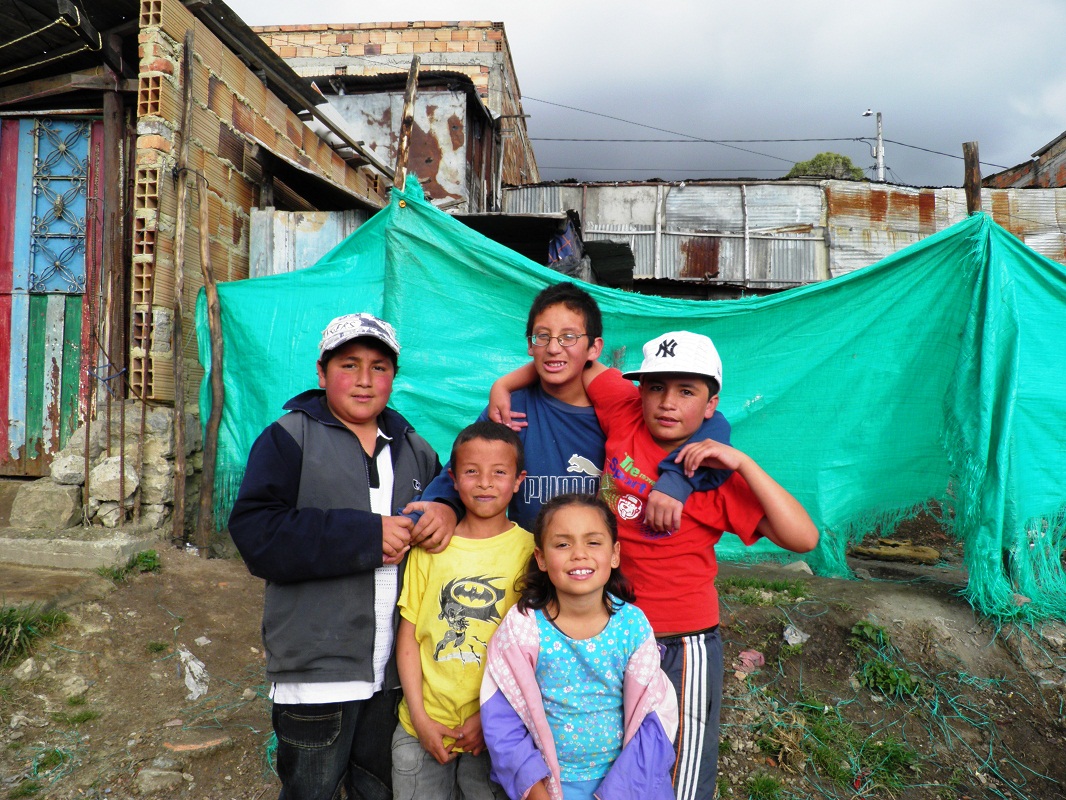
kids in the barrio

kids in the barrio

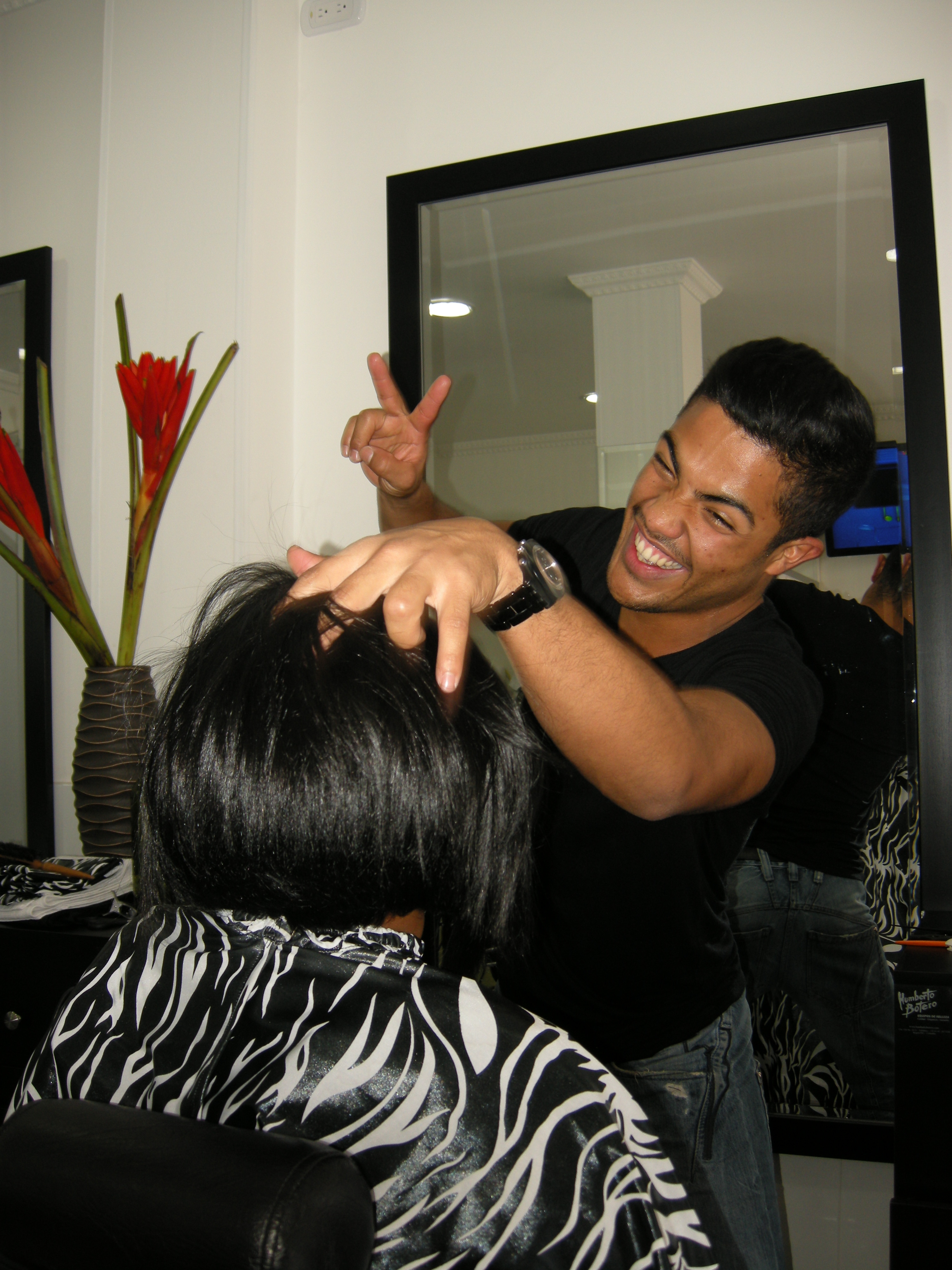
Talking to Wilmer Villa Miranda of Arte & Glamour


I am back in Mexicali (for the time being) but I was so busy during the last few weeks that I didn’t get to finish some of my posts talking about the interesting people I’ve met – and places I’ve seen..  I certainly don’t want to skip over Wilmer Villa.

Wilmer

He’s not famous, nor is he a surgeon – but just like so many of the people I’ve met in Colombia – he has a story to tell.  It’ didn’t start as an interview, but then it rarely does – it started out as a visit to a salon on Calle 115 No 59 – 35 with a friend.  But as Wilmer talked about his new salon (his first), and we celebrated the one month anniversary of his shoppe, a story started to  form.

No, he hasn’t invented a cure for cancer – or even a way to arrest the  relentless aging  process.  But he has managed to create a tranquil little spot in the middle of Bogotá for people to come and enjoy themselves for a few hours.

It hasn’t been easy – but with the help of a good friend (and long-time client), Alcira Acosta de  Chaves, Wilmer was able to move out of the previous salon where he had a chair to establish his own salon.  It’s a dream that has been several years in the making – which is obvious as soon as you enter the salon.

Everything is immaculate; organized and set out in a classically elegant black/white and silver scheme that evokes the 1940’s heyday of glamour.  But it’s more than just a place for a haircut or a manicure, Wilmer. 27, states.  It’s the entire package – the total experience, he explains, as he pours a client a cup of herbal tea.

“People can come here and get away from all the negative, and the stress [of their daily lives.]  We are here for more than just hair, and make-up. we are here for laughter, smiles and good times with friends.

His cheerful attitude is infectious, and as clients come in, he and Almira take time to explain the philosophy of the shop, and the experience.  “I want this place to be different” – it’s not a place for catty remarks, or cutting down of self-esteem.  It’s not about malicious gossip or sarcasm, ” We don’t need any of that here,” he says.  “It’s a place for people to form long-term relationships, share celebrations, milestones and happy events,” he adds.  And he means it – as each person enters, he greets them by name, they share a smile or a silly story.

It’s nice – and certainly different from many of the other salons in the area.  It isn’t about the up sell, or preying on women’s insecurities about their looks to sell services*.  They seem to genuinely enjoy their customers and in making their clients look and feel their best.

wilmer2

About Wilmer:

Wilmer, the child of a Colombian mother and a Venezuelan father, was born Cucuta, near the border.  He grew up in Chinacota, Colombia near the border with Venezuela.  He attended cosmetology school in Perico before coming to Bogotá.

After finishing school, he come to Bogotá to apprentice with several well-known stylists such as Hernan Abandano, and received a scholarship for additional training as a colorist.  He eventually received international certifications as a stylist and colorist – and has been a stylist for seven years.

He talks about how these experiences have shaped his life, and his outlook.  “I like to meet people from different places, and hear more about their lives.  I am learning English because I enjoy meeting and talking to Americans – and hearing their ideas and perspectives.”

Maybe Wilmer isn’t changing the world – but he is making it a more pleasant place.

*There is nothing more disheartening in my opinion than going for a manicure than being offered, “How about if we fix your hair” or “some Botox for those wrinkles”.. Or some other, more personal reminders that beauty, particularly in Latin America, is sometimes seen as more important that what’s inside.

J. O’Shaughnessy


Some of you have heard me talk about my friend, Jo O’shaughnessy before.  She’s a fabulous photographer that I met here in Bogotá.  (Told you there are always interesting and great people to encounter in this city.)

O

Jo has started a new blog, but she’s still getting the hang of it – so when she sent me one of her pictures of ‘Bogotá life’ – I told her I will be thrilled to share it.  She is more than a photographer – she has the instincts and the artist sensibilities to see what other people overlook.

The next picture is a perfect example of that.  On a rainy day in Bogotá – Jo looked out the window of a coffee shop and saw this man.  He’s one of hundreds of scrap collectors in the city – people who make their living, and eek out a survival by collecting and reselling much of what the rest of the city regards as garbage.  Like garbage, most people don’t even see the scrap collectors. They just become part of the city landscape, pulling their carts through traffic and enduring all sorts of conditions.

Few people stop to think about it. Fewer still can capture that daily struggle.

DSCN5381

And then there’s Jo – whose heart is so big – and is practically chasing the man down the street to offer him her husband’s coat..

Going home..


After a whirlwind three months that included trips to Chile, Bolivia and different cities in Colombia, I am getting ready to come home in a few days.  As always, leaving Bogotá is bittersweet.  I miss my friends, and my family but I will also miss the city and all of the nice people I’ve met here.

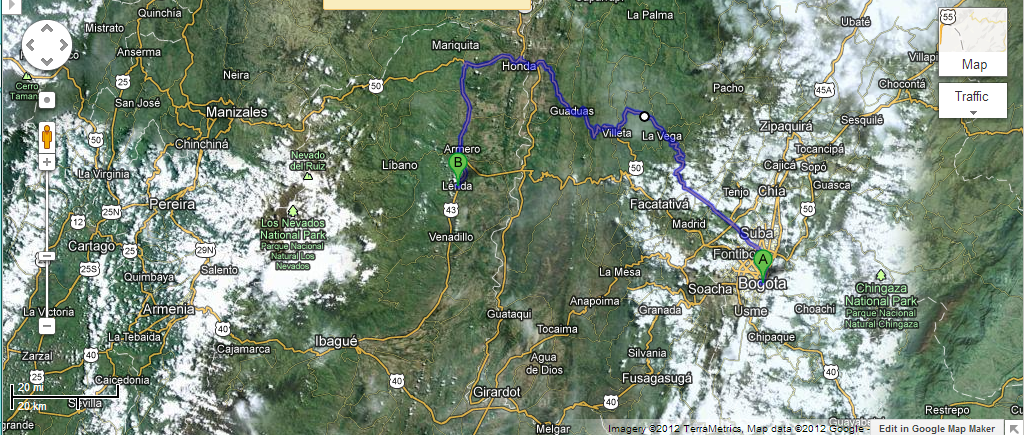
I am posting a map of Colombia, so even though I’ve taken several trips – you can see that I haven’t really explored the country at all. (I’ve posted little push pins on the areas I have visited.)  I excluded Facativa and some of the closer towns since they are really just suburbs of Bogotá, and it would just clutter the map.

Map of Colombia, courtesy of Google Earth

As you can see – I haven’t explored the southern part of Colombia, or the pacific coast at all.  My Atlantic adventures have been confined to Cartagena.  So, I guess this means, I still have a lot of work cut out for me on my next visit(s).

map showing central Colombia

But I hope that readers have enjoyed reading about my travels, the people I’ve met and the things I’ve seen.  Now – I know this is a medical/ surgery blog but since much of the surgery I write about is in this part of the world, I think that including some of my experiences is relevant/ interesting for people who read the blog.  Once I get back home, I’ll post some more articles on medical quality control and standards – and more of my usual dry fare.

Dr. Alberto Martinez, Sports Medicine/ Orthopedic surgeon


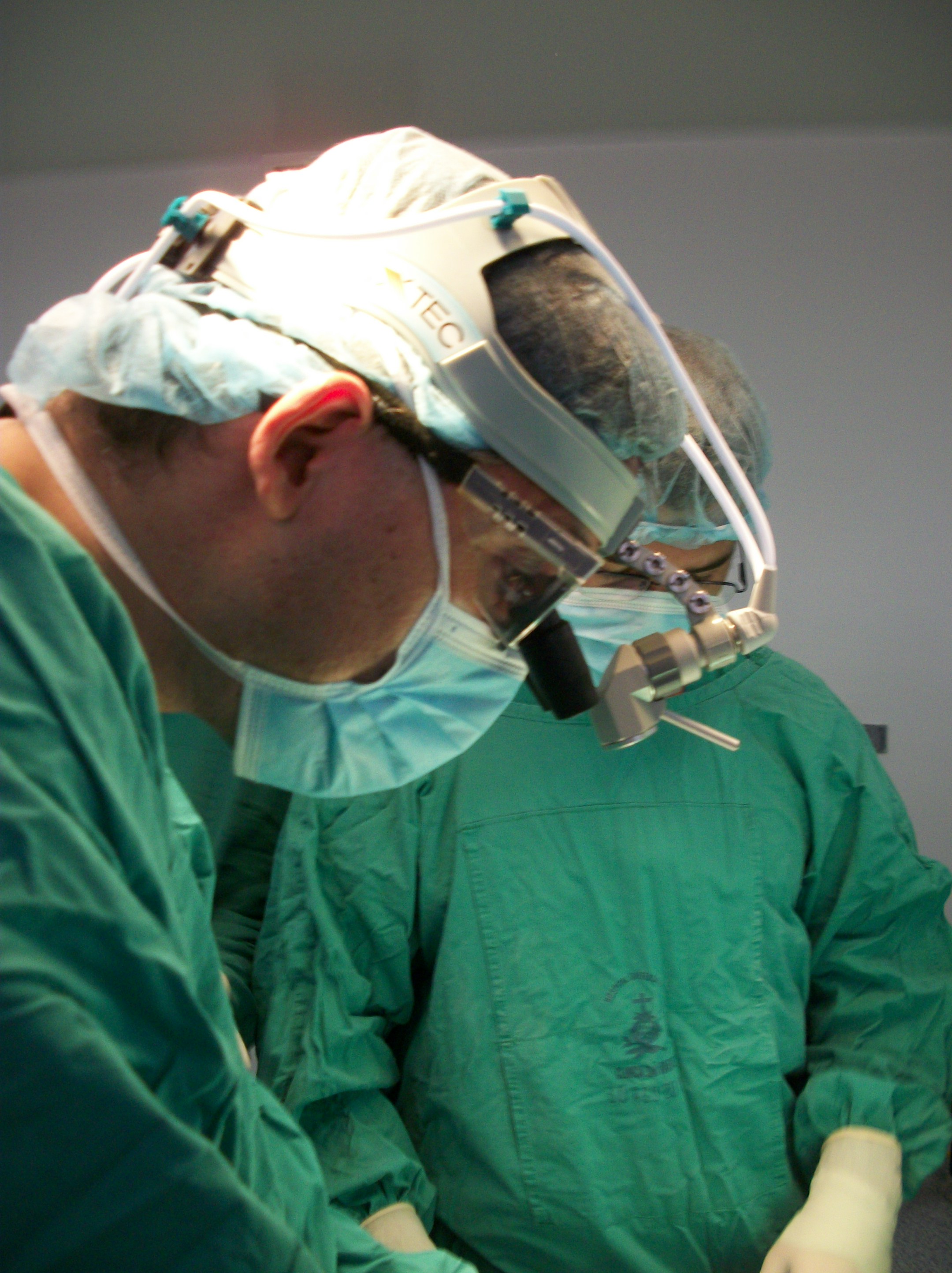
Dr. Martinez (right) in the operating room

(Out of respect for patient privacy – I’ve done my best to crop the patient ‘bits’ from the photo.)

Spent some time last week with Dr. Alberto Martinez of Med-Sports Orthopedic Clinic here in Bogotá.  Dr. Martinez specializes in arthroscopic surgery of the hips, knees and shoulders.   As we talked about before, shoulder surgery is its own subspecialty in orthopedics due to the increased complexity of this joint.

We talked a bit about hip arthroscopy,which is still a relatively new procedure in orthopedics and the fact that one two surgeons in Bogota are currently performing this procedure.

Arthroscopy is the orthopedic minimally invasive counterpart to general surgery’s laparoscopy or thoracic surgery’s thoracoscopy.  It involves insertion of a camera and several tools through small (1 cm) incisions in the skin.  Arthroscopy itself has been used in orthopedics for many years but it is just now making inroads in hip procedures.

I’ll be publishing an upcoming article based on my observations over at ColombiaReports.com

For more information

Rath E, Tsvieli O, Levy O. (2012).  Hip arthroscopy: an emerging technique and indications.  Isr Med Assoc J. 2012 Mar;14(3):170-4.

Haviv B, O’Donnell J. (2010). The incidence of total hip arthroplasty after hip arthroscopy in osteoarthritic patients.  Sports Med Arthrosc Rehabil Ther Technol. 2010 Jul 29;2:18

The authors found that 16% of patients in their study eventually required hip replacement after hip arthroscopy during seven years follow-up.

Nord RM, Meislin RJ. (2010).  Hip arthroscopy in adults.  Bull NYU Hosp Jt Dis. 2010;68(2):97-102. Review.

Afternoon at the finca, and a day at the market


We spent Saturday exploring Lerida and cruising around.

Ready for adventure

We stopped at several roadside stops to buy some local fruit before heading off to La Gaviota, a local finca owned by a Brazilian woman.

buying papayas

We bought some delicious sugar mangos, along with some sweet papayas and mandarins.

enjoying sugar mangos

La Gaviota, a finca in Tolima

Now, there are two kinds of fincas in Colombia; working fincas and pure vacation fincas.  A working finca is usually a farm or an orchard – often owned by a city resident but managed locally.  This allows people who live and work in Bogota to have a get-away place that also brings in income.

one of the lakes at La Gaviota

Some of these fincas have been in peoples’ families for generations and produce much of the fruit and livestock products (dairy, meat etc) that are sold in Colombia.

Other fincas are pure recreational homes, and as such, are primarily owned by wealthier Colombians though this is not always the case.  Fincas vary from modest cabin style affairs to elaborate, ornate mansions with swimming pools, tennis courts and private fully stocked ponds.  Since most working people can’t stay at their finca very often, many owners rent out their fincas part-time.  Such was the case with the lovely La Gaviota.

the pool, surrounded by fruit trees

The entire property has been planted with fruits and trees native to Brazil and the staff encourages visitors to sample the many exotic varieties.

Yaca, a fruit native to Brazil

There is a swimming pool, and several lakes stocked with fish.  There is also a hotel, and a restaurant, where they will prepare your fresh catch.  Like many of the numerous fincas that dot the landscape here, they welcome travelers and offer services at reasonable rates.  So we spent the sunny afternoon at the pool.

The next day, we went to the market in Lerida.   We bought some more ‘tipica’ or traditional Tolidense food called lechona from a very nice young man who helps his grandmother.

young man selling lechona

While I vary from vegetarianism to veganism in the states, I never hesitate to try another delicious typical dish when I am traveling – and it was marvelous; warm, savory and flavorful.

There are several variations of lechona, which is stuffed pork but the Tolidense version uses a base of garbanzo beans for the stuffing and comes with a sweet-flavored bread stuffing called insulso on the side.

lechona

The grandmother, also invited us to come to her house where she had other tolidense specialities for sale, including tolidense tamales.

with grandmother

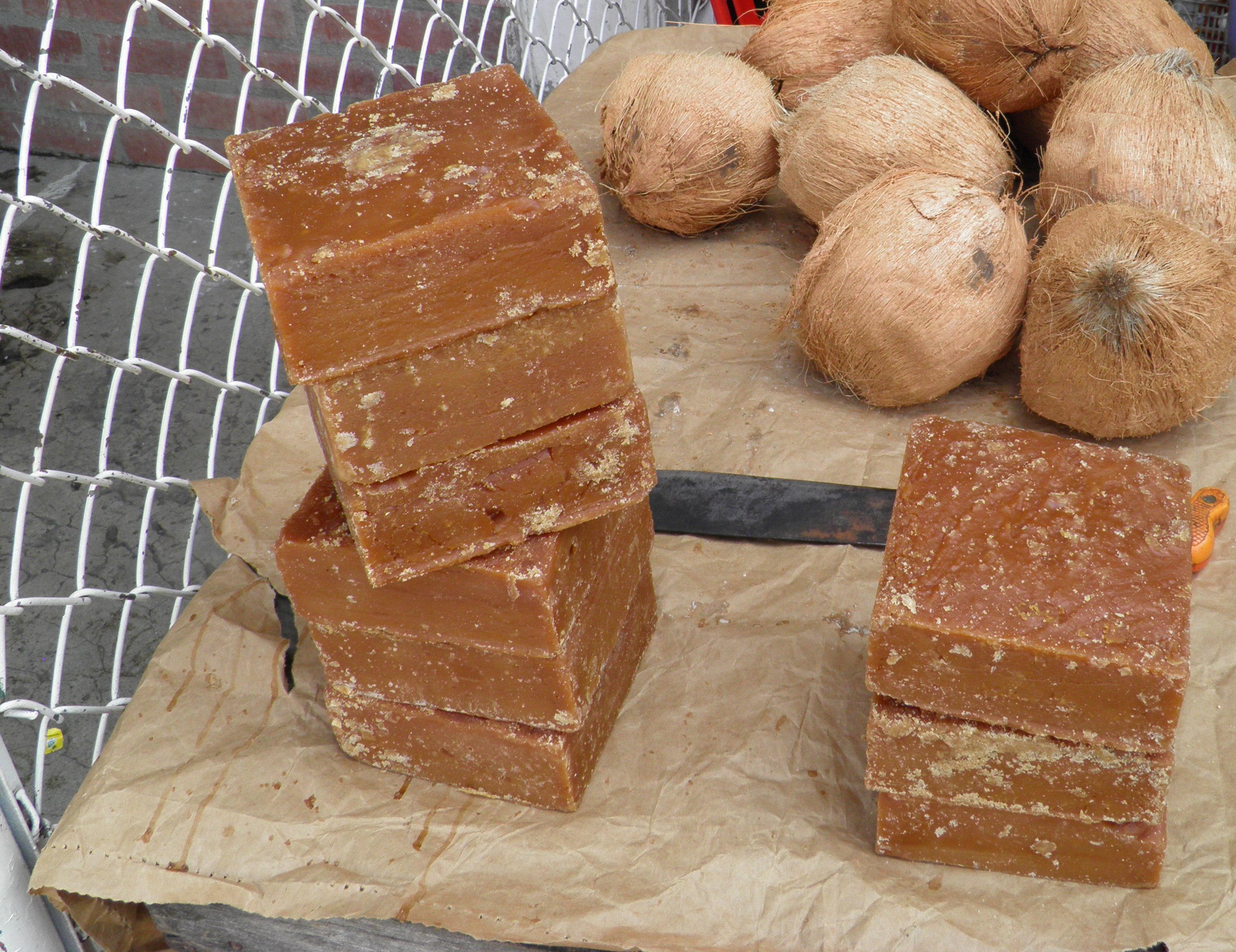
There were other vendors selling panela which is popular sugar product here in Colombia, (and other latin American countries.)  It’s a staple, a form of unrefined sugar produced at the local sugar cane factories in the region.  (I particularly like panela in my coffee and tea.)

panela

We met and purchased several tamales from another vendor in the market, a very nice woman who was very happy to pose for the camera.  I am ashamed to say that I forgot to write her name in my little notebook because my hands were full with all of our great purchases.

homemade tamales

in Lerida


in the mountains on the way to Tolima

Most Americans have limited exposure to Colombia, and Colombian life.  Other than media reports about drugs and violence, the majority of people’s opinions about the country have been formed by one quintessential little film of the mid-80’s…

“Romancing the Stone” – yeah, that’s right – the silly little romantic comedy with Kathleen Turner and Michael Douglas.  “Is this the bus to Cartagena?” is a line I’ve heard many, many times from people asking questions about my experiences here.

In general, like most things, Colombia is nothing like the movies.  Especially this one, since it was filmed in Veracruz, Mexico.

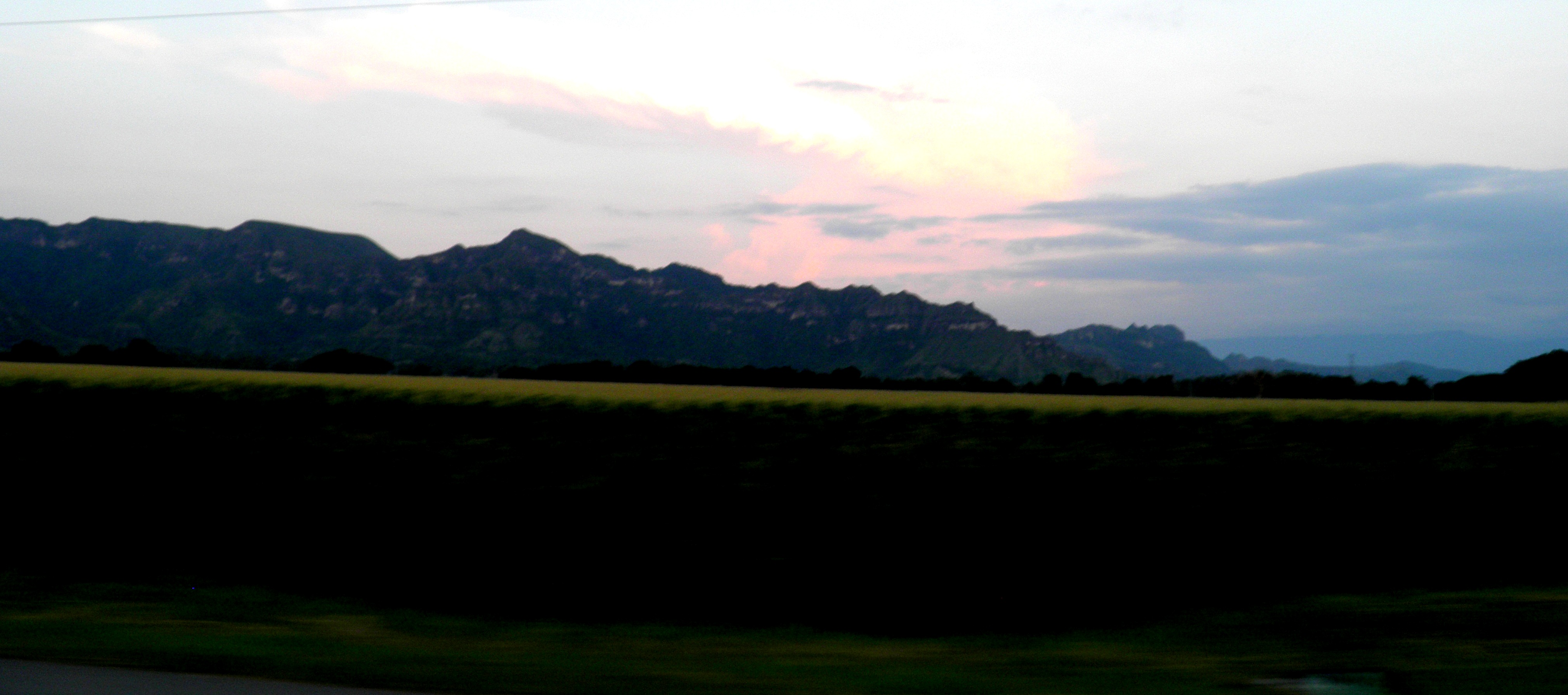
just outside Lerida at Sunset

But Lerida is that Colombia – the hot, humid, tropical Colombia that people think of after watching that movie.  It isn’t jungle-like here, of course,(that’s further south) but it’s an ancient city with stone buildings and some cobblestone streets interspersed among newer construction; but Lerida has the unrelenting heat and steaminess that people generally picture (and fail to find in Bogota.)  My guide tells me that the city wasn’t quite so hot – until most of the trees were removed when the streets were paved.  It makes sense since the neighboring cities (with thick tree-lined streets) are noticeably cooler.

It’s an interesting city – and more than just miles away from Bogotá – more like decades.  Life is a bit more traditional here, but that may be just the heat, and the ancient appearance of much of the buildings contributing to that perception.  Lerida was first ‘discovered’ in 1538 by Spanish conquistador Sebastián de Belalcazar who was amazed by the richness of the land, but it wasn’t officially ‘founded’ until 1777, which actually makes it technically one of the younger towns.  But as you wander the town, you see that people are still living in many of the original buildings – updated and modernized, of course.  But the original architecture with high ceiling and spacious rooms offers the advantages of cooler temperatures despite relentless sun.

As a mentioned in a previous post about Cali – motorcycles are the preferred method of travel in the warmer climes; relatively inexpensive, and good on gas – you see motorcycles just about everywhere you look; with entire families on bikes.

family on motorcycle in Lerida

Women in high heels, babies pressed between bodies, toddlers riding up front, even women riding ‘side-saddle’.

Coming from a society where motorcycles are used more as a statement than a viable mode of transportation; it takes a minute to adjust to the scene of so many bikes – it’s not a convention, they aren’t ‘bikers’, it’s just another day of running errands and going to work.

line of motorcycles

For more posts about my visits to Medellin, click here.

Road to Lerida, part II


As we pass into the valley, and the town of Honda, the whole topography changes.  It’s less West Virginia and more eastern Tennessee – in the summer.  The temperature has become hot and a bit humid.  The land is more flat, and as the land straightens out, so does traffic.  We can finally accelerate to 50km/h for the remainder of our journey.

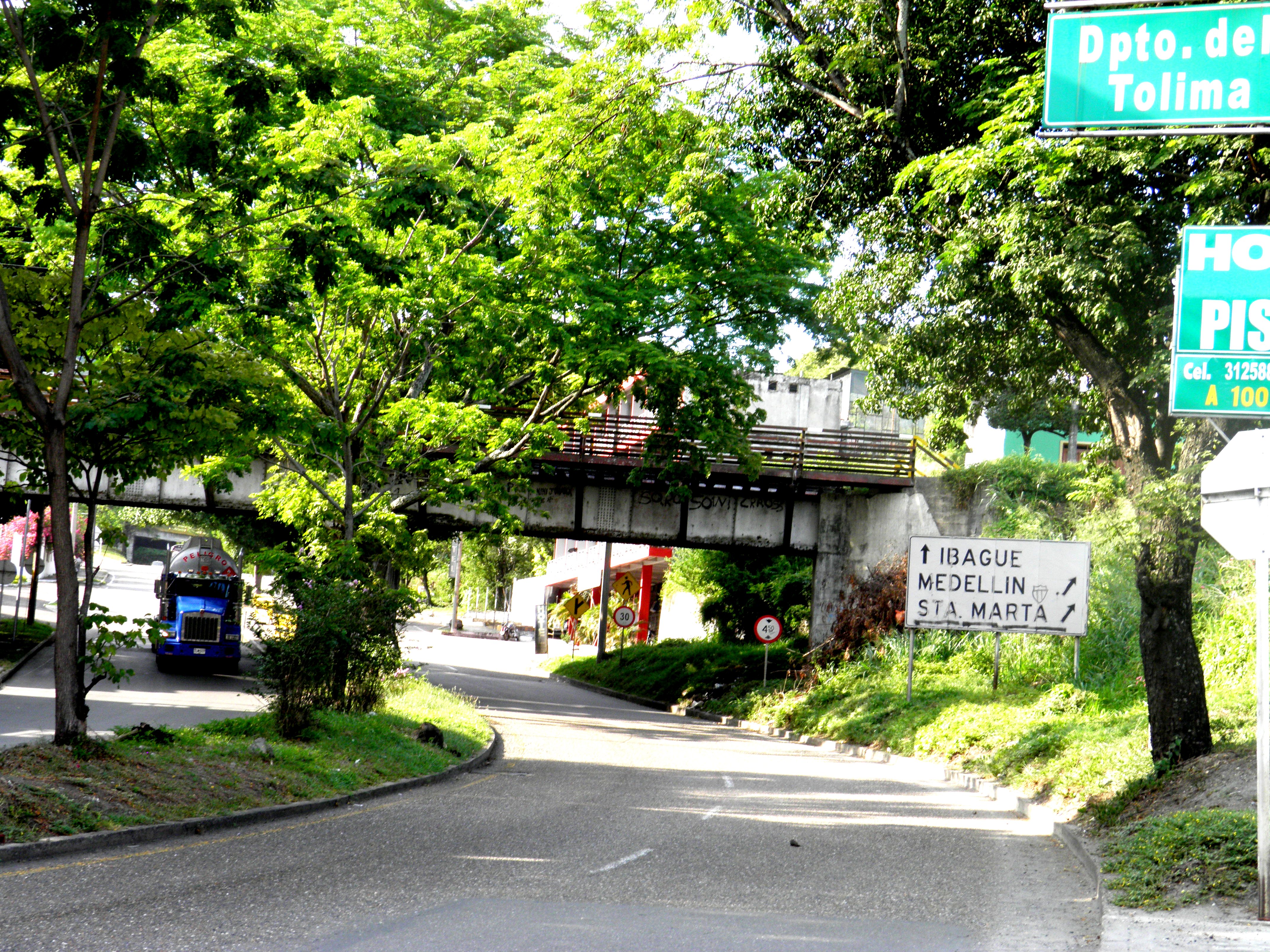
drive to Santa Marta? no thanks..

(It’s this limited speed that makes the road signs for Cartagena and Barranquilla (1150+ km) so terrifying, yet correspond with other visitors stories about 20 hour bus rides).  But the view is so interesting, and I have great company, so it makes for a pleasant drive, especially once we escape the industrial traffic.

it be corn, but it’s not Iowa..

Even the mountains here in the valley are different, the ones that are visible in the landscape are more like hills, with exposed rock crevices.

My ‘guide’ for this trip just amazes me with the breadth and knowledge he has of this area of the country.  As we pass different outcroppings, and tiny towns – he knows a bit of folklore, facts of interest or history on each one of them.  We travel through places that seems a million miles and twenty years from the sophisticated enclaves of Medellin, Bogotá or Cali.

In the Colombian state of Tolima, we drive through the small city of Caldas.  This seemingly unimportant but bustling town is actually one of the more important towns in Colombia’s history.  When scientific explorers (Spanish) first came here they found an amazing bounty of plants, flowers and fruits.  Many of which are only found in Colombia.

They also found gold here (and in the neighboring towns such as Mariquita).  It was their treatment of the native population in pursuit of this shiny metal beneath the nearby mountains that led to a local uprising (and eventual revolution – leading to Colombia’s independence).

Modern day explorers also made important discoveries in this area of Tolima, near Caldas:  large pockets of natural gas.

In the next town, of Mariquita – gold mining both recently and in the past, has shaped the town.  It was the uprising here in Mariquita against the Spaniards and their gold mining efforts that shapes this town’s history.  Further gold exploration in more recent history has also caused problems – my guide tells me that the tunneling and excavations have caused major subsidence problems, with homes disappearing into sinkholes.  (As someone who lived in the Monongalia Mine area of West Virginia, I can well image the scene.)

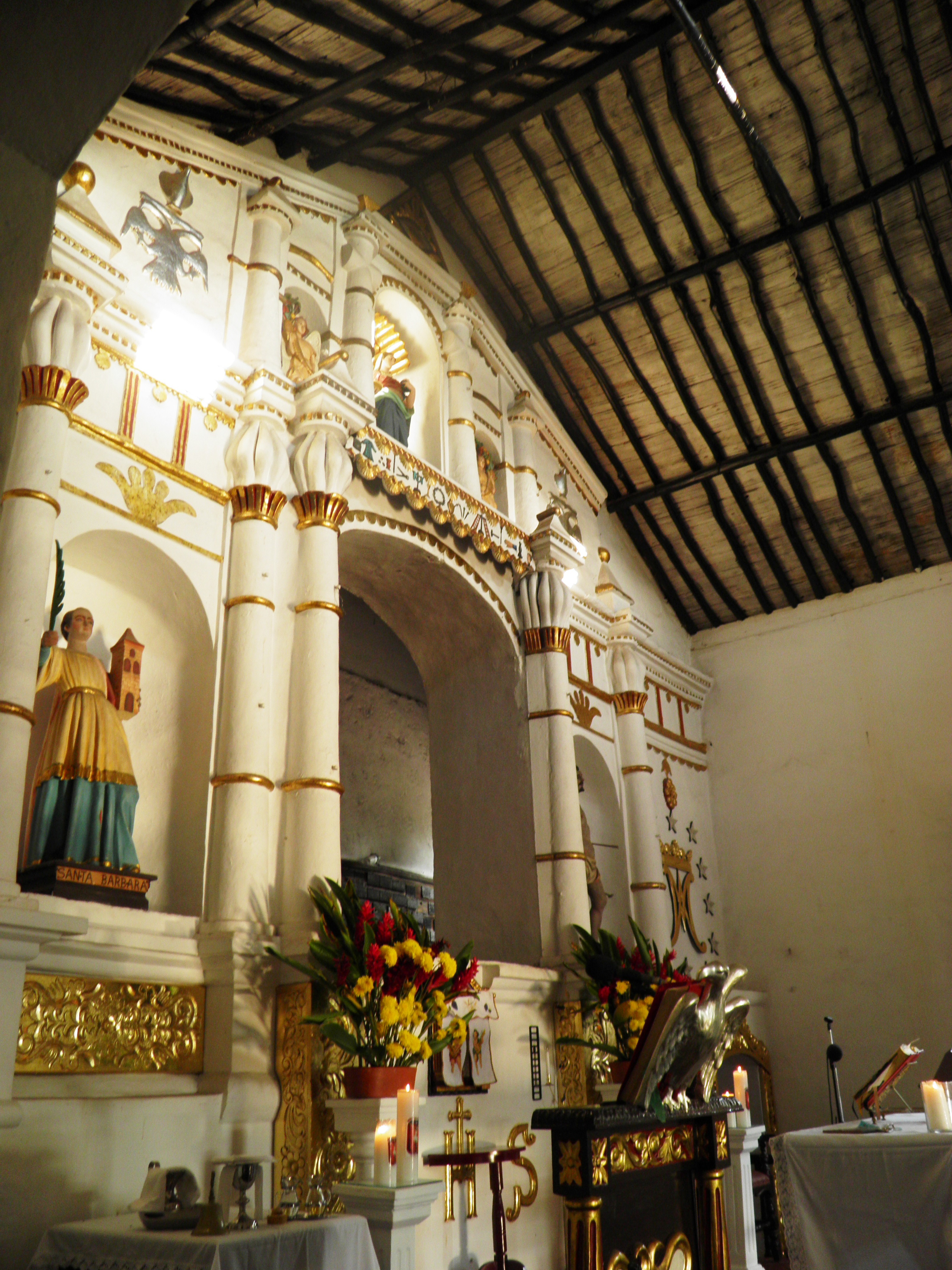
Marquita is also home to a historic church – and the “Milagro senor de la ermita.”

Church services were actually in session when I arrived, so I didn’t many pictures.  (I took the one interior picture from a little alcove so I wouldn’t disturb services while my companions lit candles).

Church in Mariquita

The state of Tolima is famous for it’s tamales  – which have little in common with the Mexican version.  Mariquita itself is famous for having excellent tamales tolidense so we stopped at a place off on a side street which was recommended by the locals, called “El Tamalito” en San Sebastian de Mariquita.  The tamales were, indeed, delicious.

The owner, Mr. William Naffati has been making tamales for over 20 years.  He lived (and worked) in Bogotá for 40 years before coming back to Tolima (where his family is from) 2 years ago.  He states that he makes the ingredients for 200 tamales at a time, in huge metal VATS.

William Neffati, in the kitchen

He states that the secret to the rich flavor of the tamales is due to three key oils: chicken, pork and another which he’s keeping a secret for now.  Then the meats and vegetables are slow cooked for a minimum of four hours before final preparations.  He reports that during the course of a weekend he will prepare and sell over 1200 tamales.

Now this next part of our journey probably deserves its own post – but since I am using borrowed internet to post this – it will have to do.

Lastly, as the sky darkened we passed Armero, a ‘lost town’ that was destroyed in the November 1985 volcanic explosion that spewed rock and lava throughout the area.  The official death toll was 24,000 but locals estimate that it was higher.  As the lava rained down on the town – it burned and destroyed many of the buildings, and their charred and abandoned structures remain – as a memorial to the site.


My guide and my traveling companions know a great story about this town too.  As the volcano rained death down on the 29,000 residents of Armero, and a sea of mud/ sludge began to destroy the town, somehow, despite being in the center of the storm of rock and lava, the local hospital (which did sustain heavy damage) was spared.  Not a single one of the hospitalized patients (who were on the second or top floor of the building) were harmed.

what remains of the hospital today

I guess when you consider the devastation to the area, that would make the hospital of Armero the second miracle of our journey.   I’m not usually so sentimental, but looking at the town, it’s hard not to be.

Ruins at Armero

Unfortunately, it was getting dark as we came through, so I couldn’t get any photos. (But we came back through the next day – and I managed to get a few.)  We didn’t get out of the car because the structures are unaltered and are considered unsafe.  I would have loved to crawl around them a little bit, but I try to take good advice.

The guide

My guide for our trip is Mr. Alvaro Palacios, an adoption attorney.  Last year, when I was writing the Bogotá book, I was renting a room in one of the apartments  he and his wife own.  After being there for six months – we became pretty close.  Especially since once my roommates returned to their home countries, I was alone (sometimes lonely, when l had enough time to think about it) in the apartment.

Mr. Alvaro Palacios

But they always made me feel safe and secure in the fact, that they were next door, and that someone would notice if I didn’t show up one day*.  So I came to very much enjoy talking with the Palacios, their daughter, Camila and their son, Alvaro who was a medical student at the time.

Dr. Alvaro Palacio

In fact, that’s the reason they’ve invited me along – we are heading to Lerida to visit their son who is doing his intern year at the hospital here.  (In Colombia, all doctors have to do a ‘social service’ year working and training in underserved areas.)

Road to Lerida, part 1


Had a wonderful Thanksgiving with some delightful friends yesterday.

I went to the operating room this morning with Dr. Alberto Martinez – but we will save that for later.

This post is for my good friend, Steven Morrisroe who always tells me to devote more posts to ‘everyday life’.  He’s been a big supporter of my work – so Steven – I hope you enjoy this.

Gee.. it doesn’t look that far..

The road to Lerida – part I

The most effective and efficient way to travel in Colombia is by plane; flying to Medellin or Cali is an exercise in ease – by the time the coffee carts comes around (yes, Colombian airlines take care of their passengers), it’s time to sit up your seats and prepare to land.

Not really going to Siberia (been there, done that!)

But the roads are notorious for being poorly designed exercises in endurance and frustration.  It’s something Santos has pledged to address – outlining a massive overhaul of Colombia’s infrastructure, which is desperately needed.  Despite being one of the major roads to this part of the interior of Colombia – it’s a two-lane road, hugging a hill on one side, and a dramatic cliff for the other for the majority of the journey.  While mom-and-pop restaurants and mini-markets dot the roadside, along with tiny houses and laundry lines – this is a heavily trafficked major route for the transport of goods across the country.  There are produce trucks, heavily laden pickups, buses, even several car haulers with brand-new Japanese cars all crowded together with more tanker trucks than I’ve ever seen in my life*.  At one point, I looked out the window at the road ahead and it was all semi-trucks as far as the eye could see in both directions.  It makes this little road as crowded as peak traffic in Bogotá.

this picture is actually from Honda, when traffic finally thinned out..

So much so that what should be a swift and picturesque journey becomes a six-hour crawl as the speedometer stays markedly fixed at less than 30 km/h (yes, that’s kilometers).  The only exceptions being quick bursts of pulse-raising, dare-devil maneuvers as we attempt to pass another in a seemingly continuous line of tanker trucks as we head into another blind and narrow hairpin curve.

passing, but you can’t see the motor cycle passing us..

We settle back into the agonizing crawl, behind more semis.  The line only broken when we attempt such feats as the double pass – passing a tanker truck on the far left as it attempts to pass a slower moving, more heavily laden truck. But at least, it breaks up the monotony and frustration of breathing diesel fumes and enduring the smell of hydraulic breaks being tested by the continuous grade.

this is actually a truck wash hugging the cliff

But don’t get the wrong idea – it’s still a beautiful journey and I am enjoying it immensely.  I just want you to be able to picture the chaos and flurry of activity amidst the serene surroundings.

Once you pass just outside of Bogotá – you are in the country.  Most of the trip is up and over a mountain pass – with a breathtaking view of what must be the Grand Canyon of all valleys.. It’s astounding lovely, but I was unable to get a photo of the massive verdant green valley with rivers and lakes scattered below.  It looks so much like West Virginia, that I have to remind myself where I am more than once.

Where am I?? (Answer: just past Honda)

After twisting and turning for hours – we emerge in the valley below and arrive in the city of Honda..

*My tour guide informs me that the reason there are so many tanker trucks is that despite having ample oil reserves, Colombia does not have a single oil refinery, so all the oil produced travels on this very road to be exported to the USA for refining.

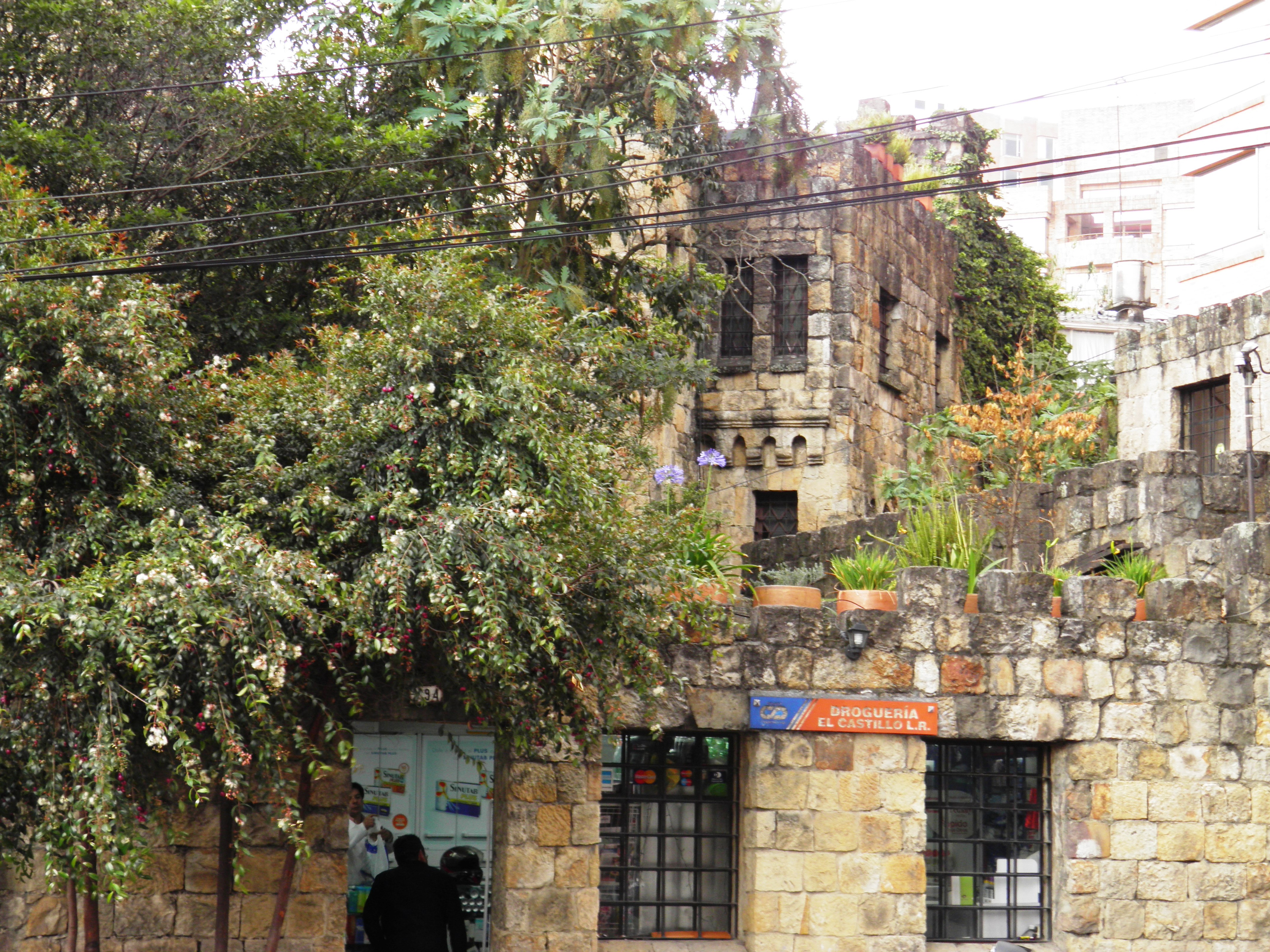
Bogota’s castle


Some of you may notice that I have temporarily changed my header – to show Bogotá’s castle.  I found it the other day as I wandered some of the carerras.  (Residents of Bogotá know that once you get into the single digit carerras – all logic and inference regarding standard directions goes out the window.)  Once you cross Carerra Septima (Cra. 7) the lovely city layout that makes Bogotá such an easy place to navigate changes into a labyrinth of twisting, winding streets reminiscent of San Francisco..

It’s part of what makes the city so interesting – and at times (such as yesterday, when I was making my way to an appointment) – a bit frustrating.  Just when you think you ‘know’ the city – you stumble upon something completely different from what you were expecting..

Not what I was expecting

The castle which is located at Cra 3 – 74 was the brainchild of Dr. Juan Osorio Morales and is called Castillo Mono Osorio.   While it has the appearance of antiquity, it’s actually only about 100 years old.

Bogotá’s castle

The creator, a local eccentric – was  Colombian cultural attaché to Brussels.   Upon his return to Bogotá, he spent the next twenty years creating the castle which later served as home to his own personal theater troupe.

Like the work of many unconventional artists, after his death the castle fell into disrepair until it was rescued in recent years by one of his descendents and repaired to its current state.

It currently houses several stores including a banquet space, a gift shop and a pharmacy.  Best of all – there is currently space for let.  A new, whimsical office, anyone?

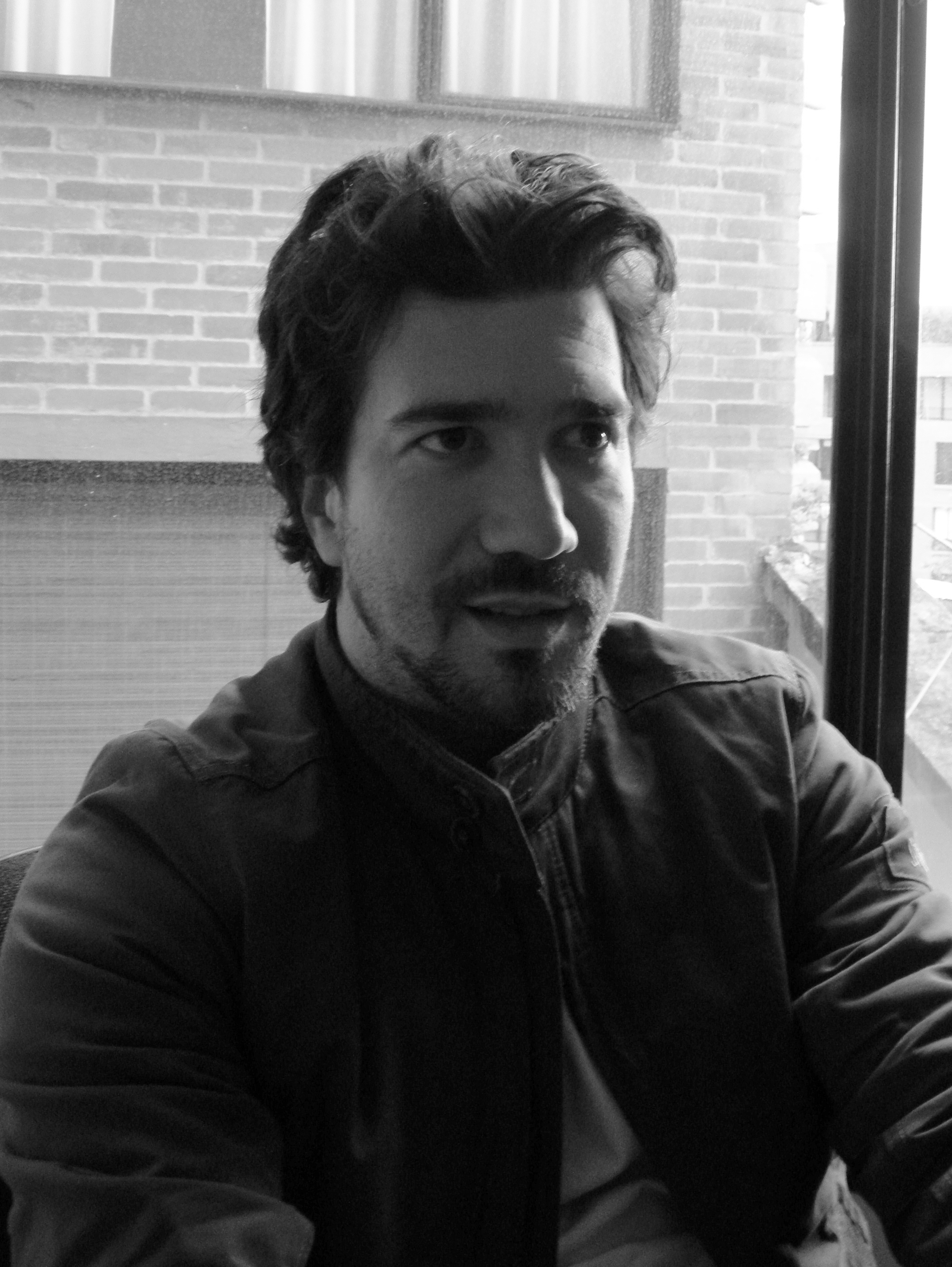
Talking with Andres Barrientos, Colombian film director


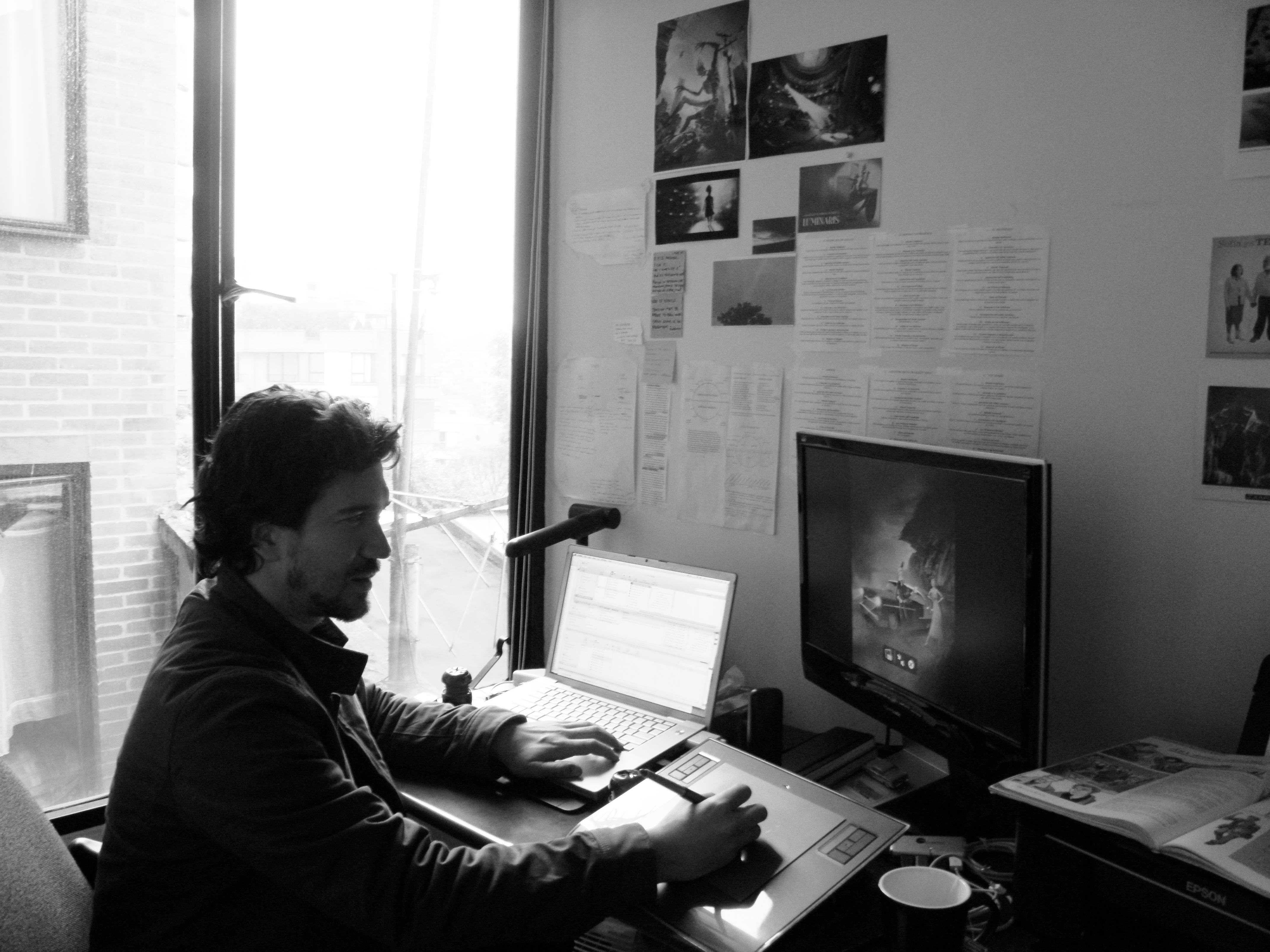
He lives at the top of the world, I think as I climb the hills of Bogota to his studio.   In a sliver of the window of his modest work space, the whole of Bogota is laid out beneath me.  I wonder how this affects the Bogota native’s work; which is dark, profound and futuristic in nature.

Film Director, Andres Barrientos

In a city where chance meetings are common, I had the good fortune to sit next to a charming and attractive young man at a friend’s dinner party.  As we made the usual small talk, he mentioned that he was a filmmaker.

Now, growing up in California, I had met my share of ‘filmmakers,’ all of who were the self-proclaimed ‘next Scorsese’ or ‘Tarentino’, and all of whom were waiting tables.  So we talked about YouTube and the like, along with one of his current projects, while I remained mainly grateful for the timely rescue his appearance made from the boorish oaf on the other side of me.  He was interesting and charming enough that I offered to interview for him for my modest little blog.

Imagine my surprise to find out that he’s not the next Clint Eastwood.  Or even Tarentino. No, he’s the Andres Barrientos, one of Colombia’s youngest critically acclaimed directors with over fifteen films (and numerous awards) to his credit.   Despite my appalling lapse, he was delightful, kind and prompt.  (The last is especially notable in Colombia, where time has its own interpretation.)

Andres Barrientos, working in his studio

It will take several days to unravel the complexities of Mr. Barrientos and his work – but I’ll be talking more about him and the three projects he is currently working on over at the Examiner.com.

Update: the full article can be seen here.

Christmas comes to the foothills of Bogota


Like I’ve said in a previous post – one of the great things about living in a city like Bogotá, is all of the interesting people..  Some of them are lifelong residents, some are visitors like myself – and others are making Bogotá a temporary home, like my friend, Johanna and her husband, Paul.

a true photographer, my friend, Johanna

Johanna’s a talented photographer (I’ve much admired her photos for a long time) so I am hoping to enlist her in some of my efforts..  She took several of the pictures here (the good ones!)

Yesterday, we went to La Calera which is a picturesque community just outside of the city.  Sundays are a particularly popular day for city residents to get a taste of small town life just twenty minutes outside Bogotá.

leaving the rainy city behind for a day in La Calera

But our excursion yesterday was a bit different from some of the lovely, and lazy afternoons I’ve had wandering the villages surrounding Bogotá.  This time, we were there for a cause.

nope, still not in trouble.. just hanging out

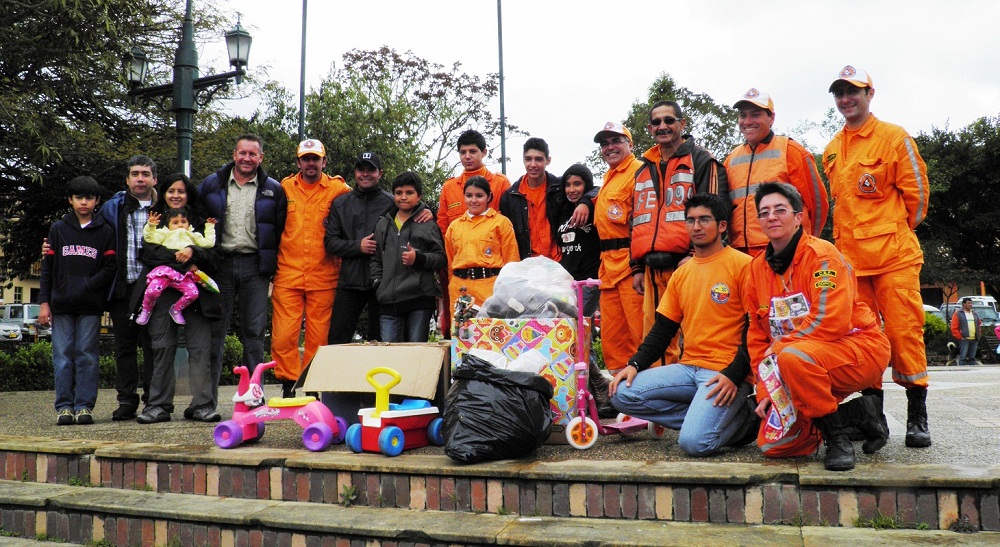
We joined Colombia’s Civil Defense – Cundinamarca division for a toy drive to benefit children in one of the outlying villages.

Civil Defense 4 x 4 division toy drive

They will deliver the toys by 4 X 4 next month..

with the Colombia’s Civil Defense

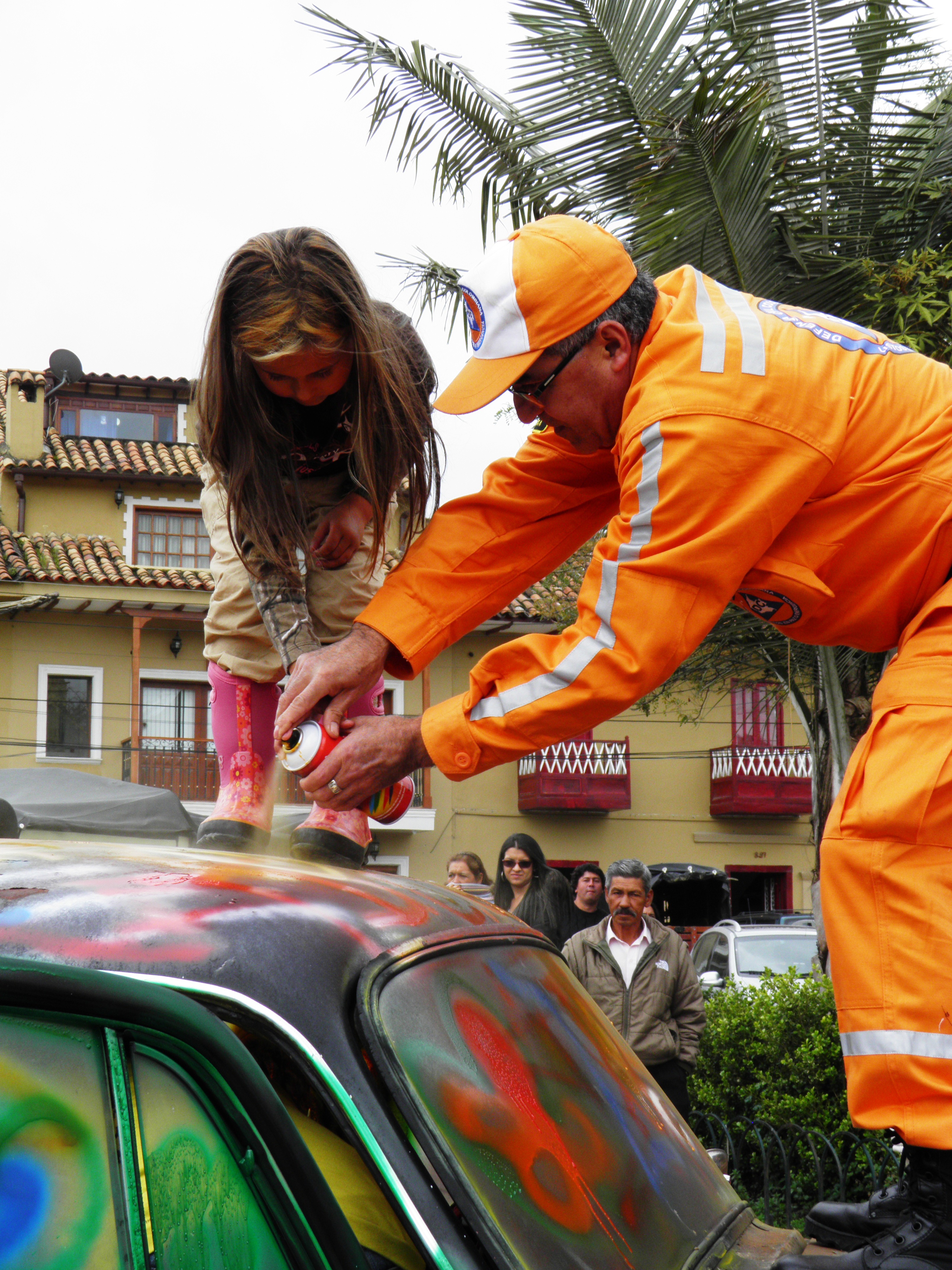
While they were collecting toys – they also had some activities for the local kids – including a ‘Paint the Car’ activity which proved popular with kids and adults alike.  (After all – how often do the police hand out spray paint?)

Civil defense officer helps a small child paint

It was a lot of fun – for a good cause, so I’ve written some more about it over at Examiner.com.

Hoping to do some more interviews this week – to bring more of Bogotá’s residents to readers..

Checking in at Santa Fe de Bogota


After a year and a half – it was time to stop in at Santa Fe de Bogotá and see what was new.

Dr. Roosevelt Farjardo, MD (general surgeon) has been instrumental in implementing some of these new and exciting changes such as the ‘Virtual Hospital’ that I will be writing about (soon).  He was very nice about taking time to update me on some of his new programs at part of the Center for innovation in education and health.  Telemedicine is just the tip of the iceberg as far as some of the cool things they are doing.

Unfortunately, the same can’t be said of the International Patient Center  – or rather – I can’t report anything other than the fact that Ana Maria Gonzalez (the previous director) has left for a position in the United States and that Dr. Carolina Munoz has taken her place.

I was hoping to get some statistics and report back about some of the specialty programs for overseas travelers – but Alas!  I am unable to bring this information to you.  I waited over 70 minutes after my scheduled appointment with Dr. Munoz – and despite several calls from her staff, she never showed up and never attempted to reschedule.

I wish I could say this is an isolated incident – but I am afraid this is more like a clash of “cultures”.  I say this because I met with Dr. Munoz  previously; during the writing of the book (when she was the Director of the International Patient Center at rival Fundacion Cardioinfantil.)

At that time, (if I remember correctly, she introduced herself as a cardiac surgeon who had retired to “spend more time with her children.”)

Of course, my obvious question – was “oh, and how many children do you have?**”

I thought we were making polite conversation – because at the time, I was less familiar with Colombian customs, culture etc.   In reality, she was reminding me of her elevated stature in comparison to mine (as ‘just a nurse’).  Dense as I was – it became obvious as the interview progressed – as she made sure that I knew that she had replaced her rival (Ms. Ana Maria Gonzalez – RN) who had also worked at Fundacion Cardioinfantil in the past.  I’m sure she resented having to answer questions about the Executive Health Program and other aspects of their medical tourism program from someone she found to be inferior to herself.  (She made that pretty clear at that initial interview back in 2011).

So I guess it is no surprise that she didn’t bother to show up to our appointment this week – which is a shame, as I had looked forward to finding out more about the evolving International Patient Center at Santa Fe de Bogotá.

Luckily for me – there was another nurse there, Sandra Salazar – who could give me some basics.   She was delightful, helpful and dreadfully embarrassed about the whole thing.  She was even able to give me a list of some of the American insurance companies they have worked with in the past.  I had lots of questions about the HIPEC program, which she couldn’t answer – but she outlined the entire medical tourist process – and answered a lot of other questions.  She showed me how they streamline the process for their international patients, and the process for medical and surgical evaluations.

Now, there’s some good news for readers:  You aren’t nurses.  You are paying customers – so I am sure that Dr. Carolina Munoz will put aside any of her personal feelings (whatever they are) towards foreigners and will make time for you.

**The answer as none – as she is not married, and was not planning to be married in the foreseeable future.

Now when I am talking about culture – I am not strictly talking Colombia – America.  I am talking about Doctor – Nurse relations.  Watch some old Turner Classic Movies sometime and you will see what I mean..

Now I debated writing about this, but after talking with some other non-Colombians here in Bogotá, I felt it was important to pass it along because it illustrates quite a few things about my work:

1.  It’s not as easy as it looks (I spend a huge amount of time waiting..)

2.  Cultural differences can cause a lot of problems – so be prepared to be tolerant.

3.  If there is a chance that patients may get poor service – I want to know about it!  (And part of readers need to know about – is my experiences.)

Calle de Mascotas – avenida Caracas


Just a few more weeks here in Bogotá before heading back to the United States.  My days are crammed with interviews – so I haven’t been posting as much as usual.

Right now, I am making copious notes – and taking plenty of photos so I can starting writing up several articles in the next several weeks.  Much of my  work will be published over at Colombia Reports.com so I will attempt to keep from duplicating it here.  (Also – I won’t have the time..)

I’ll still try to post pictures and stories here – about Bogotá life in general, to give readers a sense of the city, and the people here since that’s something that they won’t get with my (rather) dry surgical descriptions/ evaluations.

But – I am already working on plans to return to Bogotá, (and other parts of Colombia) this spring.  Once I have some concrete plans, I’ll post them here for readers and (potential travelers..)

homeless in Bogotá

I wandered around Avenue Caracas (Carrera 14) for a bit this afternoon.  It’s not the best area because there are a lot of homeless people, and it has a reputation for quite a bit of crime (muggings and such) but I couldn’t resist walking by the “Calle de Mascotas”  or the three blocks (from Calle 53-56) on Avenue Caracas that hold about a dozen pet stores..

The man crouched down in the photo above just finished stamping out his cooking fire as I came by..

kittens in a pet shop window

It was particularly heart-wrenching for me – while I’ve been down here in Bogotá, my long-time friend and companion – my 17-year-old cat passed away.  (Don’t worry, he was surrounded by loved ones, and died in my husband’s arms).

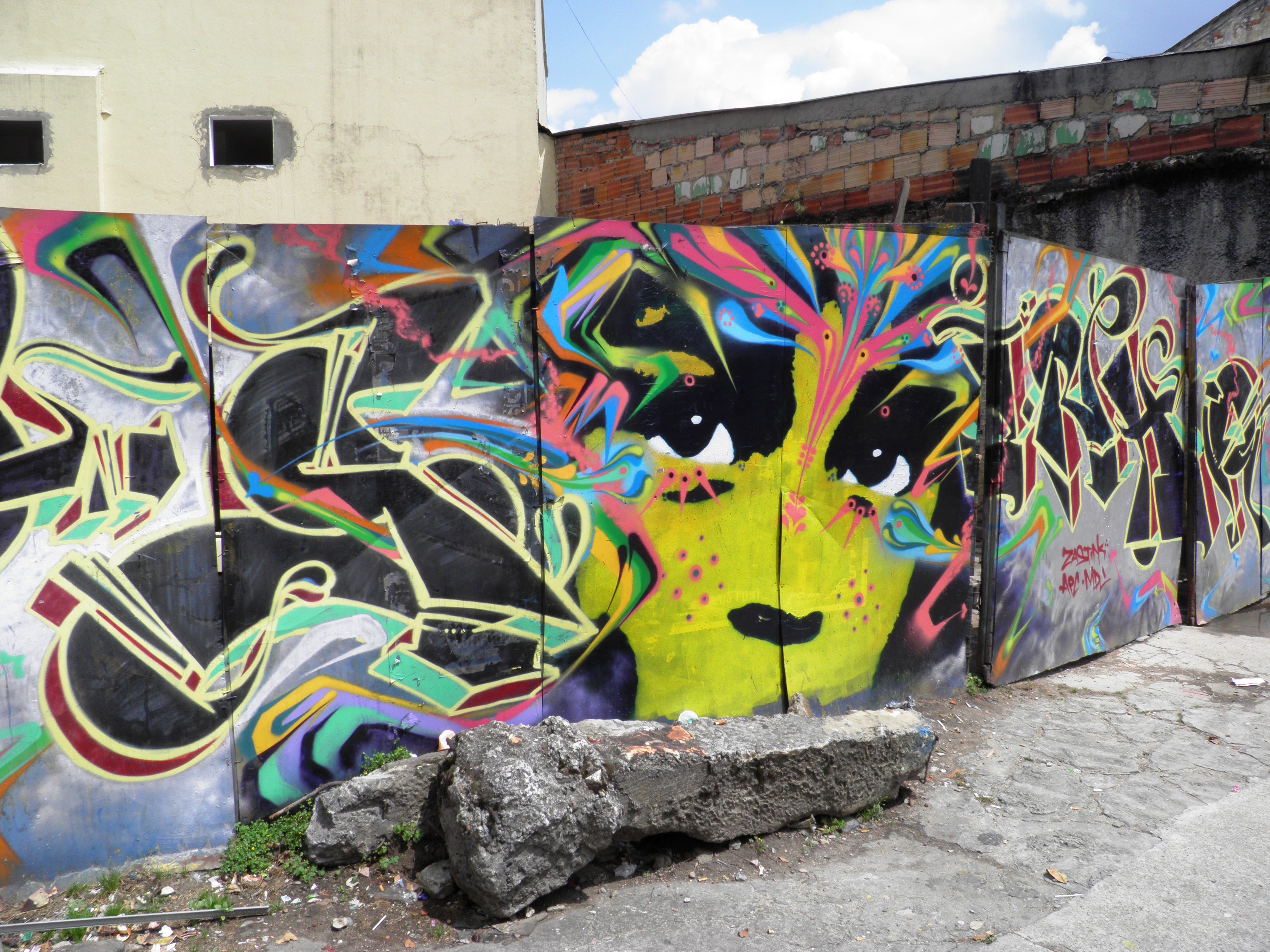
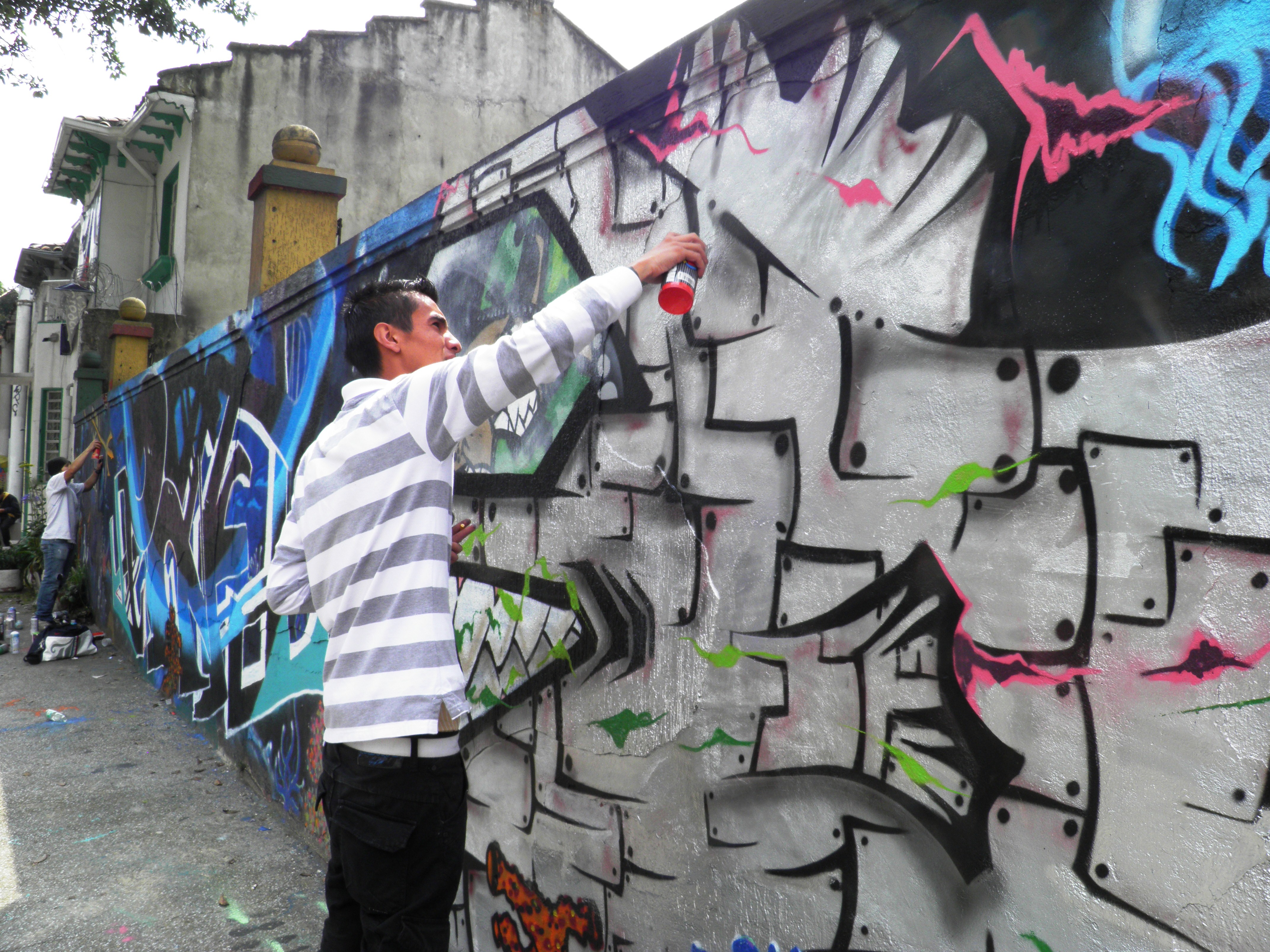
This inquisitive little fellow here reminded me quite of a bit of my cat (though they do not look-alike.)  So it was hard to keep walking – but then next to one of the pet stores, I watched two artists create this mural..

a work in progress

Hard to believe all this detail came from spray paint (no brushes!) but it did..

working on the mural

This artist, and his assistance were really nice, and didn’t mind me taking their pictures.

I’ll post some more stories soon.. In the meantime, you can read more about my recent interview with Ilene Little here.

New venture with Colombia Reports


While I have written several books about surgery and surgeons in Colombia, much of this information I’ve obtained from my research has been consigned to sitting on the shelves of various bookstores.

But, now with the help of Colombia Reports, I am hoping to change that.  As I mentioned in a previous post, Colombia Reports.com and it’s founder, Adriaan Alsema have been amazingly supportive of my work, ever since they printed my first article on Cartagena in 2010.

Since returning to Colombia, I have kept in touch with Colombia Reports while we discussed ways to bring more of my research and work to the public.  Colombia Reports is a perfect platform – because it serves a community of English-speaking (reading) individuals who are interested in/ and living in Colombia.   With this in mind, Colombia Reports has created a new Health & Beauty section which will carry some of my interviews and evaluations.

It is an ideal partnership for me; it allows me to bring my information to the people who need it – and continue to do my work as an objective, and unbiased reviewer.  We haven’t figured out all of the details yet – but I want to encourage all of my faithful readers to show Colombia Reports the same dedication that you’ve shown my tiny little blog, so that our ‘experiment’ in medical tourism reporting becomes a viable and continued part of Colombia Reports.

This is more important to me that ever – just yesterday as I was revisiting a surgeon I interviewed in the past (for a new updated article), I heard a tragic story that just broke my heart about a patient that was recently harmed by Dr. Alfredo Hoyos.  While I was unable to obtain documents regarding this incident – this is not the first time that this has happened.

Previous accusations of medical malpractice against this surgeon have been published in Colombian news outlets including this story from back in 2002.

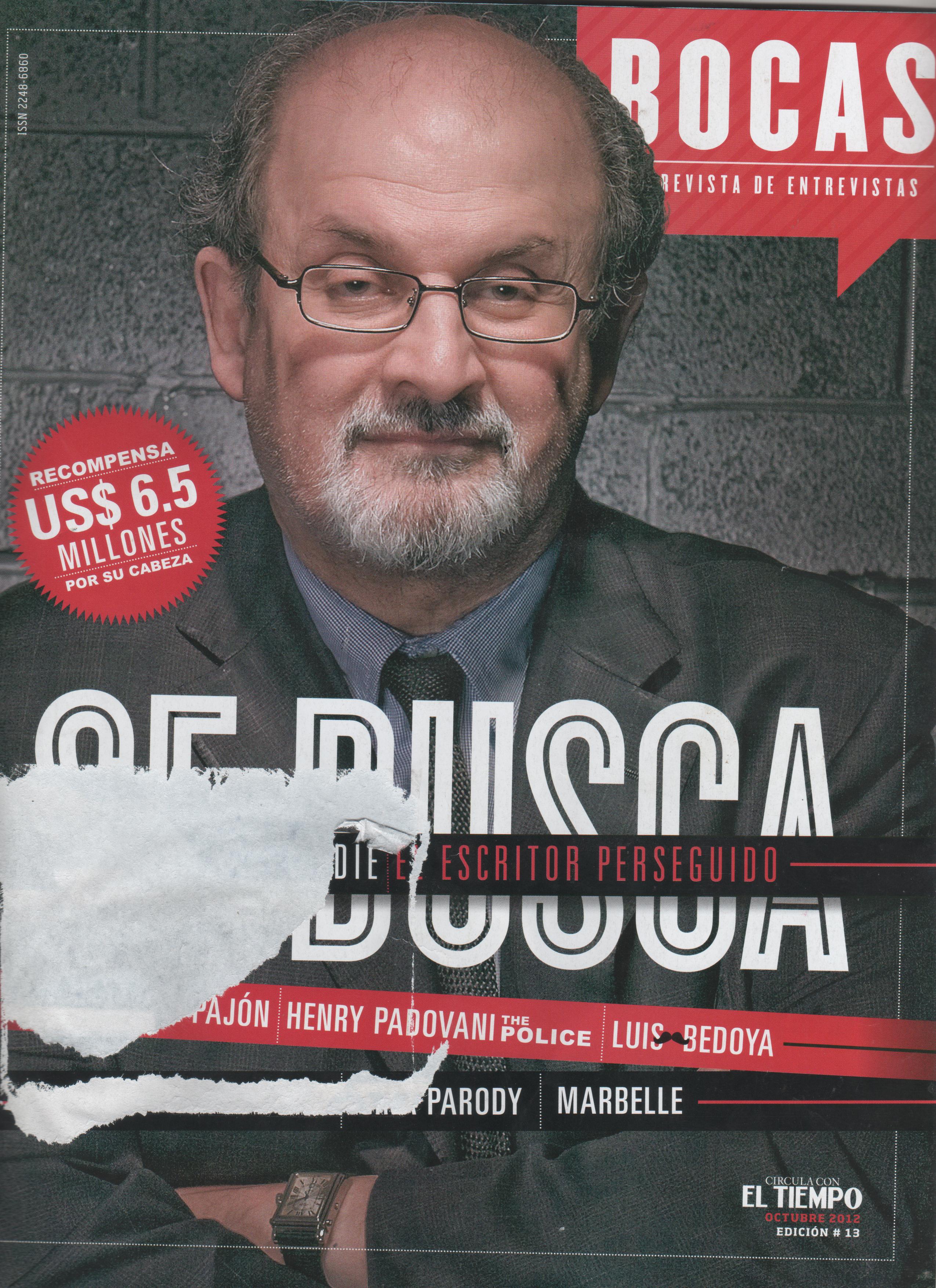
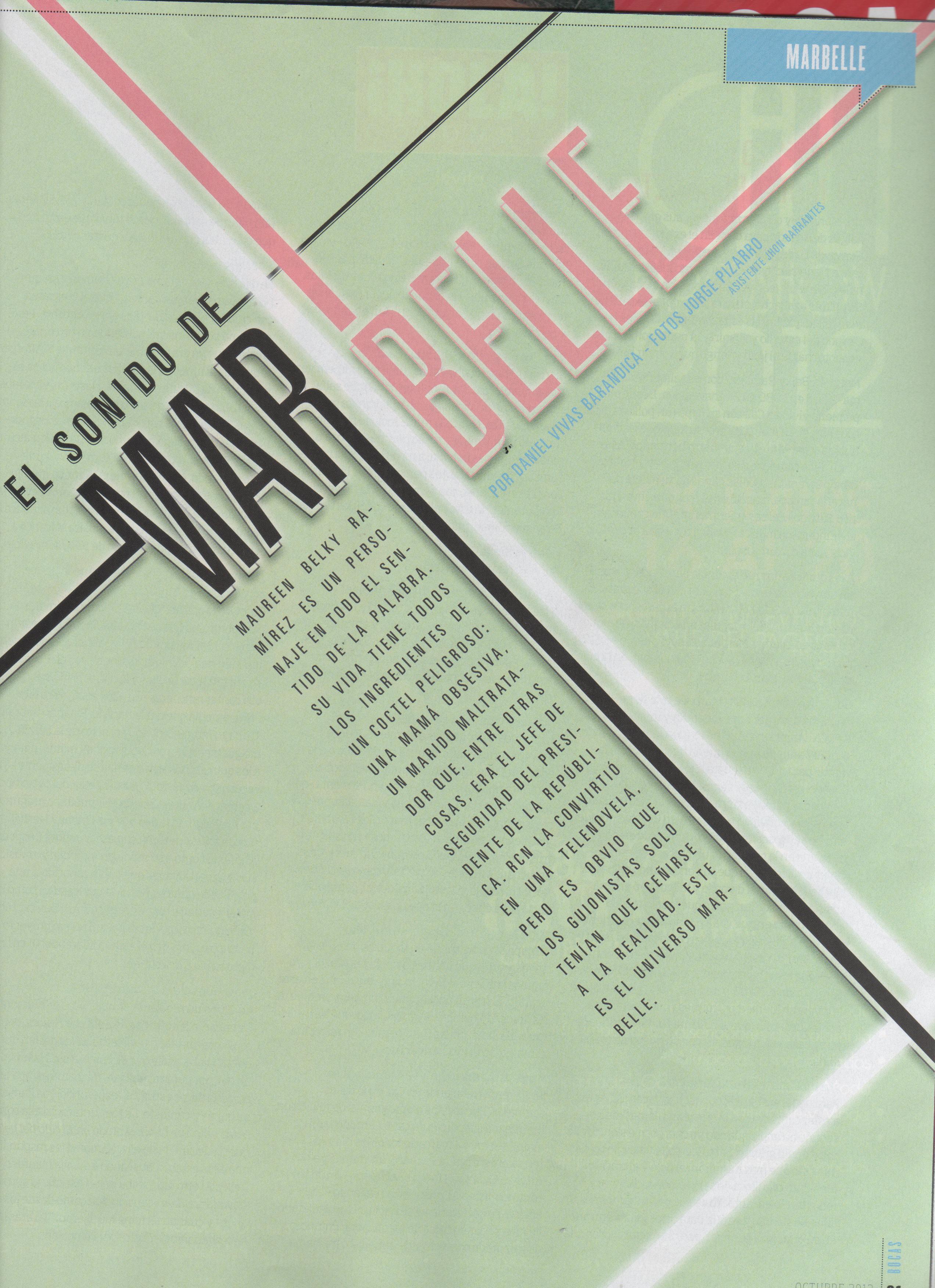
The accusations are from Marbelle, a Colombian artist regarding the intra-operative death of her mother, Maria Isabeth Cardona Restrepo (aka Yolanda) during liposuction.  These accusations were published in Bocas – which is part of El Tiempo, a popular Colombian newspaper, in which the singer alleges that Dr. Hoyos was unprepared, and did not have the proper equipment on hand to treat her mother when she went into cardiac arrest during the surgery.

story about the death of one of Dr. Alfredo Hoyos' patients.

story about the death of one of Dr. Alfredo Hoyos’ patients.

Kristin 002 Kristin 003 Kristin 004

Now – as many of you remember, I interviewed Dr. Alfredo Hoyos back in 2011, and followed him to the operating room, giving me first hand knowledge of his surgical practices.

Readers of the book know he received harsh criticism for both failure to adhere to standard practices of sterility and patient intra-operative safety (among other things.)  I also called him out for claiming false credentials from several plastic surgery associations – and notified those agencies of those claims..   In the book, readers were strongly advised not to see Dr. Hoyos or his associates for care.

But – as I mentioned, my book is sitting lonely on a shelf, here in Bogotá – and in the warehouses of Amazon.com and other retailers.. So, people like that patient – didn’t have the critical information that they needed..

This is where Colombia Reports – and I hope to change all that.   So in the coming weeks, I am re-visiting some of surgeons we talked to in 2011, and interviewing  more (new) surgeons, more operating room visits..

The people of Bogota


I’m actually out of the city for a few days – but during my long flight, I reflected on some of the reasons I enjoy this city so much.

Why do I enjoy Bogotá so much?

Well, the people, of course!  Now, I know that people are shaking their heads – but for a small-town girl like me,  a cosmopolitan city like Bogotá is very exciting indeed.   So many festivals, events, galleries and museums**.

But it’s the people who are the heart of the city – and what really brings it alive.   Just this week, I had the opportunity to rub shoulders with and talk to a Colombian film director, a geo-petroleum engineer, a civil rights (labor) attorney  and one of the executives of Caracol.   It’s just that kind of town – like Washington D.C. but down-to-earth and accessible.  [Now, my little eight-year-old friend, Flavia has met President Santos just walking on the street one day, but I haven’t.]  But there are still wonderful opportunities to meet and talk to interesting people who I might not cross paths with in my ‘normal’ life in the hospital.

For example, I found myself sitting next to the film director, Andres Barrientos at a birthday party for a mutual friend. (Of course, the guests at the party were a like a small UN delegation – but less protocol and more fun;  it included Colombians,  two delightful ladies from Venezuelan, a British gentleman, and the guest of honor – another American like myself –except for her beautiful Argentinean Spanish.)  These are all just people and friends I have made wandering around the city..

Of course – talking about the ‘extranjeros’ or foreigners living in Bogotá is an entirely different topic – and one we will get around to one of these days.  But as I chatted with the very normal, very nice Mr. Barrientos (and he politely refrained from laughing at the ridiculousness of my YouTube efforts), it made me consider how many film producers I met in Danville, Virginia, Mexicali, Mexico or Reno, Nevada during my various moves.  (The cumulative answer is: Zero.)  And why would I – on the streets of my small southern town?  But Bogotá is a different matter entirely – it is a global city, with its tenacles on the pulse of Colombia, Latin America and the world.

Global positioning and perspectives

Talking with labor attorneys and several petroleum company officers just brings home some of the amazing lack of insight we (as North Americans) have on some many issues affecting the rest of the world – and our roles within this context.

While Americans are often accused of being willfully ignorant – this just isn’t true.  The reality is that: we are intentionally blinded as citizens to much of the outside world.  I mean, I make a continuous, specific concerted effort to find English language information about issues facing Latin America (for this blog) and it is exceedingly difficult.

What we do see on CNN, BBC and our nightly news and read has already been translated (and censored) for our consumption.  As a result – if it isn’t a  sensationalized report about a bomb going off somewhere – or a huge drug seizure, then there just isn’t much information available – whether we are talking about our southern neighbor, Mexico, the economic powerhouse of Brazil, Colombia, Peru, Chile or any of another dozen countries.

But when you live somewhere like Bogotá – you become more globally informed just by meeting and interacting with all of your fellow Bogotá residents – from UN representatives, other foreign nationals on down to your every day taxi driver.  (Always talk to the taxi drivers – they are usually exceedingly nice, have a wealth of information and different perspectives on everything from affordable healthcare, the American presidential elections, the environment and Latin American economic policies.  You will be surprised what you will learn.)

That’s just something I can’t get on Main Street, Danville, Virginia..

**Speaking of which – they are offering my book for sale at the Festival de Librarias in Parque 93 this weekend.

Back in the OR with Dr. Sergio Abello


Clinica Shaio

Spent part of yesterday back in the operating room with Dr. Sergio Abello.  Dr. Abello is an orthopedic surgeon who specializes in foot and ankle surgery.  (He also have a specialized computer system in his office for truly customized orthodics).

Dr. Sergio Abello de Castro, Foot & Ankle Center 

It  was a chance meeting in the hallway, but as always, with the gracious and genial surgeon – it led to the operating room.  He apologized, “it’s just a small case,” but everything went perfectly.

Dr. Sergio Abello (right) with orthopedic resident, Dr. Juan Manuel Munoz


Patient was prepped and draped in sterile fashion, with no breaks in sterile technique.  Case proceeded rapidly (previous surgical pins removed).

The was no bleeding or other complications.

Yvonne (left), surgical nurse

Anesthesia was managed beautifully by Claudia Marroqoon, RN – with a surgical apgar of 10.  The patient received conscious sedation and appeared comfortable during the procedure.  There was no hemodynamic instability or hypoxia.  Oxygen saturation 100% for the entire duration of the case.

Sunday in Usaquen


Sunday streets open for pedestrians

Since I am always talking about Sundays in Bogotá – I thought I would post some photos..

Today we walked along the streets (Carrera Septima) to enjoy the sunshine in Usaquen.

Streets closed to auto traffic to allow Bogotanos to enjoy the city, walking, on bikes, skates, skateboards – and strollers as families enjoy the sun.

We walked to the marketplace and enjoyed the park.  (One of things I particularly love is that when you go to the park – kids are playing soccer, not with their iPhones..  (of course they have iPhones- they just put them aside for a few hours.)

Flavia in park,, kids playing in background

Teaching Flavia some basic gymnastics today – cartwheels, handstands and such..

in the park

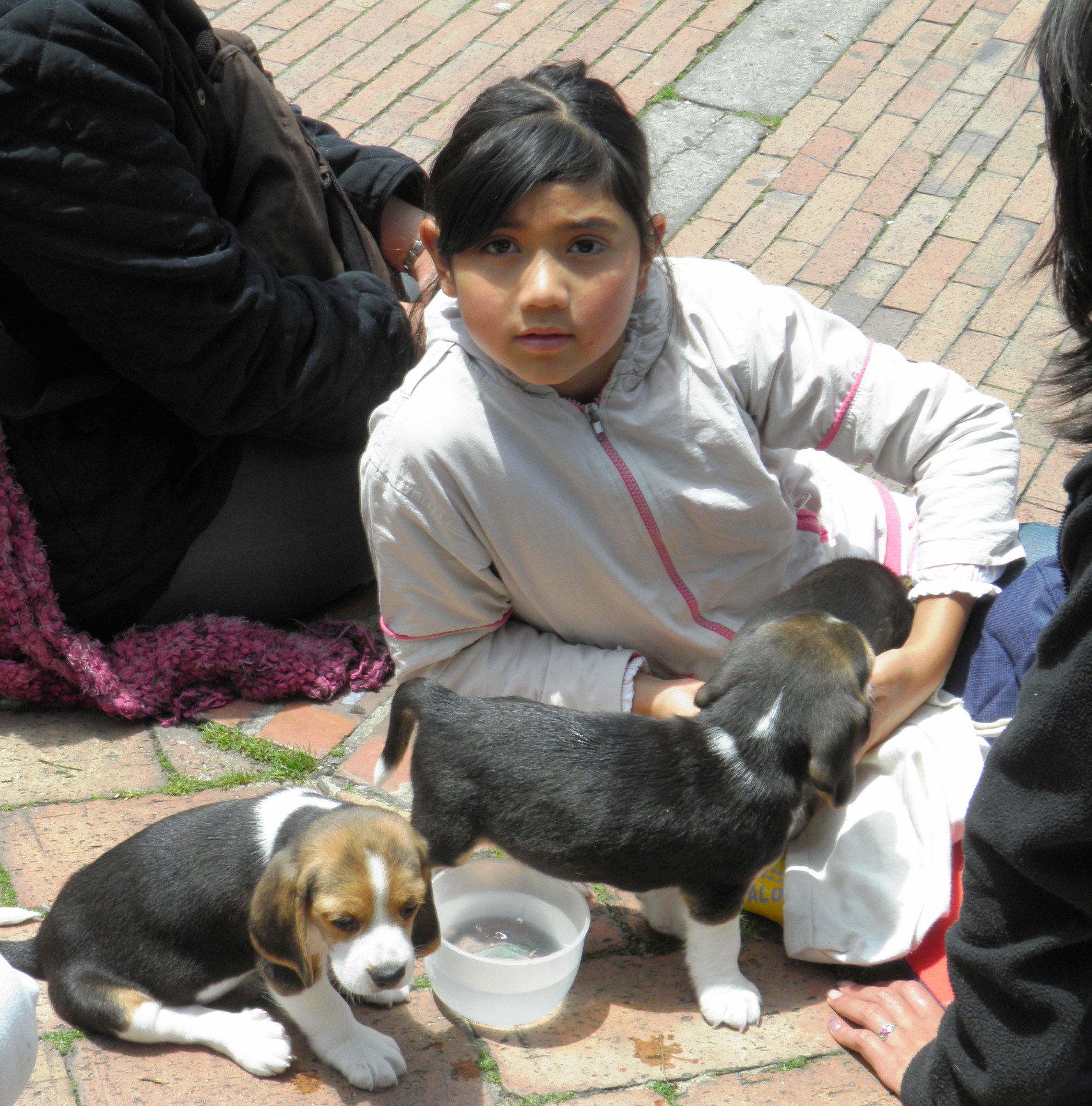
A girl offering puppies in the park (with parents, not pictured)

vintage rides in Usaquen

This guy was minding his own business – but he just looked cool (James Dean style)..


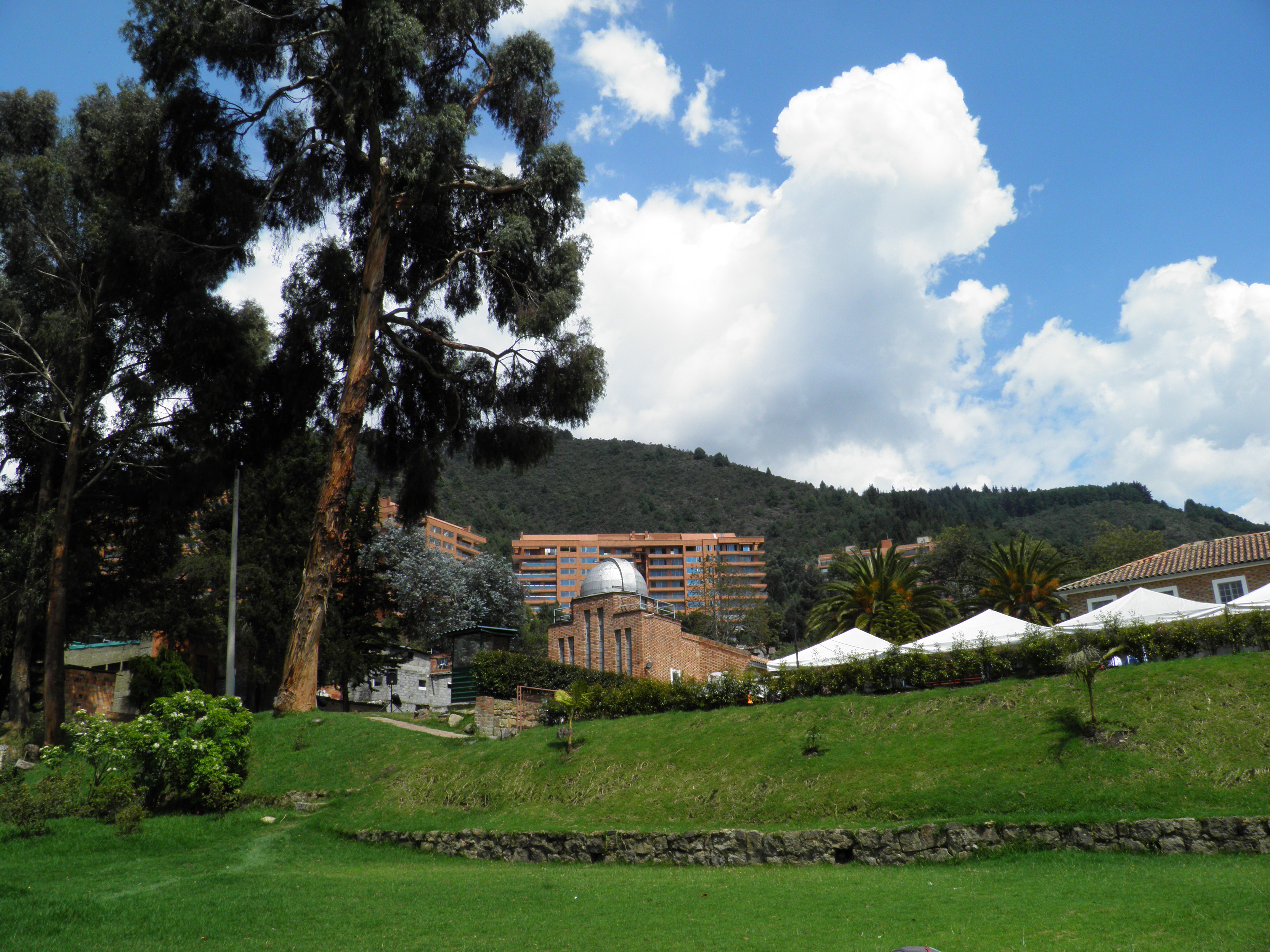
you can see the tips of the marketplace stalls (white tent tops)


Thoracic surgery and sympathectomy


Clinica Palermo,

Dr. Luis Torres, thoracic surgeon

I went back to see Dr. Luis Torres, thoracic surgeon and spent the day in the operating room with him for a couple of cases.   He is a very pleasant, and friendly surgeon that I interviewed last week.  Dr. Torres just recently returned to Bogotá after training in Rio de Janeiro for the last several years at the Universidade de Estado de Rio de Janeiro.  He completed both his general surgery residency and thoracic surgery residency in Rio after graduating from the University de la Sabana in Chia, Colombia.  (He is fluent in Spanish and Portuguese).

I spent some time out in Chia last year with the Dean of the medical school (and thoracic surgeon, Dr. Camilo Osorio).

The first case was a sympathectomy for hyperhidrosis.  I’ve written more about the surgical procedure over at Examiner.com, and I will be posting more information about the procedure – potential candidates and alternative treatments over at the sister site.


The second case was more traditional thoracic surgery – a wedge resection for lung biopsy in a patient with lung nodules.  **

In both instances, cases were reviewed prior to surgery, (films reviewed when applicable – ie. second case) and visibly posted in the operating room.  Patients were sterilely prepped, draped and positioned with surgeon present.  Anesthesia was in attendance for both procedures – and hemodynamic instability/ desaturations (if present) were rapidly attended/ addressed / corrected.

Dr. Torres utilized a dual-port technique for the sympathectomy, making 1 cm incisions, and using 5mm ports.  Each side (bilateral procedure) was treated rapidly – with the entire procedure from initial skin incision and application of final bandaids taking just 35 minutes.

Dr. Torres, performing VATS

The second case, proceeded equally smoothly, and without complications.  There was no significant bleeding, hypoxia or other problems in either case.  Surgical sterility was maintained.

** Both patients were exceedingly gracious and gave permission for me to present their cases, photographs etc.

Just as the second case ended – Dr. Ricardo Buitrago arrived – and performed a sympathectomy on one of his patients – using a single-port approach.  (I am currently working on a short YouTube film demonstrating both of these techniques.)

Do you dance (to) Reggaeton?


So – while making conversation here with new friends – music often comes up..  Ever since the Virgin Islands – I am a huge fan of reggaeton.  (There were two stations on the island – a horrible, horrible reggae and a station out of Puerto Rico..)

So every morning, I would cruise down the hill to the PR station jamming to the likes of Wisin y Yandel, Don Omar, and Daddy Yankee..


I mean – what’s not to like?

So when people would ask if I liked to dance to Reggaeton, I would shrug and say ‘sure’ and wonder why eyebrows were raised – and giggles abounded..

I mean – sure – I dance (if you can call it that) around my kitchen  listening to reggaeton, and singing (off-key) in Spanish..

Haha..  But that’s not exactly what they were referring to..

I don’t think it was lost in translation – (I am just too old for that sort of gymnastics – ‘cuz this video is actually extremely tame..)

So, to answer the original question – You can relax – this [middle-aged, klutzy] little gringa does not dance to reggaeton..

This week in Bogota


Finished a short film on robotic surgery yesterday and posted it to YouTube.

Going to the operating room this week with Dr. Torres, the nice young thoracic surgeon I spoke with last week.

Fashionistas beware!

I’ll be assisting Bogotano fashionistas this week – co-hosting a fashion party with my friend, Camila.  She is moving to Miami so she has to liquidate all the stock from her popular store on Calle 95.  It will be an afternoon of wine, cheese, fashion and fun – as she hosts a mini-fashion show for some of our friends on Saturday.

Closets by Camila is hosting a fashion event

A reggaeton group is playing down on Calle 83 this Friday – so we’ll be down there to check it out..

There’s also a big hip-hop event in Parque Simon Bolivar this weekend.  It’s the 16th year for this event – and it sounds like a lot of fun.

Still hoping to hike Monserrate but haven’t gotten around to it yet – but when I do, I’ll post some photos.

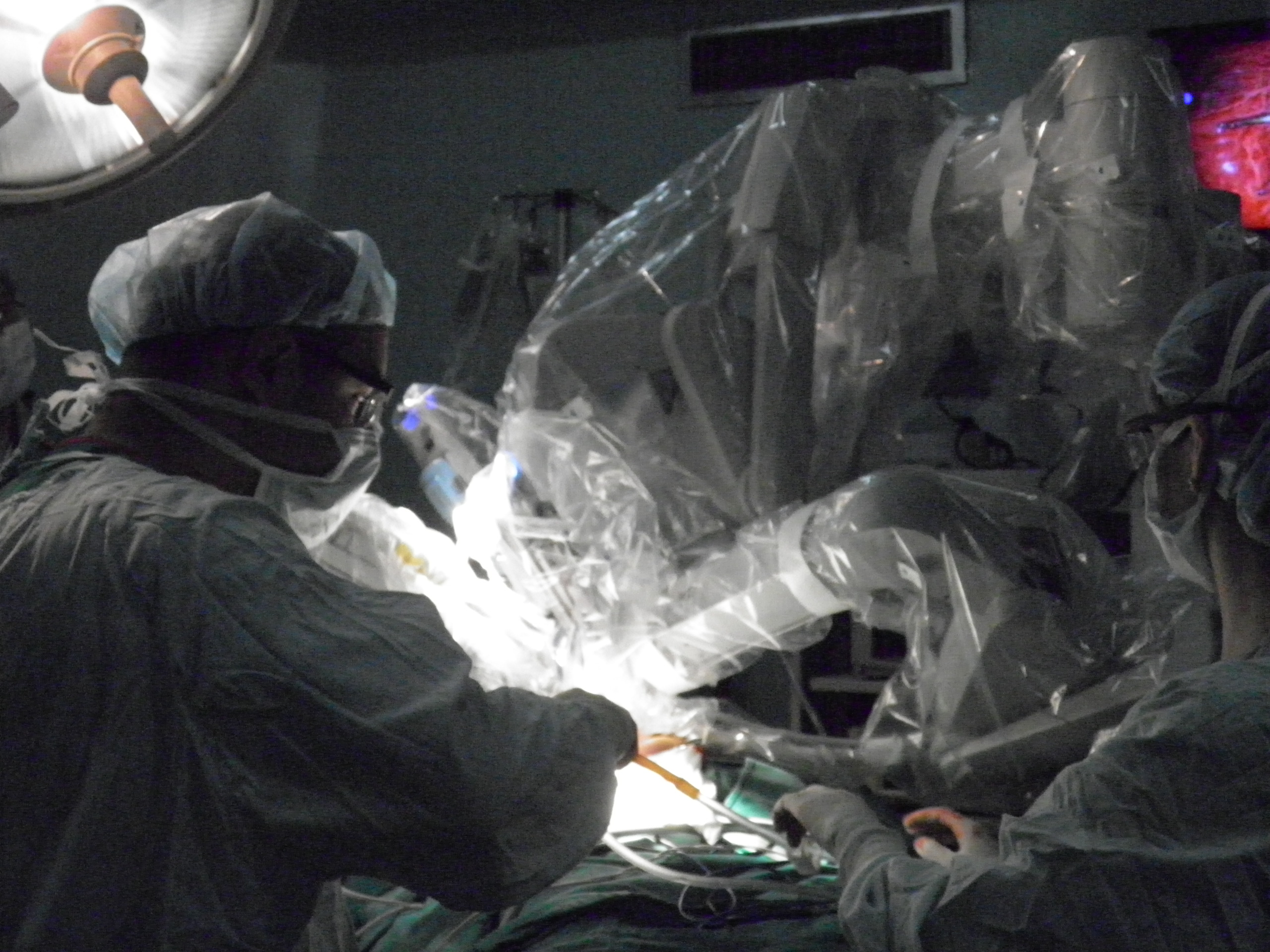
Robotic surgery at Clinica de Marly


I hope everyone is enjoying some of the changes in format – after all the wonderful experiences I had writing the Mexicali book, I thought I would start incorporating more local culture and content in the blog when I am in Bogotá.  (I have always enjoyed Bogotá – but my writing tended to be rather dry and uni-focal so from now on, I’ll try to include more local information about the city since I am in the midst of it all.)

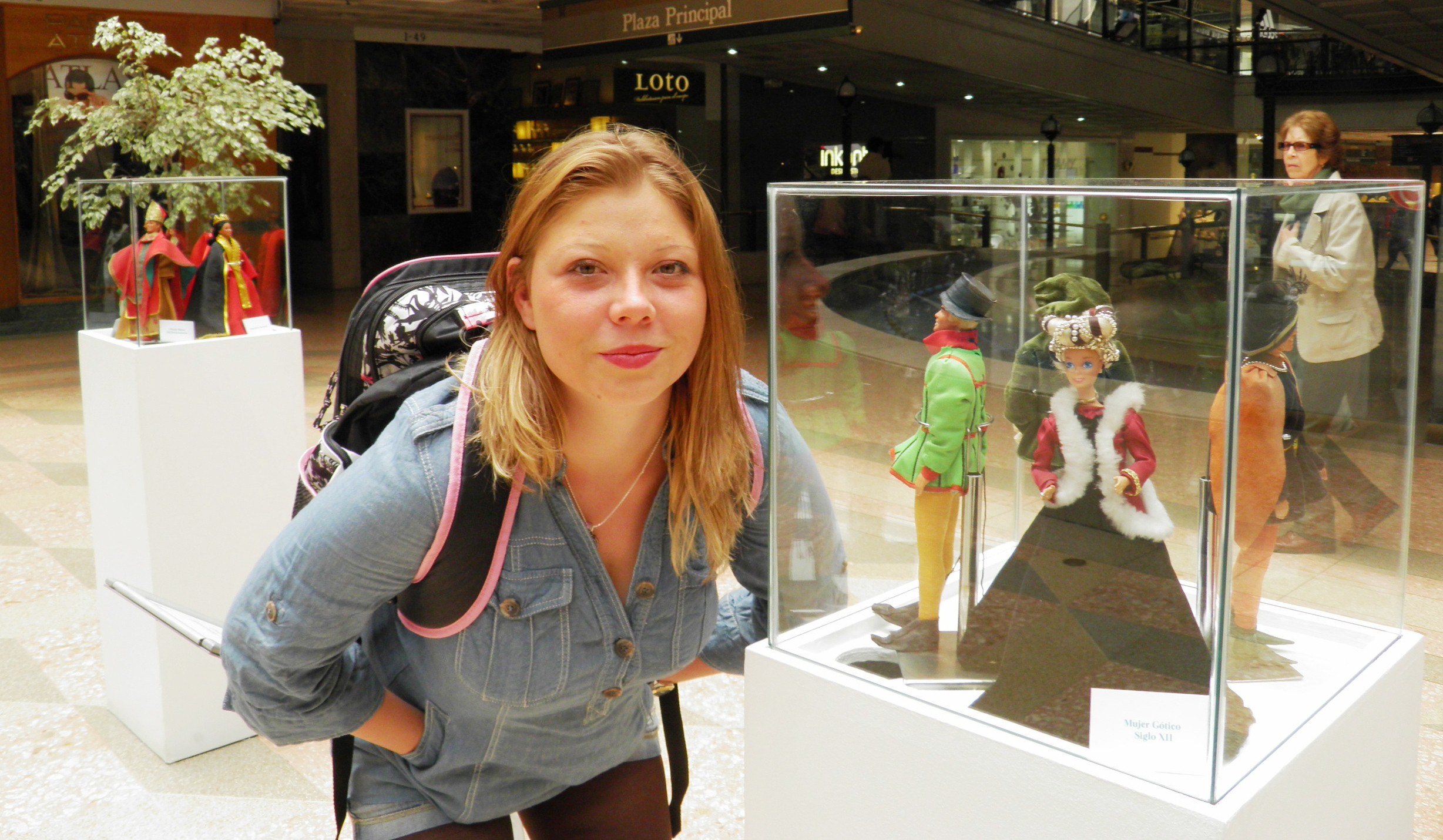
Barbie display at Andino Mall, Carrera 11 No 82-01

It doesn’t mean that I am any less interested in crucial issues in medical tourism, quality measures or surgery – I just won’t focus on these topics exclusively.

I spent yesterday over at Clinica de Marly with Dr. Ricardo Buitrago to watch one of his robotic surgery cases.  They’ve been doing robotic surgery over at Marly for several years – but Dr. Buitrago just started the first robotic program in thoracic surgery in Colombia.  (Previously the robot was used exclusively for urology and gynecology surgery).

Robotic surgery with Dr. Ricardo Buitrago

Dr. Buitrago trained with the renown robotic (thoracic) surgeon, Dr. Mark Dylewski – and has been a thoracic surgeon for over 20 years so it is always interesting to watch one of his cases – robots or no robots..

Just published a new article about robotic-assisted thoracic surgery over at the Examiner.com along with photos and a short film clip that shows the robot in action.  I am working on a longer film that provides a better look at what robotic surgery really is/ what it entails.


Talking with Dr. Jhon Jairo Berrio about vascular disease and Prostaglandin E1


XXIX Congreso Latinoamericano de cirugia vascular y angiologia

Santa Cruz de la Sierra, Bolivia

Dr. Berrio, Vascular Surgeon, Tulua, Colombia

Dr. Jhon Jairo Berrio is  the Chief of Vascular Surgery at the Clinica San Francisco, Tulua, Colombia, which is a small community outside of Cali.  He attended medical school in Colombia, completing his general surgery residency at Hospital clinics for Carlos.  He completed additional training at New York University and he completed his vascular surgery residency in Bogota at the Hospital de Kennedy  and trained under the instruction of Dr. Albert Munoz, the current president of the Association of Latin American Vascular Surgery and Angiography (ALCVA) .  He does a range of vascular procedures such as aortic aneurysm repair, fistula creation as well as endovascular surgery but his favorite procedures are limb salvage procedures such as aorto-femoral bypass, femoral-popliteal bypass and other treatments designed to prevent amputation.

He is here in Bolivia giving a presentation on the use of Prostaglandin E1 for critical ischemia / and last chance limb salvage.

Today we are talking to Dr. Berrio about the use of prostaglandin E1 (Iloprost/ iprostadil) for peripheral vascular disease (PAD).  In the past, we have used a myriad of treatments including statins, pentoxifylline, clopidogrel and even quinine for the prevention and relief of claudication symptoms.  However, all of these previous agents are designed for early PAD and are only minimally effective at treating later stages of disease.  Treatment of severe disease (rest pain or ulceration/ ischemia wounds) has been limited to stenting (angioplasty) and surgical revascularization – but this strategy often fails for patients with microvascular disease (or disease that affects vessels that can not be operated on.)

Last effort at Limb Salvage in critical ischemia

No – Prostaglandin E is not some magic ‘panacea’ for peripheral vascular disease.  There is no such thing – but it is a medication in the treatment arsenal for vascular surgeons – and it has shown some promising results particularly in treating limb-threatening ischemia.  In fact, the data goes back over 20 years – even though most people in the United States have never heard of it.  That’s because prostaglandin E1 is more commonly used for other reasons in the USA.  It is a potent vasodilator, and in the US, this medication is often used in a different (aerosolized form) for primary pulmonary hypertension.  It is also used for erectile dysfunction.  Despite a wealth of literature supporting its use for critical ischemia it is not currently marketed for such use in the United States – and thus – must be individually compounded in a hospital pharmacy for IV use.  Supplies of this medication in this form are often limited and costly.

Intravenous Prostaglandin E1

This medication offers a desparately needed strategy for patients with critical ischemia who (for multiple reasons) may not be surgical candidates for revascularization and is a last-ditch attempt to treat ‘dry’ gangrene and prevent amputation and limb loss.  Since more than 25% of all diabetes will undergo amputation due to this condition – this is a critical development that potentially affects millions of people.  (Amputations also lead to high mortality for a variety of reasons not discussed here.)

What is Prostaglandin E1?

As mentioned above, prostaglandin E1 is a potent vasodilator – meaning it opens up blood vessels by forced the vessels to dilate.  This brings much-needed blood to ischemia tissue (areas of tissue dying due to lack of blood.)

Treatment details:

A full course of treatment is 28 days.  Patients receive 60 micrograms per day by IV.

Patients must be admitted to the hospital for observation for the first intravenous administration of prostaglandin E1.  While side effects such as allergic reactions, rash or tachycardia are rare – since this medication is given as an IV infusion, doctors will want to observe you for the first few treatments. The most common side effect is IV irritation.  If this occurs the doctors will stop the infusion and dilute it further to prevent discomfort.  Once your treatment has been established, doctors may arrange for you to have either out-patient therapy at an infusion center, or home health – where a nurse comes to your house to give you the medication.

The surgeons will evaluate your legs before, during and after treatment.  If the ischemia or rest pain are not improving, or worsen during treatment – doctors may discontinue therapy.

Prostaglandin E1 therapy is compatible with other medications for PAD such as clopidogrel, aspirin, pentoxifylline and statins, so you can continue your other medications for PAD while receiving this treatment.  However, if you are taking nitrates such as nitroglycerin, (Nitro-dur, Nitropaste) or medications for pulmonary hypertension or erectile dysfunction – please tell your surgeon.

In Colombia, the average cost of the entire course of treatment (4 weeks of daily therapy) is 12 million Colombian pesos.  At today’s exchange rate – that is  a little under $ 7000.00  (seven thousand dollars, USD).

While this is a hefty price tag – it beats amputation.  In some cases, arrangements can be made with insurance companies to cover some of the costs.  (Insurance companies know that amputation-related costs are higher over the long run, since amputation often leads to a lot of other problems due to decreased mobility).

Additional Information about Dr. Berrio:

Dr. Jhon Jairo Berrio, MD

Vascular surgeon

Calle 414 – 30

Buga, Colombia

Tele: 236 9449

Email: vascular@colombia.com

Speaks fluent English, Espanol.

References/ Additional information about peripheral arterial disease (PAD) and prostaglandin e1

Pharmacotherapy for critical limb ischemia  Journal of Vascular Surgery, Volume 31, Issue 1, Supplement 1, January 2000, Pages S197-S203

de Donato G, Gussoni G, de Donato G, Andreozzi GM, Bonizzoni E, Mazzone A, Odero A, Paroni G, Setacci C, Settembrini P, Veglia F, Martini R, Setacci F, Palombo D. (2006).  The ILAILL study: iloprost as adjuvant to surgery for acute ischemia of lower limbs: a randomized, placebo-controlled, double-blind study by the italian society for vascular and endovascular surgery.  Ann Surg. 2006 Aug;244(2):185-93.  An excellent read – even for novices.

S Duthois, N Cailleux, B Benosman, H Lévesque (2003).   Tolerance of Iloprost and results of treatment of chronic severe lower limb ischaemia in diabetic patients. A retrospective study of 64 consecutive cases .  Diabetes & MetabolismVolume 29, Issue 1February 2003Pages 36-43

Katziioannou A, Dalakidis A, Katsenis K, Koutoulidis V, Mourikis D. (2012).  Intra-arterial prostaglandin e(1) infusion in patients with rest pain: short-term results.  Scientific World Journal. 2012;2012:803678. Epub 2012 Mar 12.e Note extremely small study size (ten patients).

Strecker EP, Ostheim-Dzerowycz W, Boos IB. (1998).  Intraarterial infusion therapy via a subcutaneous port for limb-threatening ischemia: a pilot study.  Cardiovasc Intervent Radiol. 1998 Mar-Apr;21(2):109-15.

Ruffolo AJ, Romano M, Ciapponi A. (2010).  Prostanoids for critical limb ischaemia.  Cochrane Database Syst Rev. 2010 Jan 20;(1):CD006544.
Volteas N, Leon M, Labropoulos N, Christopoulos D, Boxer D, Nicolaides A. (1993).  The effect of iloprost in patients with rest pain.  Eur J Vasc Surg. 1993 Nov;7(6):654-8.
Bogota revisited


Finishing my first week in the doctoral nursing program before heading back to Bogotá in mid-September.  (I’ll be keeping in touch with my professors via Skype, Scopia and a variety of on-line media.)

I am exciting to be coming back to a city that I have come to know and love!  In fact, my only regret is that I didn’t devote enough pages of the book to the city itself.  At the time, I rationalized that people who were interested in the city would be able to find plenty of information in the existing travel guides (and I am not a traditional travel writer) – so I devoted myself wholeheartedly to medical tourism, hospitals and surgery.  But as time has passed – I regret not sharing the city more with readers, since after living there for almost six months (and traveling all over the city daily), I certainly became intimately familiar with much of it.

So, readers will be happy to hear that I haven’t made that mistake with my latest book on Mexicali, MX – but I am just happy to be going back to Bogotá, a city that truly has captured my heart..

It’s insidious, you know.  The things that I initially didn’t like (like the ‘eternal autumn’ weather) become some of the very things that make me enjoy the city so much.   Bogotá is a city that has to be ‘known’ to really be appreciated.  If you don’t scratch beneath the surface of this vibrant, amazing place, then you really won’t see (and love) the city.

For example; that cool, mild weather, that had me groaning the first few weeks also made it possible for me to spend much of my time outdoors – exploring the city, walking miles everyday.  Spend a week sweltering in Cartagena (or Mexicali, in August, for that matter) and you will see what I mean.

The food that seemed plain and unspiced at first, became something to savor.  All of the exotic and tangy fruits, and ‘real’ food taste – unmasked by heavy additives let me appreciate how wholesome and unaltered it really was.  It made me appreciate the subtlety and complexities of the meals I was enjoying.  (If you drown everything in ketchup or hot sauce – what are you really tasting?)

So, in just a few weeks – I will be back in this wonderful, charming, whirlwind place that has claimed a little corner of my heart.

Neurosurgery at Santa Fe de Bogota


Dr. Fernando Hakim Daccach (left), neurosurgery – Santa Fe de Bogota

As you can imagine, millions of pairs of eyes are turned towards Santa Fe de Bogota – and the department of Neurosurgery after the mayor of Bogotá, Gustavo Petro was admitted with a subdural hematoma, and subsequently underwent surgery.

Many people don’t know that Bogotá is actually the home to modern neurosurgery.  Dr. Salomon Hakim, one of the founders of modern neurosurgery and inventor of the Hakim shunt for hydrocephalus called Bogota home.  (Sadly, he died just last year.)

But neurosurgery in Colombia doesn’t begin or end with Dr. Salomon Hakim.  With five neurosurgery residency programs and over 150 practicing neurosurgeons in Bogotá – new innovations and treatments are being developed here everyday.

Many of these fine surgeons practice at Fundacion Santa Fe de Bogota such as Dr. Aristizabal – Chief of the Neurosurgery residency program, or Dr. Carlos Cure, Dr. Enrique Jimenez and Dr. Fernando Hakim .

Others such as Dr. Pedro Penagos or Dr. Juan Fernando Ramon are scattered throughout the city – treating brain cancers at the National Cancer Institute, or caring for the families of policemen at the Hospital de la Policia – and innovating in the field of neuronavigation.

While my heart goes out to the Mayor of Bogotá, and his family – hopefully the international media stories on his health will give some well-deserved attention to these fine (and humble) neurosurgeons.


References and additional information: Updated 17 June 2012

Gustavo Petro webpage

According to their website, they anticipate the mayor will be discharged home soon (in a statement dated today, June 17th.)  We are glad to hear he is making such a speedy recovery.


US – Colombia Free Trade Agreement to be implemented in May


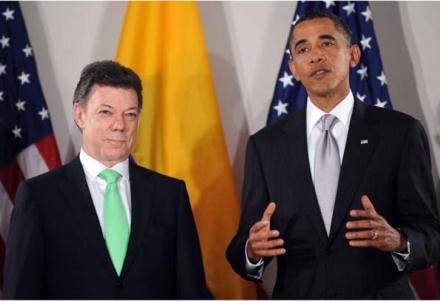
President Santos and President Obama at the Summit of the Americas

Despite a rocky start at the Summit of the Americas for President Obama (and talk of a widespread boycott of the Summit next year by a dozen countries), it looks like the deal brokered between Obama and Santos for a free trade agreement between Colombia and the United States will be implemented early.  The agreement which was first signed in October of 2011 will begin in May.

This agreement will reduce the tarifs on 80% of all imported Colombian goods.   (No, not cocaine – despite talks of legalization in multiple latin american countries.)  These goods include the huge floral industry (if you’ve bought flowers recently – they were probably from Colombia), along with other notable exports such as fruits (bananas, tropical fruits), gems (Colombia is home to the world’s largest supply of emeralds, ladies..), their famously rich coffee, fossil fuels and other minerals.

In return the US will be exporting such goods as wheat, sorgham and other agricultural products in additional to more specialized items such as aviation parts.

Now if only they would make a special ‘fast pass’ lane in Customs for medical travellers returning to the USA as part of similar trade efforts.

Dr. Giovanni Castano, opthalmologist


Another story on the tireless efforts and surgical excellence of Bogotá surgeons – this time, Dr.  Giovanni Castano, an opthalmologist.  While I have never had the opportunity to interview Dr. Castano personally, I am not surprised that he donates his time and services to patients in remote parts of Colombia.

This tireless dedication to service is an integral part of Colombian medicine and Colombian surgeons themselves.  As part of their health care training, Colombian doctors and nurses spend anywhere from several months to a year in rural parts of Colombia as part of a government service program.  This serves as a foundation for a lifetime of service for many of these individuals and is a hallmark of the care I witnessed and received during my time in Bogotá.

Looks like they forgot something.


Dr. Diego Pineros, cardiac surgeon

Nice article in the Los Angeles Times about the strong work Bogotá physicians do in bringing care to the more remote areas of Colombia.  Too bad they forgot to mention the efforts of Dr. Diego Pineros – one of the cardiac surgeons at the Clinica San Rafael Institute of Cardiology and Cardiac Surgery.  We interviewed him last year about his humanitarian efforts.

(If you remember – the kind-hearted, and gracious surgeon shrugged off any accolades during our interview – and said he and his team travel to these remote areas to prevent further hardships for his patients.)  He also shrugged off any concerns for his own welfare despite the fact that some of these areas are close to / are located in areas with a heavy FARC presence.

So even if the Los Angeles Times doesn’t congratulate Dr. Pineros and his team for all their amazing work – we here at Bogota Surgery haven’t forgotten..

Dr. Diego Pineros (second from left) and his surgical residents at Clinica San Rafael in Bogotá

Looks like Panama may bite off more than they can chew..


In a recently published story, the government of Panama is now offering medical  insurance for all tourists to Panama for free.  This insurance is not  ‘Complication Insurance’ which is offered by private surgeons in Colombia and other countries for patients traveling specifically for medical tourism.  Complication insurance covers all possible medical complications resulting from medical procedures at the designated clinic or destination..

No – Panama is taking the European and socialized medicine approach and is offering general medical coverage for ALL short-term travelers to Panama.  (The long-term exclusion is a wise move given the numbers of Americans and other overseas residents who make Panama their retirement home.)  This insurance resembles typical travel policies in that it covers injuries, accidents and other medical situations that may occur while on vacation..  I just hope the Panamanian government hasn’t underestimated its tourists and their injury/ illness potential.

Now readers – don’t get any wild ideas.. This is not the time to stress that ‘trick knee’ while hiking to visit the Naso-Teribes..

Meanwhile, Costa Rica is making a pitch for more corporate clients such as Pepsi-Cola.  These multi-national corporations can potentially bring hundreds of millions of healthcare dollars by diverting their employees to medical tourism destination such as Costa Rica.  (Like Colombia – Costa Rica is an ideal destination for North Americans due to proximity, quality and diversity of services available.)

Now available in the Kindle Lending Library!


Now you can read Bogotá! for free in the Kindle lending library..  (I hope this inspires some generosity among critics for impoverished medical writers – leave some positive feedback about the book!!)


The future of medical tourism: the glass ceiling


The International Medical Travel Journal has a new article that questions the notions that ‘the sky is the limit’ in the medical tourism industry.  This article discusses the belief that many investors have that as long as there is a new shiny facility, medical tourists will flock..  In reality, the market for medical tourism is fairly narrow, particularly for American medical tourists – who are the ones most likely to open their wallets and pay cold hard cash for surgical procedures overseas.  (That’s because medical care in many other countries is less expensive for residents – so why travel and pay cash for something you can get at home for relatively little expense (even if it requires waiting.) Many of these Americans are uncomfortable or unwilling to travel to more exotic locations – as Dubai has found out first hand.

Of course, plastic surgery and other elective procedures are a little different.)  But most Europeans, Canadians etc.  aren’t going to have to fork over 100,000 for heart surgery (or be uninsured) so the pool is limited.

The other class of medical tourist – the wealthy residents of countries that may not have elite services is also a mixed bag,  Many of these patients are going to elect to go to ‘big name’ American facilities despite the cost – for a specific level of care.  They may seek out specialized procedures that are unavailable or even illegal in their home countries – but that market is smaller than most of us realize.

It’s a good article that brings a dose of reality to the concept of medical tourism as a ‘cash cow’ route to easy and limitless cash.  Medical tourism is not for everyone, as investors are finding out.

HIPEC: the latest research results


If you remember, previous New York Times articles questioned the efficacy of hyperthermic chemotherapy given during cytoreductive surgery.  We promised to investigate, and return with more results to this question.

Recently several articles have been published on the topic, including this one – in the journal of Clinical Oncology.  This narrative by Maurie Markman talks about the quick dismissal of HIPEC by many oncologists, particularly for larger tumors – and he questions the wisdom of this approach in light of recent research results.

In fact, several large new American studies – including one at Case Western are examining the use of HIPEC, particularly in gynecological cancers like ovarian and uterine cancers which carry a dismal prognosis.

American Hospitals are finally jumping on the HIPEC bandwagon…

Detroit hospital offering HIPEC

Atlanta docs, robots and HIPEC

This last link isn’t really news – it’s a press release, but since it’s on a surgical oncologist (Dr. Wilbur Bowne) who was an early American adopter of HIPEC, I thought readers might be interested.

Previous Bogota Surgery posts on HIPEC

HIPEC: The basics

Bogota Surgeons stay ahead of the curve

The Future is Now: HIPEC

Looks like it’s about time to check in with our favorite surgical oncologist, and HIPEC expert, Dr. Fernando Arias..

Check back soon for more..

Colombian life: an outsider looking in..


There’s a great blog here on WordPress that I wanted to recommend to anyone interested in Bogota – and all things Colombian.  The blog is called The Wanderlust Chronicles and it follows the life, and adventures of Kate – a young teacher / translator (who reminds me a bit of myself).  I do have to say – that as I ‘cruised’ around the site, reading her posts – tears almost came to my eyes, and I became wistful for all the things I loved and enjoyed about my time in Colombia.

For everyone else –

It’s a great reference for all of you who want a bit of a different vantage point (nonmedical) on the beauty of Colombia and Colombian culture.  I hope you enjoy!

Medical Tourism Forecast for 2012


Where is Medical Tourism & Travel headed for 2012?   Predictions vary according to sources, but all sources expect the medical travel phenomenon to continue, unabated.

Maria Lenhart at the Medical Travel Report (a private travel company blog) estimates 35% growth over the next year, based on Deloitte statistics.

Where are they going?  According to Depak Datta of the Medical Tourism Corporation – for the most part, people are staying fairly close to home..  Meaning that people from the United States and Canada favor locations in the Western Hemisphere over Thailand, India and other destinations popular with Europeans, Africans and Asians..

Domestic medical tourism remains a popular option with American corporations who are sending their employees to large, well-known facilities within the United States.

In fact, large American healthcare institutions often have the most to gain from medical tourism via international affiliations with institutions in South America, India,  and Asia.  John Hopkins, Cleveland Clinic, Duke, Harvard and several other well-known top-tier American medical giants have branding agreements and other lesser affiliations with hospitals and clinics across the globe.

In the midst of this growth, concerns over patient safety and quality of care should remain at the forefront (in all facilities – domestic and international.) But until more potential customers demand (or even display any interest) in quality, and safety issues – the industry is not going to go out of its way to provide this information.

Colombian government steps up..


In a surprising but admirable move, the Colombian government has announced that it will pay for the removal of PIP implants.    As we discussed at our sister site, Cartagena Surgery, recent disclosures that the French company knew their breast implants were defective as far back as 2005 has sent shock waves of outrage through the medical community.  Further disclosures that the implants contained substandard construction grade materials (not medical grade) and fuel additives which contributed to the exceedingly high rupture rate (7% versus an average rate of 1% for all other implants) has important health implications for women world-wide.

In the wake of this scandal, hundreds of thousands of women across the globe, particularly women in Latin America where the implants were heavily marketed, have been panicking and storming physicians’ offices for answers.

(In a related post at our sister site – we reassured readers who received implants in 2011 by some if the surgeons profiled here..

With the French government advising over 30,000 french recipients of these implants to have them removed promptly, this goodwill gesture by the Colombian government should go far to reassure and calm Colombian women.

Update: 14 Jan 2012

Medpage Today just published a nice comprehensive article on the Poly-Implant Prostheses (PIP) implant controversy.  It’s a good story for people playing catch up on this story – and wondering if they may be affected by this news.

2011 in review: State of the Blog


Thank you to everyone for making Bogotá Surgery.org a phenomenal success!  Surprisingly – this annual report shows a few less views than our own counters – but we are thrilled all the same..  Here’s hoping for more and greater successes in 2012!

Here’s an excerpt:

The concert hall at the Syndey Opera House holds 2,700 people. This blog was viewed about 9,700 times in 2011. If it were a concert at Sydney Opera House, it would take about 4 sold-out performances for that many people to see it.

Click here to see the complete report.

French Implants recalled


Hundreds of thousands of french made breast implants have been recalled – sending women all over the globe into a panic.  These implants which are no longer in use in France, have been linked to an increased rate of rupture, and possible increased incidence of cancer.

But good news for readers – as you may recall from my interviews with several of the surgeons (as written in the book) – none of the surgeons I interviewed used french implants.  The majority used FDA approved implants (only one brand currently FDA approved.)  Several others use german made implants*.. But this is an example of the details I’ve ferreted out for my readers..

* Brand information and other details are available in the book, “Bogota: a hidden gem guide to surgical tourism.”

More stories about fake docs including this one about a phony performing liposuction while smoking a cigar on AWAKE patients..

This guy was actually a doctor, but that didn’t stop ten of his patients from dying after bariatric procedures..