Las buenas y las malas: Or how Clinica Reina Sofia tried to kill my dad


Long time readers know that I have spent the last 13 years of my life evaluating, writing about and promoting medical care in Colombia. In addition to this blog, I have written multiple papers. presentations and books about my experiences and direct observations of care in the various facilities in Bogota, Colombia. The majority of experiences have been excellent.

I have been bringing clients here several years, including my own mother – who had a life-saving TAVR for critical aortic stenosis in 2019 at Fundacion Cardioinfantil. If she hadn’t had that procedure then, she would be most assuredly dead now. Instead, she is a vibrant 84 (almost 85) year old female who continues to run several miles every day, participate in a multitude of exercises (aerobics, zumba, dance etc.) and sports (pickleball, running group). 

Of course, when you are taking about something as vast and varied as health care, it’s never going to to be 100% all of the time, for every condition at every clinic, office or hospital. As part of the process of writing a book about healthcare and surgery in Bogota, I have spent literally thousands of hours in hospitals and hundreds of hours in the operating rooms around the city. I have interviewed hundreds of doctors and staff members. Some of these experiences have been so-so, some have been below average, and a very few have been bad.. Our recent experience at Reina Sofia on Calle 127 falls into the incredibly bad category. It was so bad and potentially life-threatening that it almost sounds like farce. Until it’s your dad. And the nurses that are ignoring the patient are ignoring your dad as he experiences crushing chest pain.. The clueless ER doctor is just irritated by your very existence because she wants to get back to chatting on What’s App – and continues to talk down to you. (I am fluent in medical spanish – and cardiology/ cardiothoracic surgery) and that seemed to anger her.)

When the nurse performing your dad’s EKG gets angry when your bradycardic, pale and dizzy dad doesn’t get his shirt back on fast enough so that he can dump you back in the waiting room and he can go on his break. Then when the cardiac enzymes are positive, they move you to the observation area and never check on him again. I had to check his chest pain/ vital signs/ everything while we wait, futilely for someone to help us. 

Nevermind oxygen saturations in the mid 80’s.. Seems like the plot of a bad 1980’s movie – as you realize that they are ignoring you, because you are a crappy old gringo, and that they would rather and leave….

Until you have to call a friend to help you leave the hospital so you take your family member to another hospital because the staff keeps ignoring you – and telling you “wait ten more minutes” hour after hour.. Until the so-called specialist rattles off a prepared speech, and doesn’t seem to listen when you dad explains that he still has chest pain (after receiving only tylenol in the ER). It was a devastating experience – and a terrible learning experience.

I freely admit it was my mistake. I initially wanted to go directly to Clinica Shaio when my mom called me – but after thinking about the distance – I made the (wrong) clinical decision that if my father’s clinical status looked poor – that I shouldn’t risk the trip – and should take him to the closest well regarded facility. Clinica Reina Sofia is just minutes from my house, and my dad looked eminently bad. So much so that I rode in the backseat of the car with him in case he needed CPR on the way.

Photo by Pixabay on Pexels.com

But I trusted that ER staff would know how to manage a common and basic emergency condition like this. After all – it’s part of basic life support classes – you know, the classes that lifeguards and babysitters take. That assumption almost cost my dad his life. It’s particularly hard for me because I have been to Reina Sofia before (in the operating rooms, etc.) and the care was pretty good – good enough that I took my dad there in the middle of the night. Maybe they (Reina Sofia) do know how to treat this very common emergency condition.Maybe they know that time is the essence.Most likely they do.Which means that they just don’t care.Because they certainly didn’t care about my dad.They just wanted him to sit down and shut up.

As I write this, I am waiting for the cardiologist to tell me about my dad’s cardiac catheterization – here at Clinica Shaio, where the care has been wonderful and immediate! 

Patient satisfaction scores vs. clinical outcomes: The Yelp! approach to surgery


Patient satisfaction and clinical outcomes

Like Kevin MD says, “Patient satisfaction can kill“.  I’ve now seen several dramatic examples of this up close and personal.  For readers who feel like they are in the dark – there is a new ‘trend’ in healthcare, which financially rewards hospitals and physicians based on patient satisfaction scores..  Politicos, lobbyists and professional “patient advocates” have heralded this approach as the second coming.  A lot of these advocates try to lump patient satisfaction in with patient autonomy and patient rights.

Patient satisfaction is not the same as patient rights.

But it isn’t the same – and it’s stupid to pretend it is.  People have the right to determine if they want treatment X or not.  But giving people a “line-item veto” power on associated activities is a lazy clinician’s practice and recipe for disaster. (Not only that – it victimizes the very population we are trying to protect.  Anyone who is a parent understands this concept, but any degree of ‘paternalism’ in medicine is now viewed in a very negative light).

Instead of a new enlightened period of patient empowerment, informed consent and respect for patient rights, we have lazy attitudes (clinicians) and temper tantrums (patients) driving our clinical practices.  Doctors would rather ‘give in’ on critically important items than spend time to repeatedly try to explain key concepts of care to increasingly demanding ‘consumers’.  Overburdened staff are happy to go along with anything that decreases a workload which has tripled with recent changes in documentation.

It’s been a clinical nightmare and an  unprecedented fiasco in patient mismanagement which has lead to a dramatic rise in medical complications, length of stay and patient suffering.  I know, from first-hand observation and it’s been difficult to watch.  Even worse, it’s like a runaway train.  No one seems willing to reach for the brakes as it careens out of control and off the cliff.   It doesn’t seem to matter that there is ample evidence that this practice actually harms patients – the idea remains popular with payors, public relations departments and patients alike.

I work in cardiothoracic surgery so I guess I’ve been sheltered from this mentality.  It took a while for this concept to trickle down from the more ‘concerge-friendly’ specialities which have a high rate of elective procedures.  (No one really has elective cardiac surgery – when we used the term, we mean it’s not an active emergency).    I was first confronted with this concept when I started writing about plastic surgery.  People sent me numerous emails to complain about some of my reviews.  They didn’t care if conditions were sanitary or even safe.  Poorly staffed facilities, office-based surgeries with improper anesthesia, or a high rate of infections and post-operative complications didn’t concern them.   “Doctors” with falsified credentials didn’t daunt their enthusiasm.  The people writing to me only cared about two things; the doctor’s “bedside manner” and the price.  (Price was an important factor because we were often talking about procedures not usually covered by health insurance).

What is more important: a great surgeon or a great-looking one?

What is more important: a great surgeon or a great-looking one?  Patient satisfaction scores are often based on relatively superficial factors such as attractiveness, charisma or even whether the hospital has catered meals or hardwood floors..

I thought it was disturbing at the time, but I chalked it up to a lack of knowledge on the part of the “consumers”.  They just assume that these problems won’t happen to them.  Complications happen to other people.

Consumer or patient?

But it is this concept as consumers versus patients that is so very damaging.  It’s okay to use Yelp! to choose a restaurant, to google a hair dresser or  use tripadvisor for a hotel.  It’s even okay to use Angie’s List to find someone to trim your hedges and mow the lawn.  That’s because in the worst case scenario  – consumers have an unpleasant experience – the wait staff is slow, the haircut is ackward, or the hotel is noisy.  Maybe the gardener is late or leaves cut grass all over the sidewalk.  But no one gets hurt, and certainly no one dies.. Not from a bad haircut..

This is a photograph from a famous trainwreck in my home town in Virginia in 1903.  Somehow, it seemed appropriate for today's discussion.

This is a photograph from a famous trainwreck in my home town in Virginia in 1903. Somehow, it seemed appropriate for today’s discussion.

The problem with the consumer concept is the idea that “the customer is always right” or that the customer always knows best.   This means that customers are not only choosing their doctors based on this type of superficial data but also dictating the care.

  This is where it gets dangerous.

Aortic Valve Replacement

Aortic Valve Replacement – photo by K. Eckland, 2012

In cardiac surgery, we’ve long had a saying, “Cardiac surgery is not a democracy.”  This means that the surgeon has the last word, and is the highest authority when it comes to the care of cardiac patients.  The surgeon’s wishes trump mine, the anesthesiologists, the nurses, and even the patients and the patients’ family.  That’s because most cardiac surgeons have decades of medical and surgical training in addition to their individual years of clinical practice.  Surgeons and their support staff (like myself) are expected to use evidence-based practice.  This means we prescribe, and perform treatments based on years of research, and based on published guidelines.  These guidelines and protocols are then personalized or altered to suit each patient’s individual needs.  (Needs, not wants).

One of the biggest examples of this principle is:  Ambulation after surgery

Nobody wants to get out of bed and walk after heart surgery.  We’d all love to nap all day, get limitless pain medication and wake up six weeks later, rested and restored to health.  But reality doesn’t work that way.  Patients who get up and move, and do so in the early periods after surgery – do dramatically better than patients that don’t.  They have less complications, and they actually feel better  than patients who are allowed to take a more leisurely approach to cardiac rehabilitation.  Even a day makes a difference so this is where most surgeons draw rank.  Walking is not an “optional” part of post-surgical care.

In the ten years that I have been working in cardiac surgery, in massive academic facilities, average size hospitals and even small community programs – the guiding principle has been up and out of bed – and most programs do this at a fairly rapid pace.  For uncomplicated patients (no major immediate surgical problems, or advanced heart failure), the gold standard is out of bed to the chair on the evening of surgery (for patients who return from the operating room by mid-afternoon) or by 6 am the next morning (patients that arrive later, or who take longer to awaken from anesthesia).   These patients then take their first walk on post-operative day one to the nursing station and back, (usually around 50 to 200 feet) before lunchtime as a prerequisite for being transferred out of the intensive care unit to the step-down unit that afternoon.    For these patients, walking is not up for discussion.  It is the clinical expectation and part of the ‘package’ that goes with the operation.  Patients walk.  Period.

The majority of these patients will be discharged home on post-operative day 4.  Some will go home on post-operative day 3.  Not only that – but they will feel relatively good and will be clinically/ physically and psychologically* ready to go home by that time.

*Families are another story – the stress and anxiety of heart surgery is often worse for loved ones than for the patient and often does not clinically correlate with the patient’s actual physical condition.

Clinical Scenario of patient care driven by patient satisfaction scores$$$

In comparison, at a private, up-scale facility where I recently visited, the desire to please and get good Yelp! scores trumps the principles of patient care.  To start with, all patients automatically receive heavy doses of narcotics immediately after extubation via pca (patient controlled analgesia).  In theory, the pca allows patients to receive medication without lengthy delays to control pain to a ‘reasonable’ level.  (It is not reasonable to expect to be pain-free after major surgery.)

Patient satisfaction promise #1: You will be pain-free after surgery

But this hospital promises pain-free and they do their darndest to deliver.  Patients get on average 6 to 8 milligrams of dilaudid (hydromorphone) every hour after surgery by pushing their pca.  (If you think, “hey, after sawing my chest apart – that sounds like a great idea” then you are at risk for what happens next..

Nurses at this facility love this policy because it means they don’t have to attend to the patient as often and can catch up on computer documentation, facebook or whatever since the patient will be medicating himself into a semi-comatose state over the next few hours.  Semi-comatose is not an exaggeration.

Neurologically, some of these patients will develop delirium and vivid hallucinations.  Others will become agitated and combative.   Others will simply become confused and sleepy.

Since narcotics cause respiratory depression, sometimes these patients become hypoxic after using the pca heavily despite the supposed safeguards (lockouts are usually set ridiculously high – and despite policies against it – visitors, family and staff will push the pca button, even when the patient isn’t asking for medication).    Sometimes, patients end up on bipap or even re-intubated.  More often, they are just asleep – which as I said, suits the staff fine because it’s a lot less work for them.

But for the patient, it’s lost time – and puts them at risk for even more complications.  These people should be getting up to the chair, or walking for the first time.  Walking promotes respiratory expansion, prevents blood pooling (in extremities) and helps restore gastric function.

Instead, they are sleeping.  They should be performing pulmonary toileting to clear out all the secretions that built up during their lengthy surgery and reduce the risk of a post-operative pneumonia.  Instead, their lungs are building up more secretions.

Soon, the patient will want some water, after the intense mouth drying effects of the ventilator and breathing tube.  But the powerful narcotics have completely shut down bowel function.  No bowel sounds, no activity.  Water means nausea and vomiting, and more medications.  In many patients, this can cause an ileus, which adds several more unpleasant days (with a nasogastric tube) to their hospital stay.  For a fraction of these patients – they may need an emergent operation for a bowel obstruction as fecal material forms into hard, unpassable blockages in the GI tract.  Either way, the gross overuse of narcotics in these patients negatively impacts two of the most basic principles of post-cardiac surgery rehabilitation: ambulation and pulmonary toileting, and leads to increased risks of major/ unnecessary complications.

Patients need pain control after surgery – without adequate pain control patients can’t do all the activities they need to as part of their rehabilitation.  Untreated pain can in itself lead to complications.  But this bazooka approach to pain management is inappropriate for the vast majority of patients – especially the narcotic-naive or frail elderly (that make up a large percentage of cardiac patients).

Chasing patient satisfaction scores and profits in American healthcare

Chasing patient satisfaction scores and profits in American healthcare

The bottom line for CEOs and Administrators – I’m not sure if fulfilling the promise of pain-free cardiac surgery results in increased patient satisfaction scores on post-hospital surveys.  Do patients who spent the first two days after their surgery in a narcotic haze but then spent four or five extra days in the hospital due to preventable complications rate the service as well as patients undergoing surgery in a traditional program (who go home on day #4)?  And even if it does result in high satisfaction scores, (like it apparently did at this facility) – Is it ethical or moral to sacrifice the patient’s actual health and well-being for a couple of gold stars on post-discharge questionnaires.

But this is just the first part of the sequelae created by hospital administrators in their intense desire to chase profits, business and customers.  (This facility has created a niche market for itself by promoting these customer satisfaction practices that appeal to people that would otherwise seek care at the internationally known large academic facilities in the nearby area).  We will talk about some of the other pitfalls of programs  and practices devoted to chasing patient satisfaction scores, instead of patient care.

Take home message:

The real kicker:  multiple studies like this one by Aiken et al., demonstrate that the best way to increase patient satisfaction is to give good care, as defined by our more traditional measures (good outcomes). Hospitals that were well organized, with high levels of nurse staffing, (low levels of burnout) and good work environments.  Patients are happier, safer and have less complications when the nurse: patient ratios are appropriate for the level of care**.   It was never really about the ‘perks’ but it’s easier / cheaper for administrators to add enhanced cable television and pay-per-view movies to patient rooms than to actually give a darn..

$$$ – At the facility that was dominated by concerns related to patient satisfaction scores (ie. Press Ganey scores), that had such a high rate of complications (and a higher than average mortality)?? All those doctors have excellent, yes, excellent Press Ganey scores.. because apparently giving unlimited narcotics makes up for unnecessary (and life-threatening) complications. [and because, as demonstrated by several of the references below, Press Ganey scores are far from a reliable indicator of care.

**CEOs take note: I said nurses, not “nursing staff”.  Contrary to popular belief, 2 or 3 nursing aids, patient care techs or other ‘ancillary’ staff does NOT equal one well-trained registered nurse.  While these ancillary positions are important for providing basic care like hygeine (bathing and toileting, repositioning) and recording vital signs, they can not substitute for a nursing assessment and physical examination.

That being said – if hospitals increased (doubled or tripled) the number of occupational and physical therapists on staff – patient length of stay, level of debility and hospital complications related to disability and immobility (pneumonias, deep vein thrombosis/ pulmonary embolism, falls, fractures and failure to thrive) would dramatically decrease.

Resources/ References and Additional Reading

The Eckland Effect – this isn’t the first time we touched on this discussion, though previous posts have been focused more on international medical tourism, rather than American hospitals.

Kevin MD blog – I don’t always agree with him, but it’s an excellent blog on American medicine from a physician’s perspective.  If you read only one article from this post, read the article cited above.

Why rating your doctor is bad for your health.  Forbes article, 2013.

Rice, 2015.  Bioethicists say patient-satisfaction surveys could lead to bad medicine. Modern Healthcare, June 4th, 2015.

Dr. Delucia & Dr. Sullivan (2012). “Seven things you may not know about Press Ganey statistics“. Emergency Physicians Monthly.  The pitfalls of Press Ganey.

Robbins, Alexandra (2015).  The problem with satisfied patients.  Atlantic Monthly, April 2015.  An excellent read.  Best quote of the article, “Patients can be very satisfied and dead in an hour.”  Authors noted that the most satisfied patients were most likely to die.

Aiken LH1, Sermeus W, Van den Heede K, Sloane DM, Busse R, McKee M, Bruyneel L, Rafferty AM, Griffiths P, Moreno-Casbas MT, Tishelman C, Scott A,Brzostek T, Kinnunen J, Schwendimann R, Heinen M, Zikos D, Sjetne IS, Smith HL, Kutney-Lee A.  (2012).  Patient safety, satisfaction, and quality of hospital care: cross sectional surveys of nurses and patients in 12 countries in Europe and the United StatesBMJ. 2012 Mar 20;344:e1717. doi: 10.1136/bmj.e1717.

Zgierska, Robago & Miller (2014).  Impact of patient satisfaction ratings on physicians and clinical care.  Patient Preference and Adherence.  Results from a 26 item survey on physician’s attitudes and behaviors regarding patient satisfaction ratings.

This article demonstrates equal analgesia with IV tramadol versus the much stronger opioid, morphine.  (For comparison, hydromorphone (dilaudid) is 10X stronger than morphine).

Grunkemeier, et. al. (2007).  The narcotic bowel syndrome: clinical features, pathophysiology and management.    Clinical gastroenterology and hepatology. 2007 Nov 11. 

End of the road


I know many people were not thrilled about my latest post, “What I don’t like about Colombia,” but I felt it was a fair question (posed by a reader) and it deserved an honest answer.  Whitewashing my opinions / experiences and perspectives or painting a pretty picture does a disservice to this beautiful country and its people.

Colombia, like any country – has its beauty, its strengths, its joys and its share of problems.  Ignoring issues because they may appear less than favorable undermines my integrity and the integrity of my work.

So I apologize if I have offended anyone, particularly any of the wonderful people who have graciously extended hospitality and friendship to me.  That was not my intention.  But I cannot apologize for sharing my perspectives as an outsider looking in.

As my time here in Cartagena and Sincelejo comes to a close – I hope that my readers, colleagues and friends can appreciate my experiences for what they are, my experiences.

Last week in Sincelejo

My last week in Sincelejo was a bittersweet one.  Sweet because we had two coronary cases but bitter because it was sad knowing this was the last time I would see everyone.

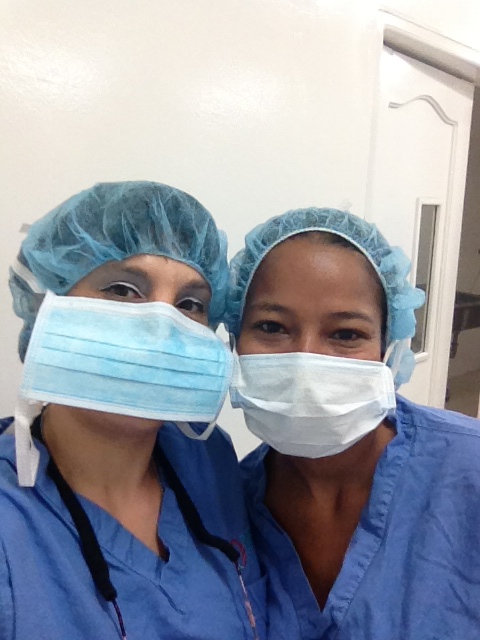
Anita, Patricia and Estebes

These three ladies have made all the difference in my operating room experiences here, and I am grateful for that.  I have really enjoyed getting to know them – and I feel sad at the thought that I may never see them again.

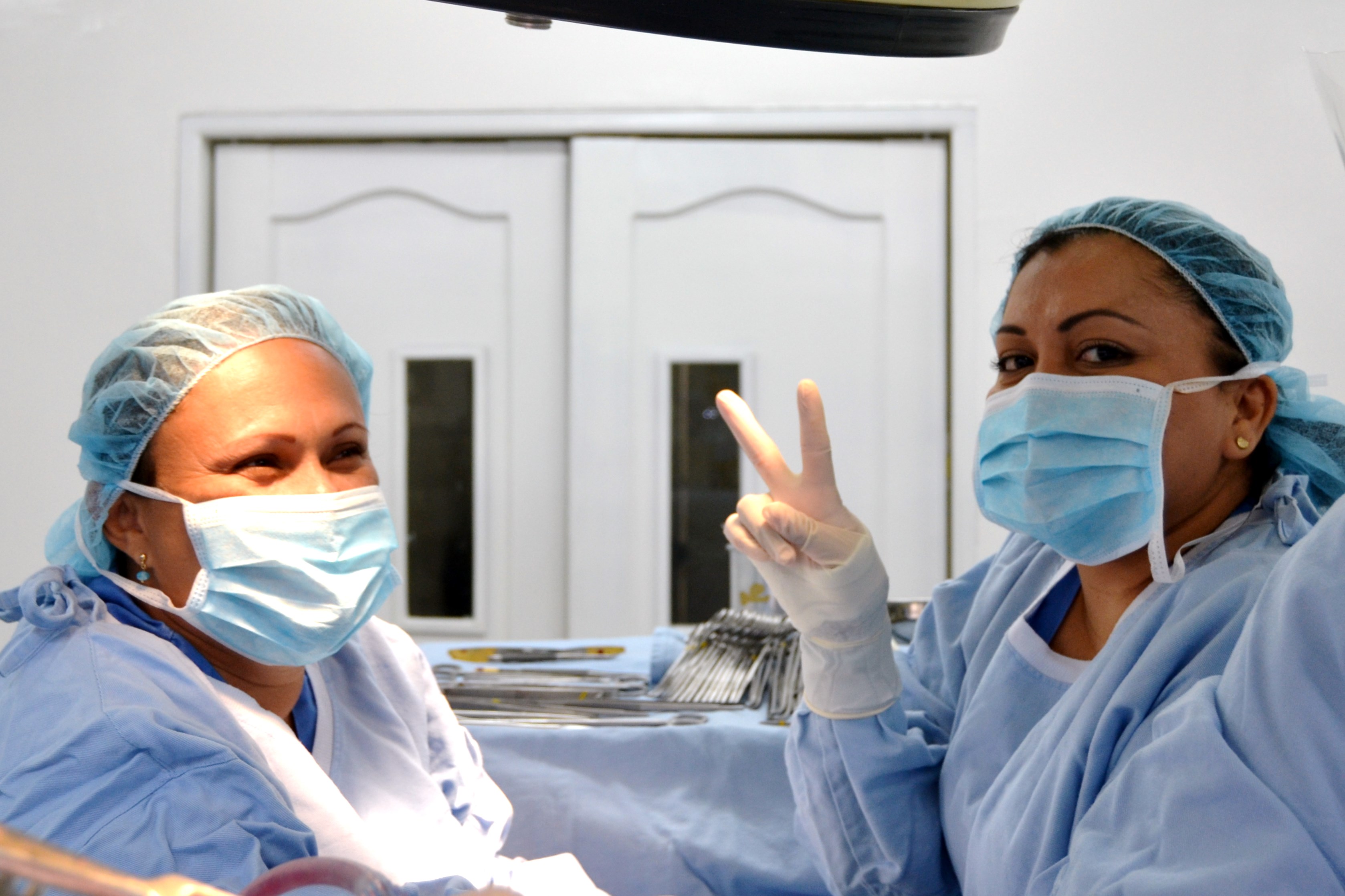
Raquel (right) and Anita, the instrumentadors

Raquel (right) and Anita, the instrumentadors

I am really going to miss Patricia and her perpetually sunny nature, easy smiles and ready laughter.  She was so sweet to introduce me to her son so I would have an escort and companion if I wanted to go out dancing.

Patricia and Estebes, circulating nurses

Patricia and Estebes, circulating nurses

I will miss Estebes, who always seems to go out of her way to help me.  She is always there to adjust the light, offer a stool or anything else that might make it easier for me while I am peering into one of the dark tunnels of someone’s leg.

with Estebes

with Estebes

Anita, too, has wonderful.  I feel like we have also had some fun, working at the ‘back’ of the table.  I’ve tried not to be in her way – and to actually be somewhat helpful.  (I’ve probably failed at this – but she has been very sweet and has never made me feel unwelcome.)  She’s also extremely knowledgeable about surgery so it’s good to have her there.  It’s hard to feel nervous with Anita watching over me.  Or when I need a third hand – she is always there – even while managing everything at the top of the table too.

barbosa 045

Tuesday

We arrived in Sincelejo this morning for surgery this afternoon.   I did a fitting with Dr. Barbosa and his new headlamp apparatus so I could fit the final piece of Velcro.  It’s not the prettiest thing in the world, but it’s functional and fully washable.  (The previous headlamp anchor is an uncovered foam that crumbles with washing).  I added a border to the old one as well, and repaired it the best I could, so he would be able to swap them out as needed.  I hope he liked it – despite its ‘ugly duckling’ appearance.  I thought it would be a nice gesture since he has done so much for me – and I don’t know how to say “Thank You.”

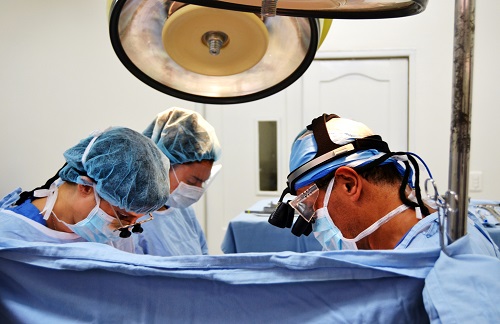
Dr. Barbosa models his new headgear.

Dr. Barbosa models his new headgear.


The patient only needs one small segment of vein – so Dr. Barbosa decided it would be a good time for me to learn open saphenectomy.  (I think I have convinced him on the soundness of my theory of learning the principles of saphenectomy, especially with my argument on the need to know for emergency cases.)

performing a saphenectomy

performing a saphenectomy

It was amazingly fast and essentially a bloodless field.  Since everything is open before you, it is easy to ligate and clip all of the collaterals.  I was surprised by how quickly I was able to free the vein.  Closure didn’t take much longer than normal because even though it was an ‘open saphenectomy’ since it was only one graft it wasn’t that long of an incision.

I am glad I had an opportunity to try it because it certainly gave me more confidence than I would have had if I was expected to learn it during an emergency case.  I also felt it gave me a better feel for the anatomy – because it’s all laid out in front of you. (It doesn’t matter how much you read or study a textbook – people are ‘never’ completely textbook, and ‘real’ anatomy looks different from the pretty drawing in my Grey’s Anatomy, especially when you are peering down a dark tunnel tract.)

Wednesday

The patient from yesterday is doing well.  The morning chest x-ray showed significant atelectasis but the patient was hemodynamically stable and without other complications.  I reviewed post-operative teaching (pulmonary toileting, ambulation) with the patient and explained that due to underlying COPD, he needed to be more aggressive in pulmonary toileting, and post- operative exercises.

Just a nurse?  I don’t think so…. But you are only a doctor.

Today a doctor attempted to insult me by stating, “You aren’t a doctor.” (Don’t worry, dear readers – it wasn’t Dr. B – I think he ‘gets” me.)  It made me want to laugh out loud but I managed to restrain myself since I was scrubbed in at the time.  Of course I’m not a doctor – and thank the lord that I am a nurse!  I never have and never will want to be anything else!

I feel sorry for someone so limited that they can’t see all that is missing from their life because they are “just a doctor.”  They are just a doctor, but I am fortunate enough to be a nurse!  I get to be everything that they can’t.  For him, the people who come to us for help are just patients – part of an endless cycle of work, a means to pay the bills, buy a big house and have the status that being a doctor brings.

But for me, well, I am not usually overly religious in my speech but there is no other way to describe it but to say, I am blessed. I do feel it’s a ‘calling’ of sorts.   I am blessed with the opportunity to care for these people, each one unique; with their own hopes, dreams and rich histories.  I have the privilege of being one of the people alongside the family and friends who cares for them.  I am lucky enough to be invited to share in that care.  The patients may leave the hospital, but they never leave my heart.

I am so much more than just a nurse to my patients; I am a teacher, a friend, a source of comfort and compassion during a life-changing experience.  I am the one who holds their hands when they are frightened – and the person who brings a smile to their face when they think they will never smile again.

Just a nurse?

Just a nurse?

I am a little bit social worker, a tiny little angel, a physical therapist, a cheerleader and friend, and even to many, their favorite ‘doctor’.  Often, I am the one they feel comfortable talking to – I am the one they bring their questions and concerns to.  Usually, I am the one they trust – to tell them to truth and to assist them on their journey back to health.  And, that sir, is a privilege you may never know.

To my surgeons, I am the extra right hand they didn’t know they needed.  I am always where I am needed – often behind the scenes, taking care of small issues so the surgeon can continue to do the things he needs to do – namely operate.  I am someone to bounce ideas off of – someone to teach (and wants to learn).  I am the very best resident a surgeon will ever have.

To the other doctors (who may have limited experience with cardiac surgery patients), the ones who are willing to admit it – I am an advisor, a teacher and a trusted colleague.

To my nursing colleagues – I am a mentor, a teacher and someone willing to listen to their concerns.  I know their jobs and I know their intrinsic value.  I know their talents – even if you don’t.  I never shrug off a nurse’s concerns, and that has saved lives.  If the nurse caring for the patient comes to me and says, “I don’t know what it is but something isn’t right,” than I know that something isn’t right.  And together, we figure it out and make it better.  I know that these nurses, the ones you dismiss – they have hopes and dreams too – and they take pride in excelling in their job.  If they don’t know something, it’s not for a lack of trying – it’s for want of a mentor.

Ever Luis, one of my favorite floor nurses

Ever Luis, one of my favorite floor nurses

And yet – there is still more to this nurse – I am an investigator, a researcher and a bit of a detective.  But you sir, are only a doctor.

In today’s case, the patient needed two grafts.  Dr. B started the initial incisions (I was off by a centimeter yesterday on my initial incision, so I think he lost confidence in my skills – I was worried about avoiding the patients more superficial varices.)  I am a little afraid of jumping in too quickly and harming the patient – so I am cautious in making my initial incisions – but once that’s done, I feel like I am in familiar territory.  I looked at my case log after the surgery – and it seems incredible for me that I’ve only had eight cases because it feels like I’ve been doing it for longer – parts of the procedure feel almost automatic now.  I wish it was 25 or 3o cases but the service just isn’t that busy.  I knew that would be the case when I came here – so I am grateful for the eight cases.  Eight is still more than none, and none is how many cases I was getting back at home.  (It’s that tired cliché – everyone wants someone with experience but no one wants to give a person a chance to get experience.)

I am still hoping that future employers will take my willingness and eagerness to train into consideration and offer me a chance even though I am a locum tenens provider.  I have just been burned too many times in permanent positions to risk taking another one in hopes that they will fulfill their promises to train me.

Thursday

No surgery today but a full clinic!  It was a good day in clinic because I got to see all the post-operative patients from our previous surgeries, and it was just a bit heart wrenching.  But then again, I am always a big sap for my patients.

All the patients seemed so happy to see me – and I was so happy to see all of them too!

Everyone looked really good, and I was impressed by their questions and attentiveness during the appointments.  My patients knew all of their medications by name, and were eager to discuss this and other post-operative instructions they received at the time of discharge.  (Usually it seems like people forget a lot of what we talk about in the hospital – but I think my horrible gringa accent sticks in their minds).

The only disappointing aspect, was seeing one of our patients (who had been really fragile pre-operatively) amble in.  She looked great – and said she felt pretty good, (other than the usual sternal soreness) but one of her leg incisions had partially dehisced.  (Luckily it was a very small skip incision and the patient had been fastidious about cleaning it as directed).  The wound was very clean, with no signs of infection.  It was healing well by secondary intention but I was disappointed in myself that the wound closure didn’t hold up.

After clinic – we headed back home.  All the while, I was thinking of how I will miss Sincelejo.  I will miss my friends, my patients and Clinica Santa Maria.  I will miss the chance to work with Dr. Barbosa – who was always such a great teacher, even if we didn’t always see eye-to-eye.  Most of all, I will miss Iris, who has been my best friend, confident and colleague during this journey.  I will miss working with her – I honestly think that between the two of us, we could be a force to change the world (or at least cardiac surgery) for the better.

From the bottom of my heart, I sincerely say, Thank you Iris, Thank you Dr. Barbosa, Thank you, Estebes, Anita and Patricia – and thank you Dr. Salgua for having me here among all of us – and making me part of the team.  I will miss you all.

Dr. Salgua Feris

Dr. Salgua Feris

Sincelejo Diaries, part 2


Sincelejo

Tuesday –  We drove back from Cartagena this morning before heading to surgery in the afternoon for a bypass grafting case.  For the first half of the way, I sat in the back and enjoyed looking out the window.  It’s amazing how dry parts of Bolivar are.

The drought has been responsible for the deaths of over 20,000 farm animals here in Colombia.  The small lakes are disappearing, from my first trip to Sincelejo to my most recent visit just a few weeks later.  The trees and bushes besides the roadways are completely coated with layers of dust from passing vehicles.  It gets greener as we pass into Sucre, but it’s a sad reminder of the devastating effects of climate change.

After stopping for breakfast along the way, where we met up with Dr. Melano, Iris went with Dr. Melano and I stayed with Dr. Barbosa.  We talked about music mostly.  At one point, a former patient from several years ago called, just to say hello.  The patient had recently heard that Dr. Barbosa now had a surgery program in Sucre. (The patient had previously traveled to Cartagena from a small town in Sucre for surgery.)

Once we got to Sincelejo, we headed to the hospital to see our patient before surgery and go over any last-minute questions or concerns.

(Of course) I was worried about finding vein but we easily found good quality conduit.  Dr. Salgua has been very nice about helping me with the saphenectomies.  The team teases me because I have a difficult time pronouncing her name.  We have a kind of system: While I finish closing the leg, she moves up the table to assist the surgeon in starting the grafts.  Then when I finish wrapping the leg, I stay at the back of the table with the instrumentadora, learning the Spanish names for all the instruments.  Once the chest is closed, she does a layer of fascia and I close the skin incision.

It’s a little crowded sometimes with the new instrumentadora learning the essentials of cardiac surgery, but the atmosphere at the back of the table is a lot different from the climate at the top.  (Dr. B is always calm, pleasant and entertaining – but Dr. Salgua is almost completely silent the whole time).  I am a lot quieter than my “out of OR self” when I am across the table from the surgeon too..

Wednesday – Another coronary case, on a fragile-ish patient (multiple co-morbidities including chronic kidney disease etc).  It was a long case and I was a little worried the whole time but the patient did well.  (I always worry about the frail patients).

I did okay too – performing a saphenectomy with Dr. Barbosa.  The patient had a vein stripping procedure previously (on one leg only) so I wanted to be sure to get a good segment of vein on the remaining vein.  I think Dr. Barbosa was worried about the quality of the conduit (because he kind of hovered – and didn’t relax until we started harvesting it.)

skip harvesting

Skip harvesting

I wish I would have more opportunities to perform a traditional saphenectomy (one very long incision).  I assisted on one several years ago – and I think if I had a chance to do a couple more, I would feel more comfortable skip harvesting.  Of course, a headlamp would also help.  (It’s kind of dark looking down the skip ‘tunnels’).  Then once I’ve mastered skip harvesting, I think it’s just another small jump to endo-harvesting with a scope.  I know a lot of people never bother learn to skip harvest, but I feel more comfortable building on the principles of open procedures first.  I might need them in an emergency case which is kind of why I wished I had more open saphenectomy experience.

Thursday – Saw three patients in the clinic today.  However, on reviewing the patient records and an intra-office echocardiogram, one of the patients definitely doesn’t need surgery at this point. (Asymptomatic with only moderate valvular disease).  We were happy to let him know he didn’t need surgery even if that means fewer cases.

Two surgeries today.  The first case was a bypass case for a patient with severe coronary disease and unstable angina.  Dr. Salgua and I did the harvest.  I think Dr. Barbosa is a little nervous about handing over the reins to me for harvest because he keeps a pretty close eye on me while I am doing it.  But then again, it might be because I am a little overly cautious and hesitant at this point.  If I didn’t have Dr. Salgua to look over my shoulder and encourage me onward, I’d put clips on everything and proceed at a snail’s pace to make sure I do it right.  But since it’s still my first week, maybe I shouldn’t be so hard on myself.

On the other hand, he must think my suturing is pretty good, because he just trusts me to do it correctly.

The second case was a patient from last week, who developed a large (symptomatic) pleural effusion and cardiac effusion (no tamponade or hemodynamic instability) which is a pretty common surgical complication.  The case proceeded well – I placed the chest tube, with Dr. Barbosa supervising.  Dr. Barbosa performed the cardiac window portion of the procedure.

Sadly, one of our patients from last week died today.  It was a fragile patient to begin with, and even though surgery proceeded well, the patient could never tolerate extubation and had to be re-intubated twice after initially doing well.  From there, the patient continued to deteriorate.

Friday

Today we had a beautiful aortic valve surgery.  This has always been one of my favorite cardiac procedures.  Somehow its elegant in the way the new valve slides down the carefully coördinated sutures.  (I don’t have pictures from this case – since I was first assisting – but I will post some from a previous case – so you can see what I mean).

????????????????????????

Dr. Salgua worked an overnight shift, so I was at the top of the table – (and yes, noticeably quieter than normal.)  I was surprised at how fast it seemed to go – but maybe that’s because everything went so smoothly.  Or maybe because we’ve done a lot of coronaries lately, which is a much more tedious and time-consuming process.

Iris and I are working on a patient education process – as a way to improve the continuum of care for patients (particularly after discharge).  I really enjoy working with Iris because I feel like we are always on the same page when it comes to patient care.

While it’s been a tiring week for the crew – I am, as always! exhilarated and happy to be here in Sincelejo.  Just knowing it’s the end of another week (and I am that much closer to going home) has me feeling a little sad.  But I guess I can’t stay forever, and I sure don’t want to take advantage of all the kindnesses that have been extended to me.

That being said:

At the end of every surgery, every day and every week in Sincelejo – I am grateful.  Grateful to Dr. Barbosa for being such a willing and patient teacher – grateful to the operating room crew (especially Iris Castro and Dr. Salgua) and particularly grateful to all the kind and generous patients I have met and helped take care of*.

The medical mission

This week I had another inquiry about ‘medical missions’.   I know people mean well when they ask about medical missions, or when they participate in these types of activities but…

Long time readers know my philosophy on this – don’t go overseas so you can pat yourself on the back over the ‘great deeds’ you performed ‘helping the poor’.  It’s patronizing to the destination country and its inhabitants – and generally not very useful anyway.  An awful lot of volunteers with real skills and talents go to waste on these so-called mission trips when their skills might be better served (in less exciting or glamorous ways) in free clinics in our own country.

But it does give everyone involved a chance to brag about how selfless and noble they have been; traveling thousands of miles, sleeping somewhere without 24/7 wi-fi (and who knows what other hardships).

Instead, change your orientation – and maybe challenge that assumption that everything you’ve learned about medicine, health care and taking care of people is better and superior.  Open your eyes and be willing to learn what others have to teach you instead.

* I always opt for full disclosure and transparency with the patients.  I introduce myself and explain that I am a studying with Dr. Barbosa, what my credentials and experience is to give them the opportunity to ‘opt out’.

Adventures in Sincelejo


If there is such thing as a perfect day, it would have been today.  The weather was still hot, humid and sticky.  I still have student loans and the world continues to have accidents, disasters and wars.  But for me, today was as good as it gets.

VSD patch400

I spent the morning in the operating room while Dr. Barbosa performed a septal patch, and repair of the tricuspid valve.  The case went well and the patient did beautifully.  Before I left the hospital, the patient was already awake, alert and awaiting extubation.  There was no hemodynamic instability or bleeding.

Barbosa1x400

The local cardiologist did several cardiac catheterizations today – and we were consulted on four of them.  3 of the patients have excellent targets for bypass grafts and normal heart function.  The fourth patient is a little more fragile, but is still a reasonable candidate for surgery.

Best way to see Sincelejo: On the back of a bike*

Lastly, I spent a nice, breezy hour touring the city on the back of a friend’s motorcycle.  (Yes, mom – I wore my helmet – and he didn’t drive like a maniac.)  We went all over Sincelejo; from the scenic overlook over the valley below, to the football stadium, past the University of the Caribbean, over to a public park with tennis courts, several pools and a small zoo. (I don’t have any pictures because I figured I’d probably drop it).

My guide was Omar, the spouse of my friend, Elena.  He works in the Parks & Recreation department of the Sucre.

photo (37)

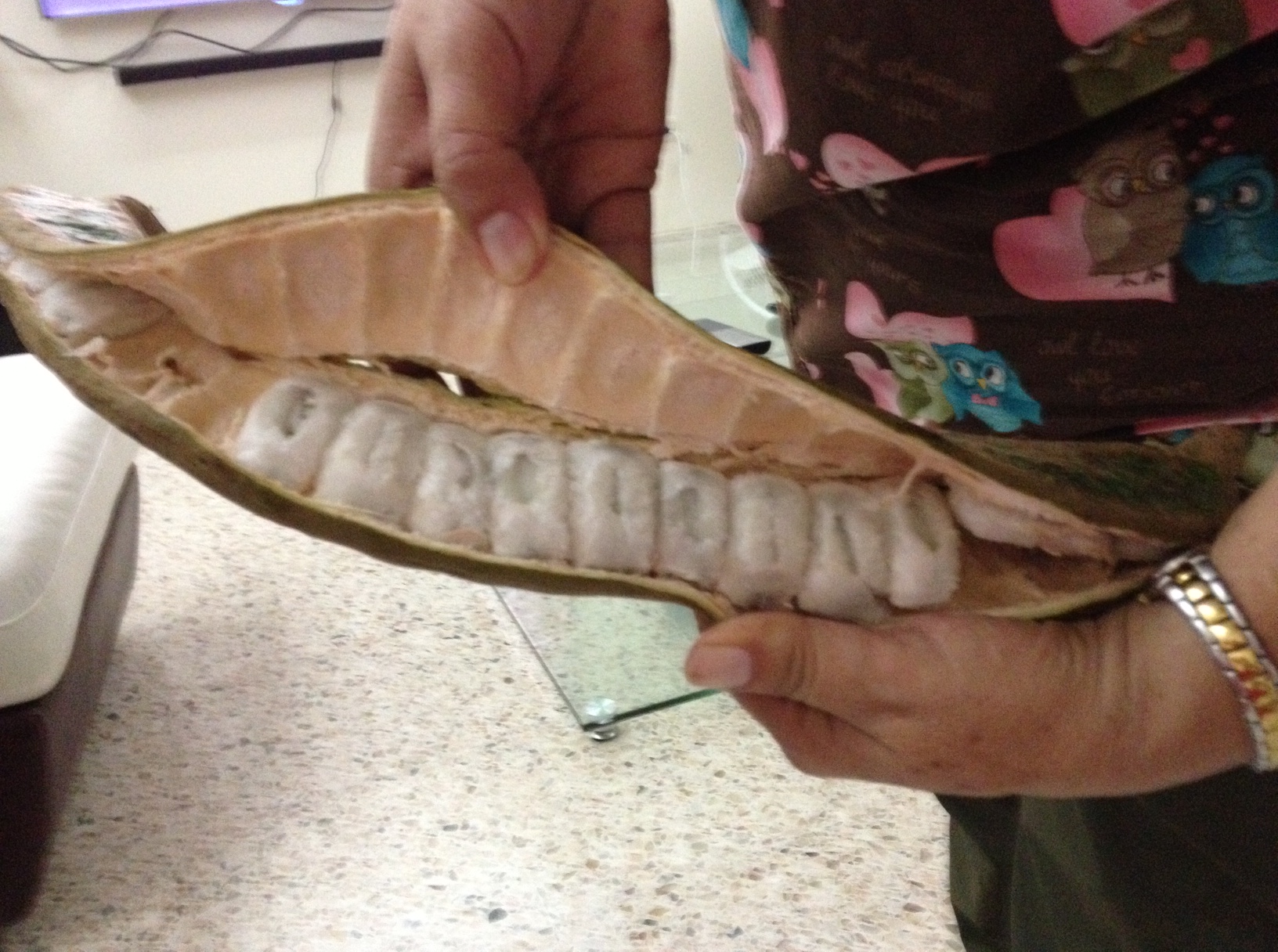
After returning home, I took a walk down to the Plaza to buy some local cheese.  Then I spent the evening eating exotic fruits like guama, plums, uchuvas and fejoas.

*Also fairly dangerous..

All in all, it was a pretty awesome day.

Start here…


This is a page re-post to help some of my new readers become familiarized with Latin American Surgery.com – who I am, and what the website is about..

As my long-time readers know, the site just keeps growing and growing.  Now that we have merged with one of our sister sites, it’s becoming more and more complicated for first time readers to find what they are looking for..

So, start here, for a brief map of the site.  Think of it as Cliff Notes for Latin American surgery. com

Who am I/ what do I do/ and who pays for it

Let’s get down to brass tacks as they say .. Who am I and why should you bother reading another word..

I believe in full disclosure, so here’s my CV.

I think it’s important that this includes financial disclosure. (I am self-funded).

I’m not famous, and that’s a good thing.

Of course, I also think readers should know why I have embarked on this endeavor, which has taken me to Mexico, Colombia, Chile, Bolivia and continues to fuel much of my life.

Reasons to write about medical tourism: a cautionary tale

I also write a bit about my daily life, so that you can get to know me, and because I love to write about everything I see and experience whether surgery-related or the joys of Bogotá on a Sunday afternoon.

What I do and what I write about

I interview doctors to learn more about them.

Some of this is for patient safety: (Is he/she really a doctor?  What training do they have?)

Much of it is professional curiosity/ interest: (Tell me more about this technique you pioneered? / Tell me more about how you get such fantastic results?  or just tell me more about what you do?)

Then I follow them to the operating room to make sure EVERYTHING is the way it is supposed to be.  Is the facility clean?  Does the equipment work?  Is there appropriate personnel?  Do the follow ‘standard operating procedure’ according to international regulations and standards for operating room safety, prevention of infection and  overall good patient care?

I talk about checklists – a lot..

The surgical apgar score

I look at the quality of anesthesia – and apply standardized measures to evaluate it.

Why quality of anesthesia matters

Are your doctors distracted?

Medical information

I also write about new technologies, and treatments as well as emerging research.  There is some patient education on common health conditions (primarily cardiothoracic and diabetes since that’s my background).  Sometimes I talk about the ethics of medicine as well.  I believe strongly in honesty, integrity and transparency and I think these are important values for anyone in healthcare.  I don’t interview or encourage transplant tourism because I think it is intrinsically morally and ethically wrong.  You don’t have to agree, but you won’t find information about how to find a black market kidney here on my site.

What about hospital scores, you ask.. Just look here – or in the quality measures section.

Cultural Content

I also write about the culture, cuisine and the people in the locations I visit.  These posts tend to be more informal, but I think it’s important for people to get to know these parts of Latin America too.  It’s not just the doctors and the hospitals – but a different city, country and culture than many of my readers are used to.

Why should you read this?  well, that’s up to you.. But mainly, because I want you to know that there is someone out there who is doing their best – little by little to try to look out for you.

How the site is organized

See the sidebar! Check the drop-down box.

Information about surgeons is divided into specialty and by location.  So you can look in plastic surgery, or you can jump to the country of interest.  Some of the listings are very brief – when I am working on a book – I just blog about who I saw and where I was, because the in-depth material is covered in the book.

information about countries can be found under country tabs including cultural posts.

Issues and discussions about the medical tourism industry, medical safety and quality are under quality measures

Topics of particular interest like HIPEC have their own section.

I’ve tried to cross-reference as much as possible to make information easy to find.

If you have suggestions, questions or comments, you are always welcome to contact me at k.eckland@gmail.com or by leaving a comment, but please, please – no hate mail or spam.  (Not sure which is worse.)

and yes – I type fast, and often when I am tired so sometimes you will find grammatical errors, typos and misspelled words (despite spell-check) but bear with me.  The information is still correct..

Thank you for coming.

The cardiac OR


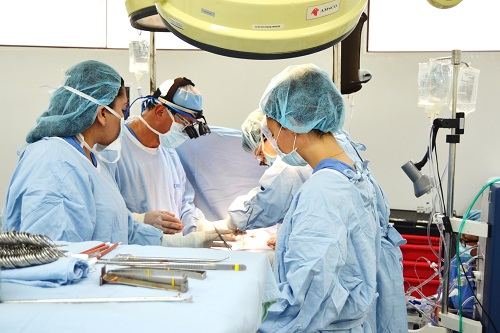
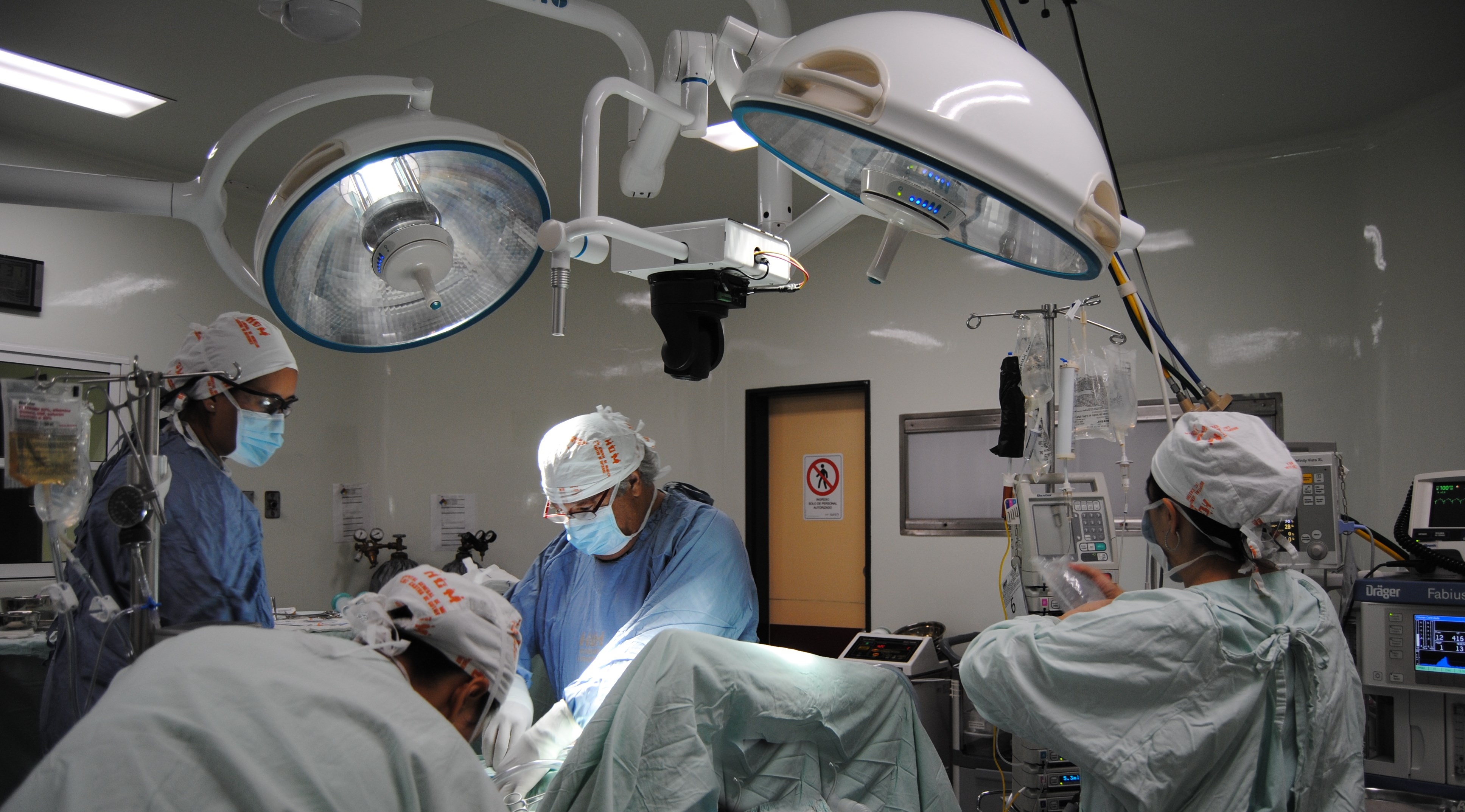
If you’ve never been to the cardiac operating room – it’s a completely different world, and not what most people expect.  For starters, unlike many areas of health care (particularly in the USA), the cardiac operating room is usually very well staffed.

 OR

Just a few of the people working in the OR. (photo edited to preserve patient privacy)

For example, there were eight people working in the operating room today:

Dr. Luis Fernando Meza, cardiac surgeon

Dr. Bernando Leon Urequi O., cardiac surgeon

Dra. Elaine Suarez Gomez, cardiac anesthesiologist

Dr. Suarez observes her patient during surgery. (photo edited to preserve patient's privacy)

Dr. Suarez observes her patient during surgery. (photo edited to preserve patient’s privacy)

Ms. Catherine Cardona, “Jefe”/ Nurse who supervises the operating room

Ms. Diana Isobel Lopez,  Perfusionist (In Colombia, all perfusionists have an undergraduate degree in nursing, before obtaining a postgraduate degree in Perfusion).  The perfusionist is the person who ‘runs’ the cardiac bypass machine.

Ms. Laura Garcia, Instrumentadora (First Assist)

Angel, circulating nurse

Olga, another instrumentadora, who is training to work in the cardiac OR.

This is fairly typical for most institutions.

Secondly – it’s always a regimented, and checklist kind of place.  (I wish I could say that about every operating room – but it just wouldn’t be true.)  But cardiac ORs (without exception) always follow a very strict set of accounting procedures..

For starters – there are labels.. For the patient (arm bands), for the equipment (medications, blood products etc..)  even the room is labeled.

Sign on operating room door (edited for patient privacy)

Sign on operating room door (edited for patient privacy)

Then come the checklists..

Perfusionist Diana Lopez gathers information to begin her pre-operative checklist.

Perfusionist Diana Lopez gathers information to begin her pre-operative checklist.

The general (WHO) operating room checklist.  The perfusionist’s checklist.. The anesthesiologist’s checklist.. and the big white cardiac checklist.

by then end of the case, this board will be full..

by the end of the case, this board will be full..

The staff attempts to anticipate every possible need and have it on hand ahead of time.  Whether it’s nitric oxide, blood, defibrillation equipment, or special medications – it’s already stocked and ready before the patient is ever wheeled in.

Most of these things are universal:

such as the principles of asepsis (preventing infection), patient safety and preventing intra-operative errors – no matter what hospital or country you are visiting (and when it comes to surgery – that’s the way it should be.)

Today was no exception..

In health care, we talk about “OR people” and “ER people”.. ER people are the MacGyvers of the world – people who thrive on adrenaline, excitement and the unexpected.  They are at their best when a tractor-trailer skids into a gas station, ignites and sets of a five-alarm fire that decimates a kindergarden, sending screaming children racing into the streets.. And God love them for having that talent..

But the OR.. that’s my personal area of tranquility.

This orderly, prepared environments is one of the reasons I love what I do.. (I am not a screaming, “by the seat-of-your-pants”/ ‘skin of your teeth’ kind of gal).  I don’t want to encounter surprises when it comes to my patient’s health – and I never ever want to be caught unprepared.   That’s not to say that I can’t handle an emergent cardiac patient crashing in the cath lab – it just means I’ve considered the scenarios before, (and have a couple of tricks up my sleeve) to make sure my patient is well taken care of (and expedite the process).

That logical, critical-thinking component of my personality is one of the reasons I am able to provide valuable and objective information when visiting hospitals and surgeons like Dr.  Urequi’s and Dr. Meza’s operating room at Hospital General de Medellin.

In OR #1 – cardiothoracic suite

As I mentioned in a previous post on Hospital General de Medellin, operating room suite #1 has been designated for cardiac and thoracic surgeries.  This works out well since the operating room itself, is modern and spacious (which is important because of the area needed when adding specialized cardiac surgery equipment like the CPB pump (aka heart-lung machine).  There are muliple monitors, which is important for the video-assisted thoracoscopy (VATS) thoracic cases but also helpful for the cardiac cases.  The surgeon is able to project the case as he’s performing it on a spare monitor, which allows everyone involved to see what’s going on during the case (and anticipate what he will need next) without shouting or crowding the operating room table.

Coordinating care by watching surgery

For instance, if the circulator looks up at the monitor and sees he is finishing (the bypasses for example), she can make sure both the instrumentadora and the anesthesiologist have the paddles and cables ready to gently defibrillate the heart if it needs a little ‘jump start’ back into normal rhythm..or collect lab samples, or double check medications, blood products or whatever else is needed at specific points during the surgery.

More on today’s case in our next post.

Shooting the breeze with Dr. Francisco Sanchez, cardiothoracic surgeon


As I mentioned in one of my previous posts, meeting and talking to surgeons in different countries can be anxiety-producing at times.. Other times, just plain interesting and enjoyable.

It was the latter during my conversations with Dr. Francisco Sanchez Garido  and his colleague, Dr. Geraldo Victoria.  (We talked about Dr. Victoria in a previous post.)

At 71, Dr. Sanchez has seen and experienced volumes; in medicine, surgery and in life.  We talked about all three of these during my visit – including some of his ‘war stories’ of yesteryear.

These included actual stories of war – such as trying to take care of the gravely wounded American GIs during the  December 1989 military invasion of Panama (Operation: Just Cause), when he was working at the Gorgas Army Hospital at the Howard Military Base.

 Dr. Sanchez talked about the difficulties of trying to save the GIs who parachuted in (and immediately became fodder for Noriega’s troops).

He also reflected on the fifteen years he spent training in the United States.  He attended medical school at the University of Oklahoma, and completed both his residencies in the US at George Washington University prior to returning to Panama in 1972.  He studied with a famous surgeon from the Cleveland Clinic  as well as hosting multiple visits by American cardiac surgeons,  Dr. Denton Cooley and Dr. Michael DeBakey (among others).  These included one ignoble attempt to convert a Panamanian hospital into the private operating room suite for the ailing Shah of Iran.  He laughed a bit when he explained how the illustrious Dr. DeBakey attempted to bluster his way into taking over the hospital but were foiled by Dr. Sanchez and his team, resulting in the Shah traveling to Cairo for his ill-fated surgery for lymphoma. (See the linked articles for more information about the fateful travels of an ailing ruler).

As he explained, “They just wanted to use our hospital [to perform a spleenectomy on the Shah] – and leave.  They didn’t want our help or involvement.  But you can’t just operate on someone and then go home.”  As it turns out – his concerns were warranted, as the Shah experienced surgical complications after surgery in Egypt, and his surgeons were long gone, leaving his care to people previously un-involved in his care. (Ultimately, the Shah died four months after surgery – closing a chapter in Iranian history and ending the controversies regarding his treatment).

These stories are, of course, just minor tales in the long career of one of Panama’s first heart surgeons.

Dr. Francisco Sanchez Garido, cardiothoracic surgeon

Dr. Francisco Sanchez Garido, cardiothoracic surgeon

The truth about TAVI/ TAVR


It looks like the rest of the medical community is finally speaking up about the overuse and safety issues of TAVI/ TAVR for aortic stenosis, but it’s still few and far between – and in specialty journals…  But in the same week that Medscape, and the Heart.org reported on a newly published article in the British Medical Journal on the overuse of TAVI therapies, and the need for earlier diagnosis and treatment of Aortic Stenosis – the Interventionalists over at the Heart.org (a cardiology specialty journal)  have published a series of articles promoting / pushing the procedure including an article entitled, “The TAVR Heart team roles.”

JAMA recently published a paper by Robert Bonow and Chintan Desnai, discussing the benefits, risks and expectations with TAVI.  This paper discusses the very real need for clinicians to address heightened patient expectations regarding TAVI as an ‘easy’ alternative to surgery.

TAVI is vastly overused – Reed Miller, The Heart.org

Here at Cartagena Surgery – we’ve been doing our own research – contacting and talking to a multitude of practicing cardiologists and cardiac surgeons to get their opinions – in addition to reviewing the latest data.

In related news, a review of the latest research on the ‘transcatheter’ valve therapies demonstrates considerable concern: including data on peri-valvular leaks as reported in the last national TAVI registries in Europe and in the US:

The incidence of  paravalvular leaks  after TAVI is extremely high  ( > 60%)

• It is technically challenging today to quantify these leaks.

• Most of them are quoted “mild”, but more than 15 % are estimated  “moderate” and “severe”.

• In > 5% of patients, the peri-valvular or valvular regurgitation grade increased significantly over time.

• there is no significant difference between Edwards SAPIEN and Medtronic COREVALVE

As one cardiologist explained:

“Importantly, the thrombogenic potential of mild leaks was recently demonstrated by Larry Scotten ( Vivitro System Inc. Victoria, Canada). High reverse flow velocities expose glycoprotein GP Ib-IX-V  platelet receptors  to circulating Von Willebrand molecule with, as results, platelet aggregation and fibrin formation.  The incidence of brain spots and stroke after TAVI was of great concern in the PARTNER A and B studies.  Whereas, Aspirin is not mandatory  in  patients implanted with bioprosthetic valves,   Plavix +  Aspirin is recommended for all TAVI patients. The rationales of such therapy were not explained so far.”

Valve oversizing – a surgeon explains

“To reduce  these peri-valvular leaks , cardiologists tentatively use large valve size, up to 29-mm.  The very large majority of valve sizes used in conventional aortic valve replacement are smaller than 25-mm.  Oversizing may increase the risk of late aortic aneurysms (aortic rupture has been reported) [emphasis added].

Moreover, atrio-ventricular conduction may be impaired  with the need of permanent pacing. Poorer outcomes have been reported in patients when the need for permanent pacemaker occurs.

“As we like to say about clothes and shoes, you forget the price overnight but you remember the quality for ever . The price of TAVI may be cheaper but patients may experience inferior outcomes. In view of these results, using TAVI would not be appropriate for the great majority of  heart valve candidates.  Moreover trans-catheter delivery and sub-optimal fit are not likely to increase tissue valve durability…  and everybody knows that tissue valves are not enough durable for young adults and children.  TAVI is thus a suitable strategy only for the neglected population of high risk patients who are no longer candidates for surgery [emphasis added].

Worth pointing out again  that there would be no need for TAVI and long-term outcomes of patients would be much better if severe aortic stenosis were correctly managed at the right time.  Enclosed the recommendations of Robert Bonow   (Circulation, July 25, 2012) for early valve replacement in ASYMPTOMATIC  patients.  A large cohort of accurate biomarkers is available today for correct timing of surgery  and consequent prevention of  irreversible myocardium damage. In the study of Lancellotti (enclosed) 55% of “truly asymptomatic patients” with severe aortic stenosis developed pulmonary hypertension during exercise and had  poor clinical outcomes. The measurement of both mean trans-aortic pressure gradient and systolic pulmonary pressure, which are technically easy, rapid and with good reproducibility may improve the management of such patients.

These updates on the natural history of aortic stenosis illustrate the present paradoxical and intriguing  focus of the industry on an experimental procedural innovation for end-stage old patients when more efficient heart valves are today feasible and could be used sooner for the benefit of all patients .

Enclosed an article on The Need For A Global Perspective On Heart Valve from Sir Madgi Yacoub.

Additional Reference / supporting data:

Modified from  Ross J and Branwald E   (Circulation 1968 (Suppl): 61-67)

• The  incidence of stroke was 9% after TAVI in  the 214 patients of the enclosed study published last week in the American Journal of Cardiology. The incidence of stroke with TAVI was >  two times higher than with conventional surgery in the PARTNER study.  Pooled proportion of postoperative stroke was 2.4%  with conventional surgery  in the  large meta-analysis of patients > 80 years old (enclosed)

• Peri-valvular aortic insufficiency is observed in more than  60% of patients undergoing trans-catheter aortic valve replacement.  Moderate or severe aortic insufficiency was seen in 17.3 % of the PARTNER inoperable and high risk cohorts at 1 year.  They have been reportedly associated with dyspnea, anemia,  cardiac failure and diminished survival. Most interestingly,  the FDA does not accept more than  1%   peri-valvular insufficiency in patients implanted with conventional prosthetic heart valves… The SJM Silzone mechanical heart valve was re-called  because of peri-valvular leakage rate of…  1.5 % .

• Traditionally, aortic stenosis involving a 2-cuspid aortic valve has been a contraindication to TAVI.  Of 347 octogenarians and 17 nonagenarians  explanted valves , 78 (22%) and 3 ( 18%) had stenotic congenitally bicuspid aortic valve, respectively.  Because the results of TAVI are less favorable in patients with stenotic congenitally bicuspid valves, proper identification of the underlying aortic valve structure is critical when considering TAVI in older patients . More than 50% of patients with aortic stenosis have bicuspid aortic valve and are not, therefore,  good candidates for TAVI. Most importantly, the great majority of patients with calcified stenotic  bicuspid aortic valves is  young ( < 60 years old)  and not candidate for tissue valve replacement.

•  The French Registry of trans-catheter aortic-valve implantation in high-risk patients was published in the New England Journal of Medicine on May 3,  2012. It reports  3195 TAVI procedures during the last two years at 34 centers.

The mean age was 83 years.  The incidence of stroke was 4.1%.  Peri-prosthetic aortic regurgitation was 64 %. The rate of death was 24% at one year. At the same time, the meta-analysis published in the American Heart Journal reports 13,216     CONVENTIONAL AORTIC VALVE REPLACEMENT in patients > 80 years old.    The rate of death was 12.4%  at one year,   21.3%  at 3 years and  34.6%  at 5 years


Full references for works cited in text:

Bonow, R. O. (2012). Exercise hemodynamics and risk assessment in asymptomatic aortic stenosisCirculation 2012, July 25.

Lancelloti, P., Magne, J., Donal, E., O’Connor, K., Dulgheru, R., Rosca, M., & Pierard, L. (2012).  Determinants and prognostic significance of exercise pulmonary hypertension in asymptomatic severe aortic stenosis.  Circulation, 2012 July 25.

Takkenberg, J. J. M., Rayamannan, N. M., Rosenhek, R., Kumar, A. S., Carapitis, J. R., & Yacoub, M. H. (2008).  The need for a global perspective on heart valve disease epidemiology: The SHVG working group on epidemiology of heart disease founding statement.  J. Heart Valve Dis. 17 (1); 135 – 139.

Gilard M, Eltchaninoff H, Iung B, Donzeau-Gouge P, Chevreul K, Fajadet J, Leprince P, Leguerrier A, Lievre M, Prat A,Teiger E, Lefevre T, Himbert D, Tchetche D, Carrié D, Albat B, Cribier A, Rioufol G, Sudre A, Blanchard D, Collet F, Dos Santos P, Meneveau N, Tirouvanziam A, Caussin C, Guyon P, Boschat J, Le Breton H, Collart F, Houel R, Delpine S,Souteyrand G, Favereau X, Ohlmann P, Doisy V, Grollier G, Gommeaux A, Claudel JP, Bourlon F, Bertrand B, Van Belle E, Laskar M; FRANCE 2 Investigators. Collaborators (184). Registry of transcatheter aortic-valve implantation in high-risk patients. N Engl J Med. 2012 May 3; 366(18):1705-15 [full abstract below].

BACKGROUND:

Transcatheter aortic-valve implantation (TAVI) is an emerging intervention for the treatment of high-risk patients with severe aortic stenosis and coexisting illnesses.

We report the results of a prospective multicenter study of the French national transcatheter aortic-valve implantation registry, FRANCE 2.

METHODS:

All TAVIs performed in France, as listed in the FRANCE 2 registry, were prospectively included in the study. The primary end point was death from any cause.

RESULTS:

A total of 3195 patients were enrolled between January 2010 and October 2011 at 34 centers. The mean (±SD) age was 82.7±7.2 years; 49% of the patients were women.

All patients were highly symptomatic and were at high surgical risk for aortic-valve replacement. Edwards SAPIEN and Medtronic CoreValve devices were implanted in 66.9% and 33.1% of patients, respectively. Approaches were either transarterial (transfemoral, 74.6%; subclavian, 5.8%; and other, 1.8%) or transapical (17.8%).

The procedural success rate was 96.9%. Rates of death at 30 days and 1 year were 9.7% and 24.0%, respectively.

At 1 year, the incidence of stroke was 4.1%, and   the incidence of periprosthetic aortic regurgitation was 64.5%.

In a multivariate model, a higher logistic risk score on the European System for Cardiac Operative Risk Evaluation (EuroSCORE), New York Heart Association functional class III or IV symptoms, the use of a transapical TAVI approach, and a higher amount of periprosthetic regurgitation were significantly associated with reduced survival.

CONCLUSIONS:

This prospective registry study reflected real-life TAVI experience in high-risk elderly patients with aortic stenosis, in whom TAVI appeared to be a reasonable option.

Rutger-Jan Nuis, MSc,  Nicolas M. Van Mieghem, MD,  Carl J. Schultz, MD, PhD,  Adriaan Moelker, MD, PhD ,  Robert M. van der Boon, MSc, Robert Jan van Geuns, MD, PhD, Aad van der Lugt, MD, PhD,  Patrick W. Serruys, MD, PhD, Josep Rodés-Cabau, MD,  Ron T. van Domburg, PhD,  Peter J. Koudstaal, MD, PhD,  Peter P. de Jaegere, MD, PhD.  Frequency and Causes of Stroke During or After Trans-catheter Aortic Valve Implantation. American Journal of Cardiology Volume 109, Issue 11 , Pages 1637-1643, 1 June 2012 [full abstract provided].

Transcatheter aortic valve implantation (TAVI) is invariably associated with the risk of clinically manifest transient or irreversible neurologic impairment. We sought to investigate the incidence and causes of clinically manifest stroke during TAVI. A total of 214 consecutive patients underwent TAVI with the Medtronic-CoreValve System from November 2005 to September 2011 at our institution. Stroke was defined according to the Valve Academic Research Consortium recommendations. Its cause was established by analyzing the point of onset of symptoms, correlating the symptoms with the computed tomography-detected defects in the brain, and analyzing the presence of potential coexisting causes of stroke, in addition to a multivariate analysis to determine the independent predictors.  Stroke occurred in 19 patients (9%) and was major in 10 (5%), minor in 3 (1%), and transient (transient ischemic attack) in 6 (3%). The onset of symptoms was early (≤24 hours) in 8 patients (42%) and delayed (>24 hours) in 11 (58%). Brain computed tomography showed a cortical infarct in 8 patients (42%), a lacunar infarct in 5 (26%), hemorrhage in 1 (5%), and no abnormalities in 5 (26%). Independent determinants of stroke were new-onset atrial fibrillation after TAVI (odds ratio 4.4, 95% confidence interval 1.2 to 15.6), and baseline aortic regurgitation grade III or greater (odds ratio 3.2, 95% confidence interval 1.1 to 9.3).

In conclusion, the incidence of stroke was 9%, of which >1/2 occurred >24 hours after the procedure. New-onset atrial fibrillation was associated with a 4.4-fold increased risk of stroke. In conclusion, these findings indicate that improvements in postoperative care after TAVI are equally, if not more, important for the reduction of peri-procedural stroke than preventive measures during the procedure.

Sinning JM, Hammerstingl C, Vasa-Nicotera M, Adenauer V, Lema Cachiguango SJ, Scheer AC, Hausen S, Sedaghat A, Ghanem A, Müller C, Grube E,Nickenig G, Werner N. (2012).  Aortic regurgitation index defines severity of peri-prosthetic regurgitation and predicts outcome in patients after transcatheter aortic valve implantation.  J Am Coll Cardiol. 2012 Mar 27;59(13):1134-41. [full abstract provided].

OBJECTIVES:

The aim of this study was to provide a simple, reproducible, and point-of-care assessment of peri-prosthetic aortic regurgitation (periAR) during trans-catheter aortic valve implantation (TAVI) and to decipher the impact of this peri-procedural parameter on outcome.

BACKGROUND:

Because periAR after TAVI might be associated with adverse outcome, precise quantification of periAR is of paramount importance but remains technically challenging.

METHODS:

The severity of periAR was prospectively evaluated in 146 patients treated with the Medtronic CoreValve (Minneapolis, Minnesota) prosthesis by echocardiography, angiography, and measurement of the aortic regurgitation (AR) index, which is calculated as ratio of the gradient between diastolic blood pressure (DBP) and left ventricular end-diastolic pressure (LVEDP) to systolic blood pressure (SBP): [(DBP – LVEDP)/SBP] × 100.

RESULTS:

After TAVI, 53 patients (36.3%) showed no signs of periAR and 71 patients (48.6%) showed only mild periAR, whereas 18 patients (12.3%) and 4 patients (2.7%) suffered from moderate and severe periAR, respectively. The AR index decreased stepwise from 31.7 ± 10.4 in patients without periAR, to 28.0 ± 8.5 with mild periAR, 19.6 ± 7.6 with moderate periAR, and 7.6 ± 2.6 with severe periAR (p < 0.001), respectively. Patients with AR index <25 had a significantly increased 1-year mortality risk compared with patients with AR index ≥25 (46.0% vs. 16.7%; p < 0.001). The AR index provided additional prognostic information beyond the echocardiographically assessed severity of periAR and independently predicted 1-year mortality (hazard ratio: 2.9, 95% confidence interval: 1.3 to 6.4; p = 0.009).

CONCLUSIONS:

The assessment of the AR index allows a precise judgment of periAR, independently predicts 1-year mortality after TAVI, and provides additional prognostic information that is complementary to the echocardiographically assessed severity of periAR.

Gotzmann M, Lindstaedt M, Mügge A. (2012). From pressure overload to volume overload: Aortic regurgitation after transcatheter aortic valve implantation.  Am Heart J. 2012 Jun;163(6):903-11.  [full abstract provided].

Severe aortic valve stenosis is a common valvular heart disease that is characterized by left ventricular (LV) pressure overload. A lasting effect of pressure overload is LV remodeling, accompanied by concentric hypertrophy and  increased   myocardial stiffness. Transcatheter aortic valve implantation (TAVI) has emerged as an alternative to surgical aortic valve replacement for patients with severe symptomatic aortic valve stenosis and high surgical risk.   Although TAVI has  favorable hemodynamic performance, aortic valve regurgitation (AR) is the most frequent complication because of the specific technique used for implantation of transcatheter valves.

During  implantation, the calcified native valve is pushed aside, and the prosthesis usually achieves only an incomplete prosthesis apposition. As a consequence, the reported prevalence of moderate and severe AR after TAVI is  6% to 21%,  which is considerably higher than that after a surgical valve replacement. Although mild AR probably has minor hemodynamic effects, even moderate AR might result in serious consequences. In moderate and   severe  AR  after TAVI,  a normal-sized LV with increased myocardial stiffness has been exposed to volume overload. Because the noncompliant LV is unable to raise end-diastolic volume, the end-diastolic pressure increases, and  the  forward stroke volume    decreases. In recent years, an increasing number of patients have successfully undergone TAVI. Despite encouraging overall results, a substantial number of patients receive neither symptomatic nor prognostic benefits from TAVI.   Aortic valve regurgitation has been considered a potential contributor to morbidity and mortality after TAVI. Therefore, various strategies and improvements in valve designs are mandatory to  reduce the prevalence of AR after TAVI.

Walther T , Thielmann M, Kempfert J, Schroefel H, Wimmer-Greinecker G, Treede H, Wahlers T, Wendler O. (2012). PREVAIL TRANSAPICAL: multicentre trial of transcatheter aortic valve implantation using the newly designed bioprosthesis (SAPIEN-XT) and delivery system (ASCENDRA-II).  Eur J Cardiothorac Surg. 2012 Aug;42(2):278-83. Epub 2012 Jan 30.  [full abstract provided].

OBJECTIVE

Transapical (TA- aortic valve implantation (AVI) has evolved as an alternative procedure for high-risk patients.  We evaluated the second-generation SAPIEN xt ™ prosthesis in a prospective multicentre clinical trial.

METHODS

A total of 150 patients  (age : 81.6;  40.7 % female) were included. Prosthetic valves (diameter :23 mm (n= 36), 26 mm (n= 57) and 29 mm (n= 57) were implanted. The ASCENDRA-II™ modified delivery system was used in the smaller sizes.   Mean logistic EuroSCORE was  24.3%  and mean STS score was 7.5 ± 4.4%.  All patients gave written informed consent.

RESULTS:

Off-pump AVI was performed using femoral arterial and venous access as a safety net.  All but two patients receivec TA-AVI, as planned.  The 29-mm valve showed similar function as the values of two other diameters did.  Three patients (2%) required temporary bypass support.

Postoperative complications included renal failure requiring long-term dialysis in four, bleeding requiring re-thoracotomy in four, respiratory complication requiring re-intubation in eight and septsis in four patients, respectively.

Thirty day mortality was 13 ( 8.7%)  for the total cohort and 2/57  (3.5%) receiving the 29 mm valve respectively.   Echocardiography at discharge showed none or trivial incompetence (AI) in  71%  and mild-AI in 22% of the patients.  Post-implantation AI was predominantly para-valvular and > 2+  in 7% of patients.  One patient required re-operation for AI within 30 days.

CONCLUSION

The PREVAIL TA multicenter trial demonstrates good functionality and good outcomes for TA-AVI, using the SAPIEN xt ™ and its second generation ASCENDRA-II™ delivery system, as well successful  introduction of the 29-mm  SAPIEN XT ™ valve for the benefit of high-risk elderly patients.

Subramanian S, Rastan AJ, Holzhey D, Haensig M, Kempfert J, Borger MA, Walther T, Mohr FW. (2012).  Conventional Aortic Valve Replacement in Transcatheter Aortic Valve Implantation Candidates: A 5-Year ExperienceAnn Thorac Surg.   July 19 2012  [full abstract provided].

BACKGROUND:

Patient selection for transcatheter aortic valve implantation (TAVI) remains highly controversial. Some screened patients subsequently undergo conventional aortic valve replacement (AVR) because they are unsuitable TAVI candidates. This study examined the indications and outcomes for these patients, thereby determining the efficacy of the screening process.

METHODS:

Between January 2006 and December 2010, 79 consecutive patients (49% men), aged older than 75 years with high surgical risk, were screened for TAVI, but subsequently underwent conventional AVR through a partial or complete sternotomy. The indications, demographics, and outcomes of this cohort were studied.

RESULTS:

Mean age was 80.4 ± 3.6 years. Mean left ventricular ejection fraction was 0.55 ± 0.16, and the mean logistic European System for Cardiac Operative Risk Evaluation was 13% ± 7%. Of the 79 patients, 6 (7.6%) had prior cardiac surgical procedures. Indications for TAVI denial after patient evaluations were a large annulus in 31 (39%), acceptable risk profile for AVR in 24 (30%), need for urgent operation in 11 (14%), and concomitant cardiovascular pathology in 5 (6%). Mean cross-clamp time was 55 ± 14 minutes, and cardiopulmonary bypass time was 81 ± 21 minutes. Concomitant procedures included a Maze in 12 patients (15%). Postoperative morbidity included permanent stroke in 2 (2.5%), respiratory failure in 9 (11%), and pacemaker implantation in 2 (2.5%). Hospital mortality was 1.3% (1 of 79). Cumulative survival at 6, 12, and 36 months was 88.5%, 87.1% and 72.7%, respectively.

CONCLUSIONS:

Our existing patient evaluation process accurately defines an acceptable risk cohort for conventional AVR. The late mortality rate reflects the advanced age and comorbidities of this cohort. The data suggest that overzealous widening of TAVI inclusion criteria may be inappropriate.

Industry fights back

Now it looks like Edwards Lifesciences,  the company that manufacturers the Sapien valve is speaking out to dispute recent findings that show TAVI to have less than optimal results.  Of course, the author at the site, Med Latest says it best, “Setting aside the conflict of interest stuff, which might be a red-herring, what we’re left with is a situation where evidence-based medicine, while being something all would sign up to, is not that straightforward.”


[1] Several cardiologists and cardiac surgeons contributed to this article.  However, given the current politics  within cardiology, none of these experts were willing to risk their reputations by publically disputing the majority opinion.  This is certainly understandable in today’s medico-legal climate in wake of widespread scandals and credibility issues. However, all quotes are accurate, even if unattributable with minor formatting (such as the addition of quotations, and paragraph headings have been added for increased clarity of reading in blog format.)  I apologize for the ‘anonymous nature’ of my sources in this instance – however, I can assure you that these ‘experts’ know what they are talking about.

  [All commentary by Cartagena Surgery are in italics and brackets]. 

Meet Lupita Dominguez, surgical nurse


Had an amazing day yesterday – one of those days that reminds you how much we can do in medicine when we all work together.  I am hoping to write it up as a case study – if not – I will tell you more about it here.  (The patient was exceedingly gracious when I asked permission.)

But this morning, I was back in the operating room with Dr. Cuauhtemoc Vasquez.  (If he is tired of me – he sure doesn’t let on..)

I finally had the opportunity to get some of the pictures I’ve been trying to get on every visit to his OR – to show readers the heart, and the pulse of cardiac surgery..

There’s a running joke in Mexicali – if you need help in the operating room, any operating room, in any of the hospitals in the city; just holler for Lupita because she’s always there.

Introducing Lupita Dominguez, surgical nurse

All kidding aside on the popularity of the name “Lupita” among operating room personnel, there is just one Lupita that I would like to talk about today,  Lupita Dominguez, who is Dr. Vasquez’s surgical nurse.  In the months, and the numerous occasions that I have been a guest in Dr. Vasquez’s operating room, I’ve had the opportunity to observe and appreciate the hard-working Lupita.

Lupita Dominguez with Dr. Vasquez

Teacher, Coordinator and Mind-Reader

Most people don’t know it – but Lupita has the hardest job in the operating room, and probably (in Mexico) the most poorly paid.   They say a good scrub nurse has the instrument in the surgeon’s hand before he knows he needs it – and from what I’ve seen, that’s Lupita.  She’s here an hour earlier than the rest of the surgical team, getting everything ready, and she’ll be here after everyone else escorts the patient to the intensive care unit.

Here she is, a blur of motion as she takes care of everyone at the operating room table

As I watch again today, she is ‘running the table’ and anticipating the needs of not just one demanding cardiac surgeon, and an additional surgeon, but also one surgical intern, and another student.  With all of these people crowded at the table, she still has to follow the surgery, anticipate everyone’s needs and keep track of all the instruments and supplies in use.  In the midst of this maelström, the scrub nurse has to ensure that everyone else maintains sterility while preventing surgical instruments from being knocked to the floor, or otherwise misplaced (a difficult task at times).

Here she is demonstrating how to correctly load the needle, and pass sharp instruments

She’s forever in motion which has made taking the few photos of her a difficult endeavor; She’s shaving ice for cardioplegia, while listening to the circulator, adjusting the OR lights, and gently guiding the apprentices.  She’s so gentle in her teaching methods that the student doesn’t even realize she’s being led, and relaxes enough to learn.  This is no easy task, particularly since it’s just the beginning of the July, and while bright-eyed, pleasant and enthusiastic, the new surgical resident is inexperienced.  Her own student nurse, is two parts shy, but helpful enough that near the end of the case, (and the first time since I’ve known her), Lupita actually stops for a moment and flashes me a wave when she sees the camera faced in her direction.  I’m surprised, but I manage to capture it.

a very rare moment – Lupita takes a millisecond to say hello

She is endlessly busy, but ever uncomplaining – even when a scheduled surgery takes an unexpected turn and extends to twelve or even fourteen hours.  Bladder straining perhaps, baby-sitter calling, but Lupita never complains.  She’s not unique in that – scrub nurses around the world endure long hours, tired feet and legs, hungry bellies, full bladders, and aching backs as they complete their days in the operating room.  But she does it with good nature and grace.

Lupita assisting Dr. Vasquez during surgery

The surgical nurse

In the United States, this important job has been lost to nursing, a casualty of the ongoing shortage.  Positions such as scrub nurse and others like it have been frequently replaced with technicians who require less training and thus, less compensation that nurses.  Maybe the nursing profession doesn’t mourn the loss; but I do.

as you can see – here she is, ‘behind the scenes’ so to speak..

But in Mexico, and many other locations, this position remains the exclusive domain of the nurse.  Nurses such as Lupita, spend three years studying general nursing in college, before completing an (optional) additional year of training for a specialty such as the operating room.  After completing this training, these nurses spend yet another year in public service.

The idea of the public service requirement is honorable yet almost ironic (to me)  at times, since the majority of nurses in Mexico will spent their careers in public facilities, and by definition (in my mind at least), nursing is an occupation almost entirely devoted to the service and care of others.

Working conditions vary but some constants

Depending on the country, the culture, and the facility; conditions may vary; nurses may get short breaks, or be relieved during particularly long cases.   The only constant is the cold, and the hard floors, and rickety stepstools[1].  While the nurses here tell me that the workday is only seven hours long – I’ve been in the operating room with these ladies before, and watched a supposed ‘seven-hour’ day stretch to fifteen.   But it is just part of being a nurse.

[Usually I tell people when I am writing about them – but on this instance – there was never an opportunity.. but she (and all the nurses in the OR with Dr. Vasquez) certainly deserve mention.]


[1] Temperatures are set lower in cardiac surgery rooms.  Why the stepstools always seem rickety, I have no idea.

Readers write in: TAVI


Thanks again to ‘Lapeyre’, who as it turns out is Dr. Didier Lapeyre, a renowned, French cardiothoracic surgeon credited with the development of the first mechanical valves.

Dr. Didier Lapeyre was gracious enough to send some additional literature to add to our ongoing discussions regarding severe aortic stenosis and TAVI/ TAVR therapies.  He also commented that the best way to avoid these ‘high risk situations’ is by earlier intervention with conventional surgery – something we discussed before in the article entitled, “More patients need surgery.”

He also points out that ‘elderly’ patients actually do quite well with aortic valve replacement and offers a recently published meta-analysis of 48 studies on patients aged 80 or older.

As readers know, on June 13, 2012 – the FDA ruled in favor of expanding the eligibility criteria for this therapy.  Previously, this treatment modality, due to its experimental nature and high rate of complications including stroke and serious bleeding, has been limited in the United States to patients deemed ineligible for aortic valve replacement surgery.

Now on the heels of the Partner A trial, in which researchers reported favorable results for patients receiving the Sapien device, the FDA has voted to approve expanding criteria to include patients deemed to be high risk candidates for surgery.  As we have discussed on previous occasions, this opens the door to the potential for widespread abuse, misapplication of this therapy and potential patient harm.

In the accompanying 114 page article, “Transcatheter aortic valve implantation (TAVI): a health technology assessment update,” Belgian researchers (Mattias, Van Brabandt, Van de Sande & Deviese, 2011) looking at transcatheter valve procedures have found exactly that in their examination of the use of TAVI worldwide.

Most notably, is the evidence of widespread abuse in Germany (page 49 of report), which has become well-known for their early adoption of this technology, and now uses TAVI for an estimated 25 – 40% of valve procedures*.  Closer examination of the practices in this country show poor data reporting with incomplete information in the national registry as well as a reported mortality rate of 7.7%, which is more than double that of conventional surgery.  Unsurprisingly, in Germany, TAVI is reimbursed at double the amount compared to conventional surgery**, providing sufficient incentive for hospitals and cardiologists to use TAVI even in low risk patients. (and yes, german cardiologists are often citing “patient refused surgery” as their reason, particularly when using TAVI on younger, healthy, low risk patients.)

In their examination of the data itself, Mattias et al. (2011) found significant researcher bias within the study design and interpretation of results.  More alarmingly, Mattias found that one of the principle researchers in the Partner A study, Dr. Martin Leon had major financial incentives for reporting successful results.  He had recently received a 6.9 million dollar payment from Edward Lifesciences, the creators of the Sapien valve for purchase of his own transcatheter valve company.   He also received 1.5 million dollar bonus if the Partner A trial reached specific milestones.  This fact alone, in my mind, calls into question the integrity of the entire study.

[Please note that this is just a tiny summary of the exhaustive report.]

Thank you, Dr. Lapeyre for offering your expertise for the benefit of our readers!

* Estimates on the implantation of TAVI in Germany vary widely due to a lack of consistent reporting.

** At the time of the report, TAVI was reimbursed at 36,000 euros (45,500 dollars) versus 17,500 euros (22,000 dollars) for aortic valve replacement.

For more posts on TAVI and aortic stenosis, see our TAVI archive.

References

Mattias, N., Van Brabandt, H., Van de Sande, S. & Deviese, S. (2011).  Transcatheter aortic valve implantation (TAVI): a health technology assessment .  Belgian Health Care Knowledge Centre.

Vasques, F., Messori, A., Lucenteforte, E. & Biancari, F. (2012).  Immediate and late outcome of patients aged 80 years and older undergoing isolated aortic valve replacement: a systematic review and meta-analysis of 48 studies.  Am Heart J 2012; 163: 477-85.

Spending the weekend with Dr. Vasquez, and medical photography


For internet searches for medical photography – all of my images are free for your use, but please give proper credit for my work, ie. “Photo by K. Eckland”.  For commercial uses, contact me, (so that I can contact the subjects of my work).

Please note that patient privacy is protected – and patient permission is obtained prior to photographs.  For the most part – I photograph surgeons – not patients, or surgery.

Spent much of the weekend in the operating room with Dr. C. Vasquez, cardiac surgeon at two different facilities, and the differences couldn’t be more apparent – and perhaps not what one might expect.  Much of it comes from perspective; as a person behind the lens, I see the scene differently than others might.

harvesting the radial artery

In fact, this prompted me to write an article on the subject of medical photography, complete with a slide show to illustrate the effects of color on surgical photographs. I’ve also re-posted much of the article here (see below).  Once you see the photos from today, you’ll understand the article.

the beige operating room

The case today went beautifully, with the patient extubated in the operating room.

Dr. Vasquez, and Lupita, scrub nurse

While we were there – had an unexpected surprise! Dr. Gutierrez ‘Lalo’ showed up.  I have been trying to get him into the cardiac OR since he confessed his interest in cardiac surgery.  It was great to see him – and I like encouraging him in his educational goals.   (I kind of miss being a mentor, and preceptor to students..)

Lalo peeks over the curtain..

Dr. Gutierrez (Lalo) in the cardiac OR

Medical Photography

Medical photography is many ways is more art, and luck that skill – at least for people like me who never set out to be medical photographers in the first place.  It was a natural development prompted by dire necessity during the early days of interviewing surgeons and medical writing.  I am still learning, and hopefully improving.

But as I said before, much of it is luck, and timing, particularly in this field, where the subjects are always in motion and a slight movement of the hand tying the suture knot can result in either a breath-taking shot or an utter failure to capture the moment.

The most dramatic and vivid photographs often come at mundane moments, or unexpected situations.  In medical photography, where the subject matter combines with a dramatic interplay of color, light and shadow to illustrate some of life’s most pivotal moments such as birth, death and life-saving operations – it is surprising how important the background elements are.

Here in Mexicali, I have been taking photographs of different surgeons for several weeks at different facilities across the city.  But, almost unanimously, all of the photographs, regardless of subject at Hospital Almater are lackluster and uninspiring.  Contrast this with the glorious photos from the public facilities such as Hospital General de Mexicali, and Issstecali.

The culprit is immediately apparent, and it demonstrates how such carefully planned such as aesthetics and interior design can have unintended consequences.  The very studied, casual beigeness used to communicate upscale living in the more public parts of the hospital are destroying the esthetics of the operating room services they are selling.  Whereas, the older facilities, which have continued the use of traditional colored drapes and materials do not have the problem.

Historically, surgical drapes were green for a very specific reason.  As the complementary color to red, it was believed to be a method of combating eye fatigue for surgeons looking at the red, bloody surgical fields for hours at a time.  Over the years, operating room apparel and drapes evolved away from this soft green to a more vivid blue, know as ‘ceil’.  The reasons for this change are probably more related to manufacturing that medicine, and since that evolution, surgical drapes now come in a variety of colors – hence the color matching here, of the paint, the tile, the patients, the operating room and the surgeons itself.  Somewhere, an interior decorator is filled with gleeful satisfaction – but I can only muster up a groan; knowing I will be here again and that most of my photos will be unusable.

While the consequences of poor medical photographs may seem trivial to anyone but myself (and my interviewees) at this junction – it runs far deeper than that.  With the advent of the internet, and the complicated legalities of getty and other corporate images, small, independent photographers such as myself are gaining wider exposure than ever before.   Alas! – much of it is uncredited, but several of my more popular images are downloaded thousands of times per week, to grace slideshows, powerpoint presentations and other illustrations for discussions of anything from medicine and surgery to travel, technology and even risk assessment.  In an era of branding, and logo recognition, places like Hospital Almater are certainly missing out.

In  other news/ happenings: Upcoming elections!**

Finally found someone to talk to and explain some of the issues in Mexican politics – but he hates Quadri, and doesn’t really explain any of it except to say ‘He’s corrupt..”  (From my understanding, ‘corrupt’ is an understatement, and that all of the parties are corrupt – and it’s pretty well understood by everyone involved – so of course, if I hear something like that – please explain.. explain..)  It’s not like I am capable of voting anyway, but I’d sure like to hear perspectives..

It looks like I’m not the only one who is a little leary of pretty boy pena’s party’s dubious history.  His numbers have fallen in recent polls in advance of tonight’s televised debates.  (Let’s hope these debates are better than the last.)

My personal “favorite”, Quadri is still trailing in the dust, but it looks like Lopez has a chance to take the election from Pena (much like it was ‘taken’ from him in 2006 with his narrow defeat..  Lopez is a socialist which is hard for Americans like me to understand – but then again, it’s not my country, and the levels of inequity here are certainly wider than at home – so maybe someone like Lopez can bring some much needed support to the lower classes.

I mean, a lot of what we take for granted in the USA doesn’t exist here, like a decent free public school education.   (Okay – I know critics will argue about the value of an inner city education – but we still provide a free elementary & secondary school education to all our citizens.)  So socialism for the purpose of providing basic services in all areas of Mexico seems pretty reasonable.  (It would help if I could read some primary source stuff – without using translation software, so I would have a better idea of the specifics of AMLO’s ideas.)

I did ask my friend about the student demonstrations for Yo Soy 132.  I guess as an American growing up after the 1960’s – we tend to not too make much of a big deal over student demonstrators – after all – we have the ‘Occupy’ movements going on right now in our own/ other countries – but he was telling me that this is pretty uncommon in Mexico.

** No, I’m not really into politics but I feel like it’s important to try and understand as much as possible about the places (countries) where I am residing.

Update: Medicare to cover TAVI/ TAVR


In an update to a previous story here at Cartagena Surgery, in the attached article, “Medicare to pay for TAVI” from Medpage.com by Chris Kaiser, the guidelines for CMS payment for TAVI/ TAVR have been released.   These criterion include the restriction that only surgery ineligible patients be included and that implanting surgeons must participate in the TAVI registry.

More importantly, this criteria requires that TWO cardiac surgeons determine the patient’s suitability to withstand surgery versus TAVI.  This is a crucial requirement as we’ve discussed before, since only a surgeon can accurately decide/ predict how a patient might tolerate surgery.  (Multiple previous studies showed that primary care providers and cardiologists were poor judges of patient’s surgical risk. )  Also, the lack of this requirement in Europe has caused several ethical problems as interventional cardiologists began the widespread implantation of experimental technologies in lower risk patients (particularly in Germany.)

Blue Cross/ Blue Shield of Mexicali & Dr. Cuauhtemoc Vasquez Jimenez


Note:  I owe Dr. Vasquez a much more detailed article – which I am currently writing – but after our intellectually stimulating talk the other day, my mind headed off in it’s own direction..

Had a great sit down lunch and a fascinating talk with Dr. Vasquez.  As per usual – our discussion was lively, (a bit more lively than usual) which really got my gears turning.  Dr. Vasquez is a talented surgeon – but he could be even better with just a little ‘help’.  No – I am not trying to sell him a nurse practitioner – instead I am trying to sell Mexicali, and a comprehensive cardiac surgery program to the communities on both sides of the border..  Mexicali really could be the ‘land of opportunity’ for medical care – if motivated people and corporations got involved.

During lunch, Dr. Vasquez was explaining that there is no real ‘heart hospital’ or cardiac surgery program, per se in Mexicali – he just operates where ever his patients prefer.  In the past that has included Mexicali General, Issstecali (the public hospitals) as well as the tiny but more upscale private facilities such as Hospital Alamater, and Hospital de la Familia..

Not such a big deal if you are a plastic surgeon doing a nip/tuck here and there, or some outpatient procedures – okay even for general surgeons – hernia repairs and such – but less than ideal for a cardiac surgeon – who is less of a ‘lone wolf’ due to the nature and scale of cardiac surgery procedures..

Cardiac surgery differs from other specialties in its reliance on a cohesive, well-trained and experienced group – not one surgeon – but a whole team of people to look out for the patients; Before, During & After surgery..  That team approach [which includes perfusionists, cardiac anesthesiologists (more specialized than regular anesthesia), operating room personnel, cardiology interventionalists and specialty training cardiac surgery intensive care nurses]  is not easily transported from facility to facility.

just a couple members of the cardiac surgery team

That’s just the people involved; it doesn’t even touch on all the specialty equipment; such as the bypass pump itself, echocardiogram equipment, Impella/ IABP (intra-aortic balloon pump), ECMO or other equipment for the critically ill – or even just the infrastructure needed to support a heart team – like a pharmacy division that knows that ‘right now’ in the cardiac OR means five minutes ago, or a blood bank with an adequate stock of platelets, FFP and a wide range of other blood products..

We haven’t even gotten into such things such as a hydrid operating rooms and 24/7 caths labs – all the things you need for urgent/ emergent cases, endovascular interventions – things a city the size of Mexicali should really have..

But all of those things take money – and commitment, and I’m just not sure that the city of Mexicali is ready to commit to supporting Dr. Vasquez (and the 20 – something cases he’s done this year..) It also takes vision..

This is where a company/ corporation could come in and really change things – not just for Dr. Vasquez – and Mexicali – but for California..

It came to me again while I was in the operating room with Dr. Vasquez – watching him do what he does best – which is sometimes when I do what I do best.. (I have some of my best ideas in the operating room – where I tend to be a bit quieter.. More thinking, less talking)..

Dr. Vasquez, doing what he does best..

As I am watching Dr. Vasquez – I starting thinking about all the different cardiac surgery programs I’ve been to: visited, worked in – trained in.. About half of these programs were small – several were tiny, single surgeon programs a lot like his.. (You only need one great surgeon.. It’s all the other niceties that make or break a program..)

All of the American programs had the advantages of all the equipment / specialty trained staff that money could buy***

[I know what you are thinking – “well – but isn’t it all of these ‘niceties’ that make everything cost so darn much?”  No – actually it’s not – which is how the Cardioinfantils, and Santa Fe de Bogotas can still make a profit offering world-class services at Colombian prices…]

The cost of American programs are inflated due to the cost of defensive medicine practices (and lawyers), and the costs of medications/ equipment in the United States****

the possibilities are endless – when I spend quality time in the operating room (thinking!)

Well – there is plenty of money in Calexico, California** and not a hospital in sight – just a one room ‘urgent care center’.  The closest facility is in El Centro, California – and while it boasts a daVinci robot, and a (part-time?) heart surgeon (based out of La Mesa, California – 100 + miles away)– patients usually end up being transferred to San Diego for surgery.

Of course, in addition to all of the distance – there is also all of the expense..  So what’s a hard-working, blue-collar guy from Calexico with severe CAD going to do?  It seems the easiest and most logical thing – would be to walk/ drive/ head across the street to Mexicali.. (If only Kaiser Permanente or Blue Cross California would step up and spearhead this project – we could have the best of both worlds – for residents of both cities.. 

 A fully staffed, well-funded, well-designed, cohesive heart program in ONE medium- sized Mexicali facility – without the exorbitant costs of an American program (from defensive medicine practices, and outlandish American salaries.)  Not only that – but as a side benefit, there are NO drug shortages here..

How many ‘cross-border’ cases would it take to bring a profit to the investors?  I don’t know – but I’m sure once word got out – people would come from all over Southern California and Arizona – as well as Mexicali, other parts of Baja, and even places in Sonora like San Luis – which is closer to Mexicali than Hermasillo..  Then Dr. Vasquez could continue to do what he does so well – operate – but on a larger scale, without worrying about resources, or having to bring a suitcase full of equipment to the OR.

The Mexican – American International Cardiac Health Initiative?

But then – this article isn’t really about the ‘Mexican- American cross-border cardiac health initiative’

It is about a young, kind cardiac surgeon – with a vision of his own.

That vision brought Dr. Vasquez from his home in Guadalajara (the second largest city in Mexico) to one of my favorite places, Mexicali after graduating from the Universidad Autonomica in Guadalajara, and completing much of his training in Mexico (D.F.).  After finishing his training – Dr. Vasquez was more than ready to take on the world – and Mexicali as it’s first full-time cardiac surgeon.

Mexicali’s finest: Dr. Vasquez, (cardiac surgeon) Dr. Campa(anesthesia) and Dr. Ochoa (thoracic surgeon

Since arriving here almost two years ago – that’s exactly what he’s done.. Little by little, and case by case – he has begun building his practice; doing a wide range of cardiovascular procedures including coronary bypass surgery (CABG), valve replacement procedures, repair of the great vessels (aneurysm/ dissections), congenital repairs, and pulmonary thrombolectomies..

Dr. Vasquez, Mexicali’s cardiac surgeon

Dr. Cuauhtemoc Vasquez Jimenez, MD

Cardiac Surgeon

Calle B No. 248 entre Obregon y Reforma

Col. Centro, Mexicali, B. C.

Email: drcvasquez@hotmail.com

Tele: (686) 553 – 4714 (appointments)

Notes:

*The Imperial Valley paper reports that Calexico makes 3 million dollars a day off of Mexicali residents who cross the border to shop.

***In all the programs I visited  – there are a couple of things that we (in the United States do well..  Heart surgery is one of those things..)

**** Yes – they charge us more in Calexico for the same exact equipment made in India and sold everywhere else in the world..

In the operating room with Dr. Cuauhtemoc Vasquez, Cardiac Surgeon


Had a great day in the operating room with Dr. Cuauhtemoc Vasquez, MD the promising young heart surgeon I told you about several months ago.  I have some absolutely breathtaking photos of the case – but I want to double-check with the patient before posting anything potentially revealing in such a public forum.

Todays’ surgery was at one of the public hospitals in Mexicali – and while technology was sometimes in short supply – talent sure wasn’t.  I was frankly surprised at the level of skill and finesse Dr. Vasquez displayed given the fact that he is so early in his career.

Dr. Cuauhtemoc Vasquez, Cardiac surgeon

He’s also just an all-around pleasant and charming person.  I know from previous encounters that he’s well-spoken, interesting, engaging and an excellent conversationalist –  We didn’t talk at length on this occasion – because honestly, I really don’t like to be distracting during cases – especially since much of the discussion was in an English-heavy Spanglish.. (He is fluent in English but we both tend to slip in and out of Spanish.  I mainly slip out when I start thinking in English and come across a concept that I am not sure about explaining or asking about in Spanish.**

But don’t worry – I am planning on seeing him next week – where I can hopefully lure him to lunch/ coffee or something so we have a more lengthy discussion – so I can give you all the details in a more formal fashion in a future post.

As a crazy side note – finally got that ‘great’ picture of the good doctor.. Oh, the irony – not during a thoracic case but while he was assisting Dr. Vasquez – (the good doctor is board-certified cardiothoracic surgeon, after all..) I didn’t post it here because there are some ‘patient bits’ in the photo..

**I know this can be frustrating from my experiences with my professor – but it’s also frustrating when: a. a question gets misinterpreted as a statement (because of my poor grammar) or b. misconstrued completely – which still happens pretty frequently.  Luckily, people around here are awfully nice, and tend to give me the benefit of a doubt.

Also – I need to post this photo of one of my favorite operating room nurses – Lupita.  (Lupita along with Carmen and Marisol) have been an absolute delight to be around even of those very first anxious days..

Lupita, operating room nurse.. Doesn’t hurt that she’s as cute as a button, eh?

We knew it would happen…


well, I guess we all knew what was coming next.. There was no way I could really stay still – and not interview some more surgeons while I was down here. So I thought I would start with two more specialities that are near and dear to my heart – and those of my readers; cardiac surgery and bariatric surgery.

I will be talking to Dr. Vasquez – who you may remember from a previous post (during an earlier visit to Mexicali) and Dr. Horatio Ham, a bariatric surgeon who also hosts the radio show, Los Doctores on 104.9 FM.

Six month TAVI/TAVR data released


The Core Valve by Medtronic

Medtronic, the makers and financial backers of a recent study on the Core Valve used for percutaneous aortic valve replacement (aka non-surgical valve replacement) released their findings showing the six month mortality data on patients receiving this valve.

This study which was performed using data from European cardiologists (who have been using this technology longer) were unsurprising – with a higher risk of stroke and overall mortality.  Notably, this study was performed on patients deemed to be ‘at high risk’ for surgery, not ineligible for surgery.  As we’ve discussed before, the term ‘high risk’ is open to considerable interpretation.

A total of 996 frail, elderly patients at high risk for heart surgery were  implanted with Medtronic’s CoreValve device, used to treat severe narrowing of  the aortic valve. Mortality rates at one month and six months were 4.5% and  12.8%, respectively. Stroke rates were 2.9% and 3.4%.

Medtronic said the rates  were consistent with previously reported data from national registries in Europe.”

Unfortunately, the general media’s coverage of these findings have been less than straightforward as Bloomberg proclaims in blazing headlines, “Edwards heart valve skirts rib-cracking for a 2.5 billion dollar market.”  That’s a pretty eye-opening headline that manages to avoid mentioning the real issues – longevity and durability.

Another article from business week proclaims, “Heart Valves found safe.”  Safe, I guess is a relative term – if you aren’t one of the 12.8% that died within six months..

Illustration showing the core valve in place

More about Aortic Stenosis and Valve Replacement therapies at Cartagena Surgery:  (you can also find a link to these stories under the TAVI tab on the sidebar.)

Aortic Stenosis as Heinz 57

More patients need surgery

Aortic Stenosis, surgery and the elderly

Aortic stenosis and TAVI

Aortic Stenosis: New Recommendations for TAVI

Transcatheter Valve Therapies: an overview

TAVI and long-term outcomes

Peri-operative outcomes with TAVI

Talking about TAVI/ TAVR with Dr. Kevin Brady

Will Medicare cover TAVI?

A new medical center for Bogota?


There’s a new article over at IMTJ about a new medical facility being built in Bogotá – but it’s not the facility itself that is interesting (sounds like a new private cosmetic surgery mega-clinic).

It’s the statistics within the article that caught my eye.  I’m not sure how accurate these statistics are, but if true – it confirms much of what we’ve been saying here at Bogotá Surgery.  I’ve placed a direct quote from the article below:

According to Colombia’s Ministry of Commerce, Industry and Tourism the most popular treatments sought by visitors are heart surgery (41%), general surgery (13%), gastric band surgery (10%), cosmetic surgery (10%), cancer treatment (6%), orthopedic treatment (4%, dental care (2%) and eyecare (1%).”

If this information is even remotely accurate – it confirms what many of within the medical tourism have been saying – and contradicts much of the popular media reports.

People aren’t just going overseas for breast implants and face-lifts – people are going overseas for essential lifesaving treatments, and procedures to improve their quality of life.

This is an important distinction to  make, but many people tend to see cosmetic procedures as frivolous, and consider the issues around medical tourism, and travel health to be equally unconcerning*.  So when they see flashy news stories (good or bad) about patients having overseas surgery (which the media usually portrays as plastic surgery) they shrug and change the channel.

Hmmm.. patient died of liposuction in Mexico (or Phoenix or India..)  Or Heidi whatshername had 26 procedures at a clinic overseas..

But as these statistics show – that’s not the reality of medical tourism – and that’s what makes all of the issues around it even more important.

People may not get fired up about insurance coverage for medical tourism for cosmetic surgery – but what about tumor resection?  or mobility restoring orthopedic procedures? Or as cited above, life-saving heart surgery?

When put into this context – the government (President Obama’s) stance against medical tourism looks a little less democratic – particularly given the state of American healthcare.

* This is not the opinion of the author – but an accurate reflection of statements made in multiple articles and news stories


In other news:  Joint Commission take note:  The Indian Health Commission plans to perform surprise health inspections of Indian facilities to ensure quality standards.  (Joint Commission announces their impending visits months ahead of time.)  Joint Commission is the organization that accredits most American hospitals.

Now available in the Kindle Lending Library!


Now you can read Bogotá! for free in the Kindle lending library..  (I hope this inspires some generosity among critics for impoverished medical writers – leave some positive feedback about the book!!)


Will Medicare cover TAVI/ TAVR?


Updates to this story have been posted here.

In an article re-post from the Heart.org, Lisa Nainggolan discusses a recent memo issued by Medicare & Medicaid services (CMS) on potential coverage for TAVI/ TAVR.    This memo lays out the necessary criteria and conditions that must be met for CMS coverage.

Don’t have medicaid or medicare?  Well, the privately insured should still sit up and take notice:  CMS decisions usually set the pace for everyone else – meaning, if Medicare won’t pay for it – then Blue Cross, Anthem and most of the big private insurances won’t either.

CMS draft of proposed coverage – the Heart.org 

Lisa Nainggolan

Baltimore, MD – The US Centers for Medicare & Medicaid Services (CMS) has issued a memo detailing its proposed coverage for transcatheter aortic-valve replacement (TAVR) [1]. The move follows a request for national coverage determination (NCD) from the ACC and Society for Thoracic Surgeons (STS), made last September.

The memo—which is a draft and will be open for public comment until March 3—outlines the conditions under which the CMS will cover TAVR, also known as transcatheter aortic-valve implantation (TAVI), and follows hard on the heels of an expert consensus document on the new technology, published earlier this week.

An estimated 45 000 patients have received TAVI worldwide, with most procedures so far being performed in Europe. US approval of the Edwards Sapien valve at the end of last year means that the country must now gear up to introduce this technology nationwide, and the expert guidance has been designed to act as a roadmap for the rollout of TAVI in the US.

Five conditions must be met for Medicare coverage of TAVR

TAVR will be covered for the treatment of severe symptomatic aortic-valve stenosis only, says the CMS, and the following five conditions must be met:

  • The procedure is performed for an approved indication with a valve and implantation system that has received FDA approval for this indication.
  • Two cardiac surgeons have evaluated the patient’s suitability for open valve-replacement surgery. (traditional cardiac surgery)
  • The procedure is performed in a facility that meets certain requirements with regard to surgical and interventional cardiology expertise. In addition, institutions with prior TAVR experience must participate in ongoing trials or postapproval studies, and all centers performing TAVR must commit to the “heart-team” concept and enroll in a prospective national TAVR study.
  • TAVR must be carried out by sufficiently qualified and experienced physicians.
  • The treating team must participate in a national registry that enrolls TAVR patients and tracks the following outcomes: major stroke; all-cause mortality; minor stroke/transient ischemic attack; major vascular events; and acute renal injury.

For unlabeled uses of TAVI, the CMS proposes coverage only in the context of a clinical trial, for which it lists 13 conditions.

The CMS also indicates that it will not cover TAVR for any other indications not specified in its memo, nor will it cover the procedure in patients who also have concomitant conditions, including: mixed aortic-valve disease; isolated aortic regurgitation; untreated clinically significant coronary artery disease requiring revascularization; hypertrophic cardiomyopathy; echocardiographic evidence of intracardiac mass; significant aortic disease; and severe obstructive calcification or tortuosity of the iliofemoral vessel or small vessel size.

It’s a mixed win for American cardiologists and cardiac surgeons – and certainly opens the door to the expanded use of this criteria.  The good news is that CMS is taking the initiative to stem off a flood of inappropriate procedures.  The release of this memo, along with the recent publication of new guidelines re-affirming the role of CABG, and relegating PCI to specific circumstances  is almost certainly a response to the numerous scandals and allegations affecting cardiology in 2011 (and ongoing.)

Which hospitals should have TAVR/ TAVI programs?

This article outlines the basic requirements for a safe and successful TAVR program – including the minimum skill requirements for surgeons and interventionalists.

But I suspect – it won’t be long before more and more hospitals open their own programs.  This article highlights the financial gains for hospitals with TAVR programs.

TAVI/ TAVR and AVR in Arizona with Dr. Brady


Sat down today with Dr. Kevin Brady to talk about TAVI, or as he corrects me with a smile, TAVR (R is for Replacement).  Dr. Brady is a cardiothoracic surgeon, and one of the few currently performing TAVI/ TAVR here in Arizona.  As we’ve discussed before, I have mixed feelings on this procedure but have elected to provide the information here for my interested readers.

Dr. Brady shares many of my apprehensions, that the public will come to view this currently quasi-experimental treatment for very high risk, and inoperable patients with Aortic Stenosis as a ‘easy fix’.   We discuss this at length, and he reviews the current recommendations guiding the implementation of TAVR programs, and the TAVR registry with me.

As part of this discussion, I have invited Dr. Brady to write a short post here, explaining the procedure, patient selection criteria and other facts about TAVI/ TAVR.  With over 41 Core-valve implantations (since March 2011, as part of the Core Valve Pivotal trial) and seven Sapien valve implantations this month, he certainly qualifies as an expert on the topic.

Dr. Brady will be able to give readers a more in-depth perspective on this procedure.  As all of you know, I have taken a fairly cautious stance on this issue.  (I haven’t talked him into letting me observe yet, but I am working on it.)

Dr. Kevin M. Brady, MD

Southwest Heart & Lung

www.swheartlung.com

10930 North Tatum Boulevard, Suite 103

Phoenix, Arizona 85020

Tele: 602-263-7600

Heart Surgery Abroad – coming to the big screen?


Too bad, the independent filmmaker from Tennessee elected to travel to India rather than closer to home (like Latin America.)  Still – it places a lot of what we talk about into context – the affordability (or lack of) life-saving treatments in the United States versus numerous countries abroad..

Interestingly enough – despite making the choice to travel thousands of miles for a huge operation – it doesn’t sound like he throughly researched his surgeons, facilities  etc.  That is certainly troubling as medical tourism has not yet reached the Kayak, or Expedia level for interested travellers.  While I am very happy, relieved, pleased that everything worked out well – this could have easily been a cautionary tale (and loss for medical tourism) as a well-publicized win.

But, I will continue to hope that stories like his will help promote safe medical tourism, through the establishment of standards and regulations for medical tourism promoters.

Clinica Shaio & Dr. Hernando Santos


Fundacion Clinica Shaio – the first cardiac hospital in Colombia has recently unveiled the updated english-language version of their website, as part of an effort to aid international travelers, and attract medical tourists.  As long time readers know, I spent quite a bit of time at Clinica Shaio, with the Doctors Santos, (and several others).    Now as part of our new podcasting project – we will be sharing one of my favorite surgery videos from the operating room of Dr. Hernando Santos.  (If you’ve spent time here at www.BogotaSurgery.org than this video will be familiar to you.)  To my new readers from iTunes – welcome & enjoy!

Brief introduction to Dr. Hernando Santos, MD.

Long-term outcomes with TAVI


As many readers know, I advise caution to patients prior to pursuing TAVI (or transcatheter aortic valve implantation, primarily because there is no long-term data on durability or long-term effects.

One of these days, I may have to eat my words – and when that day comes; I will be happy to do so (and will do it with a 14-point font).  But that day is not today.

As reported by Reed Miller over at Heartwire, there are the first results of a very small Canadian study with average follow-up 3.7 years after implantation..  Unfortunately, its way too small of a sample – and mean follow-up falls short of the five-year mark.

But given the rate of implantation in Europe (Germany, in particular) and the fact that these valves are used in younger patients over there – we should have some large (thousands of patients enrolled) studies with five-year data in just a year or two.. One of two well designed studies with a large study population would sure make a lot of us over here (in the USA) feel a lot more comfortable about the safety and efficacy of these devices in our patients.

Now, I bet most of you have gotten pretty good at picking through these Heartwire articles to get to the bit of truth inside – and the experts quoted here do a much better job at providing straight forward answers (unlike the cast of characters quoted for many of the articles regarding the stent scandals.)

(I’ll re-post below so you can see for yourself.)  I’ve also included links to our little collection of TAVI articles here – or the ‘TAVI library” for first-time readers to catch up.

1.  Aortic Stenosis – more patients need surgery  – for some background on the issue (more articles on Aortic stenosis under cardiology)

2.  TAVI  – ‘a new stent scenario’ – discussing concerns with the widespread adoption of this therapy

3.  TAVI recommendations and guidelines –  the most recent established US guidelines for therapy

4.  TAVI – an overview – getting back to the basics

5.  TAVI – mortality data – this had some pretty frightening results, another reason for caution.

6. TAVI and FDA approval: what does it mean? – talking about the implications of FDA approval, and the history of FDA approval of medical devices.

CoreValve TAVI maintains durability out to four years in small study

(Reed Miller)

[Bold type from original article]

Paris, France – The longest follow-up of patients implanted with the CoreValve (Medtronic) transcatheter aortic-valve implantation (TAVI) device presented so far suggests that it is reliable and durable in high-risk patients, according to the study investigators [1].

“In due time, I’m sure we will see a gradual decrease in the average patient age, treating patients with less comorbidity than was done in the beginning, strengthened by these types of results showing the durability of the implants,” study lead-investigator Dr Peter den Heijer (Amphia Hospital, Breda, the Netherlands) told heartwire.

Here at the European Society of Cardiology 2011 Congress, den Heijer presented long-term follow-up results from 52 patients implanted with the second-generation version of CoreValve in 2005 and 2006 in Europe and Canada. All of the patients in the study were at least 80 years old with a logistic EuroSCORE over 20 or over 65 years old with at least one high-risk comorbidity. All of the patients had severe aortic stenosis and an aortic-valve annulus diameter between 20 mm and 24 mm. Two-thirds of the patients had NYHA class 3 heart failure and almost 20% had class 4 heart failure.

Four-year follow-up data was collected on 20 patients, but 26 patients died, including 13 cardiac deaths. Overall survival was 58.5% at two years and 45.1% at four years. At four years, the surviving patients showed significant improvement in heart-failure symptoms, with 61% in class 1 heart failure and 22% in class 2. Nearly a third of patients showed grade 2 or 3 aortic regurgitation at baseline, but after four years 57% showed no regurgitation and 43% showed grade 1 regurgitation. The mean valve gradient decreased from 41 mm Hg at baseline to 12 mm Hg at 30 days and 10 mm Hg at four years.

There were no strokes reported in the study population between three months and four years and no frame fractures, valve migrations, valve endocarditis, or structural valve deteriorations leading to stenosis or regurgitation. “That’s important, because the goal of this treatment is to provide patients with severe aortic stenosis, a severely life-limiting disease, with a better prognosis, and it appears to be not at all hampered by the structure of the valve,” den Heijer told heartwire.

In a 70-patient study by Dr Ronen Gurvitch (University of British Columbia, Vancouver) colleagues, the Sapien (Edwards Lifesciences) transcatheter aortic valve showed no structural valvular deterioration, stent fracture, deformation, or valve migration over a mean follow-up of 3.7 years [2].

CoreValve is available in Europe and is being tested in a major US clinical trial that Medtronic says will be completed in 2012. The FDA is expected to approve Edward’s Sapien TAVI device soon, following a positive appraisal by its advisory committee.

Still much too early to assess long-term TAVI results

Surgeon Dr Craig Miller (Stanford University, CA), one of the investigators of the pivotal PARTNER trial of Sapien, told heartwire that while the four-year results with CoreValve are “decent,” the clinical community will “need much larger numbers of patients followed at two, three, and four years for the hemodynamics to mean much.”

PARTNER investigator Dr Michael Mack (Medical City Dallas Hospital, TX) told heartwire, “Although it’s reassuring that there are now results out to four years and there’s no sign of structural valve deterioration, it really adds minimal information to what we know already.

“There’s only 20 patients alive at four years, so how do you know what happened to the other 30 patients [in the trial]? Some died of cardiac death and some died of unknown causes. How do you know they didn’t die of structural valve deterioration?” he said. “A better way of doing this study for all aspects is that all the information should be on matched patients.”

Mack said that the real long-term durability of transcatheter valves will become more clear with more data from the SOURCE registry and the long-term follow-up of PARTNER trial, which will include annual core-lab-adjudicated echocardiography follow-up out to five years.

In an email to heartwire, Dr Grayson Wheatley (Arizona Heart Institute, Phoenix) pointed out that although the study had a high percentage of cardiac-related deaths, the arrhythmia-related deaths were a smaller proportion than in some other recent studies. But Mack and Wheatley also pointed out that because there was no echocardiographic core lab in this study, the functional assessments of the valve may not have been always accurate.

Wheatley also pointed out that this study used an older version of the CoreValve, so “this study doesn’t relate too well to real-world use of the CoreValve due to new design changes in the valve system, but it does show that, in general, TAVI procedures can be used in high-risk cardiac patients and that there will be long-term survivors.”


TAVI overseas –

As mentioned above, TAVI has rapidly been implemented in Europe.  Latin American medicine has begun to embrace this emerging technology as well.  In fact, US physicians are travelling outside the country to perform this procedure on their patients (since it’s not FDA approved.)

From a statement by the University of Miami Medical School – International Medicine Institute: [verbatim]

“New Technology Treats Aortic Heart Valve Disease Without Surgery

 At 86, Dr. Isaac Hariton is back to walking three miles a day since getting a new aortic valve this past June. To avoid surgery, this retired surgeon traveled to Cali, Columbia, for his procedure.  Hariton’s doctor is Eduardo de Marchena from UHealth – University of Miami Health System, who traveled with him to implant a valve not FDA approved for use in this country.”

Book Party!


Signing a book for Dr. Freddy Sanabria


Author’s Cafe,

Bogotá, Colombia

Had a wonderful event to share my book with and thank all of the people who made it possible.  (No surgeons, no book).  It was wonderful to see everyone – and I want to thank all the surgeons – who literally came straight from surgery to give their support of this project.  Some of the great friends I have made from all walks of life (outside the hospital) were also there – which means a great deal – I know that I live and breathe writing and surgery, but I also know that this is not true for most people.

That’s been the theme of all of my visits to Colombia; kindness, caring and support.  So many people; from surgeons, nurses, to taxi cab drivers and even random strangers in passing have been kind to the little (sometimes lost) American.

What’s next?

About 1/3 complete on formatting the e-version.  It’s a tedious job, but once it’s complete – it will give me the freedom to do instant book updates as needed.

Also hoping to translate the book into Spanish versions. It’s been difficult to find someone due to the technical/ medical language.

Now that the Bogotá project is essentially complete – I anticipate that this blog may change in focus – similar to Cartagena Surgery.  There will be more of a focus on medical tourism and medical news, now that interviews will be few and far between.  (Never done entirely.)


Peri-operative mortality with/after TAVI for aortic stenosis


More on TAVI: A newly published analysis of the existing/ reported data for peri-operative mortality after transcatheter aortic valve implantation looking at 12 previous studies was recently (June) published in the journal of Interventional Cardiology.  (While the study looks at the causes of death – we here at Cartagena Surgery – are going to talk about the rate of death in this study.)

Article information:

Causes of Peri-Operative Mortality After Transcatheter Aortic Valve Implantation: A Pooled Analysis of 12 Studies and 1,223 PatientsThe Journal of Invasive Cardiology 2011;23(5):180-184.

Raul Moreno, MD; Luis Calvo, MD; Pablo Salinas, MD; David Dobarro, MD; Jimenez Valero Santiago, MD; Angel Sanchez-Recalde, MD; Guillermo Galeote, MD; Luis Riera, MD; Isidro Moreno-Gomez, MD; Jose Mesa, MD; Ignacio Plaza, MD; Jose Lopez-Sendon, MD

Abstract re-posted below.

Background. In order to improve technique and to prevent serious procedural complications during transcatheter aortic valve implantation (TAVI), it is crucial to identify the causes of death of patients undergoing this procedure.
Objective. The objective of this study was to identify the causes of death during the procedure and at 1 month in patients with severe aortic stenosis undergoing TAVI.

Methods. 12 published studies with information about the causes of death in patients undergoing TAVI were selected. Overall, 1,223 patients were included in these studies, and 249 deaths were reported (119 at 1 month and 130 at > 1 month post-procedure).

Mortality during the procedure and at 1 month was 2.3% and 9.7%, respectively. The proportion of cardiac deaths was higher at < 1 month in comparison with > 1 month (56% versus 34%, respectively; p = 0.001). At 1 month, the most frequent causes of death were cardiac failure/multi-organ failure (24%), sudden death/cardiac arrest (17%), vascular and bleeding complications (17%), stroke (11%), sepsis (11%), and cardiac tamponade (10%). During the procedure, the most frequent causes of death were cardiac tamponade (39%), cardiac failure (21%), cardiac arrest (18%), and vascular and/or bleeding complications (18%).

In patients treated with the CoreValve system (Medtronic, Minneapolis, Minnesota) versus those treated with Edwards valves (Cribier-Edwards, Edwards-SAPIEN or SAPIEN XT valve, Edward Lifesciences, Irvine, California), deaths at 1 month due to vascular and bleeding complications were less frequent (3% versus 22%, respectively; p = 0.019), but those due to cardiac tamponade (26% versus 6%, respectively; p = 0.019), and because of aortic regurgitation (10% versus 0%, respectively; p = 0.03) were more frequent.

Conclusion. In this pooled analysis, mortality at 1 month after TAVI was 9.7%. The causes of death were widely variable, and of both cardiac and non-cardiac origin. There were some important differences between both devices in the cause of mortality.

How does this compare with conventional aortic valve replacement surgery (AVR)?

In cardiac surgery – surgeons use database calculators.  The most popular one is called the STS risk calculator to determine or estimate the surgical risk for specific patients.  This calculator is based on thousands and thousands of patients over decades of research to give approximate surgical risk of morbidity (post-operative complications) and mortality by looking at the planned procedure as well as patient risk factors (age, poor heart function, co-morbidities).  Other calculators include a European calculator called EUROscore, and a score used  by the VA (veteran’s hospitals.)

Well, how accurate are these calculators?

Interestingly enough – at the same time as the TAVI article, an article (Basreon et. al) discussing and comparing each of these calculators to actual results was published in the June 23 issue of the Annals of Thoracic Surgery.  (I’ve re-posted the abstract below.)

In their research – Basreon et. al. found the overall peri-operative mortality for aortic valve replacement surgery to be 5.9%  which is well under the 9.7% reported in the article by Moreno, et. al (re-posted above) for TAVI.

While the argument can be made that the higher than expected peri-operative mortality in the TAVI group may be secondary to other factors (patient condition at time of TAVI) without more information on patient demographics – it is hard to know.

I, for one, would like to know the average ages of patients in both groups – was the TAVI group made up of non-surgical fragile, 95 year-olds?  What specific factors raised their EUROscores? Was it overall heart function, or was it a specific co-morbidity?

It’s difficult to know since it’s a composite of other research data from multiple studies (and since TAVI is widely used in Europe, accounting for as many as 40% of all aortic procedures in Germany, for example) – this data may also reflect many of these patients (who are not frail elderly, for example.)

Reading through the Moreno study – there is little discussion of the actual patient population, except for one small paragraph (re-posted below). Both of these limitations are probably due to the nature of the study – where investigators were pooling the results of several different studies – which is a good strategy to get a wide overview.  However, this can make it impossible to go back and look at questions like ours, particularly if the investigators on the original, smaller studies didn’t record / report this information.

[my comments in brackets/ italics].  I have placed data within the article in bold or italics. 

“In this study, pooling the results of 12 series, mortality at 1 month in patients treated with TAVI was 9.7%, and mortality during the procedure was 2.3%. These data compare favorably with the predicted surgical mortality, since EuroSCOREs ranged from 12–28%.  [this is the risk calculator that Basreon et. al found that grossly overestimated risk in the study re-posted below.]

In the randomized PARTNER trial, a significant reduction (~20% absolute risk reduction) in the 1-year mortality was obtained for patients with severe aortic stenosis and considered not suitable for surgery due to a very high surgical risk when treated with TAVI in comparison with medical treatment. [as you know from previous discussions – medical treatment is exceedingly ineffective for this condition.  It would be more helpful if authors had better defined their ‘very high’ risk patient group since multiple studies show that cardiologists, etc. overestimate patient’s surgical risk.] 

Importantly, mortality significantly reduced through the years, from 2004 to 2010, probably reflecting not only the learning curve and the technical improvements, but also a better patient selection process. [meaning patients that are ineligible for surgery may also be ineligible for TAVI in some cases.]   This reduction in mortality over time has also been observed in single-center experiences.

Although not statistically significant, mortality at 30 days was higher in patients treated by transapical approach in comparison with transfemoral approach. Probably, the worse clinical profile of patients undergoing transapical TAVI justifies, at least in part, these findings.[7,12]

Ann Thorac Surg. 2011 Jun 23. [Epub ahead of print] Comparison of Risk Scores to Estimate Perioperative Mortality in Aortic Valve Replacement Surgery.

Source

Division of Cardiology, Veterans Administration Medical Center and University of Minnesota, Minneapolis, Minnesota.

Abstract  (bolding/ italics from original article)

BACKGROUND:

Transaortic valve implantation has recently been introduced as an alternative to aortic valve replacement (AVR) for high-risk patients with aortic stenosis. However, accurate assessment of surgical risk is critical for appropriate patient selection. We compared the accuracy of The Society of Thoracic Surgeons (STS) risk score, the European System for Cardiac Risk Evaluation (EuroSCORE), and the Veterans Administration (VA) risk score in predicting perioperative mortality after AVR.

METHODS:

We included 537 consecutive patients who underwent AVR for severe aortic stenosis at the Minneapolis VA Medical Center between 1997 and 2008. Observed and predicted perioperative (30-day) mortality rates were compared. Hosmer-Lemeshow goodness-of-fit test and receiver operating characteristic curves were performed to assess the performance of the scores.

RESULTS:

Perioperative mortality rate was 5.9% (n = 32). Predicted mortality rates for the EuroSCORE, STS score, and VA score were 15.6%, 3.6%, and 6.7%, respectively (p = 0.001). The EuroSCORE overestimated mortality in all patients, most notably among those with ejection fraction less than 35% (49% predicted versus 9% observed). The EuroSCORE had poor calibration (goodness-of-fit test p < 0.008), whereas the STS and the VA scores were well calibrated. However, all three scores displayed good discrimination characteristics per the areas under the receiver operating characteristic curves: STS score 0.73 (95% confidence interval: 0.69 to 0.77); VA score 0.66 (95% confidence interval: 0.62 to 0.70); and EuroSCORE 0.68 (95% confidence interval: 0.64 to 0.72; p > 0.05).

CONCLUSIONS:

The EuroSCORE substantially overestimates perioperative mortality risk in AVR, particularly in patients with low ejection fraction. These data have implications when deciding the appropriate intervention (transaortic valve implantation versus AVR) for high-risk aortic stenosis patients.

In general – the majority of the literature cites peri-operative mortality for AVR at 2.0 – 5.0% (but this is an average of ALL patients, making the calculators our best estimate of predicted risk.)

So what does this mean?

Clearly, when the data from Moreno et. al shows a thirty-day (peri-operative) mortality of almost 1 in 10 patients – it’s a signal we need to proceed with caution, and continue to follow the research.

1.  Since the authors report many of these patients at very high surgical risk (presumably due to cardiac status as well as co-morbidities) and 2. we know that in most people aortic stenosis progresses slowly  – it stands to reason that we need to consider intervening earlier in the course of the disease.  (Before the heart is significantly weakened).

For people with Aortic Stenosis – I’d want to get second/ third opinions from a cardiac surgeon before proceeding with any catheter based valve procedures.  I’d bring all of my information, and studies (echocardiogram results, lab results, medication lists) to have a serious talk to the surgeon about my surgical risk – (and ask him to calculate and show my risk based on the STS calculator).  I certainly wouldn’t let anyone make any decisions about my health/ care based on my age alone.  [we’ve talked about a ‘good 80’ versus a ‘bad 80’ or even a ‘bad 50’ before.]

Then, I would weigh all of the information – and do my best to make an informed decision.

Other posts about Aortic Stenosis/ TAVI/ AVR:

1. TAVI overview

2. TAVI: a stent scenario

3. TAVI recommendations

4. Aortic Stenosis and TAVI

5. Aortic Stenosis as Heinz 57

6. Aortic stenosis and surgery

Transcatheter Valve Therapy – (TAVI) overview


Here’s some follow-up information on the current recommendations / guidelines from the ACC (cardiologists) and STS (cardiac surgeons) on the use of TAVI or catheter-based therapies for the treatment of valvular disease.

Read it for yourself and let me know what you think, but I find it to be a nice, concisely worded document that clearly delineates and spells out the current role of TAVI therapies as a limited therapy for specific populations – at least until we have long-term outcome data.  (We can look to Europe and observe their outcomes, in part).

Not for young people, not for people who could withstand surgery (as determined by a surgeon/ sts risk calculator).  Not as part of an ‘easy fix’ mentality that winds up slapping us (and the patient) in the face a few years later.

Let’s hope that all the interventionists keep to the fundamental principles outlined here, as part of our commitment to patient care, safety and well-being.

Re-posted from Cardiosource.com

Title:         Transcatheter Valve Therapy: A Professional Society Overview From the American College of Cardiology Foundation and the Society of Thoracic Surgeons
        Date Posted:         June 27, 2011
        Authors:         Holmes DR Jr, Mack MJ.
        Citation: J Am Coll Cardiol 2011;Jun 27:[Epub ahead of print].
 Perspective:

The following are 10 points to remember about this expert consensus document on transcatheter valve therapy:

1. Transcatheter valve therapy is a transformational technology with the potential to significantly impact the clinical management of patients with valvular heart disease.
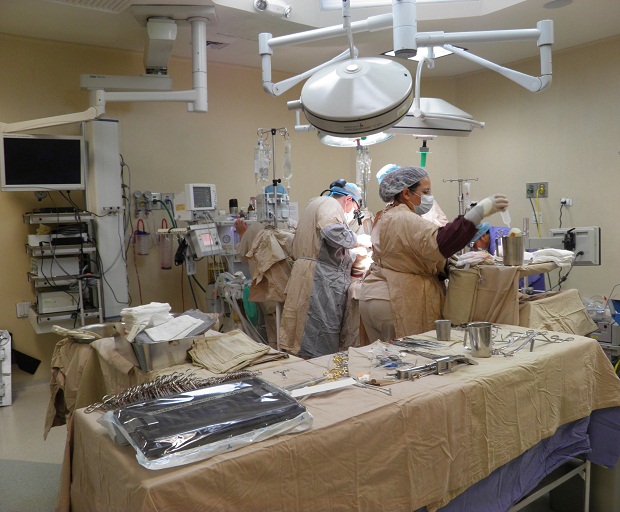
2. Although the initial experience is positive, evidence exists from only one randomized clinical trial in patients with aortic stenosis and one in patients with mitral insufficiency.

3. Adoption of these techniques to populations beyond those studied in these randomized trials, therefore, is not appropriate at the current time.

4. It will be important to establish regional centers of excellence for heart valve diseases. Criteria for centers performing interventional therapy in valvular and structural heart disease should be established, and the availability of devices and reimbursement for those procedures should be limited to those centers meeting those criteria.

5. The heart team approach should be used with formation of multidisciplinary heart teams within these centers led by primary cardiologists, cardiac surgeons, and interventional cardiologists.

6. Performance of isolated procedures without construction of a dedicated valve therapy program to encompass all aspects of care—including preprocedural assessment in common clinics, joint procedure performance, and common patient care pathways—is not recommended.

7. A national registry of valvular heart disease to perform post-market surveillance, long-term outcome measurement, and comparative effectiveness research should be established. This could be accomplished by linking the ACC’s NCDR® and STS clinical databases to the Social Security Death Master file and Centers for Medicare & Medicaid Services administrative databases in a national ‘research engine.’ This will, in effect, create a national registry of valvular heart disease.

8. Training and credentialing criteria for practitioners in this field need to be developed. Development of criteria for the formation of fellowship programs, as well as postgraduate training with appropriate experience for adequate patient care leading to guidelines for credentialing, is currently underway by multiple professional societies working together.

9. Interpretation of the current evidence by expert consensus documents and appropriate use criteria need to be developed.

10. With society leadership, multidisciplinary partnerships, and cooperation, a reasoned, balanced introduction of this new therapy can be accomplished.

Aortic Stenosis and TAVI: a new ‘stent’ scenario?


I am re-posting an article published in May on the heart.org by Reed Miller regarding the use of Transcutaneous Aortic Valve Intervention (TAVI).  TAVI is when a device is implanted in the cardiac cath lab (through an artery) to treat aortic stenosis.  Right now, this therapy is still in limited use in the United States, but is used more extensively in Europe where the guidelines are less restrictive.

I was a little disappointed here because I think some of his introductory language shows significant bias – but I think this article certainly adds to some of the discussions we’ve had here at Cartagena Surgery.  Even the title reflects a cardiology bias – cardiothoracic surgeons certainly aren’t the only ones who think we should be cautious about the overimplementation of new, experimental technologies in patients who are good candidates for existing (and proven) surgical treatments.   I would think that any prudent health care provider, or consumer would be hesitant to wholeheartedly embrace this therapy given the previous and recent cardiology lessons related to both carotid and cardiac stenting.

New technology is great – when it is selectively targeted to specific populations (high-risk surgical candidates such as extreme elderly (90+) or patients with multiple high risk co-morbidities) who would otherwise be ineligible for surgical intervention.  But let’s not put our patients at unnecessary risk by selling TAVI as an ‘easy’ fix to people who we know we benefit from aortic valve replacement surgery before we have all the data.

There are still multiple issues to be addressed with transcutaneous valve therapies – we don’t even know the durability of this technology (how long with they last?)  or the long-term complications..   Also when we compare ourselves to European practices, we need to remember that ‘acceptable thresholds’ may differ significantly.  At what level of risk of stroke are YOU willing to accept?  5 % ?  10% ?  25% ?  And doesn’t that depend on whether you are eligible to have other therapies, and what the risks of those therapies are?

Lastly, it’s important to note that the study in question – which revealed a higher than expected stroke rate was funded by the corporations that manufacture and supply these valves.  We’ve seen before how this can influence the practice of cardiology and cardiology guidelines.

Article re-post below: [my comments in brackets.]

Surgeons caution against

 overenthusiasm for TAVI in light of

PARTNER A stroke data

May 10, 2011            |            Reed Miller

Philadelphia, PA – The neurological injury data from the PARTNER cohort A trial of transcatheter aortic-valve intervention (TAVI) underscore the importance of the collaboration between surgeons and interventionalists when making decisions on how to treat patients in need of a new aortic valve, surgeons here at the American Association for Thoracic Surgery (AATS) 2011 Annual Meeting agreed.

As reported by heartwire, Dr Craig Miller (Stanford University, CA) presented new details on the neurological-event data from PARTNER cohort A, which included high-risk patients eligible for either surgery or TAVI. [‘high risk’ needs to be better defined if the patients were considered acceptable surgical candidates.] 

The data showed that the risk of neurological adverse events (transient ischemic attack [TIA] and stroke) was slightly higher with TAVI than surgery in the “as-treated” patients, especially in the patients who underwent transapical TAVI because their vessels were too small to accommodate a transfemoral implant, usually because they were obstructed with arteriosclerosis. Rates of major stroke, however, were not statistically different between the two groups in the as-treated analysis.  [numbers/ percents – I need hard data..]

Because of the added neurological risk, Miller believes TAVI should not replace surgery for most patients who can withstand surgery. So he is dismayed that it has grown so rapidly in some European countries where TAVI devices are commercially available, even though the durability of these devices has not been proven. “This is not going to be cost-effective, and civilization cannot afford this if they do not last a good amount of time, and a good amount of time would mean something different to a 95-year-old who is inoperable and to somebody under 70 with a very low surgical risk who should have 10- to 20-year life expectancy. So we have to look at valve durability,” he said.  [I wholeheartedly agree. All of Dr. Miller’s concerns are valid.]

“There are many [inoperable patients like] the people in PARTNER cohort B, who gained 1.9 quality-adjusted life-years, and it only cost $55K per QALY to achieve that. So for the inoperable cohort, it is cost-effective and actually provides meaningful rehabilitation, but the jury is out for the younger patients,” he said. “But the cost economics of the not-so-sick operable patients is going to be different; they’re still beaucoup sick and old in PARTNER A, but to take this down to younger, healthier patients is a huge question mark in my mind and in the FDA‘s mind, because we already have the gold standard of low-risk, durable, surgical [aortic-valve replacement],” Miller said.

Surgeon/interventionalist collaboration is critical

Miller thinks one reason that TAVI has become “a runaway train” in Europe is that in some countries there, interventionalists are able to decide to implant a transcatheter valve without consulting a surgeon or, in some cases, even having a surgeon on site. “The German Federal Ministry of Health didn’t have the backbone to stand up and legislate appropriate use, so it’s a free-for-all. But that would be wrong, especially since we don’t have durability data,” Miller said. Miller said he learned that about a quarter of aortic-valve replacements in 2010 in Germany were TAVI procedures, but Dr John Mayer (Children’s Hospital Boston, MA) reported at the meeting that the figure is now around 40%.

A good amount of time would mean something different to a 95-year-old who is inoperable and to somebody under 70 with a very low surgical risk who should have 10- to 20-year life expectancy.

Mayer and Dr Grayson Wheatley III (Arizona Heart Institute, Phoenix) echoed Miller’s concerns about overenthusiasm for TAVI during a staged luncheon debate on whether or not expensive technologies like TAVI ought to be somehow rationed to control healthcare costs. Mayer took the position of defending rationing and Wheatley argued against it, but they both agreed that physicians and their professional societies ought to work to ensure appropriate use of TAVI.

Wheatley said, “We’re probably going to see something along the carotid-stent paradigm, where it’s FDA approved, but [the Centers for Medicare & Medicaid Services] CMS has restricted [coverage] of an FDA-approved device, based on the data and economics, to the highest-risk patients. I see a lot of parallels there.”

“The Medicare national coverage decision process is going to undoubtedly come into play,” Mayer agreed. “That’s one way to control it, and that’s probably the biggest weapon in the arsenal.” Mayer said that the CMS is already discussing a future Medicare coverage policy for TAVI with the Society of Thoracic Surgeons (STS).

“But the other way to control it is to take the combined cardiology/cardiothoracic surgery approach to be careful about how this gets rolled out,” he said. The STS and the American College of Cardiology (ACC) are currently working on a joint position paper that will call for TAVI appropriateness guidelines based on the PARTNER results, Mayer pointed out. That paper will likely be published this summer. “That’s an extremely important step, and I think the government will understand and accept a lot of the recommendations in there.”

Meanwhile, the Society for Cardiac Angiography and Interventions (SCAI) will be contributing to the STS/ACC position paper and is also developing an expert consensus document with representatives from the AATS, STS, and ACC that will outline training and facility standards for performing TAVI. That document will be published prior to the TCT 2011 conference, according to SCAI.

“The difference between how this was rolled out in Europe and how the investigators in the PARTNER trial would like to roll it out in the United States is that a heart team with a surgeon and cardiologists—and not just the interventional cardiologists, but general cardiologists—make the decisions jointly. That is the model that we think should be imposed going forward,” Mayer said. This collaboration will “be a way of us fulfilling our professional responsibility and making sure that this gets rolled out with high quality and will have the side benefit of keeping it from going nuts like it has in Europe.”

While some may be better off undergoing surgery than transfemoral TAVI, there are also some patients whose risk of neurological injury is so high due to arteriosclerotic burden that they are probably not suitable for either surgery or TAVI, Miller said. “The only thing that’s going to change that is more rigorous patient selection and just saying no,” Miller told heartwire. “That might not go over well in the US where everybody demands everything yesterday, [but] since these are patient-disease-related predictors, more rigorous patient selection is the only thing that will reduce the late hazard of neuro events [in patients with very high arteriosclerotic burden].”

What does PARTNER cohort A reveal about the cause of strokes?

STS president and PARTNER investigator Dr Michael Mack (Medical City Dallas Hospital, TX) told heartwire, “There was an initial thought for the past few years that the transapical might be more neuroprotective than the transfemoral because you don’t transverse the aortic arch with the device, and I think this puts to bed that that was not the case. In fact, the stroke rate was higher in the transapical than in transfemoral, but the presentation showed that it was clearly related to the patient substrate.” The one-year stroke rate in the transfemoral-eligible surgery patients was 1.9%, while the one-year stroke rate for the same surgical procedure in transfemoral-ineligible patients was 9.7%, Mack pointed out. “That says they’re different patients [with] a higher atherosclerotic burden.”

[Collaboration will make] sure that [TAVI] gets rolled out with high quality and will have the side benefit of keeping it from going nuts like it has in Europe.

Mack pointed out that the version of the Sapien valve (Edwards Lifesciences) tested in PARTNER was a first-generation device that did not have the nose cone that newer versions will have, “so you basically had this snowplow that could go across the aortic arch and scrape stuff off; smaller delivery devices with nose-cone protection may be expected to be of benefit,” Mack said. However, previous studies with transcranial Doppler show that the majority of the emboli come from the valve during balloon valvuloplasty and deployment of the valve and not from the aortic arch. “[This is] why you don’t see a benefit of the transapical here, because you’re still blowing up that valve [inside the native valve].”

This explanation is consistent with the study’s finding that, in the first few weeks following the procedure, a smaller valve opening area, which is usually a sign of high calcification around the opening, was associated with a higher risk of neurological events in the TAVI patients. Embolic-protection devices, such as Edwards’s Embrella, may catch some of these emboli released during the valve deployment, Mack said, but clinical experience with these devices is very limited so far.

Better devices may stop a lot of the periprocedural events, but about half of the neurological events happened after the periprocedural period. In this period, the most important risk factor—other than undergoing TAVI instead of surgery or being transfemoral ineligible—was a stroke or TIA within the previous six to 12 months. Atrial fibrillation, which was predicted by some to possibly be a risk factor for strokes, was not associated with an increased risk of neurological events in the study. Dual antiplatelet therapy was recommended for all patients in the trial, but the trial could not track how compliant patients were with that therapy.

“We have absolutely no clue if these strokes were device related or not. We don’t know if the device is thrombogenic, or if all that calcium left in the aorta hanging out eventually breaks out, or if it’s a nidus for clot formation and that breaks off. We just don’t have any insight on that,” Mack said.

PARTNER was sponsored by Edwards Lifesciences. Miller has consulting arrangements with Medtronic CardioVascular, Abbott Vascular, and MitraClip. Mack consults for Edwards Lifesciences and Medtronic.

Aortic Stenosis: More patients need surgery


An interesting new article on the use of echocardiography (cardiac ultrasound imaging) to determine the optimal timing of aortic valve replacement is re-posted below.  This article is helpful for several reasons, but first a quick summary of Aortic Stenosis.

The timing of aortic valve replacement surgery for aortic stenosis (here after referred to as AS) has always been a complicated issue.  Not all stenotic valves need to be replaced at the time of diagnosis; in fact, most don’t since AS is usually diagnosed early (from the presence of a new heart sound on physical examination.)

Patients may not need surgery for ten or twenty years after AS is initially detected, and performing surgery at the RIGHT time is important.  Performing surgery too early has almost as many drawbacks as performing surgery too late.

Ideally, surgery is performed before the patient becomes symptomatic (fainting/ near fainting, chest pain or the development of heart failure) AND before the development of heart damage from AS.

Article re-post:  [my comments in bracketsI have also italicized certain portions for emphasis.

Echo predicts mortality in untreated

 Aortic stenosis with normal LV

function

Article authored by Marlene Busko, Heartwire.com  (June 17th, 2011)

Montreal, QC – Researchers have identified four  echo markers that predicted mortality in elderly patients with severe aortic  stenosis but preserved LV function who did not undergo surgical valve  replacement [1].
Dr Eddy Barasch (St Francis Hospital, Roslyn, NY) presented the  study here at the American Society of Echocardiography (ASE) 2011 Scientific  Sessions.

The four echocardiographic markers that predicted poor  survival were greater left ventricle (LV) concentric remodeling, lower stroke  volume, elevated LV filling pressures, and mildly elevated pulmonary artery pressure.

“Our findings may not be generalizable, but they suggest that in [elderly, symptomatic patients with untreated aortic stenosis] with normal LV function, no other valve disease, and normal sinus rhythm, these  echocardiographic parameters may be useful for risk stratification,”
Barasch told heartwire. Being able to predict mortality with surgery vs medical therapy in patients such as these—who are typical of patients seen in clinical practice—will become even more important when  transcatheter aortic-valve implantation (TAVI) becomes available, he added.

The data suggest that “not operating on symptomatic  patients like this—with these markers—is really a death sentence,” said Dr Malissa Wood (Massachusetts General Hospital Heart Center, Boston), when asked to comment on the study.”When you are managing patients who may in  fact be good candidates for surgery, looking at their echo and figuring out if
they have these risk factors can help determine the patients’ overall risk of
mortality with surgery vs medical therapy,” she added.  [I completely agree with Dr. Woods, which is why we need to be frank in our discussions of the real risks of surgery and the risks of NOT having surgery.]

Surgery seen as “too risky”

The prevalence of aortic stenosis increases with age, and it is estimated that among 80-year-olds, as many as one in four have aortic stenosis, and about 3% to 5% have severe aortic stenosis, Barasch explained.   However, a significant proportion of patients with aortic stenosis—30% to  40%—are denied surgery for various reasons, he noted. The patients may have
multiple comorbidities, be too old and frail, or may not want to have surgery.

In some cases, a primary-care physician may not refer a patient for surgery due to perceptions that the procedure is too risky, while in others, a surgeon may decide that a referred patient is not a good candidate for surgery, Wood added.
[The wording here is deceptive – if a patient decides not to have surgery – they weren’t ‘denied surgery’.  People have the right to decide for themselves – as long as we ensure that we explain everything to them in terms they can understand.  This phrasing is concerning now that many cardiologists are performing experimental transcutaneous valve procedures – sounds like cardiologists are opening the door to doing this procedure in patients that may not otherwise be candidates under “the patient was denied surgery/ patient refused surgery” model which we’ve seen many times before with stent patients.]

[The other issue that we will talk about in a future post is the “primary care provider (PCPs)” not  referring patients that he/she doesn’t think are good candidates.  Frankly, most PCP  and cardiologists, for that matter, are not qualified to make that determination.  As you will read further into the article and see – the outcomes of untreated AS are quite grim, so the
decision on whether or not to refer a patient for evaluation, is not one to be taken likely.]

“On the other hand, if you don’t treat these patients surgically, mortality is increased twofold,” said Barasch.

Although most elderly patients with severe aortic stenosis have preserved LV function, few studies have examined how risk factors  affect survival in this patient subset. To identify echo variables associated  with mortality in these patients, the team reviewed the charts of 443
consecutive patients with severe aortic stenosis and preserved LV ejection fraction who had echo Doppler in their center from 2003 to 2010.

After patients who underwent surgical aortic-valve replacement were excluded, the study population comprised 274 patients with a mean age of 79.5 years (51% men). [this is quite a large subset of patients that didn’t/ couldn’t/ didn’t want surgery.  I’d like to know why, and who decided (other than the patients themselves). We successfully do aortic valve replacement in many patients over 80 (age itself should NEVER be a factor – as discussed in numerous previous posts.]

All but two patients had symptoms of heart failure (45%), angina (33%), syncope (5%), or multiple or other symptoms (17%).  All patients had normal sinus rhythm, and their mean LVEF was 64.5%+9.4%.

After a mean follow-up of 3.2+2.7 years, 50.5% of the patients had died.

The patients who survived were younger, had a higher body-mass index (BMI), and were less likely to have hypertension, renal insufficiency, diabetes, or heart failure, and more likely to have CAD.

Of the multiple echo-Doppler variables that were examined, only four parameters—LV concentric remodeling (increased LV wall thickness), lower stroke volume, elevated LV filling pressures, and mildly increased pulmonary artery pressure—were moderately associated with mortality,  after researchers adjusted for age, gender, and BMI.

No surgery also ups risk

“The biggest take-away message is that we are still grossly undertreating symptomatic aortic stenosis, and many patients who would benefit from surgery are not getting it,” Wood summarized.  The study helps identify the magnitude of the risk of not having surgery, among these elderly patients.  [Actually, we’ve known these statistics for at least twenty years – I had to memorize them for student rounds when I was graduate school, as standard fare for grilling by the cardiac surgeon.]
“It is a strong study—useful for risk/benefit analysis,” she concluded.

Unfortunately, much of this article seems to state that the biggest obstacle to patient care, safety and welfare seems to be the referring physicians themselves.  In my opinion, ALL patients with AS should be referred to a cardiac surgeon (not because I work for one) but because ONLY the surgeon and the patient can truly decide whether its’ time for surgery/ and if the benefits outweigh the risks.

So, if you have Aortic stenosis, symptoms or not – get your more recent echocardiogram, a list of all your medications, and as many medical records as you can get – and schedule an appointment with a cardiac surgeon for a second opinion.

I’ll be posting some additional articles and references for interested readers soon.


Aortic Stenosis as Heinz 57


“Aortic Stenosis as Heinz 57”

I apologize, but the best analogy I can use – is a squeeze ketchup bottle.

okay, it's not heinz.. but you get the picture..

In normal valve functioning, the three valve leaflets open and close fully to permit and control the flood of blood from the left ventricle to the aorta, where it is then circulated throughout the body.

normal valve diameter

During diastole (the filling phase) the leaflets are shut to prevent blood from leaking backwards from the aorta into the heart.  (When leaflets don’t close properly this is called aortic regurgitation.)

During systole, the ventricle contracts like a big fist,  squeezing the ketchup bottle to shoot blood out of the heart into the aorta.  (The force of this is measured in millimeters of mercury, and is the top number on your blood pressure cuff).  When the valve is working normally, it opens fully and the blood is ejected out to the aorta, and the whole cycle begins again.

In Aortic Stenosis – the valve leaflets have become fused together, either from age or disease.
(Some people are born with only two valve leaflets and this means that they are more likely to develop aortic stenosis as they age.)  As aortic stenosis progresses, the opening for blood to pass thru becomes smaller and smaller since the leaflets can not longer open fully,  In many people – at the time of surgery – this opening is about the size of the pinhole in the ketchup bottle that squirts ketchup.      (The normal sized opening is 2 to 3 centimeters).

average valve opening in severe aortic stenosis

Now, think about how hard a person has to squeeze that ketchup bottle to get some ketchup for hamburgers, fries (and all the other foods I usually scold about in other posts).
In the heart – this pressure is magnified (and can be measured in the cath lab during cardiac catheterization).

As this pressure gets higher and higher to compensate for the narrowed opening, the delicate structures of the heart become damaged, with the heart muscle becoming thicker and less flexible (just like any other muscle with exercise.)  Except unlike biceps, a big thick heart muscle is not a good thing, and can lead to heart failure, arrhythmias and sudden cardiac death.

Eventually, as the heart pushes against the increased pressure, over and over (at least sixty times per minute) the heart gets tired from working so hard.  As the heart fatigues, it is unable to keep up with demand and patients will begin to develop symptoms.

These symptoms include:

Syncope/ near syncope (fainting or near fainting) as not enough blood is pushed into central circulation and to the brain.

Chest pain – because not enough blood is pushed out to the coronary arteries during diastole.  (In a person with aortic stenosis, nitroglycerin can cause problems – as it lowers blood pressure  (and force of contraction even further in someone who needs the extra force.)

Heart failure – the weakened and thickened heart can no
longer keep up and blood begins to back up in the left ventricle.

What these symptoms predict:

Once these symptoms develop, doctors can readily estimate the approximate longevity for patients who do not subsequently have surgery.

From the natural history of aortic stenosis (from before we had surgery to treat it) we know that 50% of people with Syncope will die within 5 years.

Fifty percent of people with chest pain die within three years.

And ultimately, fifty percent of people with heart failure die within two years.

These numbers are important, and I want you to remember them for our subsequent discussions on aortic valve replacement because they need to be factored into a patient’s decision whether or not to pursue surgery.

Medical Tourism in my own backyard..


New agreement with Colsanitas and a company in Northern Virginia is bringing Colombia to the author’s backyard..

Now, for more intimate details of the Bogotá Colsanitas facilities and the surgeons operating there – you’ll have to pick up a copy of Bogotá! The book is being reviewed right now, so we’re getting closer and closer to publication..

Images of Surgery in Colombia


I have published several Images of Surgery in Colombia to the web to give outsiders a glimpse into the operating rooms here in Bogota.  But since Yahoo! has overhauled their site – I will publish images here for readers, including photos from some of my other travels (Mexico, Medellin).

However, please do not use/ copy/ alter these images without my express written permission.  (All photos by K. Eckland)

This slideshow requires JavaScript.


The Latest Compilation


Enjoy – a short ad for the Bogota Guide to Medical Tourism featuring Bogota’s Hottest Young Surgeons – including Dr. Juan Pablo Umana, Dr. Ivan Adolfo Santos, Dr. Juan Carlos Garzon, Dr. Freddy Sanabria and Dr. Felix Castro. If you haven’t heard about Bogota’s best and brightest – you haven’t heard anything yet.

Book Advertisement


Created a new advertisement for the book. Now, obviously for reasons of patient privacy, HIPAA and all of that – we’ve changed the names, and pictures of the people involved. (I did obtain permission from the patient to use surgery photos in print, video and other media).

This is the first in a series of ads for the book, so let me know what you think.

Does it get any better than this?


Going to heart surgery tomorrow – with one of the nicest people I’ve met since I’ve been here.. (Don’t worry, I’ll tell you all about it.)

Then, later this week, I have an appointment for an interview with a thoracic and vascular surgeon – I always said those two specialties combined are like dynamite..

Does it get any better than this? I’ll let you know.

(Cartagena Surgery News) But it certainly gets worse: over at our sister site we are talking about the financial and emotional burdens placed on Americans due to our failing healthcare system..

(Thoracic Surgery News) We’re discussing robotic surgery at our new Thoracic Surgery Portal:
Saw this on a neighboring blog, talking about robotic lung surgery – but my readers here know that Dr. Buitrago has been training with an American surgeon to offer that treatment here – at Clinica de Marly.

Dr. Diego Pineros, cardiac surgeon, (revisited)


Clinica San Rafael – Bogota, Colombia

Most of you haven’t heard of Dr. Diego Pineros but I originally interviewed him about three months ago, (long before I set up this website.) He is one the many genuinely nice people I have had the fortune to meet during this trip (and a great tour guide since he knows quite a bit about the history of Bogota). Today, I went back to visit him, at Clinica San Rafael, which is one of several facilities where he operates.

The case for this morning was cancelled, but it was nice to catch up with Dr. Pineros, meet his residents (young future surgeons) and see the clinic itself.

While we were there – we ran into Dr. Mario Lopez (thoracic surgeon) who has now added Clinica San Rafael to his roster. If you remember, we last saw him in the operating room at Mederi.
I tried to get a picture of him (without his mask) but it’s a bit blurry..

Hope to be back at Clinica San Rafael soon, so I will be able to tell you more.