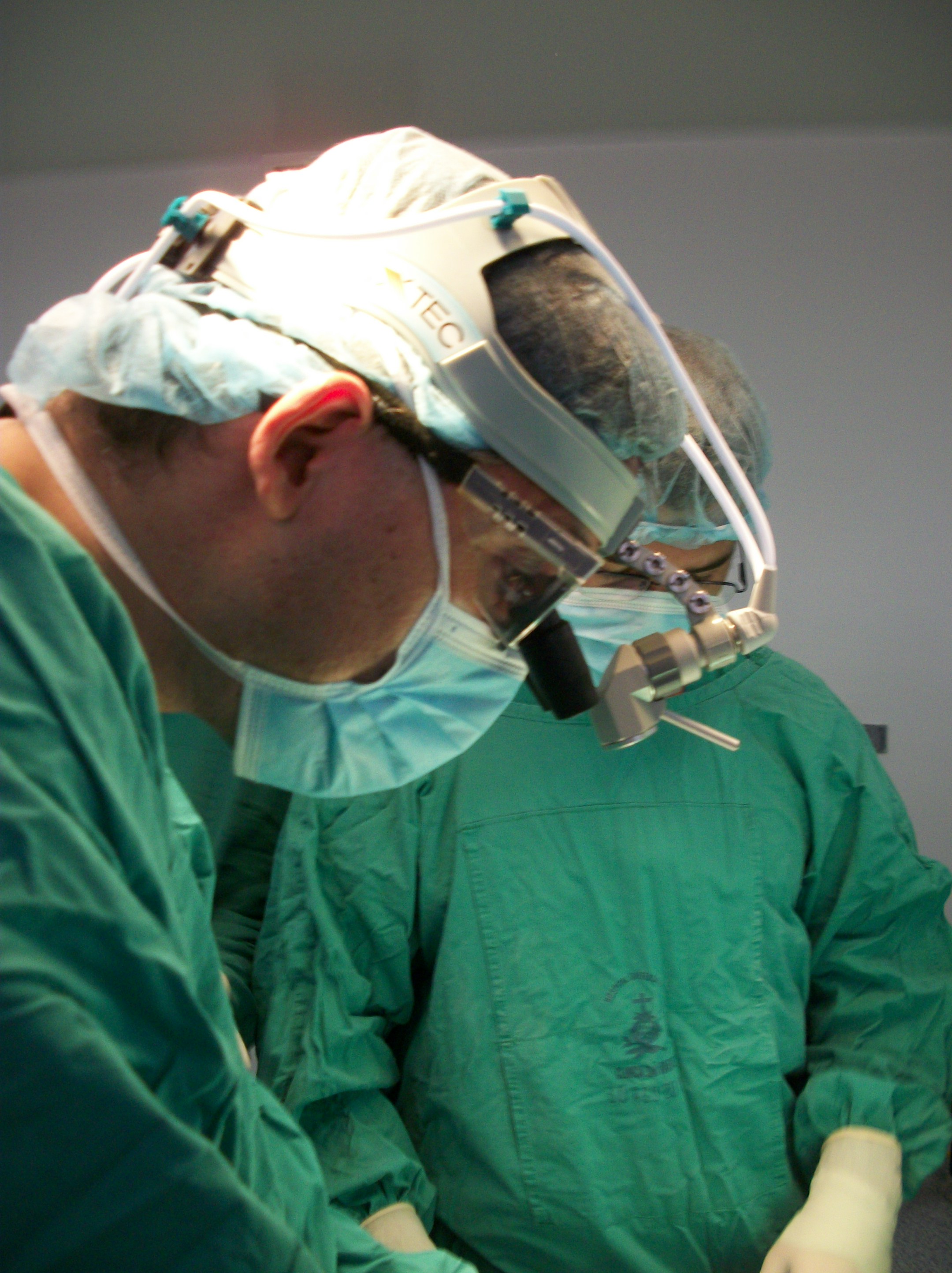
Thank you, Dr. Francisco Cabal


I would like to thank Dr. Francisco Cabal – an orthopedic surgeon and director of Clinica del Country/ Hospital de la Mujer.  A few nights ago, a Colombian friend was seriously injured in a motorcycle accident – and the worried family asked me for help, so I called Dr. Cabal.

He was absolutely fantastic in making sure the family was up-to-date on the status of their loved one while she was in surgery, addressing all of their concerns and helping to relieve some of their anxiety.

I wanted to be sure to thank him on this (semi-public) forum, because I want readers to realize that medicine here is very different from the United States, in that  – most often, if you ask for help; people will go out of their way to provide it.  (I suspect given the time of day when I contacted Dr. Cabal – he was probably enjoying a nice supper or time with his family) but he had information for the family in just a few minutes..

Sometimes, at home, (the USA),  there is a barrier, or ‘gatekeeping’ that keeps us from our providers – and can make situations like this more difficult.  But here in Colombia, as I’ve said before – the doctors give you their cell phone numbers and emails because they want you to call if you have questions or concerns..

And when you do call – you are getting their personal phones, so you won’t be routed to a secretary or left on hold for twenty minutes.. [the only exception is during surgery].

Does this privilege get abused at times?  Certainly, which is what makes it more impressive that these doctors stay accessible to their patients.  [We’ve all  encountered obnoxious customers in all lines of work – medicine and health in no exception.]

Back in town..


Back in town just a few days, and already in the swing of things..

After arriving late last week, I was just in time to attend a conference on lung cancer and mesothelioma at the Hotel Tequendama.  There were some great presentations by several speakers on advances in the treatment of Lung cancer.  It was also an opportunity to catch of with several of the thoracic surgeons I’ve talked about here; including the always classy and amazing Dr. Stella Martinez, who was one of the surgeons giving a talk on surgery for mesothelioma.

Dr. Rafael Beltran and Dr. Ricardo Buitrago were moderating the event, which was put on by the National Cancer Institute.   Dr. Juan Carlos Garzon, Dr. Barrios, and Dr. Mauricio Palaez were also in attendance.

But the biggest and nicest surprise was seeing Dr. Edgard Gutierrez (Cartagena).  Those of you that are familiar with my Cartagena writings know that Dr. Gutierrez (unwittingly) took a large role in shaping my career.   It was great to sit down and catch up with him for a while.  But I’ll post more about my visit with him over at Cartagena Surgery so I don’t confuse my Bogotá readers..

(I’ve posted some photos from the event at my sister site, http://www.cirugiadetorax.org)

Reasons to write about medical tourism: #146, a cautionary tale


As  I mentioned in several previous posts, there are numerous reasons why I write about medical tourism, and protection of the consumer is first and foremost.

Several months ago, I was told an exceedingly disturbing tale of patient abuse at the hands of a plastic surgeon here in Mexicali, MX where I am writing my latest book.  I’ve internally debated publishing information about it – not because I think the patient isn’t credible (the patient is exceedingly credible) but due to the lack of verifiable documentation and evidence related to this story.  Then again, this is exactly the reason that this American patient was so hesitant to come forward.  Ultimately, I feel that by failing to publish this account, I would be further victimizing this patient, and failing to warn consumers of the potential dangers.  It is of the utmost regret that I do not have conclusive proof to bring to the authorities (and readers) to prevent this surgeon from ever operating again.  This patient isn’t being vindictive, or seeking a payout – it’s the furthest thing from her mind.  Her only motivation is the pain, disfigurement and indignities that she has suffered, and a hope of preventing this from happening to another medical tourist.

“I wanted to go to the police, to the medical board, to someone, but how can I prove it?” the patient asks, agonizing over the episode which occurred more than a year ago.

Yet, she is still haunted by it – and the story itself is a harrowing account of  abuse of patient trust – and so it should be presented here.  Given the lack of verifiable documentation, I have omitted the name of the surgeon involved, but suffice to say, he is a popular surgeon in Mexicali, and one that I have intentionally omitted from my latest book.

The patient, who happens to be a bilingual health care provider came to Mexicali for liposuction and rhinoplasty.  While telling the story, she is embarrassed by this – as if her supposed vanity is to blame for what occurred.  It is another reason she was reluctant to report it to the police – for fear that she would be told that she deserved it.

Her surgery was botched from the beginning and almost cost her life.   A simple cosmetic procedure has profoundly damaged her physically and psychologically.   She has scars; both physical and emotional that testify to much of the trauma that occurred.

She presented for surgery that fateful morning with no sense that anything was amiss; the surgeon has an excellent reputation and she had investigated his credentials; he is in fact, a licensed plastic surgeon.  Previous patient testimonials were glowing with no hint of any problems.

The first indication there was a problem came with the initiation of the procedure.  After being given a mild paralytic, she remained conscious and aware during the procedure.  She remembers vividly being intubated by the anesthesiologist who appeared not to notice her distress.  “I could hear the heart monitor going crazy but they all ignored it.”

There were several flashes, and that’s when I realized that the surgeon was taking pictures of me, naked, intubated and helpless.” 

She continued, “I know that many plastic surgeons take pictures for before and after photos, but no one ever asked me about it.  Also, in most clinics – they take the pictures while the patient is still awake before going into the operating room.”

I finally lost consciousness and woke up in the recovery room.  I sensed right away that something was wrong – I had horrible pain on the left side of my abdomen and chest, and bandages on the left side of my abdomen but nothing on the right, or my face.”  [the patient had been scheduled for bilateral liposuction of the abdomen and rhinoplasty.]

Then the PACU nurse delivered devastating news; the procedure had been abandoned mid-way – with the liposuction performed on the left only, because she had gone into respiratory arrest during the procedure.  The nurse also whispered confidentially, that she was “lucky” because the surgeon and one of his staff members had been noticeably intoxicated on their arrival to the operating room, and had left immediately before the procedure [presumably] to “do some more cocaine.”

Later, when the anesthesiologist arrived, the patient questioned him gently; about her intubation experience, the abrupt discontinuation of her surgery – and as to what had happened.  “Nothing happened”, she was told repeatedly.  “Everything went absolutely fine.”  When she insisted, asking why her surgery did not match what was initially planned – the anesthesiologist left.

When the surgeon finally arrived, he was equally uncommunicative.   In answer to her questions; “Did anything happen during my surgery?” he gave repeated denials and assurances that ‘everything was fine.’   He also denied taking any photographs.

When she asked why, then, did she only have half the procedure completed, he answered, angrily, “because I changed my mind,” before stalking out.

When her family came to help her dress and leave the surgical center, there were even more surprises, a series of rounded, purplish marks on her chest.  “My mom asked if they were hickeys, and when I looked in the mirror – that’s exactly what they looked like.”  Being familiar with surgery, and medicine, I interrupted to ask if they could be from the electrodes, CPR or anything else.  “I don’t know” she answered, “but they sure don’t look like any of the marks I’ve seen on other patients before.”

These marks along with a fateful encounter as she was leaving the clinic are what haunt her to this day.  As she was leaving with her family, a young man was chuckling and staring at her as she walked past.  She looked over at him, and he started laughing, saying, “I recognize your face, [and your body] from the photos passed around the hospital.”  The photos that no one will admit to taking.

Even now – she has evidence of the botched procedure – one side of her abdomen has is lumpy and uneven with furrowed tunnels (an attempt at liposculturing, she thinks).  When comparing it to the side that was untreated – she begins to lament the folly of her procedure – and yet again, to blame herself.

“I wish I had never done it.  Now I have to see this everyday.  I am afraid to ever have surgery again (to fix it).”

At the end of the interview, she is in tears, and she leans over and whispers in my ear: the surgeon’s name.

I wish I could prove it,” she says.  “This should never happen to anyone else.”  She states that when she went back to talk to the original nurse (from the recovery room), the nurse was no longer there – so her only collaborating witness is gone.  While her family saw the results – they were told the same story she was, that the surgery preceded normally, and that the surgeon ‘changed his mind’ in the middle of surgery.  Repeated calls to the surgeon for more information have gone unanswered.

I wish she could prove it too – the ensure that everyone knew the name of this heartless surgeon – to prevent anyone else from becoming a victim.  But even without the name, it’s a strong reason for me to continue doing what I do now.

[Readers should note that while this occurred in Mexico – unfortunately events such as this have occurred around the world.  In the 1990’s there was a widespread scandal as a notable plastic surgeon attempted to sell photos to a tabloid of Michael Jackson, Liz Taylor (among others) that were taken without their knowledge during plastic surgery procedures.]

Update:  There is a new scandal at John Hopkins in the wake of the February suicide of one of their popular OB/GYNs who is believed to have taken pictures of his patients secretly, using a mini – camera hidden in a pen.

Likely Suicide of Johns Hopkins Ob/Gyn Tied to Secret Photos” article by Robert Lowes, Medscape, February 2013.

Radio Interview with Ilene Little


Interview with Ilene Little, “Know Before You Go”

Last month I completed a radio interview with Ilene Little, talking about Colombia, thoracic surgery, and issues in medical tourism.  I’ve been waiting for the archives to be published so I could provide a link here for interested readers.

Hope you enjoy. (You might recognize some of the names.)  For more print information on the interview – take a look at the article on my sister site.

Neurosurgery at Santa Fe de Bogota


Dr. Fernando Hakim Daccach (left), neurosurgery – Santa Fe de Bogota

As you can imagine, millions of pairs of eyes are turned towards Santa Fe de Bogota – and the department of Neurosurgery after the mayor of Bogotá, Gustavo Petro was admitted with a subdural hematoma, and subsequently underwent surgery.

Many people don’t know that Bogotá is actually the home to modern neurosurgery.  Dr. Salomon Hakim, one of the founders of modern neurosurgery and inventor of the Hakim shunt for hydrocephalus called Bogota home.  (Sadly, he died just last year.)

But neurosurgery in Colombia doesn’t begin or end with Dr. Salomon Hakim.  With five neurosurgery residency programs and over 150 practicing neurosurgeons in Bogotá – new innovations and treatments are being developed here everyday.

Many of these fine surgeons practice at Fundacion Santa Fe de Bogota such as Dr. Aristizabal – Chief of the Neurosurgery residency program, or Dr. Carlos Cure, Dr. Enrique Jimenez and Dr. Fernando Hakim .

Others such as Dr. Pedro Penagos or Dr. Juan Fernando Ramon are scattered throughout the city – treating brain cancers at the National Cancer Institute, or caring for the families of policemen at the Hospital de la Policia – and innovating in the field of neuronavigation.

While my heart goes out to the Mayor of Bogotá, and his family – hopefully the international media stories on his health will give some well-deserved attention to these fine (and humble) neurosurgeons.


References and additional information: Updated 17 June 2012

Gustavo Petro webpage

According to their website, they anticipate the mayor will be discharged home soon (in a statement dated today, June 17th.)  We are glad to hear he is making such a speedy recovery.


In the operating room with Dr. Victor Ramirez, MD, plastic surgeon


Frankly, I wasn’t sure what to expect when I returned to see Dr. Victor Ramirez.  I had enjoyed talking to him during the first interview back in November of 2011, but as most people know – a lot had happened since then.  It took me a couple of weeks to re-connect with the now somewhat wary and (media-weary) surgeon, but when I did – he didn’t hesitate to invite me to the operating room.  And then – after the first case, he immediately invited me back**.

Dr. Victor Ramirez, plastic surgeon

For readers unfamiliar with the concept of my work – let me tell you, this is usually an excellent prognostic indicator.  It’s certainly not fail-proof – but as a general rule; when a surgeon invites you to his operating room, he is generally confident because he is a good surgeon. 

You’ll notice a couple of things about the statement above – when the surgeon invites me, is important.  Often when I have to ask – it’s because the surgeons are hesitant to let me watch.  Most (but not all of the time) – there is a good reason that a surgeon doesn’t want an observer in their operating room.  (And there are a multitude of reasons – not just a poorly skilled surgeon.)

But there are certainly no absolutes.  I have met fantastic surgeons who initially were not crazy about the idea (but quickly warmed up to it) and I have met less than skilled surgeons who happily encouraged me to visit – and everything in-between.. I’ve visited great surgeons who were hampered by poor facilities, unskilled staff, or limited resources.  That’s why the on-site, operating room visit is so important.  Anything less, is well – less than the full picture.

But back to Dr. Victor Ramirez – in the quirofano (operating room) performing surgery.

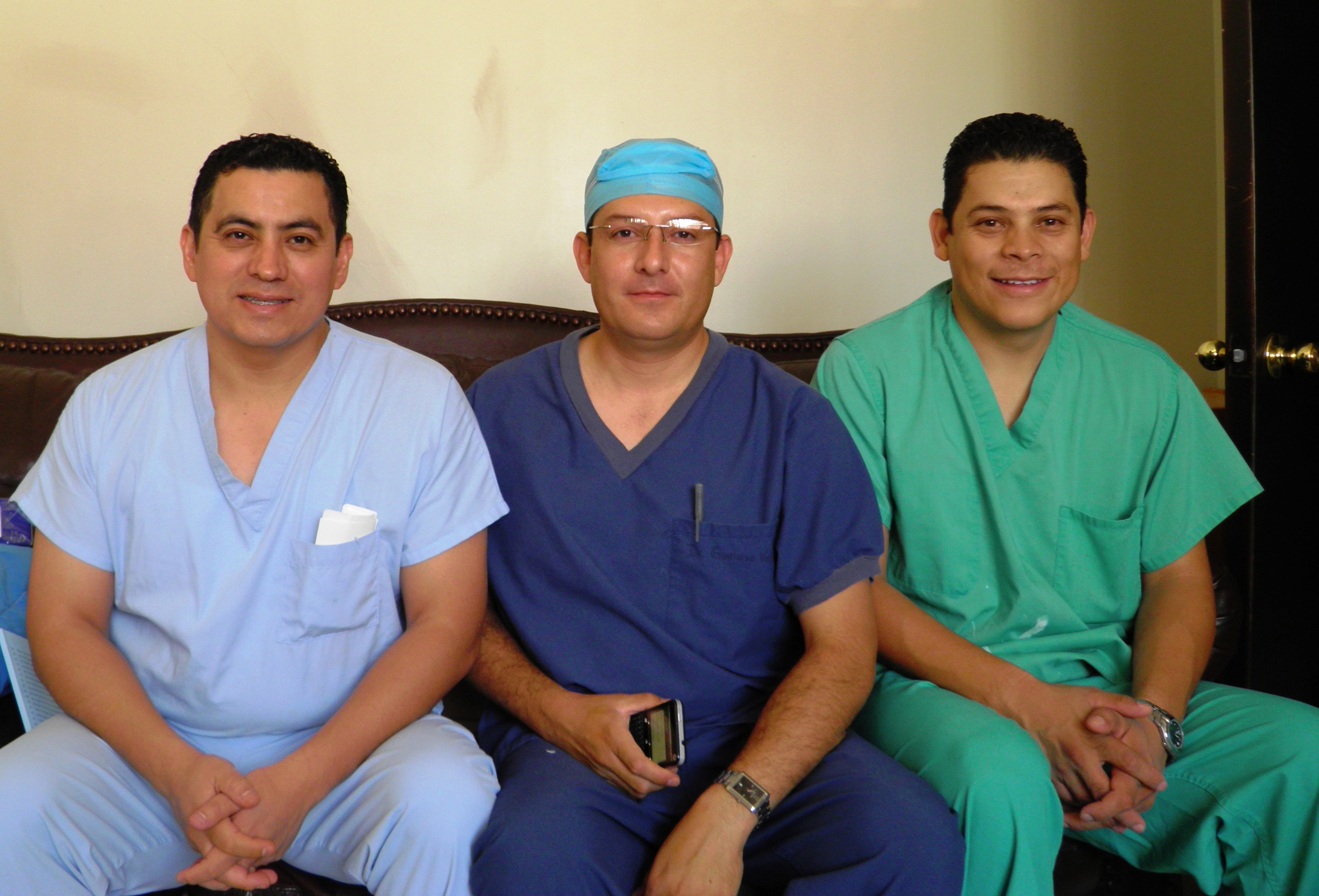
Dr. Victor Ramirez, Dr. Perez and Ricardo (RN)

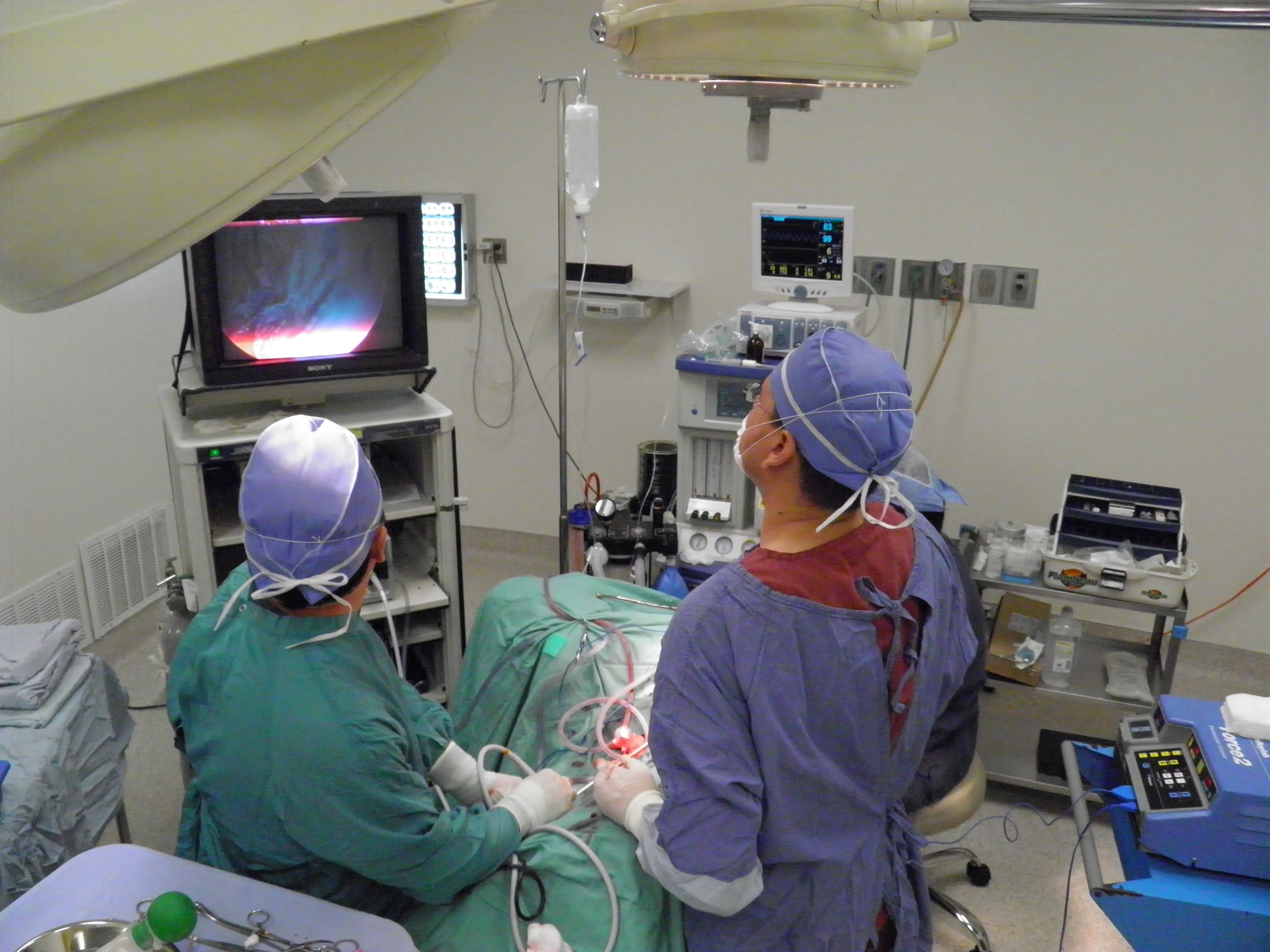
I observed Dr. Ramirez operating at two different facilities – Hospital Quirurgico del Valle, and the Bellus clinic.  Hospital Quirurogico is a private hospital – with excellent operating room facilities.  While there are only two operating rooms, both rooms are large, well-lit, new, and very well equipped.  There are three separate ‘big screen’ tv sized monitors for video-assisted procedures – so if you are looking for a facility for video-assisted procedures such as endoscopy, laparoscopy or thoracoscopy – this is the place.  All the equipment was modern, in new or ‘near-new’ condition.  As a facility specifically designed as a surgical hospital – with private rooms, patients are segregated from ‘medical patients’ with infectious conditions.  (The facility is not designed for pneumonia patients, and other medical type hospitalizations.)

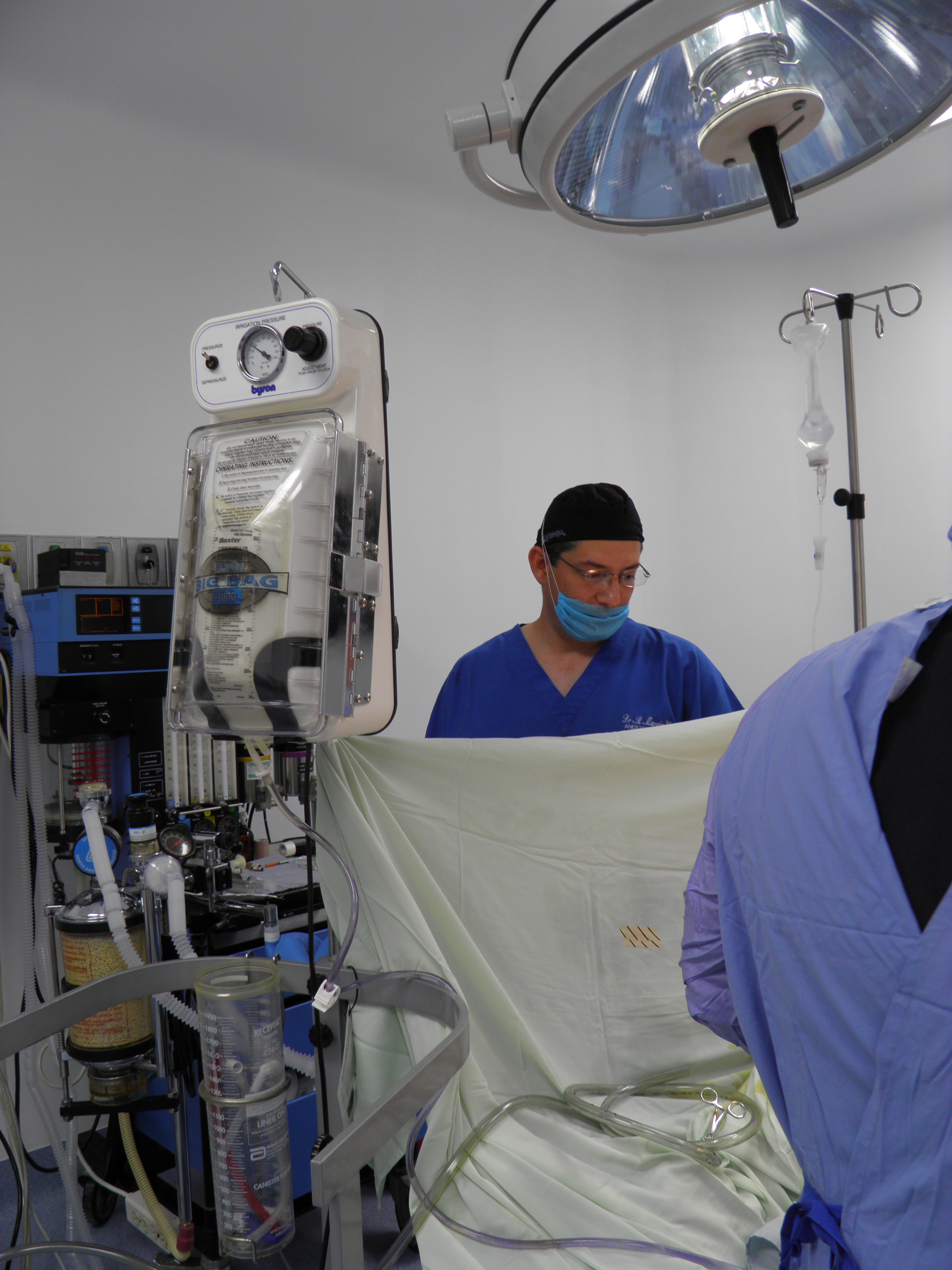
Dr. Ramirez applied the sequential stockings himself (kendall pneumatic devices), and supervised all patient preparations.  Patients received a combination of conscious sedation, and epidural analgesia – so they were awake, but comfortable during the procedures.  (This eliminates many of the risks associated with general anesthesia – and reduces other risks.)  The anesthesiologist himself, Dr. Luis Perez Fernandez, MD was excellent – attentive and on top of the situation at all times.  There was no hypoxia or hemodynamic instability during either of the cases.  (I have been favorably impressed by several of the anesthesiologists here in Mexicali.)

Dr. Perez monitors his patient closely

As for the surgery itself – everything proceeded in textbook fashion – sterility was maintained, and Dr. Ramirez demonstrated excellent surgical techniques.

For example – One of the signs of ‘good’ liposuction (and good preparation) is the color of the fat removed.  Ideally, it should be golden or light pink in color.  Over-aggressive liposuction or poorly prepped liposuction results in more bleeding.  As I watched fat being removed – the fat remained golden-yellow in the suction tubing, and even at the conclusion of the procedure, the accumulated suction canister contents remained just slightly tinged pink.

Results were cosmetically pleasing in both cases with minimal trauma to the patients***- but there will be more details forthcoming in the free book (since the post is becoming pretty long, and may be more detail than casual readers would like.)  I’ll have more information about the doctors, including the anesthesiologists, the clinics and the procedures themselves..

I did want to post some specifics – especially in this case, as the patient told me that her/his parent is a retired physician and had concerns about surgical conditions.

Mom, Dad – you don’t have to worry – Dr. Ramirez runs an excellent OR. Even in the tiny Bellus clinic, there is a full crash cart, a defibrillator and an emergency intubation cart – just in case.

**Given what I know about Dr. Ramirez, I am pretty confident – that if I wanted – I’d be there right now, and every day for a month, or until I said, “stop”..  That’s the kind of person Dr. Ramirez is.

*** In some liposuction cases – the patients appear as if they have been beaten (extensive bruising) due to the amount of trauma and force used during the procedure.

In the OR (and back again!)


It sounds awful to say but it’s a good thing my husband has been out-of-town this week – after all, considering my week in the operating room, he wouldn’t have seen much of me anyway!  But it always drives him a little crazy to see me racing from interviews to operating rooms – stumbling home late, with aching legs and a rumbling tummy, only to climb out of bed and the crack of dawn just to do it again.. then worry that I somehow won’t have time to write it all down – and round and round..  (That being said – he is phenomenal about understanding this driving motivation I have to interview, and to write – even when I’m not quite sure I understand myself.)

So he wouldn’t have complained about my whirlwind tours of the operating rooms this week – or the long days of back-to-back surgery but I would have felt bad about not seeing him all the same..

Instead with my husband thousands of miles away, I hear him smiling in the phone, laughing at my exploits, though I sometimes picture the wrinkle he gets in his brow when he thinks I’m not eating right, or getting enough sleep.. He currently serves as my remote editor for my articles at Examiner.com – calling to give feedback before submission.  He’ll be home soon – and he’ll be patient with me, as always.

Dr. Victor Ramirez, plastic surgeon

Had some great interviews and operating visits this week – including Dr. Victor Ramirez, and most of the plastic surgery community here in Mexicali – but to be fair, I will break it all up into a couple of posts.

Demonstration of techniques for breast reconstruction at Mexicali General

Back in my ‘home’ OR in thoracic surgery – which felt good.  I love meeting and seeing all the different specialties like bariatrics, urology and plastics, but it sure does feel good to come back home again..

back in thoracics (and trying to hang from the rafters)

I could wax some eloquent nonsense about the beauty of a muscle-sparing thoracotomy but then again – the good doc does almost everything minimally invasive, so I never see any.. (and you’ve heard me crow about dual port thoracoscopy.)

with more to come..

Hidden Gem returns to Bogota: calling all surgeons!


Calling all Bogotá surgeons – if you missed the first chance to be interviewed for the first edition of Bogotá! a hidden gem guide to surgical tourism – don’t worry..  I’ll be back in the city this September (2012).

While my primary purpose for my return to Bogotá is research-related (I am working on a doctoral degree), I always have time to talk to surgeons about the new and innovative things they are doing in their practices.

Contact me through the site if you are interested..


in the operating room with some of Colombia's finest surgeons

in the operating room with some of Colombia's finest surgeons

The daVinci and Thoracic Surgery


Clinica Marly, Bogota – Colombia


Dr. Ricardo Buitrago, Thoracic Surgeon

Dr. Ricardo Buitrago, Thoracic Surgeon is now performing robot-assisted thoracic surgery with the daVinci robot at Clinica de Marly.  He began performing cases with the robot in Bogotá early this month.  The daVinci robot has been heralded for enabling surgeons to perform more precise procedures through smaller incisions.  While I’ve interviewed several surgeons over at Cirugiadetorax.org about use of the daVinci for thoracic procedures (aka RATS), I’ve yet to see it in action.

In related news – I am planning to return to Colombia for a few months this Fall, and hope to bring you more first-hand information about Dr. Buitrago and his robot!

Canadians use medical tourism to skip lines, long waits


More and more Canadians are becoming frustrated with the wait times for surgical procedures in their native country – as wait times for procedures such as joint replacement routinely take years.. instead they are turning to medical tourism to satisfy their immediate medical needs, and to get back to a normal, functional life faster..

This is big news in a country that prides itself of its ‘universal’ health care system – which fails to acknowledge the tolls their lengthy waits take on their patients.  So – it may be free, but many residents are opting out.

In this story – documenting several patients who traveled abroad in the last several years – patients express their satisfaction with overseas services (which they rated as ‘excellent’ and ‘superior to care received at home’ despite having to pay-out-of-pocket.)

Interestingly enough – one of the main brokers (or travel agents) for these services – Shaz Pendharkar is a retired school teacher who readily admits he has no medical training. Despite that – he feels confident enough to recommend the services of medical providers overseas.  He states that despite this obstacle, he “knows the doctors.”

While I am in favor of medical tourism to improve the quality of life for patients in North America (and other locations), I am still uneasy about the ready assurances Mr. Pendharker offers his clients, and his easy dismissal of the unhappiness of one of his former clients.  “It was a butt-lift” he says, as if this in itself is enough to dismiss the patient’s claims of dissatisfaction.

I don’t know the facts of the case – so maybe his claim has merit – maybe it doesn’t.  While patients should continue to seek medical care where they can find it – and overseas options are an excellent choice – I’d rather that someone better informed perform the brokering.  How about you?

Do you want a high school principal chosing your surgeon, and your medical facility?  Or would you rather someone with experience in evaluating medical standards do the job for you? I think it’s time people start applying objective criteria to the entire industry – and leave medical travel to the health care professionals.

The reason for the time out

Ranks & Measures

Why Colombia (versus India and Thailand)

The ethics of Indian Medical Tourism

Dr. Ruben Francisco Luna Romero, MD and a sad day for the Colombian medical community


I received word today that Dr. Ruben Luna, general and transplant surgeon from Clinica Shaio in Bogotá, has passed away.

I met Dr. Luna a year ago while writing about Bogotá – he was a gracious and kind gentleman who didn’t mind taking the time to share some stories with an unknown writer.  So, today, I would like to share some of my notes from those interviews with Dr. Ruben Luna.

Dr. Ruben Francisco Luna Romero, MD was also the Chief of Surgery at the Shaio Clinic, and was a member of the Colombian Association for Obesity and Bariatric Surgery.

Almost an engineer

Dr. Luna was a general and transplant surgeon who helped pioneer kidney transplantation in Colombia. During our interviews, Dr. Luna reported that he was initially training to be an engineer and had entered his third year of study in Spain when he decided to switch to medicine.  He stated he had initially been dissuaded from medicine due to the long hours he saw his father work as a general surgeon.

Dr. Luna attended Universitario del Rosario for both medical school and his general surgery residency. He was working at San Rafael Hospital when he was approached by his department head who encouraged further specialization in Renal (kidney) and pancreatic transplant.

At that time, Dr.  Luna’s sister was the Heart – Lung Transplant Coordinator at the University of Minnesota, and she helped arrange for Dr. Luna to complete a transplant fellowship under the guidance of Dr. David Sutherland, an American legend in the field of solid organ transplant.  After his return to Colombia, Dr. Luna performed the first kidney transplant at Clinica San Rafael on Oct. 31, 1985.  He went on to perform the first kidney / pancreas transplant at San Pedro Claver in 1987, and was part of the team performing the first heart – kidney transplant at Clinica Shaio in 1997.

Commitment to patients & humanitarian efforts

He never forgot his commitment to his the care of his patients.  In fact, Dr. Luna started a foundation to support organ transplantation for children and performed over sixty transplants (for free as part of humanitarian efforts).  His organization also convinced several drug companies to provide anti-rejection medications to the children for free.  Dr. Luna helped to establish transplant surgery programs at Clinica Shaio, Colsubsido, San Pedro Claver and Clinica San Rafael.

Outstanding Young Person

In 1991 he was named the Outstanding Young Person of the World for medical innovation.  He also established the regional procurement program now in place in Bogotá.

Hard work took its toll

However, all of these achievements took their toll; at 36, Dr. Luna had his first heart attack.  Despite two subsequent heart attacks and cardiac surgery, Dr. Luna continued to maintain a full-time surgical practice.  In his spare time, he enjoyed playing golf.

His son, Dr. Ruben Daniel Luna Alvaro, MD maintains his legacy. He is a third generation general surgeon and maintains an active general surgery practice in addition to performing bariatric surgery and kidney transplantation as a staff physician at Clinica Shaio.  He has been operating since 2005.

** This was not the first kidney transplant in Colombia, which dates back to the 1960’s, at Hospital San Juan de Dios.

Kim Kardashian’s Mexicali secret.. (ads, that is)


Kim Kardashian on the red carpet – photo credit unknown

Looks like Dr. Victor Ramirez, the plastic surgeon in Mexicali that we previously interviewed here has ignited a firestorm of controversy by using the unauthorized likeness of Kim Kardashian (of reality television fame) to advertise his surgical skills.

While I don’t condone this behavior – the irony of the situation is unmistakable since Ms. Kardashian first shot to fame (and public attention) through public exposure of another sort entirelyIn fact, she along with Paris Hilton are two of the very ‘celebutards’ that popular media love to exploit while simultaneously decrying their actions.

Mexicali ad courtesy of Perez Hilton.com

Is the outrage against Dr. Ramirez, expressed by Kim Kardashian based on true or genuine anger or frustration against unwanted (and unpaid!) advertising, or just another slick publicity stunt in the wake of negative public sentiments regarding her highly profitable (yet amazing brief) marriage?  Even now, tales of her bickering and fighting over money with her ex still dominate the internet, tv and gossip columns..

Especially since the timing coincides nicely with the opening of her new lingerie line, the Kardashian Kollection..

Ms. Kardashian’s recent twitter pix,

Now, I’ve never met Ms. Kardashian, and I’m sure this situation might be aggravating, but at the same time – isn’t it just a bit flattering too?  That other people might choose to have a surgical procedure so that they can attempt to mimic your beauty?  If I were Kim – I’d sit down with Dr. Ramirez and work out some sort of agreement – for advertisements and endorsements..  But, wait..

Isn’t this the same woman who sued Old Navy for hiring a model for looking “too much” like her?

But then again – I’m just a nurse.

I’ve emailed Dr. Ramirez for his side of the story, (for more about the real Dr. Victor Ramirez – read our post here).

More on this story – elsewhere on the net

Fox News

Orange County Register

Dr. Fix-a-flat strikes again!


Syringe of unknown contents


Dr. Fix-a-flat (Oneal Morris) in Ft. Lauderdale, Florida has been re-arrested as more victims of his scam surgeries have come forward.

This arrest comes as other American cities, (most notably, Las Vegas) make a concerted push to protect consumers with a new campaign against fraudulent practices and unlicensed physicians.  However, these ‘campaigns’ are primarily informational commercials aimed at the Latino community.

There is a new statewide task force aimed at addressing these incidents, but as of yet – there have been no legislative changes to protect victims of these scams.  Equally disturbing, in at least one of these cases – one of the pretend doctors used his fake status to sexually assault his victims.

In another disturbing sidenote out of Nevada – Teva pharmaceuticals settled a case against them for the distribution of propofol outside of proper channels/ and in improper quantities.  (If you remember, this is how Dr. Conrad Murray obtained the anesthetic for use on Michael Jackson.)  As a result of this distribution of multi-use medications that should be exclusively used in hospital settings – several patients were inadvertently exposed to Hepatitis C (including the plaintiff who developed Hepatitis C as a result.)

[Multi-use vials mean that the same container of medication is used for multiple people – if the medication is drawn up using needles or other instruments that have already been exposed to patients – this places future patients in contact with blood and infectious agents.]   Multi-use vials are a cost-containment measure for many institutions.

I hope that someone takes issue with out-patient colonoscopies as a whole since this in itself can be a very dangerous practice – and the research proves it.  (The issue behind outpatient procedures such as colonoscopies is the use of unmonitored anesthesia.  Most patients aren’t on monitors, no anesthesiologist is present, and the doctors performing the procedure are often unprepared in the event that a patient loses his airway (or stops breathing.)  There was a landmark study several years ago – that showed that 70% of nonaesthesiologists underestimated the level of sedation in patients undergoing out-patient / office procedures.  [I will continue looking for the link to this source.]

Frighteningly, a related paper demonstrated similar findings in a pediatric population.  This South African paper voices similar concerns.

Looks like they forgot something.


Dr. Diego Pineros, cardiac surgeon

Nice article in the Los Angeles Times about the strong work Bogotá physicians do in bringing care to the more remote areas of Colombia.  Too bad they forgot to mention the efforts of Dr. Diego Pineros – one of the cardiac surgeons at the Clinica San Rafael Institute of Cardiology and Cardiac Surgery.  We interviewed him last year about his humanitarian efforts.

(If you remember – the kind-hearted, and gracious surgeon shrugged off any accolades during our interview – and said he and his team travel to these remote areas to prevent further hardships for his patients.)  He also shrugged off any concerns for his own welfare despite the fact that some of these areas are close to / are located in areas with a heavy FARC presence.

So even if the Los Angeles Times doesn’t congratulate Dr. Pineros and his team for all their amazing work – we here at Bogota Surgery haven’t forgotten..

Dr. Diego Pineros (second from left) and his surgical residents at Clinica San Rafael in Bogotá

UK surgeons add their voices to speak out against Medical Tourism


As we’ve written before, local plastic surgeons are fighting the loss of income from medical tourism.  In the UK, where 1 in 20 patients (in one poll) have used medical tourism, are adding to the dissentThis isn’t the first time British plastic surgeons have spoken out against medical tourism – in fact, British physicians were the first ones to publish commentaries against the practice of traveling overseas for surgery in professional journals.   Last year, they released a statement condeming this practice.

Now, these surgeons are speaking out in the popular press.  The irony is, while these statements are primarily aimed at people travelling to India – as readers of our sister site know, they just as easily could apply to the United States (and our large contingent of ‘phony docs.’

But how much of this is real?  and how much of this is hype to boost their own sagging practices?  It’s hard to know since much of the ‘data’ is based on polls of UK plastic surgeons.

In related news, Las Vegas has started a new task force to weed out phony/ fake doctors operating in the hispanic community after several highly publicized incidents – including several deaths.

More stories from Cartagena Surgery:

How to investigate a potential surgeon

Busting a fake clinic in Los Angeles

Unqualified Arizona doc heads to trial after several patient deaths

The ‘fix a flat’ doc

The original fix a flat doc story

Follow cartagena surgery for more stories..

American plastic surgeons lash out against medical tourism


As I’ve mentioned in a few of our older posts – medical tourism makes many American plastic surgeons very, very unhappy.   While many of their complaints are legitimate (patients could get inferior care, infections etc..) all of these complaints or comments apply to their American peers as well.  (On my sister site, we tackle many of the dubious practices in the USA (eye doctors performing liposuction, ‘fake’ doctors injecting people with fix-a-flat, and all those dentists, and hair salons injecting Botox.)

But today I take issue with Dr. Michael A. Bogdan, a plastic surgeon currently practicing in Southlake, Texas.  (Hope everyone is impressed in his degree in Zoology.) But back to the serious issues..

Dr. Bogdan recently authored an article published on Medscape questioning medical tourism in light of the PIP implant scare.  (The full article is re-posted below.)  While he makes some legitimate points in the article, (points that we have discussed here) about the lack of scrutiny on the medical travel agencies themselves, and the lack of data about complications from medical tourism surgeries – he grossly oversteps when he attempts to place the blame for the PIP implants on the feet of the medical tourism industry.

When you consider the THOUSANDS of medical devices (including different versions of breast implants) that have been recalled in the United States in the past 25 years – it undermines his whole premise.  I also find it somewhat offensive that he a.) dismisses all foreign surgeons as using faulty/ inferior equipment – that’s a wide, wide brush to use, Dr. Bogman.. 

and more importantly, b.) that in a small way – he almost sounds to me like he thinks that people who travel abroad for their surgical care – deserve to have these kinds of problems and complications.  Very uncool, and shame on you, Dr. Bogman.

In reality, Dr, Bogman and many other plastic surgeons here in the USA are lashing out at the bad economy which has dampened the public’s enthusiasm for surgical self-improvement.  (Though this article indicates the economy is recovering.)  It’s likely that as a plastic surgeon in Texas (a border state) that Dr. Bogman, seller of such procedural combinations as the ‘mommy makeover’ is feeling the loss of patients more than, let’s say a surgeon in Virginia..

More tellingly, and surprisingly, he doesn’t suggest that patients should research their surgeon wherever and whoever they are.

But read the article from Medscape.com yourself and decide:

The Cost of Medical Tourism by Michael A. Bogdan, MD

Complications From International Surgery Tourism Melendez MM, Alizadeh K Aesthet Surg J. 2011;31:694-697

Summary Medical tourism (ie, traveling outside the home country to undergo medical treatment) is a rising trend. An estimated 2.5 million Americans traveled abroad in 2011 to undergo healthcare procedures. This results in a significant direct opportunity cost to the US healthcare system. Complications from these procedures also affect the US healthcare system because patients often require treatment and have no compensation recourse from insurance. For cosmetic or other procedures that are not covered by insurance, economic motivators are driving medical tourism because some international clinics offer procedures at significantly lower costs, possibly by compromising the quality of care.

Very little data have been available to assess the outcomes, follow-up, and complication rates for patients undergoing cosmetic procedures abroad. The authors of this study distributed a 15-question survey to 2000 active members of the American Society of Plastic Surgeons about experiences treating patients with complications from procedures that they underwent during medical tourism. The response rate was acknowledged to be low, at 18%. Of the respondents, 80% had treated patients with complications arising from surgical tourism. Complications included infection (31%), dehiscence (19%), contour abnormalities (9%), and hematoma (4%). The majority of respondents reported not receiving any compensation for the care delivered to these patients.

Viewpoint Some patients travel to other states or countries seeking specialized care from surgeons who are experts in their field. In these cases, the patients understand that they will be paying a premium for the expertise, as well as the added expenses incurred for travel and lodging. These patients would be paying significantly more than they would have by undergoing the same procedure locally, but they consider the additional cost worthwhile due to the expected higher level of care.

The majority of patients who are attracted to medical tourism have a different motivation — they are trying to attain an equivalent level of care for a lower cost. Consumers are traditionally driven by price rather than quality and generally do not consider issues regarding follow-up and potential complications. Although reputable international clinics that offer high-quality care do exist, the greater majority that are trying to attract medical tourism patients are doing so by offering low prices. Overhead costs may be lower in other countries, but the level of regulation is also lower. Thus, the accepted standards of care tend to be lower as well.

A recent example of this issue is the current crisis involving breast implants manufactured by Poly Implant Prothèse (PIP).[1] Instead of using medical-grade silicone to manufacture these implants, PIP used substandard industrial-grade silicone as a cost-saving measure. Probably because of this, the implants have a markedly higher rate of rupture than other available breast implants. The International Society of Aesthetic Plastic Surgery recommends removal or exchange of these implants to avoid further health risks.[2]

PIP implants have not been used in the US since 2000, owing to the Food and Drug Administration’s (FDA) decision that the premarket approval application was inadequate.[3] In addition to blocking the use of these implants in the United States, the FDA sent a warning letter to the manufacturer discussing inadequacies in the manufacturing process.[4]

PIP implants have a significantly lower price point than implants approved for use in the United States and are therefore competitive in countries with less stringent regulation. International surgeons trying to entice patients with lower costs could easily justify using PIP implants. In my own practice, I have met patients who were lured overseas for less expensive surgery and ended up with PIP implants. These patients are now faced with additional expenditures for surgery to address complications.

If you have influence over a patient’s decision on where to undergo surgery, advise them of the adage: Buyer beware; you get what you pay for.

The case against ‘extreme makeovers’


While extreme plastic surgery makeovers (or multiple plastic surgery procedures at once) make for great television – they aren’t safe.  Prolonged (multi-hour, multi-procedure) surgeries place patients at greater risk of complications from anesthesia, bleeding, etc.  These ‘Mommy Makeovers’ sound like a good idea to patients – one surgery, less money and faster results – but the truth is – they just aren’t a good or safe idea.

Now an article by Laura Newman, [originally published  in Dermatol Surg. 2012;38:171-179] and re-posted at Medscape.com drives home that fact.

Combination Cosmetic Surgeries, General Anesthesia Drive AEs

February 9, 2012 — The use of general anesthesia, the performance of liposuction under general anesthesia, and a combination of surgical procedures significantly increase the risk for adverse events (AEs) in office-based surgery, according to reviews of statewide mandatory AE reporting in Florida and Alabama. More than two thirds of deaths and three quarters of hospital transfers were associated with cosmetic surgery performed under general anesthesia, according to an article published in the February issue of Dermatologic Surgery.

The study, derived from 10-year data from Florida and 6-year data from in Alabama, “confirms trends that have been previously identified in earlier analyses of this data,” write the authors, led by John Starling III, MD, from the Skin Cancer Center, Cincinnati, and the Department of Dermatology, University of Cincinnati, Ohio.

In a companion commentary, C. William Hanke, MD, from the Laser and Skin Surgery Center of Indiana, Indianapolis, presses for 3 patient safety practices: “(1) Keep the patient awake!… 2) Think twice before supporting a patient’s desire for liposuction that is to be done in conjunction with abdominoplasty under general anesthesia…. 3) “[B]e advocates for prospective, mandatory, verifiable adverse event reporting…[that] should include data from physician offices, ambulatory surgical centers, and hospitals to define and quantify problems that can be largely prevented and eliminated.”

The authors and editorialist are especially critical of liposuction performed under general anesthesia. The study revealed that although liposuction is perhaps one of the most common cosmetic surgical procedures, no deaths occurred in the setting of local anesthesia. “Liposuction under general anesthesia accounted for 32% of cosmetic procedure-related deaths and 22% of all cosmetic procedure-related complications,” the researchers write.

The researchers analyzed mandatory physician AE reports in ambulatory surgery submitted to their respective states, encompassing 10-year data in Florida and 6-year data in Alabama. A total of 309 AEs were reported during an office-based surgery during the 10-year period in Florida, including 46 deaths and 263 reportable complications or transfers to hospital. Cosmetic surgeries performed under general anesthesia accounted for the vast majority of deaths in Florida, with liposuction and abdominoplasty the most frequent procedures.

Six years’ worth of data from Alabama revealed 52 AEs, including 49 complications or hospital transfers and 3 deaths. General anesthesia was implicated in 89% of reported incidents; 42% were cosmetic surgeries. Pulmonary complications, including pulmonary emboli and pulmonary edema, were implicated in many deaths in both states.

Plastic surgeons were linked to nearly 45% of all reported complications in Florida and 42.3% in Alabama, write the researchers. Office accreditation, physician board certification, and hospital privileges all revealed no clear pattern.

One limitation acknowledged by the authors is that case logs of procedures performed under general and intravenous sedation are required in Florida, but are not public domain, and so were unavailable for analysis. In addition, investigators were not able to obtain data on the total number of liposuction procedures performed in either state. The lack of those data prevented them from calculating the overall fatality rate.

As readers of my previous publications know, the majority of surgeons I interviewed expressly do not perform multiple procedures during one surgery.  Also, many of them perform the majority of their procedures under conscious sedation with local anesthesia (which means you are awake, but you don’t care – and you don’t feel anything).

A new medical center for Bogota?


There’s a new article over at IMTJ about a new medical facility being built in Bogotá – but it’s not the facility itself that is interesting (sounds like a new private cosmetic surgery mega-clinic).

It’s the statistics within the article that caught my eye.  I’m not sure how accurate these statistics are, but if true – it confirms much of what we’ve been saying here at Bogotá Surgery.  I’ve placed a direct quote from the article below:

According to Colombia’s Ministry of Commerce, Industry and Tourism the most popular treatments sought by visitors are heart surgery (41%), general surgery (13%), gastric band surgery (10%), cosmetic surgery (10%), cancer treatment (6%), orthopedic treatment (4%, dental care (2%) and eyecare (1%).”

If this information is even remotely accurate – it confirms what many of within the medical tourism have been saying – and contradicts much of the popular media reports.

People aren’t just going overseas for breast implants and face-lifts – people are going overseas for essential lifesaving treatments, and procedures to improve their quality of life.

This is an important distinction to  make, but many people tend to see cosmetic procedures as frivolous, and consider the issues around medical tourism, and travel health to be equally unconcerning*.  So when they see flashy news stories (good or bad) about patients having overseas surgery (which the media usually portrays as plastic surgery) they shrug and change the channel.

Hmmm.. patient died of liposuction in Mexico (or Phoenix or India..)  Or Heidi whatshername had 26 procedures at a clinic overseas..

But as these statistics show – that’s not the reality of medical tourism – and that’s what makes all of the issues around it even more important.

People may not get fired up about insurance coverage for medical tourism for cosmetic surgery – but what about tumor resection?  or mobility restoring orthopedic procedures? Or as cited above, life-saving heart surgery?

When put into this context – the government (President Obama’s) stance against medical tourism looks a little less democratic – particularly given the state of American healthcare.

* This is not the opinion of the author – but an accurate reflection of statements made in multiple articles and news stories


In other news:  Joint Commission take note:  The Indian Health Commission plans to perform surprise health inspections of Indian facilities to ensure quality standards.  (Joint Commission announces their impending visits months ahead of time.)  Joint Commission is the organization that accredits most American hospitals.

BBC, Dr. Celso Borhoquez and Breast Implants


In this story from BBC, Dr. Celso Borhorquez, media spokesperson or the Colombian Society of Plastic and Aesthetic Surgery  (and previous interviewee here at Bogotá Surgery) talks about breast augmentation in the wake of the PIP scandal.  Dr. Borhorquez reports that many Colombian women are reconsidering their options, and electing to forgo breast implantation procedures after widespread media reports on the defective french implants.  (More on the defective implants can be found here.)

And for the estimated 14,000 women in Colombia who already have PIP implants – Thanks to the Colombian government, implant removal is free..

French implant update


More scary news for women around the globe – as the manufacturer, PIP discloses frightening information regarding their defective implants.  It has been discovered that the company knew that the implants were defective since 2005 – but continued to sell the implants for use world-wide, particularly in Latin America.

More disturbingly, this manufacturer did not use medical grade materials – instead opting for cheaper, construction grade chemicals including petroleum and fuel additives, components which have never been tested for [internal] human use.  The health effects of exposure to these materials is unknown.  The risks associated with the use of these materials is enhanced due to the high rate of rupture among this brand of implant.  These chemicals certainly have carcinogenic potential and the implications for thousands and thousands of women are terrifying.

French officials have urged women to have their implants surgically removed.

A preliminary search of PubMed and other published research shows mixed results – and primarily discusses the results of exposure to benzene (and other petroleum derivatives) via water contamination, or occupational exposure.   (In fact, only limited information is available regarding the safety of breast implants in general, and the material is fairly dated.)

As we stated in a previous story, while researching Bogota! and interviewing plastic surgeons – I investigated the types of implants used by the surgeons profiled in the book.  (None of the surgeons used this company’s implants at the time of my interviews in Winter/ Spring 2011).

Update:  In fact, the Colombian government has offered to pay for the removal of PIP implants.  More on this story here.

French Implants recalled


Hundreds of thousands of french made breast implants have been recalled – sending women all over the globe into a panic.  These implants which are no longer in use in France, have been linked to an increased rate of rupture, and possible increased incidence of cancer.

But good news for readers – as you may recall from my interviews with several of the surgeons (as written in the book) – none of the surgeons I interviewed used french implants.  The majority used FDA approved implants (only one brand currently FDA approved.)  Several others use german made implants*.. But this is an example of the details I’ve ferreted out for my readers..

* Brand information and other details are available in the book, “Bogota: a hidden gem guide to surgical tourism.”

More stories about fake docs including this one about a phony performing liposuction while smoking a cigar on AWAKE patients..

This guy was actually a doctor, but that didn’t stop ten of his patients from dying after bariatric procedures..

Por la navidad…


Perdoname porque mi espanol es un poco malo pero me gustaria dar vosotros una regalos por la navidad. Por todos mis amigos quien de leimos en espanol :

Ahora, en Smashwords.com – es un promocion por este libro – Bogota! una guia de quirofano. Este descuento es 25% cuando usas codigo TA47T.

Ir a Smashwords rapido! porque este promocion es corte – solomente desde ahora a 17 de enero.

I apologize to all my Spanish readers – my written Spanish is even worse than my spoken words.  (Luckily, I hired an excellent translator, Sra. Ochoa for the spanish edition of the book.)  Happy Holidays, and here’s wishing we all enjoy the best of health in 2012.

Bogota receives high marks from the Boston Globe


Ivy Hughes at the Boston Globe recently discovered the charms and attractions of this fair city in a feature article published  today.  She reviews some of the most popular sites and scenes of the city, while dispelling many of the myths surrounding Colombia and enjoying the Transmileno experience..

In other city news, Colombia Reports just published a new story on the development of a new plastic surgery center – catering to the needs of medical tourists.

I also wanted to thank everyone – we recently reached over 10,000 visits – in just the few short months since we started this site..

Hopefully, in the future, I’ll be able to afford to make this, (and the sister sites) ad free for less distractions..

Questionable injections, and fake doctors at a Motel 6


In news out of Greensboro, North Carolina – another woman has been charged with several cases (dating back to 2007) of practicing medicine without a license.

Like the woman quoted in the article says, if you are going to a Motel 6 for a ‘medical procedure’ – what do you really expect?

This isn’t a way to skirt ‘the system’ or save money.. But it is a really good way to get hurt or killed.

Crimes of New York – another ‘butt-injecting’, superglue using phony kills patients in the Hispanic community in New York.

Heart Surgery Abroad – coming to the big screen?


Too bad, the independent filmmaker from Tennessee elected to travel to India rather than closer to home (like Latin America.)  Still – it places a lot of what we talk about into context – the affordability (or lack of) life-saving treatments in the United States versus numerous countries abroad..

Interestingly enough – despite making the choice to travel thousands of miles for a huge operation – it doesn’t sound like he throughly researched his surgeons, facilities  etc.  That is certainly troubling as medical tourism has not yet reached the Kayak, or Expedia level for interested travellers.  While I am very happy, relieved, pleased that everything worked out well – this could have easily been a cautionary tale (and loss for medical tourism) as a well-publicized win.

But, I will continue to hope that stories like his will help promote safe medical tourism, through the establishment of standards and regulations for medical tourism promoters.

More Victims of the Fix-a-flat cement injecting fake doc.


Look at the facial deformities of one of the “Fix-a-flat” fake doctor’s earlier victims.  This story, which was picked up by multiple news outlets, is just one of the many stories authorities are hearing as more and more victims (aka ‘patients’) of the cement injecting doctor come forward.

I won’t insult readers by making snarky comments or mouthing sanctimonious “love yourself” type platitudes – those sort of attitudes certainly don’t help – nor encourage victims of this sort of fraudulent treatments to come forward.

Instead I will continue to post stories about these cases, along with advice to help people find qualified surgeons, and interviews of some of the many, many wonderful and talented surgeons out there.

Clinica Shaio & Dr. Hernando Santos


Fundacion Clinica Shaio – the first cardiac hospital in Colombia has recently unveiled the updated english-language version of their website, as part of an effort to aid international travelers, and attract medical tourists.  As long time readers know, I spent quite a bit of time at Clinica Shaio, with the Doctors Santos, (and several others).    Now as part of our new podcasting project – we will be sharing one of my favorite surgery videos from the operating room of Dr. Hernando Santos.  (If you’ve spent time here at www.BogotaSurgery.org than this video will be familiar to you.)  To my new readers from iTunes – welcome & enjoy!

Brief introduction to Dr. Hernando Santos, MD.

Bogota Surgery Podcasts


As part of our continuing efforts to bring medical tourism and travel information to people in a multitude of formats, we are planning to begin a series of podcasts featuring physicians and topics discussed here at Bogotá Surgery.

Come back soon for more information on our latest endeavor.

Cement, Fix-a-flat & Superglue are not beauty aids..


In the latest horrifying story of unlicensed people performing plastic surgery – a man in Miami, Florida has been arrested for injecting a woman with a mixture of cement, superglue and ‘fix-a-flat’ as a part of a ‘homemade’ buttock enhancement procedure – performed in an apartment.

Hopefully readers can see the many, many things wrong with the above paragraph..  But what I find the most dismaying about the entire episode, is that the woman – who paid 700.00 for the procedure – refused to report this person to the authorities – despite having to seek emergency medical attention on two separate occasions for ‘severe’ complications from this quasi-procedure.

Update: 11/22/2011 – Now more patients with Cement Buttocks are emerging..

Another person has also been charged in this case.

A story in a UK paper suggests this fake doc may be a victim of a botched procedure himself.  (Take a look at these photos.)

Now it appears similar stories are emerging in other cities – including Las Vegas

Links to posts on similar stories on Cartagena Surgery:

Silicone injections & patient harm

LA woman disfigured and several more stories about unlicensed frauds harming patients – here, here & here.  Many of these stories are tragic.

Safety & Injectibles

Recent sentencing for doctor responsible for several deaths

We also give tips on finding qualified licensed personnel, as well as conducting our own interviews..

Interview with Dr. Victor Ramirez, Plastic Surgeon


Read about my visits to the OR with Dr. Ramirez here.)

Today, I interviewed the charming young plastic surgeon, Dr. Victor Manuel Ramirez Hernandez, 37.   Dr. Ramirez is well-versed in medical tourism – he tells me that 90% of his current practice are American patients.  He reports that many of these patients are from nearby areas in California and Arizona but that he has patients from across the United States.

Undoubtedly, these patients found Dr. Ramirez the same way I did – via the internet, thru his well-designed and attractive website, www.cirugiaplasticamexicali.com   Parts of the bilingual site are still under construction, so I contacted Dr. Ramirez directly to arrange for an in-person interview.  He also offers his services thru Costuco, a medical tourism agency that published their own medical tourism guide.  He is one of four local plastic surgeons listed in their recent publication advertising surgical services in the city called guia de cirugia en Mexicali.)

His office is located just a short walk from FCO (Francisco) Maduro, on Calle B – between Reforma and Obregon and across the street from Hospital Hispanol Americano.   (Interestingly enough – and coincidentally, his office is next to one of the thoracic surgeons I had previously contacted.)

He readily agreed – and with a minimum of fuss, we sat down together to discuss his practice.  He is friendly, polite and patient.  (I, myself, am surprisingly nervous – as much of my Spanish deserts me, the usually smoothly phrased questions becoming a jumbled, hurly burly mix.)  Luckily for me, Dr. Ramirez has arranged for his nephew, an Arizona native* to stand by and assist with translation as I try and gather my wits and compose myself.  Dr. Ramirez, who primarily speaks Spanish tells me that he often does this in order to facilitate communication with his English-speaking clientele.

As we talk, one of the things Dr. Ramirez and his nephew touch on is the importance of medical training and education, and the importance of being able to quantify the validity of this training in Mexico, where training standards and requirements are not standardized.

Dr. Ramirez himself received his medical education** in Morelia, which is the capital of the Mexican state of Michoacan (de Ocampo).  He attended the well- respected, and well-reputed Universidad de Michoacana de San Nicolas de Hidalgo***.  After graduating in 1997, he completed his general surgery residency (1997 – 2002) at Hospital Central Militar (which is a large military hospital – similar to Bethesda or other American VA facilities, located in Mexico City.)

He completed his plastic and reconstructive specialty surgery at the same facility in 2007 – 2008.   During his fellowship, he published several papers in a national medical journal, Revista Sanidad Militar (Military Health Magazine).

He completed additional training in microsurgery and breast reconstruction and received his board certification in plastic, esthetic and reconstructive surgery.

(As we’ve mentioned in previous posts, and in prior publications – not all countries require specialty surgeons such as plastic surgeons, cardiac surgeons etc. to have general surgery training.)

Since then, he has presented, and lectured at several national conferences (Mexican Association of Plastic, Esthetic and Reconstructive Surgery as an active member of this organization.)

He currently performs (on average of) four surgeries a week.   He performs a wide range of facial and body procedures including injectables, face-lifts, breast augmentation, abdominoplasties, and liposuction. (This is not an all-inclusive list.)  During his initial consultation, Dr. Ramirez performs a full medical evaluation.  If patients have uncontrolled diseases (such as diabetes) or are at high rick for surgical complications, Dr. Ramirez will refer patients for further medical evaluation and treatment before undergoing surgery.

For patients who live nearby (but outside Mexicali), Dr. Ramirez recommends a three-day stay with a return to Mexicali for a one week post-operative follow-up.  For medical tourists from greater distances, Dr. Ramirez recommends a one week stay in Mexicali.  He and his staff will assist in making hotel arrangements, and Dr. Ramirez has nurses that make house calls after surgery.

During my visit today, we also reviewed several of his cases – including before and after photographs.  Notably, in the photos viewed, post-operative photos, while showing dramatic differences, also showed natural appearing results.  The post-operative breast augmentation photos were particularly interesting – in all of the photos reviewed, the patients had elected for cosmetically appealing, natural looking results [versus dramatically endowed, ‘porn star’ breast implants].  (As discussed in Bogotá! – styles and fashions of plastic surgery may vary among cultures, geographic regions and the general public.)

*It turns out that his nephew, who is currently studying medicine is practically my neighbor, having been raised and attending school in Williams, AZ which is near Flagstaff (my current home.)

** In Mexico, like many countries, students do not attend a separate undergraduate program prior to medical school.  Instead, students undertake a six or seven year program that encompasses medicine and general studies.

*** This is one of the oldest universities in Mexico, originally founded as the colegio de San Nicolas de Higaldo in 1540. It became a university in 1917. It is also one of the largest public universities in Mexico. At the Universidad Michoacana – students may apply for the five-year medicine program after completing two years of general study.

Publications: (selected sample, not a full listing)

Percutaneous tracheostomy: Experience in the intensive care unit of the regional military hospital in irapuato, guanajuato.  (2005) full-text pdf download.

Ring injuries: case report and review of the literature. (2006).  full text pdf download

Clinical experiences in burns at Hospital Central Militar. (2007) full text pdf.

Ahora en espanol!!


El turismo quirúrgico llega a Bogotá ! La autora de La Gema Escondida:
Una Guía para el Turismo Quirúrgico en Cartagena , Colombia, ahora le
trae la historia completa de los hospitales, tratamientos y médicos de
Bogotá, Colombia.  Investigado de forma metódica, este libro lo lleva a
las salas de operación para contarle lo que usted necesita saber. Esta
guía es esencial para algo más que sólo turismo quirúrgico – es algo que
cualquiera que viaje, viva o trabaje en Colombia debe tener.

K. Eckland, ACNP-BC, MSN, RN es una enfermera calificada para ejercer la
medicina.   Ella tiene extensa experiencia en cirugía cardiotorácica –
dentro y fuera de la sala de operación.   Ahora ella comparte sus
descubrimientos desde su última investigación sobre la industria del
turismo médico y servicios disponibles en Bogotá, Colombia.  Traduccion
de Constanza Isabella Ochoa Mendigaña.

November for Colombia’s tourism industry


This month (November) is a big month for the Colombian tourism industry – and the Colombian government with several big events and meetings taking place to promote the tourism sector.

This week, the Secretary – General of the United Nations World Tourism Organization (UNWTO)(who knew such things existed?) heads to Bogota to participate as a guest of the Colombia’s minister of tourism – as part of the Tourism Race 2011..

Later this month – at the JW Marriott in Bogota – is the high end tourism conference, “Chic Travel Market“which promotes luxury tourism to Colombia.  I’m not sure if surgical tourism counts as luxury tourism but it sounds interesting, nonetheless.  (I consider surgical tourism to be “life-saving tourism”..)

More mobile applications


As you know, I am a nurse practitioner and medical writer  – not a programmer, but I am still working on expanding our mobile applications to include Apple, Kindle, Blackberry and other mobile products.

The latest version of “The Bogotá Companion” is a bit more limited than previous Android Market versions.  (The new application doesn’t allow for some of the features such as interactive maps.)  However, it does have video clips, some links to helpful travel information and feeds to our blog.

Here’s a browser app version..

Interview with an Escape Artist


I had an interesting telephone interview with Jane MacLean Craig from the Escape Artist.com, a website for north American ex-pats, retirees and other people interested in living overseas.  She’s currently writing her fifth (or sixth?) book.  Her latest book is about overseas living, and we talked about the medical tourism and medical care abroad as part of that.

She’s very easy to talk to – and I love talking about the book and my day-to-day life as a nurse practitioner in cardiothoracic surgery, so we had a fine time!  I even talked a bit about my own experiences as a patient last winter, and how it sparked the Bogota book.

Her book is untitled as yet – but will be published by Random House in early 2012, so we’ll keep an eye out for it in the future..

More about Single incision laparoscopic surgery (SILS)


Since we’ve talked about single incision laparoscopic surgery (SILS) here at Bogotá Surgery after interviewing several of the surgeons performing this surgical technique in Bogotá, Colombia – I wanted to bring readers more information about the technique itself.

I have added some links to published articles discussing this technique and how it can be used as treatment for different surgical conditions. (all case reports are from 2011.)  This is just a limited selection – there are hundreds of articles on this technique, and it is now being for a wide variety of abdominal conditions.

Case report from Japan – treatment of giant liver cyst (with color photos and radiographic information.)

Single port laparoscopy for adnexal surgery – 22 cases:  this study has a photo that demonstrates the sterile glove technique that I’ve mentioned previously (that allows for a smaller peri-umbilical incision than when using a commercial instrument holder.)

an Indian study discussing this technique for kidney donors (for organ harvesting) – has a nice post-operative photo of kidney donor.

Note: while this Turkish study is descriptive and colorful – it’s not true single incision laparoscopic surgery – as observed in Bogotá, Colombia and other facilities.  (It’s only single incision surgery if there’s just one incision..)

LA woman disfigured by unlicensed surgeon


LA headlines report the most recent and horrifying case of botched plastic surgery – by an unlicensed surgeon.  Not only did the surgeon horribly botch her breast implant procedure – he performed an unauthorized (and unasked for) eyelid procedure – and botched that too.

This story was picked up by Medical News Today – who also adds additional warnings and cautions consumers to check the credentials of their surgeon prior to surgery.  This echos the numerous warnings and stories here at Cartagena Surgery.

The American Society of Plastic Surgeons has jumped in with a statement of their own – encouraging patients to do their research.

Safety and injectables


While we have discussed plastic surgery safety here at Cartagena Surgery several times, (you can read more here, here and here), it’s time to talk about “less-invasive” and “mini-surgery” techniques such as Botox.

It seems like everyone is offering injectables these days.  In many countries, including the United States – these treatments are offered in multiple places outside the plastic surgeons’ office by a multitude of practitioners including non-specialty physicians, nurses* and high-end salons.  Do you really think that your dentist should be giving you Botox?  Or your hair salon?

These treatments including Botox (botulism toxin), Restylane, juvaderm and other dermal fillers are often used as ‘refresh’ and rejuvenate the face without surgery.  Fillers are used for lip plumping and filling out fine lines and wrinkles. (Note: Botox is also used for several other ‘off-label’ uses.)

However, I’d like to remind everyone to use caution when choosing to use these products.  While less radical than surgery – these treatments are medications and need to be used cautiously (just like any other medical or surgical treatment).   Botox, in particular, when used incorrectly has been linked to several deaths.  Unlicensed practitioners have also been caught using unapproved substances such as construction grade silicone – leading to serious health consequences (this is what happened to Priscilla Presley about fifteen years ago).

The other thing we should talk about beside potential health complications, is the reason injectable and non-surgical treatments are such popular options.  We all want to look good – so shouldn’t you see a specialty trained professional?  When seeking cosmetic results – the results should be cosmetically pleasing – by someone with the experience to perform this properly, not an eye doctor, a dentist or beautician.  A board certified plastic surgeon is the best option to ensure that a person has the best results – without looking artificial or ‘frozen.”  It may cost more (but not always), but aren’t natural, pleasing  and safe results worth it?

* For example, as a licensed nurse practitioner – for a 200.00 fee and a one day course, I could (but am not) be ‘certified’ to give Botox and other injectable.  It doesn’t matter whether I have previous experience in plastic surgery, acute care, neonatal, family medicine or even if I have experience giving injections.  Other nurses, doctors, and paraprofessional personnel are eligible to take this and similar ‘short-course’ training seminars for injectable, laser treatments and other ‘minor’ plastic surgery procedures.

More criminal malpractice, and patient deaths: in my own backyard…


Phoenix, Arizona –

In a case of criminal malpractice that sickens and horrifies health care personnel like myself – ‘self-proclaimed’ plastic surgeon, Peter Normann was able to delay sentencing after being found guilty earlier this summer in the deaths of three of his patients  – in three separate incidents.

The details of each of the cases are quite frightening, and highlight reasons why trained observers like myself are critical for objective and unbiased evaluations for potential patients.  In one case, another ‘homeopathic’ doctor working with Mr. Normann (not a licensed plastic surgeon) participated in a liposuction case that resulted in the death of a patient.  In two cases – patients died because Mr. Normann failed to intubate the patients correctly (and tore the esophagus of one of the patients.)

In all cases,  there was no intra-operative monitoring during cases – and Mr. Normann’s only assistant was a massage therapist (not an anesthesiologist, not a surgical nurse or trained surgical team.)  Horrifying – completely criminal, and unforgivable and unacceptable.

Additional Links on this case:

Homeopathy in Arizona covered for doctors’ mistakes

‘Homeopathic’ doctor kills patient performing liposuction.

The Times: Surgical Roulette