CBS news on the cons of medical tourism


CBS published a refreshing take on medical tourism – an article reviewing the pros and cons of traveling for medical care along with an interview with an American orthopedic surgeon,  Dr. Claudette Lajam from New York University Langone Medical Center.

Video interview with Orthopedic Surgeon

While Dr. Lajam pretty much rejects any form of medical tourism – she made some excellent points in her interview.  In the discussion, she stressed the need for facility AND provider verification.  She also talked about the need for people to know specifics – and gives one of my favorite examples, “American trained”.

“American trained

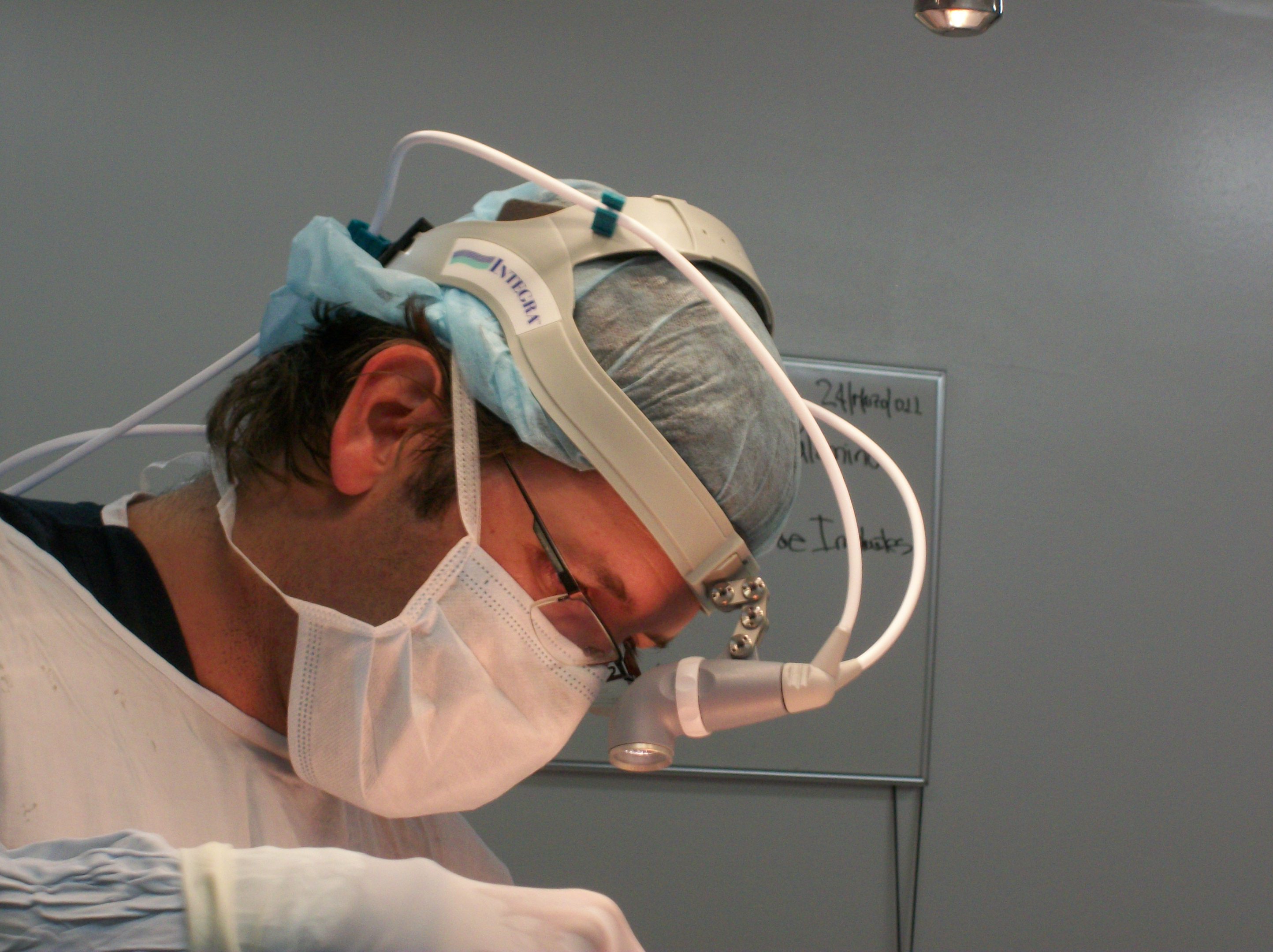
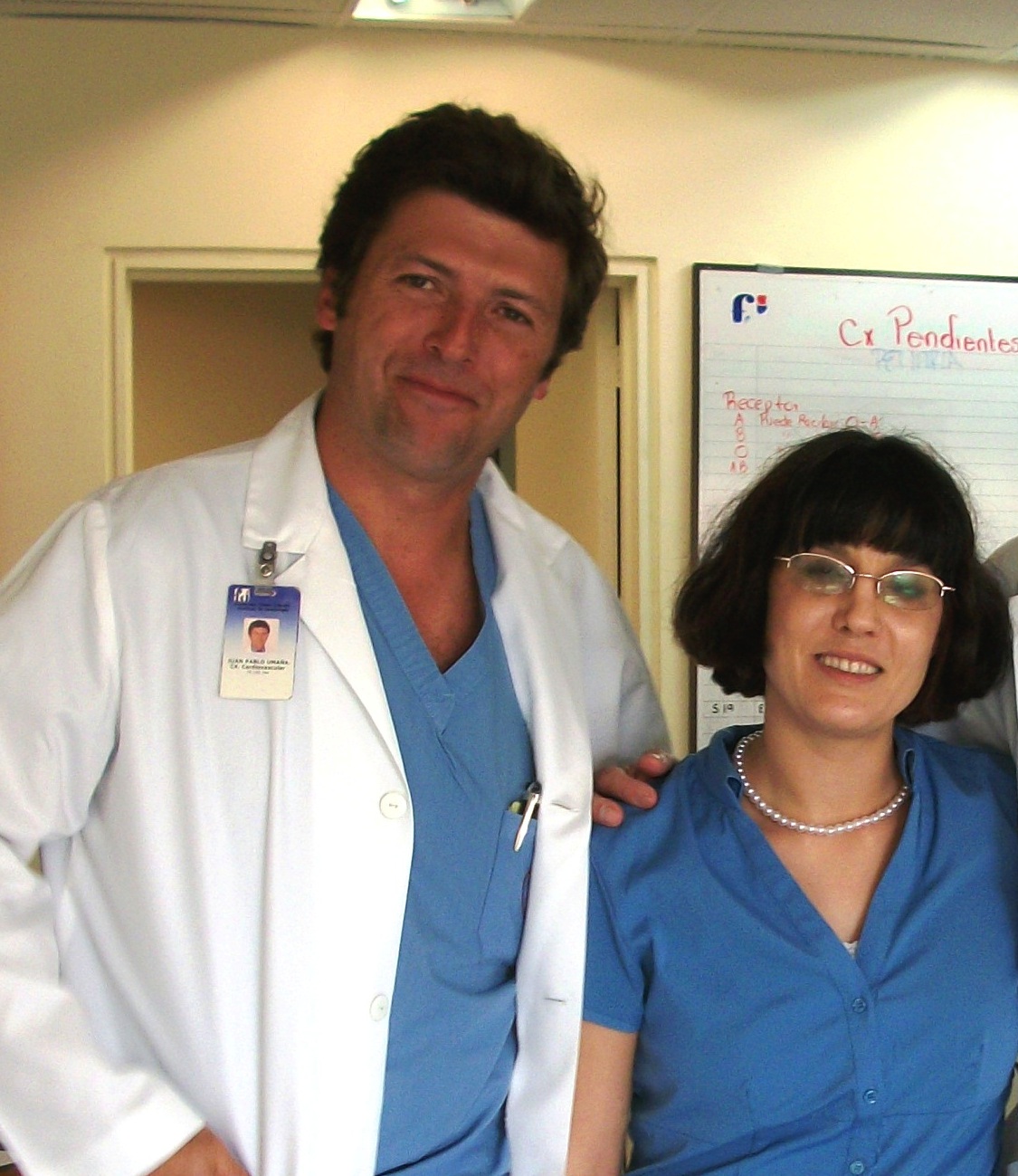
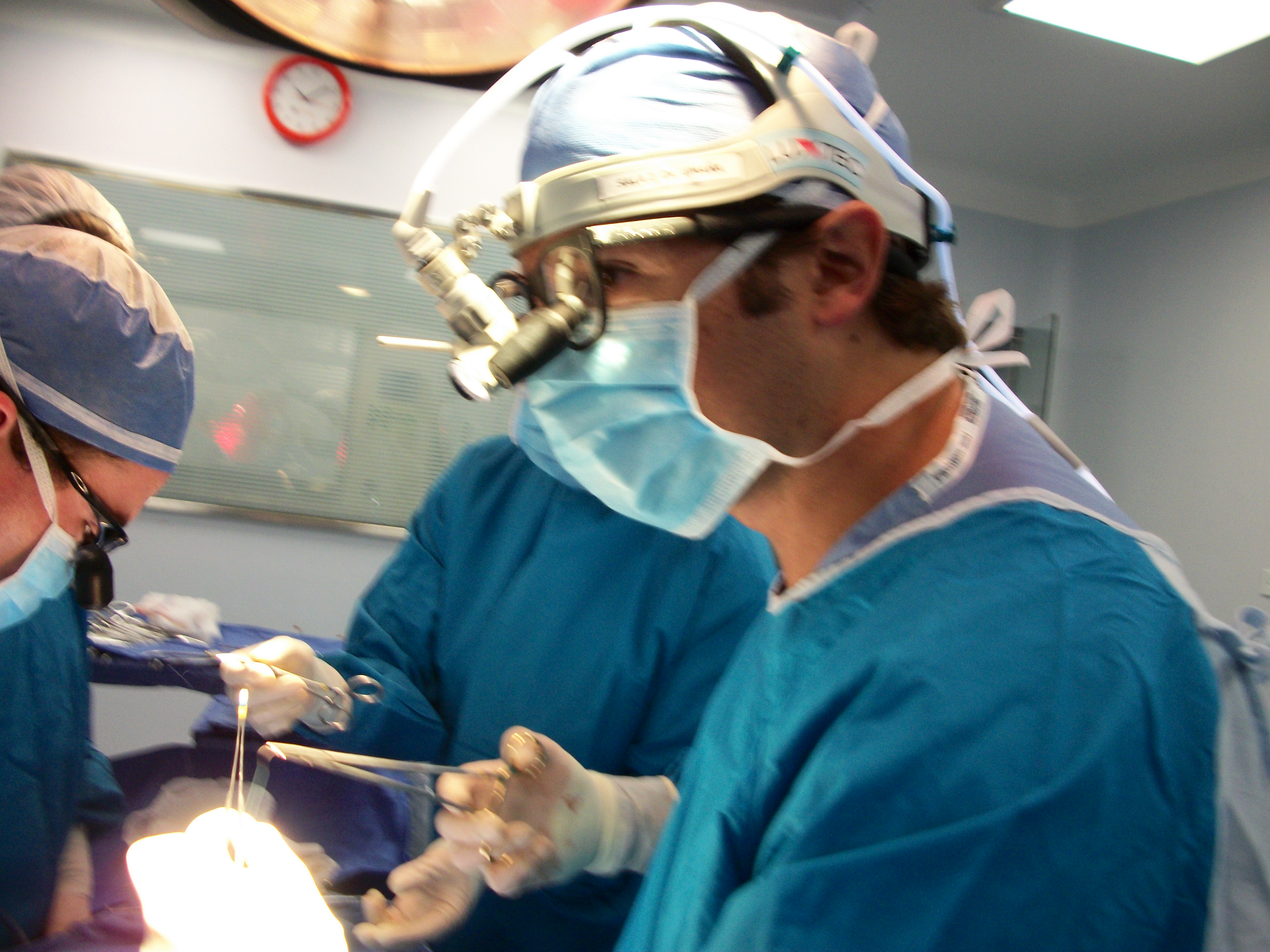
As she points out in the interview, this is a loose term that can be applied (accurately) to a Stanford educated surgeon like Dr. Juan Pablo Umana in Bogotá  or in a more deceptive fashion to one of the many surgeons who have taken a short course, or attended a teaching conference within the United States. A three-day class doesn’t really equate, now does it?

The discussion (and the article) then turned to the need to ‘research’ providers.. Now, if only CBS news had talked to me..   That would have made for a more balanced, detailed and informative show for watchers/ readers.

(Telling people to ‘research’ their medical providers falls a bit short.  Showing people how – or providing them with resources would be more helpful.)

“Off-label medical travel”

In addition, the print article should have gone a bit further in discussing the pros and potential consequences/ harmful effects of traveling for ‘off-label’ treatments instead of merely quoting one patient.  Since the area of harm is actually far greater in this subsegment of the medical tourism population due to the amount of quackery as well as the sometimes fragile state of these potential patients  – a bit more discussion or even a separate segment on “off-label medical travel” would have been an excellent accompaniment.

Speaking of which, several weeks ago, I interviewed with NPR (National Public Radio) as part of a segment on medical tourism.  During that discussion we talked about all of the pluses and minuses mentioned on the CBS segment as well as the “Selling Hope” aspect of ‘off-label medical travel” and the potential harms of this practice, as well as some of the issues involved in transplant tourism.  I am not sure how much of my interview, Andrew Fishman, the producer for the segment, will use – or when it will air, but I’ll keep readers informed.

Start here…


This is a page re-post to help some of my new readers become familiarized with Latin American Surgery.com – who I am, and what the website is about..

As my long-time readers know, the site just keeps growing and growing.  Now that we have merged with one of our sister sites, it’s becoming more and more complicated for first time readers to find what they are looking for..

So, start here, for a brief map of the site.  Think of it as Cliff Notes for Latin American surgery. com

Who am I/ what do I do/ and who pays for it

Let’s get down to brass tacks as they say .. Who am I and why should you bother reading another word..

I believe in full disclosure, so here’s my CV.

I think it’s important that this includes financial disclosure. (I am self-funded).

I’m not famous, and that’s a good thing.

Of course, I also think readers should know why I have embarked on this endeavor, which has taken me to Mexico, Colombia, Chile, Bolivia and continues to fuel much of my life.

Reasons to write about medical tourism: a cautionary tale

I also write a bit about my daily life, so that you can get to know me, and because I love to write about everything I see and experience whether surgery-related or the joys of Bogotá on a Sunday afternoon.

What I do and what I write about

I interview doctors to learn more about them.

Some of this is for patient safety: (Is he/she really a doctor?  What training do they have?)

Much of it is professional curiosity/ interest: (Tell me more about this technique you pioneered? / Tell me more about how you get such fantastic results?  or just tell me more about what you do?)

Then I follow them to the operating room to make sure EVERYTHING is the way it is supposed to be.  Is the facility clean?  Does the equipment work?  Is there appropriate personnel?  Do the follow ‘standard operating procedure’ according to international regulations and standards for operating room safety, prevention of infection and  overall good patient care?

I talk about checklists – a lot..

The surgical apgar score

I look at the quality of anesthesia – and apply standardized measures to evaluate it.

Why quality of anesthesia matters

Are your doctors distracted?

Medical information

I also write about new technologies, and treatments as well as emerging research.  There is some patient education on common health conditions (primarily cardiothoracic and diabetes since that’s my background).  Sometimes I talk about the ethics of medicine as well.  I believe strongly in honesty, integrity and transparency and I think these are important values for anyone in healthcare.  I don’t interview or encourage transplant tourism because I think it is intrinsically morally and ethically wrong.  You don’t have to agree, but you won’t find information about how to find a black market kidney here on my site.

What about hospital scores, you ask.. Just look here – or in the quality measures section.

Cultural Content

I also write about the culture, cuisine and the people in the locations I visit.  These posts tend to be more informal, but I think it’s important for people to get to know these parts of Latin America too.  It’s not just the doctors and the hospitals – but a different city, country and culture than many of my readers are used to.

Why should you read this?  well, that’s up to you.. But mainly, because I want you to know that there is someone out there who is doing their best – little by little to try to look out for you.

How the site is organized

See the sidebar! Check the drop-down box.

Information about surgeons is divided into specialty and by location.  So you can look in plastic surgery, or you can jump to the country of interest.  Some of the listings are very brief – when I am working on a book – I just blog about who I saw and where I was, because the in-depth material is covered in the book.

information about countries can be found under country tabs including cultural posts.

Issues and discussions about the medical tourism industry, medical safety and quality are under quality measures

Topics of particular interest like HIPEC have their own section.

I’ve tried to cross-reference as much as possible to make information easy to find.

If you have suggestions, questions or comments, you are always welcome to contact me at k.eckland@gmail.com or by leaving a comment, but please, please – no hate mail or spam.  (Not sure which is worse.)

and yes – I type fast, and often when I am tired so sometimes you will find grammatical errors, typos and misspelled words (despite spell-check) but bear with me.  The information is still correct..

Thank you for coming.

Back in the OR with Dr. Sergio Abello


Clinica Shaio

Spent part of yesterday back in the operating room with Dr. Sergio Abello.  Dr. Abello is an orthopedic surgeon who specializes in foot and ankle surgery.  (He also have a specialized computer system in his office for truly customized orthodics).

Dr. Sergio Abello de Castro, Foot & Ankle Center 

It  was a chance meeting in the hallway, but as always, with the gracious and genial surgeon – it led to the operating room.  He apologized, “it’s just a small case,” but everything went perfectly.

Dr. Sergio Abello (right) with orthopedic resident, Dr. Juan Manuel Munoz


Patient was prepped and draped in sterile fashion, with no breaks in sterile technique.  Case proceeded rapidly (previous surgical pins removed).

The was no bleeding or other complications.

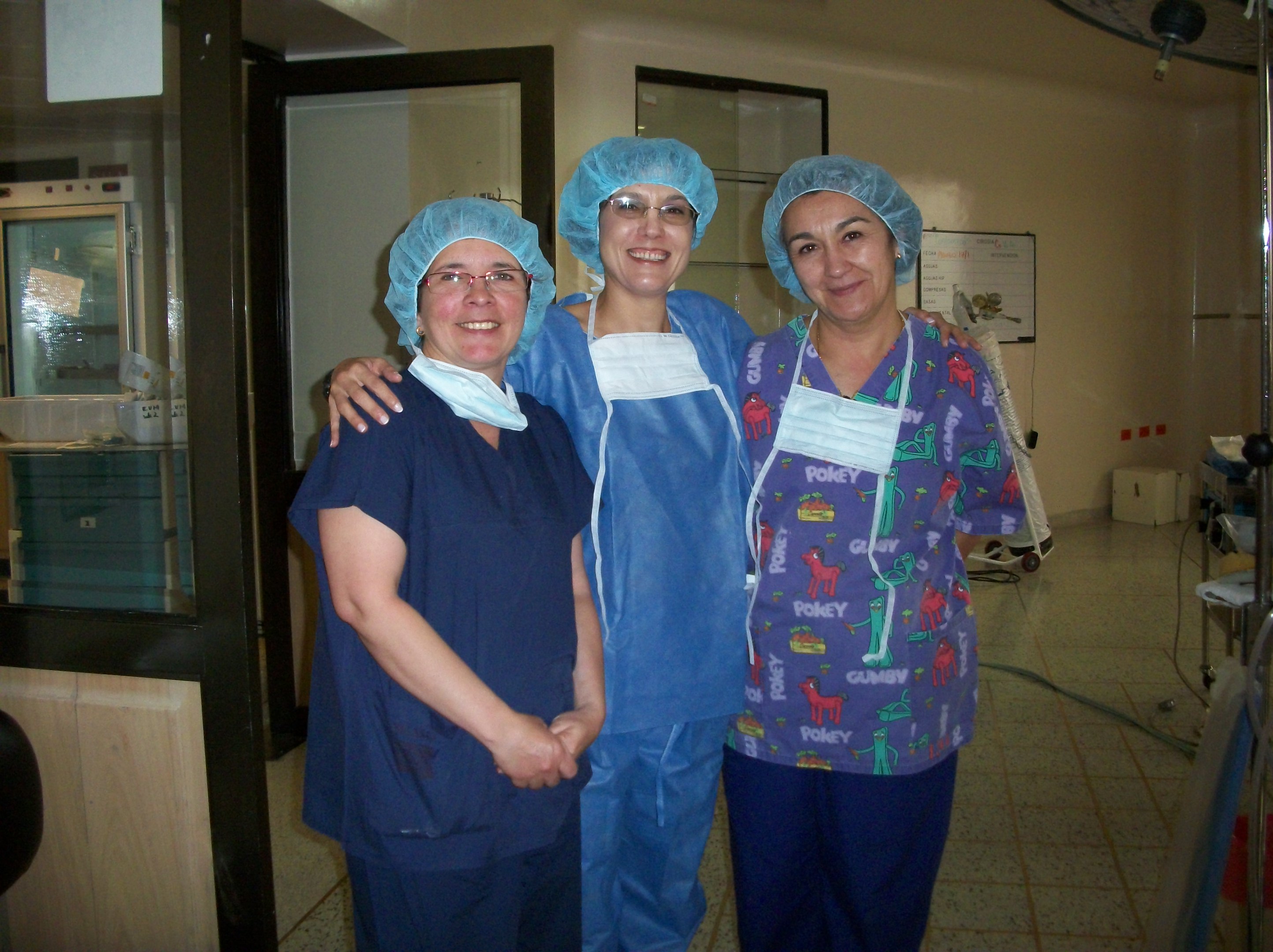
Yvonne (left), surgical nurse

Anesthesia was managed beautifully by Claudia Marroqoon, RN – with a surgical apgar of 10.  The patient received conscious sedation and appeared comfortable during the procedure.  There was no hemodynamic instability or hypoxia.  Oxygen saturation 100% for the entire duration of the case.

Why read Bogota and other hidden gem titles?


As readers of my sister site, Cartagena Surgery know, I am currently hard at work on my third title in the ‘Hidden Gem’ series – with the latest offering on Mexicali, Mexico.  But I continue to get comments from readers, friends, and everyone else asking, “Why bother?”

Why bother reading Hidden Gem?

People should read these titles because we can’t assume that all medical providers have been vetted, or that all medical facilities meet acceptable criteria for safe care.  It is a dangerous assumption to expect that ‘someone’ else has already done the research. [lest you think this could only happen in Sri Lanka, be forewarned.  With new legislation, the critical doctor shortage in the USA will only worsen.]

Medical tourism has the potential to connect consumers with excellent providers around the world.  It may be part of a solution to the long waits that many patients are experiencing when seeking (sometimes urgent) surgical care.  It also offers an opportunity to fight the runaway health care costs in the United States.

But..

But it also has the potential, if unchecked, unvetted, unverified and left unregulated to cause great harm.

Another reason to read Hidden Gem is to find out more about the surgeons themselves, their training, and many of the new, and innovative practices in the realm of surgery. Often the best doctors don’t advertise or ‘toot’ their own horn, so you won’t find them advertised in the pages of your in-flight magazine as “One of the best doctors in XXX” even if they are.  (Many people don’t realize those segments are paid advertisements, either.)

Why bother writing Hidden Gem?

Because ‘someone’ needs to.

I am that ‘someone’ who does the fieldwork to find out the answers for you.  I can never assume that it’s been done before, by someone else.  I have to start from ‘scratch’ for every book, for every provider and every hospital.

I also believe that the public should know, and want to know more about the people we entrust to take care of us during serious illness or surgery.  We should know who isn’t practicing according to accepted or current standards and evidence – and we should know who has/ and is offering the latest cutting edge (but safe and proven) therapies.


Read more about the doctor shortages:

NYT article on worsening doctor shortage  (and one of the proposed solutions is a loosening of rules governing the training and credentials of doctors from overseas – coming to practice in the USA).

Hospital ranks and measures: Medical Tourism edition?


It looks like Consumer Reports is the newest group to add their two cent’s worth about hospital safety, and hospital safety ratings.  The magazine has compiled their own listing and ratings for over 1,100 American hospitals.  Surprisingly, just 158 received sixty or greater points (out of a 100 possible.)  This comes on the heels of the most recent release of the LeapFrog results.  (Leapfrog is controversial within American healthcare due to the unequal weight it gives to many of its criterion.  For example, it is heavily weighed in favor of very large institutions versus small facilities with similar outcomes.)

Consumer Reports has a history providing consumers with independent evaluations and critiques of market products from cars to toasters since it’s inception in the 1930’s.  It’s advent into healthcare is welcome, as the USA embraces new challenges with ObamaCare, mandated EMRs, and pay-for-performance.

While there is no perfect system, it remains critical to measure outcomes and performances on both an individual (physician) and facility wide scale.  That’s why I say; the more scales, scoring systems and measures used to evaluate these issues – the better chance we have to accurately capture this information.

But – with all of the increased scrutiny of American hospitals, can more further investigation into the practices and safety at facilities promoting medical tourism overseas be far behind?

Now it looks like James Goldberg, a bioengineer that we talked about before, is going to be doing just that.  Mr. Goldberg, who is also an author of the topic of medical tourism safety recently announced that his firm will begin offering consulting services to consumers interested in knowing more about medical tourism – and making educated decisions to find the most qualified doctors and hospitals when traveling for care.  He may be one of the first to address this in the medical tourism industry, but you can bet that he won’t be the last..

If so, the winners in the international edition will be the providers and facilities that embrace transparency and accountability from the very beginning.

Wrapping up and saying “Thanks!”


It’s a busy Sunday in Mexicali – presidential elections are today, so I am going to try to get some pictures of the nearest polling station later.. In the meantime, I am spending the day catching up on my writing..

a polling station in Mexicali

Lots to write about – just haven’t had the time..  Friday morning was the intern graduation which marks the end of their intern year – as they advance in their residencies.. Didn’t get a lot of pictures since I was at the back of the room, and frankly, unwilling to butt ahead of proud parents to get good pics.. This was their day, not mine and I was pleased that I was invited.

I did get a couple of good pictures of my ‘hermanito’ Lalo and Gloria after the event.  (I’ve adopted Lalo as my ‘kid’ brother.. Not sure how he feels about – but he’s pretty easy-going so he probably just thinks it’s a silly gringa thing, and probably it is..)

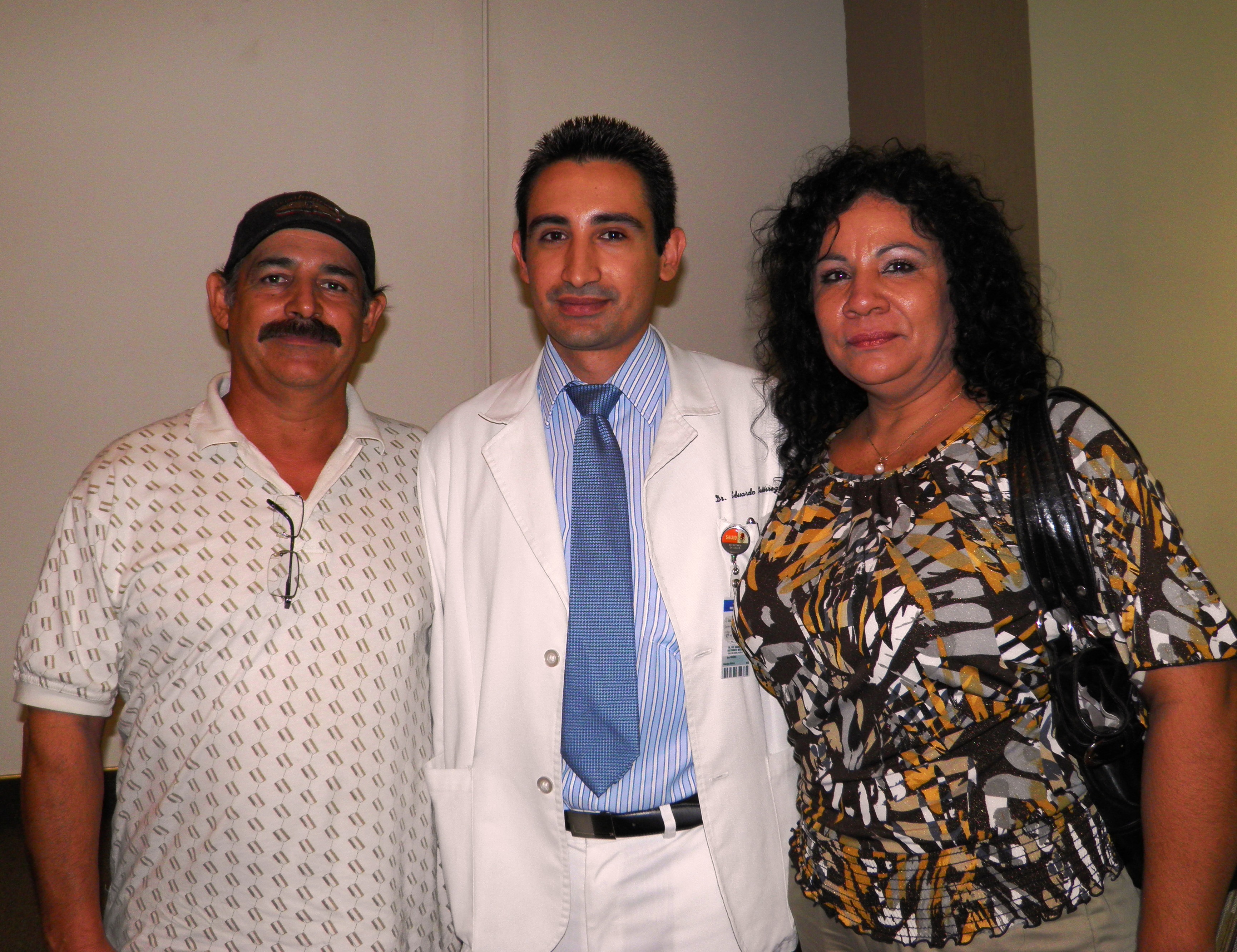
Dr. ‘Lalo” Gutierrez with his parents

Lalo’s parents were sitting in the row ahead of me, so of course, I introduced myself and said hello.. (They were probably a little bewildered by this middle-aged gringa talking about their son in atrocious Spanish) but I figured they might be curious about the same gringa that posts pictures of Lalo on the internet.. I also feel that it’s important to take time and tell people the ‘good things’ in life.  (Like what a great person their son has turned out to be..)

Same thing for Gloria.. She is such a hard-worker, and yet, always willing to help out.. “Gloria can you help me walk this patient?”  It’s not even her patient, (and a lot of people would say – it’s not our jobs to walk patients) but the patient needs to get out of bed – I am here, and I need some help (with IV poles, pleurovacs, etc.)  and Gloria never hesitates.. that to me – is the hallmark of an excellent provider, that the patient comes first .. She still has several years to go, but I have confidence in her.

She throws herself into her rotations.. When she was on thoracics, she wanted to learn.. and she didn’t mind learning from a nurse (which is HUGE here, in my experience.)

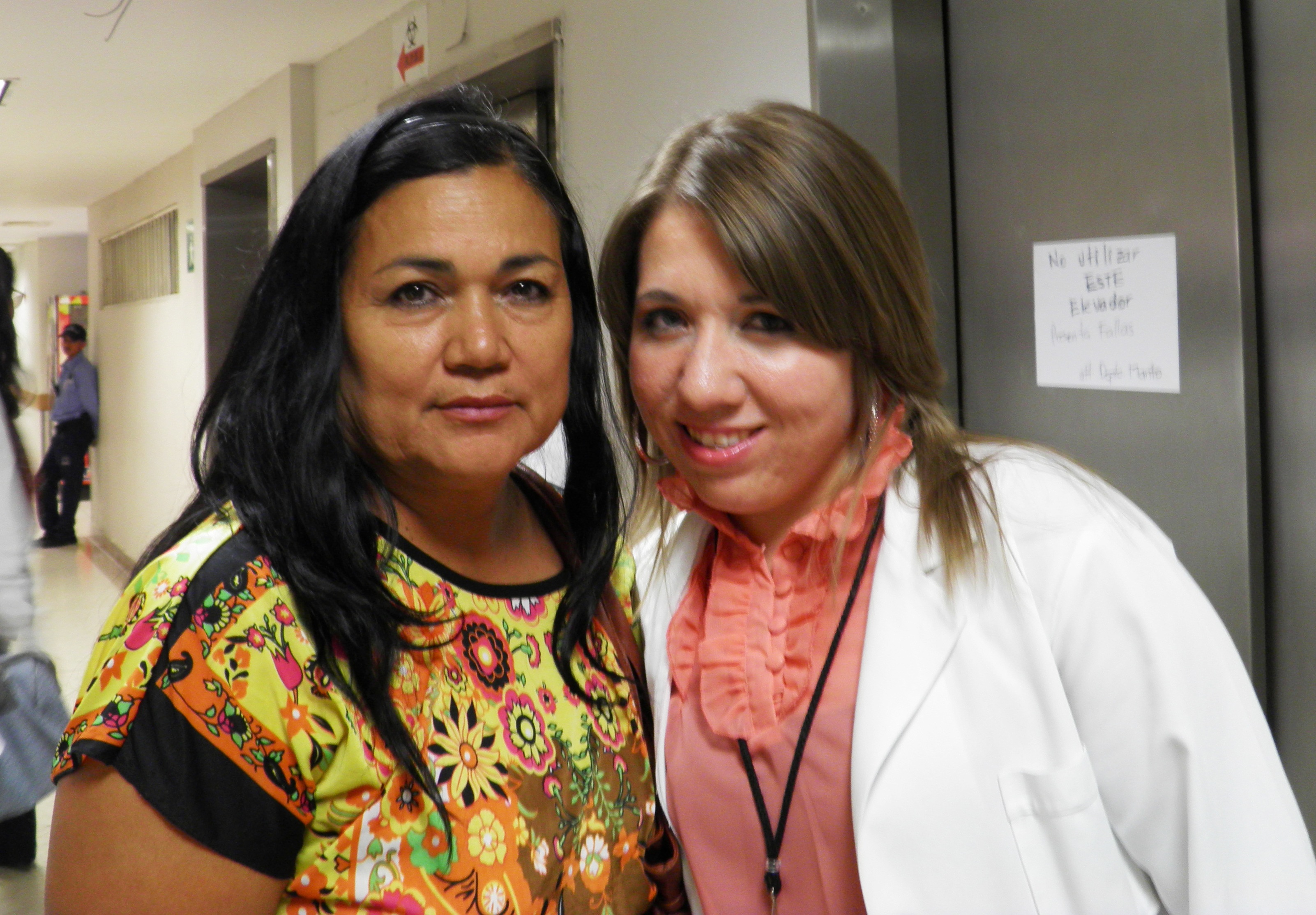
Dr. Gloria Ayala (right) and her mother

She wasn’t sure that her mom would be able to be there – (she works long hours as a cook for a baseball team) but luckily she made it!

Met a pediatric cardiologist and his wife, a pediatrician.. Amazing because the first thing they said is, “We want nurse practitioners in our NICU,” so maybe NPs in Mexico will become a reality.. Heard there is an NP from San Francisco over at Hospital Hispano Americano but haven’t had the pleasure of meeting her.  (I’d love to exchange notes with her.)

I spent the remainder of the day in the operating room of Dr. Ernesto Romero Fonseca, an orthopedic surgeon specializing in trauma.  I don’t know what it is about Orthopedics, but the docs are always so “laid back”, and just so darn pleasant to be around.  Dr. Romero and his resident are no exception.

[“Laid back” is probably the wrong term – there is nothing casual about his approach to surgery but I haven’t had my second cup of coffee yet, so my vocabulary is a bit limited.. ]  Once I finish editing ‘patient bits’ I’ll post a photo..

Then it was off to clinic with the Professor.

Saturday, I spent the day in the operating room with Dr. Vasquez at Hospital de la Familia. He teased me about the colors of the surgical drapes,(green at Hospital de la Familia), so I guess he liked my article about the impact of color on medical photography.  (Though, truthfully, I take photos of surgeons, not operations..)

Since the NYT article* came out a few days ago – things have changed here in Mexicali.  People don’t seem to think the book is such a far-fetched idea anymore.  I’m hopeful this means I’ll get more response from some of the doctors.  (Right now, for every 15 I contact – I might get two replies, and one interview..)

Planning for my last day with the Professor  – makes me sad because I’ve had such a great time, (and learned a tremendous amount) but it has been wonderful.  Besides, I will be starting classes soon – and will be moving to my next location (and another great professor.)

Professor Ochoa and Dr. Vasquez

But I do have to say – that he has been a great professor, and I think, a good friend.  He let me steer my education at times (hey – can I learn more about X..) but always kept me studying, reading and writing.  He took time away from his regular life, and his other duties as a professor of other students (residents, interns etc.) to read my assignments, make suggestions and corrections when necessary.    and lastly, he tolerated a lot with good grace and humor.  Atrocious Spanish, (probably) some outlandish ideas and attitudes about patient care (I am a nurse, after all), a lot of chatter (one of my patient care things), endless questions…  especially, “donde estas?” when I was lost – again.

So as I wrap up my studies to spend the last few weeks concentrating on the book, and getting the last interviews, I want to thank Dr. Carlos Ochoa for his endless patience, and for giving me this opportunity.  I also want to thank all the interns (now residents) for welcoming me on rounds, the great doctors at Hospital General..  Thanks to Dr. Ivan for always welcoming me to the ER, and Dr. Joanna for welcoming me to her hospital.  All these people didn’t have to be so nice – but they were, and I appreciate it.

* Not my article [ I wish it were – since I have a lot to say on the topic].

Back in the OR with Drs. Ham & Abril, bariatric and general surgeons


My first case this morning with another surgeon was cancelled – which was disappointing, but I still had a great day in the operating room with Dr.  Ham and Dr. Abril.  This time I was able to witness a bariatric surgery, so I could report back to all of you.

Dr. Ham (left) and Dr. Abril

I really enjoy their relaxed but detail oriented style – it makes for a very enjoyable case.  Today they performed a sleeve gastrectomy** so I am able to report – that they (Dr. Ham) oversewed the staple line (quite nicely, I might add).  If you’ve read any of the previous books, then you know that this is an important step to prevent suture line dehiscence leading to leakage of stomach contents into the abdomen (which can cause very serious complications.)  As I said – it’s an important step – but not one that every doctor I’ve witnessed always performed.   So I was a pleased as punch to see that these surgeons are as world-class and upstanding as everything I’d seen already suggested..

** as long time readers know, I am a devoted fan of the Roux-en-Y, but recent literature suggests that the sleeve gastrectomy is equally effective in the treatment of diabetes.. Of course – we’ll be watching the research for more information on this topic of debate. I hope further studies confirm these results since the sleeve gives patients just a little less of a drastic lifestyle change.. (still drastic but not shot glass sized drastic.)

Dr. Ham

They invited me to the show this evening – they are having several clowns (that are doctors, sort of Patch Adams types) on the show to talk about the health benefits of laughter.  Sounds like a lot of fun – but I thought I better catch up on my writing..

I’ll be back in the OR with Los Doctores again tomorrow..

Speaking of which – I wanted to pass along some information on the anesthesiologist for Dr. Molina’s cases since he did such a nice job with the conscious sedation yesterday.  (I’ve only watched him just yesterday – so I will need a few more encounters, but I wanted to mention Dr. Andres Garcia Gutierrez all the same.

Blue Cross/ Blue Shield of Mexicali & Dr. Cuauhtemoc Vasquez Jimenez


Note:  I owe Dr. Vasquez a much more detailed article – which I am currently writing – but after our intellectually stimulating talk the other day, my mind headed off in it’s own direction..

Had a great sit down lunch and a fascinating talk with Dr. Vasquez.  As per usual – our discussion was lively, (a bit more lively than usual) which really got my gears turning.  Dr. Vasquez is a talented surgeon – but he could be even better with just a little ‘help’.  No – I am not trying to sell him a nurse practitioner – instead I am trying to sell Mexicali, and a comprehensive cardiac surgery program to the communities on both sides of the border..  Mexicali really could be the ‘land of opportunity’ for medical care – if motivated people and corporations got involved.

During lunch, Dr. Vasquez was explaining that there is no real ‘heart hospital’ or cardiac surgery program, per se in Mexicali – he just operates where ever his patients prefer.  In the past that has included Mexicali General, Issstecali (the public hospitals) as well as the tiny but more upscale private facilities such as Hospital Alamater, and Hospital de la Familia..

Not such a big deal if you are a plastic surgeon doing a nip/tuck here and there, or some outpatient procedures – okay even for general surgeons – hernia repairs and such – but less than ideal for a cardiac surgeon – who is less of a ‘lone wolf’ due to the nature and scale of cardiac surgery procedures..

Cardiac surgery differs from other specialties in its reliance on a cohesive, well-trained and experienced group – not one surgeon – but a whole team of people to look out for the patients; Before, During & After surgery..  That team approach [which includes perfusionists, cardiac anesthesiologists (more specialized than regular anesthesia), operating room personnel, cardiology interventionalists and specialty training cardiac surgery intensive care nurses]  is not easily transported from facility to facility.

just a couple members of the cardiac surgery team

That’s just the people involved; it doesn’t even touch on all the specialty equipment; such as the bypass pump itself, echocardiogram equipment, Impella/ IABP (intra-aortic balloon pump), ECMO or other equipment for the critically ill – or even just the infrastructure needed to support a heart team – like a pharmacy division that knows that ‘right now’ in the cardiac OR means five minutes ago, or a blood bank with an adequate stock of platelets, FFP and a wide range of other blood products..

We haven’t even gotten into such things such as a hydrid operating rooms and 24/7 caths labs – all the things you need for urgent/ emergent cases, endovascular interventions – things a city the size of Mexicali should really have..

But all of those things take money – and commitment, and I’m just not sure that the city of Mexicali is ready to commit to supporting Dr. Vasquez (and the 20 – something cases he’s done this year..) It also takes vision..

This is where a company/ corporation could come in and really change things – not just for Dr. Vasquez – and Mexicali – but for California..

It came to me again while I was in the operating room with Dr. Vasquez – watching him do what he does best – which is sometimes when I do what I do best.. (I have some of my best ideas in the operating room – where I tend to be a bit quieter.. More thinking, less talking)..

Dr. Vasquez, doing what he does best..

As I am watching Dr. Vasquez – I starting thinking about all the different cardiac surgery programs I’ve been to: visited, worked in – trained in.. About half of these programs were small – several were tiny, single surgeon programs a lot like his.. (You only need one great surgeon.. It’s all the other niceties that make or break a program..)

All of the American programs had the advantages of all the equipment / specialty trained staff that money could buy***

[I know what you are thinking – “well – but isn’t it all of these ‘niceties’ that make everything cost so darn much?”  No – actually it’s not – which is how the Cardioinfantils, and Santa Fe de Bogotas can still make a profit offering world-class services at Colombian prices…]

The cost of American programs are inflated due to the cost of defensive medicine practices (and lawyers), and the costs of medications/ equipment in the United States****
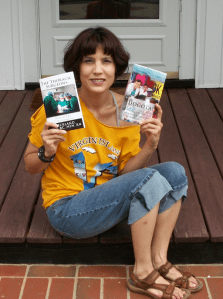
the possibilities are endless – when I spend quality time in the operating room (thinking!)

Well – there is plenty of money in Calexico, California** and not a hospital in sight – just a one room ‘urgent care center’.  The closest facility is in El Centro, California – and while it boasts a daVinci robot, and a (part-time?) heart surgeon (based out of La Mesa, California – 100 + miles away)– patients usually end up being transferred to San Diego for surgery.

Of course, in addition to all of the distance – there is also all of the expense..  So what’s a hard-working, blue-collar guy from Calexico with severe CAD going to do?  It seems the easiest and most logical thing – would be to walk/ drive/ head across the street to Mexicali.. (If only Kaiser Permanente or Blue Cross California would step up and spearhead this project – we could have the best of both worlds – for residents of both cities.. 

 A fully staffed, well-funded, well-designed, cohesive heart program in ONE medium- sized Mexicali facility – without the exorbitant costs of an American program (from defensive medicine practices, and outlandish American salaries.)  Not only that – but as a side benefit, there are NO drug shortages here..

How many ‘cross-border’ cases would it take to bring a profit to the investors?  I don’t know – but I’m sure once word got out – people would come from all over Southern California and Arizona – as well as Mexicali, other parts of Baja, and even places in Sonora like San Luis – which is closer to Mexicali than Hermasillo..  Then Dr. Vasquez could continue to do what he does so well – operate – but on a larger scale, without worrying about resources, or having to bring a suitcase full of equipment to the OR.

The Mexican – American International Cardiac Health Initiative?

But then – this article isn’t really about the ‘Mexican- American cross-border cardiac health initiative’

It is about a young, kind cardiac surgeon – with a vision of his own.

That vision brought Dr. Vasquez from his home in Guadalajara (the second largest city in Mexico) to one of my favorite places, Mexicali after graduating from the Universidad Autonomica in Guadalajara, and completing much of his training in Mexico (D.F.).  After finishing his training – Dr. Vasquez was more than ready to take on the world – and Mexicali as it’s first full-time cardiac surgeon.
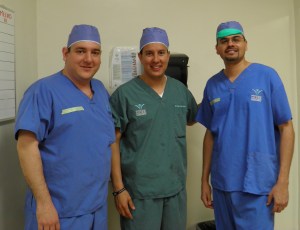
Mexicali’s finest: Dr. Vasquez, (cardiac surgeon) Dr. Campa(anesthesia) and Dr. Ochoa (thoracic surgeon

Since arriving here almost two years ago – that’s exactly what he’s done.. Little by little, and case by case – he has begun building his practice; doing a wide range of cardiovascular procedures including coronary bypass surgery (CABG), valve replacement procedures, repair of the great vessels (aneurysm/ dissections), congenital repairs, and pulmonary thrombolectomies..
Dr. Vasquez, Mexicali’s cardiac surgeon

Dr. Cuauhtemoc Vasquez Jimenez, MD

Cardiac Surgeon

Calle B No. 248 entre Obregon y Reforma

Col. Centro, Mexicali, B. C.

Email: drcvasquez@hotmail.com

Tele: (686) 553 – 4714 (appointments)

Notes:

*The Imperial Valley paper reports that Calexico makes 3 million dollars a day off of Mexicali residents who cross the border to shop.

***In all the programs I visited  – there are a couple of things that we (in the United States do well..  Heart surgery is one of those things..)

**** Yes – they charge us more in Calexico for the same exact equipment made in India and sold everywhere else in the world..
Looks like Panama may bite off more than they can chew..


In a recently published story, the government of Panama is now offering medical  insurance for all tourists to Panama for free.  This insurance is not  ‘Complication Insurance’ which is offered by private surgeons in Colombia and other countries for patients traveling specifically for medical tourism.  Complication insurance covers all possible medical complications resulting from medical procedures at the designated clinic or destination..

No – Panama is taking the European and socialized medicine approach and is offering general medical coverage for ALL short-term travelers to Panama.  (The long-term exclusion is a wise move given the numbers of Americans and other overseas residents who make Panama their retirement home.)  This insurance resembles typical travel policies in that it covers injuries, accidents and other medical situations that may occur while on vacation..  I just hope the Panamanian government hasn’t underestimated its tourists and their injury/ illness potential.

Now readers – don’t get any wild ideas.. This is not the time to stress that ‘trick knee’ while hiking to visit the Naso-Teribes..

Meanwhile, Costa Rica is making a pitch for more corporate clients such as Pepsi-Cola.  These multi-national corporations can potentially bring hundreds of millions of healthcare dollars by diverting their employees to medical tourism destination such as Costa Rica.  (Like Colombia – Costa Rica is an ideal destination for North Americans due to proximity, quality and diversity of services available.)

Book Party!


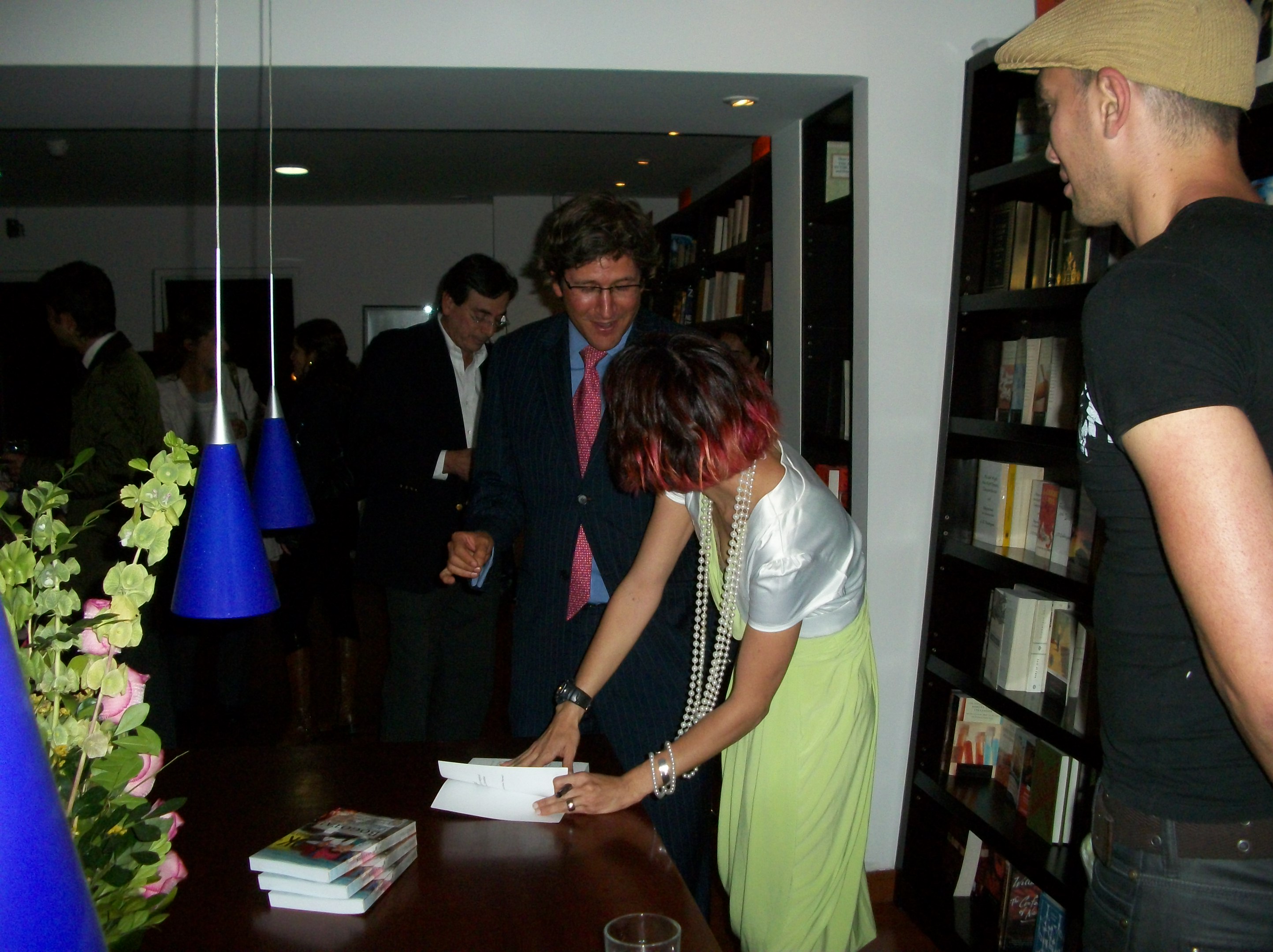
Signing a book for Dr. Freddy Sanabria


Author’s Cafe,

Bogotá, Colombia

Had a wonderful event to share my book with and thank all of the people who made it possible.  (No surgeons, no book).  It was wonderful to see everyone – and I want to thank all the surgeons – who literally came straight from surgery to give their support of this project.  Some of the great friends I have made from all walks of life (outside the hospital) were also there – which means a great deal – I know that I live and breathe writing and surgery, but I also know that this is not true for most people.

That’s been the theme of all of my visits to Colombia; kindness, caring and support.  So many people; from surgeons, nurses, to taxi cab drivers and even random strangers in passing have been kind to the little (sometimes lost) American.

What’s next?

About 1/3 complete on formatting the e-version.  It’s a tedious job, but once it’s complete – it will give me the freedom to do instant book updates as needed.

Also hoping to translate the book into Spanish versions. It’s been difficult to find someone due to the technical/ medical language.

Now that the Bogotá project is essentially complete – I anticipate that this blog may change in focus – similar to Cartagena Surgery.  There will be more of a focus on medical tourism and medical news, now that interviews will be few and far between.  (Never done entirely.)


Interview


Just had a really nice visit with James Gherardi, and his cameraman from the local TV station, WSET – 13 to talk about the book.  Now if only all my poise hadn’t suddenly fled – leaving me an awkward mess!  Gratefully, all my loyal readers know that despite all outward appearances, I really am a capable, competent individual with full use of my faculties.

Lets hope viewers are as kind.

It is scheduled to air as just a quick segment this evening at 6pm.. and let me warn my devoted readers – yes, I had a hair tragedy, but it’s only temporary (and for a good cause!)..

New article on Yahoo!


New article posted on Yahoo!  (associated content).  Most of you have heard me talk about the topic before – it’s usually one of the first questions I heard when interviewing surgeons down in Bogotá – but I wanted to publish something where the rest of the world could see it..  (Colombia as a destination for American medical tourists – five reasons why..)

Interview with Dr. Catalina Morales, Plastic & Hand Surgeon


Met with the very nice Dr. Catalina Morales yesterday evening to talk about Plastic, Aesthetic and Reconstructive Surgery.. Oh – and did I mention hand and maxillofacial surgery..

She’s very enjoyable to interview because she’s one of those people who really finds pleasure in what she does..  She likes to help people with reconstructive surgery, and she enjoys the satisfaction her aesthetic practice gives her patients..

Planning to go to the OR with her today – so we will re-visit the smiling, talented Dr. Morales later this afternoon..

Update:  In the operating room with Dr. Catalina Morales, at Clinica de Marly  7 May 2011

Dr. Catalina Morales at Clinica de Marly

Dr. Morales at Clinica de Marly during hand surgery

I also interviewed Dr. Casallas Gomez over at Santa Fe de Bogota, read about it in another post..

In the OR with Dr. Mauricio Largacha, Orthopedic Surgeon


The rest of Bogota may be quiet for the Easter holidays (la semana santa) but the operating rooms were busy at Unidad Medica Cecimin.

Dr. Mauricio Largacha, Shoulder and Elbow surgeon

I spent an interesting and enjoyable morning in the operating room with Dr. Mauricio Largacha, MD for an arthroscopic Rotator Cuff Repair. Dr. Largacha is a natural teacher, and did an excellent job at explaining different aspects of the procedure, expected post operative outcomes, and specialized equipment – since I am less familiar with shoulder and elbow surgery than other surgical procedures. (Unsurprising since as I mentioned previously, he is an expert in this area, and the author of several chapters in multiple orthopedic surgery textbooks on elbow, shoulder and ankle surgery).

Dr. Mauricio Largacha (left) and author

Surgery went beautifully, and surprisingly quick.. No intraoperative complications.

Dr. Ernesto Andrade, plastic surgeon


Dr. Ernesto Andrade is another one of Bogota’s celebrity plastic surgeons, of “Cambrio Extremo” fame.  (A latin television version of ‘Extreme Makeover’ that was popular here several years ago.)  Unfortunately, he was delayed today so I was unable to meet with him, but I did speak with a young doctor in his office, Dr. Eliana Garces.  She filled in a bit of Dr. Andrade’s biography.

I’m hoping to meet with Dr. Andrade himself  tomorrow after I get out of the operating room with Dr. Celso Bohorquez.  If you remember, I met Dr. Bohorquez out in Chia while he was volunteering his surgical skills as part of Operacion Sonrisa (Operation Smile.)

Dr. Mauricio Largacha, orthopedic surgeon


Dr. Mauricio Largacha is an orthopedic surgeon specializing in shoulder and elbow surgery including arthroscopy, rotator cuff repair and joint replacement.  I’ll be following him to the operating room this weekend – so check back in for more details..

For readers unfamiliar with orthopedic surgery – ankle and shoulder joint surgeries are a particular sub-specialty only practiced by a few orthopedic surgeons.  Luckily for readers here – Dr. Largacha is the author of several of the most heavily used textbooks (and chapters in American medical textbooks) on both ankle and shoulder surgery.

Back in the OR with Dr. Buitrago, and a visit with Dr. Andres Franco


National Cancer Institute –

Dont judge a hospital by the exterior sign..

The view from the fifth floor is less than inspiring – with the Bogota prison from one angle and the now decrepid Hospital San Juan de Dios from another..

The view from the operating room window, the now defunct Hospital San Juan de Dios

But the view from within the operating room is impressive!  Large operating rooms, in an all new facility, with brand new equipment.. This is a first class surgery facility..

 – and the surgery itself was wonderful.  I can’t divulge too many specifics other than it was a huge surgical resection that was the last chance for a heart-breaking patient..

Dr. Buitrago, Thoracic surgeon

 But the case went beautifully.

After spending all morning and part of the afternoon with Dr. Buitrago and his team – I went over to Hospital Santa Clara to interview a nice young thoracic surgeon, Dr. Jaime Andres Franco.  Dr. Franco is actually dually trained as both an Critical Care Medicine specialist and a thoracic surgeon – which is ideal because it means he is even more capable of handling any sort of crisis that may affect his surgical patients. 

I’m hoping to follow him to the operating room soon, so I can give you even more details..


In the OR with Dr. Hakim


Had an interesting day with Dr. Fernando Hakim, Neurosurgeon, over at Santa Fe de Bogota, for a tumor resection.  A lot of the stereotypes are true; neurosurgery is a  precision-based specialty (not that the other specialties aren’t – but at least in most cases, there is a margin to work with**.) but some of them aren’t.. In this case, with a tumor pressing against the spinal cord – there is no margin to work with, no border area around the tumor, so to speak.. but then again this petty much describes a lot of neurosurgery.. requiring careful, painstaking process..something I would find inherently, and incredibly stressful – but Dr. Hakim and his team didn’t; they were focused, precise, but relaxed and well-coordinated with each other.. Definitely not the uptight, high stress stereotype.. (You’d think I would have known better – I’ve seen plenty of surgery, and some spine cases# before – but nothing of this magnitude, and as I’ve said before; neurosurgery is a bit of a final frontier)

(not to give you the wrong impression – surgery is always serious, this just wasn’t the melodrama that stereotypes/ stories sometimes suggest)

Dr. Fernando Hakim Daccach (left), neurosurgery

** ‘margin of tissue’ or area surrounding the tumor, not ‘margin of error’

# cartagena neuro cases were ‘back cases’ or spinal cases for chronic back problems..

Dr. Hakim, neurosurgeon using the OR microscope for precision work

To switch gears a bit, I met with Dr. Fabio Andres Mejia, a plastic surgeon specializing in rhinoplasty and breast procedures (augmentation/ reduction).  He’s a former fellow (and current member of the) Dr. Ralph Millard (Society) and has been in practice since 1998.
He’s no longer working three jobs or taking emergency plastic surgery calls all over the city – and is now focused solely on private practice (and having a livable schedule)

Dr. Jairo Ramirez and Dra. Stella Martinez


My early morning surgery plan fell apart – so I will try again next week. Met with Dr. Jairo Ramirez, MD, FACS over at Santa Fe de Bogota this morning. Dr. Ramirez is a vascular and thoracic surgeon, and the Chief of Vascular Surgery (at SF de B) but he reports the majority of his practice is the treatment of venous disease such as varicosities and venous stasis ulcers.

This afternoon, I met with Dra. Stella Martinez Jaramillo, (thoracic surgeon) and she is a fascinating lady. We had a great chat – and scheduled a day for me to see her in action..I am definitely looking forward to it.

Spoke with Dr. Javier Maldonado, cardiac surgeon on the phone today to set up an appointment next week over at Clinica Colombia. Now, I thought he completed some of his training in the USA but I could swear I heard soft traces of a southern accent – and Cleveland is a far cry from my native Virginia.. There must be a story there – or my overactive imagination.. I’ll keep you posted.

Dr. Juan Fernando Ramon, Neurosurgery


Spent the morning with Dr. Juan Fernando Ramon, neurosurgeon at Hospital Centro de la Policia. (He also operates at two other hospitals). Dr. Ramon is one of only a handful of neurosurgeons in Colombia who performs neuroendoscopy.

We toured the hospital – and then I watched him perform a small procedure for radiculopathy (in a patient with chronic back pain.)  The hospital has a fully-equipped $4 million dollar neuro-suite (not seen in photo below.)

The patient kindly gave permission for the use of the photos


Dr. Ramon (and patient)
Met with Dr. Camilo Osorio, Thoracic surgeon this afternoon, for patient consultations.  He was great – spent a lot of time with patients explaining procedures, and answering questions.  He also calls all of his patients a few days before and after surgery – just to see how they are doing.  I’ll see Dr. Osorio in the operating room soon.
 
Ran into Dr. Rincon (cardiac surgeon) from SaludCoop – literally.   I plan to go back over to SaludCoop and see him and Dr. Mauricio Jimenez again.
 
I’ve decided to cease my pursuit of Dr. Camilo Prieto- after several emails, phone calls (by other surgeons vouching for me) and a visit – I just have to assume he isn’t interested in participating.  I only pursued him so far because besides being heavily advertised, and well-known here, I never actually got to speak to him personally, and never got a “no” from anyone.. But now that others have contacted him on my behalf – I’ll definitely take that as a ‘no’..

Dr. Constanza Moreno Serrano, Hand & Microsurgeon


Dra. Constanza Moreno is an orthopedic surgeon specializing in hand and microsurgery.  She specializes in the treatment of traumatic injuries such as digital and limb re-attachment, reconstructive surgery and correction of congenital deformities.  Next week she is traveling to Atlanta, Georgia to give a presentation at the International Hand and Composite Tissue Allotransplantation Society on the Hand Transplant Program she is developing at Santa Fe de Bogota.  Her aim is to restore limbs (and functionality) to the lives of Colombians affected by landmines. 

I hope to follow her to the operating room when she returns.. Look for more exciting news from this gracious physician in the future..

Colombia and Landmines

21 April 2011 – since I originally posted, I’ve received a lot of questions about hand tranplantation.. Here’s a Yahoo article discussing a recent hand transplant.

Journey into Neurosurgery


Delving into the depths of neurosurgery today with Dr. Enrique Jimenez-Hakim at Santa Fe de Bogota. For someone like me with no neurosurgery background (other than the required rotations in school), this brings a lot of trepidation. But Dr. Jimenez – Hakim was exceedingly kind and patient despite all of my questions.

Dr. Jimenez – Hakim is part of a busy four surgeon Neurosurgery department at the Santa Fe de Bogota, which performs 500 – 600 cases per year, with a neurosurgery residency program through El Bosque University.

Interestingly, Dr. Jimenez – Hakim has personal legacy of neurosurgery. Both he and his cousin, Dr. Fernando Hakim Daccach are second generation neurosurgeons. Their fathers, were some of the first neurosurgeons in Colombia. Notably, Dr. Salomon Hakim (Dr. Enrique Jimenez-Hakim’s uncle) was a pioneer in the treatment of hydrocephalus and the develpment of the first unidirection valve for drainage of excess CSF. (There was an early valve developed in 1949 by another neurosurgeon but it was poorly functioning.) All valves developed since Dr. Hakim’s valve have been based on his design.

This legacy has certainly been something for Dr. Jimenez – Hakim and Dr. Fernando Hakim to live up to – and they have. (more about that later).

Planning to to go the operating room with Dr. Jimenez – Hakim as soon as he returns from giving a lecture at the Latin American forum in Mexico City – on awake craniotomies.

More about Dr. Jimenez – Hakim, and neurosurgery in Bogota, Colombia.

Back in the OR with Ivan Santos


Back in the operating room today with Dr. Ivan Santos at Clinica Shaio.  Dr. Santos was in perfect form, as always..  (I swear, watching him in the operating room is like watching a conductor with a 160 member orchestra..He sees and notices everything.)

Between cases with Dr. Ivan Santos, plastic surgeon

He was assisted by Dr. Julie Alfonso today.

with Dr. Julie Alfonso, plastic surgeon

If you want to see & learn more about Dr. Ivan Santos – he has his own YouTube channel.. (It’s in Spanish.)

In the OR with Dr. Freddy Sanabria, plastic surgeon


Dr. Sanabria

with Dr. Freddy Sanabria, plastic surgeon

Spent the morning with Dr. Sanabria, at his clinic in North Bogotá (Usaquen) which was a treat. (I have lots of great things to say – but for more in-depth information, you’ll have to buy the book. 😉  I will say that surgical conditions were excellent, technique and skills were impeccable.

Working on my next possible article, which just may feature the good doctor.. Guess you’ll all have to wait and find out. (If the editor passes – I’ll post here.)

Update:  3/2012:  Readers know that I put little stock in ‘testimonials’ but I’ll include them (by readers multiple requests) when I find them.. or otherwise stumble across them – since this isn’t an ad agency..

Dr. Freddy Sanabria

The Umana Phenomenon


Dr. Juan Pablo Umana, Cardioinfantil

Since starting the Bogota project, I’ve followed the reported statistics for the blog – which tells me what my readers are looking for, and what they want.. Much of this is as expected – heavily advertised plastic surgeons bring a lot of traffic to the site – and the cardiovascular topics (cardiac surgery, carotid disease) bring quite a few readers to the sister site,  cartagenasurgery, so I’ve tried to gear some of the discussions to what people have been looking for..

But then, there are findings that are not what I expected:
And the biggest surprise of all has been the continued fascination/ success / popularity of Dr. Juan Pablo Umana..

in the operating room with Dr. Juan Pablo Umana

Or perhaps, I should phrase that better: after meeting and interviewing with Dr. Umana – his professional success as Chief of Cardiac Surgery at Cardioinfantil is certainly NO surprise.. what has surprised me is his consistent ranking as the #1 search term for this/ and the cartagena surgery website..

In fact, this week; “Dr. Juan Pablo Umana”, “Juan P. Umana,” and “Umana, cardioinfantil” are the top three search terms, respectively.

I spoke to him about it (he’s just as surprised as I am; heart surgeons are not usually web celebrities, if you exclude Dr. Oz) and we are planning to meet again, so I can try and give my readers what they want.. So, if there is anything specific that you want to know – drop me a line or a comment, and I will be sure to ask him at our next meeting.  But now I’ve got to run and meet Dr. Sanabria..

Dr. Francisco Cabal, Dr. Jaime Rojas, Orthopedics


Dr. Cabal, (left) and Dr. Rojas, Orthopedic Surgeons

Good morning over at Clinica del Country with Dr. Francisco Cabal, and Dr. Jaime Rojas in an interesting orthopedic case this morning.. Everything was beautifully smooth – great anesthesia with Dr. Douglas Leal.. Attended a nursing lecture on orthopedic patients..

Interview with Dr. Edgar Prieto, General and Biliary surgeon this evening.. Clinica de la Mujer is reviewing my credentials before I check out their OR. Supposed to hear back this evening – in time for Dr. Prieto’s cases..

To the OR with Dr. Abello, Orthopedics


Going to the OR today with Dr.  Sergio Abello, the Foot and Ankle surgeon I mentioned previously. He has six cases today, so it will be a full day. It’s several different procedures, so it should be pretty interesting – and a change from what I’ve been seeing for the last few weeks..

Dr. Sergio Abello, prior to ankle arthroscopy case


Met with Dr. Alfredo Hoyos, Plastic Surgeon yesterday – despite his over-the-top website, he seemed pretty down to earth. I’ll be going to the operating room with him at the Santa Barbara Surgical Center on Thursday. He’s actually a pretty interesting guy, and I am really interested in seeing the sculpting liposuction.

Tried to chase down Dr. Camilo Prieto and Dr. Alan Gonzalez yesterday. I heard Dr. Gonzalez is getting married this weekend – so I’ll give him a bit of a pass – I’m guessing his life is probably pretty hectic right now, (so we’ll come back to him later).

Stopped in at Dr. Prieto’s office, hoping to catch him, since my messages haven’t gotten a response – and got stuck leaving another message, but we’ll see if we get any response. I hate to give up – he’s one of the most popular plastic surgeons down here, and well advertised on the internet – so I think he should definitely be included.. But I can’t make people talk to me, so if I don’t get a response this time, I may have to reconsider.

Haven’t gotten anything booked for Saturday, but I am still working on it – I hate to miss any day when the ORs are running..

(center) with nurses at Shaio

**

I apologize to all the great doctors who gave me their time and effort – but didn’t make it on the web page (don’t worry, they will be in the book!)

Pre & Post-operative Surgical Optimization for Lung Surgery


Update: 18 April 2011 – USAtoday published a nice new article on Shannon Miller (former Olympic gymnast) and how she’s using exercise to help recover from cancer.  The article really highlights some of the things we’ve been talking about here.

As most of my patients from my native Virginia can attest; pre & post-operative surgical optimization is a critical component to a successful lung surgery. In most cases, lung surgery is performed on the very patients who are more likely to encounter pulmonary (lung) problems; either from underlying chronic diseases such as emphysema, or asthma or from the nature of the surgery itself.

Plainly speaking: the people who need lung surgery the most, are the people with bad lungs which makes surgery itself more risky.

During surgery, the surgeon has to operate using something called ‘unilung ventilation’. This means that while the surgeon is trying to get the tumor out – you, the patient, have to be able to tolerate using only one lung (so he can operate on the other.)

Pre-surgical optimization is akin to training for a marathon; it’s the process of enhancing a patient’s wellness prior to undergoing a surgical procedure. For diabetics, this means controlling blood sugars prior to surgery to prevent and reduce the risk of infection, and obtaining current vaccinations (flu and pneumonia) six weeks prior to surgery. For smokers, ideally it means stopping smoking 4 to 6 weeks prior to surgery.(1) It also means Pulmonary Rehabilitation.

Pulmonary Rehabilitation is a training program, available at most hospitals and rehabilitation centers that maximizes and builds lung capacity. Numerous studies have show the benefits of pre-surgical pulmonary rehabilitation programs for lung patients. Not only does pulmonary rehabilitation speed recovery, reduce the incidence of post-operative pneumonia,(2) and reduce the need for supplemental oxygen, it also may determine the aggressiveness of your treatment altogether.

In very simple terms, when talking about lung cancer; remember: “Better out than in.” This means patients that are able to have surgical resection (surgical removal) of their lung cancers do better, and live longer than patients who receive other forms of treatment such as chemotherapy or radiation. If you are fortunate enough to have your lung cancer discovered at a point where it is possible to consider surgical excision – then we need you to take the next step, so you are eligible for the best surgery possible.

We need you to enhance your lung function through a supervised walking and lung exercise program so the surgeon can take as much lung as needed. In patients with marginal lung function,(3) the only option is for wedge resection of the tumor itself. This is a little pie slice taken out of the lung, with the tumor in it. This is better than chemotherapy or radiation, and is sometimes used with both – but it’s not the best cancer operation because there are often little, tiny, microscopic tumor cells left behind in the remaining lung tissue.

The best cancer operation is called a lobectomy, where the entire lobe containing the tumor is removed. (People have five lobes, so your lung function needs to be good enough for you to survive with only four.(4) This is the best chance to prevent a recurrence, because all of the surrounding tissue where tumors spread by direct extension is removed as well. Doctors also take all the surrounding lymph nodes, where cancer usually spreads to first. This is the best chance for five year survival, and by definition, cure. But since doctors are taking more lung, patients need to have better lung function , and this is where Pulmonary Rehab. comes in. In six weeks of dedicated pulmonary rehab – many patients who initially would not qualify for lobectomy, or for surgery at all – can improve their lung function to the point that surgery is possible.

Post-operatively, it is important to continue the principles of Pulmonary rehab with rapid extubation (from the ventilator), early ambulation (walking the hallways of the hospitals (5) and frequent ‘pulmonary toileting’ ie. coughing, deep breathing and incentive spirometry.

All of these things are important, where ever you have your surgery, but it’s particularly important here in Bogota due to the increased altitude.

One last thing for today:
a. Make sure to have post-pulmonary rehab Pulmonary Function Testing (PFTs, or spirometry) to measure your improvement to bring to your surgeon,
b. walk daily before surgery (training for a marathon, remember)

c. bring home (and use religiously!) the incentive spirometer provided by rehab.

ALL of the things mentioned here today, are things YOU can do to help yourself.

Footnotes:
1. Even after a diagnosis of lung cancer, stopping smoking 4 to 6 weeks before surgery will promote healing and speed recovery. Long term, it reduces the risk of developing new cancers.

2. Which can be fatal.

3. Lung function that permits only a small portion (or wedge section) to be removed

4. A gross measure of lung function is stair climbing; if you can climb three flights of stairs without stopping, you can probably tolerate a lobectomy.

5. This is why chest tube drainage systems have handles. (so get up and walk!)

Dr. Francisco Cabal, Orthopedics


Met with Dr. Francisco Cabal, orthopedic surgeon and international medical advisor (for Colombia) again, and he bids me to extend a warm welcome on his behalf to all North American patients coming to Colombia.  He also states that he is here to help ANY patient, interested in going to ANY city in Colombia for surgery including Medellin, Cali, Cartagena, Bogota and all parts in between.  I’ll be following him to the OR soon – more later.. 

Lest you think surgeons aren’t sympathetic to your discomfort – Dr. Cabal recently had ankle surgery, so he is definately walking a mile in your shoes..

Also met with Dr. Tito Tulio Roa, plastic surgeon, who has the distinction of having taught most of the plastic surgeons here in Colombia.

Filled up my date book with more interviews, and surgeries for the next few weeks..

Meeting with Mauricio Pelaez, Thoracic Surgeon later this afternoon, so I’ll post and let you know how that goes..

Rescheduled with the famous Dr. Hoyos – more on that next week.

Chasing Thoracics: the greying of America’s thoracic surgeons


Note: post updated 26 March 2011
In the middle of all my interviews with bariatric surgeons, plastic surgeons and the other specialities – I am in the midst of chasing down some elusive thoracic surgeons.. (Thoracic surgery is surgery of the chest, and structures of the chest – esophagus, lungs, mediastium). 

Why the obsession with Thoracic surgeons, you ask?  Well, the answer is two-fold..

 For one – it is part of my home specialty, so it’s where I feel the most comfortable – after all, I can read a CT scan of the chest any where in the world, and immediately develop rapport and understanding with whatever surgeon I happen to be speaking to.. It’s not so easy with plastics, ortho or neurosurgery.
But secondly, and most importantly – thoracic surgery in the United States currently has the oldest average practicing surgeons (and is not maintaining adequate volumes for replacement – thoracic surgery programs are facing vacancy rates that would have been unheard of 10 or 15 years ago..)  So – in just a few short years – thoracic surgery (and other specialties) may be difficult to find in the United States, so it’s important to establish and maintain international networks..

 Thoracic surgery is too specialized and too important to be delegated to general surgeons without the necessary additional training – yet, in the USA, that’s exactly what’s happening in small towns across the country.  It is better, AND safer to travel to a board-certified, specialty trained thoracic surgeon than to have an unqualified surgeon..

Average age of US thoracic surgeons: 55 – Report from 2010

This phenomenon of aging surgeons hasn’t gone unnoticed (and it isn’t new) – Report from 2008, AORN

Cardiothoracic Surgeon shortage looms in USA

Also trying to catch up with some busy, busy, busy plastic surgeons; Dr. Alan Gonzales,  Dr. Camilo Prieto and Dr. Ivan Santos..(update: see interview with Dr. Ivan Santos).