Obamacare, American medicine, medical tourism and what it means for me


I haven’t written in a while because I have been looking for a way to describe what’s been going on in healthcare.
the American healthcare system

the American healthcare system

As a provider

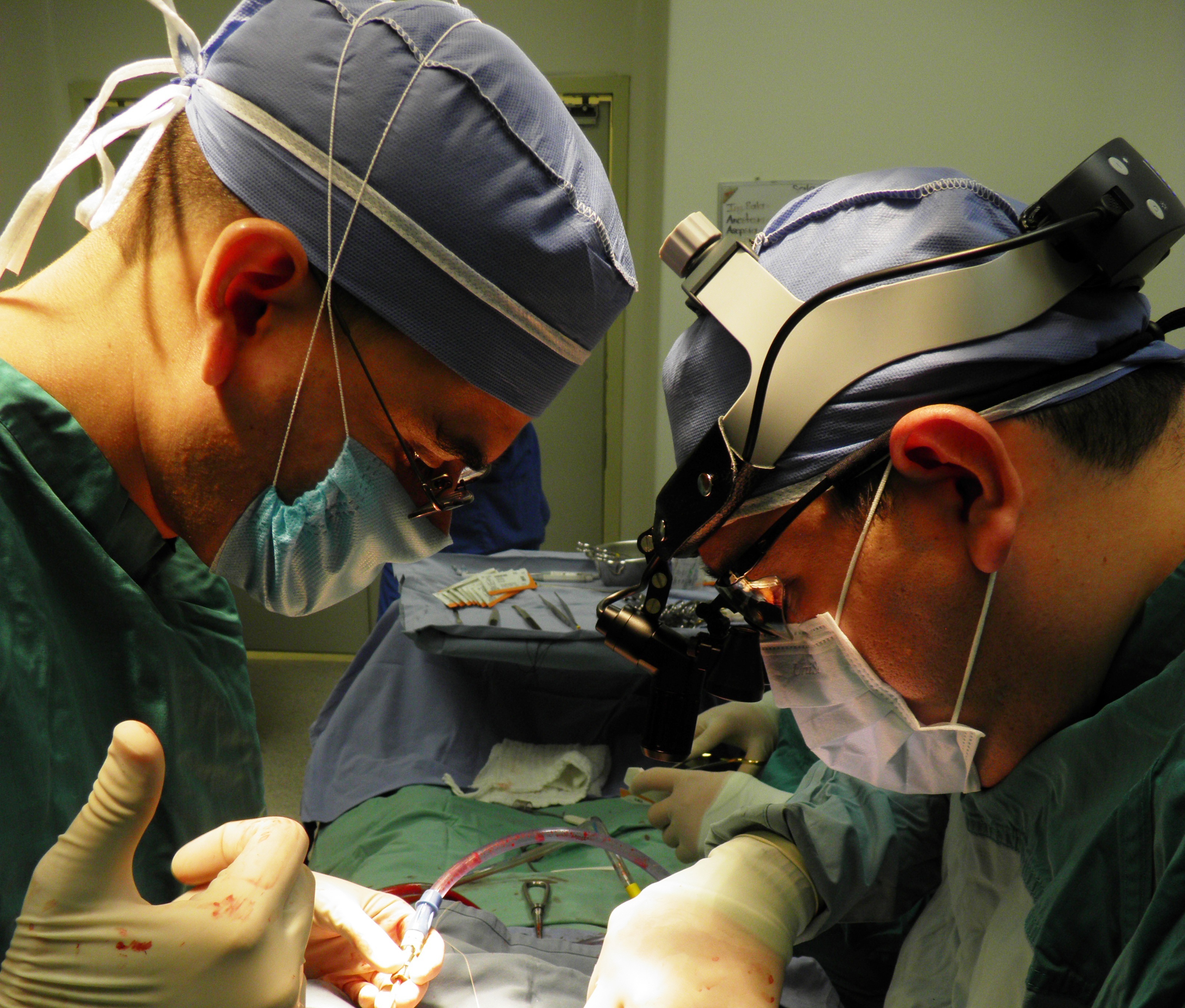
There has been a weird unhappy vibe in the  American hospitals these days.. It’s like nothing I’ve ever felt before in the last 15 years.  There has always been a collective feeling of frustration among providers; but it’s usually sat somewhat untended, like a slow cooker slowly simmering away..  These frustrations were related to our inability to provide the best for all of our patients, our frustration with the broken-ness of a health care system so rife with waste, yet with so little help for our vulnerable populations, and those in dire need.

It was manifested by occasion individual grumbling; during case management meetings, during conversations with faceless insurance companies as we explained yet again, why our patient:

a. really needed XYX treatment and

b. how it was actually more cost-effective in the long run..

But it was isolated for the most part, and the majority of providers still felt like they were helping people – and enjoyed the job satisfaction that went along with that..

It seems like a lot of that has changed over the past year.. I don’t know if it’s fear of coming changes, and the uncertainty that goes along with that..  But most providers are actually in favor of the Affordable Care Act – or the concept, anyway.  It’s something else, maybe the forced implementation of governmental changes like clunky and poorly functioning EMRs, the continual threats of “pay-for-performance” or a cummulative effect of all of the above, but many providers seem to have reached the breaking point in frustration.

For the first time that I can recall, a lot of really excellent physicians and other providers I know are just burned out to the point of complete mental and physical exhaustion.  People I’ve know for a long time, people I consider my mentors, my inspiration are talking about retiring early or leaving the field to do something else entirely.

It’s also the first time that I’ve ever seen doctors, nurses, and others as a collective to seem so broken in spirit.

Patients are people, not check box diagnoses

I am feeling a bit of it myself – a kernel of hopelessness that sparks in my heart.. a sinking feeling when I order a standard medication (but individualized for a specific patient/ condition) and enter in the computer – and receive a message telling me that dosage is not permitted.  A follow-up phone call with the pharmacist continues the charade.. Since it doesn’t fall into a specific category between two mandatory dosing schedules (for diagnoses that differ from what my patient has) then – they don’t know how to categorize it on the computer – and thus my patient can’t have it..  This makes no sense to me, I am following best practices, the current literature and evidence-based practice, but somehow my patient’s condition hasn’t been coded somewhere down in the pharmacy, so they won’t release the medication.  Too scared of the consequences I guess – or too apathetic to care that the medicine is for a real, living, breathing person and not a statistical table somewhere.

– and I argue the realities of this individual scenario but the bureaucratic mentality on the other end of the phone doesn’t care..  How am I supposed to do my job; to care and protect my patient in a system like this?  It’s only going to get worse as the government gets more and more involved in patient care.

What?  My patient isn’t a peg, it’s a person – and if this person doesn’t fit the pre-specified check box doesn’t matter to me  (in this specific instance)- what matters is that my patient keeps his leg (which he may not, if he doesn’t get this medication at the dosage I ordered in consultation with his surgeon).

As the consumer – losing my current plan

At the same time that this brokenness is affecting providers nationwide – I have fallen into the dilemma of many of my readers. As a locum tenems provider, I am self-insured.  My current plan, which was flexible, affordable and provided coverage which suited our needs (low monthly fee, low deductible, reasonable co-pay, and two free wellness checks a year) is being discontinued.  It was also a flexible plan that allowed my family and I to see providers nationally.  So if I was working in Texas for six months, I could see a doctor in Dallas. Or Massachusetts, or California, even back in my home state of Virginia.

Now, I am spending most of my days off on the phone and the internet – looking for a policy that doesn’t limit my coverage by location.  Most of the time, I can’t even find the correct phone numbers to talk to the right people.  The numbers listed online at the marketplace are incorrect, or out of service.  The representatives that I do speak to after being on hold for thirty minutes and routed through a computer automated system are sometimes nice, (often completely indifferent) but can’t answer my questions.

I do know that at a minimum my monthly expenditure for even the bronze “no frills” plans will double, and may even triple.  My deductible will also double or even triple, so in January, I will be literally paying two or three times what I paid last month (December) for a fraction of the services.

Paying a lot, and getting almost nothing in return

All of the new government approved plans are based on my home state – and some even limit coverage to my county only.  Since my county is rural – and the nearest major medical center is actually in a neighboring state, having one of these local plans is like being uninsured.  (Some representatives said they would cover out-of-area “life-threatening emergencies*”, but others weren’t sure).

this should be a significant concern for anyone in rural or limited medical access areas**.  For someone with my geographical needs, it’s become a major nightmare.   Even with the increased costs – I may still not have coverage for the majority of my time (for 2013 for example, I was home for a total of 1 month. In 2014, I was home for four months).  Since I can’t predict where I will be sent – I can’t pick a plan for another state.  Not only that – but even if I knew I was going to be posted to Indiana or somewhere like that – I am not allowed to buy a plan outside of my registered address.

No one knows the answers – and what they do know doesn’t sound good:

After another full day on the phone with representatives for the Healthcare Marketplace and different insurance providers, it looks like the answers are pretty ugly when they even know them.  Most of the representatives had no answers.  One of them even asked me, “Well, do you vote?”  They won’t even give a call back number or extension so that when they “accidentally” disconnect you during another of the “let me transfer you to another representative” spiel, you have to go thru the whole rigmarole all over again.

1.  If you have a plan that does not have out-of-network coverage – consider yourself uninsured if you become injured or have a medical emergency outside of your area (which may be as small as your county.)  The cheapest plan for two people on Blue Cross/Anthem/Blue Shield (my existing company) that offers out of network coverage is 594.00 a month (we paid 213.00 a month before).

2.  None of the plans cover medical tourism – even from companies that previously provided these options.  So, if you live in a county like mine (with no trauma center, and a tiny rural hospital) – you aren’t covered for the neighboring hospital in another area in an emergency.

Not only that – you can’t receive coverage for a non-urgent (elective) procedure for something like a knee replacement at another facility.  My town has one orthopedic surgeon (and he isn’t someone I’d ever chose to go to.)  Now I can’t go to Duke, UVA or another nearby facility – and they won’t pay for me to have the same treatment (at a fraction of the cost somewhere else like Bogotá.)

Here’s a typical example of what I’ve learned after several days/ weeks of reading & talking to representatives –

I’ll pay $5,112 in premiums with a $13,200 deductible with NO coverage of any conditions (except an annual physical and a flu shot) until I’ve put out a total of $18,300 (every year – not a one time deal).   Then the insurance will start to pick up the tab.. This is supposed to be affordable?  For whom?

And while some people will pay less in premiums based on their income level – they still have to come up with the $13,200 deductible.  How the heck is that supposed to work for someone making $30,000 a year?

So now we are calling all the other companies and reading, reading, reading all the fine print.  For now – it looks like I will paying an exorbitant amount for minimal coverage, and will need to rely on medical tourism for any non-urgent but essential treatment that either falls below my high deductible or isn’t even available in my home area.  Luckily, I am pretty healthy (but I am currently working in a trauma unit so I know how quick that can change) – but isn’t the whole point of insurance to prepare for the unexpected?

So what does that mean?

I don’t have the answers for everyon1e.. In fact, I don’t even have them for myself. But it may mean that I am better served by paying my premium and using medical tourism for all of my other (non-emergency) health care needs.  After all, $13,199.99 buys a lot of care in Colombia, Mexico and many of the other places I’ve researched and written about.

*And, if you survive – you may have to argue with some bureaucrat whether your illness was actually life-threatening or not.. I mean, it can always be argued that “how serious was it, really, if you made it home alive?”

** Limited access areas may include major cities.  For example, the city of Las Vegas has a very limited number of specialists.

Is it safe to fly after surgery?


Long haul flights are a health risk for everyone

While the risks of prolonged immobility and pulmonary embolism with long distance travel are well-known, many potential patients are unaware of the increased risks of thromboembolism after surgery.

Increased risks in specialized populations

People with a personal or family history of previous blood clots (PE or DVT), women on oral contraceptives, and patients who have undergone orthopedic surgery are some of the people at greatest risk.

Increased risk after surgery + Long trips

The heightened risk of thromboembolism or blood clots may persist for weeks after surgery.  When combined with long-haul flights, the risk increases exponentially.

In fact, these risks are one of the reasons I began investigating medical tourism options in the Americas – as an alternative to 18 hour flights to Asia and India.

Want to reduce your risk – Follow the instructions in your in-flight magazine

Guidelines and airline in-flight magazines promote the practice of in-flight exercise to reduce this risk – but few have investigated the risks of thromboembolism in post-surgical patients by modes of transportation: car travel versus air travel.

airplane3

But, is it safe to fly after surgery?

This spring, Dr. Stephen Cassivi, a thoracic surgeon at the world-famous Mayo Clinic in Minnesota tried to answer that question with a presentation of data at the  the annual meeting of the American Association for Thoracic Surgery.

This question takes on additional significance when talking about patients who have had lung surgeries.  Some of these patients require oxygen in the post-operative period, and the effects of changes in altitude* (while widely speculated about) with air travel, have never been studied in this population.

Now, Dr. Cassivi and his research team, say yes – it is safe.  Mayo Clinic is home t0 one of the most robust medical travel services in the United States for both domestic and international medical tourists.

After following hundreds of patients post-operatively and comparing their mode of transportation  – Dr. Cassivi concludes that the risks posed by automobile travel and air travel after surgery are about the same.

Additional reading

For more information on deep vein thrombosis, pulmonary embolism and safe travel, read my examiner article here.

AATS poster presentation abstract:

Safety of Air Travel in the Immediate Postoperative Period Following Anatomic Pulmonary Resection
*Stephen D. Cassivi, Karlyn E. Pierson, Bettie J. Lechtenberg, *Mark S. Allen, Dennis A. Wigle, *Francis C. Nichols, III, K. Robert Shen, *Claude Deschamps
Mayo Clinic, Rochester, MN

Schwarz T, Siegert G, Oettler W, et al. Venous Thrombosis After Long-haul Flights.  Arch Intern Med. 2003;163(22):2759-2764. doi:10.1001/archinte.163.22.2759 .  This is some of the definitive work that discussed the risk of long flights with blood clots in the traveling population due to prolonged immobility.

*Most flights are pressurized to an altitude of around 8,000 feet – which is the same level as Bogotá, Colombia.  This is higher than Flagstaff, AZ, Lake Tahoe, Nevada, Denver, Colorado or Mexico City, D.F.  – all of which are locations where some visitors feel physical effects from the altitude (headaches, fatigue, dyspnea, or air hunger.  In extreme (and rare) cases, people can develop cerebral edema or other life-threatening complications at these altitudes**.

** Severe effects like cerebral edema are much more common at extreme altitudes such as the Base Camp of Mt. Everest but have occurred in susceptible individuals at lower levels.

100% sugar-free!


I am currently on assignment in Massachusetts – and we’ve had our share of snow in the last few weeks.  It certainly makes me long for Latin America..

on assignment in the northeast

on assignment in the northeast

But while I may be in the northeast for the next several weeks, it doesn’t mean that I am hiding under a rock – so I continue to talk / read/ and research issues in medical tourism.

One of the newest reports comes out of the United Kingdom.  The UK has embraced medical tourism to a greater degree that Americans have, and UK researchers are some of the forerunners in the field.  (There are multiple reasons for the ready adoption of medical tourism by large numbers of British citizens but that’s a different topic entirely.)

No candy coating!

No candy coating!

The latest news from the Yorkshire Post is a timely and necessary reminder for all potential medical tourists and facilitators out there.  The article discusses the recently published paper, entitled, “The three myths of medical tourism” as well as interviews with medical tourists.

Research into the medical tourism industry

The paper is based on results of a study conducted at York University.  Researchers at  York University have an ongoing medical tourism project looking at multiple aspects of medical tourism including financial/ economic, as well as quality and continuity of care issues.

Much of what the researchers at York are studying are topics we have discussed previously on our site:

Quality Control

– the lack of standardized guidelines for ensuring quality of care (and continuity of care from the moment the patient leaves home until recovery)

– the lack of accountability for facilitators/ tour operators/ medical tourism companies for patient safety and outcomes  (this means that companies can send you to the cheapest surgeon)

– the lack of recourse for patients who experience complications/ serious injury or inadequate care.  (It’s a black hole for medical malpractice at present).

– The potential financial costs of complications:  While some surgeons require their patients to purchase ‘complication insurance’ to cover treatment of complications (if they occur) in the home country, there is no universal requirement.

Papers in-press

Unfortunately, much of this work (by Lunt & Smith) is currently in-press.  I’m anxious to see their reports but I am also wondering what sort of regional differences may exist.  Medical tourism by British residents is often to neighboring areas of Europe, Eastern Europe, India and Israel.  I’d be fascinated to see how that compares with outcomes and experiences for medical travelers to Latin America, and different South American countries in particular.

In any case – it’s a timely report.  Hard scientific information is dearly needed since the majority of data over the last decade has been anecdotal in nature or statistical “projections/ estimates / guesstimates”.

Hard data is particularly important when it comes to allegations regarding poor post-operative care/ and increased incidence of infections (specifically in medical tourists from the UK who traveled to India).  Many of these complaints arise from local plastic surgeons and may have little supporting data.  If there is a problem, we need actual numbers, not case reports (particularly if we are dealing with antibiotic resistant infections).

The industry has also been plagued with numerous biases on both sides..  – Biases towards the perception that all overseas medical care is cheaper (not always the case)

and/or that cheaper = inferior

Quantitative data would also be helpful when discussing patient satisfaction and quality of care.  Most of the time, statistics are bandied about from the Deloitte Institute – but I want to hear what patients think from other sources.  How did patients rate their experiences in Britain?  In California?  Where were the patients going?  What countries?  What clinics were mentioned repeatedly?

Other issues – Patients poorly informed

Researchers also found that medical travelers were poorly informed or ignorant of the risks involved with medical tourism.

In some cases, patients were ‘willfully ignorant‘ and relied on social media and friends for all of their health information.  A subset of these patients also traveled for unproven/ unregulated medical treatments (such as bovine stem cell injections).

Many patients were ignorant of the risks or potential complications of the surgical procedures themselves (lap-band was specifically cited numerous times) as well as the problems that arise when your surgeon is thousands of miles away.

Patients were also unaware/ poorly informed about the financial implications of developing/ treating complications in their home country – (or the costs involved if they needed to return to their surgeon).  Some of the financial issues mentioned in this (and previous data I’ve encountered) is more specific to British residents with their National Health Services and it’s reimbursement structure.

However, it’s not unimaginable to picture similar circumstances for uninsured medical tourists, or tourists seeking aftercare at an “out-of-network” facility once they returned to the USA.

Ignorance of health care information – an ethical/ safety issue

Some of this ignorance may be directly attributed to the way that many medical tourism companies operate – with patients being funnelled overseas thru a “facilitator” versus referring physicians and nurses.  During a recent conference on medical tourism, I was astounded when a prominent American medical facilitator brushed aside my concerns about the lack of medically trained personnel, stating, “I’ve been a paralegal for 22 years in a malpractice office – I know all that anyone needs to know about surgery.”

But what about the ‘caregiver’?

Facilitators and medical tourism companies often tout the use of ‘caregivers’.  This  terminology is misleading in my opinion.

Since “doctor”, “registered nurse”, and other healthcare personnel are professions that require certification and educational degrees – companies often label their assistants ‘caregivers’ since it’s illegal to use the title of nurse.   In reality, the term ‘caregiver’ is more akin to ‘paid companion’.  These individuals have no medical or nursing training and may actually be a source of misinformation (as this paper states.)*

In the usual course of surgery – as part of the pre-operative process, patients receive information, education and instructions during their initial consultation/ and pre-operative visits.  This also gives patients a chance to ask questions, in-person to a medically knowledgeable person.  Skype, and email just can’t replace this critical component.

Many times, critical information is obtained (and given) by the surgical team during the physical examination and history-taking on the initial consultation.    If the referring service is a layperson, and the initial (in-person) consultation  takes place after the patient arrives in the destination country, these crucial education opportunities are lost.

Call for Regulation for patient safety

As readers know, I believe that regulation is both necessary and desirable to improve/ promote and grow the medical tourism industry.  This regulation needs to be undertaken by knowledgeable people/ institutions outside of the industry.

Other research in medical tourism –

Simon Fraser University – British Columbia, Canada

*In a related aside, one of the more popular Canadian medical tourism facilitators uses her unemployed sister in the role of ‘caretaker’.  While the sister has no medical or nursing training, the facilitator bragged that it allows her to put her family on the payroll and bill the client for these services.

Narcotics and Analgesia in Latin America: Issues related to managing acute pain in chronic opioid patients


This article is part of a new series that explores issues in medical tourism.

The geopolitical landscape of drug trafficking?

As a writer who has written on both Colombia and Mexico, the most frequent questions I encounter from friends, colleagues and acquaintances are almost always related to drugs and drug-related violence.  As I’ve mentioned in previous posts, the real risks of crime and violence affecting medical tourists is actually quite small in many of these areas, despite media headlines*.   Questions related to the drug trade are for all intents and purposes outside of my area of expertise..   However, this does bring up some other related issues that are increasingly relevent for our on-going discussions about medical tourism.  But, first some background –

drugs2

The Latin American Drug Problem?

Just ask a Mexican, Colombian or another person from Latin America and they will tell you, the United States is the place with the drug problem.

Not only that, but the majority of Latin American countries hold the USA as responsible for fueling much of the violence that has devastated these countries in recent years.  Erik Vance over at Slate.com recently published an excellent essay on this topic which explores the role and collective responsibility of American citizens for drug related atrocities under the guise of a Friday night high.

This isn’t Colombia Reports, its Latin American Surgery.com

But talking about the politics and trade issues regarding the growth, harvesting, and distribution of illegal drugs isn’t really the focus of my work.   Healthcare is, so my interpretation of issues regarding drugs is very different – almost like another language.  If you could see inside my head, and watch my thought processes, it would look a little like this:

Drugs —> Narcotics —-> medications for pain —–> treating pain —–> international / cultural issues related to pain and treatment of pain —> who is most heavily affected by this?

When I hear “drugs”, I think “medications.”  When I think of medications, or more specifically, narcotics – I don’t think of tiny, little bags littering the street in Medellin, but the somewhat vague medical definitions for narcotics..

drugs

Narcotics, Narcotics, Narcotics…

The definition of narcotics depends on the discussion..

Legally, a narcotic is any medication or drug that is prohibited/ restricted / illegal.  Thus while the government classifies amphetamines, MDMA (ecstasy) or cocaine as narcotics, healthcare providers usually don’t.

Medically, narcotics usually refers to opioid compounds or other medications used to relieve physical pain.  More recently, the term analgesics has replaced narcotics in the everyday vernacular.  When we refer to narcotics, we are usually talking about using medications in a therapeutic fashion specifically to treat pain – like prescribing Percocet or Lortab for pain after surgery..

pills2

A kid in the candy store

Americans are the kings of narcotics. But unlike the common perception of drug abuse being isolated to crack pipes, cocaine and heroin junkies – the majority of drug abuse in the USA is derived from legal prescription medications, readily available at large chain pharmacies.

CVS and Walgreens versus the Colombian drug dealer

It’s usually a Colombian or Mexican drug dealer – at least on the latest episode of modern crime dramas.  I guess that’s because the truth is a lot more mundane.  In actuality, CVS, Walgreens and any number of local pharmacies are the real ‘drug dealers’ for many Americans.

We prescribe, we use, and we abuse at astronomical rates.  No other country comes close to being as heavily medicated as ours. Not only have overdoses and addiction rates skyrocked, but so have the cases of “Chronic non-cancer pain” treated with long-term narcotics.  Some of this use is legitimate, some of it isn’t but anyway you look at it – we have a problem.

The prescription drug problem: Overdoses, addiction and chronic pain

In  a recent Medscape article by one of the foremost experts on chronic pain,  chronic pain management and addiction medicine,  Laxmaiah Manchikanti in “Lessons Learned in the Abuse of Pain-Relief Medication_ A Focus on Health Care Costs” estimates that there are over 100 million chronic pain patients in the United States. 

That’s a lot of pills and prescriptions.

But even if we ignore issues of prescription abuse and misuse, there still remains a large segment of people with chronic pain and chronic opioid use.  These people aren’t abusing their medications, but they are using opioid medications over long periods of time, often in escalating doses.

Chronic pain and Chronic Pain treatment with opioids

The problem chronic pain patients face is one of tolerance.  When patients are treated with opioid medications, including long-term opioid medication regimens for problems like chronic back pain, tolerance to these drugs and their effects occurs.  This means that it takes more of the medication to produce analgesic (and other) effects.

For example, a dosage that would make an opioid naive patient comatose for example, may only serve to reduce pain from a “10 [unbearable agony]” to an “8 [excruciating] ” in a patient with tolerance.

While an isolated prescription for Percocet after major surgery or an injection of morphine in the emergency room for an acute fracture shouldn’t cause any long-term problems, many of people with chronic use have developed a significant tolerance to these medications.

Tolerance makes obtaining adequate analgesia in acute pain difficult

This means that the ‘standard’ doses of pain medications that are usually ordered after procedures may be inadequate to manage their pain.  Huxtable et al describe the problem of maintaining adequate analgesia in opioid tolerant individuals during episodes of acute pain in his 2011 review, which gives a comprehensive overview of the issues involved.

But, if you can imagine the scenario of an opioid tolerant patient awakening from major surgery, only to find out that the prescribed medications aren’t working  – then you have a pretty good idea of how potentially traumatic and devastating this could be.

If you are planning for surgery: 

– Pain management planning (baseline pain score, realistic pain management goals, multi-modal therapies, and thorough review of medication history)

But more critically, people with increased opioid tolerance need to talk – to their providers and their caregivers about realistic expectations of post-operative pain control.  Together, patients and providers should review their pain medication history, as well as baseline pain scores.

Also contributing factors like depression or other emotional distress should be addressed prior to surgery.  (Even if you don’t have a diagnosed depression – antidepressants can often help alleviate pain).

For example:

Patient P is scheduled for a knee replacement.  While P’s knee has been hurting for some time, P’s chronic arthritis pain is mainly centered in P’s low back.  P takes several medications for his back pain, including oxycodone and has done so for several years since a workplace injury landed him in the emergency room with a herniated disk.  Now P is concerned about his pain after surgery.  

What are some of the issues that P faces?

If prior to surgery, patient P reports a chronic (baseline) pain level of 6 in his back (on scheduled, long-term narcotics):

– obtaining pain relief (a score of 3 or less) might be impossible.  It is almost certainly impossible that the same medication regimen used for opioid naïve patients is going to be equally effective for patient P.

 After a frank discussion with his/her surgeon during pre-surgical evaluation, P’s doctor anticipates P’s increased needs for post-operative analgesia.  The doctor also orders a wide range of non-pharmacological interventions and adjuvant medications to help alleviate P’s acute pain needs.

However, neither P nor P’s surgeon anticipate that this regimen will treat or relieve P’s chronic pain.  Following adequate recovery from surgery, P is referred back to his/her pain management specialist for long-term needs.

Sounds good, right?  Well, it should since this is the textbook scenario for patient care that has been taught in universities all over the United States for the last decade.

But this is Latin American Surgery..  so we need to explore the regulations and attitudes regarding pain management and analgesia outside of the USA.

But the very first thing people should know is: 

1.  Pain is culturally defined.

Cultural beliefs affect everyone, not just the patient..  So it isn’t just about whether the patient displays stoicism or tears.  It’s much more complex than that.   Cultural beliefs affect everyone; including doctors and nurses, so this means that culture also plays a role in pain management too…

That’s not to imply that some cultures just tell their patients “to shut up and suffer” but that pain and appropriate pain management may be viewed very, very differently depending on where the person is being treated.

In general, some cultures are more openly expressive of pain – and in these cultures pain may be treated with stronger medications and more frequently.  But that is not always the case – because the cultural beliefs surrounding pain and suffering also reflect that individual society’s belief regarding the value of suffering, as well as beliefs/ fears/ concerns regarding addiction.

Crying

Many of the cultures that are frequently cited as “highly emotive” or as cultures where pain is readily expressed are some of the same cultures where narcotics are not heavily used in in-patient or outpatient settings.

For example, many classic sociology references cite latino culture as being very expressive and emotive (ie. not stoic regarding pain).  At the same time, the use of narcotic pain medications (in my observations) are quite limited in both in-patient or outpatient settings.  Numerous medications (tramadol, ketorolac and other NSAIDS) are used to manage post-operative pain in these patients – including formulations not available in the United States.  Patients certainly weren’t undertreated:  during interviews and visits with patients, the vast majority of these patients reported good to excellent pain relief.

However, in the three years that I have been working closely with physicians in Mexico, and Colombia – I have very rarely seen a doctor order narcotics (ie. morphine, dilaudid or similar medications) on the post-operative orders.  I have never  seen a written prescription for percocet, lortab or similar medications for a patient in the outpatient setting (or as part of discharge medications.)

Obviously that doesn’t mean that these medications aren’t prescribed.  But it does show that what would be considered a routine Rx in the USA (ie. Discharge prescriptions for Percocet after cardiac surgery or lung surgery) is not routine for the doctors in the various practices that I have observed in my numerous travels.

So patients with opioid tolerance or chronic opioid use would certainly want to discuss this with their surgeons prior to surgery.

Of course, “cultural traditions” aren’t the only reason narcotics may be used / dispensed differently in other countries.  Other reasons may include:

Legal constraints / Availability

Globally, pain management practices may also be influenced by that nation’s laws as issues of supply and scarcity.  This is less of an issue in parts of Latin America but may be more problematic in Asia or other countries where narcotics are more tightly controlled.

In Mexico, for instance, many of the legal constraints for the prescribing and use of narcotics mirrors the United States.  There is a centralized governmental agency, COFEPRIS, similar to the DEA which regulates and monitors prescription drugs.  Narcotics like morphine, hydromorphone and fentanyl require a specific type of prescription called “Type 2” (and prescriptive authority for the prescribing physician).  There are dosage limitations and restrictions.  Only certain types of doctors are authorized to write these prescriptions and frequent follow ups are required (monthly) for on-going prescriptions of Type 2 drugs (A. Ballesteros, 2014).

globe ribbon

Happy, safe, successful travels

None of the above is to suggest that medical travel is contraindicated for American patients.  But like any big occasion or event, advanced planning is critical for a successful medical trip.

It is also a reminder to have clear expectations, good lines of communications and thorough discussions with medical providers** prior to having surgery or other procedures, particularly if you have special needs (like chronic pain management) or other health conditions.

*Venezuela is a different story. Travelers are advised to be informed, and take precautions prior to visiting this area.

** Overseas, domestic or just down the street

Additional references and resources

Vital Signs: Overdoses of Prescription Opioid Pain Relievers and Other Drugs Among Women — United States, 1999–2010.  A CDC report.

Cultural aspects of pain management.  Marcia Carteret.

Laxmaiah Manchikanti (2007).  National Drug Control Policy and Prescription Drug Abuse: Facts and Fallacies. Pain Physician, 2007;10;399-424.

Hartrick, Craig (2007).  Long term opioid treatment.  Virtual Mentor (American Medical Association Journal of Ethics).

Huxtable et. al. (2011). Acute pain management in opioid tolerant patients: a growing challenge.  Anesthesia Intensive Care, 2011, 39: 804-823.

Brafman, B (2014). Advance for nurses: Addiction in the surgical patient.

For fellow Medscape subscribers – there is an excellent series of articles as well as video lectures addressing multiple facets of the American prescription (opioid) pill problem.  I’ve included links to just a few of them here.

Managing pain

Safe prescribing

The “lessons learned” article, previously cited above.

The “Pain TV” series.

Medical tourism on the heels of Obamacare


Happy Thanksgiving to all of my American readers!  I hope everyone has a wonderful and safe holiday.

I’m home for a while, sort of.

After returning from Mexico this October, I’ll be spending the rest of the Fall/ Winter here in the United States while I replenish my writer’s budget by completing some travel assignments.  (Coming soon – to a hospital near you!)

Now that I am home, I have been catching up on all of the local news – and it looks like Obamacare hasn’t really kicked off to a wonderful start.  Of course, it was naive to think that anything SO large/ SO involved / Affecting some many people could go off without (several) hitches, but as one of the people losing their coverage because of it – I certainly understand all of the anxiety and worry out there.

In the midst of continuing coverage of the current Obamacare fiasco, as millions of Americans lose their existing health care, several new articles on medical tourism have been making headlines across the country.  Here’s a look at some of the latest news and reports from this past month.globe ribbon

In the Bay Area, NBC news‘ Elyce Kirchner, Jeremy Carroll and Kevin Nious published “Medical tourism: the future of healthcare?” along with a televised report. It’s the usual patient narrative along with an overview of medical tourism.

Kevin Gray, at the Men’s Journal talks about the domestic and international options available in his narrative, “Medical Tourism: Overseas and under the knife.”  Gray takes a slightly different approach and discusses how consumers can comparison shop for health care services.

Among these publications, is “Medical tourism: Spanning the globe for health care,” by Kent McDill which includes information from one of my publications and a recent interview published right here at Latin American Surgery.com

The sky’s the limit?

Also, in counterpoint to the numerous press releases and newspaper articles talking about Iran, Bermuda, and various other medical tourism destinations seeking to “cash in” on the phenomena, British researchers (Lunt et al.) have published a report that contradicts the “if you build it, they will come” philosophy which has taken over the industry in many quarters.

Medical News Today published a summary of their findings early this month.  Researchers also point out that much of the credible data required to provide a full and accurate picture regarding medical tourism is absent.

On a related note: While I talked about the limitations in medical tourism, accuracy of reported statistics and public perceptions in-depth during my 90 minute NPR interview, you wouldn’t really know it from my 2 sentence quote.

Pitfalls..

USA Today also published a story on some of the pitfalls for destinations with thriving medical tourism.  Kate Shuttleworth takes a look at the strain that Eastern European medical tourists have placed on some Israeli facilities.

Is medical tourism on the rise?  or is it all a spin of the numbers?  I guess it all depends on who you ask.. But for now – Obamacare is not a viable alternative to medical travel.

CBS news on the cons of medical tourism


CBS published a refreshing take on medical tourism – an article reviewing the pros and cons of traveling for medical care along with an interview with an American orthopedic surgeon,  Dr. Claudette Lajam from New York University Langone Medical Center.

Video interview with Orthopedic Surgeon

While Dr. Lajam pretty much rejects any form of medical tourism – she made some excellent points in her interview.  In the discussion, she stressed the need for facility AND provider verification.  She also talked about the need for people to know specifics – and gives one of my favorite examples, “American trained”.

“American trained

As she points out in the interview, this is a loose term that can be applied (accurately) to a Stanford educated surgeon like Dr. Juan Pablo Umana in Bogotá  or in a more deceptive fashion to one of the many surgeons who have taken a short course, or attended a teaching conference within the United States. A three-day class doesn’t really equate, now does it?

The discussion (and the article) then turned to the need to ‘research’ providers.. Now, if only CBS news had talked to me..   That would have made for a more balanced, detailed and informative show for watchers/ readers.

(Telling people to ‘research’ their medical providers falls a bit short.  Showing people how – or providing them with resources would be more helpful.)

“Off-label medical travel”

In addition, the print article should have gone a bit further in discussing the pros and potential consequences/ harmful effects of traveling for ‘off-label’ treatments instead of merely quoting one patient.  Since the area of harm is actually far greater in this subsegment of the medical tourism population due to the amount of quackery as well as the sometimes fragile state of these potential patients  – a bit more discussion or even a separate segment on “off-label medical travel” would have been an excellent accompaniment.

Speaking of which, several weeks ago, I interviewed with NPR (National Public Radio) as part of a segment on medical tourism.  During that discussion we talked about all of the pluses and minuses mentioned on the CBS segment as well as the “Selling Hope” aspect of ‘off-label medical travel” and the potential harms of this practice, as well as some of the issues involved in transplant tourism.  I am not sure how much of my interview, Andrew Fishman, the producer for the segment, will use – or when it will air, but I’ll keep readers informed.

Start here…


This is a page re-post to help some of my new readers become familiarized with Latin American Surgery.com – who I am, and what the website is about..

As my long-time readers know, the site just keeps growing and growing.  Now that we have merged with one of our sister sites, it’s becoming more and more complicated for first time readers to find what they are looking for..

So, start here, for a brief map of the site.  Think of it as Cliff Notes for Latin American surgery. com

Who am I/ what do I do/ and who pays for it

Let’s get down to brass tacks as they say .. Who am I and why should you bother reading another word..

I believe in full disclosure, so here’s my CV.

I think it’s important that this includes financial disclosure. (I am self-funded).

I’m not famous, and that’s a good thing.

Of course, I also think readers should know why I have embarked on this endeavor, which has taken me to Mexico, Colombia, Chile, Bolivia and continues to fuel much of my life.

Reasons to write about medical tourism: a cautionary tale

I also write a bit about my daily life, so that you can get to know me, and because I love to write about everything I see and experience whether surgery-related or the joys of Bogotá on a Sunday afternoon.

What I do and what I write about

I interview doctors to learn more about them.

Some of this is for patient safety: (Is he/she really a doctor?  What training do they have?)

Much of it is professional curiosity/ interest: (Tell me more about this technique you pioneered? / Tell me more about how you get such fantastic results?  or just tell me more about what you do?)

Then I follow them to the operating room to make sure EVERYTHING is the way it is supposed to be.  Is the facility clean?  Does the equipment work?  Is there appropriate personnel?  Do the follow ‘standard operating procedure’ according to international regulations and standards for operating room safety, prevention of infection and  overall good patient care?

I talk about checklists – a lot..

The surgical apgar score

I look at the quality of anesthesia – and apply standardized measures to evaluate it.

Why quality of anesthesia matters

Are your doctors distracted?

Medical information

I also write about new technologies, and treatments as well as emerging research.  There is some patient education on common health conditions (primarily cardiothoracic and diabetes since that’s my background).  Sometimes I talk about the ethics of medicine as well.  I believe strongly in honesty, integrity and transparency and I think these are important values for anyone in healthcare.  I don’t interview or encourage transplant tourism because I think it is intrinsically morally and ethically wrong.  You don’t have to agree, but you won’t find information about how to find a black market kidney here on my site.

What about hospital scores, you ask.. Just look here – or in the quality measures section.

Cultural Content

I also write about the culture, cuisine and the people in the locations I visit.  These posts tend to be more informal, but I think it’s important for people to get to know these parts of Latin America too.  It’s not just the doctors and the hospitals – but a different city, country and culture than many of my readers are used to.

Why should you read this?  well, that’s up to you.. But mainly, because I want you to know that there is someone out there who is doing their best – little by little to try to look out for you.

How the site is organized

See the sidebar! Check the drop-down box.

Information about surgeons is divided into specialty and by location.  So you can look in plastic surgery, or you can jump to the country of interest.  Some of the listings are very brief – when I am working on a book – I just blog about who I saw and where I was, because the in-depth material is covered in the book.

information about countries can be found under country tabs including cultural posts.

Issues and discussions about the medical tourism industry, medical safety and quality are under quality measures

Topics of particular interest like HIPEC have their own section.

I’ve tried to cross-reference as much as possible to make information easy to find.

If you have suggestions, questions or comments, you are always welcome to contact me at k.eckland@gmail.com or by leaving a comment, but please, please – no hate mail or spam.  (Not sure which is worse.)

and yes – I type fast, and often when I am tired so sometimes you will find grammatical errors, typos and misspelled words (despite spell-check) but bear with me.  The information is still correct..

Thank you for coming.

Talking with Dr. Gustavo Gaspar Blanco, plastic surgeon


Dr. Gustavo Gaspar Blanco, plastic surgeon

Gaspar 083

Dr. Gustavo Gaspar Blanco is a plastic surgeon in Mexicali (Baja California) Mexico.  He is well-known throughout Baja and Northern Mexico for his gluteal augmentation techniques using gluteal implants.  While this is one of the procedures he is most famous for, he also performs the complete range of body, facial plastic surgery procedures, and post-bariatric reconstructive surgery.

It was an engaging series of interviews as Dr. Gaspar is extremely knowledgeable and passionate about his craft.  “Plastic surgery is different from other specialties, it is an art.  The surgeon needs to have an eye for beauty and symmetry in addition to surgical skill.”

To read more about Dr. Gaspar in the operating room.

Gluteal Implants versus Fat Grafting

There are multiple methods of gluteal augmentation (or buttock enhancement).  Dr. Gaspar performs both fat grafting and gluteal implantation procedures.  He prefers gluteal implantation for patients who are very thin (and have limited fat tissue available for grafting) or for patients who want longer-lasting, more noticeable enhancements.   (With all fat injection procedures, a portion of the fat is re-absorbed).

He recommends fat grafting procedures to patients who want a more subtle shaping, particularly as part of a body sculpting plan in conjunction to liposuction.

Breast Implants and attention to detail

Like most plastic surgeons, breast augmentation is one of the more popular procedures among his patients.  The vast majority of his patients receive silicone implants (by patient request), and Dr. Gaspar reports improved patient satisfaction with appearance and feel with silicone versus saline implants.  He uses Mentor and Natrelle brand implants, and is very familiar with these products.  In fact, he reports that he has visited the factories that create breast implants in Ireland and Costa Rica.  He says he visited these factories due to his own curiosity and questions about breast implants**.

Once he arrived, he found that each implant is made by a time-consuming one at a time process versus a vast assembly line as he had envisioned.  He was able to see the quality of the different types of implants during the manufacturing process.  These implants, which range from $800.00 to $1200.00 a piece, go through several stages of preparation before being completed and processed for shipping.  He also watched much of the testing process which he found very interesting in light of the history of controversy and concern over previous silicone implant leakage in the United States (during the 1960’s – 1970’s).

Gaspar 061

Another aspect of breast augmentation that Dr. Gaspar discusses during my visits is the breast implantation technique itself.  While there are several techniques, in general, he uses the over-the-muscle technique for the majority of breast implantation procedures.  He explains why, and demonstrates with one of his patients (who had the under-the-muscle technique with another surgeon, and now presents for revision).

“While the under-the-muscle technique remains very popular with many surgeons, the results are often less than optimal.  Due to the position of the muscle itself, and normal body movements (of the shoulders/ arms), this technique can cause unattractive rippling and dimpling of the breast.  In active women, it can actually displace the implant downward from pressure caused by normal muscle movements during daily activities.  This may permanently damage, displace or even rupture the implant.”

Instead, he reserves the under-the-muscle implant for specific cases, like post-mastectomy reconstruction.  In these patients (particularly after radiation to the chest), the skin around the original mastectomy incision is permanently weakened, so these patients need the additional support of the underlying muscle to prevent further skin damage.

Not just about outcomes

While his clients, from all over North America, are familiar with his plastic surgery results, few of them are aware of his deep commitment to maintaining the highest ethical and medical standards while pursing excellence in surgery.

Commitment to ethical care of patients crosses language barriers

While Dr. Gaspar is primarily Spanish-speaking, his commitment to ethical practice is crystal clear in any language.  He explains these ethical principles while offering general guidelines for patients that I will share here (the principles are his, the writing style is my own).

Advice for patients seeking plastic surgery

Be appropriate:

– Patients need to be appropriate candidates for surgery: 

Around fifty percent all of the people who walk into the office are not appropriate candidates for plastic surgery, for a variety of reasons.  Dr. Gaspar feels very strongly about this saying, “Unnecessary or inappropriate surgery is abusive.”

– Plastic surgery is not a weight-loss procedure.  Liposuction/ Abdominoplasty is not a weight loss procedure.  Plastic surgery can refine, but not remake the physique.  Obese or overweight patients should lose weight prior to considering refining techniques like abdominoplasty which can be used to remove excess or sagging skin after large-scale weight loss.

fat removed during liposuction procedure

fat removed during liposuction procedure

  – Have surgery for appropriate reasons.  Plastic surgery will not make someone love you.  It won’t fix troubled relationships, serious depression or illness.  Plastic surgery, when approached with realistic expectations (#3) can improve self-esteem and self-confidence.

Realistic expectations – just as plastic surgery won’t result in a 25 pound weight loss, or bring back a wayward spouse, it can’t turn back the clock completely, or radically remake someone’s appearance.  There is a limit to what procedures can do; for the majority people, no amount of surgery is going to make them into supermodels.

Know the limitations

Not only are there limits to what surgery itself can do, there are limits to the amounts of procedures that people should have, particularly during one session.  “Marathon/ Extreme Makeovers” make for exciting television but are a dangerous practice.

Stay Safe:

Just as patients should avoid marathon or multi-hour, multiple procedure surgeries, patients should stay safe.

–          Avoid office procedures

As Dr. Gaspar says, “The safest place for patients is in the operating room.” With the exception of Botox, all plastic surgery procedures should be performing the operating room, not the doctor’s office.  This is because the operating room is a sterile, well-prepared environment with adequate supplies and support staff.  There are monitors to help surgeons detect the development of potential problems, life-saving drugs and resuscitation (rescue) equipment on hand. Should a patient stop breathing, start bleeding or develop a life-threatening allergic reaction (among other things), the operating room (and operating room staff) are well prepared to take care of the patient.

Communicate with your surgeon –

Give your surgeon all the details s/he needs to keep you safe, and have a successful surgery.  Talk about more than the surgeries you are interested in –

– bring a list of all of your medications

– know a detailed history including all past medical problems/ conditions and surgeries.

If you had heart surgery ten years ago – that’s relevant, even if you feel fine now.  Have a history of previous blood transfusions/ radiation therapy/ medication reactions?  Be sure to tell the doctor all about it.

Even if you aren’t sure if it matters, “My sister had a blood clot after liposuction” – go ahead and mention it.. It might just be a critical piece of information such as a family predisposition to thromboembolism (like the example above).

Lastly

Surgical complications are a part of surgery.  All surgeons have them – and having a surgical complication in and of itself is no indication of the quality or skill of the surgeon.  Complications can occur for a variety of reasons.

However, how efficiently and effectively the surgeon treats that complication is a good indicator of skill, experience and expertise.

As part of this, Dr. Gaspar stresses that medical tourism patients need to prepare to stay until they have reached an adequate stage of recovery.  This prevents the development of complications and allows the surgeon to rapidly treat a problem if it develops; before it become more serious.

“There is no set time limit for my patients after surgery, everyone is different.  But none of my patients can go [return home] until I give my approval.”  This philosophy applies to more than just medical tourists from far off destinations. It also applies to any patients have large procedures and their hospitalizations.  While many surgeons race to discharge clients as same-day surgery patients, Dr. Gaspar has no hesitation in keeping a patient hospitalized if he has any concerns regarding their recovery. “Hospitals are the best places for my patients, if I am concerned about their recovery.”

About Dr. Gustavo Gaspar Blanco, MD

Plastic and reconstructive surgeon

Av. Madero 1290 y Calle E

Plaza de Espana, suite 17 (second floor)

Mexicali, B.C

Tele: (686) 552 – 9266

If calling from the USA: 1 (877) 268 4868

Email: gustavo@drgaspar.com

Dr. Gaspar attended medical school at the Universidad Autonoma de Guadalajara.  He completed both his general surgery residency and plastic surgery fellowship in Mexico City at the Hospital de Especialidades Centro Medico La Raza.

He is a board certified plastic surgeon by the Mexican Society of Plastic and Reconstructive Surgery, license number #601.  He has been performing plastic surgery for over 20 years.  Surgeons from areas all over Mexico train with Dr. Gaspar to learn his gluteal implantation techniques.

** He has also visited the facilities in Germany where the Botulism toxin is prepared for cosmetic/ and medical use.

San Vicente at Rionegro: Hospital at the top of the hill


After interviewing Dr. Andres Franco, Chief of Cardiac Surgery over at Clinica Medellin, he invited me to tour San Vicente Fundacion’s Centros Especializados in Rionegro, Antioquia.

San Vicente Fundacion Centros Especializados in Rionegro, Antioquia

San Vicente Fundacion Centros Especializados in Rionegro, Antioquia

Rionegro is about 45 minutes from downtown Medellin but just a few miles from Jose Marie Cordoba airport (the international airport for Medellin.)  This makes this hospital well-positioned for domestic and international tourists.

San Vicente Fundacion

Vereda la Convencion, via Aeropuerto – Llanogrande, kilometre 2,3

Rionegro, Colombia

Tele: (574) 444 8717

Website: http://www.sanvicentefundacion.com

We’ve briefly mentioned the 100 million dollar facility in the past, as it was one of the first hospitals in Latin America to receive a “green” designation (Leed silver certification) for sustainability, water conservation, energy use, material and resource use, innovation and indoor environmental qualities.  To see San Vicente’s individual scores in each of these catagories, click here.  It was interesting to have the opportunity to see the facility for myself.

My guide for the visit was Ms. Flor Cifuentes, the chief nurse for cardiovascular surgery.  In addition to answering all of my questions and showing me around the facility, we talked about nursing.  We were joined by Ms.  Sandra Milena Velasquez, who is the care coordinator for the facility.

Nursing care at San Vicente

The three of us spent much of the morning talking about their vision of nursing at San Vicente.    Both nurses see the role of specialty nursing as being critical to the success of the facility, and the care of the patients.

I think they are interested in my viewpoint as both an outsider and as a nurse practitioner, a position that isn’t recognized in Colombia.  We all kind of sigh over this – as it’s apparent in any facility that nurses here have extensive education (usually five to six years for “Jefes” and often function in advanced roles (particularly in the operating room.)

Enf. Flor Cifuentes

Enf. Flor Cifuentes

Eco-friendly and patient friendly design

While four stories are visible to casual visitors, there are an additional four floors beneath the facility.  The subterranean floors are part of the eco-friendly design.

The hospital is beautiful, and surrounded by the lush greenery that characterizes the hills of Colombia.  There are several gardens stocked with aromatic plants as a sort of “tranquility space” for patients and families.

At 2600 meters (8,500 ft), Rionegro falls into one of the top ten hospitals for altitude (along with facilities in Bogota, Quito, Ecuador and La Paz, Bolivia).

The above ground areas are filled with light, with large windows.  Many of the patient rooms, including the ICU room have a ‘family space’ for family members to spend time with their loved ones.

The equipment was state-of-the -art.  The cardiac operating room was large, well-stocked.  There is a computerized system for everything from climate control to lighting, to cameras and monitors.  Touch screens abound.  Nitric oxide connections exist in all of the operating rooms.  A cell-saver rested in the corner next to the bypass machine (heart-lung machine) in an antechamber of the cath lab, just waiting to be called into service.

One of the operating rooms has been converted into an angiography suite (cardiac catheterizations, peripheral vascular procedures and neurology interventions) with a second room being constructed nearby.

There is a helicopter pad on the roof for more urgent arrivals.

Phase II

Evidence of ongoing construction was rampant – as the hospital begins a second stage of construction; for a Cancer Center, a Neurosciences center, a trauma center, plastic surgery center (plastic, maxiofacial and esthetics), Women’s Health, Neo-natal care and a Psychiatric care center.  It’s a pretty ambitious endeavor which will also add 400 beds to the facility.  (Currently, the Rionegro facility has 145 general beds, 14 ICU beds, 20 specialty beds and 20 ER beds.)

“Ghost Hospital”

Unfortunately, for investors – the two-year old facility was essentially empty.  Among healthcare professionals, many refer to the facility as a “ghost hospital” due to the low occupancy rates since it’s opening.

Only one of the five operating rooms was in use during my visit.  The pre and post operative areas were empty.  So was the four ambulatory procedure areas.

The ICU was half-full at best (4 to 5 patients).  The only area that showed evidence of life was one of the ‘regular’ patient floors.  Amazingly, even the emergency room was empty.

Hopefully, this is just growing pains for the hospital, which is the newest part of the well-established San Vicente Health System.

The San Vicente de Paul Health System

The Rionegro facility is part of the larger San Vicente de Paul Hospital System.  The San Vicente hospital in downtown Medellin has a long history of patient care and community service.  (The film below talks about the San Vicente Hospital System – but it’s a couple of years old, so the Rionegro facility was still in the development stage.)

Chapel on the main campus of San Vicente de Paul in downtown Medellin

Chapel on the main campus of San Vicente de Paul in downtown Medellin

San Vicente : Rionegro has several advertisements on YouTube about their facility, and is part of the San Vicente  channel on YouTube.  The majority of it is in Spanish but there are a few English language offerings.

For one of ads featuring the Rionegro facility, (Spanish version) – click here.   The hospital gave me a CD-ROM containing the English version, so a friend is uploading it to YouTube so I can show it here.

Medellin, my beautiful friend..


I don’t know how it always happens.. I set out on one kind of expedition and (frequently) it turns into something else.  So we have it.. I was planning to write extensively on Panama City, but looky, looky – here I am again, living in the fantastic, tragic beauty of Medellin.

As I wrote once before, Medellin is a city of great loveliness, but somehow Bogotá always blinded me to Medellin’s charms.. But it’s time to give Medellin a fair shake, so here I am..

Medellin 002

Shooting the breeze with Dr. Francisco Sanchez, cardiothoracic surgeon


As I mentioned in one of my previous posts, meeting and talking to surgeons in different countries can be anxiety-producing at times.. Other times, just plain interesting and enjoyable.

It was the latter during my conversations with Dr. Francisco Sanchez Garido  and his colleague, Dr. Geraldo Victoria.  (We talked about Dr. Victoria in a previous post.)

At 71, Dr. Sanchez has seen and experienced volumes; in medicine, surgery and in life.  We talked about all three of these during my visit – including some of his ‘war stories’ of yesteryear.

These included actual stories of war – such as trying to take care of the gravely wounded American GIs during the  December 1989 military invasion of Panama (Operation: Just Cause), when he was working at the Gorgas Army Hospital at the Howard Military Base.

 Dr. Sanchez talked about the difficulties of trying to save the GIs who parachuted in (and immediately became fodder for Noriega’s troops).

He also reflected on the fifteen years he spent training in the United States.  He attended medical school at the University of Oklahoma, and completed both his residencies in the US at George Washington University prior to returning to Panama in 1972.  He studied with a famous surgeon from the Cleveland Clinic  as well as hosting multiple visits by American cardiac surgeons,  Dr. Denton Cooley and Dr. Michael DeBakey (among others).  These included one ignoble attempt to convert a Panamanian hospital into the private operating room suite for the ailing Shah of Iran.  He laughed a bit when he explained how the illustrious Dr. DeBakey attempted to bluster his way into taking over the hospital but were foiled by Dr. Sanchez and his team, resulting in the Shah traveling to Cairo for his ill-fated surgery for lymphoma. (See the linked articles for more information about the fateful travels of an ailing ruler).

As he explained, “They just wanted to use our hospital [to perform a spleenectomy on the Shah] – and leave.  They didn’t want our help or involvement.  But you can’t just operate on someone and then go home.”  As it turns out – his concerns were warranted, as the Shah experienced surgical complications after surgery in Egypt, and his surgeons were long gone, leaving his care to people previously un-involved in his care. (Ultimately, the Shah died four months after surgery – closing a chapter in Iranian history and ending the controversies regarding his treatment).

These stories are, of course, just minor tales in the long career of one of Panama’s first heart surgeons.

Dr. Francisco Sanchez Garido, cardiothoracic surgeon

Dr. Francisco Sanchez Garido, cardiothoracic surgeon

Punta Pacifica, Hospital San Tomas and Centro Medico Paitilla


**Due to some unforeseen changes in my itinerary, I can only provide just a brief overview of some of the facilities in Panama City, which falls far short of my usual.**

Centro Medico Paitillo (CMP)

Balboa Ave. and 53rd Street

Website: http://centromedicopaitilla.com/

Founded in 1975, CMP has grown to become the largest private facility, though  Punta Pacifica appears to rapidly approaching on their heels.  They have several well-established international health insurance programs and the hallways were well populated with English-speaking visitors and patients.  The hospital has community outreach and health promotion classes as well as a 64 slice CT scanner, MRI and other diagnostic capabilities.

Website is attractive, and well-designed with English and Spanish versions.

Clinica Hospital San Fernando

Via Espana Las Sabanas

Website: http://www.hospitalsanfernando.com

There are two facilities for Hospital San Fernando; a Panama City facility and another facility in Coronado. The Panama city facility is one of two Panamanian facilities accredited by Joint Commission International.  This is a private facility designed to entice foreign visitors and upwardly mobile Panamanians.

Website with English language version that includes price quotes for International travelers. Website is well-designed and easy to navigate.

I have not visited or viewed this facility

Hospital Punta Pacifica

Boulevard Pacífica y Vía Punta Darién
Ciudad de Panamá

Website: http://www.hospitalpuntapacifica.com/

Webpage with English and Spanish versions, and has been designed for international travellers. However, the overall quality of the website is poor. Information has been poorly laid out and is often mischaracterized. For example, visitors to the site who are seeking information about individual physicians are transferred to a poorly typed resume-style pdf. Physician specialties are mislabeled; with cardiologists listed as surgeons, which may cause confusion for potential patients.

Hospital Punta Pacifica was accredited by Joint Commission International in September of 2011. Hospital Punta Pacifica’s main claim to fame, as it were, is that it is John Hopkins International branded facility.  As such, it is aggressively marketed as a medical tourism destination.

It is located in downtown Panama City, just a kilometer from the CMP (Centro Medico Paitilla).

Victoria 001

Hospital Santo Tomas

Calle 34 Este y Avenida Balboa

Website: http://hospitalsantotomas.gob.pa/

Hospital San Tomas is the oldest public hospital in Panama. Originally started as a small facility for impoverished women in September of 1702, the hospital has grown over the last 300 years to become the largest hospital in the country. The hospital now offers multiple service lines including surgical specialties such as thoracic surgery, plastic surgery and general surgery, among others.  The campus includes separate facilities (Maternity hospital, children’s hospital), a blood bank and Cancer center.

Blue Cross Blue Shield of Panama – one of the international arms of the Blue Cross Blue Shield insurance company, and just one of the many insurances accepted at most Panamanian facilities.

What’s this about free insurance for tourists to Panama?

In one of their more effective (and dramatic) public relations gestures, the Panamanian government widely advertises “Free  medical insurance for the visitors”.  This catastrophic policy covers all visitors during the first thirty days of their stay for accidents and injuries (up to $7000.00) that may occur during a stay in Panama.  Visitors just need to show their passports on arrival to one of the participating medical facilities.

The policy also covers up to $500.00 of dental expenses, and economy class air tickets for return home for family members (in case of a death of a tourist) and repatriation of the deceased.  (This may sound like a grisly benefit but from previous discussions with tourists in various locations – this can be quite costly.)

*Just so you know – it doesn’t cover chronic conditions or pregnancy, so visitors can’t come here and expect to have free care for non-emergent problems (ie, elective hip replacement and the like.)

Know before you go: Medical tourism and patient safety


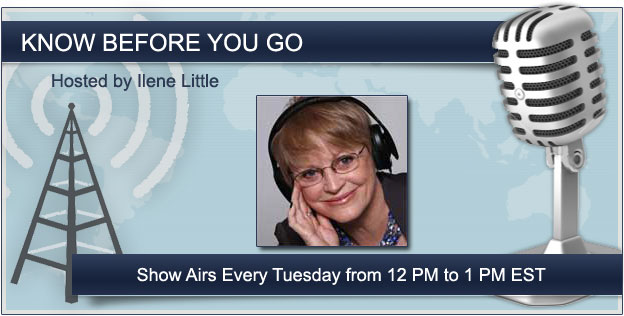
The file download for the latest radio program, “Know before you go” with Ilene Little is available.  It’s from the Christmas broadcast with Dr. Freddy Sanabria.

Image courtesy of Ilene Little

Image courtesy of Ilene Little

(I am on the periphery of the show – introducing Dr. Sanabria and talking about safety guidelines and intra-operative safety protocols.  (Same stuff I talk about here – just a different medium.)

Sanabria, breast implant

Dr. Sanabria, plastic surgeon

Dr. Sanabria joined us to talk about his experiences, and his clinic in Bogotá, as well as his ongoing projects and  patient safety protocols.  It was nice to be able to share some of my observations from my visits to his operating room.

safety checklist

Click here to connect to the Radio show archives

Checking in at Santa Fe de Bogota


After a year and a half – it was time to stop in at Santa Fe de Bogotá and see what was new.

Dr. Roosevelt Farjardo, MD (general surgeon) has been instrumental in implementing some of these new and exciting changes such as the ‘Virtual Hospital’ that I will be writing about (soon).  He was very nice about taking time to update me on some of his new programs at part of the Center for innovation in education and health.  Telemedicine is just the tip of the iceberg as far as some of the cool things they are doing.

Unfortunately, the same can’t be said of the International Patient Center  – or rather – I can’t report anything other than the fact that Ana Maria Gonzalez (the previous director) has left for a position in the United States and that Dr. Carolina Munoz has taken her place.

I was hoping to get some statistics and report back about some of the specialty programs for overseas travelers – but Alas!  I am unable to bring this information to you.  I waited over 70 minutes after my scheduled appointment with Dr. Munoz – and despite several calls from her staff, she never showed up and never attempted to reschedule.

I wish I could say this is an isolated incident – but I am afraid this is more like a clash of “cultures”.  I say this because I met with Dr. Munoz  previously; during the writing of the book (when she was the Director of the International Patient Center at rival Fundacion Cardioinfantil.)

At that time, (if I remember correctly, she introduced herself as a cardiac surgeon who had retired to “spend more time with her children.”)

Of course, my obvious question – was “oh, and how many children do you have?**”

I thought we were making polite conversation – because at the time, I was less familiar with Colombian customs, culture etc.   In reality, she was reminding me of her elevated stature in comparison to mine (as ‘just a nurse’).  Dense as I was – it became obvious as the interview progressed – as she made sure that I knew that she had replaced her rival (Ms. Ana Maria Gonzalez – RN) who had also worked at Fundacion Cardioinfantil in the past.  I’m sure she resented having to answer questions about the Executive Health Program and other aspects of their medical tourism program from someone she found to be inferior to herself.  (She made that pretty clear at that initial interview back in 2011).

So I guess it is no surprise that she didn’t bother to show up to our appointment this week – which is a shame, as I had looked forward to finding out more about the evolving International Patient Center at Santa Fe de Bogotá.

Luckily for me – there was another nurse there, Sandra Salazar – who could give me some basics.   She was delightful, helpful and dreadfully embarrassed about the whole thing.  She was even able to give me a list of some of the American insurance companies they have worked with in the past.  I had lots of questions about the HIPEC program, which she couldn’t answer – but she outlined the entire medical tourist process – and answered a lot of other questions.  She showed me how they streamline the process for their international patients, and the process for medical and surgical evaluations.

Now, there’s some good news for readers:  You aren’t nurses.  You are paying customers – so I am sure that Dr. Carolina Munoz will put aside any of her personal feelings (whatever they are) towards foreigners and will make time for you.

**The answer as none – as she is not married, and was not planning to be married in the foreseeable future.

Now when I am talking about culture – I am not strictly talking Colombia – America.  I am talking about Doctor – Nurse relations.  Watch some old Turner Classic Movies sometime and you will see what I mean..

Now I debated writing about this, but after talking with some other non-Colombians here in Bogotá, I felt it was important to pass it along because it illustrates quite a few things about my work:

1.  It’s not as easy as it looks (I spend a huge amount of time waiting..)

2.  Cultural differences can cause a lot of problems – so be prepared to be tolerant.

3.  If there is a chance that patients may get poor service – I want to know about it!  (And part of readers need to know about – is my experiences.)

New venture with Colombia Reports


While I have written several books about surgery and surgeons in Colombia, much of this information I’ve obtained from my research has been consigned to sitting on the shelves of various bookstores.

But, now with the help of Colombia Reports, I am hoping to change that.  As I mentioned in a previous post, Colombia Reports.com and it’s founder, Adriaan Alsema have been amazingly supportive of my work, ever since they printed my first article on Cartagena in 2010.

Since returning to Colombia, I have kept in touch with Colombia Reports while we discussed ways to bring more of my research and work to the public.  Colombia Reports is a perfect platform – because it serves a community of English-speaking (reading) individuals who are interested in/ and living in Colombia.   With this in mind, Colombia Reports has created a new Health & Beauty section which will carry some of my interviews and evaluations.

It is an ideal partnership for me; it allows me to bring my information to the people who need it – and continue to do my work as an objective, and unbiased reviewer.  We haven’t figured out all of the details yet – but I want to encourage all of my faithful readers to show Colombia Reports the same dedication that you’ve shown my tiny little blog, so that our ‘experiment’ in medical tourism reporting becomes a viable and continued part of Colombia Reports.

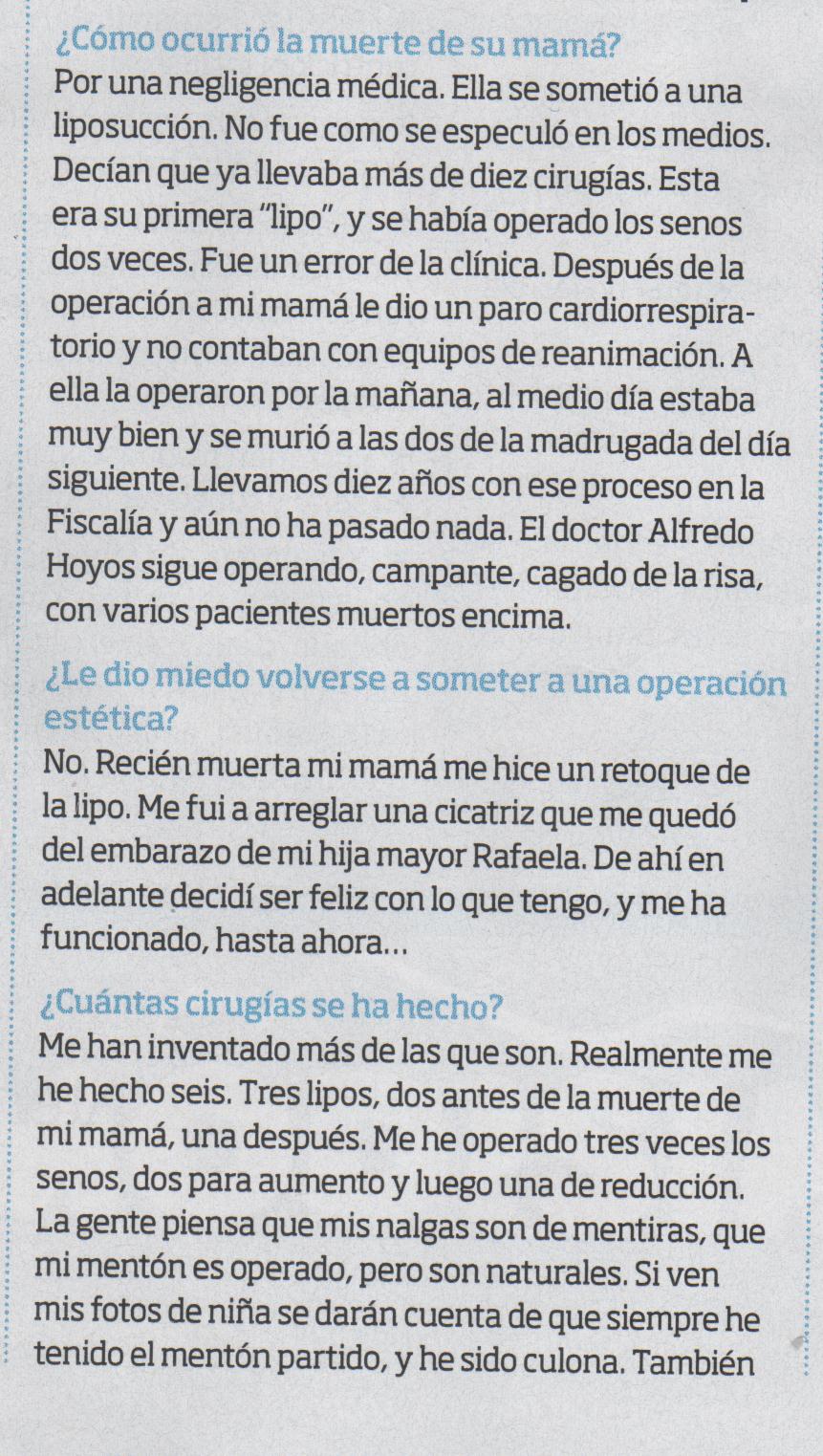
This is more important to me that ever – just yesterday as I was revisiting a surgeon I interviewed in the past (for a new updated article), I heard a tragic story that just broke my heart about a patient that was recently harmed by Dr. Alfredo Hoyos.  While I was unable to obtain documents regarding this incident – this is not the first time that this has happened.

Previous accusations of medical malpractice against this surgeon have been published in Colombian news outlets including this story from back in 2002.

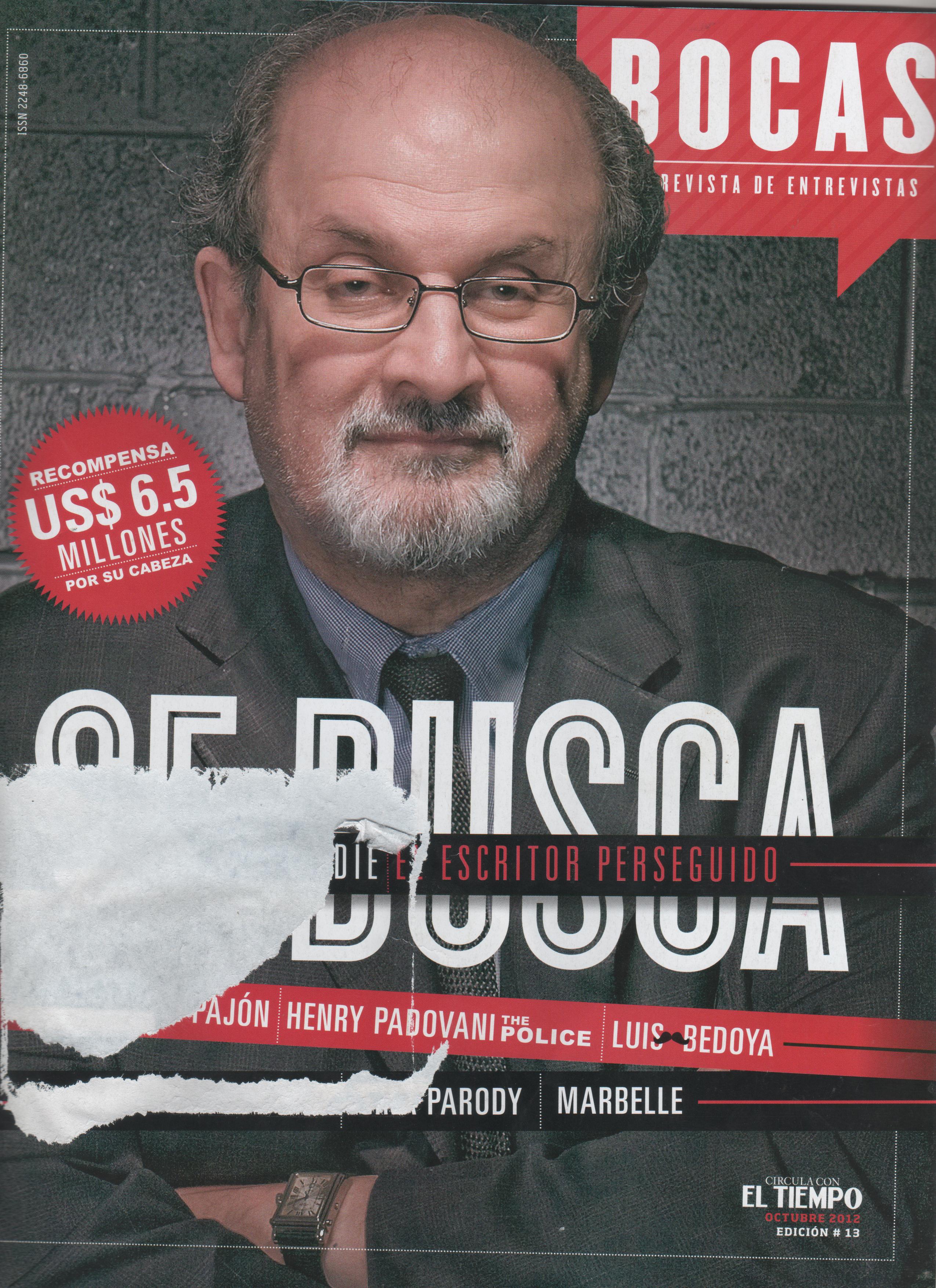
The accusations are from Marbelle, a Colombian artist regarding the intra-operative death of her mother, Maria Isabeth Cardona Restrepo (aka Yolanda) during liposuction.  These accusations were published in Bocas – which is part of El Tiempo, a popular Colombian newspaper, in which the singer alleges that Dr. Hoyos was unprepared, and did not have the proper equipment on hand to treat her mother when she went into cardiac arrest during the surgery.

story about the death of one of Dr. Alfredo Hoyos' patients.

story about the death of one of Dr. Alfredo Hoyos’ patients.

Kristin 002 Kristin 003 Kristin 004

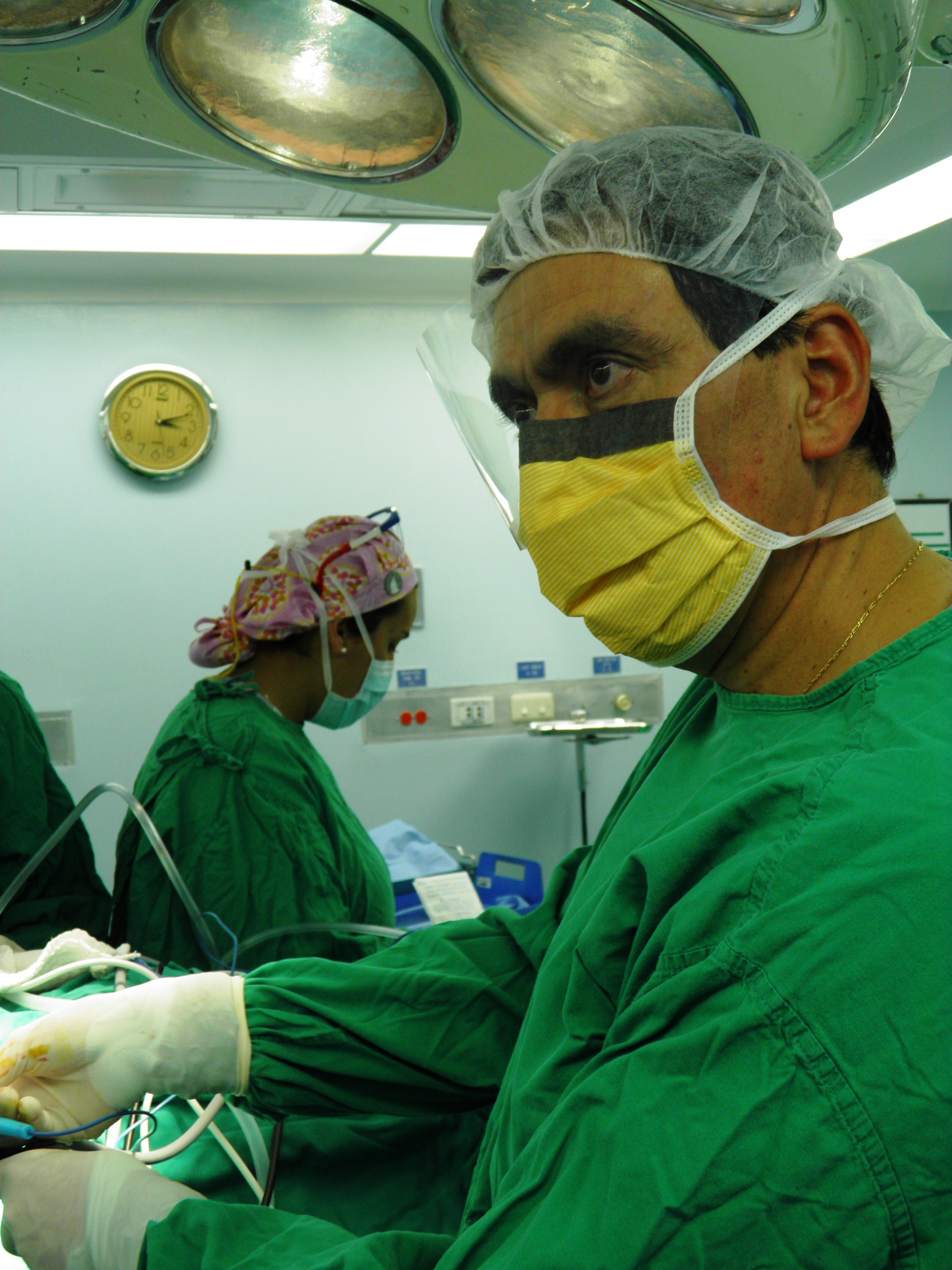
Now – as many of you remember, I interviewed Dr. Alfredo Hoyos back in 2011, and followed him to the operating room, giving me first hand knowledge of his surgical practices.

Readers of the book know he received harsh criticism for both failure to adhere to standard practices of sterility and patient intra-operative safety (among other things.)  I also called him out for claiming false credentials from several plastic surgery associations – and notified those agencies of those claims..   In the book, readers were strongly advised not to see Dr. Hoyos or his associates for care.

But – as I mentioned, my book is sitting lonely on a shelf, here in Bogotá – and in the warehouses of Amazon.com and other retailers.. So, people like that patient – didn’t have the critical information that they needed..

This is where Colombia Reports – and I hope to change all that.   So in the coming weeks, I am re-visiting some of surgeons we talked to in 2011, and interviewing  more (new) surgeons, more operating room visits..

Back in the OR with Dr. Sergio Abello


Clinica Shaio

Spent part of yesterday back in the operating room with Dr. Sergio Abello.  Dr. Abello is an orthopedic surgeon who specializes in foot and ankle surgery.  (He also have a specialized computer system in his office for truly customized orthodics).

Dr. Sergio Abello de Castro, Foot & Ankle Center 

It  was a chance meeting in the hallway, but as always, with the gracious and genial surgeon – it led to the operating room.  He apologized, “it’s just a small case,” but everything went perfectly.

Dr. Sergio Abello (right) with orthopedic resident, Dr. Juan Manuel Munoz


Patient was prepped and draped in sterile fashion, with no breaks in sterile technique.  Case proceeded rapidly (previous surgical pins removed).

The was no bleeding or other complications.

Yvonne (left), surgical nurse

Anesthesia was managed beautifully by Claudia Marroqoon, RN – with a surgical apgar of 10.  The patient received conscious sedation and appeared comfortable during the procedure.  There was no hemodynamic instability or hypoxia.  Oxygen saturation 100% for the entire duration of the case.

Thoracic surgery and sympathectomy


Clinica Palermo,

Dr. Luis Torres, thoracic surgeon

I went back to see Dr. Luis Torres, thoracic surgeon and spent the day in the operating room with him for a couple of cases.   He is a very pleasant, and friendly surgeon that I interviewed last week.  Dr. Torres just recently returned to Bogotá after training in Rio de Janeiro for the last several years at the Universidade de Estado de Rio de Janeiro.  He completed both his general surgery residency and thoracic surgery residency in Rio after graduating from the University de la Sabana in Chia, Colombia.  (He is fluent in Spanish and Portuguese).

I spent some time out in Chia last year with the Dean of the medical school (and thoracic surgeon, Dr. Camilo Osorio).

The first case was a sympathectomy for hyperhidrosis.  I’ve written more about the surgical procedure over at Examiner.com, and I will be posting more information about the procedure – potential candidates and alternative treatments over at the sister site.


The second case was more traditional thoracic surgery – a wedge resection for lung biopsy in a patient with lung nodules.  **

In both instances, cases were reviewed prior to surgery, (films reviewed when applicable – ie. second case) and visibly posted in the operating room.  Patients were sterilely prepped, draped and positioned with surgeon present.  Anesthesia was in attendance for both procedures – and hemodynamic instability/ desaturations (if present) were rapidly attended/ addressed / corrected.

Dr. Torres utilized a dual-port technique for the sympathectomy, making 1 cm incisions, and using 5mm ports.  Each side (bilateral procedure) was treated rapidly – with the entire procedure from initial skin incision and application of final bandaids taking just 35 minutes.

Dr. Torres, performing VATS

The second case, proceeded equally smoothly, and without complications.  There was no significant bleeding, hypoxia or other problems in either case.  Surgical sterility was maintained.

** Both patients were exceedingly gracious and gave permission for me to present their cases, photographs etc.

Just as the second case ended – Dr. Ricardo Buitrago arrived – and performed a sympathectomy on one of his patients – using a single-port approach.  (I am currently working on a short YouTube film demonstrating both of these techniques.)

Patients with Passports: Medical Tourism, Law, and Ethics


A new book on medical tourism – this one by an associate professor at Harvard Law School ( I. Glenn Cohen), which follows the lines of the work done by Dr. Delmonico and several others in addressing the legal and ethical issues in medical tourism – particularly the grey areas (and downright black, in my opinion) such as transplant tourism and surrogacy tourism.  I haven’t had the opportunity to read his book yet  – but I hope he takes aim at the unethical practices of some of the giants like Planet Hospital.

He’s a much bigger voice than an unknown nurse / writer like me – so maybe he will get the attention that this issue deserves.

Maybe at the same time, it will spark interest in efforts like mine – to establish objective and unbiased evaluations of health care services so that people who are looking or relying on medical tourism for their healthcare aren’t just taking a blind stab based on slick marketing tools, and fancy websites?

I sure hope so – even if stories like this one aren’t front-page news like black market kidney sales, it is still a vital and important reason to do what I do.

Final draft.

Objective and unbiased reviews

Author to author – congratulations, Mr. Cohen and best of luck!

Robotic surgery at Clinica de Marly


I hope everyone is enjoying some of the changes in format – after all the wonderful experiences I had writing the Mexicali book, I thought I would start incorporating more local culture and content in the blog when I am in Bogotá.  (I have always enjoyed Bogotá – but my writing tended to be rather dry and uni-focal so from now on, I’ll try to include more local information about the city since I am in the midst of it all.)

Barbie display at Andino Mall, Carrera 11 No 82-01

It doesn’t mean that I am any less interested in crucial issues in medical tourism, quality measures or surgery – I just won’t focus on these topics exclusively.

I spent yesterday over at Clinica de Marly with Dr. Ricardo Buitrago to watch one of his robotic surgery cases.  They’ve been doing robotic surgery over at Marly for several years – but Dr. Buitrago just started the first robotic program in thoracic surgery in Colombia.  (Previously the robot was used exclusively for urology and gynecology surgery).

Robotic surgery with Dr. Ricardo Buitrago

Dr. Buitrago trained with the renown robotic (thoracic) surgeon, Dr. Mark Dylewski – and has been a thoracic surgeon for over 20 years so it is always interesting to watch one of his cases – robots or no robots..

Just published a new article about robotic-assisted thoracic surgery over at the Examiner.com along with photos and a short film clip that shows the robot in action.  I am working on a longer film that provides a better look at what robotic surgery really is/ what it entails.


Reasons to write about medical tourism: #146, a cautionary tale


As  I mentioned in several previous posts, there are numerous reasons why I write about medical tourism, and protection of the consumer is first and foremost.

Several months ago, I was told an exceedingly disturbing tale of patient abuse at the hands of a plastic surgeon here in Mexicali, MX where I am writing my latest book.  I’ve internally debated publishing information about it – not because I think the patient isn’t credible (the patient is exceedingly credible) but due to the lack of verifiable documentation and evidence related to this story.  Then again, this is exactly the reason that this American patient was so hesitant to come forward.  Ultimately, I feel that by failing to publish this account, I would be further victimizing this patient, and failing to warn consumers of the potential dangers.  It is of the utmost regret that I do not have conclusive proof to bring to the authorities (and readers) to prevent this surgeon from ever operating again.  This patient isn’t being vindictive, or seeking a payout – it’s the furthest thing from her mind.  Her only motivation is the pain, disfigurement and indignities that she has suffered, and a hope of preventing this from happening to another medical tourist.

“I wanted to go to the police, to the medical board, to someone, but how can I prove it?” the patient asks, agonizing over the episode which occurred more than a year ago.

Yet, she is still haunted by it – and the story itself is a harrowing account of  abuse of patient trust – and so it should be presented here.  Given the lack of verifiable documentation, I have omitted the name of the surgeon involved, but suffice to say, he is a popular surgeon in Mexicali, and one that I have intentionally omitted from my latest book.

The patient, who happens to be a bilingual health care provider came to Mexicali for liposuction and rhinoplasty.  While telling the story, she is embarrassed by this – as if her supposed vanity is to blame for what occurred.  It is another reason she was reluctant to report it to the police – for fear that she would be told that she deserved it.

Her surgery was botched from the beginning and almost cost her life.   A simple cosmetic procedure has profoundly damaged her physically and psychologically.   She has scars; both physical and emotional that testify to much of the trauma that occurred.

She presented for surgery that fateful morning with no sense that anything was amiss; the surgeon has an excellent reputation and she had investigated his credentials; he is in fact, a licensed plastic surgeon.  Previous patient testimonials were glowing with no hint of any problems.

The first indication there was a problem came with the initiation of the procedure.  After being given a mild paralytic, she remained conscious and aware during the procedure.  She remembers vividly being intubated by the anesthesiologist who appeared not to notice her distress.  “I could hear the heart monitor going crazy but they all ignored it.”

There were several flashes, and that’s when I realized that the surgeon was taking pictures of me, naked, intubated and helpless.” 

She continued, “I know that many plastic surgeons take pictures for before and after photos, but no one ever asked me about it.  Also, in most clinics – they take the pictures while the patient is still awake before going into the operating room.”

I finally lost consciousness and woke up in the recovery room.  I sensed right away that something was wrong – I had horrible pain on the left side of my abdomen and chest, and bandages on the left side of my abdomen but nothing on the right, or my face.”  [the patient had been scheduled for bilateral liposuction of the abdomen and rhinoplasty.]

Then the PACU nurse delivered devastating news; the procedure had been abandoned mid-way – with the liposuction performed on the left only, because she had gone into respiratory arrest during the procedure.  The nurse also whispered confidentially, that she was “lucky” because the surgeon and one of his staff members had been noticeably intoxicated on their arrival to the operating room, and had left immediately before the procedure [presumably] to “do some more cocaine.”

Later, when the anesthesiologist arrived, the patient questioned him gently; about her intubation experience, the abrupt discontinuation of her surgery – and as to what had happened.  “Nothing happened”, she was told repeatedly.  “Everything went absolutely fine.”  When she insisted, asking why her surgery did not match what was initially planned – the anesthesiologist left.

When the surgeon finally arrived, he was equally uncommunicative.   In answer to her questions; “Did anything happen during my surgery?” he gave repeated denials and assurances that ‘everything was fine.’   He also denied taking any photographs.

When she asked why, then, did she only have half the procedure completed, he answered, angrily, “because I changed my mind,” before stalking out.

When her family came to help her dress and leave the surgical center, there were even more surprises, a series of rounded, purplish marks on her chest.  “My mom asked if they were hickeys, and when I looked in the mirror – that’s exactly what they looked like.”  Being familiar with surgery, and medicine, I interrupted to ask if they could be from the electrodes, CPR or anything else.  “I don’t know” she answered, “but they sure don’t look like any of the marks I’ve seen on other patients before.”

These marks along with a fateful encounter as she was leaving the clinic are what haunt her to this day.  As she was leaving with her family, a young man was chuckling and staring at her as she walked past.  She looked over at him, and he started laughing, saying, “I recognize your face, [and your body] from the photos passed around the hospital.”  The photos that no one will admit to taking.

Even now – she has evidence of the botched procedure – one side of her abdomen has is lumpy and uneven with furrowed tunnels (an attempt at liposculturing, she thinks).  When comparing it to the side that was untreated – she begins to lament the folly of her procedure – and yet again, to blame herself.

“I wish I had never done it.  Now I have to see this everyday.  I am afraid to ever have surgery again (to fix it).”

At the end of the interview, she is in tears, and she leans over and whispers in my ear: the surgeon’s name.

I wish I could prove it,” she says.  “This should never happen to anyone else.”  She states that when she went back to talk to the original nurse (from the recovery room), the nurse was no longer there – so her only collaborating witness is gone.  While her family saw the results – they were told the same story she was, that the surgery preceded normally, and that the surgeon ‘changed his mind’ in the middle of surgery.  Repeated calls to the surgeon for more information have gone unanswered.

I wish she could prove it too – the ensure that everyone knew the name of this heartless surgeon – to prevent anyone else from becoming a victim.  But even without the name, it’s a strong reason for me to continue doing what I do now.

[Readers should note that while this occurred in Mexico – unfortunately events such as this have occurred around the world.  In the 1990’s there was a widespread scandal as a notable plastic surgeon attempted to sell photos to a tabloid of Michael Jackson, Liz Taylor (among others) that were taken without their knowledge during plastic surgery procedures.]

Update:  There is a new scandal at John Hopkins in the wake of the February suicide of one of their popular OB/GYNs who is believed to have taken pictures of his patients secretly, using a mini – camera hidden in a pen.

Likely Suicide of Johns Hopkins Ob/Gyn Tied to Secret Photos” article by Robert Lowes, Medscape, February 2013.

Why read Bogota and other hidden gem titles?


As readers of my sister site, Cartagena Surgery know, I am currently hard at work on my third title in the ‘Hidden Gem’ series – with the latest offering on Mexicali, Mexico.  But I continue to get comments from readers, friends, and everyone else asking, “Why bother?”

Why bother reading Hidden Gem?

People should read these titles because we can’t assume that all medical providers have been vetted, or that all medical facilities meet acceptable criteria for safe care.  It is a dangerous assumption to expect that ‘someone’ else has already done the research. [lest you think this could only happen in Sri Lanka, be forewarned.  With new legislation, the critical doctor shortage in the USA will only worsen.]

Medical tourism has the potential to connect consumers with excellent providers around the world.  It may be part of a solution to the long waits that many patients are experiencing when seeking (sometimes urgent) surgical care.  It also offers an opportunity to fight the runaway health care costs in the United States.

But..

But it also has the potential, if unchecked, unvetted, unverified and left unregulated to cause great harm.

Another reason to read Hidden Gem is to find out more about the surgeons themselves, their training, and many of the new, and innovative practices in the realm of surgery. Often the best doctors don’t advertise or ‘toot’ their own horn, so you won’t find them advertised in the pages of your in-flight magazine as “One of the best doctors in XXX” even if they are.  (Many people don’t realize those segments are paid advertisements, either.)

Why bother writing Hidden Gem?

Because ‘someone’ needs to.

I am that ‘someone’ who does the fieldwork to find out the answers for you.  I can never assume that it’s been done before, by someone else.  I have to start from ‘scratch’ for every book, for every provider and every hospital.

I also believe that the public should know, and want to know more about the people we entrust to take care of us during serious illness or surgery.  We should know who isn’t practicing according to accepted or current standards and evidence – and we should know who has/ and is offering the latest cutting edge (but safe and proven) therapies.


Read more about the doctor shortages:

NYT article on worsening doctor shortage  (and one of the proposed solutions is a loosening of rules governing the training and credentials of doctors from overseas – coming to practice in the USA).

Hospital ranks and measures: Medical Tourism edition?


It looks like Consumer Reports is the newest group to add their two cent’s worth about hospital safety, and hospital safety ratings.  The magazine has compiled their own listing and ratings for over 1,100 American hospitals.  Surprisingly, just 158 received sixty or greater points (out of a 100 possible.)  This comes on the heels of the most recent release of the LeapFrog results.  (Leapfrog is controversial within American healthcare due to the unequal weight it gives to many of its criterion.  For example, it is heavily weighed in favor of very large institutions versus small facilities with similar outcomes.)

Consumer Reports has a history providing consumers with independent evaluations and critiques of market products from cars to toasters since it’s inception in the 1930’s.  It’s advent into healthcare is welcome, as the USA embraces new challenges with ObamaCare, mandated EMRs, and pay-for-performance.

While there is no perfect system, it remains critical to measure outcomes and performances on both an individual (physician) and facility wide scale.  That’s why I say; the more scales, scoring systems and measures used to evaluate these issues – the better chance we have to accurately capture this information.

But – with all of the increased scrutiny of American hospitals, can more further investigation into the practices and safety at facilities promoting medical tourism overseas be far behind?

Now it looks like James Goldberg, a bioengineer that we talked about before, is going to be doing just that.  Mr. Goldberg, who is also an author of the topic of medical tourism safety recently announced that his firm will begin offering consulting services to consumers interested in knowing more about medical tourism – and making educated decisions to find the most qualified doctors and hospitals when traveling for care.  He may be one of the first to address this in the medical tourism industry, but you can bet that he won’t be the last..

If so, the winners in the international edition will be the providers and facilities that embrace transparency and accountability from the very beginning.

Dr. Marco Sarinana and Dr. Joel Ramos,Bariatric surgeons


Busy day yesterday – spent the morning shift with Jose Luis Barron over at Mexicali General..  Then raced over to Hospital de la Familia for a couple of general and bariatric cases.

The first case was with the ever charming Drs. Horatio Ham, and Rafael Abril (who we’ve talked about before.)  with the always competent Dr. Campa as the anesthesiologist.   (Seriously – Dr. Campa always does an excellent job.)

Then as we prepared to enter the second case – the director of the hospital asked if I would like to meet Dr. Marco Sarinana G. and his partner, Dr. Joel Ramos..  well, of course.. (Dr. Sarinana’s name has a tilde over the first n – but try coaxing that out this antique keyboard..)

So off to the operating room with these three fellows.  (This isn’t my usual protocol for interviewing surgeons, etc. but sometimes it works out this way.)  Their practice is called Mexicali Obesity Solutions.

Dr. Marco Sarinana and Dr. Joel Ramos, Bariatric surgeons

Dr. Alejandro Ballesteros was the anesthesiologist for the case – and everything proceeded nicely.

After that – it was evening, and time to write everything down!

Today should be another great day – heading to IMSS with Dr. Gabriel Ramos for a big case..

Wrapping up and saying “Thanks!”


It’s a busy Sunday in Mexicali – presidential elections are today, so I am going to try to get some pictures of the nearest polling station later.. In the meantime, I am spending the day catching up on my writing..

a polling station in Mexicali

Lots to write about – just haven’t had the time..  Friday morning was the intern graduation which marks the end of their intern year – as they advance in their residencies.. Didn’t get a lot of pictures since I was at the back of the room, and frankly, unwilling to butt ahead of proud parents to get good pics.. This was their day, not mine and I was pleased that I was invited.

I did get a couple of good pictures of my ‘hermanito’ Lalo and Gloria after the event.  (I’ve adopted Lalo as my ‘kid’ brother.. Not sure how he feels about – but he’s pretty easy-going so he probably just thinks it’s a silly gringa thing, and probably it is..)

Dr. ‘Lalo” Gutierrez with his parents

Lalo’s parents were sitting in the row ahead of me, so of course, I introduced myself and said hello.. (They were probably a little bewildered by this middle-aged gringa talking about their son in atrocious Spanish) but I figured they might be curious about the same gringa that posts pictures of Lalo on the internet.. I also feel that it’s important to take time and tell people the ‘good things’ in life.  (Like what a great person their son has turned out to be..)

Same thing for Gloria.. She is such a hard-worker, and yet, always willing to help out.. “Gloria can you help me walk this patient?”  It’s not even her patient, (and a lot of people would say – it’s not our jobs to walk patients) but the patient needs to get out of bed – I am here, and I need some help (with IV poles, pleurovacs, etc.)  and Gloria never hesitates.. that to me – is the hallmark of an excellent provider, that the patient comes first .. She still has several years to go, but I have confidence in her.

She throws herself into her rotations.. When she was on thoracics, she wanted to learn.. and she didn’t mind learning from a nurse (which is HUGE here, in my experience.)

Dr. Gloria Ayala (right) and her mother

She wasn’t sure that her mom would be able to be there – (she works long hours as a cook for a baseball team) but luckily she made it!

Met a pediatric cardiologist and his wife, a pediatrician.. Amazing because the first thing they said is, “We want nurse practitioners in our NICU,” so maybe NPs in Mexico will become a reality.. Heard there is an NP from San Francisco over at Hospital Hispano Americano but haven’t had the pleasure of meeting her.  (I’d love to exchange notes with her.)

I spent the remainder of the day in the operating room of Dr. Ernesto Romero Fonseca, an orthopedic surgeon specializing in trauma.  I don’t know what it is about Orthopedics, but the docs are always so “laid back”, and just so darn pleasant to be around.  Dr. Romero and his resident are no exception.

[“Laid back” is probably the wrong term – there is nothing casual about his approach to surgery but I haven’t had my second cup of coffee yet, so my vocabulary is a bit limited.. ]  Once I finish editing ‘patient bits’ I’ll post a photo..

Then it was off to clinic with the Professor.

Saturday, I spent the day in the operating room with Dr. Vasquez at Hospital de la Familia. He teased me about the colors of the surgical drapes,(green at Hospital de la Familia), so I guess he liked my article about the impact of color on medical photography.  (Though, truthfully, I take photos of surgeons, not operations..)

Since the NYT article* came out a few days ago – things have changed here in Mexicali.  People don’t seem to think the book is such a far-fetched idea anymore.  I’m hopeful this means I’ll get more response from some of the doctors.  (Right now, for every 15 I contact – I might get two replies, and one interview..)

Planning for my last day with the Professor  – makes me sad because I’ve had such a great time, (and learned a tremendous amount) but it has been wonderful.  Besides, I will be starting classes soon – and will be moving to my next location (and another great professor.)

Professor Ochoa and Dr. Vasquez

But I do have to say – that he has been a great professor, and I think, a good friend.  He let me steer my education at times (hey – can I learn more about X..) but always kept me studying, reading and writing.  He took time away from his regular life, and his other duties as a professor of other students (residents, interns etc.) to read my assignments, make suggestions and corrections when necessary.    and lastly, he tolerated a lot with good grace and humor.  Atrocious Spanish, (probably) some outlandish ideas and attitudes about patient care (I am a nurse, after all), a lot of chatter (one of my patient care things), endless questions…  especially, “donde estas?” when I was lost – again.

So as I wrap up my studies to spend the last few weeks concentrating on the book, and getting the last interviews, I want to thank Dr. Carlos Ochoa for his endless patience, and for giving me this opportunity.  I also want to thank all the interns (now residents) for welcoming me on rounds, the great doctors at Hospital General..  Thanks to Dr. Ivan for always welcoming me to the ER, and Dr. Joanna for welcoming me to her hospital.  All these people didn’t have to be so nice – but they were, and I appreciate it.

* Not my article [ I wish it were – since I have a lot to say on the topic].

Overseas Radio Follow-up


As a follow-up for all the overseasradio.com radio listeners (and all my loyal readers) I have posted some additional information on the topics covered during the radio program with Ilene Little from Traveling for Health.com including contact information for several of the physicians mentioned.

in the Operating Room at New Bocagrande Hospital

Thoracic Surgery

Esophageal cancer – during the segment we highlighted the importance of seeking surgical treatment for esophageal cancer at a high-volume center.  One of the centers we mentioned was the University of Pennsylvania Medical Center in Pittsburgh, PA – and the work of Dr. Benny Weksler, MD.

Dr. Benny Weksler*, MD

Hillman Cancer Center

5115 Centre Avenue

Pittsburgh, PA 15232

Phone: (412) 648-6271

He is an Associate Professor in Cardiothoracic Surgery and Chief of Thoracic Surgery at UPMC and the UPMC Cancer Center.  (For more information on Dr. Weksler, esophageal cancer, and issues in thoracic surgery – see my sister site, Cirugia de Torax.org)

(To schedule an appointment via UPMC on-line click here).

We also briefly mentioned Dr. Daniela Molena*, MD at John Hopkins in Baltimore, Maryland.

The Johns Hopkins Hospital

600 N. Wolfe Street

Baltimore, MD 21287

Phone: 410-614-3891

Appointment Phone: 410-933-1233

(The link above will take readers to the John Hopkins site where they can also make an appointment.)

* I would like to note that I have not observed either of these physicians (Weksler or Molena) in the operating room.

We also talked about several of the thoracic surgeons that I have interviewed and observed numerous times, including both Dr. Rafael Beltran, MD & Dr. Ricardo Buitrago, MD at the National Cancer Institute in Bogotá, Colombia.  These guys are doing some pretty amazing work, on a daily basis – including surgery and research on the treatment of some very aggressive cancers.

in the operating room with Dr. Rafael Beltran

Dr. Rafael Beltran is the Director of the Thoracic Surgery division, and has published several papers on tracheal surgery.   He’s an amazing surgeon, but primarily speaks Spanish, but his colleague Dr. Buitrago (equally excellent) is fully fluent in English.

Now the National Institute website is in Spanish, but Dr. Buitrago is happy to help, and both he and Dr. Beltran welcome overseas patients.

Dr. Buitrago recently introduced RATS (robot assisted thoracic surgery) to the city of Bogotá.

Now, I’ve written about these two surgeons several times (including two books) after spending a lot of time with both of them during the months I lived and researched surgery in Bogotá, so I have included some links here to the on-line journal I kept while researching the Bogotá book.  It’s not as precise, detailed or as lengthy as the book content (more like a diary of my schedule while working on the book), but I thought readers might enjoy it.

In the Operating Room with Dr. Beltran

There are a lot of other great surgeons on the Bogotá website, and in the Bogotá book – even if they didn’t get mentioned on the show, so take a look around, if you are interested.

in the operating room with Dr. Ricardo Buitrago

Contact information:

Dr. Ricardo Buitrago, MD 

Email: buitago77us@yahoo.com

please put “medical tourist” or “overseas patient for thoracic surgery” in the subject line.

We talked about Dr. Carlos Ochoa, MD – the thoracic surgeon I am currently studying with here in Mexicali, MX.  I’ve posted all sorts of interviews and stories about working with him – here at Cartagena Surgery under the “Mexicali tab” and over at Cirugia de Torax.org as well.  (Full disclosure – I assisted Dr. Ochoa in writing some of the English content of his site.)

out from behind the camera with Dr. Ayala (left) and Dr. Carlos Ochoa

He is easily reached – either through the website, www.drcarlosochoa.com or by email at drcarlosochoa@yahoo.com.mx

HIPEC / Treatment for Advanced Abdominal Cancers

I don’t think I even got to mention Dr. Fernando Arias’ name on the program, but we did talk about HIPEC or intra-operative chemotherapy, so I have posted some links to give everyone a little more information about both.

HIPEC archives at Bogotá Surgery.org – listing of articles about HIPEC, and Dr. Arias.  (I recommend starting from oldest to most recent.)

Dr. Fernando Arias

Oncologic Surgeon at the Fundacion Santa Fe de Bogotá in Bogotá, Colombia.  You can either email him directly at farias00@hotmail.com or contact the International Patient Center at the hospital.  (The international patient center will help you arrange all of your appointments, travel, etc.)

Fundacion Santa Fe de Bogota

   www.fsfb.org.co

Ms. Ana Maria Gonzalez Rojas, RN

Chief of the International Services Department

Calle 119 No 7- 75

Bogota, Colombia

Tele: 603 0303 ext. 5895

ana.gonzalez@fsfb.org.co  or info@fsfb.org.co

Now – one thing I would like to caution people is that email communications are treated very differently in Mexico and Colombia, meaning that you may not get a response for a day or two.  (They treat it more like we treat regular postal mail.  If something is really important, people tend to use the phone/ text.)

Of course, I should probably include a link to the books over on Amazon.com – and remind readers that while the Mexicali ‘mini-book’ isn’t finished yet – when it is – I’ll have it available on-line for free pdf downloads.

Dr. Gabriel Ramos, Oncology Surgeon


Dr. Gabriel Ramos, Oncologic Surgeon

Been a busy week  – (Yea!) but now that it is the weekend, I have a chance to post some more pictures and talk about my day in the operating room with Dr. Gabriel Omar Ramos Orozco. 

Despite living in a neighboring apartment, interviewing Dr. Ramos proved to be more difficult than anticipated.  But after several weeks, I was able to catch up with the busy surgeon.

Outside of the operating room, he is a brash, young surgeon with an off-beat charm and quirky sense of humor.  But inside the operating room, as he removes a large tumor with several cancerous implants, Dr. Gabriel Ramos Orozco is all business.

It’s different for me, as the interviewer to have this perspective.  As much as I enjoy him as a friendly neighbor – it’s the serious surgeon that I prefer.  It’s a side of him that is unexpected, and what finally wins me over.

Originally from San Luis Rio Colorado in the neighboring state of Sonora, Dr. Ramos now calls Mexicali home.  Like most surgeons here, he has a staff position at a public hospital separate from his private practice.  It is here at IMSS (Instituto Mexicano del Seguro Social) where Dr. Ramos operates on several patients during part of the extended interview.

Operating room nurses at IMSS

During the cases, the patients received a combination of epidural analgesia and conscious sedation.  While the anesthesiologist was not particularly involved or attentive to the patients during the cases, there was no intra-operative hypotension/ alterations in hemodynamic status or prolonged hypoxia.

Dr. Ramos reviewed patient films and medical charts prior to the procedures.  Patients were prepped, positioned and draped appropriately.  Surgical sterility was maintained during the cases.  The first case is a fairly straight forward laparoscopic case – and everything proceeds rapidly, in an uncomplicated fashion.  45 minutes later, and the procedure is over – and Dr. Ramos is typing his operative note.

Dr. Gabriel Ramos in the operating room

But the second case is not – and Dr. Ramos knows it going in..

The case is an extensive tumor resection, where Dr. Ramos painstakingly removes several areas of implants (or tumor tissue that has spread throughout the abdomen, separate from the original tumor).

The difference between being able to surgical remove all of the sites and being unable to remove all of the gross disease is the difference between a possible surgical ‘cure’ and a ‘de-bulking’ procedure, Dr. Ramos explains.  As always, when entering these surgeries, Dr. Ramos and his team do everything possible to go for surgical eradication of disease.  The patient will still need adjunctive therapy (chemotherapy) to treat any microscopic cancer cells, but the prognosis is better than in cases where gross disease is left behind*.  During this surgery, after extended exploration – it looks like Dr. Ramos was able to get everything.

“It’s not pretty,” he admits, “but in these types of cases, aesthetics are the last priority,” [behind removing all the tumor].  Despite that – the aesthetics after this large surgery are not as worrisome as one might have imagined.

The patient will have a large abdominal scar – but nothing that differs from most surgical scars in the pre-laparoscopy era.  [I admit I may be jaded in this respect after seeing so many surgeries] – It is several inches long, but there are no obvious defects, the scar is straight and neatly aligned at the conclusion of the case – and the umbilicus “belly-button” was spared.

after the successful removal of a large tumor

As I walk out of the hospital into the 95 degree heat at 11 o’clock at night – I admit surprise and revise my opinion of Dr. Ramos – he is better than I expected, (he is more than just the kid next door), and he deserves credit for such.

*This may happen due to the location of metastatic lesions – not all lesions are surgically removable.  (Tumor tissue may attach to major blood vessels such as the abdominal aorta, or other tissue that cannot be removed without seriously compromising the patient.)  In those cases, surgeons try to remove as much disease as possible – called ‘de-bulking’ knowing that they will have to leave tumor behind.

Dr. Ramos, HIPEC and Radio Broadcasts


Finally caught up with the busy Dr. Gabriel Ramos, MD, oncologic surgeon and spent several hours with him in the operating room at IMSS (the social security hospital) for a couple of cases on Wednesday..  I’ll be writing more about him soon.

Dr. Gabriel Ramos, Oncologic Surgeon

Yesterday was a full day with clinics here and San Luis.  Also – more homework, so I have to get some studying in before heading back in this afternoon.

On the radio with Cartagena Surgery:

Recorded my very first radio interview with Ilene Little at Traveling 4 Health..  I hope I don’t sound too bad (when I get nervous, I laugh..)  It’s not a pre-determined format, so I didn’t know the questions until she asked them – which makes it more interesting, but I sound less polished as I search my brain for names, dates, places etc.  Trying to remember the name of the researchers who published a paper in 1998, 2008, or 1978 is daunting when you worry about ‘dead air’.. I was so nervous I was even forgetting my abbreviations.  I hope it comes across better to listeners.

We talked about the books, what I do (and how I am surviving on savings to do it).  We also talked about some of the great doctors I’ve interviewed, treatments such as HIPEC as well as some of the quackery and false hope being peddled by people with a lot to gain.. I kind of wish HIPEC and quackery weren’t in the same segment.  Since it was off the cuff – I didn’t have all of my medical references and literature to talk about to distinguish the two (so if you are here looking for information on HIPEC – search around the site – I have links to on-going studies, and research going back over a decade, both here at BogotaSurgery.org .  Of course, the crucial difference between the two is:

HIPEC is a new treatment, but there is NO assurance of success – in fact, some patients die from the treatment itself.

– There is a body of scientific literature on HIPEC for advanced abdominal cancers (ovarian, uterine, etc)

Quakery or pseudo-science can be a bit trickery.  Maybe they take an existing or  promising treatment (like therapies for stroke, Parkinson’s etc.) and apply it to something else – like treatment of serious cancers.  (Yes – people will find papers written about the ‘treatment’, but these papers may not meet scientific rigor, or may not be about the condition or treatment that they are receiving.)  They also promise miracles and cures.

In medicine, even the very best doctors and surgeons can’t promise these things – because medicine itself isn’t an exact science, and different people respond to the same treatments differently – ie. one patient may have complications and another patient doesn’t.

Lastly  – we just touched on it – but I think it’s an important concept – is patient self-determination.  That no matter what I, or anyone writes, does or says – people always have the right to determine their own medical treatment.

Back in the OR with Drs. Ham & Abril, bariatric and general surgeons


My first case this morning with another surgeon was cancelled – which was disappointing, but I still had a great day in the operating room with Dr.  Ham and Dr. Abril.  This time I was able to witness a bariatric surgery, so I could report back to all of you.

Dr. Ham (left) and Dr. Abril

I really enjoy their relaxed but detail oriented style – it makes for a very enjoyable case.  Today they performed a sleeve gastrectomy** so I am able to report – that they (Dr. Ham) oversewed the staple line (quite nicely, I might add).  If you’ve read any of the previous books, then you know that this is an important step to prevent suture line dehiscence leading to leakage of stomach contents into the abdomen (which can cause very serious complications.)  As I said – it’s an important step – but not one that every doctor I’ve witnessed always performed.   So I was a pleased as punch to see that these surgeons are as world-class and upstanding as everything I’d seen already suggested..

** as long time readers know, I am a devoted fan of the Roux-en-Y, but recent literature suggests that the sleeve gastrectomy is equally effective in the treatment of diabetes.. Of course – we’ll be watching the research for more information on this topic of debate. I hope further studies confirm these results since the sleeve gives patients just a little less of a drastic lifestyle change.. (still drastic but not shot glass sized drastic.)

Dr. Ham

They invited me to the show this evening – they are having several clowns (that are doctors, sort of Patch Adams types) on the show to talk about the health benefits of laughter.  Sounds like a lot of fun – but I thought I better catch up on my writing..

I’ll be back in the OR with Los Doctores again tomorrow..

Speaking of which – I wanted to pass along some information on the anesthesiologist for Dr. Molina’s cases since he did such a nice job with the conscious sedation yesterday.  (I’ve only watched him just yesterday – so I will need a few more encounters, but I wanted to mention Dr. Andres Garcia Gutierrez all the same.

In the OR with Los Doctores, Dr. Ham & Dr. Abril


Haven’t had time to sit down and write about my trip to the operating room with Dr. Horacio Ham and Dr. Rafael Abril until now, but that’s okay because I am going back again on Saturday for a longer case at a different facility.  Nice surprise to find out that Dr. Octavio Campa was scheduled for anesthesia.  Both Dr. Ham and Dr. Abril told me that Dr. Campa is one their ‘short list’ of three or four preferred anesthesiologists.  That confirms my own impressions and observations and what several other surgeons have told me.

campa

Dr. Campa (left) and another anesthesiologist at Hispano Americano

That evening we were at Hispano – Americano which is a private hospital that happens to be located across the street from the private clinic offices of several of the doctors I have interviewed.  It was just a quick short case (like most laparoscopy cases) – but everything went beautifully.

As I’ve said before, Dr. Campa is an excellent anesthesiologist so he doesn’t tolerate any hemodynamic instability, or any of the other conditions that make me concerned about patients during surgery.

Dr. Ham  and Dr. Abril work well together – everything was according to protocols – patient sterilely prepped and draped, etc..

laparoscopy

laparoscopy with Dr. Ham & Dr. Abril

I really enjoy talking with the docs, who are both fluent in English – but I won’t get more of an interview with Dr. Abril until Saturday.

w/ Dr. Ham

with Dr. Horacio Ham in the operating room after the conclusion of a successful case

Then – on Wednesday night – I got to see another side of the Doctors Ham & Abril on the set of their radio show, Los Doctores.  They were interviewing the ‘good doctor’ on sympathetectomies for hyperhidrosis – so he invited me to come along.

Los Doctores invited me to participate in the show – but with my Spanish (everyone remembers the ‘pajina’ mispronunciation episode in Bogotá, right?)  I thought it was better if I stay on the sidelines instead of risking offending all of Mexicali..

Los Doctores

on the set of Los Doctores; left to right: Dr. Rafael Abril, Dr. Carlos Ochoa, Dr. Mario Bojorquez and Dr. Horacio Ham

It really wasn’t much like I expected; maybe because all of the doctors know each other pretty well, so it was a lot more relaxed, and fun than I expected.  Dr. Abril is the main host of the show, and he’s definitely got the pattern down; charming, witty and relaxed, but interesting and involved too.. (my Spanish surprises me at times – I understood most of his jokes…)  It’s an audience participation type show – so listeners email / text their questions during the show, which makes it interesting but prevents any break in the format, which is nice.  (Though I suppose a few crazy callers now and then would be entertaining.)

Dr. Ochoa did a great talk about sympathectomy and how life changing it can be for patients after surgery, and took several questions.  After meeting several patients pre and post-operatively for hyperhidrosis, I’d have to say that it’s true.  It’s one of those conditions (excessive palmar and underarm sweating) that you don’t think about if you don’t have – but certainly negatively affects sufferers.  I remember an English speaking patient in Colombia telling me about how embarrassing it was to shake hands -(she was a salesperson) and how offended people would get as she wiped off her hands before doing so.  She also had to wear old-fashioned dress shields so she wouldn’t have big underarm stains all the time..  This was in Bogota (not steamy hot Cartagena), which is known for it’s year-round fall like temperatures and incredibly stylish women so you can imagine a degree of her embarrassment.

It (bilateral sympathectomy) is also one of those procedures that hasn’t really caught on in the USA – I knew a couple people in Flagstaff who told me they had to travel to Houston (or was it Dallas?) to find a surgeon who performed the procedure..  So expect a more detailed article in the future for readers who want to know more.

Tomorrow, (technically later today) I head back to San Luis with the good doctor in the morning to see a couple of patients – then back to the hospital.. and then an interview with a general surgeon.. So it should be an interesting and fun day.

New series of articles


I’ll be writing a new series of articles for the Examiner.com based on my experiences, interviews and observations here in Mexicali, MX and Calexico, California.  While the focus will be on serving the needs of the Calexico community (particularly now that there is a fast pass lane for medical travelers), I hope that all of my loyal readers will continue to support my work.

I have already published my first three articles  – and have added a new navigation section (on the side of this blog) for interested readers.

As part of this, I wrote a story about the good doctor and all of the work he is doing – including one of our recent ‘house calls’ to San Luis, in Sonora, Mexico.   It was probably one of the more difficult articles to write; due to space limitations and trying to present information in an objective fashion.  (It’s hard to present all the evidence to support your conclusions in just a few hundred words;  ie. He’s a good doctor because he does X, Y, and Z and follows H protocol according the P.”  Makes for wordy reading and not really what the Examiner is looking for.

Too bad, since readers over at Examiner.com haven’t had the chance to know that if the opposite is true (a less than stellar physician or treatment – that I have absolutely no reservations about presenting the evidence  and stating the facts about that either..)

Don’t worry, though – I will continue to provide that level of detail here at Cartagena Surgery – where the only limitations are my ability to type, and the (sometimes) faulty keys of my aging laptop.

Guia Cirugia


I am glad to see that many of the ideals I’ve promoted in the past – objective and unbiased medical review for medical tourists and consumers are starting to take flight.

I talked with John Coffey, in Cali, Colombia about his project , Guia Cirugia earlier this year, so I am pleased to see he was able to bring it to fruition.  (Some people would see it as competition – I see it as a necessary and needed service for consumers – so I am completely thrilled!!  I just wish there were more people interested in trying to ensure that patients (where ever they come from) receive high quality care.

JCI and the big regulatory agencies don’t count in my mind – there is just too much bureaucratic BS that gets in the way of actually getting down to the nitty-gritty;

Is the place clean?

Is the doctor licensed (at all – or in the specialty where s/he is practicing)?

Do they follow the generally accepted standards and practices for prevention of patient harm?

Do they have the technology and machinery to handle emergencies that may reasonably arise from procedures performed at that facility?  (Let me tell you – if they are operating at a Motel 6, (as we have documented before) – the answer is most assuredly NO.)

So Kudos to John and everyone else at Guia Cirugia.com

Hidden Gem returns to Bogota: calling all surgeons!


Calling all Bogotá surgeons – if you missed the first chance to be interviewed for the first edition of Bogotá! a hidden gem guide to surgical tourism – don’t worry..  I’ll be back in the city this September (2012).

While my primary purpose for my return to Bogotá is research-related (I am working on a doctoral degree), I always have time to talk to surgeons about the new and innovative things they are doing in their practices.

Contact me through the site if you are interested..


in the operating room with some of Colombia's finest surgeons

in the operating room with some of Colombia's finest surgeons

Canadians use medical tourism to skip lines, long waits


More and more Canadians are becoming frustrated with the wait times for surgical procedures in their native country – as wait times for procedures such as joint replacement routinely take years.. instead they are turning to medical tourism to satisfy their immediate medical needs, and to get back to a normal, functional life faster..

This is big news in a country that prides itself of its ‘universal’ health care system – which fails to acknowledge the tolls their lengthy waits take on their patients.  So – it may be free, but many residents are opting out.

In this story – documenting several patients who traveled abroad in the last several years – patients express their satisfaction with overseas services (which they rated as ‘excellent’ and ‘superior to care received at home’ despite having to pay-out-of-pocket.)

Interestingly enough – one of the main brokers (or travel agents) for these services – Shaz Pendharkar is a retired school teacher who readily admits he has no medical training. Despite that – he feels confident enough to recommend the services of medical providers overseas.  He states that despite this obstacle, he “knows the doctors.”

While I am in favor of medical tourism to improve the quality of life for patients in North America (and other locations), I am still uneasy about the ready assurances Mr. Pendharker offers his clients, and his easy dismissal of the unhappiness of one of his former clients.  “It was a butt-lift” he says, as if this in itself is enough to dismiss the patient’s claims of dissatisfaction.

I don’t know the facts of the case – so maybe his claim has merit – maybe it doesn’t.  While patients should continue to seek medical care where they can find it – and overseas options are an excellent choice – I’d rather that someone better informed perform the brokering.  How about you?

Do you want a high school principal chosing your surgeon, and your medical facility?  Or would you rather someone with experience in evaluating medical standards do the job for you? I think it’s time people start applying objective criteria to the entire industry – and leave medical travel to the health care professionals.

The reason for the time out

Ranks & Measures

Why Colombia (versus India and Thailand)

The ethics of Indian Medical Tourism

UK surgeons add their voices to speak out against Medical Tourism


As we’ve written before, local plastic surgeons are fighting the loss of income from medical tourism.  In the UK, where 1 in 20 patients (in one poll) have used medical tourism, are adding to the dissentThis isn’t the first time British plastic surgeons have spoken out against medical tourism – in fact, British physicians were the first ones to publish commentaries against the practice of traveling overseas for surgery in professional journals.   Last year, they released a statement condeming this practice.

Now, these surgeons are speaking out in the popular press.  The irony is, while these statements are primarily aimed at people travelling to India – as readers of our sister site know, they just as easily could apply to the United States (and our large contingent of ‘phony docs.’

But how much of this is real?  and how much of this is hype to boost their own sagging practices?  It’s hard to know since much of the ‘data’ is based on polls of UK plastic surgeons.

In related news, Las Vegas has started a new task force to weed out phony/ fake doctors operating in the hispanic community after several highly publicized incidents – including several deaths.

More stories from Cartagena Surgery:

How to investigate a potential surgeon

Busting a fake clinic in Los Angeles

Unqualified Arizona doc heads to trial after several patient deaths

The ‘fix a flat’ doc

The original fix a flat doc story

Follow cartagena surgery for more stories..

American plastic surgeons lash out against medical tourism


As I’ve mentioned in a few of our older posts – medical tourism makes many American plastic surgeons very, very unhappy.   While many of their complaints are legitimate (patients could get inferior care, infections etc..) all of these complaints or comments apply to their American peers as well.  (On my sister site, we tackle many of the dubious practices in the USA (eye doctors performing liposuction, ‘fake’ doctors injecting people with fix-a-flat, and all those dentists, and hair salons injecting Botox.)

But today I take issue with Dr. Michael A. Bogdan, a plastic surgeon currently practicing in Southlake, Texas.  (Hope everyone is impressed in his degree in Zoology.) But back to the serious issues..

Dr. Bogdan recently authored an article published on Medscape questioning medical tourism in light of the PIP implant scare.  (The full article is re-posted below.)  While he makes some legitimate points in the article, (points that we have discussed here) about the lack of scrutiny on the medical travel agencies themselves, and the lack of data about complications from medical tourism surgeries – he grossly oversteps when he attempts to place the blame for the PIP implants on the feet of the medical tourism industry.

When you consider the THOUSANDS of medical devices (including different versions of breast implants) that have been recalled in the United States in the past 25 years – it undermines his whole premise.  I also find it somewhat offensive that he a.) dismisses all foreign surgeons as using faulty/ inferior equipment – that’s a wide, wide brush to use, Dr. Bogman.. 

and more importantly, b.) that in a small way – he almost sounds to me like he thinks that people who travel abroad for their surgical care – deserve to have these kinds of problems and complications.  Very uncool, and shame on you, Dr. Bogman.

In reality, Dr, Bogman and many other plastic surgeons here in the USA are lashing out at the bad economy which has dampened the public’s enthusiasm for surgical self-improvement.  (Though this article indicates the economy is recovering.)  It’s likely that as a plastic surgeon in Texas (a border state) that Dr. Bogman, seller of such procedural combinations as the ‘mommy makeover’ is feeling the loss of patients more than, let’s say a surgeon in Virginia..

More tellingly, and surprisingly, he doesn’t suggest that patients should research their surgeon wherever and whoever they are.

But read the article from Medscape.com yourself and decide:

The Cost of Medical Tourism by Michael A. Bogdan, MD

Complications From International Surgery Tourism Melendez MM, Alizadeh K Aesthet Surg J. 2011;31:694-697

Summary Medical tourism (ie, traveling outside the home country to undergo medical treatment) is a rising trend. An estimated 2.5 million Americans traveled abroad in 2011 to undergo healthcare procedures. This results in a significant direct opportunity cost to the US healthcare system. Complications from these procedures also affect the US healthcare system because patients often require treatment and have no compensation recourse from insurance. For cosmetic or other procedures that are not covered by insurance, economic motivators are driving medical tourism because some international clinics offer procedures at significantly lower costs, possibly by compromising the quality of care.

Very little data have been available to assess the outcomes, follow-up, and complication rates for patients undergoing cosmetic procedures abroad. The authors of this study distributed a 15-question survey to 2000 active members of the American Society of Plastic Surgeons about experiences treating patients with complications from procedures that they underwent during medical tourism. The response rate was acknowledged to be low, at 18%. Of the respondents, 80% had treated patients with complications arising from surgical tourism. Complications included infection (31%), dehiscence (19%), contour abnormalities (9%), and hematoma (4%). The majority of respondents reported not receiving any compensation for the care delivered to these patients.

Viewpoint Some patients travel to other states or countries seeking specialized care from surgeons who are experts in their field. In these cases, the patients understand that they will be paying a premium for the expertise, as well as the added expenses incurred for travel and lodging. These patients would be paying significantly more than they would have by undergoing the same procedure locally, but they consider the additional cost worthwhile due to the expected higher level of care.

The majority of patients who are attracted to medical tourism have a different motivation — they are trying to attain an equivalent level of care for a lower cost. Consumers are traditionally driven by price rather than quality and generally do not consider issues regarding follow-up and potential complications. Although reputable international clinics that offer high-quality care do exist, the greater majority that are trying to attract medical tourism patients are doing so by offering low prices. Overhead costs may be lower in other countries, but the level of regulation is also lower. Thus, the accepted standards of care tend to be lower as well.

A recent example of this issue is the current crisis involving breast implants manufactured by Poly Implant Prothèse (PIP).[1] Instead of using medical-grade silicone to manufacture these implants, PIP used substandard industrial-grade silicone as a cost-saving measure. Probably because of this, the implants have a markedly higher rate of rupture than other available breast implants. The International Society of Aesthetic Plastic Surgery recommends removal or exchange of these implants to avoid further health risks.[2]

PIP implants have not been used in the US since 2000, owing to the Food and Drug Administration’s (FDA) decision that the premarket approval application was inadequate.[3] In addition to blocking the use of these implants in the United States, the FDA sent a warning letter to the manufacturer discussing inadequacies in the manufacturing process.[4]

PIP implants have a significantly lower price point than implants approved for use in the United States and are therefore competitive in countries with less stringent regulation. International surgeons trying to entice patients with lower costs could easily justify using PIP implants. In my own practice, I have met patients who were lured overseas for less expensive surgery and ended up with PIP implants. These patients are now faced with additional expenditures for surgery to address complications.

If you have influence over a patient’s decision on where to undergo surgery, advise them of the adage: Buyer beware; you get what you pay for.

Looks like Panama may bite off more than they can chew..


In a recently published story, the government of Panama is now offering medical  insurance for all tourists to Panama for free.  This insurance is not  ‘Complication Insurance’ which is offered by private surgeons in Colombia and other countries for patients traveling specifically for medical tourism.  Complication insurance covers all possible medical complications resulting from medical procedures at the designated clinic or destination..

No – Panama is taking the European and socialized medicine approach and is offering general medical coverage for ALL short-term travelers to Panama.  (The long-term exclusion is a wise move given the numbers of Americans and other overseas residents who make Panama their retirement home.)  This insurance resembles typical travel policies in that it covers injuries, accidents and other medical situations that may occur while on vacation..  I just hope the Panamanian government hasn’t underestimated its tourists and their injury/ illness potential.

Now readers – don’t get any wild ideas.. This is not the time to stress that ‘trick knee’ while hiking to visit the Naso-Teribes..

Meanwhile, Costa Rica is making a pitch for more corporate clients such as Pepsi-Cola.  These multi-national corporations can potentially bring hundreds of millions of healthcare dollars by diverting their employees to medical tourism destination such as Costa Rica.  (Like Colombia – Costa Rica is an ideal destination for North Americans due to proximity, quality and diversity of services available.)

A new medical center for Bogota?


There’s a new article over at IMTJ about a new medical facility being built in Bogotá – but it’s not the facility itself that is interesting (sounds like a new private cosmetic surgery mega-clinic).

It’s the statistics within the article that caught my eye.  I’m not sure how accurate these statistics are, but if true – it confirms much of what we’ve been saying here at Bogotá Surgery.  I’ve placed a direct quote from the article below:

According to Colombia’s Ministry of Commerce, Industry and Tourism the most popular treatments sought by visitors are heart surgery (41%), general surgery (13%), gastric band surgery (10%), cosmetic surgery (10%), cancer treatment (6%), orthopedic treatment (4%, dental care (2%) and eyecare (1%).”

If this information is even remotely accurate – it confirms what many of within the medical tourism have been saying – and contradicts much of the popular media reports.

People aren’t just going overseas for breast implants and face-lifts – people are going overseas for essential lifesaving treatments, and procedures to improve their quality of life.

This is an important distinction to  make, but many people tend to see cosmetic procedures as frivolous, and consider the issues around medical tourism, and travel health to be equally unconcerning*.  So when they see flashy news stories (good or bad) about patients having overseas surgery (which the media usually portrays as plastic surgery) they shrug and change the channel.

Hmmm.. patient died of liposuction in Mexico (or Phoenix or India..)  Or Heidi whatshername had 26 procedures at a clinic overseas..

But as these statistics show – that’s not the reality of medical tourism – and that’s what makes all of the issues around it even more important.

People may not get fired up about insurance coverage for medical tourism for cosmetic surgery – but what about tumor resection?  or mobility restoring orthopedic procedures? Or as cited above, life-saving heart surgery?

When put into this context – the government (President Obama’s) stance against medical tourism looks a little less democratic – particularly given the state of American healthcare.

* This is not the opinion of the author – but an accurate reflection of statements made in multiple articles and news stories


In other news:  Joint Commission take note:  The Indian Health Commission plans to perform surprise health inspections of Indian facilities to ensure quality standards.  (Joint Commission announces their impending visits months ahead of time.)  Joint Commission is the organization that accredits most American hospitals.

Now available in the Kindle Lending Library!


Now you can read Bogotá! for free in the Kindle lending library..  (I hope this inspires some generosity among critics for impoverished medical writers – leave some positive feedback about the book!!)


BBC, Dr. Celso Borhoquez and Breast Implants


In this story from BBC, Dr. Celso Borhorquez, media spokesperson or the Colombian Society of Plastic and Aesthetic Surgery  (and previous interviewee here at Bogotá Surgery) talks about breast augmentation in the wake of the PIP scandal.  Dr. Borhorquez reports that many Colombian women are reconsidering their options, and electing to forgo breast implantation procedures after widespread media reports on the defective french implants.  (More on the defective implants can be found here.)

And for the estimated 14,000 women in Colombia who already have PIP implants – Thanks to the Colombian government, implant removal is free..

Bariatric Surgery Safety: More than your weight is at risk!


Dying to be thin?  These patients are… A look at the Get-Thin clinics in Beverly Hills, California..

This series from LA Times writers, Michael Hiltzik and Stuart Pfiefer highlights the importance of safety and the apparent lack of regulation in much of the bariatric procedure business here in the United States.

In these reports – which follow several patient deaths from lap-band procedures, both surgeons and surgical staff alike have made numerous reports against the ‘Get Thin” clinics operating in Beverly Hills and West Hills, California.  These allegations include unsafe and unsanitary practices.  One of the former surgeons is involved in a ‘whistle-blower’ lawsuit as he describes the dangerous practices in this clinic and how they led to several deaths.

Regulators ignore complaints against Beverly Hills clinics despite patient deaths  – in the most recent installment, Hiltzik decries the lack of action from regulatory boards who have ignored the situation since complaints first arose in 2009!

House members call for probe into Lap-Band safety, marketing – California legislators call for action, but the clinics stay open. (article by Stuart Pfiefer)

Plaintiffs allege ‘gruesome conditions’ at Lap-Band clinics – mistakes and cover-ups at the popular weight loss clinics.  (article by Stuart Pfiefer)  This story detailing a patient’s death made me ill – but unfortunately reminded me of conditions I had seen at a clinic I wrote about in a previous publication..  The absolute lack of the minimum standards of patient care – is horrifying.  This woman died unnecessarily and in agony.  It proves my point that anesthesiologists need to be detailed, and focused on the case at hand.. (not iPhones, crosswords or any of the other distractions I’ve seen in multiple cases.. Now this case doesn’t specifically mention a distracted anesthesiologist – but given the situation described in the story above, he couldn’t have been paying attention, that’s for sure.