End of the road


I know many people were not thrilled about my latest post, “What I don’t like about Colombia,” but I felt it was a fair question (posed by a reader) and it deserved an honest answer.  Whitewashing my opinions / experiences and perspectives or painting a pretty picture does a disservice to this beautiful country and its people.

Colombia, like any country – has its beauty, its strengths, its joys and its share of problems.  Ignoring issues because they may appear less than favorable undermines my integrity and the integrity of my work.

So I apologize if I have offended anyone, particularly any of the wonderful people who have graciously extended hospitality and friendship to me.  That was not my intention.  But I cannot apologize for sharing my perspectives as an outsider looking in.

As my time here in Cartagena and Sincelejo comes to a close – I hope that my readers, colleagues and friends can appreciate my experiences for what they are, my experiences.

Last week in Sincelejo

My last week in Sincelejo was a bittersweet one.  Sweet because we had two coronary cases but bitter because it was sad knowing this was the last time I would see everyone.

Anita, Patricia and Estebes

These three ladies have made all the difference in my operating room experiences here, and I am grateful for that.  I have really enjoyed getting to know them – and I feel sad at the thought that I may never see them again.
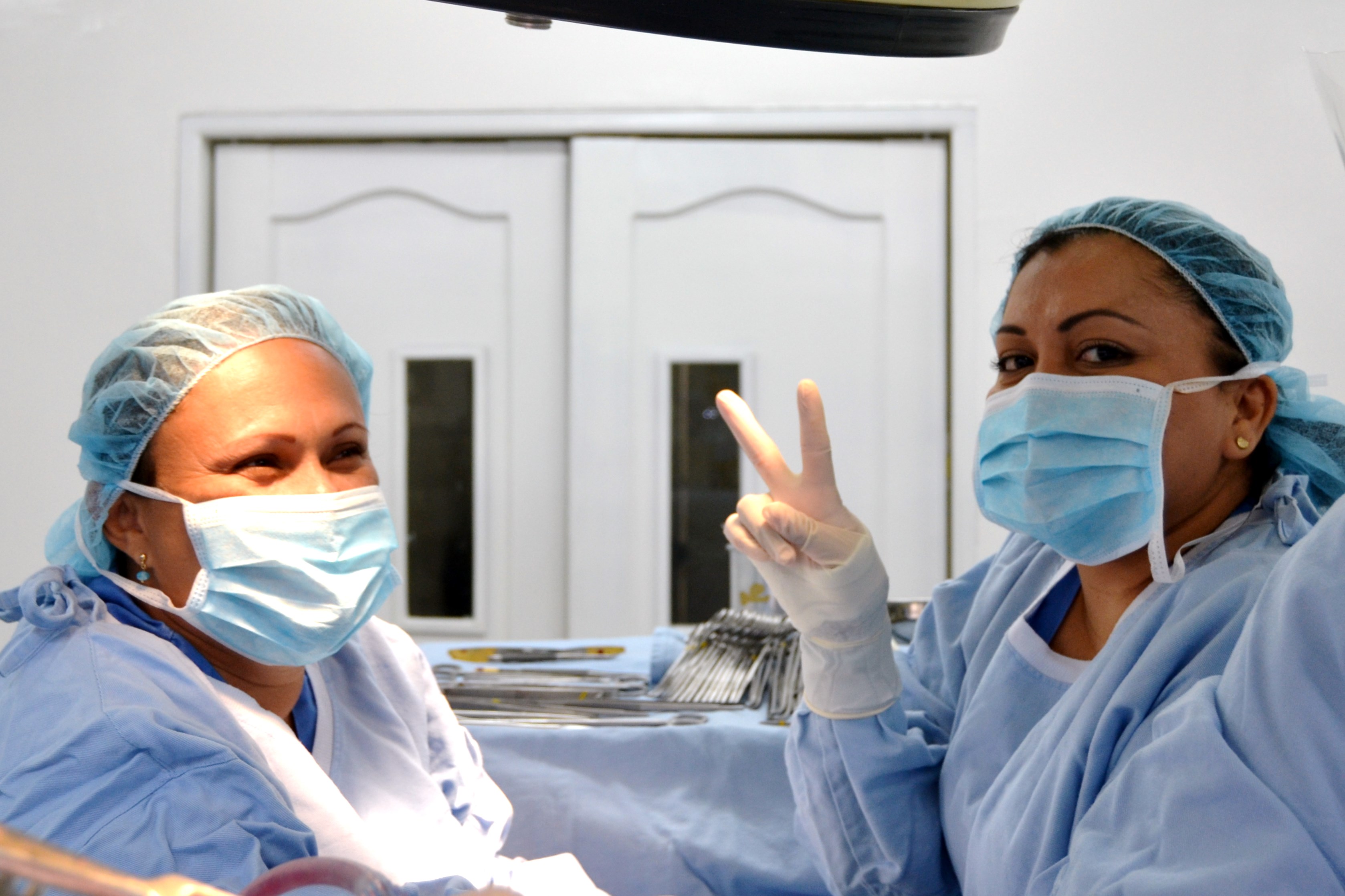
Raquel (right) and Anita, the instrumentadors

Raquel (right) and Anita, the instrumentadors

I am really going to miss Patricia and her perpetually sunny nature, easy smiles and ready laughter.  She was so sweet to introduce me to her son so I would have an escort and companion if I wanted to go out dancing.

Patricia and Estebes, circulating nurses

Patricia and Estebes, circulating nurses

I will miss Estebes, who always seems to go out of her way to help me.  She is always there to adjust the light, offer a stool or anything else that might make it easier for me while I am peering into one of the dark tunnels of someone’s leg.
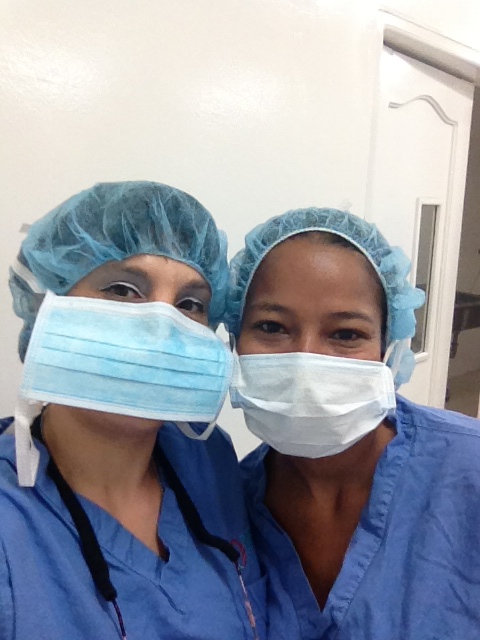
with Estebes

with Estebes

Anita, too, has wonderful.  I feel like we have also had some fun, working at the ‘back’ of the table.  I’ve tried not to be in her way – and to actually be somewhat helpful.  (I’ve probably failed at this – but she has been very sweet and has never made me feel unwelcome.)  She’s also extremely knowledgeable about surgery so it’s good to have her there.  It’s hard to feel nervous with Anita watching over me.  Or when I need a third hand – she is always there – even while managing everything at the top of the table too.

barbosa 045

Tuesday

We arrived in Sincelejo this morning for surgery this afternoon.   I did a fitting with Dr. Barbosa and his new headlamp apparatus so I could fit the final piece of Velcro.  It’s not the prettiest thing in the world, but it’s functional and fully washable.  (The previous headlamp anchor is an uncovered foam that crumbles with washing).  I added a border to the old one as well, and repaired it the best I could, so he would be able to swap them out as needed.  I hope he liked it – despite its ‘ugly duckling’ appearance.  I thought it would be a nice gesture since he has done so much for me – and I don’t know how to say “Thank You.”

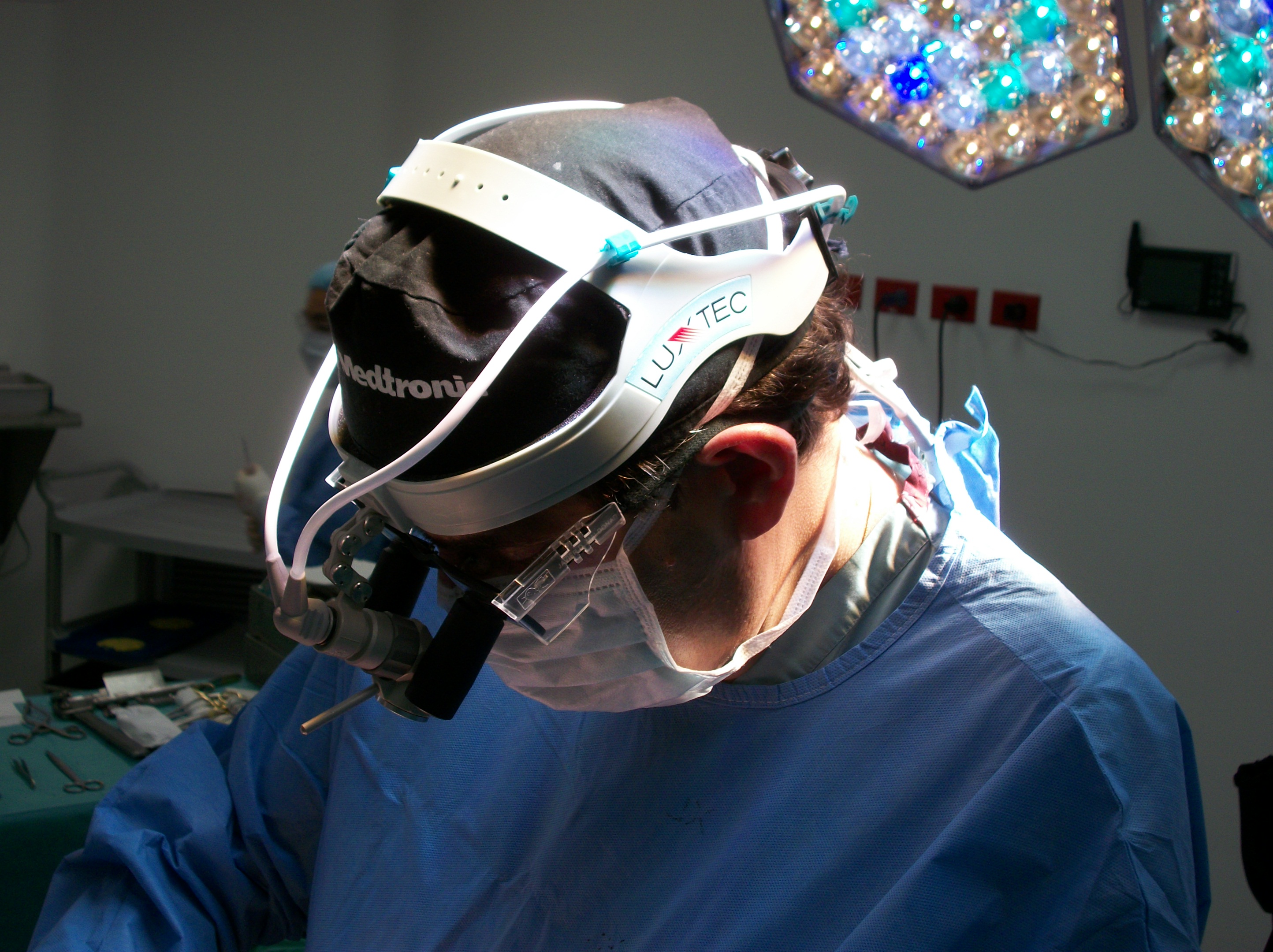
Dr. Barbosa models his new headgear.

Dr. Barbosa models his new headgear.


The patient only needs one small segment of vein – so Dr. Barbosa decided it would be a good time for me to learn open saphenectomy.  (I think I have convinced him on the soundness of my theory of learning the principles of saphenectomy, especially with my argument on the need to know for emergency cases.)

performing a saphenectomy

performing a saphenectomy

It was amazingly fast and essentially a bloodless field.  Since everything is open before you, it is easy to ligate and clip all of the collaterals.  I was surprised by how quickly I was able to free the vein.  Closure didn’t take much longer than normal because even though it was an ‘open saphenectomy’ since it was only one graft it wasn’t that long of an incision.

I am glad I had an opportunity to try it because it certainly gave me more confidence than I would have had if I was expected to learn it during an emergency case.  I also felt it gave me a better feel for the anatomy – because it’s all laid out in front of you. (It doesn’t matter how much you read or study a textbook – people are ‘never’ completely textbook, and ‘real’ anatomy looks different from the pretty drawing in my Grey’s Anatomy, especially when you are peering down a dark tunnel tract.)

Wednesday

The patient from yesterday is doing well.  The morning chest x-ray showed significant atelectasis but the patient was hemodynamically stable and without other complications.  I reviewed post-operative teaching (pulmonary toileting, ambulation) with the patient and explained that due to underlying COPD, he needed to be more aggressive in pulmonary toileting, and post- operative exercises.

Just a nurse?  I don’t think so…. But you are only a doctor.

Today a doctor attempted to insult me by stating, “You aren’t a doctor.” (Don’t worry, dear readers – it wasn’t Dr. B – I think he ‘gets” me.)  It made me want to laugh out loud but I managed to restrain myself since I was scrubbed in at the time.  Of course I’m not a doctor – and thank the lord that I am a nurse!  I never have and never will want to be anything else!

I feel sorry for someone so limited that they can’t see all that is missing from their life because they are “just a doctor.”  They are just a doctor, but I am fortunate enough to be a nurse!  I get to be everything that they can’t.  For him, the people who come to us for help are just patients – part of an endless cycle of work, a means to pay the bills, buy a big house and have the status that being a doctor brings.

But for me, well, I am not usually overly religious in my speech but there is no other way to describe it but to say, I am blessed. I do feel it’s a ‘calling’ of sorts.   I am blessed with the opportunity to care for these people, each one unique; with their own hopes, dreams and rich histories.  I have the privilege of being one of the people alongside the family and friends who cares for them.  I am lucky enough to be invited to share in that care.  The patients may leave the hospital, but they never leave my heart.

I am so much more than just a nurse to my patients; I am a teacher, a friend, a source of comfort and compassion during a life-changing experience.  I am the one who holds their hands when they are frightened – and the person who brings a smile to their face when they think they will never smile again.

Just a nurse?

Just a nurse?

I am a little bit social worker, a tiny little angel, a physical therapist, a cheerleader and friend, and even to many, their favorite ‘doctor’.  Often, I am the one they feel comfortable talking to – I am the one they bring their questions and concerns to.  Usually, I am the one they trust – to tell them to truth and to assist them on their journey back to health.  And, that sir, is a privilege you may never know.

To my surgeons, I am the extra right hand they didn’t know they needed.  I am always where I am needed – often behind the scenes, taking care of small issues so the surgeon can continue to do the things he needs to do – namely operate.  I am someone to bounce ideas off of – someone to teach (and wants to learn).  I am the very best resident a surgeon will ever have.

To the other doctors (who may have limited experience with cardiac surgery patients), the ones who are willing to admit it – I am an advisor, a teacher and a trusted colleague.

To my nursing colleagues – I am a mentor, a teacher and someone willing to listen to their concerns.  I know their jobs and I know their intrinsic value.  I know their talents – even if you don’t.  I never shrug off a nurse’s concerns, and that has saved lives.  If the nurse caring for the patient comes to me and says, “I don’t know what it is but something isn’t right,” than I know that something isn’t right.  And together, we figure it out and make it better.  I know that these nurses, the ones you dismiss – they have hopes and dreams too – and they take pride in excelling in their job.  If they don’t know something, it’s not for a lack of trying – it’s for want of a mentor.

Ever Luis, one of my favorite floor nurses

Ever Luis, one of my favorite floor nurses

And yet – there is still more to this nurse – I am an investigator, a researcher and a bit of a detective.  But you sir, are only a doctor.

In today’s case, the patient needed two grafts.  Dr. B started the initial incisions (I was off by a centimeter yesterday on my initial incision, so I think he lost confidence in my skills – I was worried about avoiding the patients more superficial varices.)  I am a little afraid of jumping in too quickly and harming the patient – so I am cautious in making my initial incisions – but once that’s done, I feel like I am in familiar territory.  I looked at my case log after the surgery – and it seems incredible for me that I’ve only had eight cases because it feels like I’ve been doing it for longer – parts of the procedure feel almost automatic now.  I wish it was 25 or 3o cases but the service just isn’t that busy.  I knew that would be the case when I came here – so I am grateful for the eight cases.  Eight is still more than none, and none is how many cases I was getting back at home.  (It’s that tired cliché – everyone wants someone with experience but no one wants to give a person a chance to get experience.)

I am still hoping that future employers will take my willingness and eagerness to train into consideration and offer me a chance even though I am a locum tenens provider.  I have just been burned too many times in permanent positions to risk taking another one in hopes that they will fulfill their promises to train me.

Thursday

No surgery today but a full clinic!  It was a good day in clinic because I got to see all the post-operative patients from our previous surgeries, and it was just a bit heart wrenching.  But then again, I am always a big sap for my patients.

All the patients seemed so happy to see me – and I was so happy to see all of them too!

Everyone looked really good, and I was impressed by their questions and attentiveness during the appointments.  My patients knew all of their medications by name, and were eager to discuss this and other post-operative instructions they received at the time of discharge.  (Usually it seems like people forget a lot of what we talk about in the hospital – but I think my horrible gringa accent sticks in their minds).

The only disappointing aspect, was seeing one of our patients (who had been really fragile pre-operatively) amble in.  She looked great – and said she felt pretty good, (other than the usual sternal soreness) but one of her leg incisions had partially dehisced.  (Luckily it was a very small skip incision and the patient had been fastidious about cleaning it as directed).  The wound was very clean, with no signs of infection.  It was healing well by secondary intention but I was disappointed in myself that the wound closure didn’t hold up.

After clinic – we headed back home.  All the while, I was thinking of how I will miss Sincelejo.  I will miss my friends, my patients and Clinica Santa Maria.  I will miss the chance to work with Dr. Barbosa – who was always such a great teacher, even if we didn’t always see eye-to-eye.  Most of all, I will miss Iris, who has been my best friend, confident and colleague during this journey.  I will miss working with her – I honestly think that between the two of us, we could be a force to change the world (or at least cardiac surgery) for the better.

From the bottom of my heart, I sincerely say, Thank you Iris, Thank you Dr. Barbosa, Thank you, Estebes, Anita and Patricia – and thank you Dr. Salgua for having me here among all of us – and making me part of the team.  I will miss you all.

Dr. Salgua Feris

Dr. Salgua Feris

Sundays in Cartagena


El Centro

El Centro

Sundays in Cartagena are a bit different from Bogotá or Medellin. As a major tourist destination, Cartagena never really slows down the way other cities do in Colombia.  In Bogotá, my neighborhood (Chico) was essentially deserted on Sundays.  The only signs of life were on the streets closed for  pedestrian walking.  La Candeleria and Usaquen were the destinations of choice for Bogotanos who chose to stay in the city.

Instead the activities change – instead of business, the weekends are for boat trips to the Islands of Santa Rosario, long leisurely lunches, wandering around El Centro and looking at arts and native crafts, and walking along the beach.   Tourists stroll along Bocagrande window shopping at designer storefronts, eating ice cream.  The hotels host popular events in Castillogrande, and restaurants and bars feature the sports of the day, to standing room only crowds.

So today, after sleeping in a bit, Iris and I headed to El Centro for another leisurely stroll around El Centro.  Sunday mornings are a nice time for this – the streets are still pretty quiet and not yet packed with tourists.  (That comes later in the day.)

Cartagena 013

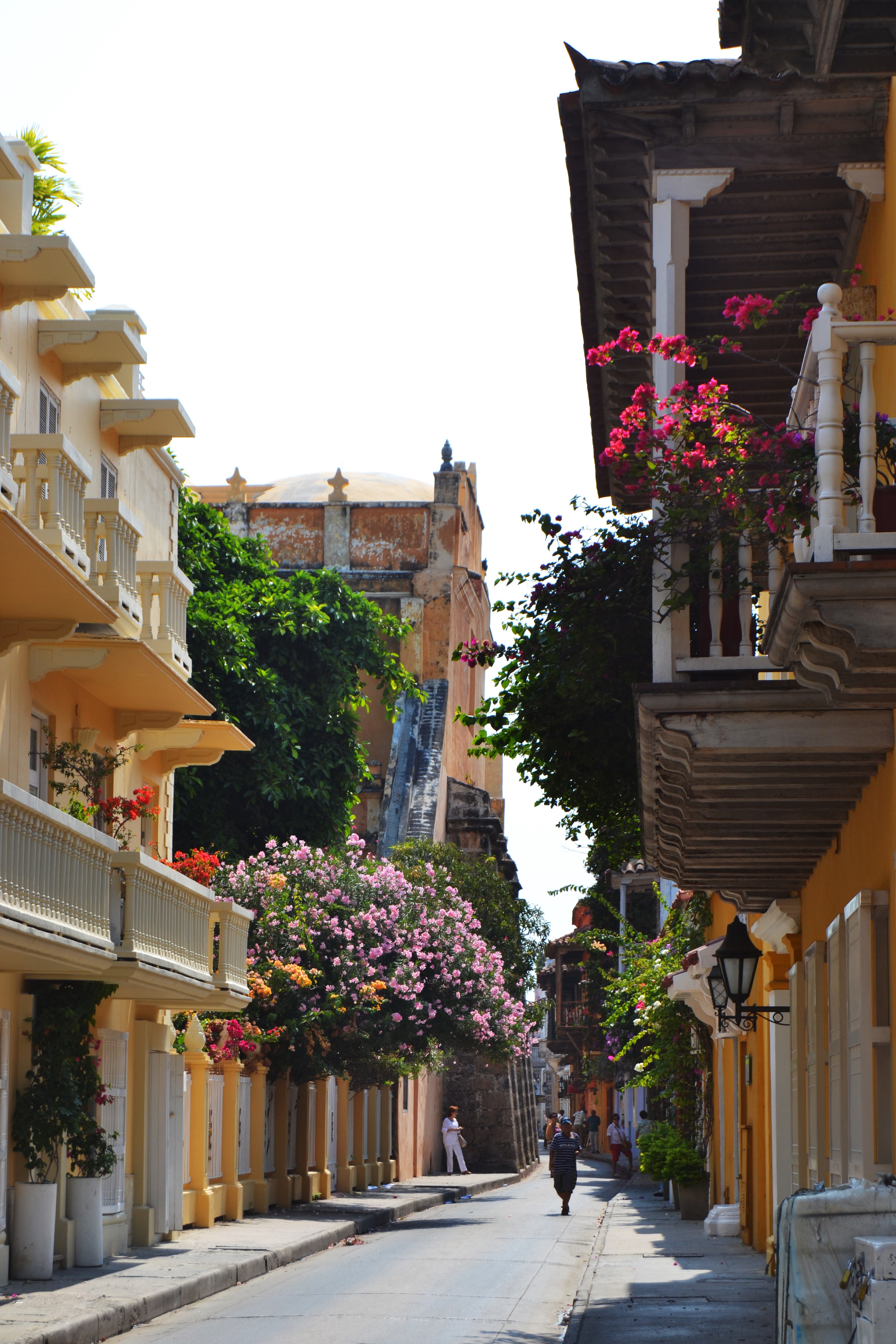
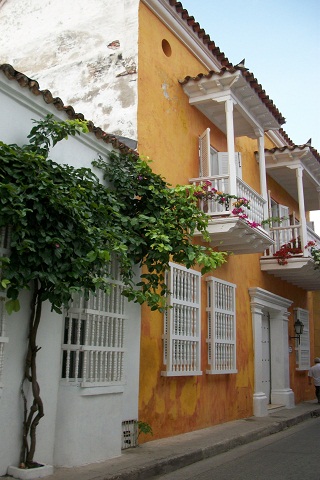
As we wandered down the tree-lined streets, I can’t help put take photos, even if I’ve photographed these same areas many times before.  Somehow, every time I encounter the colorful buildings with the beautiful blossoms on the curving cobblestone streets, I am enchanted all over again.

Cartagena 026


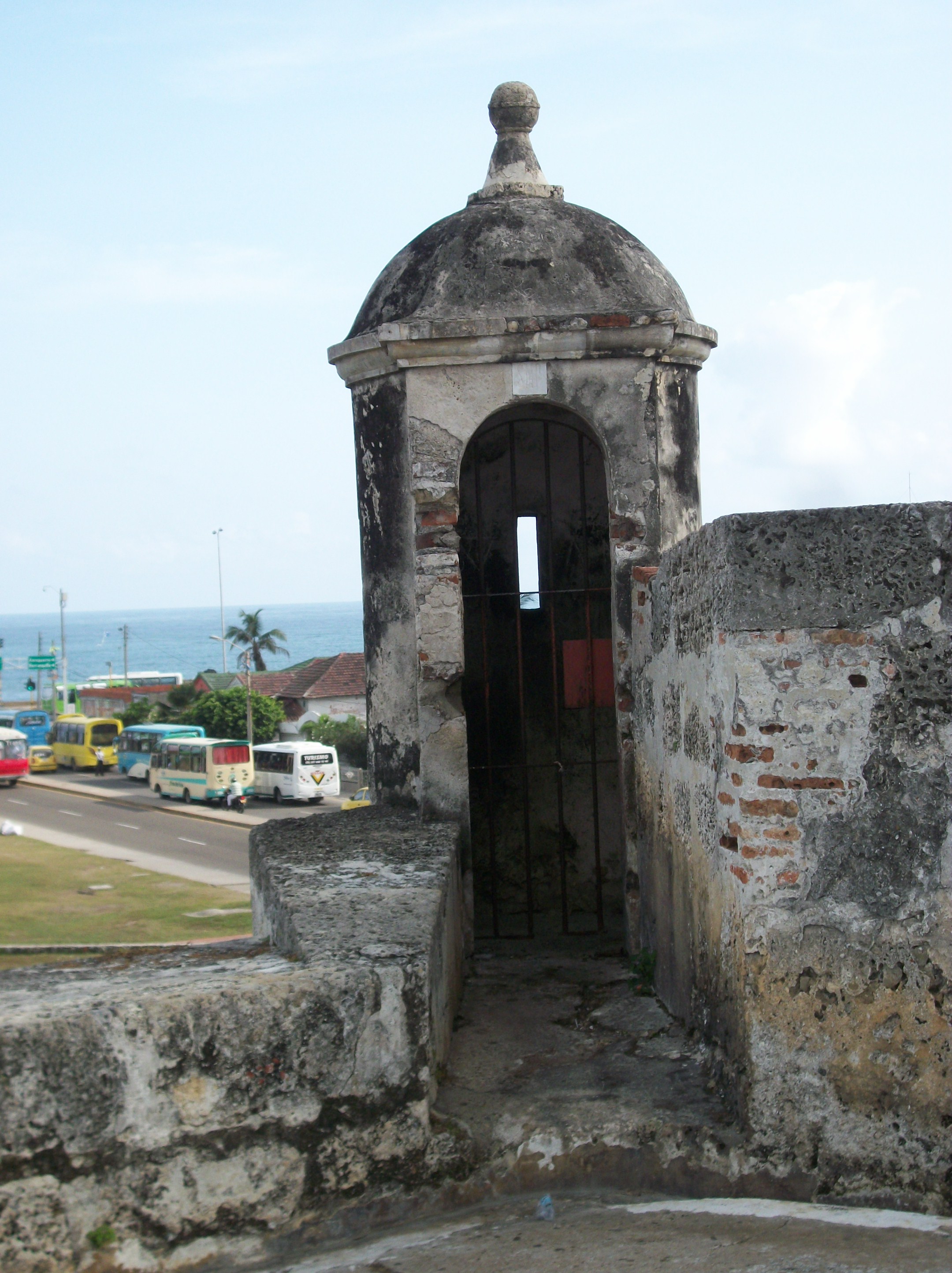
After walking around the neighborhood and making our way up the wall, we headed to the nearest Juan Valdez..

Cartagena 027

After our leisurely coffee, we walked back home to escape the heat of the day.  Now I am heading back out – to the beach.


Going home..


After a whirlwind three months that included trips to Chile, Bolivia and different cities in Colombia, I am getting ready to come home in a few days.  As always, leaving Bogotá is bittersweet.  I miss my friends, and my family but I will also miss the city and all of the nice people I’ve met here.

I am posting a map of Colombia, so even though I’ve taken several trips – you can see that I haven’t really explored the country at all. (I’ve posted little push pins on the areas I have visited.)  I excluded Facativa and some of the closer towns since they are really just suburbs of Bogotá, and it would just clutter the map.

Map of Colombia, courtesy of Google Earth

As you can see – I haven’t explored the southern part of Colombia, or the pacific coast at all.  My Atlantic adventures have been confined to Cartagena.  So, I guess this means, I still have a lot of work cut out for me on my next visit(s).

map showing central Colombia

But I hope that readers have enjoyed reading about my travels, the people I’ve met and the things I’ve seen.  Now – I know this is a medical/ surgery blog but since much of the surgery I write about is in this part of the world, I think that including some of my experiences is relevant/ interesting for people who read the blog.  Once I get back home, I’ll post some more articles on medical quality control and standards – and more of my usual dry fare.

Cartagena update: Dr. Cristian Barbosa, cardiac surgeon


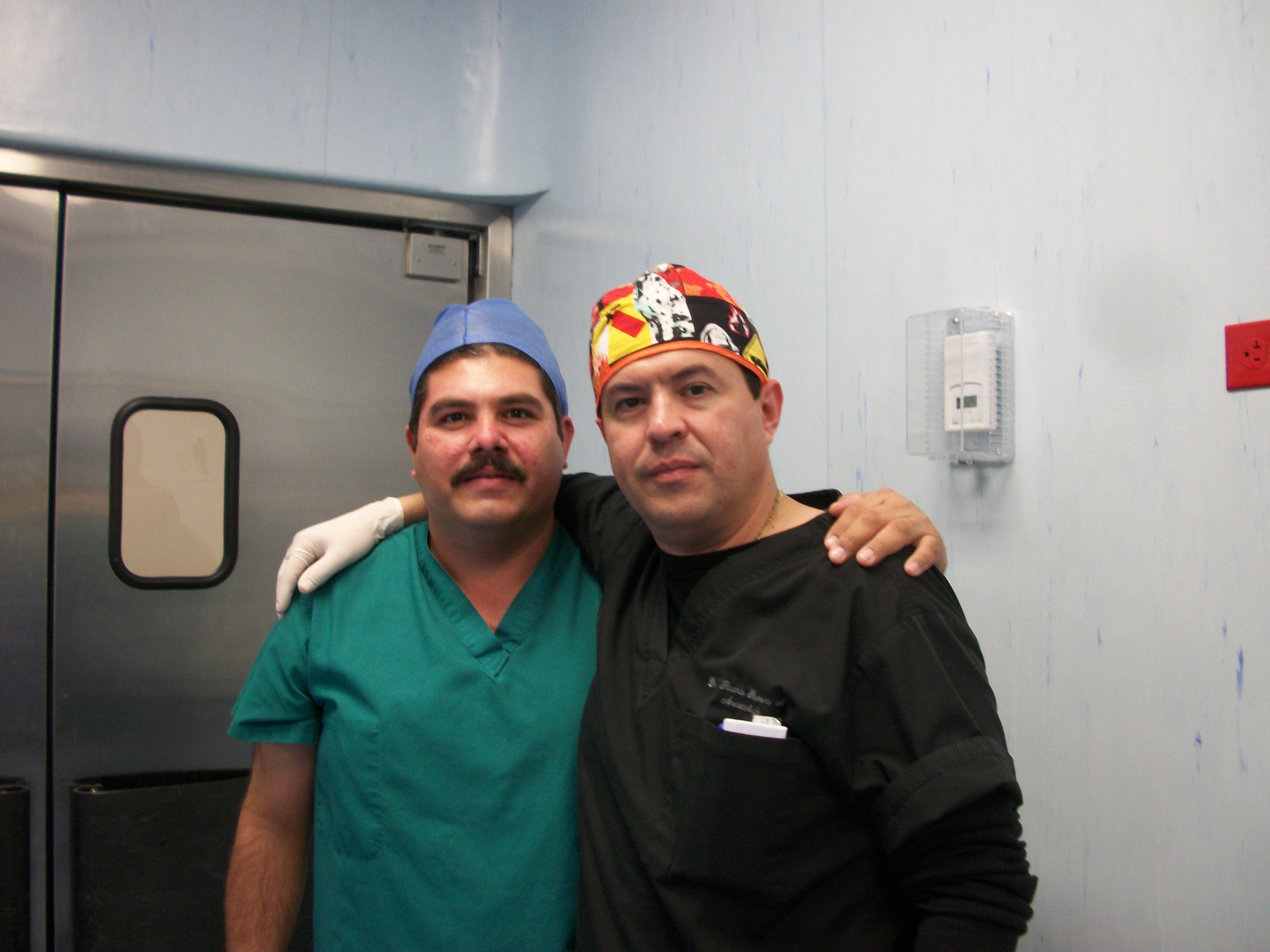
with Dr. Pulido (left) and Dr. Barbosa in Cartagena (2010).

I wanted to post an update on a fantastic surgeon (who has since become a good friend).  In fact, Dr. Cristian Barbosa was one of the first surgeons I ever interviewed back in 2010 – and without his encouragement, the first book would have never gotten off the ground.  Maybe not the second book (Bogotá!) either – since once I said the magic words, “Oh – I interviewed Dr. Barbosa in Cartagena last year,” plenty of other surgeons who might not have talked to me – started to take me seriously.

with Dr. Barbosa back in 2010

Ever since then – I try to keep in contact with Dr. Barbosa – he’s a great person and an absolutely phenomenal surgeon, so I email him every so often..

Since my last visit, back in August – Dr. Barbosa has left Hospital Neuvo Bocagrande – and is now operating in Clinica Santa Maria in Sincelejo, Colombia.

Sincelejo is the capital of the state of Sucre, which is part of the Caribbean region of Colombia.  Like most of this part of Colombia – it has a rich history, and was founded back in 1535 in the name of St. Francis de Assis, though it was long inhabited prior to that by native Colombian tribes such as the Zenu.  Unlike nearby Cartagena (125km north), Sincelejo is a more mountainous landscape, and is known for their agriculture, particularly cattle.  (wow – my stomach just rumbled  – must be missing those gourmet Corral burgers, which are my one Colombian indulgence.. Argentina has nothing on Colombian beef.)

Dr. Barbosa is still living in Cartagena and making a three-hour commute to perform life-saving surgery, while he works on creating a new cardiac surgery program back in our favorite seaside city.  (Hopefully, when he does – we’ll be invited back to take a look!)

gate at the entrance to the historic el centro district

sunset in Cartagena, Colombia

Summit of the Americas


cobblestone streets in the historic district of Cartagena, Colombia

Summit of the Americas – Cartagena, Colombia

As anticipated, President Obama is receiving some harsh criticisms for the Cuban embargo begun by fellow democrat, President John F. Kennedy in October of 1960.  (Despite the long-standing embargo, the United States remains the fifth largest exporter to the island nation.)

This embargo, which was initiated in response to the Cuban nationalization of private properties as part of the institution of a communist regime, reached full strength in February of 1962, and has continued unabated since then.  In fact, the American embargo was re-affirmed in 1992 with passage of the Cuban Democracy Act, and again in 1996 with Helms – Burton Act which further prevents private American citizens from having business relationships or trade with Cuba.

At the summit, the host of the event, President Juan Manual Santos (Calderon) has been one of the more outspoken critics of this on-going trade policy and public relations nightmare.  President Santos argues, fairly successfully in my opinion, that not only is the embargo an outmoded method of diplomatic negotiation, but that is has been an ineffective one (in inspiring governmental and philosophical change in Cuba.)

President Santos respectfully requests that Obama reconsider the decades old policies of trade embargo. Photo by AP press

This comes after President Obama was embarrassed by a prostitution scandal involving several of his private security detail.  At the time of this writing, eleven members of the secret service along with five members of the military has been openly disciplined, and returned home.

Colombian prostitutes – photo found at multiple sites, including another wordpress blog and http://azizonomics.com/tag/colombian-prostitutes/
(If this is your photo – let me know, so I can give proper credit)

Protests against the United States have been small scale and without injury as small explosives were detonated near the American embassy.

President Obama also fielded criticism on America’s ‘War on Drugs’.  While conceding that the efforts have been a multi-billion dollar failure (with the exception of small scale victories such as the capture/ death of Pablo Escobar in 1994), Obama refused to consider efforts to legalize drugs, as are under discussion in several other nations.

In other news – in a surprise move that may predict more future instability for Venezuela, President Hugo Chavez has decided to forgo the summit as he pursues treatment for cancer (in Cuba).  This move leads to intense speculation regarding both the presidential and governmental prognosis in Venezuela.  Previously, President Chavez had been adamant that his cancer was curable and disputed reports of a more serious condition. There are now several media reports that the president has widespread metastasis affecting multiple organs.  (May I suggest that you consider HIPEC, President Chavez?)

The rise of Latin America


Big news out of Cartagena, Colombia as Hugo Chavez (Venezuela) and Bolivia’s president, Evo Morales come together with President Barack Obama and Secretary of State, Hilary Clinton along with 30 other member nations for the Summit of the Americas.  Most certainly on the agenda – discussions regarding both Mexico’s and Colombia’s decisions to decriminalize drugs, as well as the continued drug violence affecting both countries.  President Evo Morales’, a former coca grower, position on drugs and the so-called ‘Drug war’ are already well-known.

While Colombia’s crime has decreased dramatically, the reverse is true in certain parts of Mexico* – where the nightly news seems more like Vietnam footage, as reporters discuss caches of guns toted by young teenagers, and Cuidad de Juarez claims the title of ‘Murder capitol of the world.”   Much of this criminal activity has been attributed to illegal drug commerce to the United States leading several countries to blame the USA for creating havoc in their home countries as suppliers attempt to feed the hoards of American drug users.

Tensions between Venezuela, Bolivia, and Cuba against the United States are unlikely to change as a result of this Summit, but hopes remain.  The summit is also expected to put pressure on the United States regarding the 50-year-old Cuban embargo.

It’s an interesting turn of the tide – as these issues along with the economic problems plaguing the United States (and causing problems globally) put the US at a significant disadvantage.

In related news – here at Cartagena Surgery, readers are asking:

— So how dangerous is Mexico? —

Since I am currently living in a Mexican border city, you’ve picked the right time to ask.

* There are still plenty of safe and beautiful places in Mexico – but it remains a tragedy that the Sinoloa gang / drug activity have resulted in over 47,000 murders in the last five years.  ([To put this into context, let’s do some simply math.. Simple math since I’m a nurse not a statistician, so keep that in mind as you consider the limited variables here.]

1.  Mexico has over a hundred million people (or 1/3 the people of the USA)

with  47,000 murders over five years (or that’s the number that has been widely quoted.)  Divide 47,000 by five = 9,400 people murdered per year.

2.  The US has over 300 million people, and had 18,361 murders in 2007 (last year available by the US census.) So three times the people.  Hmmm.  I can already see that 18,361 divided by three is 6,120. 

3. But to be fair – let’s also look at cummulative average for the US – and compare apples to apples.. (or five years of data to five years of data.)  It’s still not entirely comparable since our latest available data is from 2007.

2007:  18,361

2006: 18,573

2005: 18,124

2004: 17,357

2003: 17,732

for a total of 90,147 murders over five years.  If we divide that by three, we get 30,039 which is only 69% of the murders in Mexico in the same number of years.  Now you can argue it either way – since the USA numbers aren’t current, etc. etc.. but Mexico’s rate IS significantly higher..

So what does that mean for travelers?  It means – stay the heck out of Juarez..  Be extra cautious in Tijuana, and Nuevo Larado – but otherwise,  use caution & commonsense when traveling in other parts of Mexico (like you would any where else!) – and enjoy yourselves.

Adventure Tours to Colombia


Want to see the lush beauty of Colombia without the surgery?

The tram to Monserrate

Ready to explore the sophisticated city of Bogota, combined with the historic jewel of Cartagena?   What about the sandy beaches of Santa Marta?

Overseas Adventure Travel is offering a new tour of Colombia for interested travellers.

If this whirlwind tour of Colombia isn’t enough for you – there are Bolivian and Panama add-on options.  Or you could always rent an apartment and stay a while (like I did.)

Overseas Adventure Tours

For a more tailor-made tour of Colombia, contact Mantaraya Tours.  This Colombian travel company offers a multitude of options to fit your budget (and your dreams!)

I wrote this post for the friends and family who were fascinated by my travels to Colombia – and wanted to see for themselves.  I have no affiliation or relationships with either of the companies listed.  (But if they are reading this – hope they buy a copy of the book).

Hello, Cartagena!


Hello magazine says Hello to the beautiful Cartagena de Indias in this new article that highlights the romance and ambience of this charming, coastal city that was founded during the swashbuckling days of pirates and buccaneers..

Cartagena de Indias

In other news (from Colombia Reports) – if you can’t make it to Cartagena right now, don’t worry – the city is taking steps to safeguard and protect its rich history for generations of tourists to come.

Looks like Panama may bite off more than they can chew..


In a recently published story, the government of Panama is now offering medical  insurance for all tourists to Panama for free.  This insurance is not  ‘Complication Insurance’ which is offered by private surgeons in Colombia and other countries for patients traveling specifically for medical tourism.  Complication insurance covers all possible medical complications resulting from medical procedures at the designated clinic or destination..

No – Panama is taking the European and socialized medicine approach and is offering general medical coverage for ALL short-term travelers to Panama.  (The long-term exclusion is a wise move given the numbers of Americans and other overseas residents who make Panama their retirement home.)  This insurance resembles typical travel policies in that it covers injuries, accidents and other medical situations that may occur while on vacation..  I just hope the Panamanian government hasn’t underestimated its tourists and their injury/ illness potential.

Now readers – don’t get any wild ideas.. This is not the time to stress that ‘trick knee’ while hiking to visit the Naso-Teribes..

Meanwhile, Costa Rica is making a pitch for more corporate clients such as Pepsi-Cola.  These multi-national corporations can potentially bring hundreds of millions of healthcare dollars by diverting their employees to medical tourism destination such as Costa Rica.  (Like Colombia – Costa Rica is an ideal destination for North Americans due to proximity, quality and diversity of services available.)

Bariatric Surgery Safety: More than your weight is at risk!


Dying to be thin?  These patients are… A look at the Get-Thin clinics in Beverly Hills, California..

This series from LA Times writers, Michael Hiltzik and Stuart Pfiefer highlights the importance of safety and the apparent lack of regulation in much of the bariatric procedure business here in the United States.

In these reports – which follow several patient deaths from lap-band procedures, both surgeons and surgical staff alike have made numerous reports against the ‘Get Thin” clinics operating in Beverly Hills and West Hills, California.  These allegations include unsafe and unsanitary practices.  One of the former surgeons is involved in a ‘whistle-blower’ lawsuit as he describes the dangerous practices in this clinic and how they led to several deaths.

Regulators ignore complaints against Beverly Hills clinics despite patient deaths  – in the most recent installment, Hiltzik decries the lack of action from regulatory boards who have ignored the situation since complaints first arose in 2009!

House members call for probe into Lap-Band safety, marketing – California legislators call for action, but the clinics stay open. (article by Stuart Pfiefer)

Plaintiffs allege ‘gruesome conditions’ at Lap-Band clinics – mistakes and cover-ups at the popular weight loss clinics.  (article by Stuart Pfiefer)  This story detailing a patient’s death made me ill – but unfortunately reminded me of conditions I had seen at a clinic I wrote about in a previous publication..  The absolute lack of the minimum standards of patient care – is horrifying.  This woman died unnecessarily and in agony.  It proves my point that anesthesiologists need to be detailed, and focused on the case at hand.. (not iPhones, crosswords or any of the other distractions I’ve seen in multiple cases.. Now this case doesn’t specifically mention a distracted anesthesiologist – but given the situation described in the story above, he couldn’t have been paying attention, that’s for sure.

Nurse Practitioners and Medscape


A couple of new articles over at Medscape highlight the role of Nurse Practitioners (and Physician’s Assistants) in patient care.

The Role of Nps and PAs with MDs in today’s care

A study from Loyola showed that surgical NPs reduced emergency room visits  : here’s a link to the article abstract by Robles et al. (2011).

Reducing cardiovascular risk with NPs: the Coach trial

And yet again, Nurse Practitioners trump physicians in patient satisfaction surveys.

This is just a sampling of the articles featured over at Medscape’s NP perspective.

From the free-text files: a selection of articles showing the growing use of Nurse Practitioners around the world

Nurse practitioners improve quality of care in chronic kidney disease: two-year results of a randomised study.  – a study from the Netherlands

A Parallel Thrombolysis Protocol with Nurse Practitioners As Coordinators Minimized Door-to-Needle Time for Acute Ischemic Stroke.  A taiwanese study showing the impact of nurse practitioners in reducing door-to-needle time in acute coronary syndromes.

Helping patients attain and maintain asthma control: reviewing the role of the nurse practitioner.

Type 2 diabetes, cardiovascular disease and the utilisation of primary care in urban and regional settings.  An Austrailian study discussing the impact of NPs in rural care.

Hospital General de Mexicali


Following surgery at Hospital Alamater, we proceed to the Hospital General de Mexicali.  This is the largest public facility in Mexicali, and is surprisingly small.  After a recent earthquake, only three floors are currently in use, with the two remaining upper floors undergoing demolition for repair after earthquake-related damage.  The facility is old and dated, and it shows.  There are ongoing construction projects and repairs throughout the facility.

On the medical and surgical floors there are dormitory style accommodations with three patients in each room.  Sandwiched across from the nursing station are several rooms designated as ‘Intermediate’ care.  These rooms are full with patients requiring a higher level of care, but not needing the intensive care unit which is located downstairs adjacent to the operating theater.


surgical nurses at Hospital General

The intensive care unit itself is small and crowded with patients.  There are currently five patients, all intubated and in critical condition.  Equipment is functional and adequate but not new, with the exception of hemodynamic monitors.  There is no computerized radiology (all films are printed and viewed at bedside.)

We visit several post-operative patients upstairs on the surgical floors, and talk with the patients at length.  All of the patients are doing well, including several patients who were hospitalized after holiday-related trauma (stabbing with chest and abdominal injuries.) The floors are busy with internal medicine residents and medical students on rounds.

Despite it’s unattractive facade, and limited resources – the operating room is similar to operating rooms across the United States.. Some of the equipment is older, or even unavailable (Dr. Ochoa brings his own sterile packages of surgical instruments for cases here.)  However, during a case at the facility – all of the staff demonstrate appropriate knowledge and surgical techniques. The anesthesiologist invites me to look over his shoulder (so to speak) and read through the chart..

Since respiratory therapy and pulmonary toileting is such an important part of post-operative care of patients having lung surgery – we stopped in to check out the Respiratory department.  I met with Jose Luis Barron Oropeza who is the head of Respiratory Therapy.  He graciously explained the therapies available and invited me to the upcoming symposium, which he is chairing.  (The symposium for respiratory therapy in Mexicali is the 18th thru the 20th of this month.  If anyone is interested in attending, send me an email for further details.)

After rounding on patients at the General Hospital – despite the late hour (it is after midnight) we make one more stop, back at the Hospital Alamater for one last look at his patients there.  Dr. Ochoa makes a short stop for some much-needed food at a small taco stand while we make plans to meet the next morning.

Due to the limitedavailable resources, I wouldn’t recommend this facility for medical tourists.  However, the physicians I encountered were well-trained and knowledgeable in their fields.

Fired!!


As I review the few short film clips I delegated to my ‘cameraman’ (my husband) – all I can say is that he is totally, and completely fired!!  (and I am pretty irritated.)

All I needed was a few background clips of Mexicali for the first new video cast for the iTunes series – I took all the stills, interviewed the surgeons and got all the intra-operative footage..  He just needed to get about two minutes worth – for the introductory segments..

Totally.  Fired.

So, readers, I apologize but my first iTunes video cast won’t be the wonderful, glossy creation I had hoped for.. More like a schizophrenic, slightly generic – art house production.

But we’ll try again on our next journey – (with a new cameraman!)

In the operating room with Dr. Carlos Ochoa, thoracic surgeon


Mexicali, Baja California (Mexico)

Dr. Carlos Cesar Ochoa Gaxiola, Thoracic Surgeon

We’ve back in the city of Mexicali on the California – Mexico border to interview Dr. Carlos Cesar Ochoa Gaxiola as part of the first of a planned series of video casts.   You may remember Dr. Ochoa from our first encounter back in November 2011.  He’s the personable, friendly thoracic surgeon for this city of approximately 900,000 residents.  At that time, we talked with Dr. Ochoa about his love for thoracic surgery, and what he’s seen in his local practice since moving to Mexicali after finishing his training just over a year & a half ago.

Now we’ve returned to spend more time with Dr. Ochoa; to see his practice and more of his day-to-day life in Mexicali as the sole thoracic surgeon.  We’re also planning to talk to Dr. Ochoa about medical tourism, and what potential patients need to know before coming to Mexicali. He greets me with the standard kiss on the cheek and a smile, before saying “Listo?  Let’s go!”  We’re off and running for the rest of the afternoon and far into the night.  Our first stop is to see several patients at Hospital Alamater, and then the operating room for a VATS procedure.

He is joined in the operating room by Dr. Cuauhtemoc Vasquez, the newest and only full-time cardiac surgeon in Mexicali.  They frequently work together during cases.  In fact, that morning, Dr. Ochoa assisted in two cases with Dr. Vasquez, a combined coronary bypass/ mitral valve replacement case and a an aortic valve replacement.

Of course, I took the opportunity to speak with Dr. Vasquez at length as well, as he was a bit of a captive audience.  At 32, he is just beginning his career as a cardiac surgeon, here in Mexicali.  He is experiencing his first frustrations as well; working in the first full-time cardiac surgery program in the city, which is still in its infancy, and at times there is a shortage of cases[1].  This doesn’t curb his enthusiasm for surgery, however and we spend several minutes discussing several current issues in cardiology and cardiac surgery.  He is well informed and a good conversationalist[2] as we debate recent developments such as TAVI, carotid stenting and other quasi-surgical procedures and long-term outcomes.

We also discuss the costs of health care in Mexicali in comparison to care just a few short kilometers north, in California.   He estimates that the total cost of bypass surgery (including hospital stay) in Mexicali is just $4500 – 5000 (US dollars).  As readers know, the total cost of an uncomplicated bypass surgery in the USA often exceeds $100,000.

Hmm.. Looks like I may have to investigate Dr. Vasquez’s operating room on a subsequent visit – so I can report back to readers here.  But for now, we return to the case at hand, and Dr. Ochoa.

The Hospital Alamater is the most exclusive private hospital in the city, and it shows.   Sparkling marble tile greets visitors, and patients enjoy attractive- appearing (and quiet!) private rooms.  The entire hospital is very clean, and nursing staff wears the formal pressed white scrub uniforms, with the supervisory nurse wearing the nursing cap of yesteryear with special modifications to comply with sanitary requirements of today.

The operating rooms are modern and well-lit.  Anesthesia equipment is new, and fully functional.  The anesthesiologist is in attendance at all times[3].  The hemodynamic monitors are visible to the surgeon at all times, and none of the essential alarms have been silenced or altered.  The anesthesiologist demonstrates ease and skill at using a double lumen ETT for intubation, which in my experience as an observer, is in itself, impressive.  (You would be surprised by how often problems with dual lumen ETT intubation delays surgery.)

Surgical staff complete comprehensive surgical scrubs and surgical sterility is maintained during the case.  The patient is well-scrubbed in preparation for surgery with a betadine solution after being positioned safely and correctly to prevent intra-operative injury or tissue damage.  Then the patient is draped appropriately.

The anesthesiologist places a thoracic epidural prior to the initiation of the case for post-operative pain control[4].  The video equipment for the case is modern with a large viewing screen.  All the ports are complete, and the thoracoscope is new and fully functioning.

Dr. Ochoa demonstrates excellent surgical skill and the case (VATS with wedge resection and pleural biopsy) proceeds easily, without incident.  The patient is hemodynamically stable during the entire case with minimal blood loss.

Following surgery, the patient is transferred to the PACU (previously called the recovery room) for a post-operative chest radiograph.  Dr. Ochoa re-evaluates the patient in the PACU before we leave the hospital and proceed to our next stop.

Recommended.  Surgical Apgar: 8


[1] There is another cardiac surgeon from Tijuana who sees patients in her clinic in Mexicali prior to sending patients to Tijuana, a larger city in the state of Baja California.  As the Mexicali surgery program is just a few months old, many potential patients are unaware of its existence.

[2] ‘Bypass surgery’ is an abbreviation for coronary artery bypass grafting (CABG) aka ‘open-heart surgery.’  A ‘triple’ or ‘quadruple’ bypass refers to the number of bypass grafts placed during the procedure.

[3] If you have read any of my previous publications, you will know that this is NOT always the case, and I have witnessed several cases (at other locations) of unattended anesthesia during surgery, or the use poorly functioning out-dated equipment.

[4] During a later visit with the patient, the patient reported excellent analgesia (pain relief) with the epidural and minimal adjuvant anti-inflammatories.

French implant update


More scary news for women around the globe – as the manufacturer, PIP discloses frightening information regarding their defective implants.  It has been discovered that the company knew that the implants were defective since 2005 – but continued to sell the implants for use world-wide, particularly in Latin America.

More disturbingly, this manufacturer did not use medical grade materials – instead opting for cheaper, construction grade chemicals including petroleum and fuel additives, components which have never been tested for [internal] human use.  The health effects of exposure to these materials is unknown.  The risks associated with the use of these materials is enhanced due to the high rate of rupture among this brand of implant.  These chemicals certainly have carcinogenic potential and the implications for thousands and thousands of women are terrifying.

French officials have urged women to have their implants surgically removed.

A preliminary search of PubMed and other published research shows mixed results – and primarily discusses the results of exposure to benzene (and other petroleum derivatives) via water contamination, or occupational exposure.   (In fact, only limited information is available regarding the safety of breast implants in general, and the material is fairly dated.)

As we stated in a previous story, while researching Bogota! and interviewing plastic surgeons – I investigated the types of implants used by the surgeons profiled in the book.  (None of the surgeons used this company’s implants at the time of my interviews in Winter/ Spring 2011).

Update:  In fact, the Colombian government has offered to pay for the removal of PIP implants.  More on this story here.

Aortic Valve Replacement & the elderly


I just read an interesting article in the Annals of Thoracic Surgery.

Unfortunately, the full-text article is not available for free – but I did find a nice article abstract (which I’ve posted below.)  It confirms some of the previous discussions we’ve had here at Cartagena Surgery on the role of surgery in Aortic Stenosis, even in ‘elderly’ patients.  [I put elderly in quotes since the definition can be fairly elastic depending on who is doing the judging.]

The article below is from Medscape.com

Aortic valve replacement in the elderly: the real life.

Ann Thorac Surg. 2012; 93(1):70-8 (ISSN: 1552-6259)

Langanay T; Flécher E; Fouquet O; Ruggieri VG; Tour Bde L; Félix C; Lelong B; Verhoye JP; Corbineau H; Leguerrier A Department of Cardiovascular and Thoracic Surgery, University Hospital, Rennes, France.

BACKGROUND: Aortic stenosis is of concern in the elderly. Although aortic valve replacement provides good long-term survival with functional improvement, many elderly patients are still not referred for surgery because of their age. Percutaneous aortic valve implantation offers an alternative to open-heart surgery. Concerns about the management of aortic valve stenosis in the elderly will be reviewed.

METHODS: We retrospectively analyzed 1,193 consecutive aortic valve replacements, performed in octogenarians since January 2000. A total of 657 patients (55%) had at least one associated comorbidity (eg, respiratory failure) and 381 (32%) associated coronary lesions. Valve replacement was the only procedure in 883 patients (74%), and was associated with coronary revascularization in 262 cases, or with another cardiac procedure in 48 patients.

RESULTS: Overall operative mortality was 6.9% (83 of 1,193 patients); 5.5% for single replacement and 11.5% if associated with coronary artery bypass surgery. Univariate and multivariate analyses identified 11 operative risk factors related to general status, cardiologic condition, and the procedure itself: older age (p< 0.015); respiratory failure (p <0.03); aortic regurgitation (p <0.001); emergency surgery (p <0.0029); New York Heart Association class IV (p < 0.0007); right heart failure (p < 0.03); atrial fibrillation (p < 0.04); impaired ejection fraction (p < 0.001); coronary disease (p < 0.01); redo surgery (p < 0.02); associated coronary revascularization (p < 0.008).

CONCLUSIONS: Today, valve replacement has acceptable low hospital mortality, even in the elderly. Thus, older patients should not be denied surgery due to their advanced age alone. Conventional surgery remains the gold standard treatment for aortic stenosis; the decision should be made on an individual basis. If several risk factors suggest very high-risk surgery, then percutaneous valve implantation should be considered instead.

In more disturbing news:

As predicted, the unproven ‘easy option’ of TAVI is now being pursued by more low-risk patients.  These lower risk patients are people who should have been encouraged to undertake the more durable, safe and proven surgical therapy [Aortic Valve Replacement.]  I guess this just shows how quickly those new recommendations [for patient protection and safety] were thrown out the window.

In this article (posted below) by Kurt Ullman at Medpage Today – German researchers discuss their preliminary findings and discuss the use in low risk patients.

The bar for transcatheter aortic valve implantation (TAVI) is dropping as more lower-risk patients are undergoing the procedure and their outcomes are favorable, a single-center study from Germany found. [Unfortunately – as we’ve seen so many times in the past, and as I am finding out while preparing this presentation on the Syntax trial – studies such as this can be quite deceiving – and LONG term data is needed. – Cartagena Surgery].

When stratified by quartiles based on enrollment date, Q1 patients had higher logistic EuroSCOREs, higher Society of Thoracic Surgeons (STS) scores, and higher median N-terminal pro-B-type natriuretic peptide levels compared with those enrolled later in Q4, noted Nicolo Piazza, MD, PhD, and colleagues from the German Heart Center in Munich.

Although there were significant decreases in 30-day and six-month mortality from Q1 to Q4 in the crude analysis, after adjustments for baseline characteristics, the significant differences disappeared (HR 0.29 for 30-day mortality and HR 0.67 for six-month mortality), according to the study published online in the Journal of the American College of Cardiology.

“These results suggest that underlying comorbidities play an important role in acute and intermediate-term survival after TAVI,” the researchers wrote.

The researchers noted anecdotal information suggesting a shift toward using TAVI in patients who are less sick than those enrolled in premarket trials. Additionally, the next wave of trials involving the CoreValve (Medtronic) and the Sapien XT (Edwards Lifesciences) devices will involve intermediate to high surgical risk patients, providing “yet another indication that TAVI is being directed at the treatment of lower and lower surgical risk patients,” Piazza and colleagues wrote.  [There are significant ethical considerations here which seem to be ignored – similar to criticisms of the Syntax trial – Cartagena Surgery.]

A single-center French study of low-risk TAVI patients found the procedure to be safe in this population. The study was presented at the European Society of Cardiology meeting in Paris.

The impact on this shift in patient selection was uncertain, they said, prompting a retrospective review of 420 patients who underwent TAVI at their institution from June 2007 to June 2010.

The consensus that a patient was suitable for TAVI was derived from a team that comprised cardiologists, cardiac surgeons, and anesthesiologists. This team approach is exemplified by the recent announcement that the American College of Cardiology and the Society of Thoracic Surgeons will jointly sponsor a TAVI registry to monitor the safety and efficacy of the procedure as it rolls out in the U.S.

Patients received either the CoreValve or Sapien device, the latter of which was just approved for use in the U.S. based on the PARTNER trial. PARTNER found that TAVI was as good as surgery in high-risk patients with severe aortic stenosis. [‘as good as’ – ah.. another ‘non-inferiority’ study….. view with skepticism folks..]

Researchers divided patients into four quartiles of 105 patients each. Those in Q1 were seen earlier in the study time frame than those in Q4.

Compared with Q4, Q1 patients had higher EuroSCOREs (25.4% versus 17.8%, P<0.001), STS scores (7.1% versus 4.8%, P<0.001), and NT-proBNP levels (3,495 versus 1,730 ng/dL, P<0.046).

There were significantly less transfemoral access approaches from Q1 to Q4, with a concomitant rise in transapical approaches. There also were significantly less intubations moving from Q1 to Q4, and the use of contrast significantly decreased over time.

Researchers noted that transfemoral complications decreased by 17% from Q1 to Q4 (P=0.008), but found no significant differences in the rate of stroke or transient ischemic attack or the need for a permanent pacemaker.

However, there was a shift in the later quartiles toward the treatment of younger patients with fewer comorbidities and lower surgical risk scores, Piazza and colleagues wrote.

Univariable analysis for 30-day mortality showed it was associated with age, STS score, atrial fibrillation, previous heart surgery, and previous stroke (P<0.10).

The factors associated with six-month mortality were age, logistic EuroSCORE, STS score, left ventricular ejection fraction, atrial fibrillation, previous cardiac surgery, chronic obstructive pulmonary disease, and N-terminal pro-B type natriuretic peptide (P<0.10).

Because only baseline characteristics were included, the authors noted the possibility that procedure-, operator-, or device-related factors might influence both 30-day and six-month mortality. The study is also limited by potential unmeasured confounding.

The investigators cautioned that little is known of the long-term durability of these devices should they be routinely implanted in younger patients with a longer expected life span.  [especially since the lifespan of the patients these valves were designed for was six months to one year..]

Piazza is a consultant and proctor for Medtronic and CardiAQ. Other authors revealed consultant status with Medtronic and Edwards Lifesciences, or instuctors for Medtronic

French Implants recalled


Hundreds of thousands of french made breast implants have been recalled – sending women all over the globe into a panic.  These implants which are no longer in use in France, have been linked to an increased rate of rupture, and possible increased incidence of cancer.

But good news for readers – as you may recall from my interviews with several of the surgeons (as written in the book) – none of the surgeons I interviewed used french implants.  The majority used FDA approved implants (only one brand currently FDA approved.)  Several others use german made implants*.. But this is an example of the details I’ve ferreted out for my readers..

* Brand information and other details are available in the book, “Bogota: a hidden gem guide to surgical tourism.”

More stories about fake docs including this one about a phony performing liposuction while smoking a cigar on AWAKE patients..

This guy was actually a doctor, but that didn’t stop ten of his patients from dying after bariatric procedures..

Cartagena on CNN


It looks like our Hidden Gem of a city is finally getting some of the attention it deserves – earlier this month, the city of Cartagena was featured as a ‘secret treasure’ on CNN Travel.    The article talks about the Caribbean flavor of this bright, diverse and colorful city and its rich history.

photo by CNN

Across ‘the pond’ in the UK – the Telegraph was also singing the praises of this tropical, elegant paradise and it’s status as a ‘cultural capital’..

New Frankie Jazz single


As promised, my dear readers – more about the delightfully charming and sinfully attractive Frankie Jazz.. Since our fateful (but chance encounter) this summer, Frankie Jazz has released a new single, the acoustic version of one of my personal favorites, “Fight to Stay.”   This song, as well as his album, “Let me take my way” are available over at iTunes (and are now part of my newest playlist..  so move over, Wisin & Yandel – Frankie’s come to town!)

and I just couldn’t help myself – I lifted some of his album art from his website, Frankie Jazz.  (Let me tell you – the photos of Mr. Vergara don’t do him justice..)


iTunes book catalog


It looks like after several weeks of tedious reformatting to meet Apple’s strict e-book standards – the revised 2011 edition of Cartagena! will be in the Apple iBook catalog.  I’m still working on re-formatting The Thoracic Surgeons, and I have barely begun Bogota.

However, the Spanish translation of Bogota! is complete – so once I finish some formatting and final editing – I’ll be publishing Bogota! en espanol to Amazon.com. Loks like I have a couple of weeks in front of the computer ahead of me but let’s hope that everything goes smoothly.

Talking with Frankie Jazz


As I mentioned before, Colombia is rich country for arts and culture.  I had the pleasure of speaking with Frankie Jazz (Jose Vergara) while in Cartagena about what he’s doing now.

For people who aren’t familiar with Frankie Jazz, the name comes from a children’s book character created by Vergara and his brother while they were in school. (Very cool.. I don’t know what you were doing in school but Cartagena Surgery wasn’t writing books yet.)

These days, the almost thirty year old Vergara is clean cut, and working as the publicist for the House of Design for Ketty Tinoco, a well-known Cartagena designer (and incidentally, his mother.)

His influence on the house of design is apparent – the website, and promotional materials have a slick, professional and modern feel. His talents are certainly being put to good use – though I am certain that his devoted fans would love another album.

I’d like to Thank both Mr. Vergara and Ketty Tinoco for taking the time to talk to Cartagena Surgery.

Talking with Ketty Tinoco


Cartagena’s Fashionable Best

One of the things that I really enjoy about Colombia is the accessibility to arts, literature, entertainment and to those that provide  these contributions to local culture.  As a small country of only 45 million, there’s just a greater chance to encounter these national treasures.

Today was another example of that – as I had the opportunity to talk to one of Cartagena’s home grown fashion designers, the fabulous Ketty Tinoco and her son, Jose Vergara.

This wonderful chance encounter with the queen of elegance with her trademark crisp cool linens was absolutely thrilling.  As long time friends and readers know – medicine/ surgery are my life, and my obsession – but clothing design and fashion are a close second.  It all stems from an elective course at Dalhousie University many (too many!) years ago when I was just a few classes short of graduation.
Dalhousie University is well-known to everyone (except this gringa) for its costume studies program – and after taking one class – I was hooked forever with a love of design, fashion and fabric.
Some of you have read about my love of native Bogotano fashion, and how I
haunted the shop windows during the months I lived in Bogotá.  Now, I turn my eyes to the coast..

So here I am, sitting next to Ketty Tinoco as she gives me a sneak peek of her upcoming collection – coming out September 1st.   (Yes – the collection is luscious, beautiful – and no – all of you will have to wait – no sneak peeks here at Cartagena Surgery.)  Ms. Tinoco speaks just a little English, and while looking at her lovely, lovely pieces, all of my adjectives in Spanish just desert me.  I am speechless with wonder as I look at the way the fabric is soft, yet crisp, simply elegant yet beautifully detailed.
All the fancy terms I learned in school – are instantly erased – I have no words to describe the loose drape, the relaxed yet classic looks.

Her clothing evokes images of romantic evenings in the steamy Cartagena heat – a return to the glamour of the past. Lauren Bacall, Casablanca, Marlene Dietrich and Katherine Hepburn in those fabulous trousers, this is what it makes me think of.  A time when people dressed to impress and dressed for dinner.  And these clothes  make me long for that.

While all the pieces are beautiful, there is one piece of such classic beauty that my heart just stops – this dress it calls to me, it speaks to me, it evokes images of screen legends and black and white films, of forgotten eras.  This dress is so amazingly beautiful and brings to mind such lovely feelings – that tears come to my eyes.  And that is fashion, my friends.

from the Ketty Tinoco Collection

Now that I’ve had a chance to share my lovely afternoon with you – let me share a little more about the charming, elegant, talented Ms. Tinoco.  She started sewing at home over thirty years ago (just barely 52, and certainly doesn’t look it!)

Since then she has earned a reputation for her style and extensive use of washed linens in her work, as one of Cartagena’s best known designers.

Ketty Tinoco

 (Centro Historico)

Calle Baloco, Edif.
Pineres Local 1

Cartagena, Colombia

57 5 664 0525


Ketty Tinoco’s boutique in historic El Centro

Hotel Hilton Cartagena, Local H

Cartagena, Colombia

57 5 665 0660 ext 217

Website:  http://www.kettytinoco.com

This video is in Spanish – but you certainly don’t need to know Spanish to love her style!

Dr. Richard Eljadue Martinez, DDS


My readers may remember Dr. Richard Eljadue Martinez, DDS one of the dentists profiled in Hidden Gem.   He still maintains an active dental practice in the heart of Cartagena.

Dr. Eljadue also has a small hotel, Portal de San Diego in the middle of the historic district of the El Centro district.  (This is where I have been staying during my return visit to Cartagena – and as you should know by now, No – not for free – that’s not my style*.)

Portal de San Diego

Calle 2nd (segundo) de Badillo No 36 – 17

email: portaldesandiego@gmail.com

Portal San Diego is a charming hotel, a typical property with just a few rooms in the heart of one of the most interesting areas in Cartagena.  It is more than miles away from the high rises of Bocagrande and the modern, all access beach resorts lining the coastal highway – it is a world away.  The rooms are clean, comfortable and European in style – fast internet, hot water and air conditioning make it the perfect hideaway for a writer like myself with a myriad of nearby restaurants and cafes to supplement the complimentary breakfast.  It’s been such a nice place to relax and write while I’ve been here in Cartagena that it would be a crime not to mention it.

Since my first visit to interview Dr. Eljadue – he has added a small bar, Bar del Portal aside the hotel.  It’s a cozy, intimate sort of place, with a retro early 1960’s feel; everything is sparkling clean with crisp lines, and cool lighting.  Frank Sinatra or any of the Rat Pack would be perfectly at home in its relaxed atmosphere.  Normally the music is pure Colombiano – but for me, they’ve added a bit of Puerto Rican Reggeaton to the playlist.

One of the bartenders, Jesus (not pictured) looks a lot like the singer, Prince when he was younger and we joke about that as we sip Aguila and enjoy the evening.

Bar del Portal

*I do not accept gifts, payments or gratuities from any of the physicians or dentists profiled.  *

Back to Bogota


Raleigh – Durham Airport (RDU) – A more personal post today for readers –

The nice thing about traveling to Colombia is that even though the distances are pretty far geographically, flight times are pretty short.  After a one hour flight to Miami, it’s just three short hours to Bogotá.  Despite that – Bogotá is certainly a world away from my quiet life in Virginia.

– Now I am here in the airport, beginning my journey back to Colombia, starting with a week in Bogotá, my favorite of all Colombian cities (so far!)  My adoration of Bogotá came as quite of a surprise to me – and still surprises me after all these months.  I’d enjoyed Cartagena – that beautiful, historic but steamy coastal city, but I expected that.  It has architecture, museums, monuments along with the ocean, and a latin-caribbean feeling that I like so much.  Anyone can love Cartagena with its elegant fortresses, warm sunny weather and welcoming residents.  No – Bogota is different.  It’s high mountain elevation (8000 ft) gives it a unique climate (eternal fall) with distinct rainy seasons. The city sprawl extends the entire basin of the foot of the mountains – the city itself is surrounded by a haze mix of cloud, smog/ pollution from its inhabitants..

No, my enjoyment of Bogotá was a complete surprise.  I had expected to tolerate the city, to endure the bustle, rush, the traffic and the very condensed humanity that is a city of ten million people.  It was, in my mind, a necessary evil as part of my research for writing the book.  I am many things, but a city girl?  Not hardly.  A more rustic/ rural / redneck gal could not be found, in northern Nevada, West Virginia and now, in the smallest of urban cities, a mere hamlet of southern Virgina.  I expected to be intimidated by the sheer volume of people; after all, I hate crowds, and busy public places. But somehow, it was the complete opposite – it was invigorating, intoxicating.

The very sophistication, the people, the life of the city was addicting in a way I never expected.  As three months turned to four, and then five – I kept expecting for my love affair with the city to fade or flame out.  But it hasn’t, and I am already mourning my return to the USA.

In Bogota Surgery news:

The New York Times has recently published an article talking about the HIPEC procedure as “bringing hope to patients**”.  In typical media fashion, they manage to interview the one surgeon who talks about the procedure in an exceedingly cavalier fashion – and the author of the article reinforces this with his terminology (which I find disturbing.)   Did he really need to describe the surgery thusly:

“After slicing the man’s belly wide open, he thrust his gloved hands deep inside, and examined various organs, looking for tumors. He then lifted the small intestine out of the body to sift it through his fingers.

As he found tumors, he snipped them out. “You can see how this is coming off like wallpaper,” Dr. Lowy said as he stripped out part of the lining of the man’s abdominal cavity.

After about two hours of poking and cutting, Dr. Lowy began the so-called shake and bake. The machine pumped heated chemotherapy directly into the abdominal cavity for 90 minutes while nurses gently jiggled the man’s bloated belly to disperse the drug to every nook and cranny. ”

Blatent sensationalism in my opinion – certainly guaranteed to sell papers.  If they terrorize a few patients in the process, I guess they don’t care..  Using patient friendly terminology doesn’t mean writing an article like a Stephen King novel..  But then – I am guessing that Andrew Pollack has never had a close family member or friend facing this sort of illness.

The author also does a poor job researching his sources or the actual clinical indications for the procedure, but Bogota Surgery readers will be interested to note the cost of the procedure in the USA ranges from 20,000 to 100,000 – which certainly provides plenty of incentive for medical tourism.

However, despite this fantastic language – the authors voice serious concerns about the effectiveness and appropriateness of this procedure.  As you know, I have been following the available research and will continue to do so – to bring readers more information about this procedure; it’s feasibility and effectiveness.

** Since publishing my initial article on HIPEC with hope in the title, there have been a spate of articles using that terminology, as well as several blatent rip-offs of my original article.  The success of this article has been surprising, as well as the level of plagerism with on-line media, including large, well-known media outlets.

Meeting of the minds – thoracic surgery


Attended the monthly thoracic surgery meeting led by Dr. Juan Carlos Garzon yesterday for case discussions.. Several interesting cases presented.  More importantly, I met and set up interviews with the last few thoracic surgeons; Dr. Beltran and Dr. Rodolfo Barrios (that I hadn’t met previously).  Should be an interesting week in the south end of the city..

On the topic of thoracic surgery – I am soliciting articles from thoracic surgeons, and other practitioners on the site – not just here in Bogota, but from around the world as part of the mission of the site.  I’ve already had some great feedback from some American surgeons.

Over at cartagena surgery we are talking about the recent announcement by the International Diabetes Federation on treatment recommendations for diabetes including the endorsement of Bariatric Surgery.

Gastric banding versus gastric bypass: Easy?


Another example in the realm of surgery where easiest doesn’t equal most effective: gastric banding (lap-band). This is one of those procedures highly touted in American medicine – and heavily advertised on television as an ‘easy’ way to lose weight..

First, let’s get some things clear – the ‘easy’ mentality needs to go away in medicine, and so does the pushing of this concept with patients.. None of this; not surgery, weight loss drugs, or conventional treatment is easy for the patient..It’s all hard work, so don’t mislead your patients – that sets them up for failure..

In the article linked here (from the LA times, February 2011) the two doctors interviewed do their best to avoid answering the easy/ effective question. “I let the patient decide,” which is a royal cop-out. Patients come to doctors for expert opinions and recommendations not wishy-washy information that doesn’t present the facts and evidence. The picture accompanying the article is disturbing as well, since it’s captioned as a patient awaiting lap-band.. The patient is clearly morbidly obese – yet is undergoing the least effective option available!

What makes this frustrating to me – is that in talking to patients – is that it’s usually such a long road to even get to bariatric surgery.. Contrary to popular belief and tabloid reporting, the majority of overweight people don’t jump to bariatric surgery.. These patients spend years (sometimes decades) dieting, gaining and losing weight..
This isn’t always the case in other countries where surgery is more readily available – but in the USA where insurance coverage or lack there of, usually dictates care – bariatric surgery is usually the end of a long, frustrating road..

I know I’ve discussed this before on the site – but I feel that there needs to be transparency in treatment options – and that we need to do away with the ‘easy’ concept whether it’s bariatric surgery, stents or even medications.. Don’t sell people easy – give them safe, proven and effective.

I’ll be updating the article over the next few days with links for more information – and hard facts about surgical options and obesity surgery.

Related Articles: Free full-text links: (my titles, the actual titles are a bit longer)

1. It’s Not Easy – a study looking at the patients perspective, and perceptions before and 2 years after bariatric surgery.

2. Current treatment guidelines and limitations – a discussion of current treatment guidelines in the USA and Canada

3. German study with 14 year outcomes after gastric banding – this is a nice study because they use terms that are easily understood for laypeople – and shows decent outcomes for patients with this procedure

4. Single port bariatric surgery – this has been a hot topic over at the sister site. This article discusses the most recent innovations in surgical techniques for bariatric surgery.

5. A review of the current data (2008) surrounding bariatric surgery, obesity, and diabetes and the cost of care.
This is a particularly good article (reviews often are) because it gives a nice summary of multiple other studies – so intead of reading about eight patients in Lebanon or some other small group – you are getting a good general overview..also it gives a good idea the scope of the problem..

I’m trying to collect a wide range of articles for patient education; unfortunately, since surgeons in Latin America are on the forefront of bariatric surgery – a lot of the most interesting articles are in Spanish and Portuguese (or paid articles). i haven’t posted the translations since they are secondary source and all of the other citations are primary source.

In the OR with Dr. Javier Maldonado


Dr. Javier Maldonado, cardiac surgeon

No southern accent, per say, just a gentle, relaxed way of speaking that reminds me of home.. Went to the operating room with Dr. Javier Maldonado at Clinica Colombia this morning, for a three vessel off-pump CABG.  Everything went smooth – textbook perfect..

I followed him to the Cardiovascular ICU  and then to his cardiac clinic to see patients..

After a productive and pleasant morning (and afternoon), I raced over to Clinica Shaio to catch the end of the minimally invasive cardiac surgery symposium, and to interview Dr. Barbosa, one of the first surgeons I interviewed for the Cartagena book..

Dr. Javier Maldonado

Cardiac surgeon, Fundacion Santa Fe de Bogota, Clinica Colombia

In the the OR with Dr. Juan Pablo Umana & Dr. Ricardo Nasser


Dr. Juan Pablo Umana, cardiac surgeon

Dr. Juan Pablo Umana

Cardiac Surgeon at Fundacion Cardioinfantil

Spent the morning in the operating room with Dr. Juan Pablo Umana. Dr. Umana is the Chief of Adult Cardiac Surgery at Cardioinfantil.

Ran into an old friend while I was there..

Dr. Jose Pomares, Anesthesia

Dr. Pomares was a anesthesia resident over at Medihelp in Cartagena, when I was writing hidden gem.. I recognized those emerald eyes right away.. (not sure if I would have recognized him without the mask.)

Dr. Umana had another case, but so did I – over at Santa Fe de Bogota..

Went back to see Dr. Ricardo Nasser, Chief of Bariatric Surgery. He just returned from the Bariatric Surgery conference in Cartagena, and was back at work, in the operating room.

Dr. Ricardo Nasser

Bariatric Surgeon – Fundacion Santa Fe de Bogota

Dr. Richard Nasser, Bariatric surgeon

Bariatic surgery, revisited


In honor of the Latin-American Bariatric Surgery Congress, currently in progress in Cartagena – (since I couldn’t make time in my research to go) I am posting a brand new article about bariatric surgery and the severely obese. It seems American medicine is finally starting to catch up, and take notice..

It’s hard concept out there – and I still have trouble with it myself, sometimes.. In our society, it seems we are too busy blaming ourselves, and others for being overweight and attaching labels; ‘lazy’, to really see how fundamentally things need to change to improve our health as a nation.

From my perspective, down here in Bogota – it’s interesting, because I am seeing Colombians just beginning to start to struggle with obesity – as more and more imported snack foods, and fast foods replace traditional diets. Obese people are still very rare here – and after several months, I can still say I’ve not seen a single super-obese person here, but the ‘chubbies’ are starting to grow in number..

At the same time, by being in such a walkable city, and having access to (cheap!), delicious, ripe fruit every day, I’ve managed to lose over ten pounds with almost no effort.. I’ve been tracking my walking, and I walk about 6 to 10 miles a day with my various errands. But these are things that aren’t readily available – in the urban sprawl of American life.. A week’s worth of fruit for several meals for ten dollars? Not hardly, unless you gorged yourself on bananas every single day..

Surgery as a solution seems drastic to American healthcare providers, myself including.. Removing/ destroying a perfectly functioning organ.. But then – when you look at the drastic effects, and the desperate states our patients are in – Bariatric surgery really is as lifesaving as cardiac surgery for many people.. Until we change society as a whole (which may never happen), we need to help these individuals regain their health,and their lives..

Bariatric Surgery for the Severely Obese

In the meantime, everyone, stay away from soft drinks (all soft drinks, including ‘diet drinks’, juices and fruit drinks, sweet tea) and stick to water, plain tea. Coffee too – if you remember not to load it up with too many calories.. Try it for a month, and I wager you will be unable to go back to the supersurgery drinks you formerly enjoyed out cringing..

Dr. Francisco Cabal, Orthopedics


Met with Dr. Francisco Cabal, orthopedic surgeon and international medical advisor (for Colombia) again, and he bids me to extend a warm welcome on his behalf to all North American patients coming to Colombia.  He also states that he is here to help ANY patient, interested in going to ANY city in Colombia for surgery including Medellin, Cali, Cartagena, Bogota and all parts in between.  I’ll be following him to the OR soon – more later.. 

Lest you think surgeons aren’t sympathetic to your discomfort – Dr. Cabal recently had ankle surgery, so he is definately walking a mile in your shoes..

Also met with Dr. Tito Tulio Roa, plastic surgeon, who has the distinction of having taught most of the plastic surgeons here in Colombia.

Filled up my date book with more interviews, and surgeries for the next few weeks..

Meeting with Mauricio Pelaez, Thoracic Surgeon later this afternoon, so I’ll post and let you know how that goes..

Rescheduled with the famous Dr. Hoyos – more on that next week.

Thoracics..


This will be a quick post this evening before I run back out to catch another case.

Spent most of the morning in the OR with Dr. Mario Andres Lopez Ordenez (Thoracic Surgery) over at Mederi.. Complex case but he handled it beautifully. (and I remembered to get photos, so I will post later when I have more time.)

Dr. Mario Andre Lopez

Dr. Mario Lopez, Thoracic Surgeon

Then I raced over to meet with Dr. Luis Jaime Tellez Rodriguez (Thoracic Surgery) over at Cardioinfantil.  He works with Dr. Garzon.   No surgery this afternoon, but just give me time!  To be fair – he’s a lot like Dr. Edgar Guiterrez, (Cartagena) and he sees patients at several facilities; Cardioinfantil, Clinica Colombia, Clinica Reina Sofia. 

Now I’m getting ready to head back over to see Dr. Fernando Arias at Santa Fe de Bogota.  I interviewed him this afternoon – he’s a real interesting guy so I’ll write more about him later – but now I am heading back to see him at work.

Dr. Fernando Arias

Dr. Fernando Arias, General & Oncology Surgeon