New recommendations on the bariatric surgery and diabetes


New recommendations out of a recent conference in Austria as reported by the Heart.org.  This comes on the heels of the most recent changes in BMI recommendations, as we reported last month.

As reported by Steve Stiles over at the Heart.org,  in”Case made for metabolic bariatric-surgery eligibility criteria,”  new evidence and recommendations suggest that surgery should be done earlier in the course of the disease process (diabetes) in patients with lower BMIs.  Currently the BMI restriction criteria enforced in North America and Europe prevent the majority of diabetic patients from receiving gastric bypass surgery, which is the only proven ‘cure’ for diabetes.  That’s because the majority of type II diabetic patients are  overweight but not morbidly obese.

As reported previously on this site, Latin American bariatric surgeons have been at the forefront of the surgical treatment of diabetes.  Many of the surgeons previously interviewed for numerous projects here at Cartagena Surgery were involved in several early studies on the effects of surgery in moderate overweight patients with diabetes.

More interestingly, researchers at the conference are also suggesting possible gastric bypass procedures for patients with ‘pre-diabetes’ or patients with an hemoglobin A1c greater than 5.7 % but less than 6.5% (6.5% is the cut off for diagnosis of diabetes.)

This is wonderful news – it means committees and such are finally getting around to following all of the research that has been published and presented over the last ten years..  But then it just one more important step…

Call it by its name

So I have my own suggestion to doctors and researchers – and it’s one that I’ve made been – a nomenclature change.  We need to stop calling it “pre-diabetes”, because the name is a falsehood – and leads everyone (patients, nurses and doctors astray.)

– Greater than 95% of patients with ‘pre-diabetes’ will develop diabetes – so without a drastic intervention (far beyond diet and exercise)  it’s pretty much a certainty.

– Many of the devastating complications of diabetes develop during this so-called pre-diabetic period.

– Doctors are now recommending surgical treatment to cure this “pre” disease state.

So….  

if almost everyone who has ‘pre-diabetes’ gets diabetes, and it’s already causing damage PLUS we now recommend a pretty radical lifestyle change (surgical removal of most of the stomach) —> that sounds like a disease to me.  Call it early diabetes, call it diabetes with minimal elevation of lab values, but call it what it is….Diabetes..

This is critical because without this firm diagnosis:

insurance won’t pay for glucometers, medications, diabetic education, dietary counseling (or surgery for that matter).  That’s a lot of out-of-pocket expenses for our patients to bear, for something that is treated like a ‘maybe’.

– patients (and healthcare providers) alike won’t take it seriously..  Patients won’t understand how crucial it is to take firm control of glucose management, patients won’t be started on preventative regimens to prevent the related complications like renal failure, heart disease and limb ischemia.

– Patients may not receive important screening to prevent these complications – and we already know that at the time for formal diagnosis (usually SEVEN years after initial glucose derangements are seen) – these patients will already have proteinuria (a sign of kidney disease), retinopathies, vasculopathies and neuropathies..

I work with providers every day, and the sad fact is that too many of them (us) shrug their shoulders and say – yeah – he /she should eat better, get more exercise, shrug.. But they don’t treat the disease – they don’t start checking the glucose more often, they don’t start statin drugs, the don’t screen for heart disease and they don’t consult the specialists – the diabetic educators, the nutritionists, the endocrinologists – and yes, the bariatric surgeons…

Chances are if your doctors and your nurses don’t take it seriously; and don’t make a big deal out of it – and don’t talk to you, at length about what “pre-diabetes” IS and what it really means for your life and your health –

then neither will you.

For related content:  see the Diabetes & Bariatric tab

the Weight of a Nation: the obesity epidemic

Bariatric surgery and non-alcoholic fatty liver disease

The Pros & Cons of Bariatric Surgery

Gastric bypass to ‘cure’ diabetes goes mainstream

Anthony Bourdain does Colombia


It’s not his first visit – he’s done several other programs highlighting Colombia, but tonight’s episode on his new CNN show, “Parts Unknown” is definitely his best.  It’s the first time I think  he actually ‘got it’ and was really able to convey a real sense of Colombia to his viewers.

While his previous shows were primarily about food, and local food culture – his episodes on Colombian cuisine were always very wide from the mark..  Sure, he had the names of dishes and such – but he didn’t really bring home the feel of Colombia and it’s people.

http://www.youtube.com/watch?v=qNiF0R1QJpk&feature=share&list=SP6XRrncXkMaVZxpButSnMywWvtINMmjXv

Or that Colombian food isn’t really about intense spices, it’s about the intense and rich flavors that comes from the rich textures of the foods themselves – without overpowering curries or heavy sauces..

Better quality, fresher ingredients and a wide variety make for richer flavors

Better quality, fresher ingredients and a wide variety make for richer flavors

Is your ‘cosmetic surgeon’ really even a surgeon?


The answer is “NO” for several disfigured patients in Australia, who later found out that a loophole in Australian licensing laws allowed Dentists and other medical (nonsurgeons) professionals to claim use of the title of ‘cosmetic surgeon’ without any formalized training or certification in plastic and reconstructive surgery (or even any surgery specialty at all).

In this article from the Sydney Morning Herald, Melissa Davey explains how dentists and other nonsurgical personnel skirted around laws designed to protect patients from exactly this sort of deceptive practice, and how this resulted in harm to several patients.

As readers will recall – we previously discussed several high-profile cases of similar instances in the United States, including a doctor charged in the deaths of several patients from his medical negligence.  In that case, a ‘homeopathic’  and “self-proclaimed” plastic surgeon, Peter Normann was criminally indicted in the intra-operative deaths of several of his patients.  The patients died while he was performing liposuction due to improper intubation techniques.

But at least, in both of the cases above – the people performing the procedures, presumably, had at a minimum, some training in a medical/ quasi-medical field..

Surgeon or a handyman

More frightening, is the ‘handyman’ cases that have plagued Las Vegas and several other American cities – where untrained smooth operators have preyed primarily on the Latino community – injecting cement, construction grade materials and even floor wax into their victims.

How to protect yourself from shady characters?  In our post, “Liposuction in a Myrtle Beach Apartment” we discuss some of the ways to verify a surgeon’s credentials.  We also talk about how not to be fooled by fancy internet ads and the like.  (Even savvy consumers can be fooled by circular advertisements designed to look like legitimate research articles as well as bogus credentials/ or ‘for-hire’ credentials*. )

*We will talk about some of the sketchy credentials in another post – but the field is growing, by leaps and bounds..More and more fly-by-night agencies are offering ‘credentials’ for a hefty fee (and not much else.)

Catastrophic surgical mistakes – and bold red headlines…


Many of you may have seen the bold red headlines for the weekend edition of USA Today, which screams, “What surgeons leave behind.”   If you haven’t read it, this article by Mr. Eisler makes for riveting reading on one of surgery’s most catastrophic mistakes.

(The other catastrophic surgical mistake is a topic we’ve covered before, Wrong-site surgery (wrong side, etc.)  Readers will remember the previous stories about an American neurosurgeon who was found to have performed wrong-sided surgery, on not just one – but several patients.  Readers will also recall that said surgeon has a habit of moving from state to state as each medical board catches up to her*.

The How and Why of Retained Surgical Items is our own contribution to the topic – over at Examiner.com, where we review much of the information regarding retained surgical items or forgotten foreign bodies including risk factors for this phenomenon, and how current practices may actually inhibit efforts to prevent this from occurring.

surgeon clip art

* This surgeon was previously mentioned by name in both my posts, and several news stories about her numerous medical/ surgical errors.. Of course – disclosing her name on this site led to multiple threats of legal action – quite the  long story, for new readers.

the ethical, moral and health hazards of transplant tourism


Now that’s a mighty long title – for a very small section of medical tourism, which alternates in generating world-wide headlines and being swept quietly under the rug.

Bathtub full of ice

Everyone has heard ‘urban folklore’ regarding the unwary/ drunken/ duped young man who goes looking for sex, and wakes up in a bathtub full of ice.. Conventional wisdom is that these tales serve as a modern-day fairy tale with an underlying moral message.  In this case – cautioning young people against the vices of alcohol/ drugs and anonymous/ promiscuous sex..  If only the truth were really just such a cautionary tale. But, as readers know, the truth is considerably darker – involving the exploitation and even outright murder of citizens around the world to feed the organ trade.

(For the first-person account from a Chinese doctor involved in organ harvesting, click here. )

“Transplant Tourism”

This division of medical tourism, “Transplant tourism“,  is the sanitized term for organ selling, or diversion of transplantable organs to wealthy consumers (outside of the formal donor networks like UNOS).

Transplant tourism/ murder for organs is making headlines again this week as Taiwanese legislators try to ban the practice among their citizens and residents.  The Taiwanese lawmakers are trying to prevent the practice of wealthy patients (and companies making money from the sale of organs/ transplantation) using China as a ‘spare parts’ playground.

As widely reported over the last several years – China has become notorious for widespread ethical violations, including the murder (execution) of political prisoners for organ sales and transplantation to wealthy buyers.  Many of these political prisoners are people accused of such crimes as the practice of the religion, Falun Gong, or for expressing ideas that challenge the traditional Chinese culture or current government practices.

Not illegal in the United States

Unfortunately, despite multiple scientific, medical, governmental papers and sporadic media coverage of this issue – it is not illegal for Americans to engage in this practice, nor for American companies to offer transplantation services based on these practices.  (It is illegal for organs to be sold in the USA, but not for people to travel to engage in these practices.) While the United Nations, New Zealand, Australia and now, Taiwan have begun addressing this practice – the US government remains silent.

Protecting citizens from the wealthy foreigner

Other nations, like Pakistan have acted to try to prevent their citizens from becoming donor sources for wealthy foreigners.  Just today, a new law was passed to prevent organs obtained in Pakistan from being given to non-Pakistani residents. While these laws will not eliminate the practice outright, these countries and their citizens have taken a moral and legal stance against the practices. Now, it’s our turn.

Resources/ More information on this topic

More about the people “criminals” the Chinese government is executing – and taking organs from – Washington Post, November 2012

List of famous Chinese dissidents – Wikipedia

More about the murder and torture of practitioners of Falun Gong

The Ugly Side of Medical Tourism – a related post with links to scholarly articles and media reports regarding transplant tourism in China and Latin America.

A look at why transplant tourism is not safe for recipients, either.

Patients with passports – another post on law, ethics and medical tourism discussion focused on the publication of a book by the same title.  Includes links to several articles by Dr. Delmonico – the foremost  expert on illegal organ transplantation.

Medical Tourist death under inquest


Was it a medical mistake/ an accident of fate /  or…. was it the Cocaine?  An inquest is held on the intra-operative death of an Irish medical tourist..

In a recent inquest, the wife of  an Irish tourist who died while undergoing liposuction with a well-known Colombian plastic surgeon talked about her husband and his decision to pursue plastic surgery with Dr. Ricardo Lancheros Pedraza.

liposuction

In a published story by Gareth Naughton of the Irish Independent, the wife of Pierre Christian Lawlor detailed her husband’s decision to undergo cosmetic surgery with the Bogotá surgeon due to unhappiness with his physique.

During her testimony, she also conceded that her husband had taken cocaine in the days and hours immediately prior to surgery – despite being advised specifically to refrain from smoking, alcohol or taking medications.

In a story published in Irish Central – Ms. Andrea Galeano, the Venezuelan-borne wife of Mr. Farrell reported that her husband had taken cocaine on several occasions after arriving in Bogotá for his surgical procedure.

Mr. Farrell is believed to have died from intra-operative myocardial infarction (heart attack during surgery).

Additional Information

This Daily Mail article from 2012 describes how the use of cocaine can cause heart attacks, and sudden cardiac death.

Medical News Today article

Scholarly articles:

Finkel JB, Marhefka GD. (2011).  Rethinking cocaine-associated chest pain and acute coronary syndromes.    Mayo Clin Proc. 2011 Dec;86(12):1198-207. doi: 10.4065/mcp.2011.0338.

Schwartz BG, Rezkalla S, Kloner RA. (2010).  Cardiovascular effects of cocaine.

Circulation. 2010 Dec 14;122(24):2558-69. doi: 10.1161/CIRCULATIONAHA.110.940569. Review.

Images of Colombia


While I am back here in the United States, I wanted to share many of the images I’ve gathered and collected during my most recent visit to Colombia..  Some of these images will be familiar to long-term readers from various posts about my trips to Lerida, visits to the finca, and day-to-day encounters with different and interesting people in Colombia.

I hope you enjoy!

The Man in the Iron Lung


or rather the people in the iron lungs…

Spending my afternoon off doing the usual things; as I was folding laundry watching one of my favorite quirky comedies, Bubba Ho-tep, it brought to mind an interesting bit of medical history.. the era of the Iron Lung, or negative pressure ventilator.

There is a brief scene at the beginning of the film, which is set in “Shady Rest Home” in rural Texas..  In this scene at the beginning of the film, one of the nursing home residents, who is a bit of a thief, steals the glasses from another resident, an elderly woman who is imprisoned in an iron lung.

iron lung display at the Sacramento Medical Museum

iron lung display at the Sacramento Medical Museum

This is an interesting footnote to the Iron Lung – the one we don’t often hear about – the fact that several Americans are still encased in this iron maiden of artificial respiration.  According to the most recent statistics available (2004) there were more than thirty people still living in iron lungs in the USA.  (Some sources cite 19 people in Houston alone – in 2009.)

Not everyone needed to use iron lungs for years – in fact, many of the children and young adults stricken with polio recovered after several months, and went on to live normal (ventilator-free) lives.  But for others – the iron lung became a life-long condition.  Here are some of their stories..

“28 years in an iron lung” – interview with Joan Herman – Mark Finley, April 1976, Ministry Magazine

Soon, as these  few elderly patients pass away – the iron lung, the relic of early life support technology will be forgotten into the pages of history; remembered only by history buffs such as myself, in a few scattered photos and the backrooms and storage sheds of obscure museum archives.

The negative pressure ventilator aka ‘tank respirator’ worked exactly as it sounded – patients were placed into the small cylinder, with their chests and lower bodies enclosed as the machine applied negative pressure (think of vacuüm suction) to make the patient’s chest physically rise for inspiration. While iron lungs were invented in the late 1920’s, they became popularly known in the decades following their invention due to Poliomyelitis.

The iron lungs became critical life-saving devices for large numbers of people, especially children (who were more affected) during the polio outbreaks of the forties and fifties, and were one of the most visible images of medical technology / modern medicine of the era.

Martha Mason, one of the most well-known of the modern-day iron-lung reisdents published a memoir entitled, “Breath” of her sixty-year experience in 2003.  It’s a great glimpse into a full and amazingly rich life lived despite these handicaps.


Another Iron Lung resident, Diane Odell made headlines after she died during a power outage, which caused her iron lung to stop working. (This is an on-going problem for people living on life-support apparatus in their homes according to a 2009 article.)

Related stories:

Bangor man living with effects of Polio still  in Iron Lung.

Polio: The Iron Lung

University of Virginia on-line Iron Lung Exhibit

We are all welcome here” – fictionalized biography of Pat Raming.

The Sessions: Life in an iron lung – movie about man in Iron Lung.  Click here to read an interview with the actor.

Mark O’Brien – the real life behind the man in the sessions.

Interview with British man from 2004, BBC living in an iron lung.

Life in an iron lung – Paul Berry

Not even an iron lung” – Laurel Nisbet, who became a preacher in Jehovah’s Witness religion

Iron lung in Dallas – Star-News article, 1976

The Emerson Respirator – article brief from Anesthesiology, April 2009

A practical mechanical respirator, 1929: the ‘iron’ lung.   Meyer, J. (1990).  Annals of thoracic surgery.

Reading periscope for iron lung patients

An improvised iron lung – 1956 letter to the British Medical Journal

Negative pressure ventilation in the treatment of acute respiratory failure: an old noninvasive technique reconsidered. – 1996 article on potential modern applications for the iron lung.

Iron lung versus conventional mechanical ventilation in acute exacerbation of COPD. – a 2004 article comparing use of iron lung (negative pressure ventilation) with more invasive positive pressure mechanical ventilation.

More about Martha Mason:

Documentary on YouTube

Book review of Breath – at the Washington Post

“Martha in Lattimore”

Happy Anniversary…


As my long-time readers know – I am a huge fan of Adriaan Alsema, a Dutch-borne journalist in Medellin, Colombia.  He is the founder/ creator/ and genius behind Colombia Reports.com – the English language news source for all things Colombiano.

Mr. Alsema, Editor-in-chief, Colombia Reports

Mr. Alsema, Editor-in-chief, Colombia Reports

It’s the fifth anniversary of Colombia Reports – so I wanted to wish Adriaan a Happy Anniversary..


Locums life – the traveling NP


Best of both worlds

It looks like sometimes I can have the best of both worlds; spending time with my patients (and hopefully helping to improve their lives/ restore wellness) while having the opportunity to travel, to interview and observe surgeons from around the world.  It’s been a difficult balance because it’s hard to find nurse practitioner positions that allow the sort of flexibility I need to continue my other (pursuits?)

Nurse Practitioner/ Medical Writer?

I love being a nurse practitioner but I also see myself as a writer so it’s hard to relegate my journalistic endeavors to the little corner known as ‘hobby’.   In fact, I feel that my travels are an essential counterbalance to my daily practice in nursing and cardiothoracic surgery.  My travels, particularly into cardiothoracic surgery in other locations – give me grounding and perspective.  Otherwise, without continuous effort – things can become too routine, too “by rote”.  While it’s critical to stay-up-to-date in medicine; it’s also crucial to continue to think about what we are doing – to get away from the ‘cookbook medicine’ of algorithms and protocols every so often.

Is it all about the protocol?

Protocols and algorithms based on ‘evidence-based practice’ are highly useful but they aren’t the only consideration when it comes to patient care.  Patients are individuals – and care needs to be individualized to each person’s situation and needs – which is where protocols often fail.

So it’s also helpful to see other variations in practice.  Sometimes the ways that other people/ hospitals/ groups practice isn’t just different; it’s better.  Maybe it’s not better for every situation, and maybe it shouldn’t replace the current standardized protocols at your hospital – but it might fit the needs of some of your individual patients.

But you have to be more that open and receptive to the idea of variations in practice – you have to be aware of different practices.   While conferences, lectures and publications may present and discuss different practices, the best way to learn about and see different practices – is to go there.  

But how/ when can a working nurse practitioner find the time to see different practices?

Locum tenums

Both, now I have found a way to see and experience this on both a national and international level.  I’ve begun practicing as a locum tenums (or temporary) nurse practitioner at different facilities in the United States.   I work for a few (or several) months at different hospitals and practices across the USA – giving me a spectrum of care within a basic framework of American medicine; from rural or small-town surgery programs to big-city/ metropolitan or academic settings.

In between assignments – with careful planning and budgeting, I can continue my international travels.. So far it seems ideal..

fwy bw

Coming to a city near you..

Dear Edward


In the middle of all the news about Lance Armstrong and his upcoming interview with Oprah Winfrey – where he has reportedly expressed his apologies for his years of lies and cover-ups over blood doping and steroid use, came this interesting piece by Lance Pugmire at The Los Angeles Times.    In the article, several of Armstrong’s teammates and their families talk about what they consider to be the worst aspect of this entire scandal – the years of intimidation, threats and forced silence.  Armstrong committed these abuses of the system, and flagrant cheating for years, and got away with it for over a decade.  Not only that – but he had a team comprised to maintain this conspiracy of silence, of lawyers and such to protect Armstrong  – while his unwilling colleagues paid the price for their honesty and integrity..

In a similar, but much smaller scale – I am publishing an open letter here at Bogota Surgery.  As my regular readers know – we have had our own legal encounters (with threats and intimidation) over several of our previous posts about patient safety.

This all started due to a blog post on patient safety – based on an article from another website, verified by the original news agency and the original investigative reporter.

These fact-based, well-researched posts with supporting documents told the story of a surgeon who had committed multiple surgical errors including several different ‘wrong-sided’ surgeries.  This surgeon, after being reported to the medical board in her state answered this action by moving to another state (where malpractice charges are now pending) and ultimately moved to a third state to practice.

However, one of the limitations of having state-based medical regulatory boards (versus a nationalized system) was that these complaints did not follow the doctor.. Meaning that when current patients / hospitals/ potential employers investigate or look up her licensure or credentials – they will have no idea of the previous charges against her.  However, by publishing a blog post about this individual and re-posting links to original news articles and court documents, her lawyers threatened me with legal action to enact my silence.

So this is my response – in an open letter to her lawyer:

Dear Edward;

First, I would like to extend my sincerest sympathies to you.  I am guessing that you are a nice person, and are working hard to perform your occupation to the best of your abilities.  But by taking on this client, you are doing yourself and American patients a great disservice.

Your client has been found to be medically negligent in multiple cases in the state of Colorado.  She acknowledged that through her own actions, and she now stands accused of the same in Illinois.  Not only that, her brazen disregard for the health and safety of the unfortunate people who came under her care led to changes in the laws and regulations of the Colorado Medical Board.  She may claim that she did not ‘lose’ her license in that state, but it was her actions that demonstrated to the medical board that there were significant loopholes in their processes that allowed physicians who admitted guilt, like your client, to move on to another state without penalty.

However, all of this is fact, and it is public record, so you and your client have no cause or claim against me for writing about these published facts.  In my previous writing, I included supporting articles and documents to demonstrate that what I reported, was indeed, fact.

One of those facts in particular, is that – yes, you are targeting and bullying me.  It is bullying and an intimidation tactic to threaten to sue someone for writing an established truth.  It is bullying and a targeted attack, when it has been confirmed that you have not approached or sent similar letters to major news outlets such as the news agency that wrote and produced the original story, or another large agency that republished the story.  But then again, large agencies have legal departments.  So, yes, it is a targeted intimidation when you threaten me.

You may be just doing your job today, but what about tomorrow or ten years from now?    Unfortunately, you are just part of a bigger problem in regards physicians and medical malpractice, which is what the heart of this discussion is really about; a surgeon who makes repeated surgical mistakes and then denies they ever occurred.  That may not affect you, personally today but what about when one of your loved ones needs care for heart surgery, cancer or maybe even a brain tumor?  How much confidence can you have in a system that allows surgeons such as this one to continue to practice?  How much confidence will you have, knowing how easy it is to threaten others into silence?

My heart goes out to you, but my only advice is – give the money back to your client.  Take no part in her actions and let people like myself continue our efforts; of trying to promote patient safety, education and protect this public, and people like you.


Know before you go: Medical tourism and patient safety


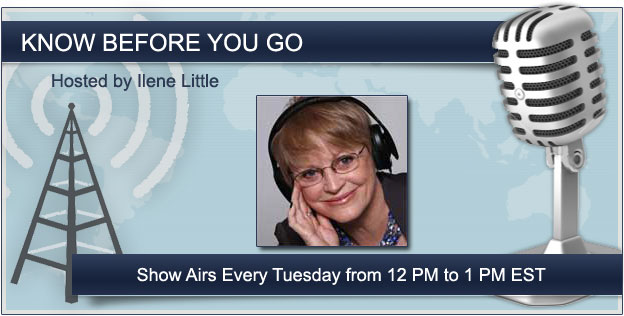
The file download for the latest radio program, “Know before you go” with Ilene Little is available.  It’s from the Christmas broadcast with Dr. Freddy Sanabria.

Image courtesy of Ilene Little

Image courtesy of Ilene Little

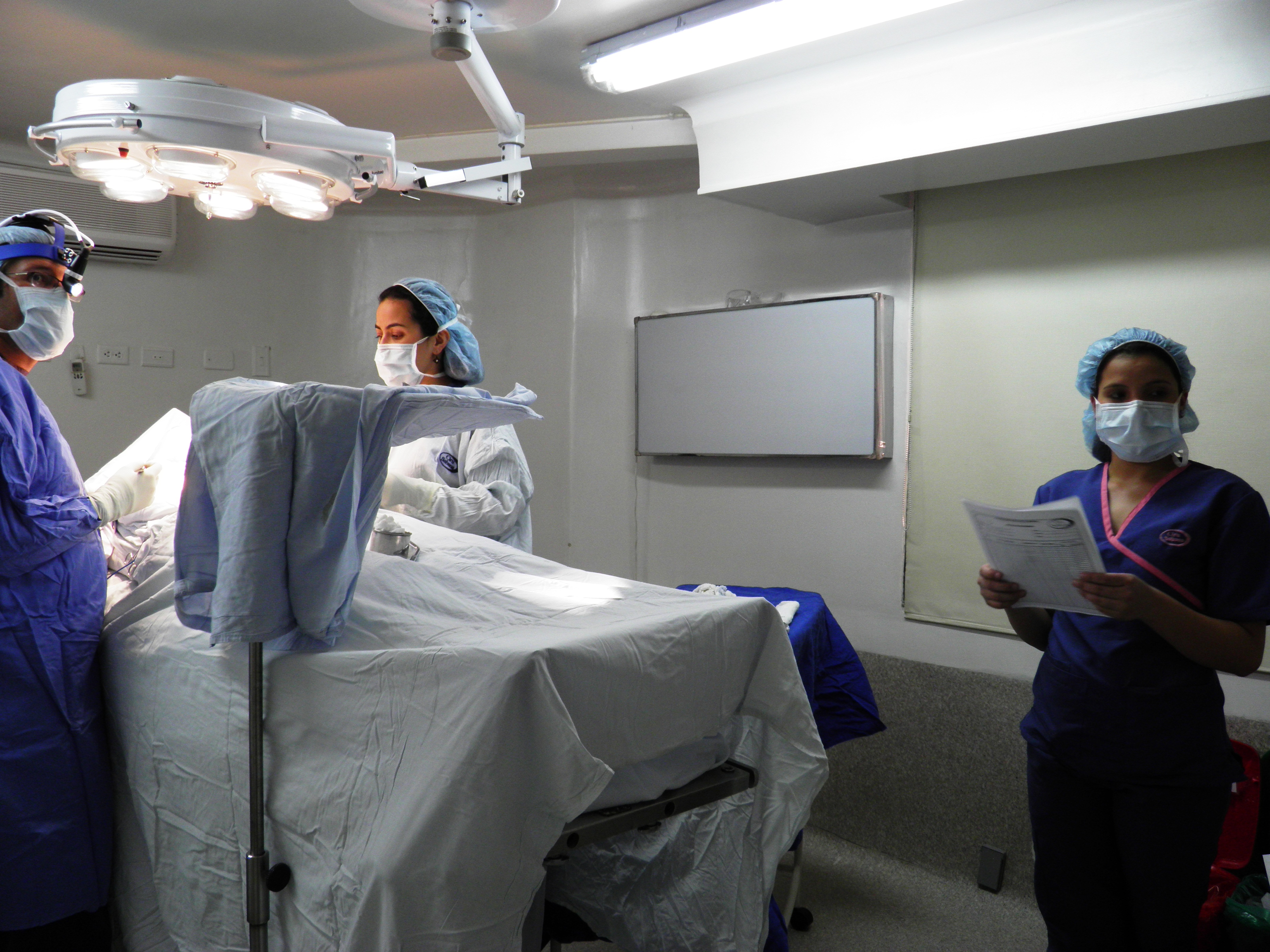
(I am on the periphery of the show – introducing Dr. Sanabria and talking about safety guidelines and intra-operative safety protocols.  (Same stuff I talk about here – just a different medium.)

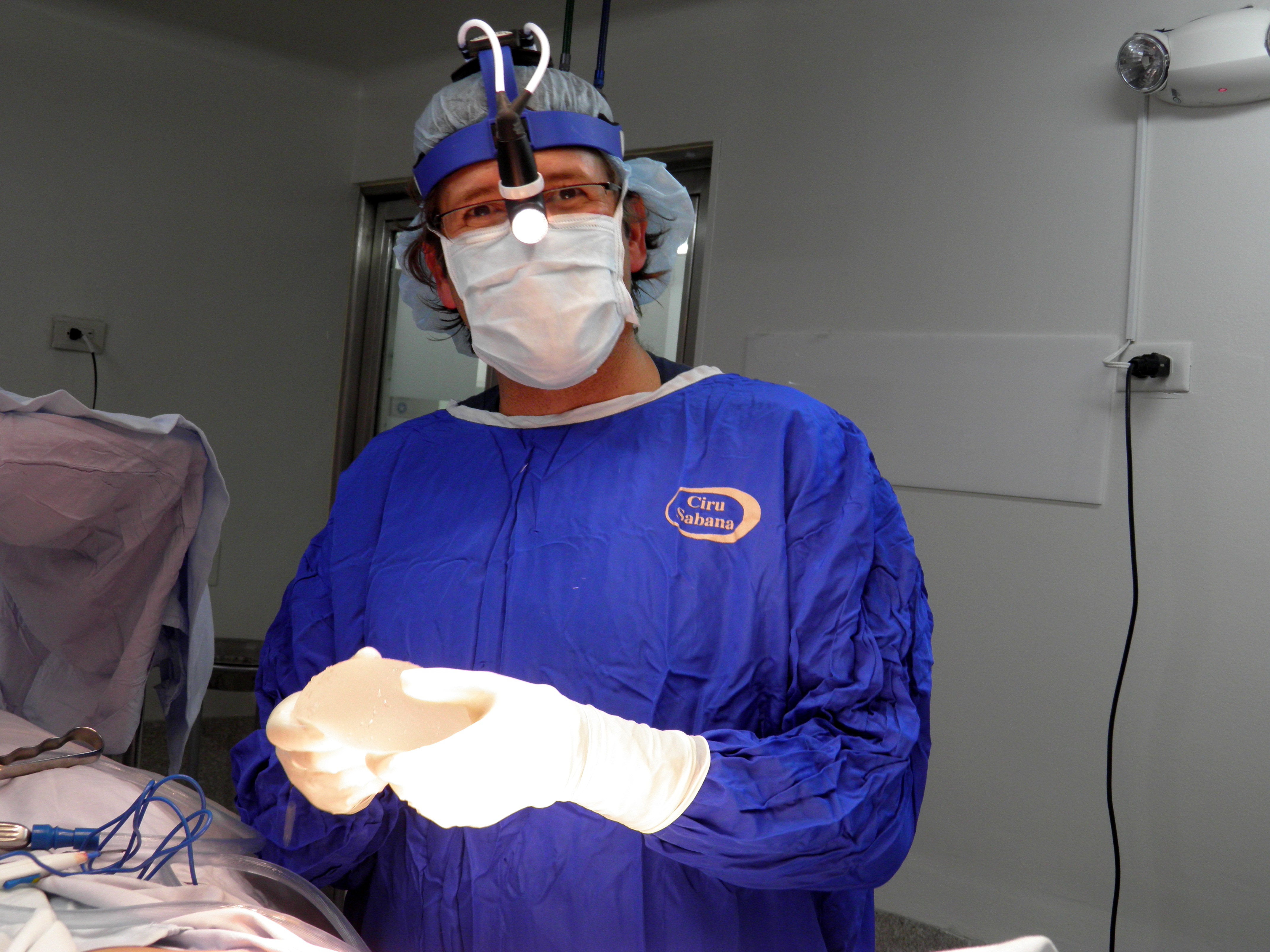
Sanabria, breast implant

Dr. Sanabria, plastic surgeon

Dr. Sanabria joined us to talk about his experiences, and his clinic in Bogotá, as well as his ongoing projects and  patient safety protocols.  It was nice to be able to share some of my observations from my visits to his operating room.

safety checklist

Click here to connect to the Radio show archives

Dr. Alejandro Jadad and Jose Vergara


Much thanks to Jose Vergara  for sending me a link to an article on Dr. Alejandro Jadad.  Jose Vergara, aka Frankie Jazz, as some readers may remember, is a Cartagena native and talented artist in his own right.

Frankie Jazz/ Jose Vergara

Frankie Jazz/ Jose Vergara

We try to keep up with each other – so he knows all about my interest in Colombian medicine and surgery, and I love his new album (so I try not to gush and be too much of a groupie when I hear from him) but he recently sent me a link to one of his more recent projects.   The Voxxi article by Silvia Casablanca is pretty interesting, so I wanted to share it with readers.

For starters – Jose Vergara is the photographer for the article..

Dr. Alejandro Jadad, MD, PhD

But it’s the life of Dr. Alejandro Jadad that is so inspiring..  Dr. Jadad is a Colombian anesthesiologist, textbook author and founder of the Centre for Global eHealth Innovation in Toronto, Canada (among other things).  He has been credited with being one of the major innovators in the fields of clinical research, medicine and information technology.

While at Oxford, as a research fellow in Anesthesiology, he developed a validation tool (the Jadad scale) to critically evaluate and analyze clinical research studies.  This is an important tool to distinguish the quality (and value) of individual research studies – or how much weight a study (and its findings) should have.   We talk about the importance of objective scales and measures quite a bit here at Bogotá Surgery, and the Jadad scale is one of the best known and most widely used scales for clinical research.

Clinical research is how surgeons know whether a patient has a better chance for survival with surgery or chemotherapy/ radiation, for example.

So as you can imagine – having a tool like this is particularly vital when talking about clinical medicine / or health research where the findings of research studies are used to guide and determine medical decisions – aka the medical treatments for people like in our example above.

As the Casablanca article points out – Dr. Jadad didn’t stop with writing textbooks and creating the Jadad scale.  After completing his fellowship in the United Kingdom, he moved to Ontario, Canada to continue his research at McMaster University.   Since then, he has continued to innovate and create tools to help both clinicians and the public.  One of the ways he helps clinicians is by further creating and refining tools to evaluate medical research.

He has also been a major creator and contributor to the development of internet and computer based applications to connect doctors and their patients.  His efforts are based on more that the patient – provider dyad, and are part of a larger, global framework for reforming and transforming healthcare.

More about Dr. Alejandro Jadad, MD, PhD

Casablanca, Silvia (2013, January).  Dr. Alejandro Jadad: Redefining health and  making it global.  Voxxi [on-line article].

(Canadian) Pioneers for Change

Making Longer Life Worth Living“, lecture by Dr. Jedad at Singularity webblog as part of the ‘Singularity University lecture’ series.

More about Jose Vergara / Frankie Jazz

Frankie Jazz – wikipedia page

Vimeo page

Let Me Take My Way – which is one of my personal favorites…

The HIPEC calculator


We’ve talked a lot about HIPEC here – but we have not really talked about the risks of treatment.  While we mentioned the arduous nature of the procedure itself, we’ve left more in-depth discussions to the oncologists.

Now researchers at the National Institute of Health have developed a tool to help clinicians and their patients determine the risks of HIPEC.  In an article published over at Surviving Mesothelioma, the authors discuss their recent study and the results.  Since the procedure itself carries significant mortality – the calculator offers an important tool for determining who the best candidates are for successful treatment with this procedure.

Original Article:

Schaub NP, Alimchandani M, Quezado M, Kalina P, Eberhardt JS, Hughes MS, Beresnev T, Hassan R, Bartlett DL, Libutti SK,Pingpank JF, Royal RE, Kammula US, Pandalai P, Phan GQ, Stojadinovic A, Rudloff U, Alexander HR, Avital I. (2012).  A Novel Nomogram for Peritoneal Mesothelioma Predicts Survival.  Ann Surg Oncol. 2012 Dec 12

Follow up on wrong-sided surgery


We recently mentioned Dr. Denise Crute, an American neurosurgeon in a November blog post, Wrong-sided surgery.  We quoted News of the Weird as our source, with the original source being ABC channel 7 news.  We mentioned her story to illustrate the importance of safety checklists in the operating room.  It would have stopped there, but now we’ve received a threatening letter from a lawyer in Phoenix, Arizona representing Dr. Crute.  (Since we last heard that she was practicing in New York – the Arizona lawyer must be for my benefit.  I wonder if she would have hired a Colombian lawyer if she realized that’s where I spend the majority of my time.)

Harming her reputation?

Her lawyer claimed that by republishing this information that I am liable for damages  caused by the harm to her reputation.

In my opinion, she’s blemished her reputation all on her own (but I’ll let you read the letter for yourself).

To make it easy on everyone – I’ve also linked to my original post, which was a quote from Mr. Shepherd, who stands by his story.

In my defense – Truth is the truth

I think my statements are fair, accurate criticism, particularly given the known facts of the case.  Now, the last thing I want to do is report something erroneously.  After all, I stake my reputation on my honesty and integrity, so if I have made a mistake – I will freely admit it – and will happy display it in ALL CAPS here on the blog.    Not only that, but I will happily travel out to see Dr. Crute and interview her for the blog, so she can set the record straight – if it needs correcting.  But I can’t be cowed by an angry surgeon looking for an easy target.

Litigious behavior doesn’t change the facts

Notably, the lawyer’s letter doesn’t even address the accuracy of the claims against her. But I did see her own personal blog, where she has a one page statement addressing the charges, so I will link to it here.  In it she claims to have been the victim of a one-person driven witch hunt.

Yes, that could happen – but the breadth and width of the charges (hundreds) and the collaborating witnesses in the statements argues against it in this case.

Now, the initial report to the medical board may very well have been the result of professional jealousies, or whatever, as Crute and her legal team claim.  But there are so many charges – with multiple supporting witnesses that it seems highly unlikely.

Her main argument is against the neurosurgeon that helped the medical board evaluate the claims.  She chalks up his decisions and statements against her behavior to competition, since she is the superior surgeon, apparently.  Fine, but that doesn’t account for the majority of charges which have nothing to do with actual surgery – but with the ethics of her practice.  (You don’t have to be a neurosurgeon to know that altering a patient chart and falsifying data is wrong.)

Another point to consider:

But it also may have also taken another neurosurgeon who was finally bold enough to speak up against repeated, repeated and repeated episodes of unprofessional, dangerous and injurous behaviors.

In fact, a recent poll of 24,000 physicians demonstrates the reluctance of doctors to criticize their colleagues.  The Medscape 2012 Ethical Dilemma Survey results showed that just 47% of physicians would caution a patient about a colleague they felt was practicing ‘substandard’ medicine.

While her statement makes it sound like these sort of complaints against providers and surgeons are common – they really aren’t.

While it may seem so for Dr. Crute (and neurosurgeons do have a high rate of malpractice), for another colleague, several nurses and the surgeon’s own PA to make these statements about Dr. Crute to a medical board means that it was more that a personality conflict.

Not having her license stripped away is not proof of innocence.  In most states, medical boards offer disgraced physicians the opportunity to inactivate their licenses.  It’s similar to hospitals (and other organizations) allowing  doctors, CEOs and such, to resign instead of being fired outright.  This practice has been clearly established and well-documented in several notable cases.

Doctor’s story led to changes in the Colorado Board of Medicine

In fact, many say that the recent stories about Dr. Crute (by Denver reporter, Ferrugia) have prompted changes in the licensure and disciplinary processes at the Colorado Medical Board.

But it’s more than that – attacking my blog for using well-publicized and reprinted information (available at multiple sources) to illustrate a discussion here on patient safety, just seems to me like bullying, especially when there are twenty other articles about Dr. Crute on much larger websites with a lot more viewers.  So I also contacted Mr. Ferrugia and Mr. Shepherd (of News of the Weird) to see if they, too, had been contacted by Dr. Crute and her legal team.  No, they haven’t.. Just me.

This makes me suspect that this entire letter/ episode is just an attempt to bully someone smaller and less powerful, and that’s what makes me angry.  This would have been a good opportunity for Dr. Crute to rectify the record, if that’s truly the case (especially since legal action and media coverage appears to have ramped up in the last few days with more and more articles over the last week)  but she doesn’t appear interested in that.  (If she had, we would be seeing retractions from the other writers involved).

But – check out her site, read her defense, and let me know what you think.  It is also worth noting that despite all the ‘glowing’ quotes she has on her website, she doesn’t appear to be operating on patients in her new position.

I’m not sure that the fact that she volunteers or donates supplies to Central America holds any relevance to the discussion – but she put it out there, so I’m reporting it.

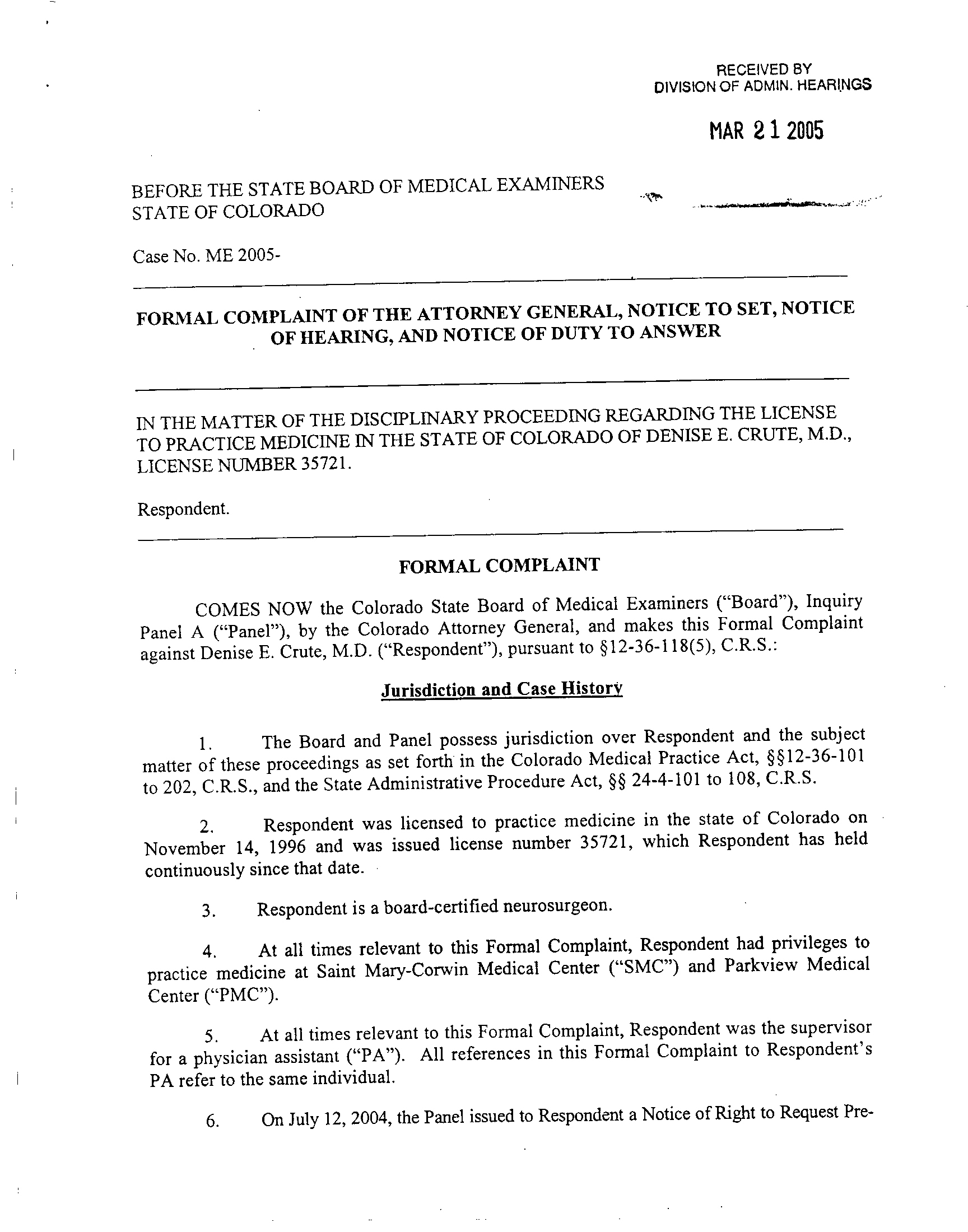
 Dr. Crute settlement agreement

documents related to medical practice

In the meantime, I stand by my statements in reference to safety checklists, etc. that a ‘time-out’ for patient safety can prevent many of these errors that are documented in the original papers, such as in 2004 when she performed wrong-sided brain surgery – which she is accused of, along with   then attempting to cover-up in her documentation (and actually had the gall to say that the patient “marked” the wrong-side.) The patient had a right subdural hematoma (and according to the notes on page 7 of attached document) – was in no condition to consent/mark or otherwise make any medical decisions.

Read the original documents – and see if it paints a portrait of someone who did whatever she wanted, when she wanted and thought that she could get away with it – like when she failed to come see an emergency surgical consult at night*.  She gave a telephone order for intubation, and still didn’t bother to come see this critically injured patient.   Then, after it was too late – came by at 7 am in the morning, and back-dated her notes.  (Yes, patient died).  Unfortunately, there is no checklist to address such an ethical lapse.

But in the spirit of honesty and integrity, and in pursuit of the truth, I have contacted the reporter of the original story, John Ferrugia to see if there have been any story updates, retractions or corrections. (Mr. Ferrugia also provided the supporting documents.)  I also offer Dr. Crute the opportunity to give a statement here.  She knows how to contact me, and apparently she’s reading the blog.

But – this isn’t what my blog is really about – so we will get back to our regular topics, like surgical checklists and surgical apgar scoring – on our next post..

Supporting documents – Mr. Ferrugia:

Dr. Crute 1

Dr. Denise Crute 2

Additional articles

Dr.Crute article by Melissa Westphal

* Just one of many incidents documented in the original documents.

Smartphones and Facebook in the operating room


I hope everyone enjoyed posts about Colombian life and culture, but now that I am back in the United States – we will get back to our more serious discussions about patient safety and issues in health care.  One of the things we have talked a lot about in the past – and cover extensively in the Hidden Gem book series is operating room quality and safety measures.  This includes using objective measurement tools such as the Surgical Apgar score (created by physician and author, Dr. Atul Gawande) and the safety checklist.

Surgeon as pilot 

These checklists were designed to be similar to the mandatory checklists used by pilots.    They were originally designed in the 1930’s to prevent pilot errors and accidents as planes become more and more complex.

Tools to measure and improve practice

These tools do more than just rate (or grade) operating room safety procedures – they encourage a ‘culture of safety’ and adherence to practices and procedures designed to prevent errors or mistakes.  This means that the more people use (and become familiar with) these practices – the better they get at detecting and preventing errors.

The importance of these checklists has been recognized for years, but is just now gaining in traction. It wasn’t until 2009, that the World Health Organization recommended use of the checklist in hospitals internationally.

Checklists and hospital reimbursement

American hospitals now use the checklist religiously because ‘core measures’  – and reimbursement are tied to its use.  These ‘core measures’ were established a decade ago as part of quality assurance procedures for Medicare and Medicaid.  American hospitals that do not participate (or score poorly) on core measures such as surgical safety procedures – risk not getting paid for their services.  (There are core measures for other patient care items as well, such as the care of patients having a heart attack, or pneumonia).

Surgical Apgar Score

The surgical apgar score, (and similar scales) have been slower to catch on.  This is unfortunate in my opinion, because this tool has the greatest chance of really improving patient care and preventing patient harm.  The surgical apgar score works by basically rating and grading the actual care of the patient in the operating room.

When consumers think about patient care in the operating room – we tend to focus on the surgeon.  But surgery and surgical skill are only a part of the picture.  The anesthesiologist/ nurse anesthestist and anesthesia care team are critical to the safety and health of the patient – and their inattention / or distraction can be disasterous for patients.  But even when disaster is averted – frequent distractions can lead to increased complications.  Sometimes the effects are subtle; such as twenty or thirty minutes of ‘borderline’ low blood pressure and post-operative organ dysfunction from intra-operative ischemia.

But is anyone paying attention?

But is anyone paying attention?

We all know it happens, but too many anesthesiologists are busy playing on Facebook to address the realities of the situation.

Unfortunately, this is a common problem in operating rooms worldwide

Unfortunately, this is a common problem in operating rooms worldwide

None of this is news to long-time readers, but several new articles confirm the utility of safety checklists and operating room safety practices.  (One of the articles somewhat ironically reports that injuries to patients were not as reduced as anticipated by previous studies – because the checklist was not always used / or used correctly.  The authors note that the checklists reduced patient injuries and complications – when they were actually used.


Additional posts on this and similar topics:

Reputation, Ranking and Objective measures – talking about the ‘core measures’.

More about the surgical apgar score – from our sister site.

The original Surgical Apgar score

Additional references

I will be updating this section frequently over the next few days.

Medscape summary articles:

Hilt, Emma, (2012). Surgical checklist from WHO improves safety and outcomes.  Medscape, November 2012.

Source articles:

Fudickar, A., Horle, K., Wiltfang, J. & Bein, B. (2012). The effect of the WHO surgical checklist on complication rate and communication.  Dtsch. Artztebl Int 2012, 109(42): 695-701.  The authors of this German paper examined / analyzed 20 different studies looking at the use of surgical checklists.

Jorm CM, O’Sullivan G. (2012). Laptops and smartphones in the operating theatre – how does our knowledge of vigilance, multi-tasking and anaesthetist performance help us in our approach to this new distraction?  Anaesth Intensive Care. 2012 Jan;40(1):71-8.

Patterson P. (2012). Smartphones, tablets in the OR: with benefits come distractions.  OR Manager. 2012 Apr;28(4):1, 6-8, 10.  [no free full text available].

Pereira, Bruno Monteiro Tavares et al. Interruptions and distractions in the trauma operating room: understanding the threat of human error. Rev. Col. Bras. Cir. [online]. 2011, vol.38, n.5 [cited  2012-12-18], pp. 292-298 .

Techo por mi pais with Team Sanabria


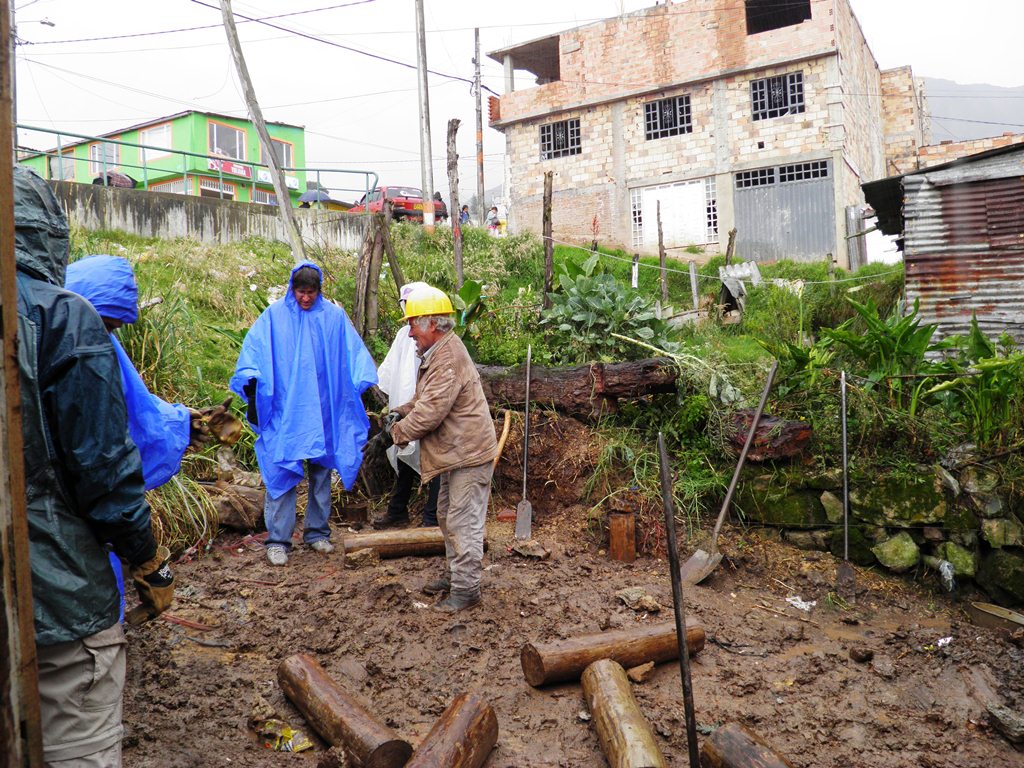
Just a week ago, I was ankle-deep in mud in the southern-most reaches of Bogotá, with ‘Team Sanabria’ as they completed another house as part of “Techo por mi pais”, which is an organization very similar to Habitat for Humanity.

O

A couple of weekends each year, they donate their time (and hard labor) to build homes for many of Bogotá’s poorest residents.

O

It’s arduous work – which is more difficult given the frequent rain and adverse weather conditions in the hills above Bogotá.

O

I wrote a short story about their efforts over at Examiner.com  – but I wasn’t able to include all of the pictures, so I wanted to post some of them here.

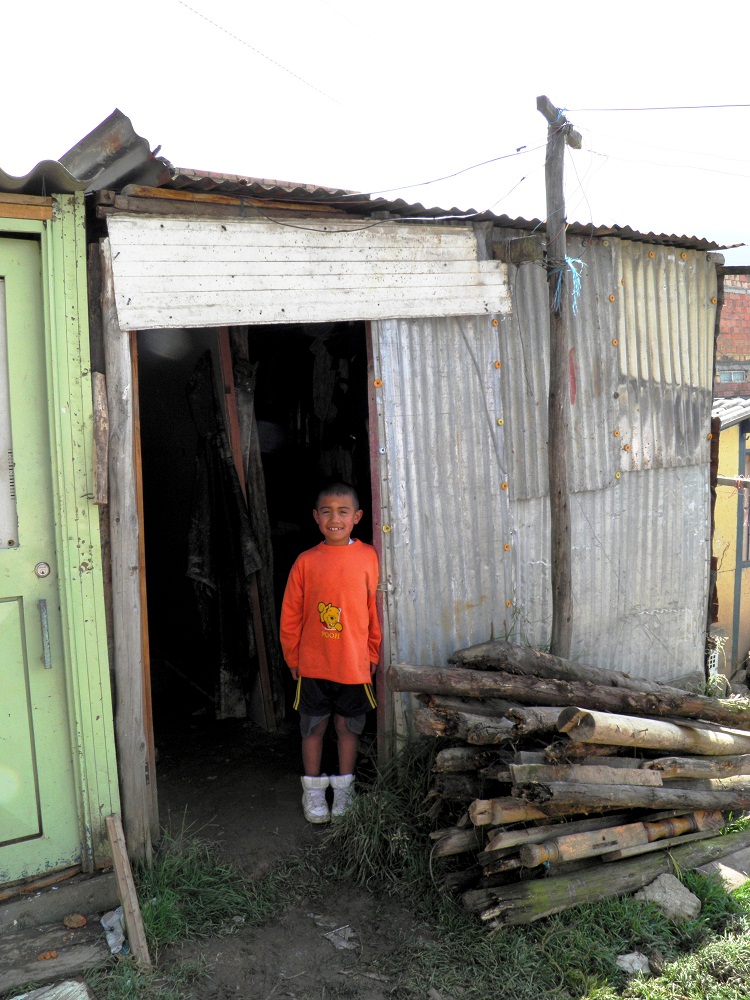
Juan Jesus' grandson stands in the doorway of his modest home

Juan Jesus’ grandson stands in the doorway of his modest home

The family they were building the house for on this occasion was exceedingly sweet, gracious – and willing to wade into the muck with the rest of the team.

OThe organization, is much bigger than just Team Sanabria, so all in all – about fifty houses were built that weekend.

Volunteers carrying supplies to another site

Volunteers carrying supplies to another site

O

laying foundation for Juan Jesus' new house

laying foundation for Juan Jesus’ new house

O

It costs about 1500 dollars to construct one of the basic 3 meter X 6 meter homes.

O

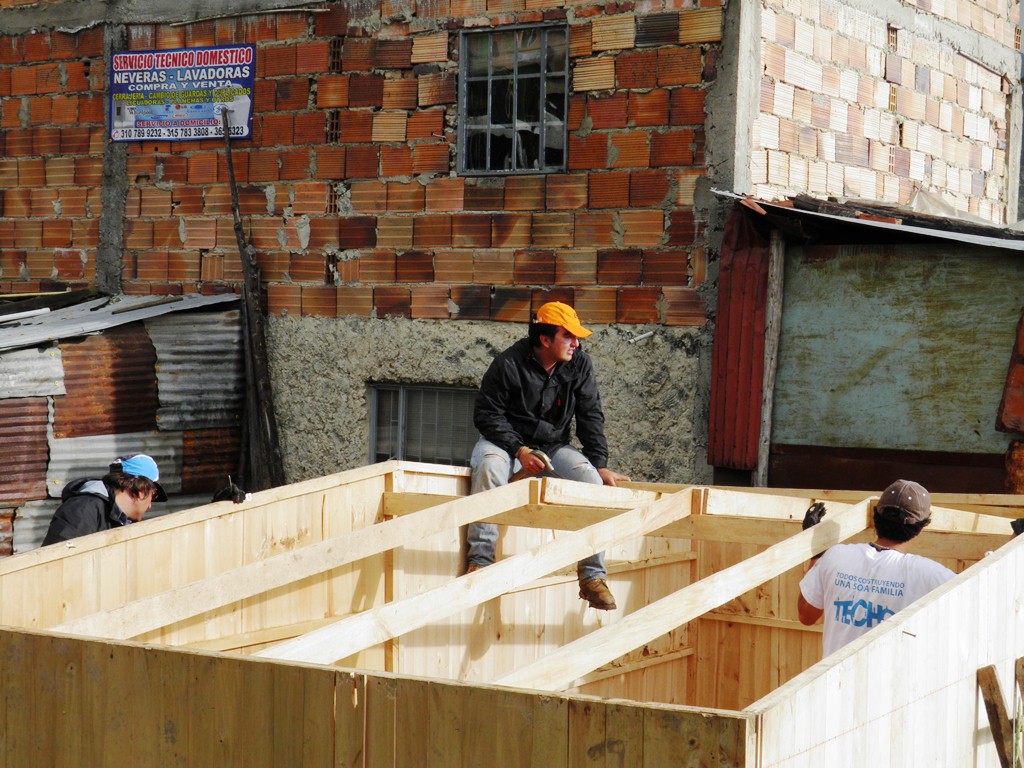
Here the foundation, and flooring has been completed – and they are getting the walls into place.

O

Luckily, the rain didn’t start again until most of the walls were completed.

O

It was an excellent chance to see a side of Bogota that most visitors never to get see – and to meet many of the residents of the neighborhood, so I was very glad they invited me to join them.

a group of beauty school students stop by to check on the progress.

a group of beauty school students stop by to check on the progress.

It also gave me a chance to get some other pictures of the neighborhood – of things we don’t often think about when we see or hear about poorer neighborhoods (or slums).

O

Like the rose bushes that residents plant to brighten and beautify their homes.

well kept home with flowers

well kept home with flowers

O

Or the full herb garden, Juan Jesus’ neighbor planted (and shared with us) in her immaculately kept and fenced yard.

O

I think sometimes, the overwhelming poverty makes it hard for outsiders to notice the little spots of beauty in places like this.  But it gives me hope – and it shows the resilience of human nature.

O

I think it’s also important right now, while our own country is hurting too.. With all of the divisions and politics – particularly in the aftermath of the elections, sometimes we forget to put a face on the people who are living in more marginal circumstances – due to unemployment, etc.

OLYMPUS DIGITAL CAMERA

We hear so much about fraud, waste and abuse of social programs that we forget about the real people who desperately need these services.  Now, I am not some hippie advocating for radical political change.

I am just a nurse, trying to find the people who sometimes get forgotten in the middle of all this.

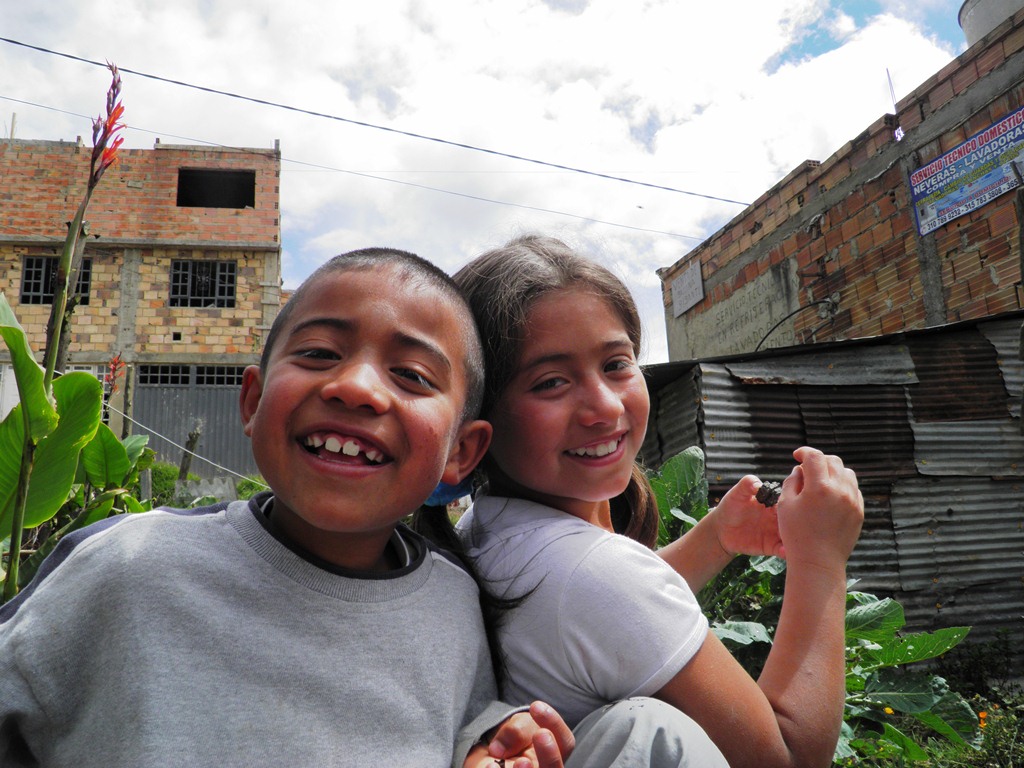
kids in the barrio

kids in the barrio

Talking to Wilmer Villa Miranda of Arte & Glamour


I am back in Mexicali (for the time being) but I was so busy during the last few weeks that I didn’t get to finish some of my posts talking about the interesting people I’ve met – and places I’ve seen..  I certainly don’t want to skip over Wilmer Villa.

Wilmer

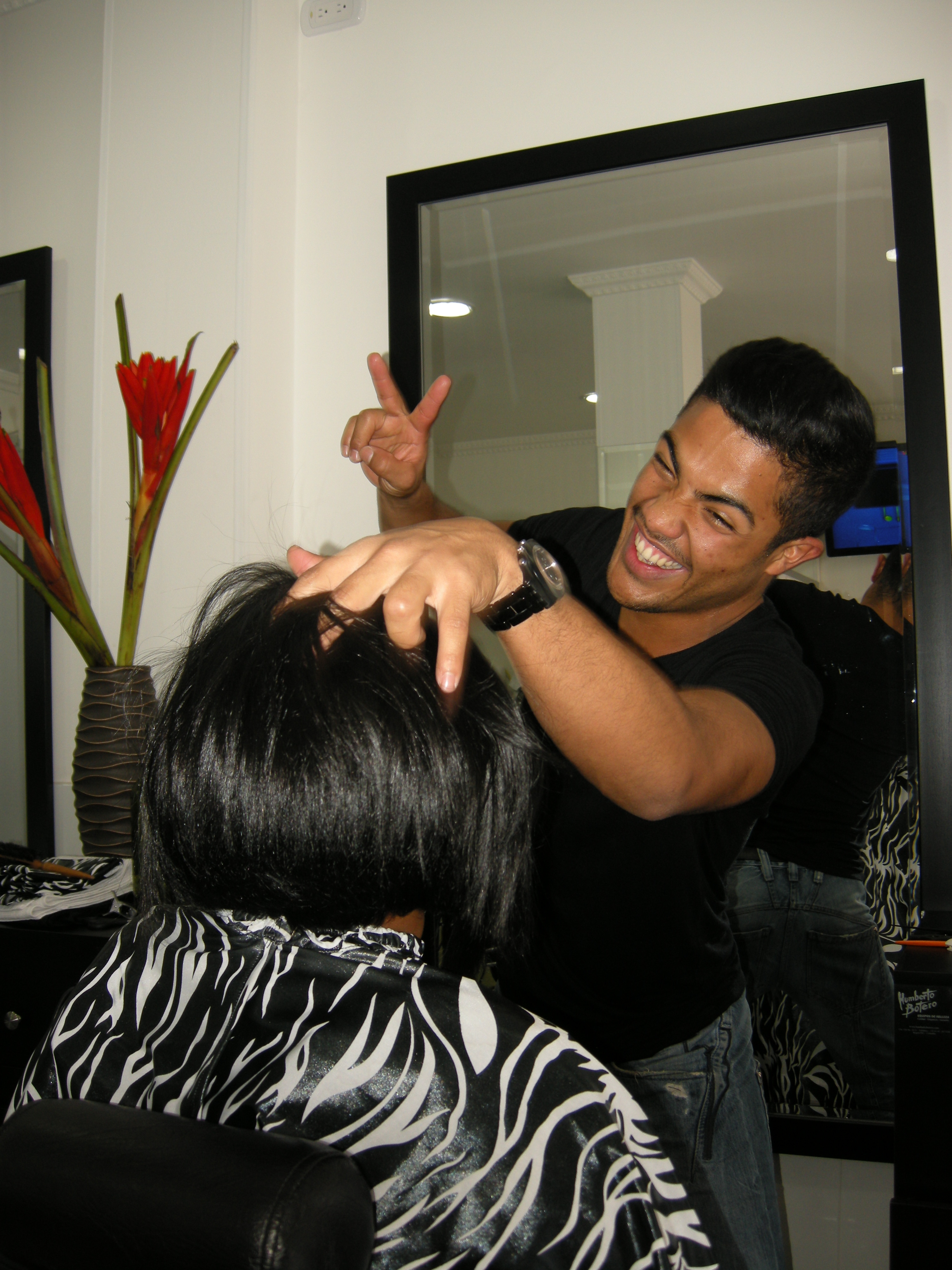
He’s not famous, nor is he a surgeon – but just like so many of the people I’ve met in Colombia – he has a story to tell.  It’ didn’t start as an interview, but then it rarely does – it started out as a visit to a salon on Calle 115 No 59 – 35 with a friend.  But as Wilmer talked about his new salon (his first), and we celebrated the one month anniversary of his shoppe, a story started to  form.

No, he hasn’t invented a cure for cancer – or even a way to arrest the  relentless aging  process.  But he has managed to create a tranquil little spot in the middle of Bogotá for people to come and enjoy themselves for a few hours.

It hasn’t been easy – but with the help of a good friend (and long-time client), Alcira Acosta de  Chaves, Wilmer was able to move out of the previous salon where he had a chair to establish his own salon.  It’s a dream that has been several years in the making – which is obvious as soon as you enter the salon.

Everything is immaculate; organized and set out in a classically elegant black/white and silver scheme that evokes the 1940’s heyday of glamour.  But it’s more than just a place for a haircut or a manicure, Wilmer. 27, states.  It’s the entire package – the total experience, he explains, as he pours a client a cup of herbal tea.

“People can come here and get away from all the negative, and the stress [of their daily lives.]  We are here for more than just hair, and make-up. we are here for laughter, smiles and good times with friends.

His cheerful attitude is infectious, and as clients come in, he and Almira take time to explain the philosophy of the shop, and the experience.  “I want this place to be different” – it’s not a place for catty remarks, or cutting down of self-esteem.  It’s not about malicious gossip or sarcasm, ” We don’t need any of that here,” he says.  “It’s a place for people to form long-term relationships, share celebrations, milestones and happy events,” he adds.  And he means it – as each person enters, he greets them by name, they share a smile or a silly story.

It’s nice – and certainly different from many of the other salons in the area.  It isn’t about the up sell, or preying on women’s insecurities about their looks to sell services*.  They seem to genuinely enjoy their customers and in making their clients look and feel their best.

wilmer2

About Wilmer:

Wilmer, the child of a Colombian mother and a Venezuelan father, was born Cucuta, near the border.  He grew up in Chinacota, Colombia near the border with Venezuela.  He attended cosmetology school in Perico before coming to Bogotá.

After finishing school, he come to Bogotá to apprentice with several well-known stylists such as Hernan Abandano, and received a scholarship for additional training as a colorist.  He eventually received international certifications as a stylist and colorist – and has been a stylist for seven years.

He talks about how these experiences have shaped his life, and his outlook.  “I like to meet people from different places, and hear more about their lives.  I am learning English because I enjoy meeting and talking to Americans – and hearing their ideas and perspectives.”

Maybe Wilmer isn’t changing the world – but he is making it a more pleasant place.

*There is nothing more disheartening in my opinion than going for a manicure than being offered, “How about if we fix your hair” or “some Botox for those wrinkles”.. Or some other, more personal reminders that beauty, particularly in Latin America, is sometimes seen as more important that what’s inside.

J. O’Shaughnessy


Some of you have heard me talk about my friend, Jo O’shaughnessy before.  She’s a fabulous photographer that I met here in Bogotá.  (Told you there are always interesting and great people to encounter in this city.)

O

Jo has started a new blog, but she’s still getting the hang of it – so when she sent me one of her pictures of ‘Bogotá life’ – I told her I will be thrilled to share it.  She is more than a photographer – she has the instincts and the artist sensibilities to see what other people overlook.

The next picture is a perfect example of that.  On a rainy day in Bogotá – Jo looked out the window of a coffee shop and saw this man.  He’s one of hundreds of scrap collectors in the city – people who make their living, and eek out a survival by collecting and reselling much of what the rest of the city regards as garbage.  Like garbage, most people don’t even see the scrap collectors. They just become part of the city landscape, pulling their carts through traffic and enduring all sorts of conditions.

Few people stop to think about it. Fewer still can capture that daily struggle.

DSCN5381

And then there’s Jo – whose heart is so big – and is practically chasing the man down the street to offer him her husband’s coat..

From news of the weird: Wrong-sided surgery


Admittedly, this is not where I usually look for information on medical quality and safety measures – but this case, as presented in News of the Weird for this week deserves mention:

Neurosurgeon Denise Crute left Colorado in 2005 after admitting to four serious mistakes (including wrong-side surgeries on patients’ brain and spine) and left Illinois several years after that, when the state medical board concluded that she made three more serious mistakes (including another wrong-side spine surgery).

Nonetheless, she was not formally “disciplined” by either state in that she was permitted merely to “surrender” her licenses, which the profession does not regard as “discipline.” In November, Denver’s KMGH-TV reported that Dr. Crute had landed a job at the prestigious Mount Sinai Medical Center in New York, where she treats post-surgery patients (and she informed Illinois officials recently that she is fully licensed in New York to resume performing neurosurgery). [KMGH-TV, 11-4-2012]”

This is an excellent example of the importance of the ‘Time-out” which includes ‘surgical site verification’ among all members of the surgical team.  This also shows some of the limitations in relying on the health care professions to police themselves.  Does this mean that I can absolutely guarantee that this won’t happen in any of the operating rooms I’ve observed?  No – but it does mean that I can observe and report any irregularities witnessed (or deviations from accepted protocols) – such as ‘correct side verification’ or failure of the operating surgeon to review medical records/ radiographs prior to surgery.

It also goes to show that despite lengthy credentialing processes and the reputations of some of the United States finest institutions are still no guarantee of quality or even competence.

What about Leapfrog?

This comes at the same time as the highly controversial Leapfrog grades are released – in which medical giants like UCLA and the Cleveland Clinic received failing marks.  (UCLA received an ‘F” for avoidable patient harm, and the Cleveland Clinic received a “D”.)

Notably, the accuracy of the Leapfrog scoring system has been under fire since it’s inception – particularly since the organization charges hospitals for the right to promote their score.

But then – as the linked article points out – so do most of the organizations ‘touting’ to have the goods on the facilities such as U.S. News and Reports and their famed hospital edition.

Guess there aren’t very many people like me – that feel like that’s a bit of a conflict of interest..

Going home..


After a whirlwind three months that included trips to Chile, Bolivia and different cities in Colombia, I am getting ready to come home in a few days.  As always, leaving Bogotá is bittersweet.  I miss my friends, and my family but I will also miss the city and all of the nice people I’ve met here.

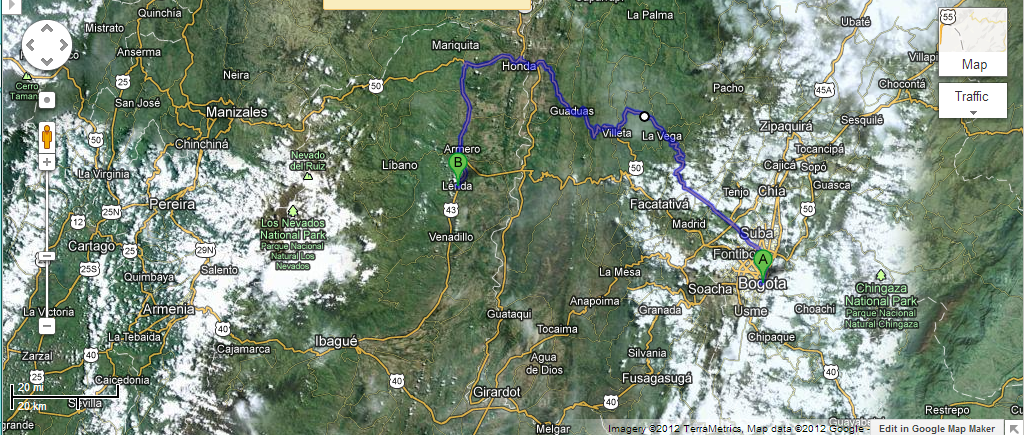
I am posting a map of Colombia, so even though I’ve taken several trips – you can see that I haven’t really explored the country at all. (I’ve posted little push pins on the areas I have visited.)  I excluded Facativa and some of the closer towns since they are really just suburbs of Bogotá, and it would just clutter the map.

Map of Colombia, courtesy of Google Earth

As you can see – I haven’t explored the southern part of Colombia, or the pacific coast at all.  My Atlantic adventures have been confined to Cartagena.  So, I guess this means, I still have a lot of work cut out for me on my next visit(s).

map showing central Colombia

But I hope that readers have enjoyed reading about my travels, the people I’ve met and the things I’ve seen.  Now – I know this is a medical/ surgery blog but since much of the surgery I write about is in this part of the world, I think that including some of my experiences is relevant/ interesting for people who read the blog.  Once I get back home, I’ll post some more articles on medical quality control and standards – and more of my usual dry fare.

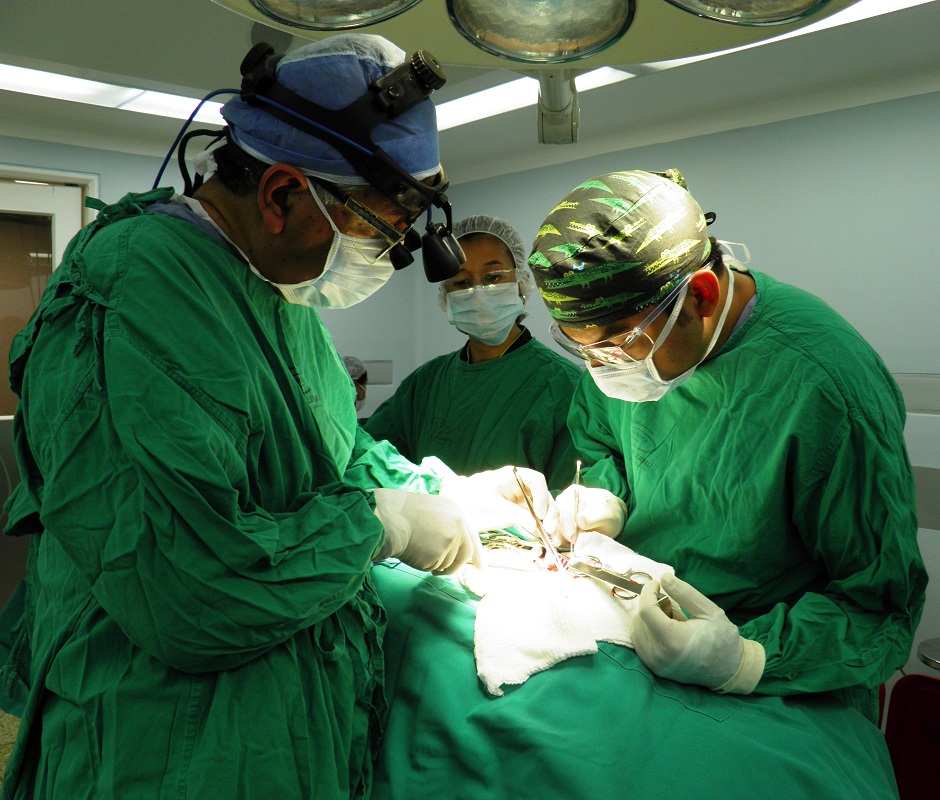
Dr. Alberto Martinez, Sports Medicine/ Orthopedic surgeon


Dr. Martinez (right) in the operating room

(Out of respect for patient privacy – I’ve done my best to crop the patient ‘bits’ from the photo.)

Spent some time last week with Dr. Alberto Martinez of Med-Sports Orthopedic Clinic here in Bogotá.  Dr. Martinez specializes in arthroscopic surgery of the hips, knees and shoulders.   As we talked about before, shoulder surgery is its own subspecialty in orthopedics due to the increased complexity of this joint.

We talked a bit about hip arthroscopy,which is still a relatively new procedure in orthopedics and the fact that one two surgeons in Bogota are currently performing this procedure.

Arthroscopy is the orthopedic minimally invasive counterpart to general surgery’s laparoscopy or thoracic surgery’s thoracoscopy.  It involves insertion of a camera and several tools through small (1 cm) incisions in the skin.  Arthroscopy itself has been used in orthopedics for many years but it is just now making inroads in hip procedures.

I’ll be publishing an upcoming article based on my observations over at ColombiaReports.com

For more information

Rath E, Tsvieli O, Levy O. (2012).  Hip arthroscopy: an emerging technique and indications.  Isr Med Assoc J. 2012 Mar;14(3):170-4.

Haviv B, O’Donnell J. (2010). The incidence of total hip arthroplasty after hip arthroscopy in osteoarthritic patients.  Sports Med Arthrosc Rehabil Ther Technol. 2010 Jul 29;2:18

The authors found that 16% of patients in their study eventually required hip replacement after hip arthroscopy during seven years follow-up.

Nord RM, Meislin RJ. (2010).  Hip arthroscopy in adults.  Bull NYU Hosp Jt Dis. 2010;68(2):97-102. Review.

Back to Bogota


After stuffing myself with lechona and tamal tolidense, swimming in the fresh crisp water of one of the local fincas, enjoying the controlled chaos of the market in Lerida and being overwhelmed by the tragedy of Armero – it was time to head back home to Bogotá.

Since it was Sunday, the roads were almost deserted, so we made it home in a fraction of the time it took to travel in the other direction. So much so, that we had plenty of time to stop and look around at more sites on the way home.

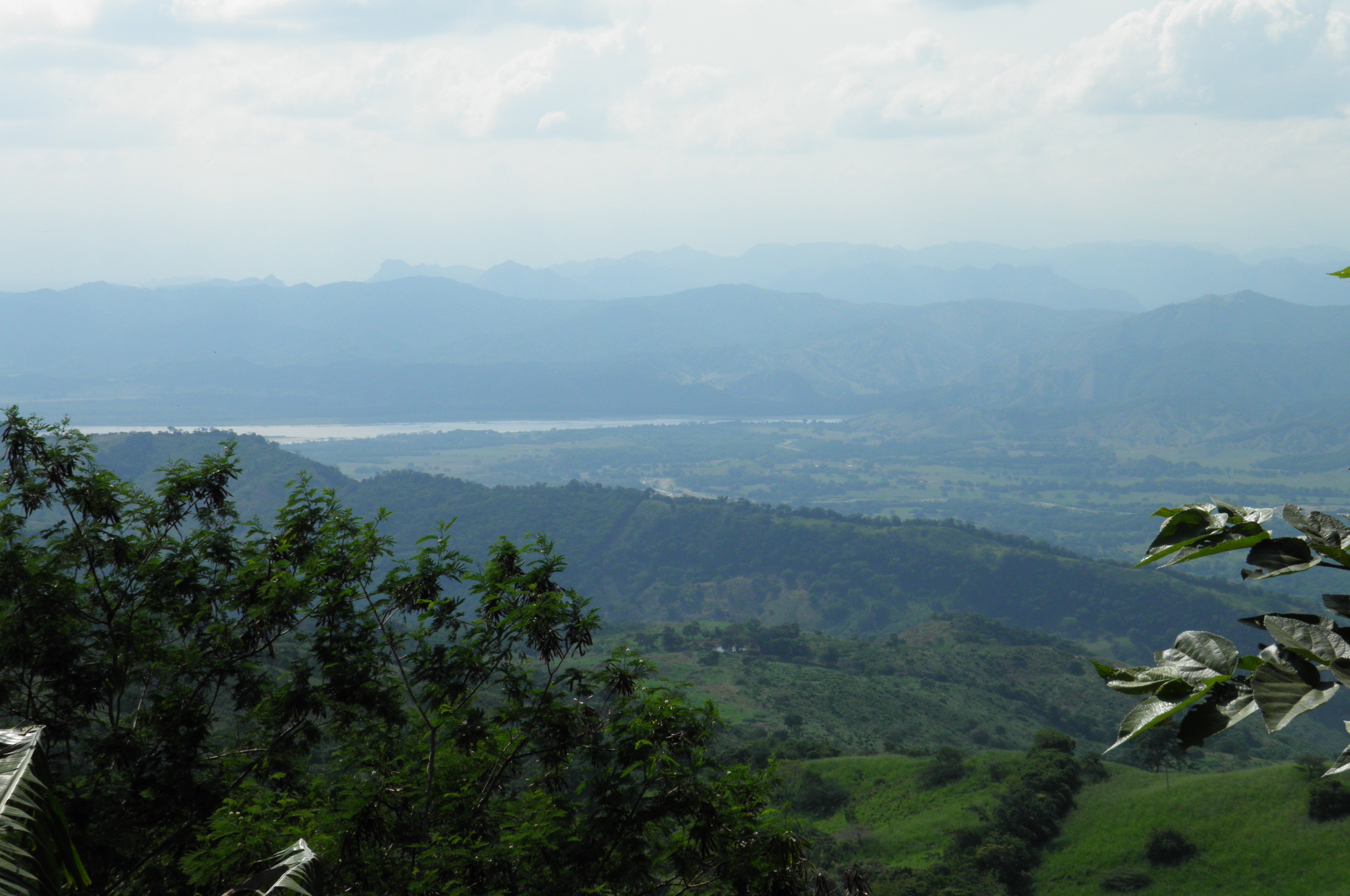
I got some great pictures of the drive – heading up into the cool mountains.

the valley below

One of the more interesting places we passed once we returned to Cundinamarca was Guaduas.  Guaduas is a small city of about 30,000 that was the birthplace and home of one of Colombia’s most famous women (no, not Shakira but “La Pola”.)

The city was founded in 1572 and was a well-used and frequent stop for travelers from Bogotá to more outlying areas like Tolima.  Now one of its main claims to fame is Policarpa Salavarrieta or “La Pola” as she is known.  Her likeness and name currently adorn a local bakery in Guaduas.

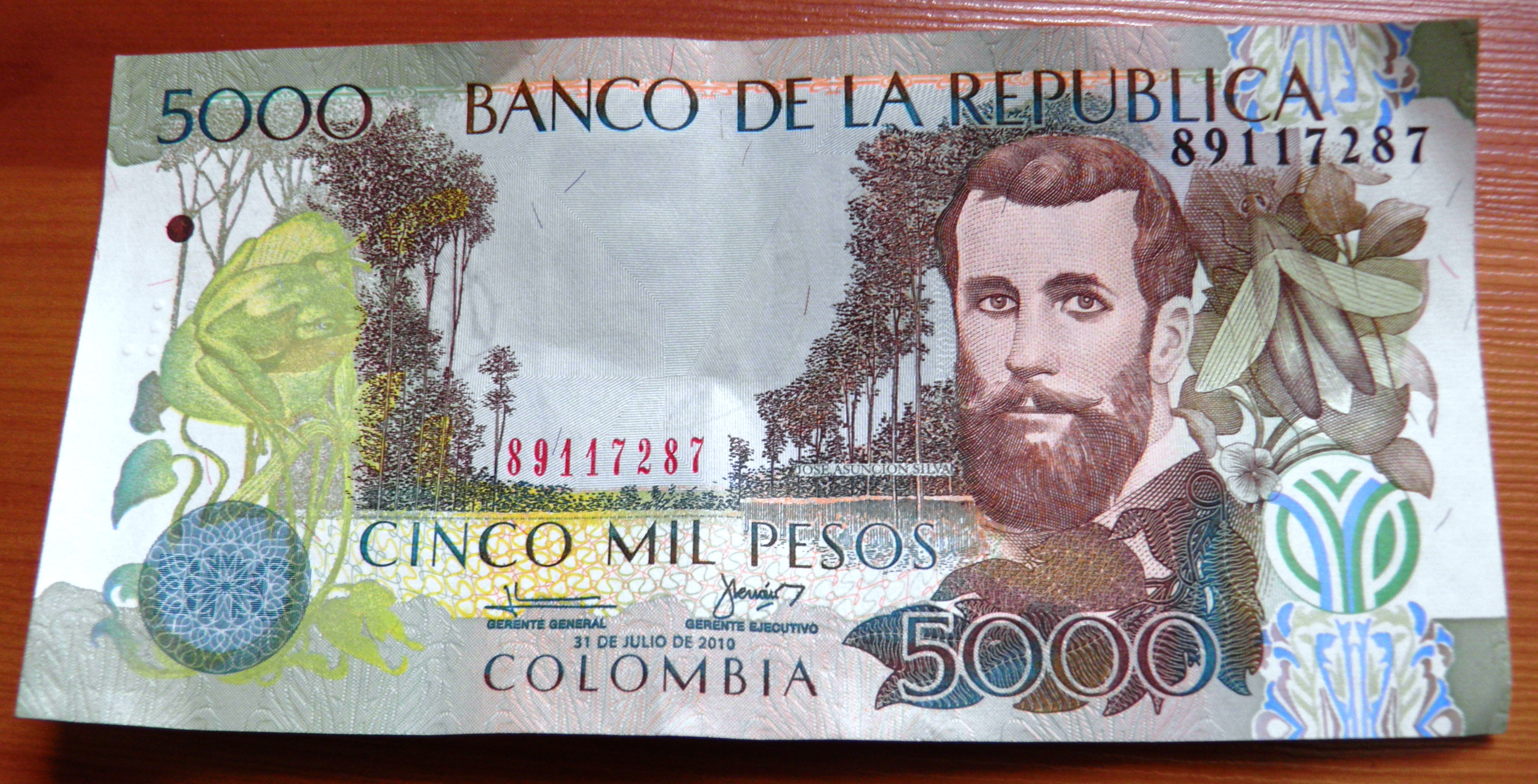
Ms. Salavarrieta (1795 – 1817)  is considered one of Colombia’s heroes (or heroine) for her role in the Colombian revolution.  She is the only female to be honored on Colombian currency (in multiple different designations over the years.)  She currently decorates the 10,000 peso bill, but was also on coinage in the past.

After being orphaned by a smallpox outbreak, she moved to Bogotá where she was able to sneak in and out of Bogotá (which had tight security under the Royalist regime).

She was a seamstress who used her sewing talents to gain access to the homes of staunch Royalists and eavesdrop on their conversations.  She also stole documents and spied on military officers and recruited others to the revolutionary cause.

Unfortunately, after the capture of one of her fellow revolutionaries, she was arrested, tried and executed along with her lover and several others on November 14, 1817.  She was reportedly defiant even as she was led to the firing squad, and refused to keep her back to her executioners – turning around to face them as they shot her to death.

To commemorate her actions to assist the revolutionary efforts, in the late 1960’s, the Colombian government designated her birthday as “Day of the Colombian Woman.”

After learning more about La Pola from my guide, we continued to Faca (Facativa), a city just outside Bogotá to visit one of the fincas that used to be in the family.  Faca is best known for its native roots, and the many indigenous carvings, paintings and sculptures that were found during archeological excavations.  Faca is primarily a farm town – and is surrounded by several large fincas with livestock and different agricultural products including flower cultivation.

From there – we cruised on into Bogotá; where as much as I enjoyed my journeys, it felt great to be home.

Jose Asuncion Silva, the poet and 5 mil


There are several poems named Nocturne, and a I, II and III.  Nocturne III is the one on the bill – but his simply named Nocturno is my favorite.

“Nocturno” 
Oh dulce niña pálida, que como un montón de oro
de tu inocencia cándida conservas el tesoro;
a quien los más audaces, en locos devaneos
jamás se han acercado con carnales deseos;
tú, que adivinar dejas inocencias extrañas
en tus ojos velados por sedosas pestañas,
y en cuyos dulces labios —abiertos sólo al rezo—
jamás se habrá posado ni la sombra de un beso…
Dime quedo, en secreto, al oído, muy paso,
con esa voz que tiene suavidades de raso:
si entrevieras en sueños a aquél con quien tú sueñas
tras las horas de baile rápidas y risueñas,
y sintieras sus labios anidarse en tu boca
y recorrer tu cuerpo, y en su lascivia loca
besar todos sus pliegues de tibio aroma llenos
y las rígidas puntas rosadas de tus senos;
si en los locos, ardientes y profundos abrazos
agonizar soñaras de placer en sus brazos,
por aquel de quien eres todas las alegrías,
¡oh dulce niña pálida!, di, ¿te resistirías?…

Lee todo en: NOCTURNO – Poemas de José Asunción Silva

the poet

  The poem is actual microprinted on the reverse side of the 5,000 peso bill but despite using my macrolens – it’s impossible to read – I can’t even verify exactly which version is printed here, though one of my sources says Nocturno III, the rest just say Nocturne.  But the bill itself is pretty impressive.

Nocturno III

Una noche
Una noche toda llena de perfumes, de murmullos y de músicas de alas,
Una noche
En que ardían en la sombra nupcial y húmeda las luciérnagas fantásticas,
A mi lado lentamente, contra mí ceñida toda, muda y pálida,
Como si un presentimiento de amarguras infinitas,
Hasta el más secreto fondo de las fibras te agitara,
Por la senda florecida que atraviesa la llanura
Caminabas,
Y la luna llena
Por los cielos azulosos, infinitos y profundos esparcía su luz blanca,
Y tu sombra
Fina y lánguida,
Y mi sombra
Por los rayos de la luna proyectadas,
Sobre las arenas tristes
De la senda se juntaban,
Y eran una,
Y eran una,
Y eran una sola sombra larga
Y eran una sola sombra larga…
Esta noche
Solo; el alma
Llena de las infinitas amarguras y agonías de tu muerte,
Separado de ti misma por el tiempo, por la tumba y la distancia,
Por el infinito negro
Donde nuestra voz no alcanza,
Mudo y solo
Por la senda caminaba…
Y se oían los ladridos de los perros a la luna,
A la luna pálida,
Y el chillido
De las ranas…
Sentí frío; era el frío que tenían en tu alcoba
Tus mejillas y tus sienes y tus manos adoradas,
Entre las blancuras níveas
De las mortuorias sábanas,
Era el frío del sepulcro, era el hielo de la muerte
Era el frío de la nada,
Y mi sombra,
Por los rayos de la luna proyectada,
Iba sola,
Iba sola,
Iba sola por la estepa solitaria
Y tu sombra esbelta y ágil
Fina y lánguida,
Como en esa noche tibia de la muerta primavera,
Como en esa noche llena de murmullos de perfumes y de músicas de alas,
Se acercó y marchó con ella
Se acercó y marchó con ella…
Se acercó y marchó con ella…¡Oh las sombras enlazadas!
¡Oh las sombras de los cuerpos que se juntan con
[las sombras de las almas…
¡Oh las sombras que se buscan en las noches de tristezas y de lágrimas!..

microscript

 Earlier, I posted what was supposed to be an ‘official translation’ but even as I compared the two – with my limited Spanish – it seemed really, really off.  (Not just shades of nuance – which I have yet to master in Spanish.)

 Jose Asuncion Silva  (1865 – 1896)

They say that Jose Asuncion Silva wrote those words after the death of his beloved sister in 1892, but reading his words more than a century later – I have my doubts.  Unless, like Poe, he nurtured a romantic love for a close family member (Poe married his first cousin.)**

Otherwise, to me – the words speak of a more romantic, more tragic love with a lot of sensual imagery, but of course, that is just my interpretation of my modest Spanish, as well as google translation.

  A few years after his sister’s death, the majority of his work was lost at sea (1895).  Shortly after, in 1896 – burdened by family debt and these emotional losses – Jose Asuncion Silva committed suicide by shooting himself in the chest.

His most famous work – (as posted above) wasn’t published until well after his death in 1908.

You can visit his grave at the Central cemetary here in Bogotá.  (The link is to one of my favorite Bogotá bloggers).  ** Local rumor is that he did, indeed, harbor an ‘unnatural affection for his dear sis..

Afternoon at the finca, and a day at the market


We spent Saturday exploring Lerida and cruising around.

Ready for adventure

We stopped at several roadside stops to buy some local fruit before heading off to La Gaviota, a local finca owned by a Brazilian woman.

buying papayas

We bought some delicious sugar mangos, along with some sweet papayas and mandarins.

enjoying sugar mangos

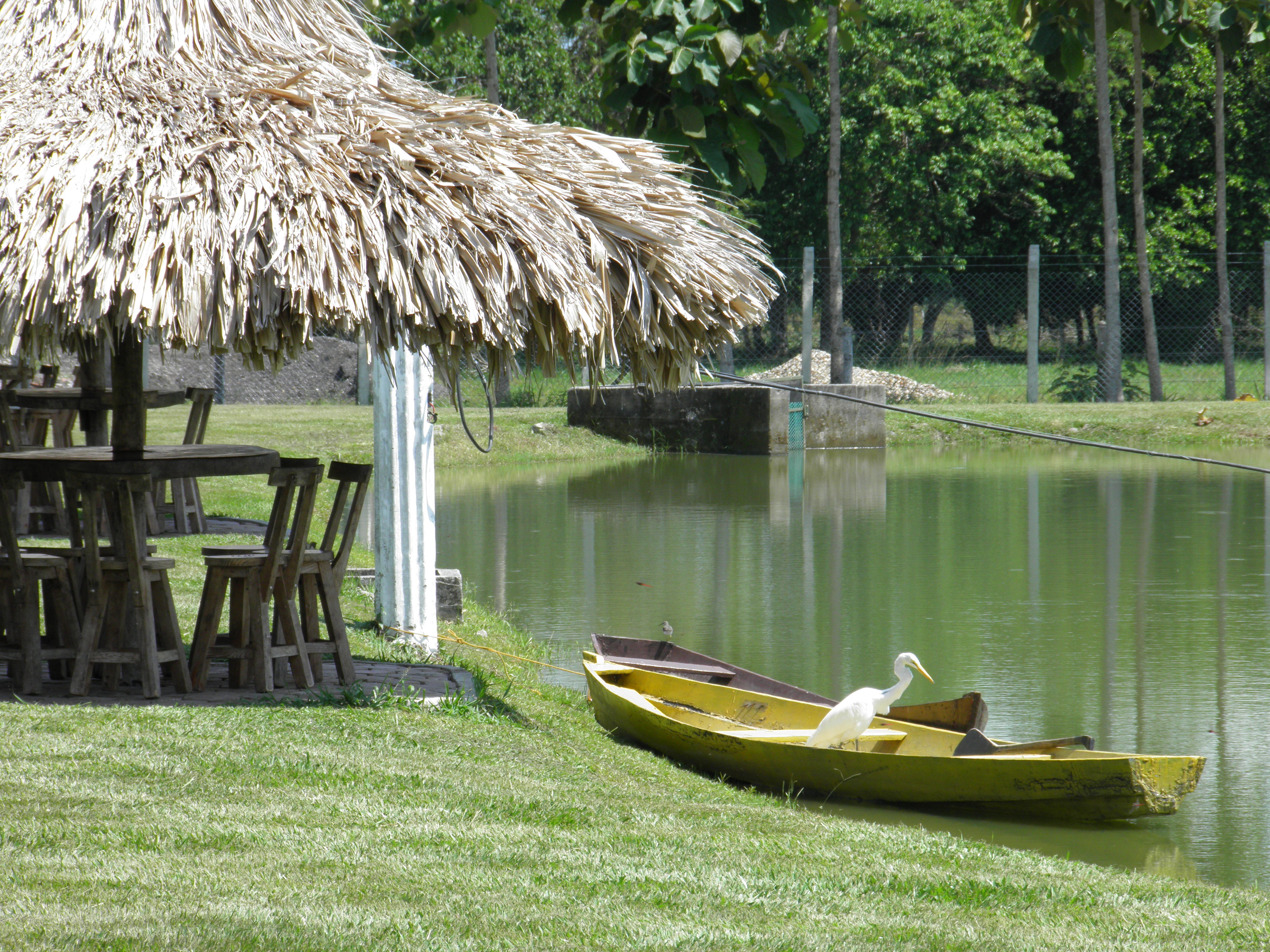
La Gaviota, a finca in Tolima

Now, there are two kinds of fincas in Colombia; working fincas and pure vacation fincas.  A working finca is usually a farm or an orchard – often owned by a city resident but managed locally.  This allows people who live and work in Bogota to have a get-away place that also brings in income.

one of the lakes at La Gaviota

Some of these fincas have been in peoples’ families for generations and produce much of the fruit and livestock products (dairy, meat etc) that are sold in Colombia.

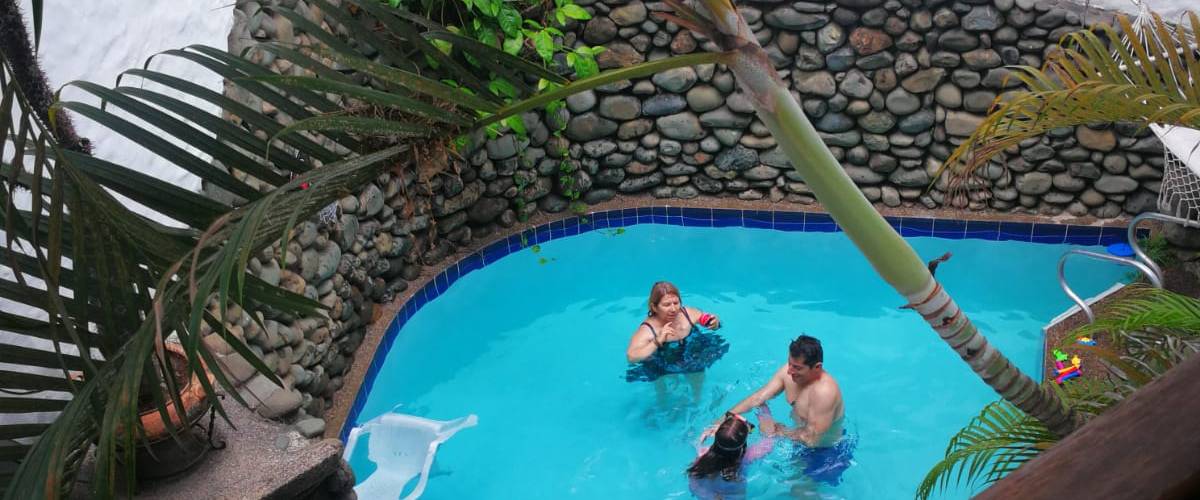
Other fincas are pure recreational homes, and as such, are primarily owned by wealthier Colombians though this is not always the case.  Fincas vary from modest cabin style affairs to elaborate, ornate mansions with swimming pools, tennis courts and private fully stocked ponds.  Since most working people can’t stay at their finca very often, many owners rent out their fincas part-time.  Such was the case with the lovely La Gaviota.

the pool, surrounded by fruit trees

The entire property has been planted with fruits and trees native to Brazil and the staff encourages visitors to sample the many exotic varieties.

Yaca, a fruit native to Brazil

There is a swimming pool, and several lakes stocked with fish.  There is also a hotel, and a restaurant, where they will prepare your fresh catch.  Like many of the numerous fincas that dot the landscape here, they welcome travelers and offer services at reasonable rates.  So we spent the sunny afternoon at the pool.

The next day, we went to the market in Lerida.   We bought some more ‘tipica’ or traditional Tolidense food called lechona from a very nice young man who helps his grandmother.

young man selling lechona

While I vary from vegetarianism to veganism in the states, I never hesitate to try another delicious typical dish when I am traveling – and it was marvelous; warm, savory and flavorful.

There are several variations of lechona, which is stuffed pork but the Tolidense version uses a base of garbanzo beans for the stuffing and comes with a sweet-flavored bread stuffing called insulso on the side.

lechona

The grandmother, also invited us to come to her house where she had other tolidense specialities for sale, including tolidense tamales.

with grandmother

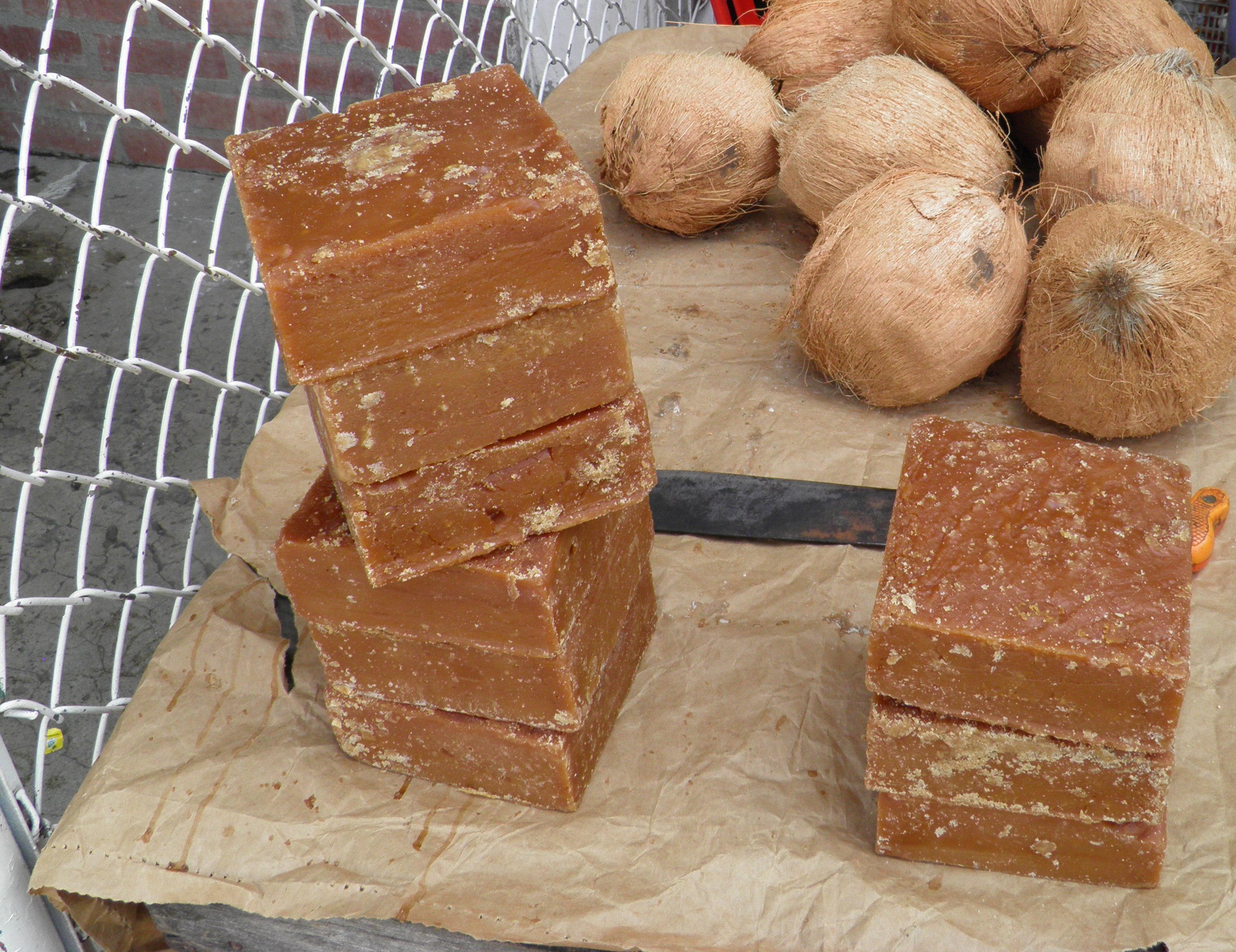
There were other vendors selling panela which is popular sugar product here in Colombia, (and other latin American countries.)  It’s a staple, a form of unrefined sugar produced at the local sugar cane factories in the region.  (I particularly like panela in my coffee and tea.)

panela

We met and purchased several tamales from another vendor in the market, a very nice woman who was very happy to pose for the camera.  I am ashamed to say that I forgot to write her name in my little notebook because my hands were full with all of our great purchases.

homemade tamales

in Lerida


in the mountains on the way to Tolima

Most Americans have limited exposure to Colombia, and Colombian life.  Other than media reports about drugs and violence, the majority of people’s opinions about the country have been formed by one quintessential little film of the mid-80’s…

“Romancing the Stone” – yeah, that’s right – the silly little romantic comedy with Kathleen Turner and Michael Douglas.  “Is this the bus to Cartagena?” is a line I’ve heard many, many times from people asking questions about my experiences here.

In general, like most things, Colombia is nothing like the movies.  Especially this one, since it was filmed in Veracruz, Mexico.

just outside Lerida at Sunset

But Lerida is that Colombia – the hot, humid, tropical Colombia that people think of after watching that movie.  It isn’t jungle-like here, of course,(that’s further south) but it’s an ancient city with stone buildings and some cobblestone streets interspersed among newer construction; but Lerida has the unrelenting heat and steaminess that people generally picture (and fail to find in Bogota.)  My guide tells me that the city wasn’t quite so hot – until most of the trees were removed when the streets were paved.  It makes sense since the neighboring cities (with thick tree-lined streets) are noticeably cooler.

It’s an interesting city – and more than just miles away from Bogotá – more like decades.  Life is a bit more traditional here, but that may be just the heat, and the ancient appearance of much of the buildings contributing to that perception.  Lerida was first ‘discovered’ in 1538 by Spanish conquistador Sebastián de Belalcazar who was amazed by the richness of the land, but it wasn’t officially ‘founded’ until 1777, which actually makes it technically one of the younger towns.  But as you wander the town, you see that people are still living in many of the original buildings – updated and modernized, of course.  But the original architecture with high ceiling and spacious rooms offers the advantages of cooler temperatures despite relentless sun.

As a mentioned in a previous post about Cali – motorcycles are the preferred method of travel in the warmer climes; relatively inexpensive, and good on gas – you see motorcycles just about everywhere you look; with entire families on bikes.

family on motorcycle in Lerida

Women in high heels, babies pressed between bodies, toddlers riding up front, even women riding ‘side-saddle’.

Coming from a society where motorcycles are used more as a statement than a viable mode of transportation; it takes a minute to adjust to the scene of so many bikes – it’s not a convention, they aren’t ‘bikers’, it’s just another day of running errands and going to work.

line of motorcycles

For more posts about my visits to Medellin, click here.

Road to Lerida, part II


As we pass into the valley, and the town of Honda, the whole topography changes.  It’s less West Virginia and more eastern Tennessee – in the summer.  The temperature has become hot and a bit humid.  The land is more flat, and as the land straightens out, so does traffic.  We can finally accelerate to 50km/h for the remainder of our journey.

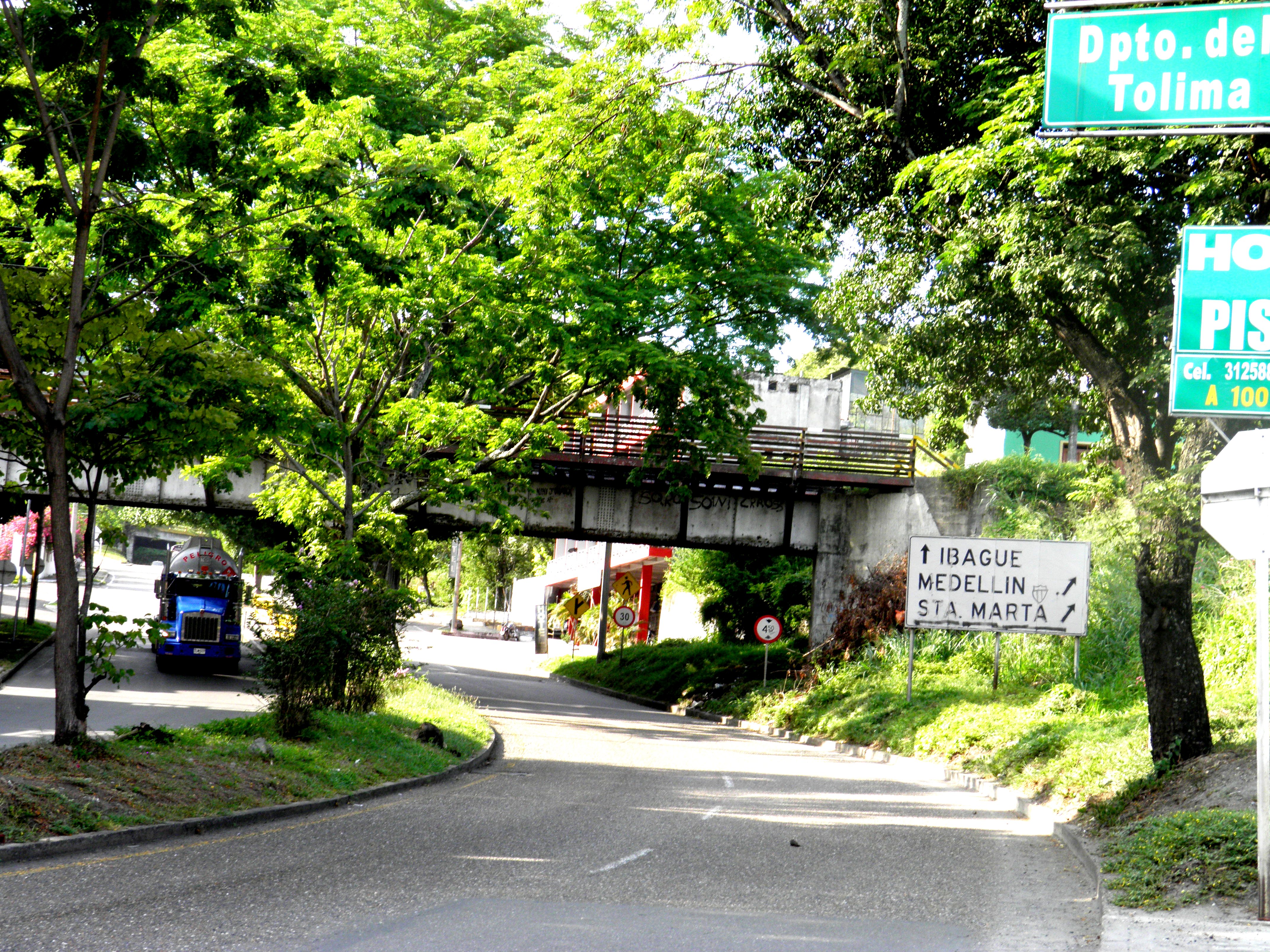
drive to Santa Marta? no thanks..

(It’s this limited speed that makes the road signs for Cartagena and Barranquilla (1150+ km) so terrifying, yet correspond with other visitors stories about 20 hour bus rides).  But the view is so interesting, and I have great company, so it makes for a pleasant drive, especially once we escape the industrial traffic.

it be corn, but it’s not Iowa..

Even the mountains here in the valley are different, the ones that are visible in the landscape are more like hills, with exposed rock crevices.

My ‘guide’ for this trip just amazes me with the breadth and knowledge he has of this area of the country.  As we pass different outcroppings, and tiny towns – he knows a bit of folklore, facts of interest or history on each one of them.  We travel through places that seems a million miles and twenty years from the sophisticated enclaves of Medellin, Bogotá or Cali.

In the Colombian state of Tolima, we drive through the small city of Caldas.  This seemingly unimportant but bustling town is actually one of the more important towns in Colombia’s history.  When scientific explorers (Spanish) first came here they found an amazing bounty of plants, flowers and fruits.  Many of which are only found in Colombia.

They also found gold here (and in the neighboring towns such as Mariquita).  It was their treatment of the native population in pursuit of this shiny metal beneath the nearby mountains that led to a local uprising (and eventual revolution – leading to Colombia’s independence).

Modern day explorers also made important discoveries in this area of Tolima, near Caldas:  large pockets of natural gas.

In the next town, of Mariquita – gold mining both recently and in the past, has shaped the town.  It was the uprising here in Mariquita against the Spaniards and their gold mining efforts that shapes this town’s history.  Further gold exploration in more recent history has also caused problems – my guide tells me that the tunneling and excavations have caused major subsidence problems, with homes disappearing into sinkholes.  (As someone who lived in the Monongalia Mine area of West Virginia, I can well image the scene.)

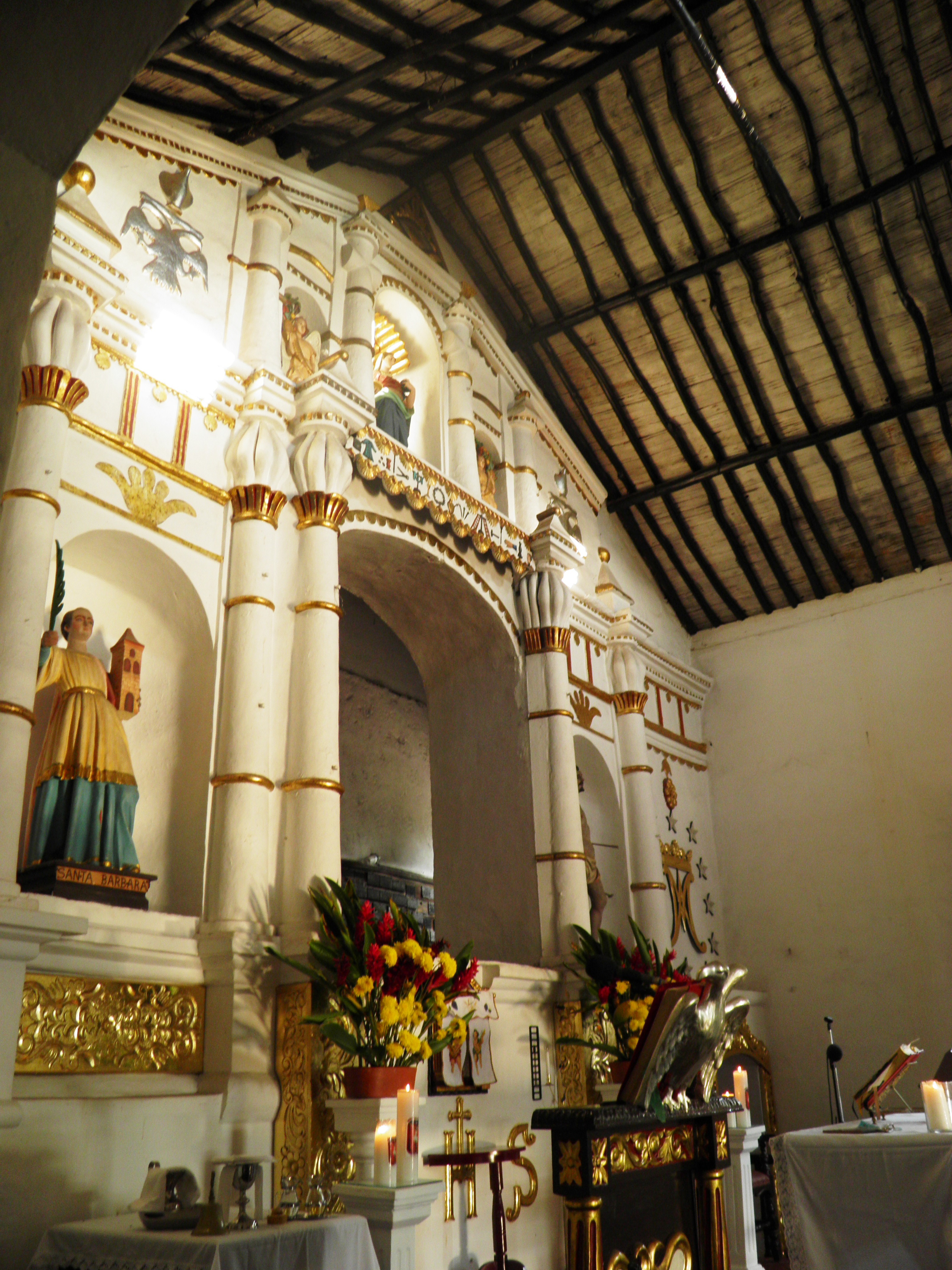
Marquita is also home to a historic church – and the “Milagro senor de la ermita.”

Church services were actually in session when I arrived, so I didn’t many pictures.  (I took the one interior picture from a little alcove so I wouldn’t disturb services while my companions lit candles).

Church in Mariquita

The state of Tolima is famous for it’s tamales  – which have little in common with the Mexican version.  Mariquita itself is famous for having excellent tamales tolidense so we stopped at a place off on a side street which was recommended by the locals, called “El Tamalito” en San Sebastian de Mariquita.  The tamales were, indeed, delicious.

The owner, Mr. William Naffati has been making tamales for over 20 years.  He lived (and worked) in Bogotá for 40 years before coming back to Tolima (where his family is from) 2 years ago.  He states that he makes the ingredients for 200 tamales at a time, in huge metal VATS.

William Neffati, in the kitchen

He states that the secret to the rich flavor of the tamales is due to three key oils: chicken, pork and another which he’s keeping a secret for now.  Then the meats and vegetables are slow cooked for a minimum of four hours before final preparations.  He reports that during the course of a weekend he will prepare and sell over 1200 tamales.

Now this next part of our journey probably deserves its own post – but since I am using borrowed internet to post this – it will have to do.

Lastly, as the sky darkened we passed Armero, a ‘lost town’ that was destroyed in the November 1985 volcanic explosion that spewed rock and lava throughout the area.  The official death toll was 24,000 but locals estimate that it was higher.  As the lava rained down on the town – it burned and destroyed many of the buildings, and their charred and abandoned structures remain – as a memorial to the site.


My guide and my traveling companions know a great story about this town too.  As the volcano rained death down on the 29,000 residents of Armero, and a sea of mud/ sludge began to destroy the town, somehow, despite being in the center of the storm of rock and lava, the local hospital (which did sustain heavy damage) was spared.  Not a single one of the hospitalized patients (who were on the second or top floor of the building) were harmed.

what remains of the hospital today

I guess when you consider the devastation to the area, that would make the hospital of Armero the second miracle of our journey.   I’m not usually so sentimental, but looking at the town, it’s hard not to be.

Ruins at Armero

Unfortunately, it was getting dark as we came through, so I couldn’t get any photos. (But we came back through the next day – and I managed to get a few.)  We didn’t get out of the car because the structures are unaltered and are considered unsafe.  I would have loved to crawl around them a little bit, but I try to take good advice.

The guide

My guide for our trip is Mr. Alvaro Palacios, an adoption attorney.  Last year, when I was writing the Bogotá book, I was renting a room in one of the apartments  he and his wife own.  After being there for six months – we became pretty close.  Especially since once my roommates returned to their home countries, I was alone (sometimes lonely, when l had enough time to think about it) in the apartment.

Mr. Alvaro Palacios

But they always made me feel safe and secure in the fact, that they were next door, and that someone would notice if I didn’t show up one day*.  So I came to very much enjoy talking with the Palacios, their daughter, Camila and their son, Alvaro who was a medical student at the time.

Dr. Alvaro Palacio

In fact, that’s the reason they’ve invited me along – we are heading to Lerida to visit their son who is doing his intern year at the hospital here.  (In Colombia, all doctors have to do a ‘social service’ year working and training in underserved areas.)

Road to Lerida, part 1


Had a wonderful Thanksgiving with some delightful friends yesterday.

I went to the operating room this morning with Dr. Alberto Martinez – but we will save that for later.

This post is for my good friend, Steven Morrisroe who always tells me to devote more posts to ‘everyday life’.  He’s been a big supporter of my work – so Steven – I hope you enjoy this.

Gee.. it doesn’t look that far..

The road to Lerida – part I

The most effective and efficient way to travel in Colombia is by plane; flying to Medellin or Cali is an exercise in ease – by the time the coffee carts comes around (yes, Colombian airlines take care of their passengers), it’s time to sit up your seats and prepare to land.

Not really going to Siberia (been there, done that!)

But the roads are notorious for being poorly designed exercises in endurance and frustration.  It’s something Santos has pledged to address – outlining a massive overhaul of Colombia’s infrastructure, which is desperately needed.  Despite being one of the major roads to this part of the interior of Colombia – it’s a two-lane road, hugging a hill on one side, and a dramatic cliff for the other for the majority of the journey.  While mom-and-pop restaurants and mini-markets dot the roadside, along with tiny houses and laundry lines – this is a heavily trafficked major route for the transport of goods across the country.  There are produce trucks, heavily laden pickups, buses, even several car haulers with brand-new Japanese cars all crowded together with more tanker trucks than I’ve ever seen in my life*.  At one point, I looked out the window at the road ahead and it was all semi-trucks as far as the eye could see in both directions.  It makes this little road as crowded as peak traffic in Bogotá.

this picture is actually from Honda, when traffic finally thinned out..

So much so that what should be a swift and picturesque journey becomes a six-hour crawl as the speedometer stays markedly fixed at less than 30 km/h (yes, that’s kilometers).  The only exceptions being quick bursts of pulse-raising, dare-devil maneuvers as we attempt to pass another in a seemingly continuous line of tanker trucks as we head into another blind and narrow hairpin curve.

passing, but you can’t see the motor cycle passing us..

We settle back into the agonizing crawl, behind more semis.  The line only broken when we attempt such feats as the double pass – passing a tanker truck on the far left as it attempts to pass a slower moving, more heavily laden truck. But at least, it breaks up the monotony and frustration of breathing diesel fumes and enduring the smell of hydraulic breaks being tested by the continuous grade.

this is actually a truck wash hugging the cliff

But don’t get the wrong idea – it’s still a beautiful journey and I am enjoying it immensely.  I just want you to be able to picture the chaos and flurry of activity amidst the serene surroundings.

Once you pass just outside of Bogotá – you are in the country.  Most of the trip is up and over a mountain pass – with a breathtaking view of what must be the Grand Canyon of all valleys.. It’s astounding lovely, but I was unable to get a photo of the massive verdant green valley with rivers and lakes scattered below.  It looks so much like West Virginia, that I have to remind myself where I am more than once.

Where am I?? (Answer: just past Honda)

After twisting and turning for hours – we emerge in the valley below and arrive in the city of Honda..

*My tour guide informs me that the reason there are so many tanker trucks is that despite having ample oil reserves, Colombia does not have a single oil refinery, so all the oil produced travels on this very road to be exported to the USA for refining.

In the operating room with Dr. Alberto Munoz


at Clinica Palermo

Dr. Albert Munoz, Vascular Surgeon

Spent the afternoon with Dr. Alberto Munoz, Vascular Surgeon.  He invited me over to Clinica Palermo to watch surgery for a carotid body tumor, which is almost exclusively a high-altitude condition.

We previously met in Santa Cruz de la Sierra (Bolivia) at the  annual conference of the Latin American Association of Vascular Surgery and Angiography.  Dr. Munoz is the current President of the organization.

Since the majority of cases of this condition are diagnosed and treated in Latin America (in the high altitude cities of Mexico City, Bogotá, Quito and La Paz) one of the goals Dr. Munoz is working on is compiling a database of carotid body tumor cases, and creating a surgical consensus (or guideline) for the treatment of this condition.

Right now, there is no formal data collection process to keep track of all the different surgeons operating for this condition at different hospitals – so the true incidence of this condition isn’t really known.      Having a database to collect all the data would also make it easier for surgeons to track and publish their findings and outcomes.  Since both vascular surgeons and ENT surgeons operate for this condition – a lot of the experts for this condition aren’t even in contact with each other to share information.

Dr. Munoz, operating

Since I created a thoracic surgery database (for a similar purpose), we talked about this a bit while waiting for the patient to be brought to the operating room.

More importantly, this database would give surgeons an opportunity to publish their data – for the benefit of others in the specialty as well as the patients.  (Wouldn’t you, as a patient want to see someone like Dr. Munoz, who has operated on numerous patients with this condition versus a North American surgeon, who may see just a few cases, if any, during his/her entire career?)

The database would allow surgeons to quantify their cases, as well as report and calculate their surgical outcomes.

(I’ll publish more about the actual operating room experience over at Colombia Reports.com)

Bogota’s castle


Some of you may notice that I have temporarily changed my header – to show Bogotá’s castle.  I found it the other day as I wandered some of the carerras.  (Residents of Bogotá know that once you get into the single digit carerras – all logic and inference regarding standard directions goes out the window.)  Once you cross Carerra Septima (Cra. 7) the lovely city layout that makes Bogotá such an easy place to navigate changes into a labyrinth of twisting, winding streets reminiscent of San Francisco..

It’s part of what makes the city so interesting – and at times (such as yesterday, when I was making my way to an appointment) – a bit frustrating.  Just when you think you ‘know’ the city – you stumble upon something completely different from what you were expecting..

Not what I was expecting

The castle which is located at Cra 3 – 74 was the brainchild of Dr. Juan Osorio Morales and is called Castillo Mono Osorio.   While it has the appearance of antiquity, it’s actually only about 100 years old.

Bogotá’s castle

The creator, a local eccentric – was  Colombian cultural attaché to Brussels.   Upon his return to Bogotá, he spent the next twenty years creating the castle which later served as home to his own personal theater troupe.

Like the work of many unconventional artists, after his death the castle fell into disrepair until it was rescued in recent years by one of his descendents and repaired to its current state.

It currently houses several stores including a banquet space, a gift shop and a pharmacy.  Best of all – there is currently space for let.  A new, whimsical office, anyone?

Talking with Andres Barrientos, Colombian film director


He lives at the top of the world, I think as I climb the hills of Bogota to his studio.   In a sliver of the window of his modest work space, the whole of Bogota is laid out beneath me.  I wonder how this affects the Bogota native’s work; which is dark, profound and futuristic in nature.

Film Director, Andres Barrientos

In a city where chance meetings are common, I had the good fortune to sit next to a charming and attractive young man at a friend’s dinner party.  As we made the usual small talk, he mentioned that he was a filmmaker.

Now, growing up in California, I had met my share of ‘filmmakers,’ all of who were the self-proclaimed ‘next Scorsese’ or ‘Tarentino’, and all of whom were waiting tables.  So we talked about YouTube and the like, along with one of his current projects, while I remained mainly grateful for the timely rescue his appearance made from the boorish oaf on the other side of me.  He was interesting and charming enough that I offered to interview for him for my modest little blog.

Imagine my surprise to find out that he’s not the next Clint Eastwood.  Or even Tarentino. No, he’s the Andres Barrientos, one of Colombia’s youngest critically acclaimed directors with over fifteen films (and numerous awards) to his credit.   Despite my appalling lapse, he was delightful, kind and prompt.  (The last is especially notable in Colombia, where time has its own interpretation.)

Andres Barrientos, working in his studio

It will take several days to unravel the complexities of Mr. Barrientos and his work – but I’ll be talking more about him and the three projects he is currently working on over at the Examiner.com.

Update: the full article can be seen here.

Christmas comes to the foothills of Bogota


Like I’ve said in a previous post – one of the great things about living in a city like Bogotá, is all of the interesting people..  Some of them are lifelong residents, some are visitors like myself – and others are making Bogotá a temporary home, like my friend, Johanna and her husband, Paul.

a true photographer, my friend, Johanna

Johanna’s a talented photographer (I’ve much admired her photos for a long time) so I am hoping to enlist her in some of my efforts..  She took several of the pictures here (the good ones!)

Yesterday, we went to La Calera which is a picturesque community just outside of the city.  Sundays are a particularly popular day for city residents to get a taste of small town life just twenty minutes outside Bogotá.

leaving the rainy city behind for a day in La Calera

But our excursion yesterday was a bit different from some of the lovely, and lazy afternoons I’ve had wandering the villages surrounding Bogotá.  This time, we were there for a cause.

nope, still not in trouble.. just hanging out

We joined Colombia’s Civil Defense – Cundinamarca division for a toy drive to benefit children in one of the outlying villages.

Civil Defense 4 x 4 division toy drive

They will deliver the toys by 4 X 4 next month..

with the Colombia’s Civil Defense

While they were collecting toys – they also had some activities for the local kids – including a ‘Paint the Car’ activity which proved popular with kids and adults alike.  (After all – how often do the police hand out spray paint?)

Civil defense officer helps a small child paint

It was a lot of fun – for a good cause, so I’ve written some more about it over at Examiner.com.

Hoping to do some more interviews this week – to bring more of Bogotá’s residents to readers..

Checking in at Santa Fe de Bogota


After a year and a half – it was time to stop in at Santa Fe de Bogotá and see what was new.

Dr. Roosevelt Farjardo, MD (general surgeon) has been instrumental in implementing some of these new and exciting changes such as the ‘Virtual Hospital’ that I will be writing about (soon).  He was very nice about taking time to update me on some of his new programs at part of the Center for innovation in education and health.  Telemedicine is just the tip of the iceberg as far as some of the cool things they are doing.
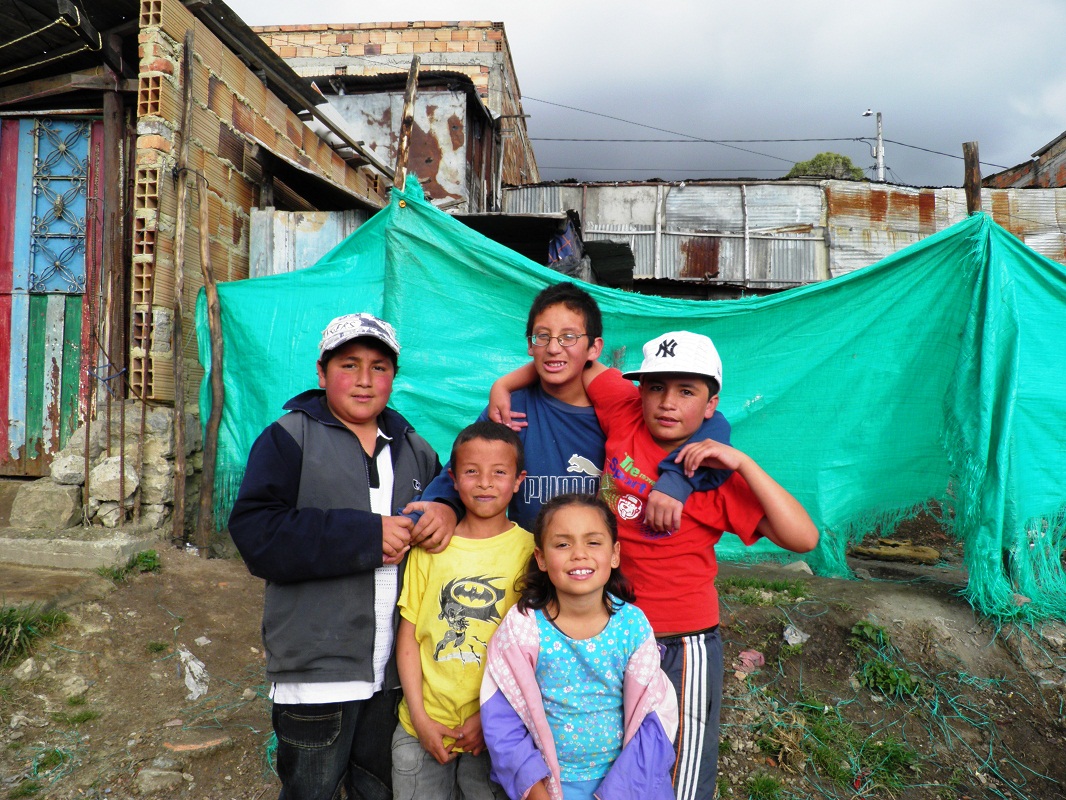
Unfortunately, the same can’t be said of the International Patient Center  – or rather – I can’t report anything other than the fact that Ana Maria Gonzalez (the previous director) has left for a position in the United States and that Dr. Carolina Munoz has taken her place.

I was hoping to get some statistics and report back about some of the specialty programs for overseas travelers – but Alas!  I am unable to bring this information to you.  I waited over 70 minutes after my scheduled appointment with Dr. Munoz – and despite several calls from her staff, she never showed up and never attempted to reschedule.

I wish I could say this is an isolated incident – but I am afraid this is more like a clash of “cultures”.  I say this because I met with Dr. Munoz  previously; during the writing of the book (when she was the Director of the International Patient Center at rival Fundacion Cardioinfantil.)

At that time, (if I remember correctly, she introduced herself as a cardiac surgeon who had retired to “spend more time with her children.”)

Of course, my obvious question – was “oh, and how many children do you have?**”

I thought we were making polite conversation – because at the time, I was less familiar with Colombian customs, culture etc.   In reality, she was reminding me of her elevated stature in comparison to mine (as ‘just a nurse’).  Dense as I was – it became obvious as the interview progressed – as she made sure that I knew that she had replaced her rival (Ms. Ana Maria Gonzalez – RN) who had also worked at Fundacion Cardioinfantil in the past.  I’m sure she resented having to answer questions about the Executive Health Program and other aspects of their medical tourism program from someone she found to be inferior to herself.  (She made that pretty clear at that initial interview back in 2011).

So I guess it is no surprise that she didn’t bother to show up to our appointment this week – which is a shame, as I had looked forward to finding out more about the evolving International Patient Center at Santa Fe de Bogotá.

Luckily for me – there was another nurse there, Sandra Salazar – who could give me some basics.   She was delightful, helpful and dreadfully embarrassed about the whole thing.  She was even able to give me a list of some of the American insurance companies they have worked with in the past.  I had lots of questions about the HIPEC program, which she couldn’t answer – but she outlined the entire medical tourist process – and answered a lot of other questions.  She showed me how they streamline the process for their international patients, and the process for medical and surgical evaluations.

Now, there’s some good news for readers:  You aren’t nurses.  You are paying customers – so I am sure that Dr. Carolina Munoz will put aside any of her personal feelings (whatever they are) towards foreigners and will make time for you.

**The answer as none – as she is not married, and was not planning to be married in the foreseeable future.

Now when I am talking about culture – I am not strictly talking Colombia – America.  I am talking about Doctor – Nurse relations.  Watch some old Turner Classic Movies sometime and you will see what I mean..

Now I debated writing about this, but after talking with some other non-Colombians here in Bogotá, I felt it was important to pass it along because it illustrates quite a few things about my work:

1.  It’s not as easy as it looks (I spend a huge amount of time waiting..)

2.  Cultural differences can cause a lot of problems – so be prepared to be tolerant.

3.  If there is a chance that patients may get poor service – I want to know about it!  (And part of readers need to know about – is my experiences.)

Calle de Mascotas – avenida Caracas


Just a few more weeks here in Bogotá before heading back to the United States.  My days are crammed with interviews – so I haven’t been posting as much as usual.

Right now, I am making copious notes – and taking plenty of photos so I can starting writing up several articles in the next several weeks.  Much of my  work will be published over at Colombia Reports.com so I will attempt to keep from duplicating it here.  (Also – I won’t have the time..)

I’ll still try to post pictures and stories here – about Bogotá life in general, to give readers a sense of the city, and the people here since that’s something that they won’t get with my (rather) dry surgical descriptions/ evaluations.

But – I am already working on plans to return to Bogotá, (and other parts of Colombia) this spring.  Once I have some concrete plans, I’ll post them here for readers and (potential travelers..)

homeless in Bogotá

I wandered around Avenue Caracas (Carrera 14) for a bit this afternoon.  It’s not the best area because there are a lot of homeless people, and it has a reputation for quite a bit of crime (muggings and such) but I couldn’t resist walking by the “Calle de Mascotas”  or the three blocks (from Calle 53-56) on Avenue Caracas that hold about a dozen pet stores..

The man crouched down in the photo above just finished stamping out his cooking fire as I came by..

kittens in a pet shop window

It was particularly heart-wrenching for me – while I’ve been down here in Bogotá, my long-time friend and companion – my 17-year-old cat passed away.  (Don’t worry, he was surrounded by loved ones, and died in my husband’s arms).

This inquisitive little fellow here reminded me quite of a bit of my cat (though they do not look-alike.)  So it was hard to keep walking – but then next to one of the pet stores, I watched two artists create this mural..

a work in progress

Hard to believe all this detail came from spray paint (no brushes!) but it did..

working on the mural

This artist, and his assistance were really nice, and didn’t mind me taking their pictures.

I’ll post some more stories soon.. In the meantime, you can read more about my recent interview with Ilene Little here.

New venture with Colombia Reports


While I have written several books about surgery and surgeons in Colombia, much of this information I’ve obtained from my research has been consigned to sitting on the shelves of various bookstores.

But, now with the help of Colombia Reports, I am hoping to change that.  As I mentioned in a previous post, Colombia Reports.com and it’s founder, Adriaan Alsema have been amazingly supportive of my work, ever since they printed my first article on Cartagena in 2010.

Since returning to Colombia, I have kept in touch with Colombia Reports while we discussed ways to bring more of my research and work to the public.  Colombia Reports is a perfect platform – because it serves a community of English-speaking (reading) individuals who are interested in/ and living in Colombia.   With this in mind, Colombia Reports has created a new Health & Beauty section which will carry some of my interviews and evaluations.

It is an ideal partnership for me; it allows me to bring my information to the people who need it – and continue to do my work as an objective, and unbiased reviewer.  We haven’t figured out all of the details yet – but I want to encourage all of my faithful readers to show Colombia Reports the same dedication that you’ve shown my tiny little blog, so that our ‘experiment’ in medical tourism reporting becomes a viable and continued part of Colombia Reports.

This is more important to me that ever – just yesterday as I was revisiting a surgeon I interviewed in the past (for a new updated article), I heard a tragic story that just broke my heart about a patient that was recently harmed by Dr. Alfredo Hoyos.  While I was unable to obtain documents regarding this incident – this is not the first time that this has happened.

Previous accusations of medical malpractice against this surgeon have been published in Colombian news outlets including this story from back in 2002.

The accusations are from Marbelle, a Colombian artist regarding the intra-operative death of her mother, Maria Isabeth Cardona Restrepo (aka Yolanda) during liposuction.  These accusations were published in Bocas – which is part of El Tiempo, a popular Colombian newspaper, in which the singer alleges that Dr. Hoyos was unprepared, and did not have the proper equipment on hand to treat her mother when she went into cardiac arrest during the surgery.

story about the death of one of Dr. Alfredo Hoyos' patients.

story about the death of one of Dr. Alfredo Hoyos’ patients.

Kristin 002 Kristin 003 Kristin 004

Now – as many of you remember, I interviewed Dr. Alfredo Hoyos back in 2011, and followed him to the operating room, giving me first hand knowledge of his surgical practices.

Readers of the book know he received harsh criticism for both failure to adhere to standard practices of sterility and patient intra-operative safety (among other things.)  I also called him out for claiming false credentials from several plastic surgery associations – and notified those agencies of those claims..   In the book, readers were strongly advised not to see Dr. Hoyos or his associates for care.

But – as I mentioned, my book is sitting lonely on a shelf, here in Bogotá – and in the warehouses of Amazon.com and other retailers.. So, people like that patient – didn’t have the critical information that they needed..

This is where Colombia Reports – and I hope to change all that.   So in the coming weeks, I am re-visiting some of surgeons we talked to in 2011, and interviewing  more (new) surgeons, more operating room visits..

Dr. Ernesto Andrade interview fails again


As many long-time readers know, I spent several months trying to chase down Dr. Ernesto Andrade for an interview while writing the Bogota book, but only got a couple of minutes with one of his surgical interns – who was fairly dismissive.. Despite repeated requests, phone calls and emails were not returned.

Several months ago, I was contacted by Dr. Andrade on LinkedIn, the professional networking site, and he asked if I would interview him.  I was pleased, and explained that I would be in Colombia soon – and would be  happy to talk to him (and gave the date when I would arrive.)   Now after repeated emails, and even an office visit – it looks like I am getting the same run around.

Often when I fail to make contact with someone I would like to interview – I chalk it up to missed / miscommunication (maybe staff never forwarded messages, etc.) but this is clearly something else entirely.

So while I apologize to the many readers who have asked for more information about Dr. Andrade – there is little more that I can do at this point.

A Beautiful Mess: El Dorado International Airport


A Beautiful Mess:  El Dorado International Airport

The new international terminal at Bogota’s airport opened October 18th and it is gorgeous.  Walls of windows and sky-high ceilings give the new terminal a feeling of light and airy spaciousness.  The new space is great for International travelers and on a recent trip to another part of South America, I breezed through check-in and security in just minutes with no hassles.

But for in-country travelers – a word of caution:  while Avianca offers some of the best deals around* – finding their terminal for domestic flights can be a real headache.  While the majority of domestic carriers including LAN, COPA and Sabena are housed in the domestic portion of the airport – Avianca is housed in a completely different area.  Even with my basic Spanish skills, it took some maneuvering.   I had arrived at the airport in what should have been plenty of time; but between trekking  from the international terminal (where my taxi driver insisted on dropping me off despite my protests) walking around ongoing construction and upgrades down to the domestic terminal (passing three separate, but not the correct, Avianca desks) requiring several stops for directions and finally a ride on a bus to get to the Avianca domestic terminal;  I missed my first flight, for which they wanted to charge me a 100,000 peso fine.

While I was able to negotiate my way out of the fine, and ended up flying standby on the next flight – I would advise fellow travelers to other destinations in Colombia to leave early.  Give yourself plenty of time to get around – and catch the airport shuttle if needed.  (Of course, now that you know where the Avianca terminal has been relocated – just ask your transportation to take you there.)  From the outside it looks like a maintenance hanger, with corrugated aluminum walls, (the only different is that now the building is teeming with activity).

But despite the hassles – in six months – El Dorado International Airport will be beautiful and finished.  All of these hassles and confusion will be sorted out – and travel will be smooth and effortless; like it was for my recent trip to Chile.

In the meantime, if you get the opportunity to see other parts of Colombia like Medellin, Cali, Cartagena, Santa Marta or the Coffeelands – do it.. Just be prepared for a little chaos on the way out..  Try Viva Colombia for low-cost domestic flights..usually around 40 to 60 dollars a trip (Medellin to Bogotá, one-way)

*For my current domestic excursion consisting of a three leg journey – from Bogotá to Cali – then Cali to Medellin and then back to Bogotá again – the total price was only 156.00 dollars (taxes included).

Fundacion Santa Fe de Bogota ranks among the best in Latin America


Santa Fe de Bogotá ranked second in Latin America

In the most recent American Economics (AmericaEconomica), Fundacion Santa Fe de Bogotá ranked second in the category of “Capital Humano” coming in just behind Clinica Alemana, in Santiago, Chile.  Fundacion Santa Fe ranked #4 overall.

Capital Humano

This category ranks and measures the education, training and research among the staff of each facility, as well as on-going improvement projects and educational offerings.

Of course, it’s no surprise to readers of Hidden Gem that the surgeons over at Santa Fe de Bogotá excel at academic excellence.

Now – while we give Kudos to Santa Fe de Bogotá, as well as Hospital Israelita Albert Einstein (Brazil) and Clinica Alemana for their outstanding rankings – we remind readers that rankings aren’t always what they are cracked up to be.

AmericaEconomica, “The best hospitals and clinics in Latin America.”

The people of Bogota


I’m actually out of the city for a few days – but during my long flight, I reflected on some of the reasons I enjoy this city so much.

Why do I enjoy Bogotá so much?

Well, the people, of course!  Now, I know that people are shaking their heads – but for a small-town girl like me,  a cosmopolitan city like Bogotá is very exciting indeed.   So many festivals, events, galleries and museums**.

But it’s the people who are the heart of the city – and what really brings it alive.   Just this week, I had the opportunity to rub shoulders with and talk to a Colombian film director, a geo-petroleum engineer, a civil rights (labor) attorney  and one of the executives of Caracol.   It’s just that kind of town – like Washington D.C. but down-to-earth and accessible.  [Now, my little eight-year-old friend, Flavia has met President Santos just walking on the street one day, but I haven’t.]  But there are still wonderful opportunities to meet and talk to interesting people who I might not cross paths with in my ‘normal’ life in the hospital.

For example, I found myself sitting next to the film director, Andres Barrientos at a birthday party for a mutual friend. (Of course, the guests at the party were a like a small UN delegation – but less protocol and more fun;  it included Colombians,  two delightful ladies from Venezuelan, a British gentleman, and the guest of honor – another American like myself –except for her beautiful Argentinean Spanish.)  These are all just people and friends I have made wandering around the city..

Of course – talking about the ‘extranjeros’ or foreigners living in Bogotá is an entirely different topic – and one we will get around to one of these days.  But as I chatted with the very normal, very nice Mr. Barrientos (and he politely refrained from laughing at the ridiculousness of my YouTube efforts), it made me consider how many film producers I met in Danville, Virginia, Mexicali, Mexico or Reno, Nevada during my various moves.  (The cumulative answer is: Zero.)  And why would I – on the streets of my small southern town?  But Bogotá is a different matter entirely – it is a global city, with its tenacles on the pulse of Colombia, Latin America and the world.

Global positioning and perspectives

Talking with labor attorneys and several petroleum company officers just brings home some of the amazing lack of insight we (as North Americans) have on some many issues affecting the rest of the world – and our roles within this context.

While Americans are often accused of being willfully ignorant – this just isn’t true.  The reality is that: we are intentionally blinded as citizens to much of the outside world.  I mean, I make a continuous, specific concerted effort to find English language information about issues facing Latin America (for this blog) and it is exceedingly difficult.

What we do see on CNN, BBC and our nightly news and read has already been translated (and censored) for our consumption.  As a result – if it isn’t a  sensationalized report about a bomb going off somewhere – or a huge drug seizure, then there just isn’t much information available – whether we are talking about our southern neighbor, Mexico, the economic powerhouse of Brazil, Colombia, Peru, Chile or any of another dozen countries.

But when you live somewhere like Bogotá – you become more globally informed just by meeting and interacting with all of your fellow Bogotá residents – from UN representatives, other foreign nationals on down to your every day taxi driver.  (Always talk to the taxi drivers – they are usually exceedingly nice, have a wealth of information and different perspectives on everything from affordable healthcare, the American presidential elections, the environment and Latin American economic policies.  You will be surprised what you will learn.)

That’s just something I can’t get on Main Street, Danville, Virginia..

**Speaking of which – they are offering my book for sale at the Festival de Librarias in Parque 93 this weekend.