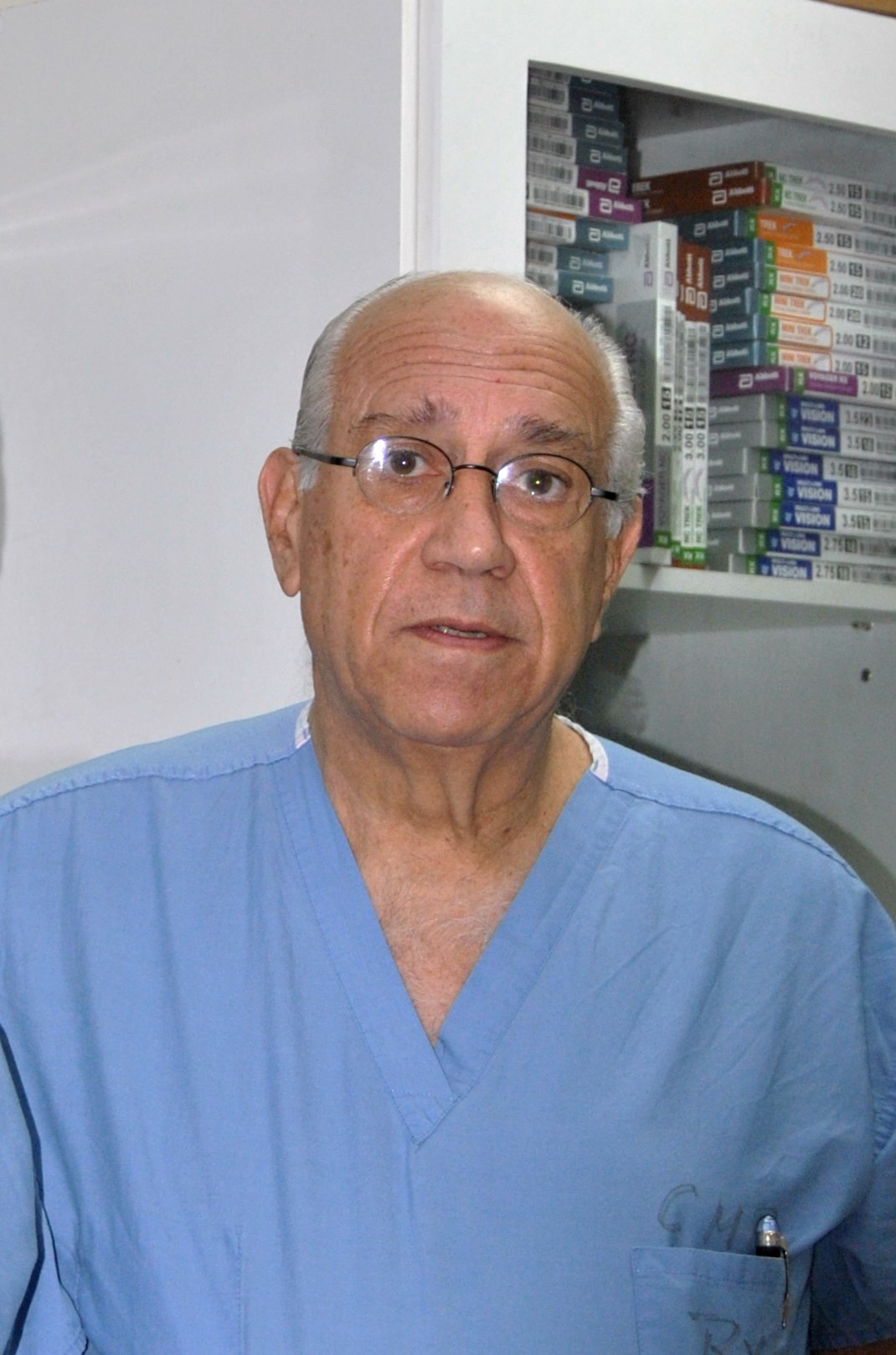
Dr. Ivan Santos

Just another reason for Latinamericansurgery.com


Dr. Ivan Santos

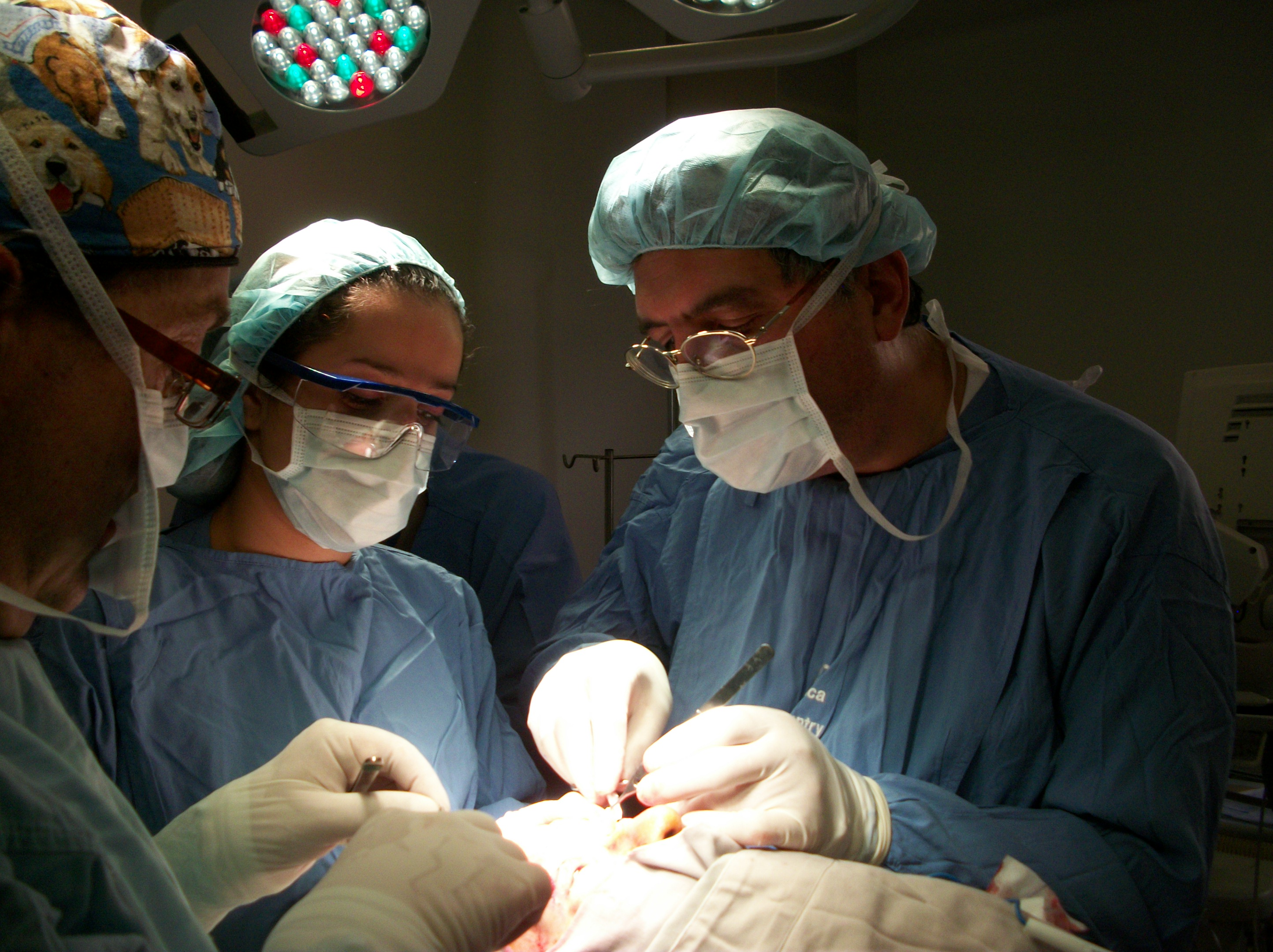
Colombian plastic surgeons operating

because you need someone who is objective (and informed) that is looking out for you, the patient..

In this article, at International Journal of Medical Travel, Kevin Pollard talks about the need for regulation of medical tourism in cosmetic surgery.  I wholeheartedly agree – in fact, Mr. Pollard and I conversed about this very topic in a series of emails last week.

After all – it is why I do what I do, and publish it here for my readers.  The industry does need to be regulated – medical tourism companies shouldn’t pick providers by “lowest bidder” and patients need to be protected (from unsanitary conditions, bad surgeons, and poor care).  But what form will this regulation take?

Will it be Joint Commission certification – which covers facilities and not the physicians (and their surgical practices themselves)?

Will it require facilities to pay a lot of money for a shiny badge?

Or will it be someone like me, low-key and independent, going into facilities at the behest of patients; interviewing surgeons and actually observing the process and talking to patients?

and who pays for this?  The beauty of what I do – is that I am independently (read: self) funded.  True, it hurts my wallet but I have no divided loyalties or outside interests in doing anything but reporting the unvarnished truth.

and ultimately – will this be done in a fair, open and honest way?  Or it is really a witch hunt led by disgruntled American and British plastic surgeons?  Will they bother to discriminate between excellent surgeons and incompetent ones who will it be by geography alone?

I guess we will just have to wait and see.

Why Colombia? (and why not India and Thailand?)


We’ll talk about the downsides in a future post..

AL Press's avatarHidden Gem: Surgery in Cartagena, Colombia

Why Colombia for medical tourism/ surgical tourism?

Here are several of the reasons I have decided to focus on Colombia as one the emerging destinations for medical tourism:

1. It’s close to the United States (and North America): direct flights to several cities in Colombia are only 2 – 3 hours from Miami, Orlando and many other southern US cities.
This should be first and foremost in people’s minds – for more than just consumer comfort. Those coach-class seats can kill.
The risk of venous thromboembolism (VTE), a potentially fatal complication of air travel (and other stationary conditions) is very real; and this risk increases dramatically with flight duration. Flights to Asia can be anywhere from 16 to 20 hours – which is an endurance test for even the healthiest and heartiest of individuals.

This risk for DVT/ VTE which can lead to pulmonary embolism, and death is enhanced in elderly…

View original post 694 more words

Sanabria, breast implant

Colombian plastic surgeons answer back


Chairman of International Society of Aesthetic Plastic Surgery questions the ethics of medical tourism, Colombia responds.

Colombia is now 11th in the world for plastic surgeries by volume according to the International Society of Aesthetic Plastic Surgery (ISAPS) but that may change if Dr. Igor Niechajev, Chair of the Government Relations Committee of that same organization gets his way.  ISAPS, who ranked Colombia among the top 25 countries for plastic surgery also printed an article by Niechajev in the spring edition of its newsletter condemning medical tourism.

Chairman discourages medical tourism, stating that medical tourists are victims of inferior care

The strongly-voiced piece accused surgeons outside of European and North America of providing inferior medical care, inadequate pre-operative evaluations and operating in substandard facilities.

States bad outcomes wouldn’t happen at home

In his editorial, Dr. Niechajev provides anecdotal evidence of a botched procedure that occurred in Asia, and stated that “such a tragic outcome” of [procedure cited] “is highly unlikely had the patient not been a medical tourist.”  Dr. Niechajev cites these concerns, not as a surgeon losing business to his competitors but states that he is concerned about the costs of caring for patients with possible complications once they return home.

Not limited to national borders

His concerns don’t stop at national borders, Dr. Niechajev also suggests that surgeons limit themselves to their immediate local vicinity.  What this may mean for a rural patient requiring extensive reconstructive surgeon is not addressed by Dr. Niechajev.

 Statements based on limited data

He bases the majority of his opinions on the shoulders of Dr. Ritz, the Australian National Secretary for Health, who cites one specific incident as the trigger for changing Australian legislature to prohibit this practice.  Additional evidentiary support of gross episodes or a mass epidemic of malpractice by international surgeons appears to be limited to 11 cases in the United Kingdom.  No other data was cited.

International Society debating the issue; Niechajev recommends financial sanctions against patients

These concerns have the officers of ISAPS considering changing the code of ethics of the organization to discourage the practice of medical tourism by its member surgeons.  However, Dr. Niechavej does not seem content to stop there, instead he advocates for governmental announcements advising the public about “increased risks associated with medical tourism” and that “surgery overseas practically means that they [patients] are giving up all their rights.”  He also advocates for financial penalties for patients who experience post-operative complications after surgery overseas, stating, “No preventative measure is as effective as hitting someone’s purse.”

 Colombian plastic surgeons respond

In an exclusive interview with the President of the Colombian Society of Plastic Surgery, he answered many of the allegations by Dr. Niechajev.

Regarding Dr. Igor Niechevaj’s statements on the lack of regulations and substandard facilities in countries that are popular medical tourism destinations, the President of the Colombian Society of Plastic, Esthetic and Reconstructive Surgery, Dr. Carlos Enrique Hoyos Salazar replied that, “All facilities, and hospitals in Colombia are regulated by the Ministry of Health. There are minimum standards that must be met.  Any facilities that are interested in participating in the medical tourism business have additional standards and qualifications for certification by national agencies.  Anesthesiologists, and medical doctors are required to have additional training to perform pre-operative evaluations for International plastic surgery patients”.

 Reports safety and patient protections for medical tourists

He refutes claims that patients receive minimal post-operative care before returning home. In addition to medical advice from Colombian physicians, he cites agreements with Colombian and international airlines to encourage international patients to stay a minimum of 15 days after their surgical procedures to ensure optimal recovery.

Additionally, several plastic surgeons specializing in medical tourism and medical tourism companies offer ‘complication policies’ to pay for any expenses a medical tourist may incur in both the destination and home country should they develop complications post-operatively.  In fact, an advertisement for one of these policies shares space with Dr. Niechevaj’s article.  These policies effectively negate one of Dr. Niechevaj’s (and Dr. Ritz’s) strongest arguments, that medical tourism incurs costs in the home country when patients develop post-operative infections or other problems after returning home.

ISAPS Chairman defending his own wallet?

When asked about Dr. Niechevaj’s position on medical tourism and possible changes to the ISAPS code of ethics, Dr. Hoyos stated, “This is not right.  This has nothing to do with the quality of surgery in Colombia and other countries.  This is about the expensive costs of surgery in Europe and the United States.  If a surgery costs $6,000 (USD) over there and only $3,000 – $3,500 in Colombia, then those doctors are losing money due to medical tourism.”

Good and Bad is a global phenomenon

As we’ve pointed out here on our site (and related work) – good and bad surgical outcomes are certainly not limited by geography, and Dr. Niechajev certainly seems to paint the rest of the world with a wide brush with his call to action.

A more reasonable, and fair response would be continue to encourage work such as mine – using outside, independent and unbiased observers to evaluate surgeons wishing to participate in medical tourism.

In an ideal world, companies such as Blue Cross/ Blue Shield who wish to broaden their international physician base would hire independent medical professionals to review surgeons who wished to be included under their health plan.  This way both consumers and third-party payers would have more information before patients went ‘under the knife’ so to speak.

Patients wouldn’t be shuttled to surgeons who submit the lowest bid (to insurance companies, and private parties) but to surgeons whose qualifications had been authenticated.  All parties would know about the quality of hospital facilities, anesthesia, pre-operative evaluation and post-operative care.

Doing my part

Readers know that I do what I can, in a very small way, to add to the body of knowledge about the quality and care of patients who receive treatment from the surgeons who consent to let me observe, evaluate and report my findings.

Now we just need this on a large-scale, multi-national level.

Site merge


Notice of site merge:  since much of the content tends to run parallel – from medical tourism to medical information about medical conditions and treatment options – I am merging Cartagena Surgery content with Latin American surgery.

For my readers here at Latin American Surgery, this means that the tone of the blog will change with the addition of my more personal posts on photography, student life (during various internships), travels and road trips within the USA and other posts.  I hope that this give readers a better sense of the person behind the posts.

I debated for several months before initiating the large-scale move – (hundreds of posts), and it will take time to organize and arrange all of the new additions.  Hopefully, the addition of the posts is welcome to all of my long-term followers  – who can now find information on medical conditions  (aortic stenosis) and the doctors (cardiac surgeons) to treat it at the same place.

International Tango festival


There’s always something going on here in Medellin, so I am keeping busy even when I’m not in the operating room.

Dressed and ready to tango!

Dressed and ready to tango!

This week – it’s the 6th Festival Internacional de Tango..

the crowd at the Botanical Gardens enjoys a free show during the International Tango Festival

the crowd at the Botanical Gardens enjoys a free show during the International Tango Festival

While salsa dancing is a Colombian original (from Cali), the Argentine tango is alive and well here in Medellin.  At this week’s festival, several musicians and dancers from Medellin are being showcased for their skills – along with Buenos Aires legends..  Local schoolchildren are also participating in a series of concerts and dance demonstrations.  It’s quite a bit of fun – and showcases some of the things the city of Medellin really excels at.

After attending a Tango performance last weekend, and numerous other public events and outings – one of the things that it really noticeable is how well the city manages these events.

Fun and family friendly

There has been no trash or litter, no displays of public drunkenness (despite the fact that there is plenty of alcohol at these events), and no disturbances at any of our outings (and several were free).

??????????????????

Roaming the city

During the weekend, we roam the city – taking pictures, enjoying the endlessly lovely weather – and riding on the metro (train).  The trains are affordable, quick (and if you avoid peak traveling times during the week) not too overly crowded.

above ground metro train

above ground metro train

Universidad Station

Universidad Station

Several parks and museums are located close to the Universidad Station including the Planetarium, Parque Explora (for kids) and the Botanical Gardens.

the planetarium

the planetarium

The Botanical Gardens

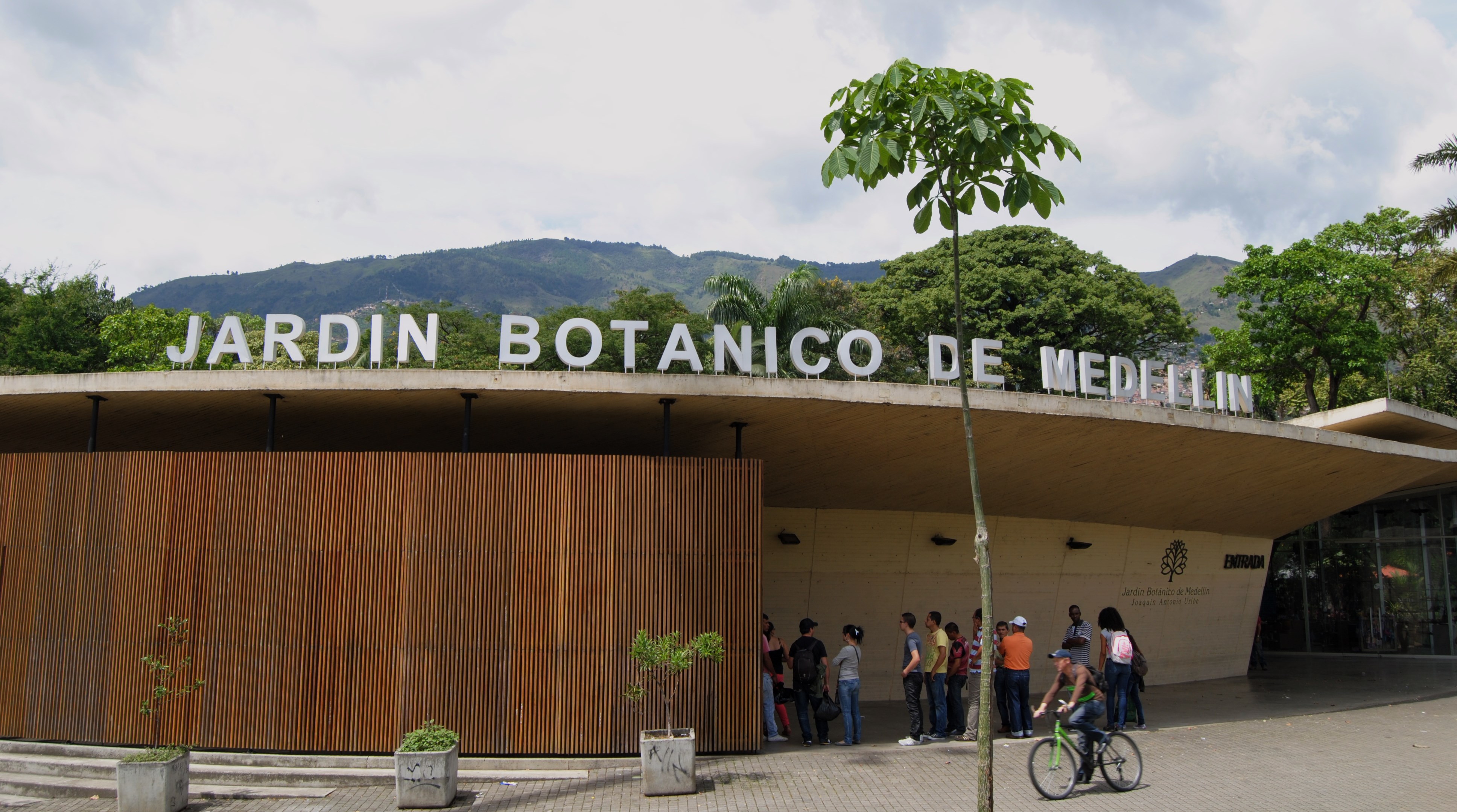
The ‘Joaquin Antonio Uribe’ Botanical Gardens were a delightfully relaxing place to spend a gorgeously sunny Sunday afternoon in the midst of the city, but away from the hustle and bustle of El Centro (where I live).

Jardin botanico 038

Admission is free.

There was live music to listen to, plenty of flowers, and wildlife to enjoy (iguanas roam the grounds), and assortment of snacks (ice cream, juice drinks, and other regional treats).

Iguanas roam the park

Iguanas roam the park

But the park isn’t just there to enjoy nature.. It’s a great place to people watch.. Also the people of Medellin are very kind and friendly, so they are happy to talk – even to gringas with bad Spanish, like myself.

using his camera to meet girls

using his camera to meet girls

We watched this photographer use his camera to meet girls as he roamed the park..

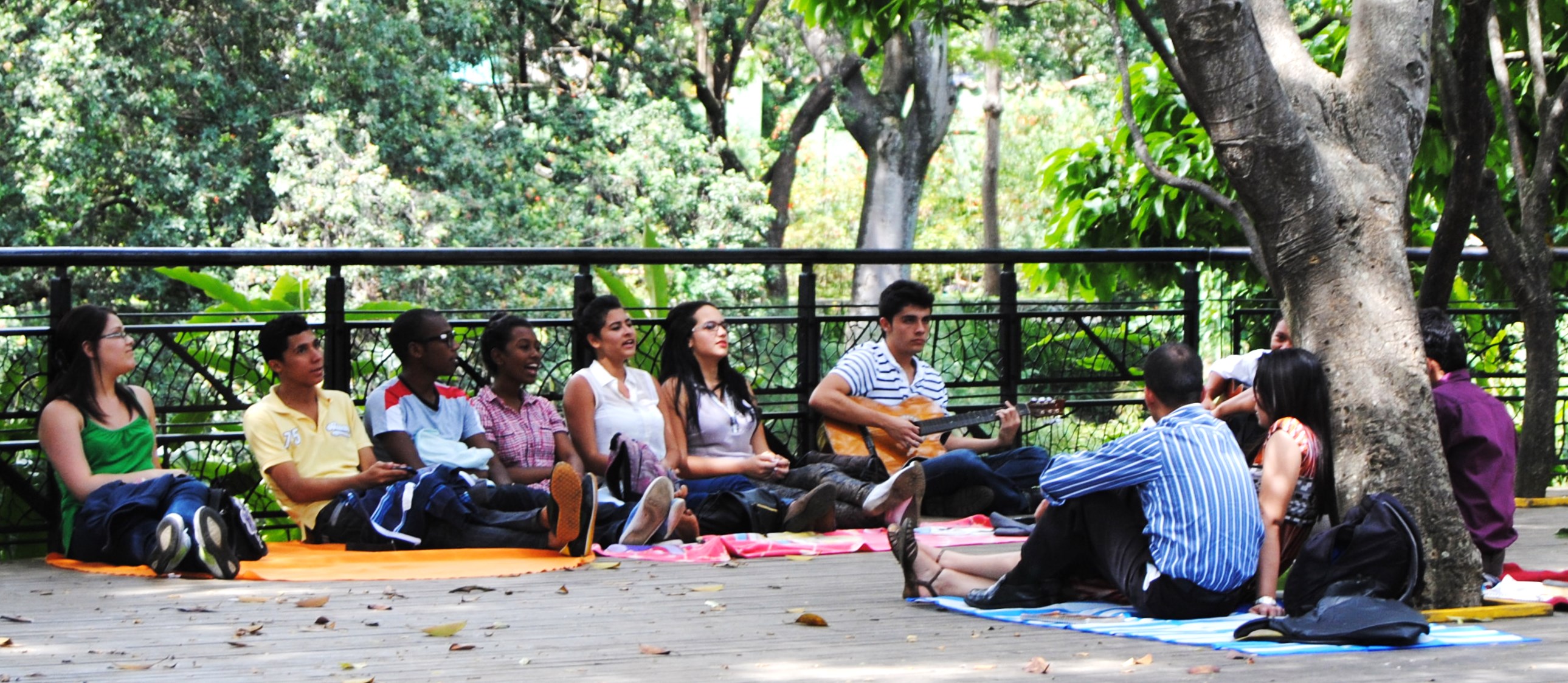
A group of young people singing…

Jardin botanico 134

Then we met a lovely princess..

Jardin botanico 043

and a local vendor selling gum in the park..

lost his leg due to a landmine

lost his leg due to a landmine

This very nice gentleman is a reminder that as sunny and lovely as Medellin is – there is still an ongoing war to remember.. One that has devastated thousands of young men, and displaced millions of people.

jumping rope

jumping rope

Wholesome

As a visitor (and temporary resident) of Medellin – the wholesomeness of the park is enchanting.. It’s a reminder of one of the reasons, I do enjoy Colombia so very much.. Just like my “Sundays in Bogotá” – the city slows down during the weekends, and people spent time with their loved ones.. No gameboys in evidence, and phones used mainly to take pictures..  It’s a gracious illusion that reminds me of my own childhood in a small town..

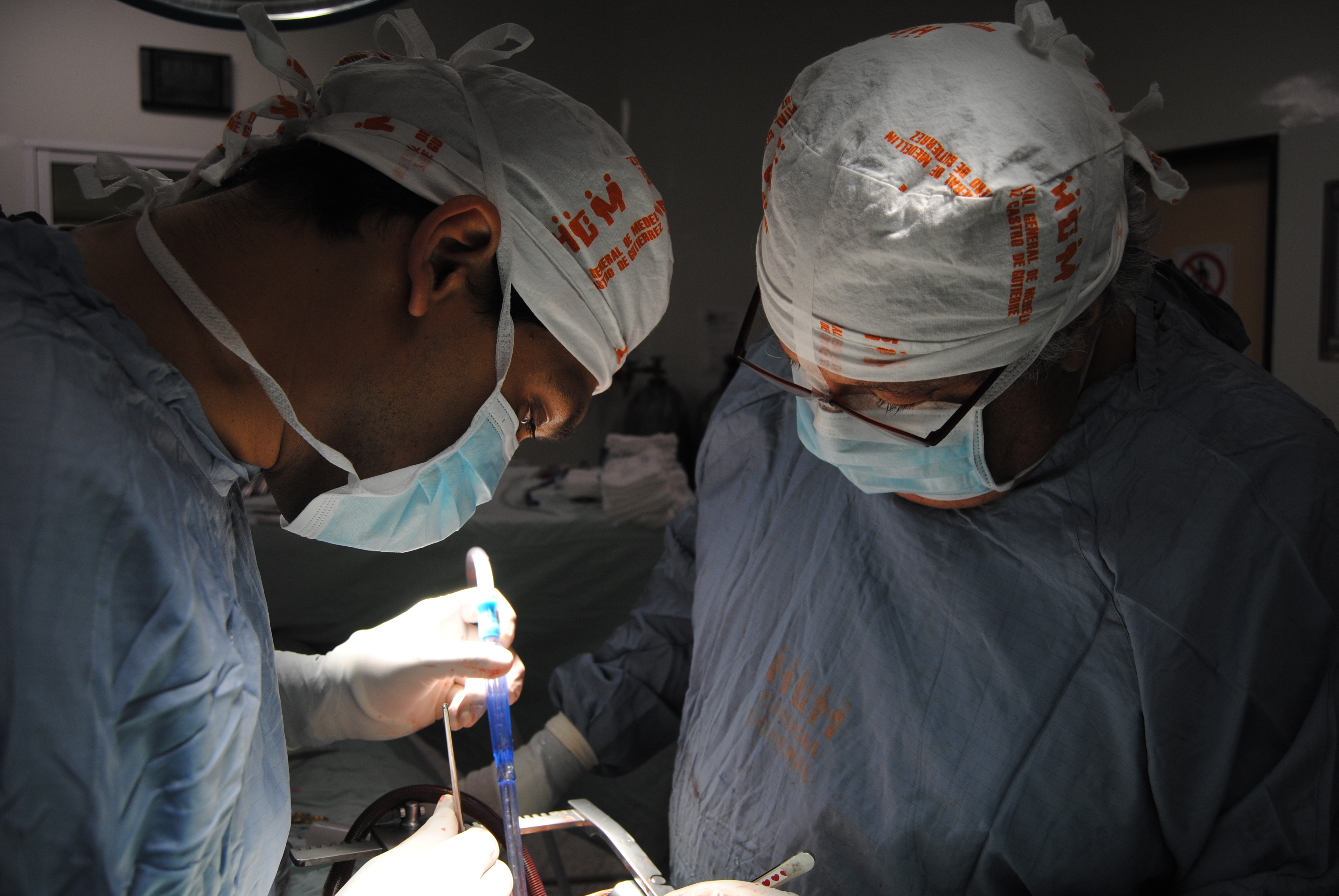
In the operating room with Dr. Meza at Hospital General de Medellin


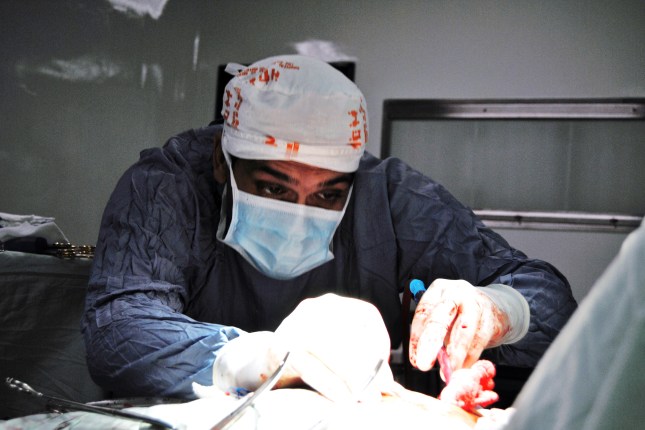
Dr. Meza, closing the chest

Dr. Meza, closing the chest

I apologize for the wordiness of this post – but much of what we discuss below is covered in the Bogotá, Cartagena and Mexicali books – the essential mechanisms of cardiac surgery; how procedures work, what is off-pump surgery, when do we use the bypass pump and other explanatory information.  But since I have am not writing a full book on Medellin, I wanted to offer a bit of a primer for my new internet readers here.  

Dr. Luis Meza

Cardiac surgeon, Hospital General de Medellin

After interviewing Dr. Meza and meeting many of the staff at Hospital General de Medellin, it was a pleasure to be invited to observe Dr. Meza and Dr. Urequi , the head of the cardiac surgery department in the operating room. Despite the patient’s young age, the surgery (for me as an observer) was knuckle-biting.  While the surgery itself was a fast, straight-forward and uncomplicated repair of an interauricular septal defect – it was the patient’s fragile condition that had me on the edge of my seat.

Complex patients The case was typical of many of the cases they see at public hospitals.  It was a young patient with newly diagnosed right-sided heart failure due to an uncorrected congenital defect.  The patient had traveled from another part of Colombia (one of the poorer regions) to have surgery.  The patient had initially presented to a local doctor after a syncopal event (passing out) and was found to have an enlarged heart, with a moderate sized pericardial effusion (fluid in the sac around the heart.)  After arriving at HGM, the patient was also diagnosed with a serious acquired coagulopathy (bleeding disorder).
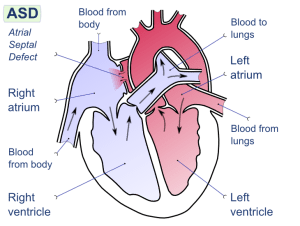
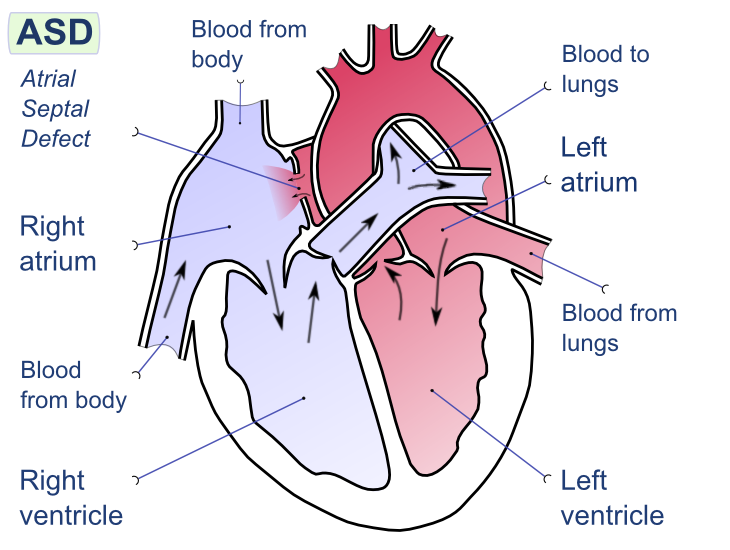
drawing courtesy of Wikipedia (Creative Commons licensing)

drawing courtesy of Wikipedia (Creative Commons licensing)

Since the patient had a hole between the left atrium leading into the right atrium, blood was being pushed from the left atrium (which is under higher pressure) to the low pressure right atrium.  Over the course of many years, this had caused the right atrium to enlarge massively.  As the right atrium was continuously being overfilled (from blood from the left side), the right side of the heart was being forced to work harder, and harder.  As the atrium continued to be overstretched, and enlarged – it also caused blood to be forced back into the pulmonary arteries – causing pulmonary hypertension.  While pre-surgical tests (echocardiogram, and cardiac catheterization) showed the patient to have (only) moderate pulmonary hypertension (with PA systolic pressures of 65mmHg).

Pre-operative testing is only part of the story

However, when we looked down, into the patient’s chest – it was obvious that the patient’s pulmonary vasculature was engorged and enlarged.  The patient’s heart was massive, and floppy (which is a sign the heart is working way too hard).  The patient also had peripheral edema which is another sign that the heart was not working well.

Potential for badness*

So even though, the surgery itself (described below) is not terribly technically challenging (‘like darning socks’ one surgeon used to say) – a lot can go wrong because the patient’s heart just doesn’t work that well to begin with.

* a not-so-scientific term to describe the likelihood of potential complications, problems or adverse outcomes.  These may be unavoidable circumstances in many cases – but the term is a reminder to remain vigilant even during so-called “simple” procedures.

Nitric oxide on hand

This OR does have nitric oxide  – (which we didn’t need), but was available nearby, just in case. Nitric oxide, milrinone and other medications are critical to have on hand in patients with pulmonary hypertension.  Some patients will never need it – others can’t survive without it – and sadly, (in patients with severe fixed pulmonary hypertension),  nothing – not even an assist device is going to make much difference.  While we can try to predict which patients are going to tolerate surgery, it’s not always clear-cut.  Tests (echocardiograms, right heart caths) can predict, tests can give probabilities – but sometimes tests are wrong, and patients who appear to have only ‘mild’ disease do very poorly (and visa versa). Sometimes, we just have to hold our breath as the patient comes off bypass and see.

canisters of nitric oxide in OR #1

canisters of nitric oxide in OR #1

As I mentioned in a previous post – cardiac surgery procedures can be a bit more complicated than many other surgical procedures, and while having something like nitric oxide on hand doesn’t seem like a big deal – it is.  (I have worked in several facilities without these capabilities).   It also speaks to the general preparedness of the staff. But despite the ‘potential for badness’ everything proceeded beautifully with  Drs. Urequi and Meza.  The case seemed to speed by despite the patient’s fragile health.  The entire CPB (cardiopulmonary bypass run) was just 26 minutes with a total cross-clamp time of 31 minutes.)

A little bit about cardiopulmonary bypass – the “heart-lung machine”

In comparison to the congenital repair above, average CPB times for valve replacement run around 100 minutes, 60 to 90 minutes for bypass surgery.  Patients have a higher risk of CPB related complications from hypo/ altered perfusion after long pump runs  .  As the clock begins to exceed 120 minutes, the risk of renal failure, cognitive changes and bleeding problems (as blood cells are continuous smashed/ broken / damaged within the pump) increase.

Perfusionist operating bypass pump aka "hart-lung machine"

Perfusionist operating bypass pump aka “heart-lung machine”

What is “Off-pump surgery”?  Nowadays, lots of people get real excited about “off-pump” surgery because they think that by not using the heart-lung machine, they can avoid a lot of the problems we mentioned above.  But that’s oversimplifying the entire scenario – and one that I find is often used to “sell” a particular surgeon or surgical program.  Off-pump can be safer than CPB cases, for some patients.  But these are usually not the patients that the surgery is sold to.. So it’s important to know what some of the terminology really means.  Just because Hospital X has billboards announcing that they now perform off pump surgery – doesn’t mean that it’s something you may even need or want.

Off pump is not for everyone

Patients have to be fairly healthy to tolerate cardiac surgery without the pump.  People with a lot of the problems that we thought were worsened by the pump, actually fare worse when we try to do surgery without the heart-lung machine. For example, we initially thought that Off-pump surgery would be great for people with renal insufficiency or ‘bad kidneys’ – particularly people who have kidney problems but aren’t quite sick enough to be on dialysis yet. The hope was that by avoiding the bypass pump we could avoid any damage to the kidneys from artificial flow/hypoperfusion because one of the biggest risks of cardiac surgery in patients with bad kidneys is that surgery will cause their kidneys to fail entirely, and make patients dialysis dependent.  Unfortunately, the research from all of the off-pump surgeries being done hasn’t really shown the benefits that we thought it would. So like most things in medicine, it’s not quite the panacea we had hoped it was.  But we did learn an incredible amount  of information once surgeons started trying off pump surgeries for coronary bypass.   Surprisingly, we learned that many of the complications, and conditions that we had long blamed on the CPB pump – weren’t related to the machine at all. But much of this is still being argued by cardiac surgeons every single day – each with different research studies giving different results..

More importantly, Off-pump not possible for many types of cardiac surgery

It’s technically impossible to do some types of cases without the bypass pump.  Coronary bypass surgery (CABG) is very different from other types of surgery, for example.  During bypass, the surgeon is only operating on the outside of the heart – attaching new conduit (arteries and veins) to arteries on the surface of the heart.  So – it isn’t absolutely essential to have the pump circulating blood for him while he’s operating – in some patients – we can let their body do it for us during surgery.

But replacing diseased heart valves, or the great vessels (aortic aneurysms etc) is a completely different entity.  In those surgeries – the surgeon is cutting into the heart or great vessels themselves.  It’s not possible to lop off the top of the aorta, operate on the aortic valve and not have blood being re-directed mechanically during this process.   Otherwise blood would just literally spill out into the chest and never oxygenate the brain and the rest of the body. (The only time we ever do this kind of procedure without a pump is during organ retrieval – for obvious reasons). It’s important to know these distinctions so people understand how the surgery actually proceeds.

For the case today – the surgeon has to make an incision through the side of the atria (wall of the heart chamber) to get to the hole on the inside wall of the heart.)  The surgeon then closes the hole with suture (and a patch, in some cases).  Some doctors do this in the cath lab without surgery – but that’s also controversal because the patch used in the cath procedures in the past has caused a high incidence of stroke.  In a young patient like the one here – you certainly wouldn’t want to risk it – particularly since we don’t know how well those patches hold up in the long term.

Cardiac surgeons operate at Hospital General de Medellin (HGM)

Cardiac surgeons operate at Hospital General de Medellin (HGM)

Overall evaluation of today’s case:

Safety checklists, and all pre-operative procedures were completed.  Patient was prepped and draped in an appropriate sterile fashion.  Antibiotics were administered within the recommended window (of time).  Appropriate records were maintained during the case.

Surgery proceeded normally and without incident.

Due to an underlying coagulopathy the patient did require administration of nonautologous blood products (4 units of packed red blood cells, 3 packets of platelets, and abumin) while on pump.  While the facility does not have a ‘cell-saver’ for washing and re-infusing shed blood, patient did receive autologous(their own) transfusion from the CPB pump. This blood, from the CPB circuit was returned to the patient to limit the amount of blood needed after surgery.  Hemoglobin at the conclusion of surgery was 9.6mg/dl, which is within acceptable parameters.

Hemostasis was obtained prior to chest closure, with only a small amount of chest tube drainage in the collection chamber at the time of transfer to the intensive care unit.

Surgical Apgarsdo not apply for cardiac cases due to the nature of the case, and use of CPB.  Mean pressure while on CPB was within an acceptable range.  Patient’s urinary output was less than anticipated during the case (150cc) despite the use of mannitol while on pump, but the patient responded well  (1000+) with volume infusion and the addition of furosemide.

The patient was hemodynamically stable during the entire case.  The was a very brief transitory period of hypotension (less than 5 minutes) near the conclusion of the case, which was immediately noted by anesthesia and treated with no recurrence.

On transfer to the unit, the patient was accompanied by several members of the OR staff, including Dr. Meza, the anesthesiologist, and the perfusionist, each of which did a face-to-face “hand-off” report of the patient (and medical history) including the course of the surgical procedure (including medications given, lab values, procedural details) to the Intensivist (physician), with ICU nursing staff attending to the patient.

Transesophageal echo (TEE) was not performed during this case, but was available if needed.

Also, I am happy to report there were no smartphones or “facebooking” in sight.  No one appeared engaged in anything other than the surgery at hand.

The cardiac OR


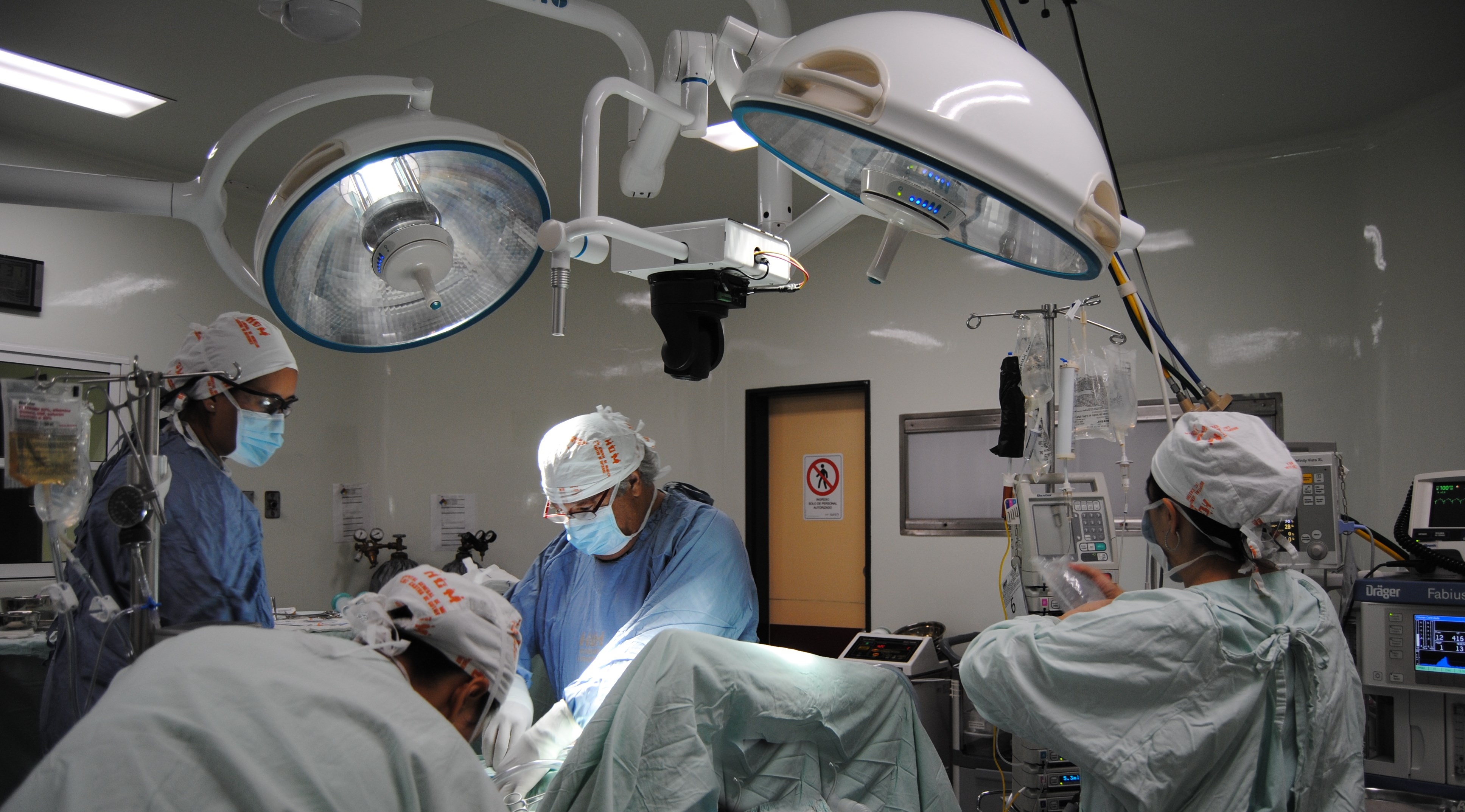
If you’ve never been to the cardiac operating room – it’s a completely different world, and not what most people expect.  For starters, unlike many areas of health care (particularly in the USA), the cardiac operating room is usually very well staffed.
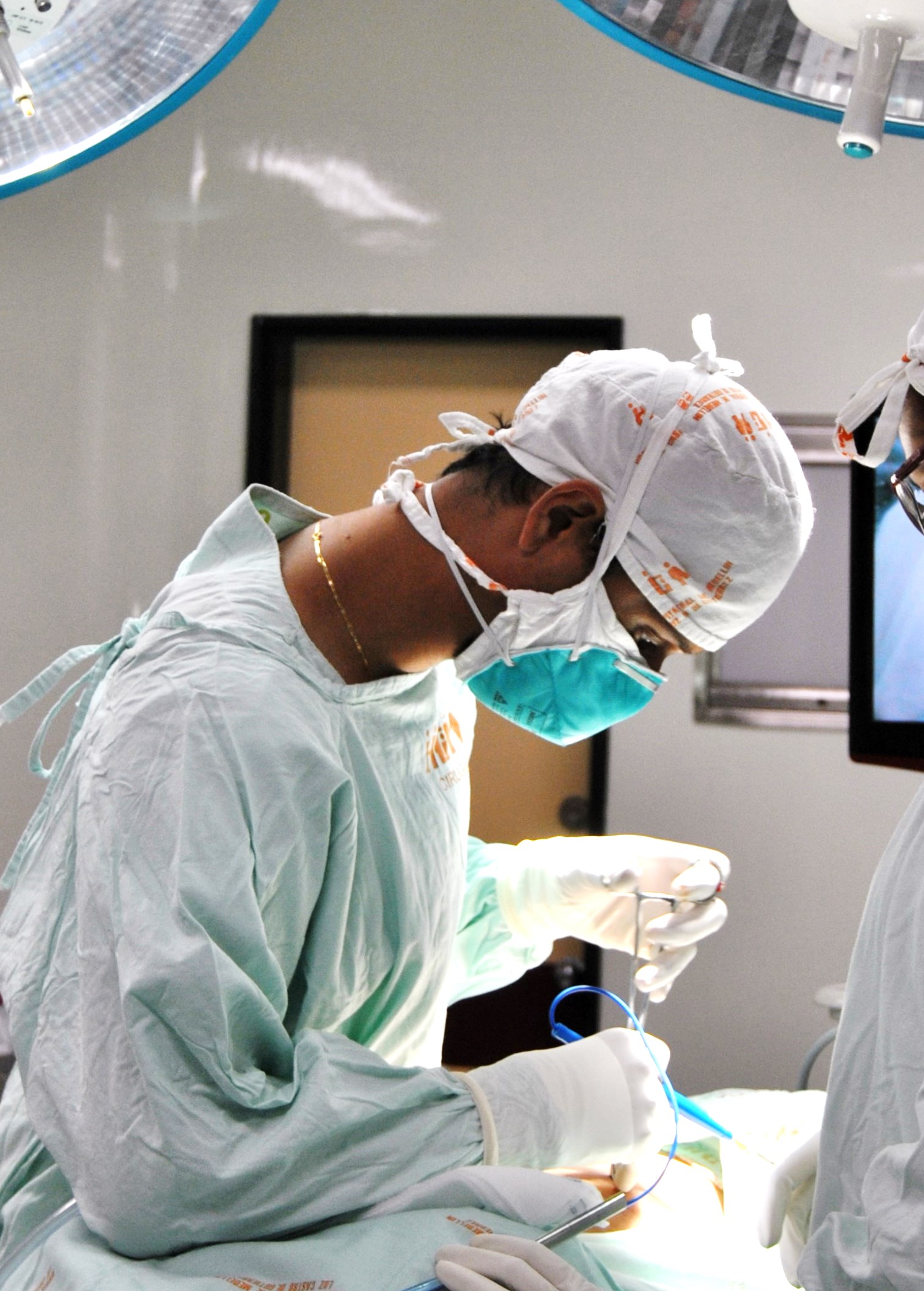
 OR

Just a few of the people working in the OR. (photo edited to preserve patient privacy)

For example, there were eight people working in the operating room today:

Dr. Luis Fernando Meza, cardiac surgeon

Dr. Bernando Leon Urequi O., cardiac surgeon

Dra. Elaine Suarez Gomez, cardiac anesthesiologist

Dr. Suarez observes her patient during surgery. (photo edited to preserve patient's privacy)

Dr. Suarez observes her patient during surgery. (photo edited to preserve patient’s privacy)

Ms. Catherine Cardona, “Jefe”/ Nurse who supervises the operating room

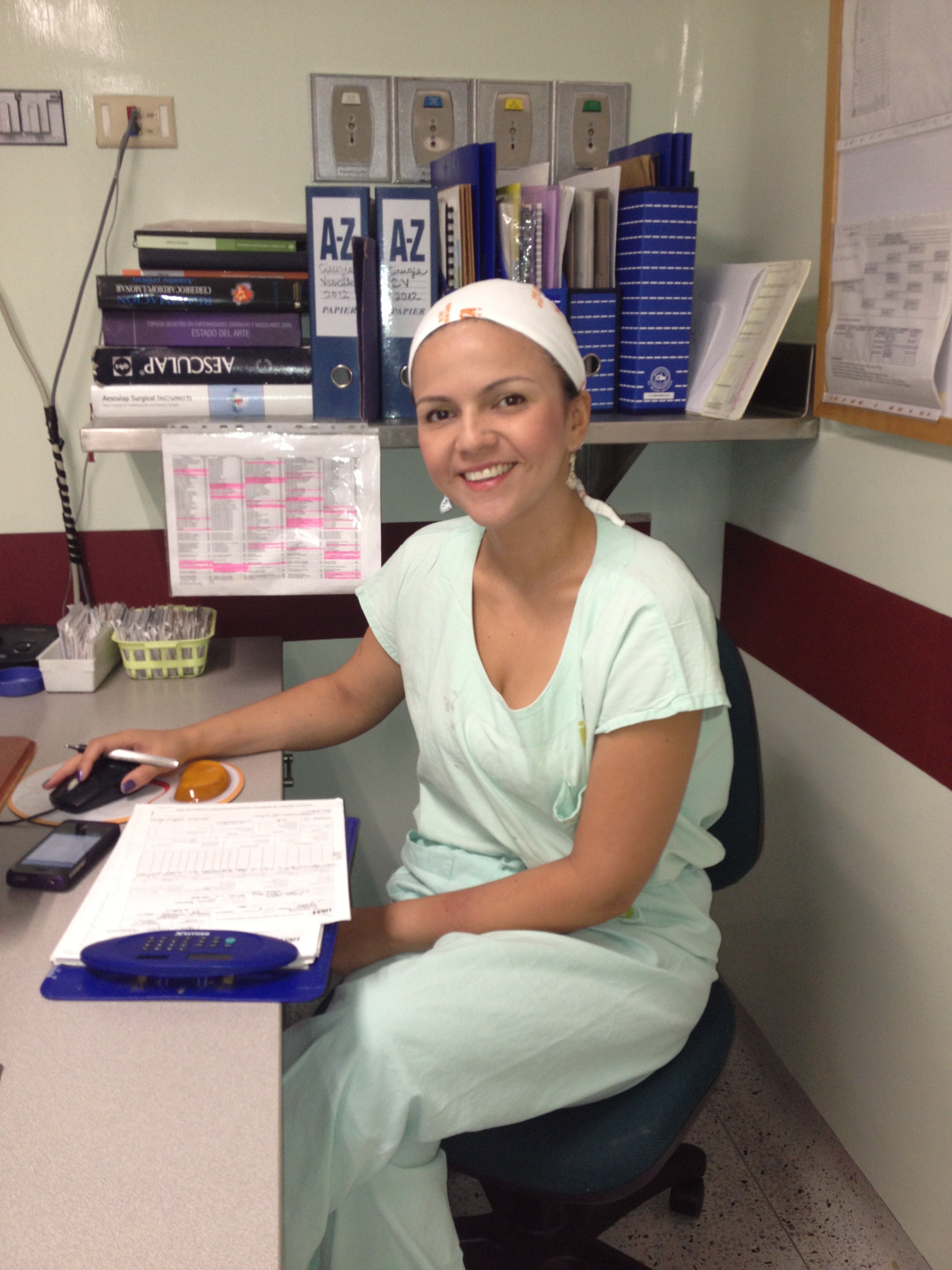
Ms. Diana Isobel Lopez,  Perfusionist (In Colombia, all perfusionists have an undergraduate degree in nursing, before obtaining a postgraduate degree in Perfusion).  The perfusionist is the person who ‘runs’ the cardiac bypass machine.

Ms. Laura Garcia, Instrumentadora (First Assist)

Angel, circulating nurse

Olga, another instrumentadora, who is training to work in the cardiac OR.

This is fairly typical for most institutions.

Secondly – it’s always a regimented, and checklist kind of place.  (I wish I could say that about every operating room – but it just wouldn’t be true.)  But cardiac ORs (without exception) always follow a very strict set of accounting procedures..

For starters – there are labels.. For the patient (arm bands), for the equipment (medications, blood products etc..)  even the room is labeled.

Sign on operating room door (edited for patient privacy)

Sign on operating room door (edited for patient privacy)

Then come the checklists..

Perfusionist Diana Lopez gathers information to begin her pre-operative checklist.

Perfusionist Diana Lopez gathers information to begin her pre-operative checklist.

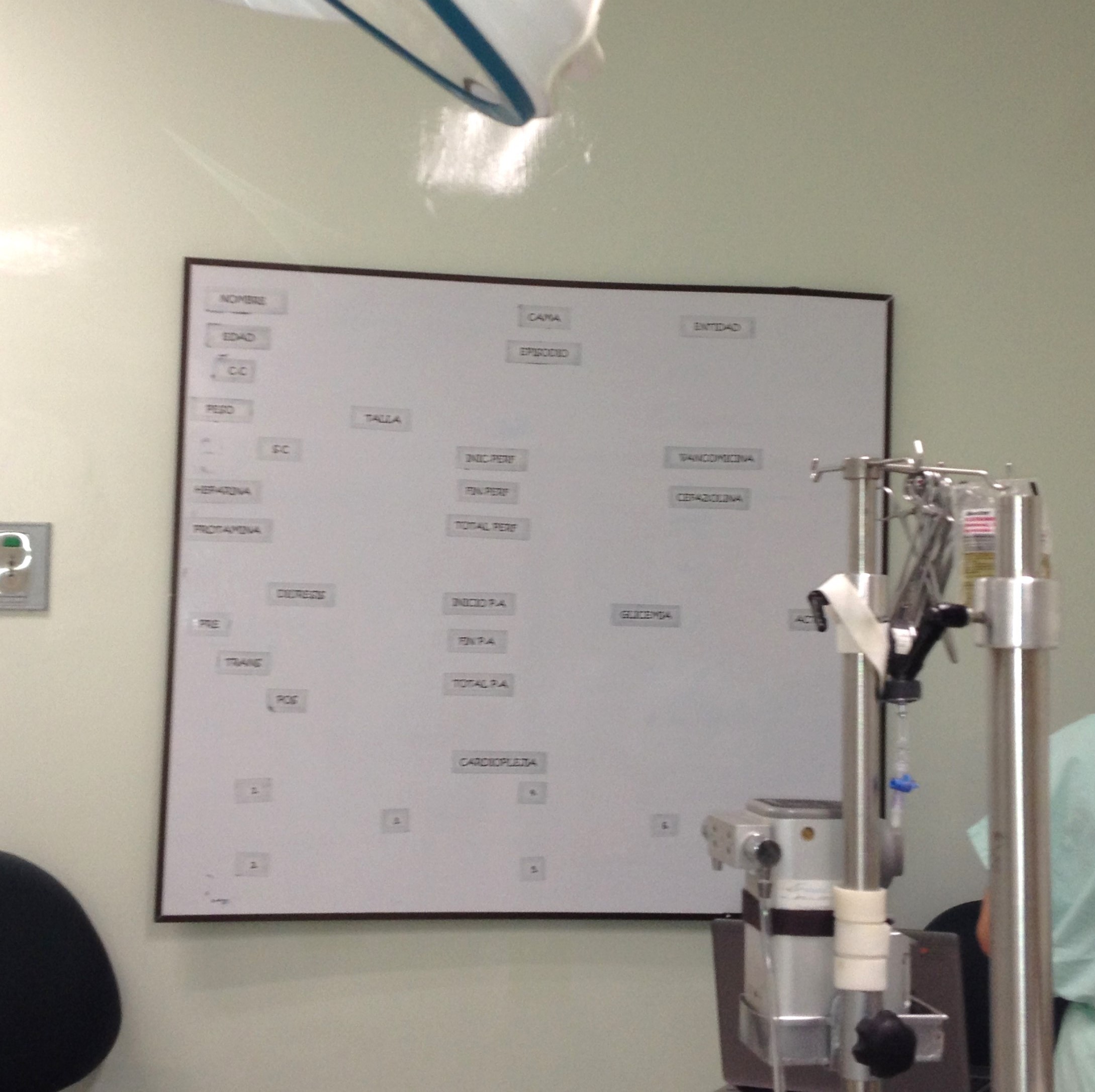
The general (WHO) operating room checklist.  The perfusionist’s checklist.. The anesthesiologist’s checklist.. and the big white cardiac checklist.

by then end of the case, this board will be full..

by the end of the case, this board will be full..

The staff attempts to anticipate every possible need and have it on hand ahead of time.  Whether it’s nitric oxide, blood, defibrillation equipment, or special medications – it’s already stocked and ready before the patient is ever wheeled in.

Most of these things are universal:

such as the principles of asepsis (preventing infection), patient safety and preventing intra-operative errors – no matter what hospital or country you are visiting (and when it comes to surgery – that’s the way it should be.)

Today was no exception..

In health care, we talk about “OR people” and “ER people”.. ER people are the MacGyvers of the world – people who thrive on adrenaline, excitement and the unexpected.  They are at their best when a tractor-trailer skids into a gas station, ignites and sets of a five-alarm fire that decimates a kindergarden, sending screaming children racing into the streets.. And God love them for having that talent..

But the OR.. that’s my personal area of tranquility.

This orderly, prepared environments is one of the reasons I love what I do.. (I am not a screaming, “by the seat-of-your-pants”/ ‘skin of your teeth’ kind of gal).  I don’t want to encounter surprises when it comes to my patient’s health – and I never ever want to be caught unprepared.   That’s not to say that I can’t handle an emergent cardiac patient crashing in the cath lab – it just means I’ve considered the scenarios before, (and have a couple of tricks up my sleeve) to make sure my patient is well taken care of (and expedite the process).

That logical, critical-thinking component of my personality is one of the reasons I am able to provide valuable and objective information when visiting hospitals and surgeons like Dr.  Urequi’s and Dr. Meza’s operating room at Hospital General de Medellin.

In OR #1 – cardiothoracic suite

As I mentioned in a previous post on Hospital General de Medellin, operating room suite #1 has been designated for cardiac and thoracic surgeries.  This works out well since the operating room itself, is modern and spacious (which is important because of the area needed when adding specialized cardiac surgery equipment like the CPB pump (aka heart-lung machine).  There are muliple monitors, which is important for the video-assisted thoracoscopy (VATS) thoracic cases but also helpful for the cardiac cases.  The surgeon is able to project the case as he’s performing it on a spare monitor, which allows everyone involved to see what’s going on during the case (and anticipate what he will need next) without shouting or crowding the operating room table.

Coordinating care by watching surgery

For instance, if the circulator looks up at the monitor and sees he is finishing (the bypasses for example), she can make sure both the instrumentadora and the anesthesiologist have the paddles and cables ready to gently defibrillate the heart if it needs a little ‘jump start’ back into normal rhythm..or collect lab samples, or double check medications, blood products or whatever else is needed at specific points during the surgery.

More on today’s case in our next post.

“Chose Colombia” campaign for medical tourism


As Colombia’s profile continues to rise as a medical tourism destination, Proexport is launching a new campaign which will air on international media such as the Discovery Health channel.  As reported in the Curacao Chronicle, Colombia is becoming a destination of choice for high complexity medical procedures, and expanding to include visitors from a myriad of destinations, including North America.


Historically, patients from the Caribbean have come to Colombia for medical tourism due to the lack of even basic services in most Caribbean nations – which is something travelers should keep in mind now that Barbados, and several other islands have launched their own medical tourism campaigns.

The growing role of Planet Hospital in Colombia

The only alarming part – appears to be the heavy participation of Planet Hospital in the world marketing of Colombian medical services.  Planet Hospital, a massively successful medical tourism company, which proudly exists in a ‘no mans’ land” of ethics (according to founder, Rudy Rupak).   The company also prides itself on its global forays into surrogacy and transplant tourism, both of which are highly controversal.

Selling babies… and organs

While people can continue to argue the ethics of the surrogacy baby trade, the murder of Chinese and other citizens for organ transplantation should give anyone pause.  Or the fact, that companies like Planet Hospital will send potential patients to someone who isn’t even trained in transplant

But that hasn’t stopped Planet Hospital in their quest, the ever-expanding global tourism empire has seemingly become more bulletproof in the last few months.  Multiple websites, blogs and news articles that detailed corruption and casualities (as well as problems behind the scenes) at Planet Hospital have seemingly disappeared.

Now it appears Planet Hospital will be adding  Colombia to it’s stables and laughing all the way to the bank.

Sunday lunch: the food of Antioquia


So, my talent runs short when photographing food..

tipico

As I may have mentioned before, the regional cooking of Colombia varies quite a bit.  Cartagena and the other Atlantic coastal areas, are famous for the Caribbean influence of the local cuisine which is heavy on fried plantanos, fish and a caribbean (caribe) curry type flavor.

Bogota, as a more mountainous but cosmopolitan area boasts a ready mix of flavors, but also have delicious traditional dishes such as Ajiaco, and  my personal favorite, morcilla.

We’ve talked about the tamals of Tolima.. and the vast array of fruits and vegetables, many of which only exist here (or in very specific areas of Colombia).  I have an intense love for chonteduro, feijoa and uchuva myself.. There is another blog, by a fellow traveler – who documents his delicious encounters with numerous varieties of Colombian fruit.

found mainly around Cali (and some parts of Panama)

found mainly around Cali (and some parts of Panama)

While I mainly write about surgery and such, I think it’s important that visitors to Colombia have a chance to experience the rich abundance of this country – and no where is it more evident than in the streets, fruit markets and grocery stores due to the readily availability of fruit.  No visitor to Colombia should ever leave thinking Colombian cuisine is just arepas, empanadas and frijoles.

concord grapes, uchuva, mangos, brevas, strawberries, guava and mangostinos are just a few of the delicious (and cheap!) fruit grown in Colombia

concord grapes, uchuva, mangos, brevas, strawberries, guava and mangostinos are just a few of the delicious (and cheap!) fruit grown in Colombia

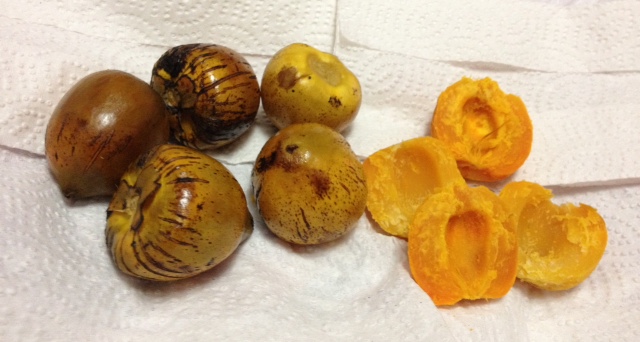
Mangostinos are a particular delight – with an inedible hard shell, but a creamy, smooth and amazingly rich/ sweet interior.

Mangostinos (and brevas) with rich creamy interior of mangostino visible.

Mangostinos (and brevas) with rich creamy interior of mangostino visible.

But the food of Medellin, the food of the ‘paisa’ has its own flavors.. Hard to know where to start – and you don’t want to get locked into thinking ‘bandeja paisa’ is all Medellin has to contribute to Colombia’s culinary culture.

But I am fortunate enough to live with a native Medellinesa, Diana, who (among other things) is an excellent cook, so I can pretty much label “Authentic Cuisine of Antioquia” to most of what comes out of the kitchen, with the exception of the few paltry and miserable offering of my own.  (I am not a good cook.)

DeAna, with Olle Petersson

Diana, with Olle Petersson

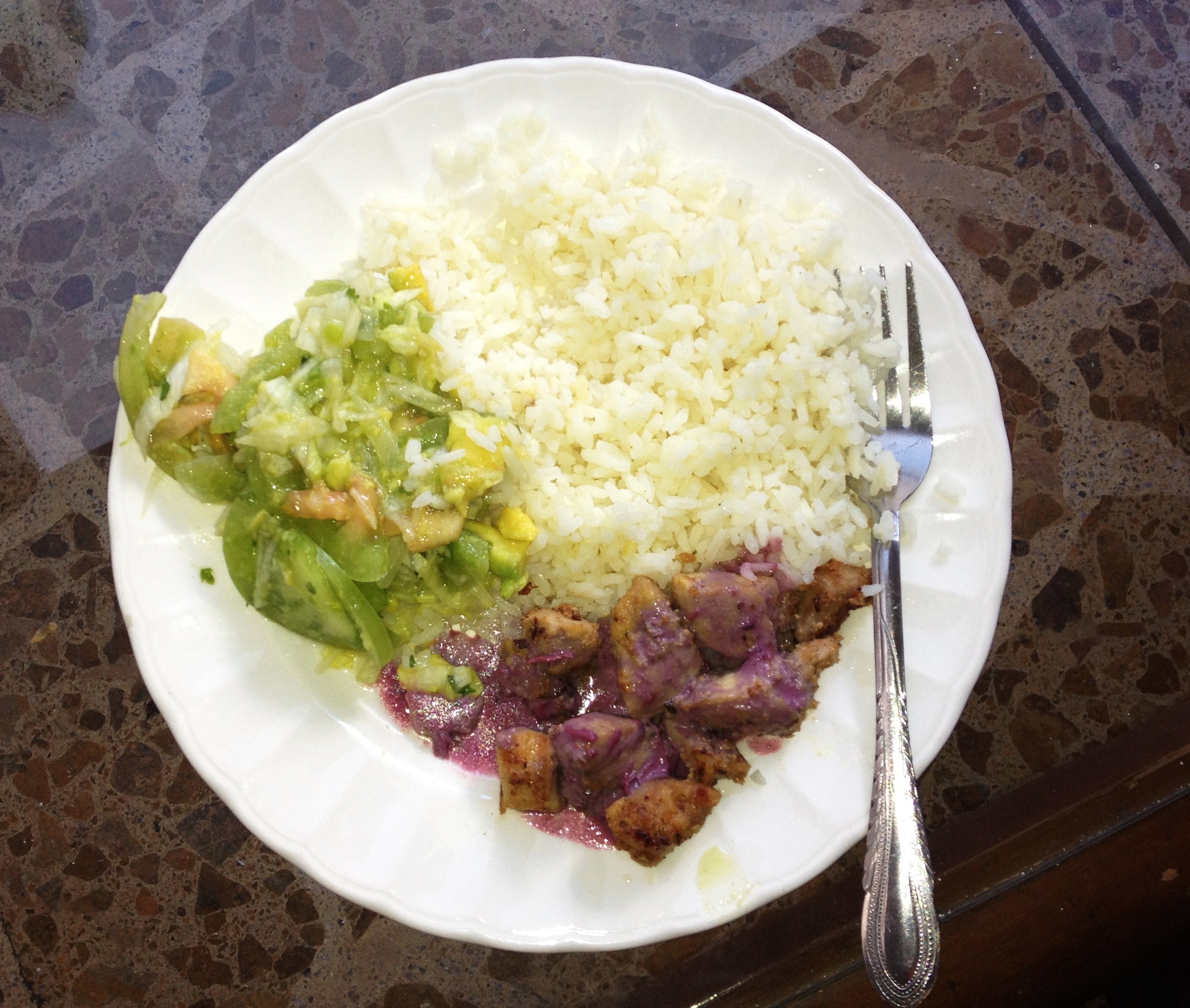
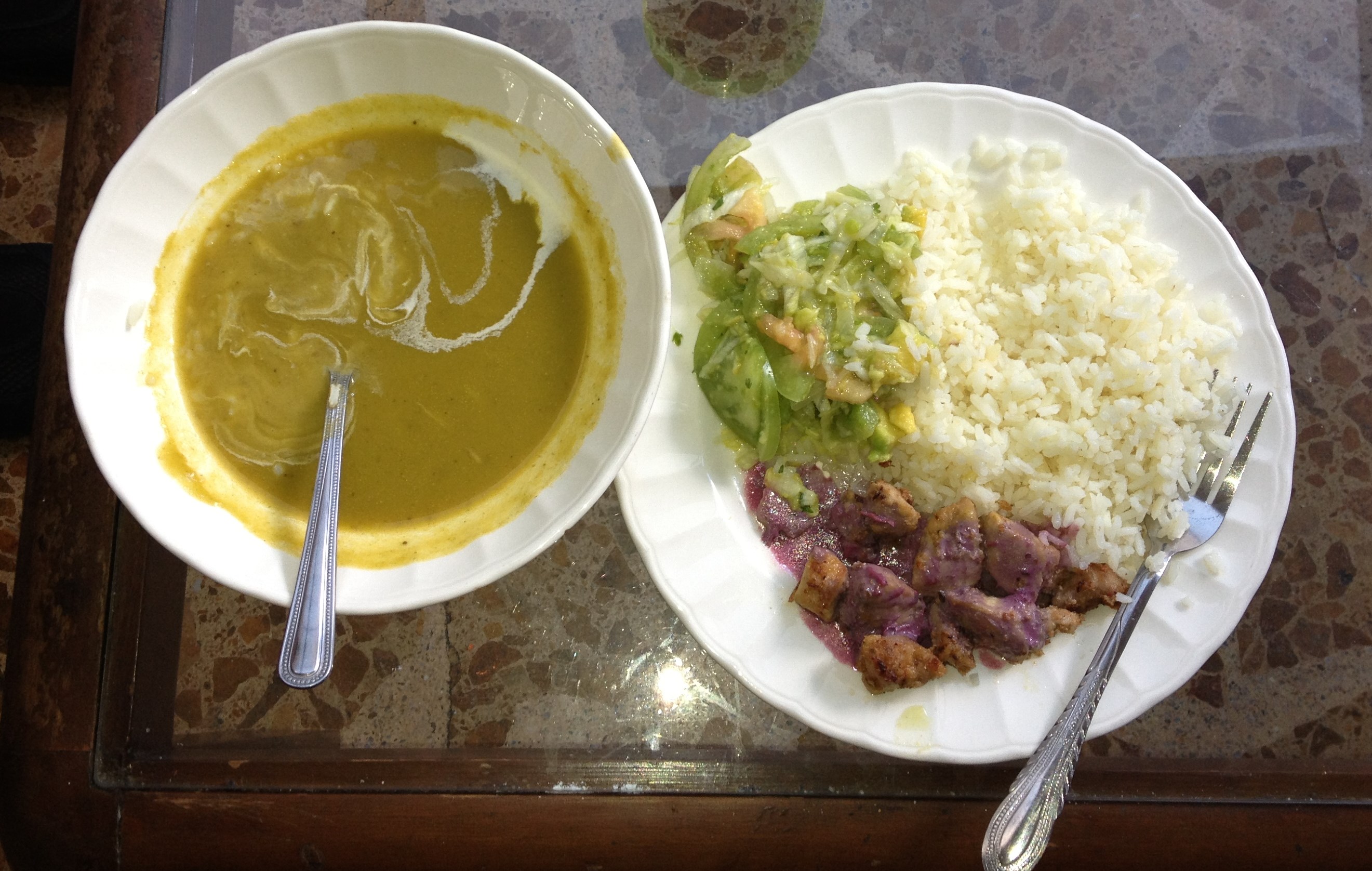
So for Father’s Day lunch, we had grilled pork with a grape sauce, rice and a ‘green salad’ made of green tomatos, mild onions, avocados and a light dressing along with a creamy vegetable soup.  (Sorry I don’t know all the foodie terms like compotes and such – but it was delicious all the same.)

creme of vegetable soup, pork with grape sauce, green salad and rice

creme of vegetable soup, pork with grape sauce, green salad and rice

the Drs. Meza and Suarez


Dr. Luis Fernando Meza Valencia, cardiac surgeon and his wife, Dra. Elaine Suarez Gomez, anesthesiologist have a terrific partnership as part of the Cardiac Surgery program at Hospital General de Medellin (HGM). (Hospital General de Medellin is one of just a few public hospitals that have heart surgery programs.)

Dr. Meza, a Cali native who trained at Fundacion Cardioinfantil under the instruction of Dr. Pablo Umana, Dr. Nestor Sandoval along with Dr. Maldonado now performs coronary bypass, valve replacement, surgery on the great vessels (such as ascending arch replacement, aortic aneurysm repair) at the Hospital General de Medellin as well as several smaller, private facilities like Clinica Las Vegas.

He has worked at HGM for 2 1/2 years since he moved from the public hospital in Manizales (in the coffee-growing region of central Colombia).

Dra. Elaine Suarez is a anesthesiologist who has specializes in cardiothoracic anesthesia.  She has been practicing for five years and is fluent in English and German in addition to her native Spanish.

High risk patients

Because HGM serves the public and many of their patients are impoverished, Dr. Meza and Dra. Suarez see a large number of rheumatic heart disease and endocarditis patients.  Many of these patients have had very limited preventative care or medical management of their underlying chronic health conditions.  A large number of these patients have significant co-morbid conditions such as diabetes,  chroic pulmonary disease, hypertension, hyperlipidemia, and nephropathies (kidney damage).  This subset of patients almost always presents in the midst of a cardiac emergency.

In the Consulta Externa

Dr. Meza reports that he usually spends at least an hour with his patients during the initial consultation, gathering information, examining the patient and explaining the necessary tests and treatments.

In the Operating Room

Haven’t had an opportunity to follow Dr. Meza to the operating room yet, but we did get to see Dra. Suarez in action.

Colombia ranked 11th in the world for plastic surgery: who says so??


No, not the World Health Organization (WHO), but another entity entirely, ISAPS.

Plastic surgeons in Mexico gather for a demonstration of techniques for breast reconstruction

Plastic surgeons in Mexico gather for a demonstration of techniques for breast reconstruction. Mexico is currently ranked #5 for number of plastic surgeries

 International Society of Aesthetic Plastic Surgery (ISAPS) recently published survey data ranking Colombia at 11th for volume according to the most recent statistics (2011) available.   211,879 total procedures were reported.  Colombia currently ranks #27th globally in population with a 2013 estimated population of 47 million.   Considering the modest population size of Colombia this statistic may reflect both Colombian cultural expectations and the growing trend of medical tourism.

Countries that perform the most cosmetic surgery procedures***:

1. United States: 1,094,146

2. Brazil: 905,124

3. China: 415,140

These top three nations also represent a total population of 1.86 billion people.  Brazil, in particular is also widely known as the medical tourism destination of choice for plastic surgery.

Plastic surgery in Colombia

Of the 211, 879 procedures, 65,075 or 30.7% were breast enhancement procedures.  Liposuction accounted for 23% of all cosmetic surgical procedures.

Dr. Reyes, a plastic surgeon in Bogota, Colombia operates on a patient

Dr. Reyes, a plastic surgeon in Bogota, Colombia operates on a patient

Questionable study results due to lack of participation

However, the accuracy of the data collected by a joint American – Brazilian team is questionable given the low percentage of participation by licensed member surgeons.  Out of 20,000 eligible ISAPS member surgeons, only 996 participated in the organization’s survey.  Additionally, of the .04 percent of surgeons reporting their surgical practices, 43% (431 surgeons) were based in the United States.  Of the remaining 565 surgeons represented the remainder of the worldwide plastic surgery community, 172 of these participants were from Brazil.  The final statistics provided for each country are based on estimates extrapolated from a representative sample from survey responses received.

Are the results any surprise, given the players?  But then again, maybe these results will encourage more Latin American surgeons (and surgeons in other countries) to participate more fully in the academic activities of their specialty societies.

*Mexico was also in the top five with 299,835 procedures.

***As an interesting aside, the island nation of Japan ranked fourth.

In the operating room with Dr. Wilfredy Castaño Ruiz


I am still working on several posts – but in the meantime, I wanted to post some photos from my visit to the operating room with Dr. Wilfredy Castaño Ruiz, one of the thoracic surgeons at Hospital General de Medellin.

Readers may notice that some of the content of my observations of the operating room have changed.. In reality, the reports haven’t changed – I have just chosen to share more of the information that I usually reserve for the books since I probably won’t get time for a “Medellin book”.  So, if you are squeamish, or if you don’t want to know – quit reading right about now…

It was a surprise to meet Dr. Wilfredy Castaño Ruiz because it turns out we’ve already met.  He was one of the fellows I encountered during one of my early interviews in Bogota, with Dr. Juan Carlos Garzon Ramirez at Fundacion Cardioinfantil.

Since then (which was actually back in the early spring of 2011), Dr. Castaño has completed his fellowship and come to Medellin.

Dr. Wilfredy Castaño Ruiz, thoracic surgeon at Hospital General de Medellin

Dr. Wilfredy Castaño Ruiz, thoracic surgeon at Hospital General de Medellin

Yesterday, I joined him in the operating room to observe a VATS decortication.  The case went beautifully.

Dra. Elaine Suarez Gomez, an anesthesiologist who specializes in cardiothoracic anesthesia managed the patient’s anesthesia during the case.  (This is important because anesthesia is more complicated in thoracic surgery because of such factors as double lumen intubation and selective uni-lung ventilation during surgery).

Anesthesia was well-managed during the case, with continuous hemodynamic monitoring.  There was no hypotension (low blood pressure) during the case, or hemodynamic instability.  Pulse oxymetry was maintained at 98% or above for the entire case.   Surgical Apgar: 8 (due to blood loss**)

Monitors at HGM are large and easily seen from all areas of the OR

Monitors at HGM are large and easily seen from all areas of the OR

Dr. Wilfredy Castaño Ruiz was assisted by Luz Marcela Echaverria Cifuentes, (RN, first assist*). The circulating nurse was a very nice fellow named Mauricio Lotero Lopez.

Enf. Luz Echaverria assists Dr. Wilfredy Castaño Ruiz during surgery.

Enf. Luz Echaverria assists Dr. Wilfredy Castaño Ruiz during surgery.

*”Registered nurse” is not terminology common to Colombia, but this is the equivalent position in Colombia, which requires about six years of training.)

** In this particular case, the surgical apgar of 8 is misleading.  The anesthesia was excellent, and the surgery proceeded very well.  However, due to the nature of surgical decortication (for a loculated pleural effusion/ empyema) there is always some bleeding as the thick, infected material is pulled from the lung’s surface.  This bleeding was not excessive for this type of surgery, nor was it life-threatening in nature.

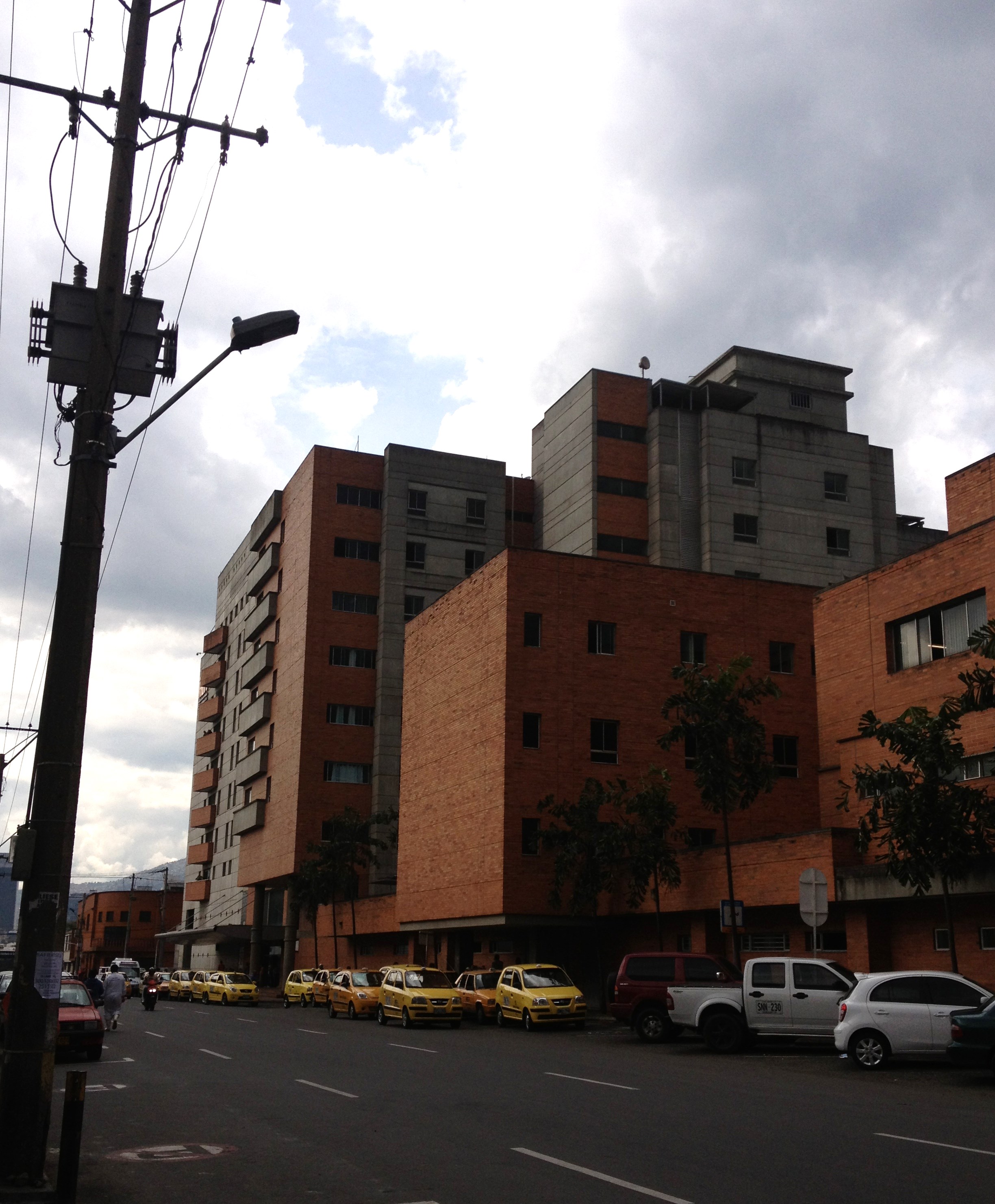
Hospital General de Medellin


I spent the day yesterday at Hospital General de Medellin, and I am going back today for another visit.  I’ll be revising and updating this post as I go along.  I spend most of the day with Dr. Luis Fernando Meza Valencia and Dra. Elaine Suarez Gomez, but we will talk more about these two doctors in another post.

Hospital General de Medellin

Carrera 48 No 30-102

Medellin

574) 384 7475

Emergencies: : 018000411124 / (574) 262 17 43

Hospital General de Medellin

Hospital General de Medellin

Quite frankly, it is the nicest public facility I have ever been in, anywhere.  The entire facility (and I was peeking in corners and closets) was spotless – and that included the operating rooms.

It’s the main trauma center for Medellin, and the largest public facility with a large well-coordinated ER.  (The ER was quiet and orderly during my visit – despite being about half-full.

ambulance

The hospital is well-equipped with 3 mixed ICUs, a step-down unit, a  large neonatal ward and NICU, pediatric ICU along with multiple wards for medical patients. There are nine operating rooms, including a dedicated cardiac operating room (quirofano #1), and a separate cath lab with OR capabilities (for endovascular and hybrid procedures.)

Attached to the hospital is the ‘Consulta Externa’ where the doctors see their patients, along with a non-invasive cardiology clinic (echocardiograms, stress tests and the like, and laboratory.  I have certainly missed several departments – as I passed auditoriums and several other departments during my visit, but all of the major elements are included above.

They do not have a PET scanner at Hospital General de Medellin (but given the expense of this machinery, there are only a few PET scanners in Colombia.  There are only  two in Bogotá – one at the Fundacion Santa Fe de Bogotá, and one at the National Cancer Institute.)

There is no international patient division or department, but the website has a full English version, many of the physicians speak English (about half of the physicians I met), and they are very welcoming.

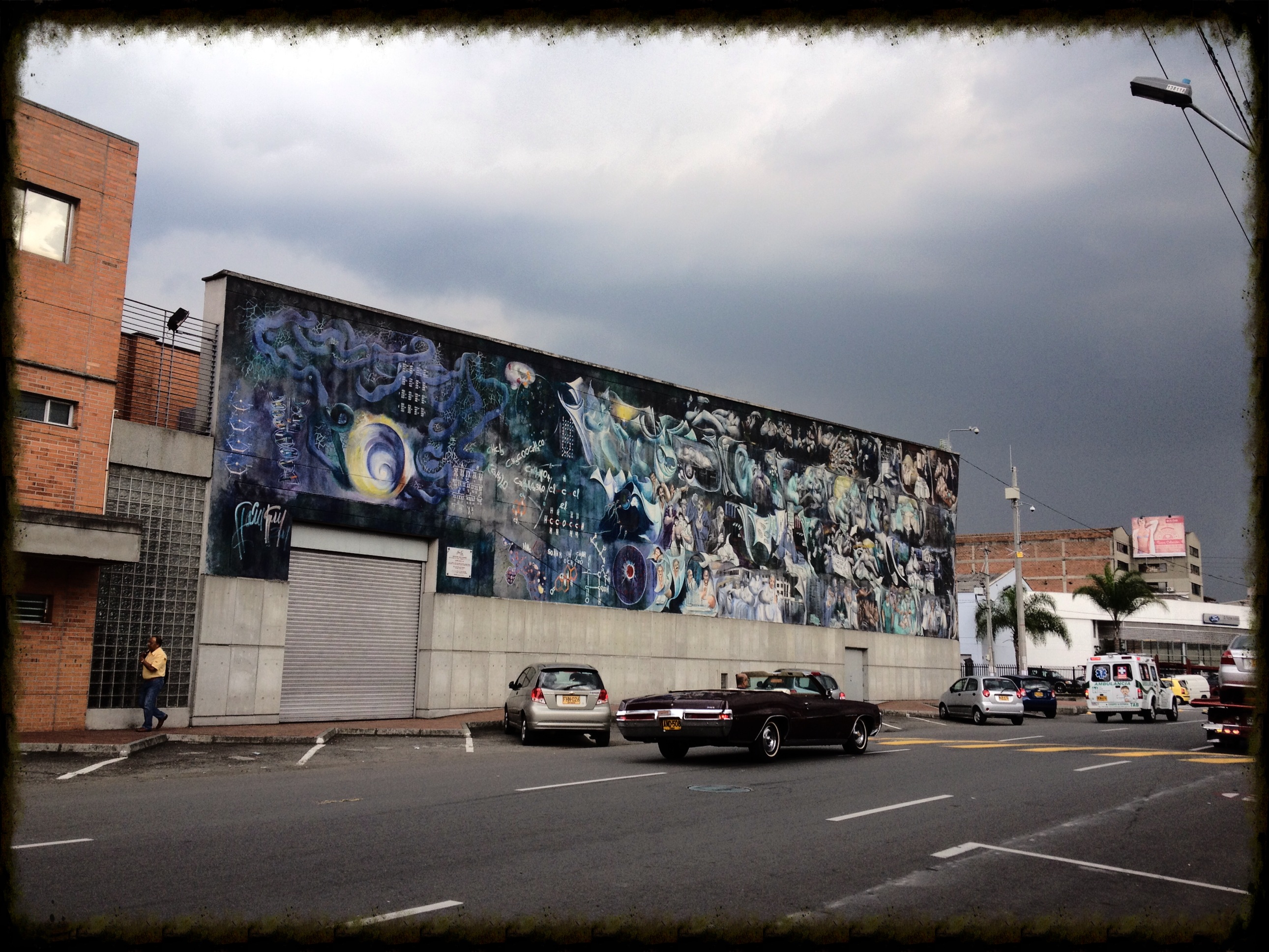
Mural at Hospital General de Medellin

Mural at Hospital General de Medellin

The hospital, while busy was not as hectic or crowded as some of the other facilities I have seen in the past.  I’ll be at Hospital General for multiple visits, so I will have plenty of opportunities to see if that changes.

High-risk Obstetrics Program

During my visit – Dr. Carlos Garcia, the Chief of Surgery was talking about  the new obstetrics outpatient monitoring program along with several other services that are fairly uncommon for publicly funded hospital facilities.

I only received the basics of the OB program (because OB is not really my area of expertise) but as Dr. Garcia explained – it’s an out-patient monitoring program for high-risk obstetrics patients.  Patients are equipped with fetal monitors so that they can be in their own homes during much of their gestational period, instead of confined to the hospital.  The monitors are reviewed continuously by the staff at Hospital General – and if there are any serious abnormalities or evidence of fetal distress, not only is the patient contacted – but an ambulance is automatically sent to bring in the patient for urgent/ emergent evaluation and treatment.

HIPEC hits its stride


When I first started reading and writing about HIPEC (after meeting Dr. Arias in Bogota), I was met with a lot of skepticism and sometimes even ridicule, primarily from American physicians.

Several of them derided HIPEC with a vehemence that was unexpected – a vigor that was quite surprising and almost venomous in nature.  I was accused of being ignorant, or more maliciously, a possible fraud or trickster – even when I explained my sources (scientific and medical journals) and reminded critics that I was on a fact-finding mission, not a sales pitch.

I don’t sell HIPEC.  I don’t sell any medical equipment, treatment, or procedures. I don’t market or sell surgeons.  About the only thing I sell  is the occasional copy of one of my books.

No – I don’t sell much.  Instead, I write, I research and I do my best to provide information, and resources to people who are interested in the same topics.  As a healthcare provider, my reasons for writing about these topics may very well differ from my readers – but that’s more perspective than anything else.

When it comes to HIPEC – I was attracted because HIPEC offers hope.  Not in a wild, faith-healing, magic pill , “100% absolutely guaranteed, for positively everyone” kind of way, but in a quiet, evolving medicine kind of way.. Meaning that we are still learning about it -and who it can help..

So it was disappointing to have that hope dimmed by other medical professionals, but then – sometimes procedures and treatments that sound promising DO end up disappointing.  So I’ve kept an eye on the research, and kept reading..

It’s been a on-going process.. Imagine my delight to see that over SIXTY articles have been published in medical & research journals on HIPEC in just the last six months.. Some with great results, some okay, – some detailing complications..

(I’ve posted some of the citations here).  Most of the articles aren’t free but there is a notation to the ones that are.

1. Intrapleural hyperthermic perfusion chemotherapy in subjects with metastatic pleural malignancies.
  Işık AF, Sanlı M, Yılmaz M, Meteroğlu F, Dikensoy O, Sevinç A, Camcı C, Tunçözgür B, Elbeyli L.
  Respir Med. 2013 May;107(5):762-7. doi: 10.1016/j.rmed.2013.01.010. Epub 2013 Feb 23.
  PMID: 23462236 [PubMed – in process]  This is actually HITHOC
  Related citations
2. Patients at risk for peritoneal surface malignancy of colorectal cancer origin: the role of second look laparotomy.
  Brücher B, Stojadinovic A, Bilchik A, Protic M, Daumer M, Nissan A, Itzhak A.
  J Cancer. 2013;4(3):262-9. doi: 10.7150/jca.5831. Epub 2013 Mar 15.
  PMID: 23459716 [PubMed] Free PMC Article
  Related citations
3. Cytoreductive surgery and hyperthermic intraperitoneal chemotherapy for peritoneal carcinomatosis (HIPEC): the Danish experience.
  Iversen LH, Rasmussen PC, Hagemann-Madsen R, Laurberg S.
  Colorectal Dis. 2013 Mar 4. doi: 10.1111/codi.12185. [Epub ahead of print]
  PMID: 23458368 [PubMed – as supplied by publisher]
  Related citations
4. Complications and toxicities after cytoreductive surgery and hyperthermic intraperitoneal chemotherapy.
  Canda AE, Sokmen S, Terzi C, Arslan C, Oztop I, Karabulut B, Ozzeybek D, Sarioglu S, Fuzun M.
  Ann Surg Oncol. 2013 Apr;20(4):1082-7. doi: 10.1245/s10434-012-2853-x. Epub 2013 Mar 2.
  PMID: 23456387 [PubMed – in process]
  Related citations
5. The role of perioperative systemic chemotherapy in diffuse malignant peritoneal mesothelioma patients treated with cytoreductive surgery and hyperthermic intraperitoneal chemotherapy.
  Deraco M, Baratti D, Hutanu I, Bertuli R, Kusamura S.
  Ann Surg Oncol. 2013 Apr;20(4):1093-100. doi: 10.1245/s10434-012-2845-x. Epub 2013 Mar 2.
  PMID: 23456386 [PubMed – in process]
  Related citations
6. Extensive cytoreductive surgery for appendiceal carcinomatosis: morbidity, mortality, and survival.
  Wagner PL, Austin F, Maduekwe U, Mavanur A, Ramalingam L, Jones HL, Holtzman MP, Ahrendt SA, Zureikat AH, Pingpank JF, Zeh HJ, Bartlett DL, Choudry HA.
  Ann Surg Oncol. 2013 Apr;20(4):1056-62. doi: 10.1245/s10434-012-2791-7. Epub 2013 Mar 2.
  PMID: 23456385 [PubMed – in process]
  Related citations
7. Body surface area predicts plasma oxaliplatin and pharmacokinetic advantage in hyperthermic intraoperative intraperitoneal chemotherapy.
  Leinwand JC, Bates GE, Allendorf JD, Chabot JA, Lewin SN, Taub RN.
  Ann Surg Oncol. 2013 Apr;20(4):1101-4. doi: 10.1245/s10434-012-2790-8. Epub 2013 Mar 2.
  PMID: 23456384 [PubMed – in process] Free PMC Article
  Related citations
8. Assessment of neoadjuvant chemotherapy on operative parameters and outcome in patients with peritoneal dissemination from high-grade appendiceal cancer.
  Turner KM, Hanna NN, Zhu Y, Jain A, Kesmodel SB, Switzer RA, Taylor LM, Richard Alexander H Jr.
  Ann Surg Oncol. 2013 Apr;20(4):1068-73. doi: 10.1245/s10434-012-2789-1. Epub 2013 Mar 2.
  PMID: 23456383 [PubMed – in process]
  Related citations
9. Surveillance MR imaging is superior to serum tumor markers for detecting early tumor recurrence in patients with appendiceal cancer treated with surgical cytoreduction and HIPEC.
  Low RN, Barone RM, Lee MJ.
  Ann Surg Oncol. 2013 Apr;20(4):1074-81. doi: 10.1245/s10434-012-2788-2. Epub 2013 Mar 2.
  PMID: 23456382 [PubMed – in process]
  Related citations
10. Cytoreductive surgery with hyperthermic intraperitoneal chemotherapy in peritoneal carcinomatosis from rectal cancer.
  Votanopoulos KI, Swett K, Blackham AU, Ihemelandu C, Shen P, Stewart JH, Levine EA.
  Ann Surg Oncol. 2013 Apr;20(4):1088-92. doi: 10.1245/s10434-012-2787-3. Epub 2013 Mar 2.
  PMID: 23456381 [PubMed – in process]
  Related citations
11. Hyperthermic intraperitoneal chemotherapy in patients with peritoneal carcinomatosis: role of heat shock proteins and dissecting effects of hyperthermia.
  Pelz JO, Vetterlein M, Grimmig T, Kerscher AG, Moll E, Lazariotou M, Matthes N, Faber M, Germer CT, Waaga-Gasser AM, Gasser M.
  Ann Surg Oncol. 2013 Apr;20(4):1105-13. doi: 10.1245/s10434-012-2784-6. Epub 2013 Mar 2.
  PMID: 23456378 [PubMed – in process]
  Related citations
12. Risk factors for recurrence following complete cytoreductive surgery and HIPEC in colorectal cancer-derived peritoneal surface malignancies.
  Königsrainer I, Horvath P, Struller F, Forkl V, Königsrainer A, Beckert S.
  Langenbecks Arch Surg. 2013 Jun;398(5):745-9. doi: 10.1007/s00423-013-1065-6. Epub 2013 Mar 1.
  PMID: 23456355 [PubMed – in process]
  Related citations
13. Assessment of clinical benefit and quality of life in patients undergoing cytoreduction and Hyperthermic Intraperitoneal Chemotherapy (HIPEC) for management of peritoneal metastases.
  Zhu Y, Hanna N, Boutros C, Alexander HR Jr.
  J Gastrointest Oncol. 2013 Mar;4(1):62-71. doi: 10.3978/j.issn.2078-6891.2012.053.
  PMID: 23450068 [PubMed] Free PMC Article
  Related citations
14. Laparoscopic hyperthermic intraperitoneal chemotherapy (HIPEC) for palliative treatment of malignant ascites from gastrointestinal stromal tumours.
  Ong E, Diven C, Abrams A, Lee E, Mahadevan D.
  J Palliat Care. 2012 Winter;28(4):293-6. No abstract available.
  PMID: 23413766 [PubMed – indexed for MEDLINE]
  Related citations
15. A prospective multicenter phase II study evaluating multimodality treatment of patients with peritoneal carcinomatosis arising from appendiceal and colorectal cancer: the COMBATAC trial.
  Glockzin G, Rochon J, Arnold D, Lang SA, Klebl F, Zeman F, Koller M, Schlitt HJ, Piso P.
  BMC Cancer. 2013 Feb 7;13:67. doi: 10.1186/1471-2407-13-67.
  PMID: 23391248 [PubMed – in process] Free PMC Article
  Related citations
16. Heated intraperitoneal chemotherapy in appendiceal cancer treatment.
  Cianos R, Lafever S, Mills N.
  Clin J Oncol Nurs. 2013 Feb;17(1):84-7, 90. doi: 10.1188/13.CJON.84-87.
  PMID: 23372101 [PubMed – in process]
  Related citations
17. Aggressive locoregional management of recurrent peritoneal sarcomatosis.
  Baumgartner JM, Ahrendt SA, Pingpank JF, Holtzman MP, Ramalingam L, Jones HL, Zureikat AH, Zeh HJ 3rd, Bartlett DL, Choudry HA.
  J Surg Oncol. 2013 Mar;107(4):329-34. doi: 10.1002/jso.23232. Epub 2013 Feb 5.
  PMID: 23386388 [PubMed – indexed for MEDLINE]
  Related citations
18. A Phase I Trial of Thermal Sensitization Using Induced Oxidative Stress in the Context of HIPEC.
  Harrison LE, Tiesi G, Razavi R, Wang CC.
  Ann Surg Oncol. 2013 Jun;20(6):1843-50. doi: 10.1245/s10434-013-2874-0. Epub 2013 Jan 26.
  PMID: 23354567 [PubMed – in process]
  Related citations
19. Hyperthermic intraperitoneal chemotherapy with carboplatin for optimally-cytoreduced, recurrent, platinum-sensitive ovarian carcinoma: a pilot study.
  Argenta PA, Sueblinvong T, Geller MA, Jonson AL, Downs LS Jr, Carson LF, Ivy JJ, Judson PL.
  Gynecol Oncol. 2013 Apr;129(1):81-5. doi: 10.1016/j.ygyno.2013.01.010. Epub 2013 Jan 23.
  PMID: 23352917 [PubMed – indexed for MEDLINE]
1. Accuracy of MDCT in the preoperative definition of Peritoneal Cancer Index (PCI) in patients with advanced ovarian cancer who underwent peritonectomy and hyperthermic intraperitoneal chemotherapy (HIPEC).
  Mazzei MA, Khader L, Cirigliano A, Cioffi Squitieri N, Guerrini S, Forzoni B, Marrelli D, Roviello F, Mazzei FG, Volterrani L.
  Abdom Imaging. 2013 Jun 7. [Epub ahead of print]
  PMID: 23744439 [PubMed – as supplied by publisher]
  Related citations
2. Cytoreductive surgery and intraperitoneal chemotherapy for treatment of peritoneal carcinomatosis from colorectal origin.
  Losa F, Barrios P, Salazar R, Torres-Melero J, Benavides M, Massuti T, Ramos I, Aranda E.
  Clin Transl Oncol. 2013 Jun 6. [Epub ahead of print]
  PMID: 23740133 [PubMed – as supplied by publisher]
  Related citations
3. Iterative cytoreductive surgery and hyperthermic intraperitoneal chemotherapy for recurrent peritoneal metastases.
  Chua TC, Quinn LE, Zhao J, Morris DL.
  J Surg Oncol. 2013 Jun 5. doi: 10.1002/jso.23356. [Epub ahead of print]
  PMID: 23737041 [PubMed – as supplied by publisher]
  Related citations
4. Importance of standardizing the dose in hyperthermic intraperitoneal chemotherapy (HIPEC): a pharmacodynamic point of view.
  Mas-Fuster MI, Ramon-Lopez A, Nalda-Molina R.
  Cancer Chemother Pharmacol. 2013 Jun 5. [Epub ahead of print] No abstract available.
  PMID: 23736155 [PubMed – as supplied by publisher]
  Related citations
5. Cytoreductive surgery and hyperthermic intraperitoneal chemotherapy for peritoneal carcinomatosis from small bowel adenocarcinoma.
  Sun Y, Shen P, Stewart JH, Russell GB, Levine EA.
  Am Surg. 2013 Jun;79(6):644-8.
  PMID: 23711278 [PubMed – in process]
  Related citations
6. Cytoreductive surgery with hyperthermic intraperitoneal chemotherapy in peritoneal sarcomatosis.
  Randle RW, Swett KR, Shen P, Stewart JH, Levine EA, Votanopoulos KI.
  Am Surg. 2013 Jun;79(6):620-4.
  PMID: 23711273 [PubMed – in process]
  Related citations
7. Prognostic Factors of Peritoneal Metastases from Colorectal Cancer following Cytoreductive Surgery and Perioperative Chemotherapy.
  Yonemura Y, Canbay E, Ishibashi H.
  ScientificWorldJournal. 2013 Apr 18;2013:978394. doi: 10.1155/2013/978394. Print 2013.
  PMID: 23710154 [PubMed – in process] Free PMC Article
  Related citations
8. Is there a role for intraperitoneal administration of heparin in hyperthermic intraperitoneal chemotherapy (HIPEC) for peritoneal carcinomatosis of colorectal cancer origin? Current data and future orientations.
  Seretis F, Seretis C.
  Med Hypotheses. 2013 May 13. doi:pii: S0306-9877(13)00221-1. 10.1016/j.mehy.2013.04.040. [Epub ahead of print]
  PMID: 23680001 [PubMed – as supplied by publisher]
  Related citations
9. The benefit of intraperitoneal chemotherapy for the treatment of colorectal carcinomatosis.
  Francescutti V, Rivera L, Seshadri M, Kim M, Haslinger M, Camoriano M, Attwood K, Kane JM 3rd, Skitzki JJ.
  Oncol Rep. 2013 Jul;30(1):35-42. doi: 10.3892/or.2013.2473. Epub 2013 May 15.
  PMID: 23673557 [PubMed – in process]
  Related citations
10. Clinical study of cisplatin hyperthermic intraperitoneal perfusion chemotherapy in combination with docetaxel, 5-flourouracil and leucovorin intravenous chemotherapy for the treatment of advanced-stage gastric carcinoma.
  Zhibing W, Qinghua D, Shenglin M, Ke Z, Kan W, Xiadong L, Pengjun Z, Ruzhen Z.
  Hepatogastroenterology. 2013 May 10;60(128). doi: 10.5754/hge13038. [Epub ahead of print]
  PMID: 23598741 [PubMed – as supplied by publisher]
  Related citations
11. Outcome of patients with aggressive pseudomyxoma peritonei treated by cytoreductive surgery and intraperitoneal chemotherapy.
  Arjona-Sanchez A, Muñoz-Casares FC, Casado-Adam A, Sánchez-Hidalgo JM, Ayllon Teran MD, Orti-Rodriguez R, Padial-Aguado AC, Medina-Fernández J, Ortega-Salas R, Pulido-Cortijo G, Gómez-España A, Rufián-Peña S.
  World J Surg. 2013 Jun;37(6):1263-70. doi: 10.1007/s00268-013-2000-2.
  PMID: 23532601 [PubMed – in process]
  Related citations
12. Treatment of peritoneal carcinomatosis from breast cancer by maximal cytoreduction and HIPEC: A preliminary report on 5 cases.
  Cardi M, Sammartino P, Framarino ML, Biacchi D, Cortesi E, Sibio S, Accarpio F, Luciani C, Palazzo A, di Giorgio A.
  Breast. 2013 Mar 21. doi:pii: S0960-9776(13)00053-2. 10.1016/j.breast.2013.02.020. [Epub ahead of print]
  PMID: 23523180 [PubMed – as supplied by publisher]
  Related citations
13. Primary peritoneal serous carcinoma treated by cytoreductive surgery combined with hyperthermic intraperitoneal chemotherapy. A multi-institutional study of 36 patients.
  Bakrin N, Gilly FN, Baratti D, Bereder JM, Quenet F, Lorimier G, Mohamed F, Elias D, Glehen O; Association Française de Chirurgie.
  Eur J Surg Oncol. 2013 Mar 16. doi:pii: S0748-7983(13)00263-1. 10.1016/j.ejso.2013.02.018. [Epub ahead of print]
  PMID: 23510853 [PubMed – as supplied by publisher]
  Related citations
14. Impact of hyperthermic intraperitoneal chemotherapy on Hsp27 protein expression in serum of patients with peritoneal carcinomatosis.
  Kepenekian V, Aloy MT, Magné N, Passot G, Armandy E, Decullier E, Sayag-Beaujard A, Gilly FN, Glehen O, Rodriguez-Lafrasse C.
  Cell Stress Chaperones. 2013 Mar 19. [Epub ahead of print]
  PMID: 23508575 [PubMed – as supplied by publisher]
  Related citations
15. Cytoreductive Surgery and Hyperthermic Intraperitoneal Chemotherapy in Asian Patients: 100 Consecutive Patients in a Single Institution.
  Teo MC, Tan GH, Tham CK, Lim C, Soo KC.
  Ann Surg Oncol. 2013 Mar 17. [Epub ahead of print]
  PMID: 23504144 [PubMed – as supplied by publsh
  Related citations
16. Treatment factors associated with long-term survival after cytoreductive surgery and regional chemotherapy for patients with malignant peritoneal mesothelioma.
  Alexander HR Jr, Bartlett DL, Pingpank JF, Libutti SK, Royal R, Hughes MS, Holtzman M, Hanna N, Turner K, Beresneva T, Zhu Y.
  Surgery. 2013 Jun;153(6):779-86. doi: 10.1016/j.surg.2013.01.001. Epub 2013 Mar 13.
  PMID: 23489943 [PubMed – in process]
  Related citations
17. Cytoreductive surgery with hyperthermic intraperitoneal chemotherapy as salvage treatment for a late wound recurrence of endometrial cancer.
  Santeufemia DA, Lumachi F, Basso SM, Tumolo S, Re GL, Capobianco G, Bertozzi S, Pasqual EM.
  Anticancer Res. 2013 Mar;33(3):1041-4.
  PMID: 23482779 [PubMed – indexed for MEDLINE]
  Related citations
18. Preoperative carcinoembryonic antigen level predicts prognosis in patients with pseudomyxoma peritonei treated with cytoreductive surgery and hyperthermic intraperitoneal chemotherapy.
  Canbay E, Ishibashi H, Sako S, Mizumoto A, Hirano M, Ichinose M, Takao N, Yonemura Y.
  World J Surg. 2013 Jun;37(6):1271-6. doi: 10.1007/s00268-013-1988-7.
  PMID: 23467926 [PubMed – in process]
  Related citations
19. Rhabdomyolysis after cytoreductive surgery and hyperthermic intraperitoneal chemotherapy: a case report.
  Bielen R, Verswijvel G, Van der Speeten K.
  Case Rep Oncol. 2013 Jan;6(1):36-44. doi: 10.1159/000346471. Epub 2013 Jan 18.
  PMID: 23467441 [PubMed] Free PMC Article

Surgery in Medellin, maybe?


I was hoping to collect information on surgeons and surgery here in Medellin for publication in a series of articles as well as a potential collection(another book, perhaps) but so far – the surgeons of Medellin have proven to be quite elusive to my attempts to contact them.

Hopefully my luck will change, so I am able to bring all of you news about what’s new, innovative, or simply outstanding in medicine here in Medellin..

Medellin, my beautiful friend..


I don’t know how it always happens.. I set out on one kind of expedition and (frequently) it turns into something else.  So we have it.. I was planning to write extensively on Panama City, but looky, looky – here I am again, living in the fantastic, tragic beauty of Medellin.

As I wrote once before, Medellin is a city of great loveliness, but somehow Bogotá always blinded me to Medellin’s charms.. But it’s time to give Medellin a fair shake, so here I am..

Medellin 002

Shooting the breeze with Dr. Francisco Sanchez, cardiothoracic surgeon


As I mentioned in one of my previous posts, meeting and talking to surgeons in different countries can be anxiety-producing at times.. Other times, just plain interesting and enjoyable.

It was the latter during my conversations with Dr. Francisco Sanchez Garido  and his colleague, Dr. Geraldo Victoria.  (We talked about Dr. Victoria in a previous post.)

At 71, Dr. Sanchez has seen and experienced volumes; in medicine, surgery and in life.  We talked about all three of these during my visit – including some of his ‘war stories’ of yesteryear.

These included actual stories of war – such as trying to take care of the gravely wounded American GIs during the  December 1989 military invasion of Panama (Operation: Just Cause), when he was working at the Gorgas Army Hospital at the Howard Military Base.

 Dr. Sanchez talked about the difficulties of trying to save the GIs who parachuted in (and immediately became fodder for Noriega’s troops).

He also reflected on the fifteen years he spent training in the United States.  He attended medical school at the University of Oklahoma, and completed both his residencies in the US at George Washington University prior to returning to Panama in 1972.  He studied with a famous surgeon from the Cleveland Clinic  as well as hosting multiple visits by American cardiac surgeons,  Dr. Denton Cooley and Dr. Michael DeBakey (among others).  These included one ignoble attempt to convert a Panamanian hospital into the private operating room suite for the ailing Shah of Iran.  He laughed a bit when he explained how the illustrious Dr. DeBakey attempted to bluster his way into taking over the hospital but were foiled by Dr. Sanchez and his team, resulting in the Shah traveling to Cairo for his ill-fated surgery for lymphoma. (See the linked articles for more information about the fateful travels of an ailing ruler).

As he explained, “They just wanted to use our hospital [to perform a spleenectomy on the Shah] – and leave.  They didn’t want our help or involvement.  But you can’t just operate on someone and then go home.”  As it turns out – his concerns were warranted, as the Shah experienced surgical complications after surgery in Egypt, and his surgeons were long gone, leaving his care to people previously un-involved in his care. (Ultimately, the Shah died four months after surgery – closing a chapter in Iranian history and ending the controversies regarding his treatment).

These stories are, of course, just minor tales in the long career of one of Panama’s first heart surgeons.

Dr. Francisco Sanchez Garido, cardiothoracic surgeon

Dr. Francisco Sanchez Garido, cardiothoracic surgeon

Ceviche with Anthony Bourdain in Panama City


Okay, okay.. so maybe it wasn’t actually WITH Anthony Bourdain, but based on Anthony Bourdain and his episode on Panama.. (Season Six, episode 1 of “No Reservations“).

As everyone who is a fan of any of his shows already knows, Anthony Bourdain loves ceviche.. Me, personally, not so much..  I mean – it is raw fish – in juice.. Or at least that’s what I thought it was after a particularly nasty encounter in Buenos Aires..

But one of the members of my “Away Team” convinced me to give it another shot..  Since, rumor had it – “Anthony Bourdain recommends the ceviche at stall #2 in the fish market.” Logically it seemed like sound advice – where better to re-attempt ceviche than a place named “Abundance of Fish”..

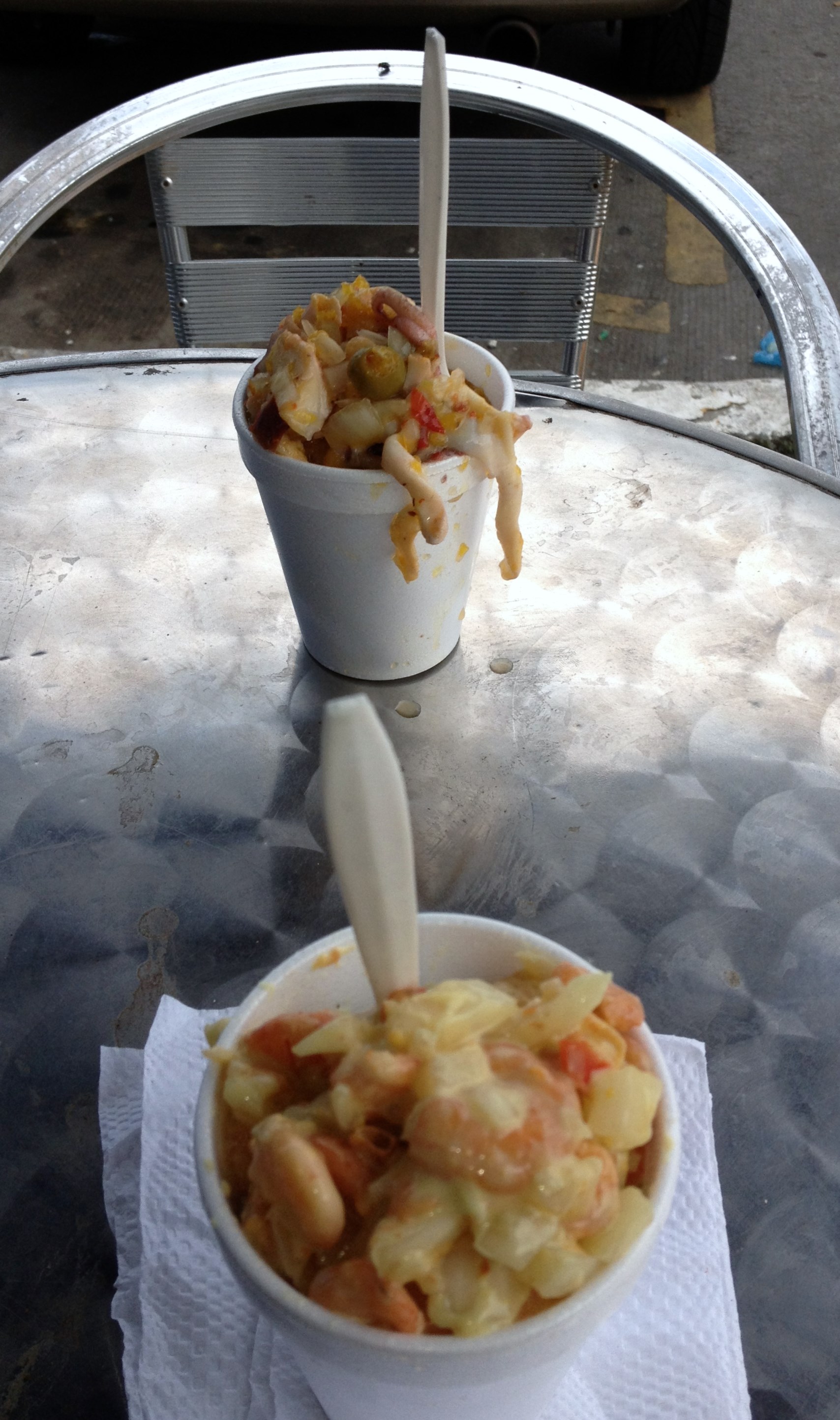
type different varieties of ceviche from the famed stall #2.

type different varieties of ceviche from the famed stall #2.

Anthony’s right – it was delicious..

Dr. Geraldo Victoria and Dr. Francisco Sanchez, cardiothoracic surgeons


I am currently writing another article about Dr. Geraldo Victoria for Examiner.com but I wanted to tell readers a bit about these two very nice, and charming surgeons. (I will also be re-posting this article at a sister site). Dr. Victoria graciously invited me to spend even more time with them, but I had a minor injury yesterday and had to defer.

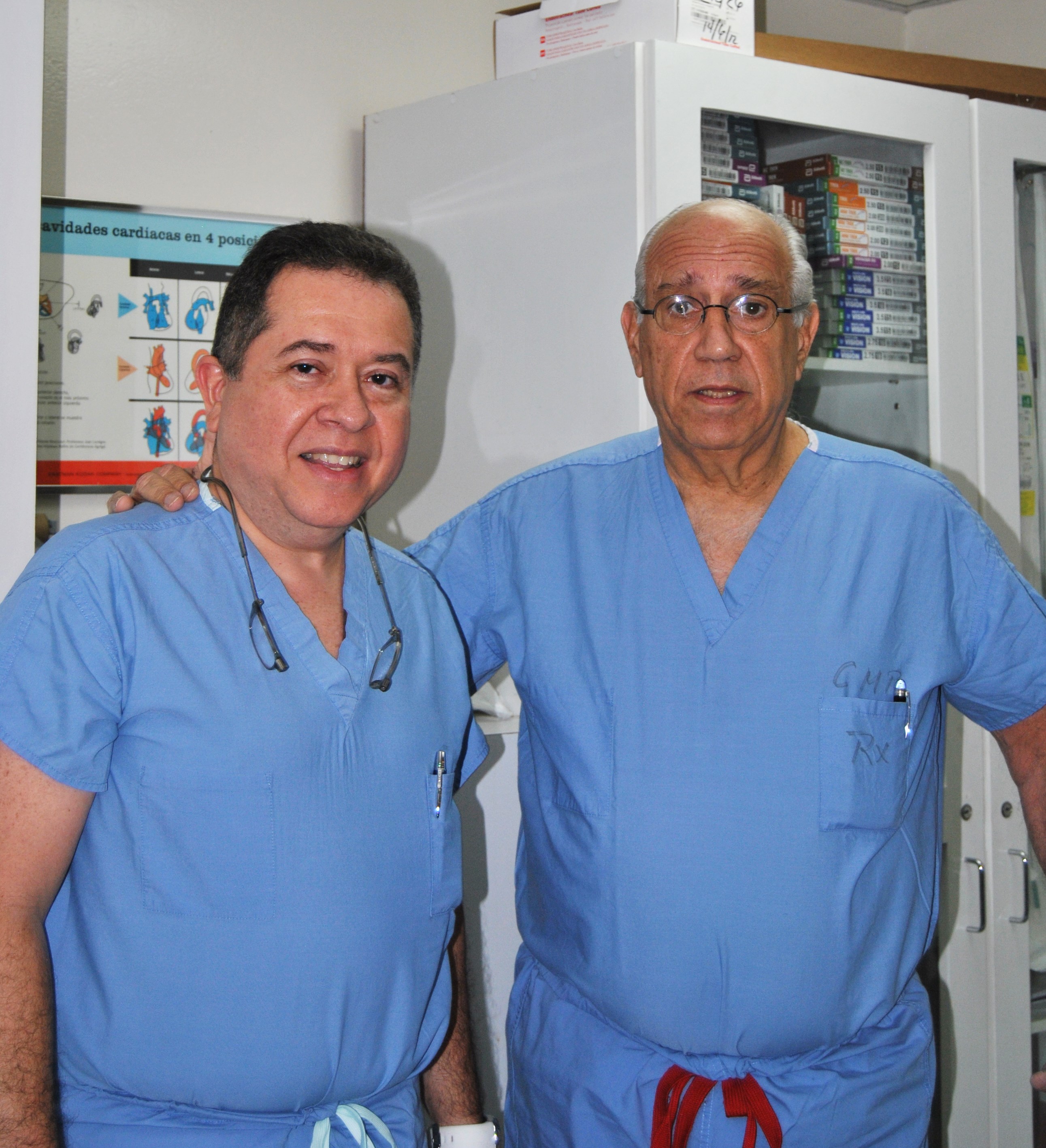
Dr. Geraldo Victoria and Dr. Francisco Sanchez, cardiothoracic surgeons

Dr. Geraldo Victoria and Dr. Francisco Sanchez, cardiothoracic surgeons

It’s always a bit nerve-wracking to meet and talk to surgeons but Dr. Victoria was very welcoming, and friendly.  He readily answered my questions and told me about his practice.

Dr. Victoria is primarily Spanish-speaking but does speak some English.

He showed me around his offices at both Hospital San Tomas and Punto Pacifico while talking about his work.  He is a Professor of Surgery at Hospital Santo Tomas – which is the primary teaching facility in Panama City.  He also operates as a general surgeon there.

His practice is a mix of cardiac, thoracic, vascular, endovascular and general surgery.  He attended medical school and completed the majority of his training in Caracas, Venezuela at the Luis Razetti School of Medicine  – University of Central Venezuela.  He completed his general surgery and specialty fellowship training at the University Hospital of Caracas (Hospital Universidad de Caracas) before completing additional training sessions in cardiac (Texas Heart) and endovascular surgery in New Orléans, La.

He reports that prior to 1992, the majority of patients in Panama travelled to the United States and other countries for cardiac surgery.  Since then cardiac surgery volumes have increased.  Since rheumatic fever remains problematic in Panama, he has a large volume of patients with rheumatic heart disease.

His thoracic practice largely consists of trauma surgery – from penetrating trauma (guns, knives) and hemothoraces as is typical of many surgical practices in large urban areas.   He also sees cases of empyema (infected pleural space around the lung) with several cases involving multi-drug resistant strains of Klebsiella.

Contrary to many vascular surgery practices I have encountered in Latin America, Dr. Victoria has a thriving peripheral arterial disease (PAD) practice. In fact, I was able to see him in action in the cath lab as he performed arteriography on a patient with persistent intermitten claudication (despite medical management).

cathlabVictoria

Since this post is becoming quite lengthy – I will talk about Dr. Sanchez in the next post.

Punta Pacifica, Hospital San Tomas and Centro Medico Paitilla


**Due to some unforeseen changes in my itinerary, I can only provide just a brief overview of some of the facilities in Panama City, which falls far short of my usual.**

Centro Medico Paitillo (CMP)

Balboa Ave. and 53rd Street

Website: http://centromedicopaitilla.com/

Founded in 1975, CMP has grown to become the largest private facility, though  Punta Pacifica appears to rapidly approaching on their heels.  They have several well-established international health insurance programs and the hallways were well populated with English-speaking visitors and patients.  The hospital has community outreach and health promotion classes as well as a 64 slice CT scanner, MRI and other diagnostic capabilities.

Website is attractive, and well-designed with English and Spanish versions.

Clinica Hospital San Fernando

Via Espana Las Sabanas

Website: http://www.hospitalsanfernando.com

There are two facilities for Hospital San Fernando; a Panama City facility and another facility in Coronado. The Panama city facility is one of two Panamanian facilities accredited by Joint Commission International.  This is a private facility designed to entice foreign visitors and upwardly mobile Panamanians.

Website with English language version that includes price quotes for International travelers. Website is well-designed and easy to navigate.

I have not visited or viewed this facility

Hospital Punta Pacifica

Boulevard Pacífica y Vía Punta Darién
Ciudad de Panamá

Website: http://www.hospitalpuntapacifica.com/

Webpage with English and Spanish versions, and has been designed for international travellers. However, the overall quality of the website is poor. Information has been poorly laid out and is often mischaracterized. For example, visitors to the site who are seeking information about individual physicians are transferred to a poorly typed resume-style pdf. Physician specialties are mislabeled; with cardiologists listed as surgeons, which may cause confusion for potential patients.

Hospital Punta Pacifica was accredited by Joint Commission International in September of 2011. Hospital Punta Pacifica’s main claim to fame, as it were, is that it is John Hopkins International branded facility.  As such, it is aggressively marketed as a medical tourism destination.

It is located in downtown Panama City, just a kilometer from the CMP (Centro Medico Paitilla).

Victoria 001

Hospital Santo Tomas

Calle 34 Este y Avenida Balboa

Website: http://hospitalsantotomas.gob.pa/

Hospital San Tomas is the oldest public hospital in Panama. Originally started as a small facility for impoverished women in September of 1702, the hospital has grown over the last 300 years to become the largest hospital in the country. The hospital now offers multiple service lines including surgical specialties such as thoracic surgery, plastic surgery and general surgery, among others.  The campus includes separate facilities (Maternity hospital, children’s hospital), a blood bank and Cancer center.

Blue Cross Blue Shield of Panama – one of the international arms of the Blue Cross Blue Shield insurance company, and just one of the many insurances accepted at most Panamanian facilities.

What’s this about free insurance for tourists to Panama?

In one of their more effective (and dramatic) public relations gestures, the Panamanian government widely advertises “Free  medical insurance for the visitors”.  This catastrophic policy covers all visitors during the first thirty days of their stay for accidents and injuries (up to $7000.00) that may occur during a stay in Panama.  Visitors just need to show their passports on arrival to one of the participating medical facilities.

The policy also covers up to $500.00 of dental expenses, and economy class air tickets for return home for family members (in case of a death of a tourist) and repatriation of the deceased.  (This may sound like a grisly benefit but from previous discussions with tourists in various locations – this can be quite costly.)

*Just so you know – it doesn’t cover chronic conditions or pregnancy, so visitors can’t come here and expect to have free care for non-emergent problems (ie, elective hip replacement and the like.)

Introduction to Panama City and Panama


Had some internet difficulties the last few days, so I will be posting several posts to ‘catch-up’ as it were.

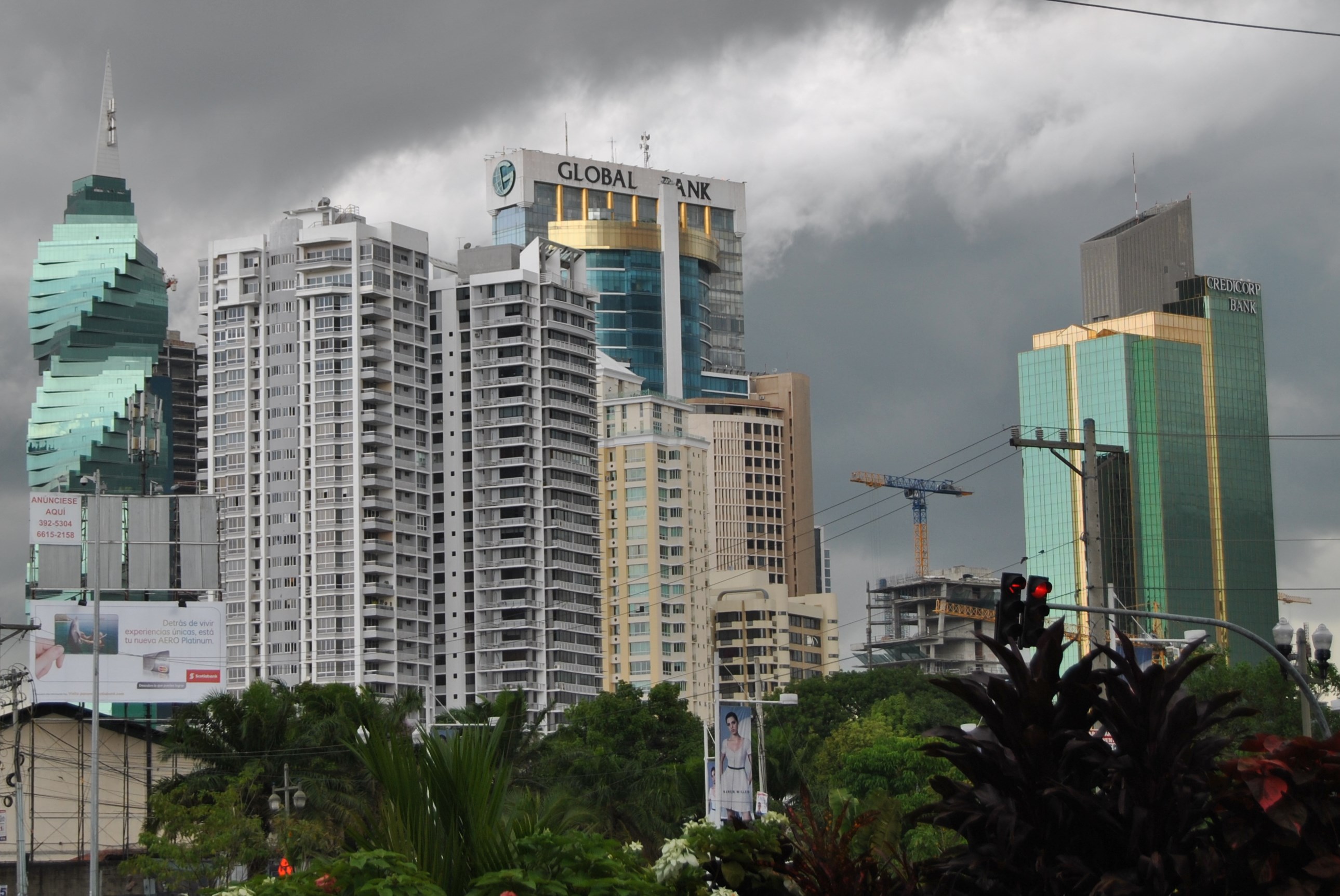
downtown Panama City

downtown Panama City

Panama

The nation of Panama is a nation of contrasts; at once old and young, rich in wealth with grinding poverty, Americanized yet foreign. Rainforests, and lush jungles teem with steamy heat, in comparison with the cooler mountainous regions.  These contrasts extend to the general attitudes of local residents as well, similar to that of “big city versus friendly hometown” with Panama city residents often exemplifying the attitudes of their northern neighbors (New York City).

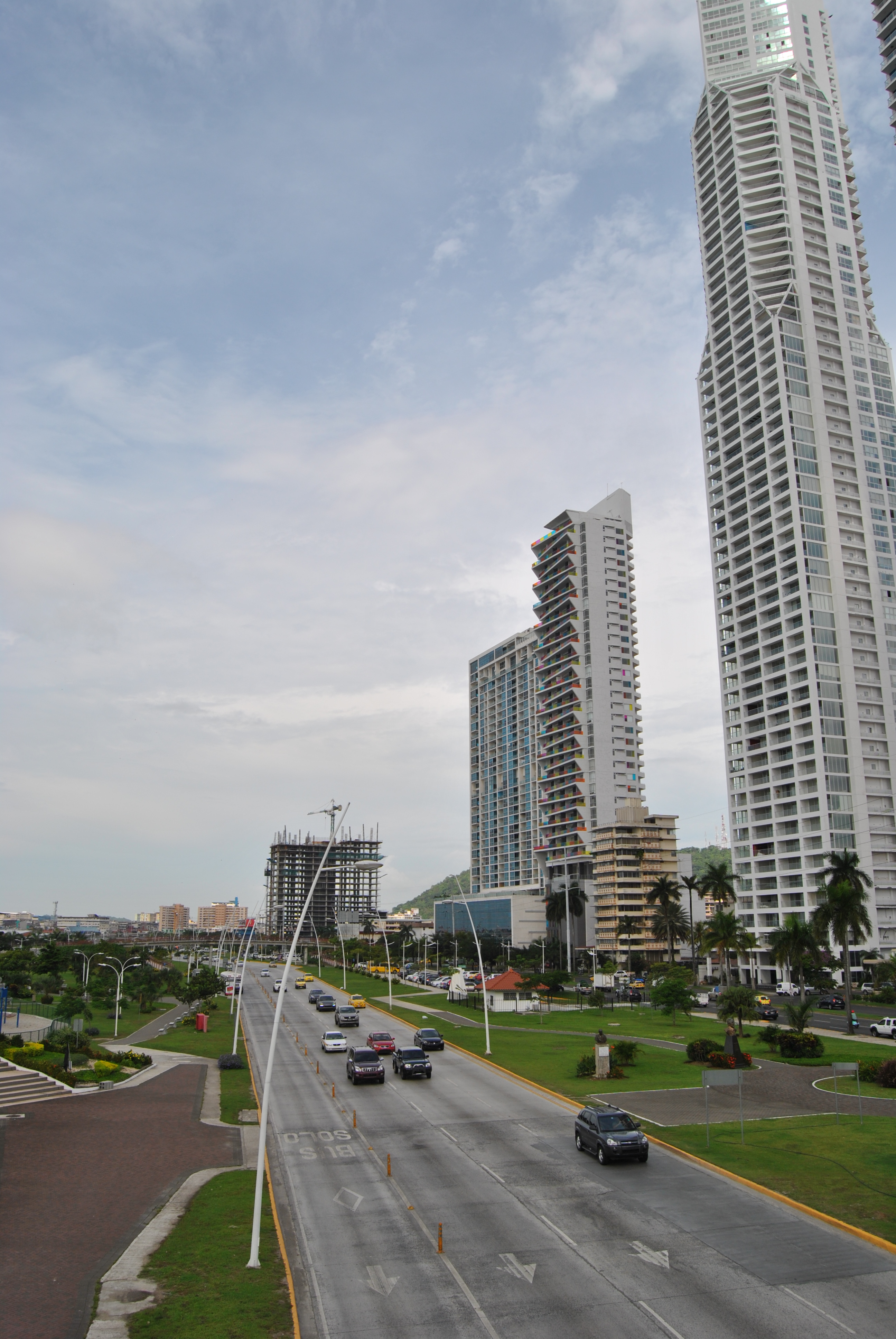
Daily rainstorms pound the capital city during the rainy season (May – December) but offer little respite from the heat, which can be oppressive. However, despite urbanization along with an impressive array of skyscrapers, the city remains just steps from the rainforest, and a bountiful variety of birds, plants and other animals.

American-ish?

Reluctant or nervous travelers will appreciate Panama’s shared history with the United States. As the USA encouraged the Central American nation towards independence (as part of American efforts to control the canal zone and thwart the Colombian government), these close ties have resulted in a degree of Americanization that is surprising to some first time travelers.

While Panama boasts of a national currency featuring ‘Balboas’ or ‘Martinellis’ by the nations’ satirists, only coins exist as evidence of this. The remainder of trade and economic barter is done using American currency. English is commonly spoken by Panamanians, and the North American presence has grown exponentially in the last decade. Several exclusive communities of United States and Canadian residents dot the Panamanian landscape, particularly in more desirable areas such as the more temperate areas surrounding David.

the 'Balboa', the official currency of Panama

the ‘Balboa’, the official currency of Panama

The shared history of Panama and ‘the gringo’ has existed for well over a century – since the Americans financed and engineered their way in – to complete that Canal project after a spectacular French failure twenty-five years earlier*.

Of course, this influx of gringos, and influence/ interference in Panamanian life comes with mixed feelings.  Some of the local publications are quite critical of  the American economy, and current government policies as being responsible for increased inflation in Panama due to their reliance on American currency due to American currency devaluation.

The large number of US ex-pats and other North Americans has a more appreciable downside to today’s tourists – in that Gringos are a frequent target for scams and rip-offs but that’s no different from several other tourist destinations, (and is more noticeable in the city itself.)

Victoria 009

International flavor

However, the local mix is much more than Panamanians and Gringos, which gives the capital city a more interesting cultural mix..  There are groups of Venezuelan immigrants both quite recent and more remote, Chinese neighborhoods as well as barrios of Colombians, Salvadorans, and other Latin American neighbors..  Germans and Russians also have a presence in the city – making it quite cosmopolitan despite the relatively small population in Panama overall with a total population of just under four million.

* Canal history is pretty interesting, so I have included some links for readers interesting in additional information.

History of the Panama Canal – wikipedia standard

Panama canal

Canal museum 

Smithsonian Collection blogs

New name, same site & Hello, Panama!


Panama City, Panama

firstday 002

Long time readers may notice some changes to the site, mainly that we have expanded to include information on areas outside of Bogotá, Colombia.

Since the original Bogotá book, we’ve been back to Bogotá several times (of course!) to update the book and keep readers abreast of any changes.  But we have also travelled to several other Latin American countries including Bolivia, Chile, Mexico and (now) Panama.  During these journeys, we’ve continued to research, writing, and interview surgeons along with trips to the operating room.

We’ve also published several books and articles since ‘Bogotá surgery’ days, so as we embark on our newest project here in Panama – it only seemed fitting to update the blog to include our newer geographic locations.

It may take a bit of time to get the blog sorted out – and the look may change, but the high quality content, and active discussions will be the same.