The cardiac OR


If you’ve never been to the cardiac operating room – it’s a completely different world, and not what most people expect.  For starters, unlike many areas of health care (particularly in the USA), the cardiac operating room is usually very well staffed.
 OR

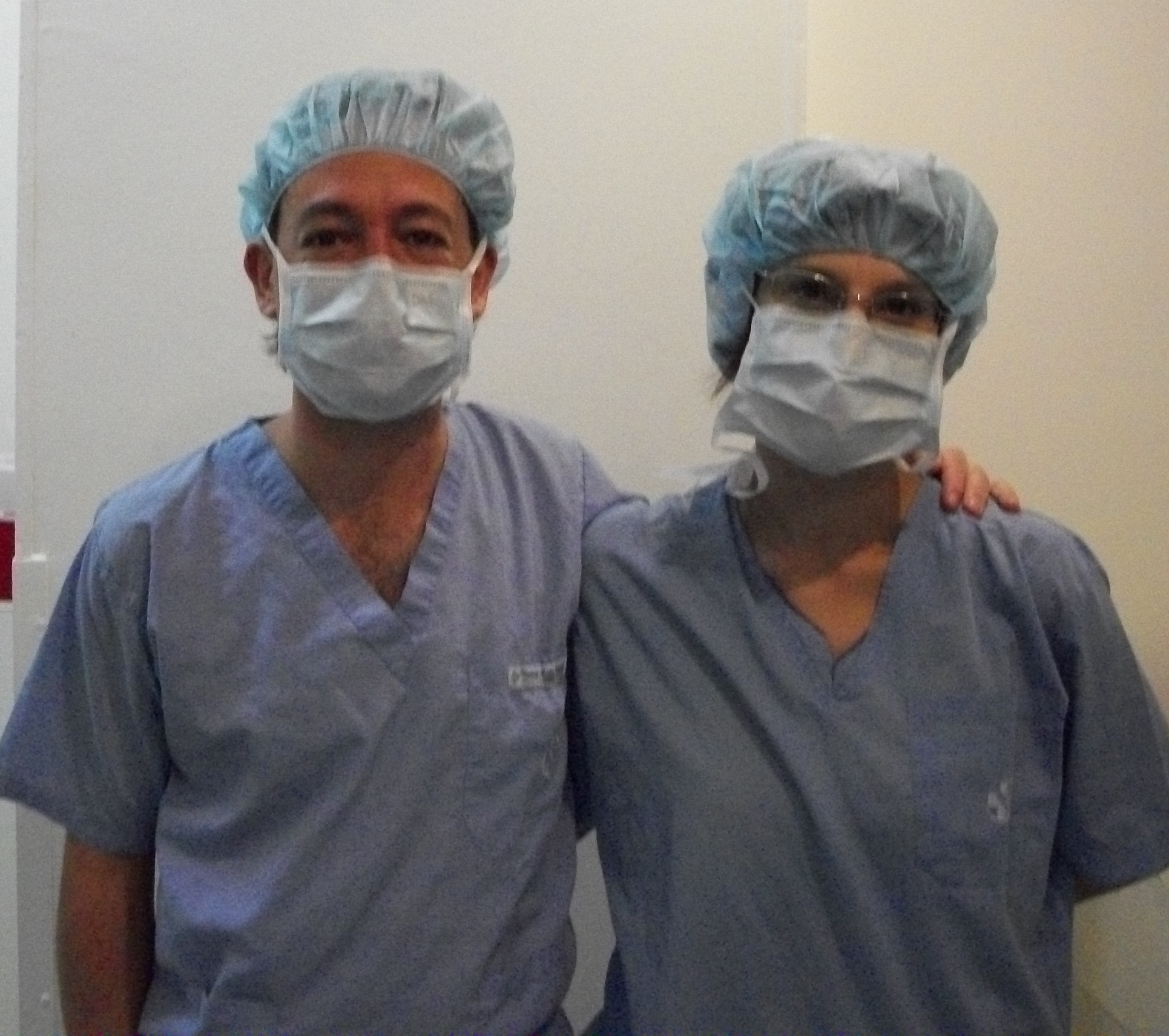
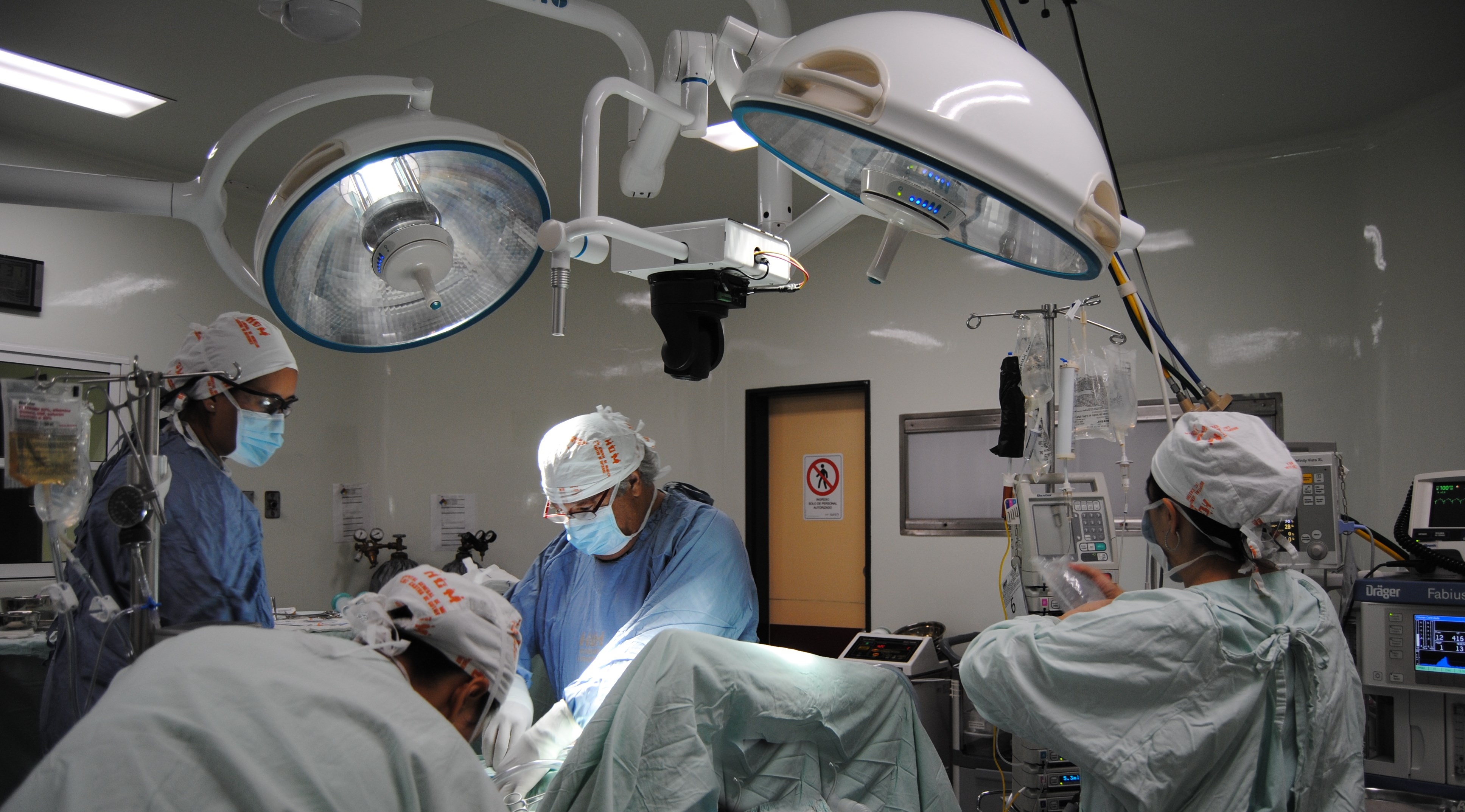
Just a few of the people working in the OR. (photo edited to preserve patient privacy)

For example, there were eight people working in the operating room today:

Dr. Luis Fernando Meza, cardiac surgeon

Dr. Bernando Leon Urequi O., cardiac surgeon

Dra. Elaine Suarez Gomez, cardiac anesthesiologist

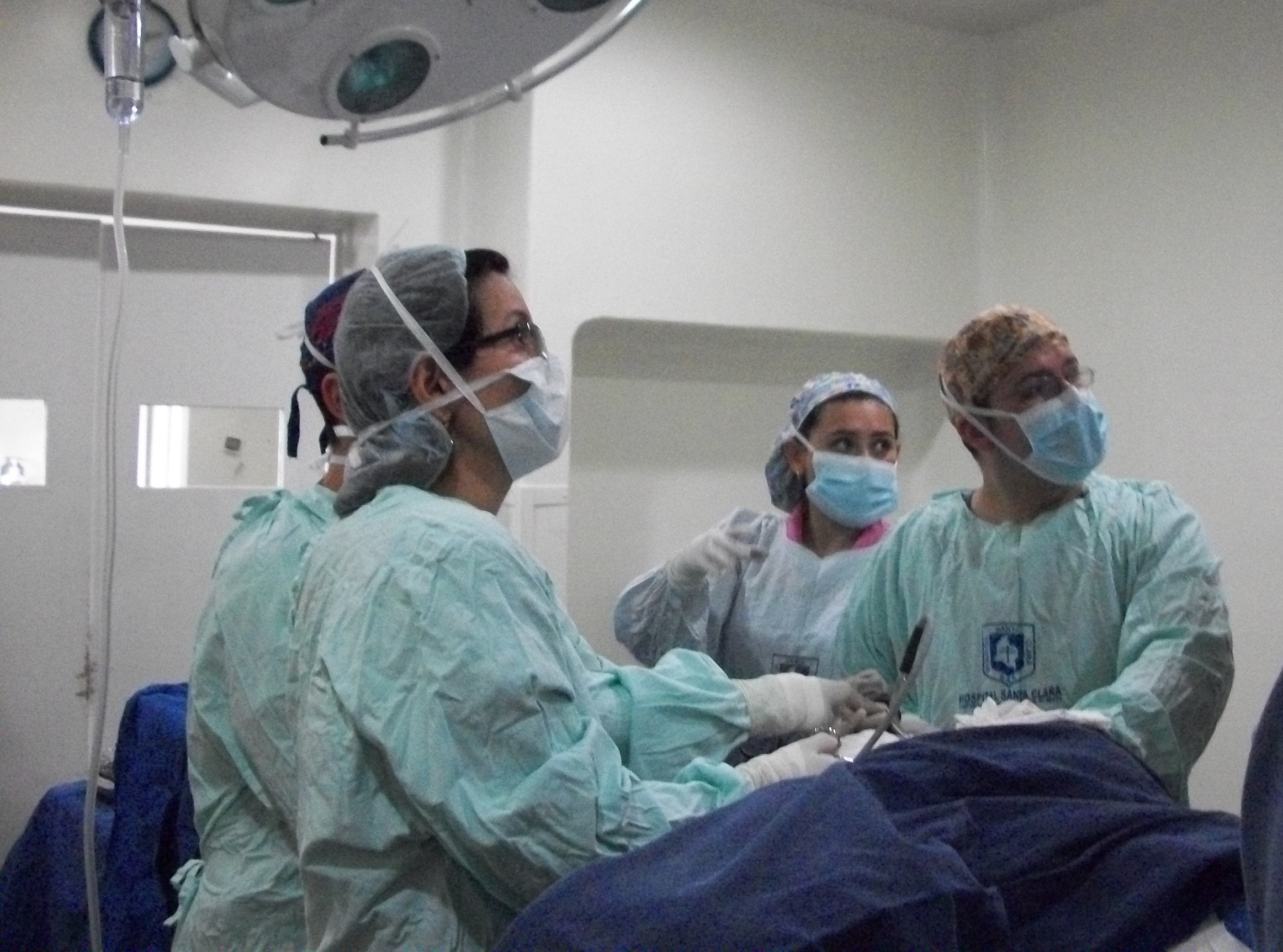
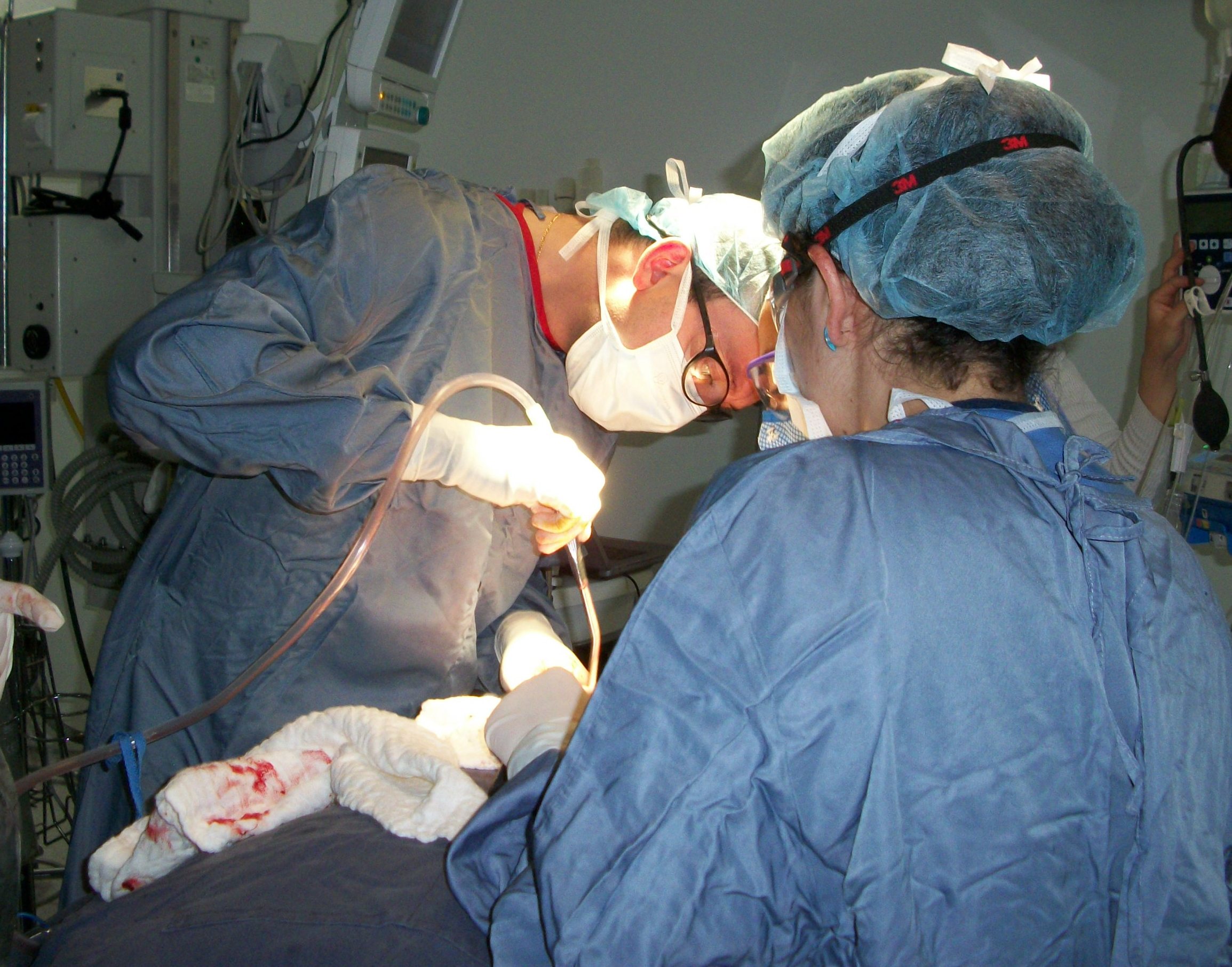
Dr. Suarez observes her patient during surgery. (photo edited to preserve patient's privacy)

Dr. Suarez observes her patient during surgery. (photo edited to preserve patient’s privacy)

Ms. Catherine Cardona, “Jefe”/ Nurse who supervises the operating room

Ms. Diana Isobel Lopez,  Perfusionist (In Colombia, all perfusionists have an undergraduate degree in nursing, before obtaining a postgraduate degree in Perfusion).  The perfusionist is the person who ‘runs’ the cardiac bypass machine.

Ms. Laura Garcia, Instrumentadora (First Assist)

Angel, circulating nurse

Olga, another instrumentadora, who is training to work in the cardiac OR.

This is fairly typical for most institutions.

Secondly – it’s always a regimented, and checklist kind of place.  (I wish I could say that about every operating room – but it just wouldn’t be true.)  But cardiac ORs (without exception) always follow a very strict set of accounting procedures..

For starters – there are labels.. For the patient (arm bands), for the equipment (medications, blood products etc..)  even the room is labeled.

Sign on operating room door (edited for patient privacy)

Sign on operating room door (edited for patient privacy)

Then come the checklists..
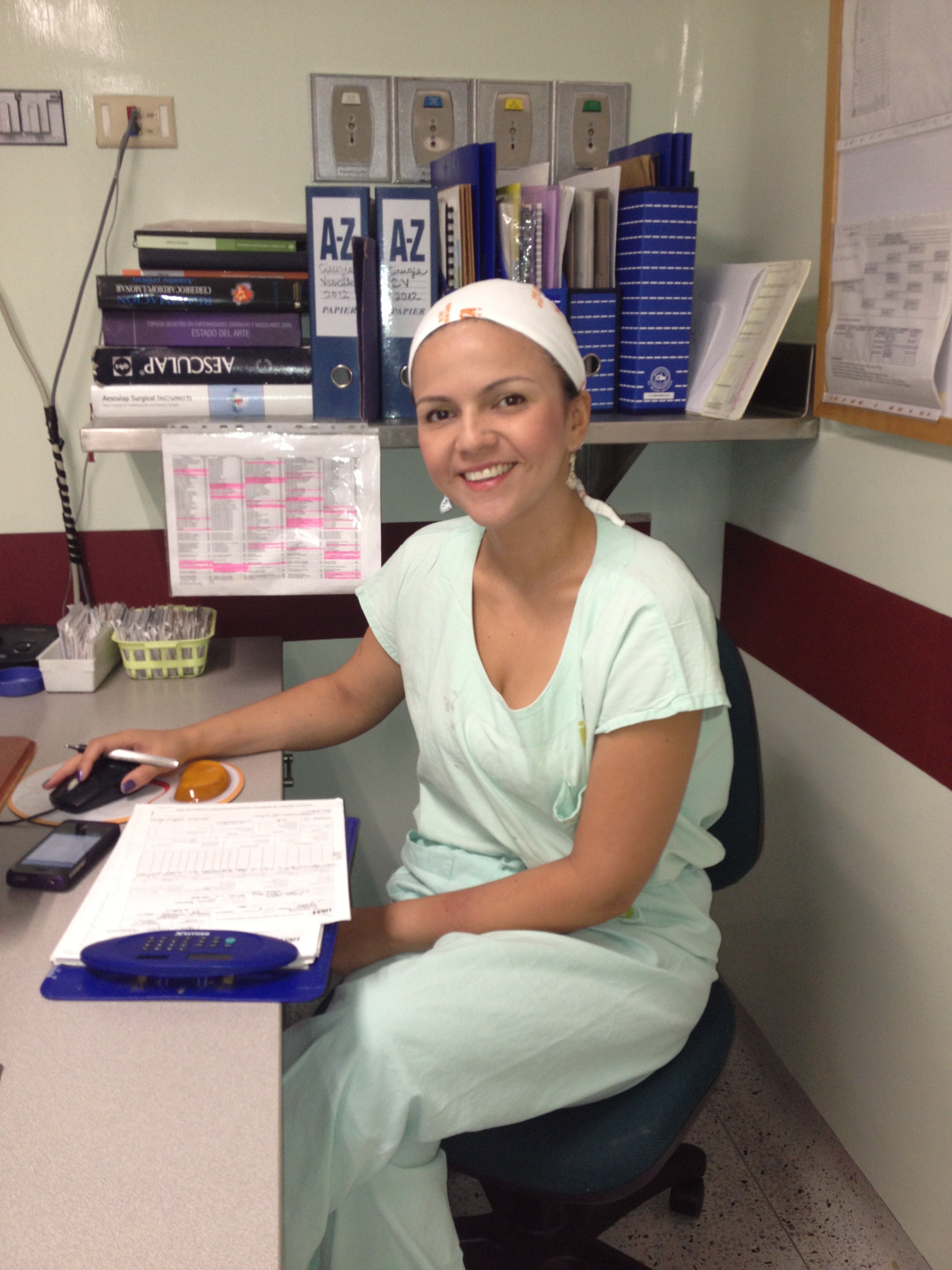
Perfusionist Diana Lopez gathers information to begin her pre-operative checklist.

Perfusionist Diana Lopez gathers information to begin her pre-operative checklist.

The general (WHO) operating room checklist.  The perfusionist’s checklist.. The anesthesiologist’s checklist.. and the big white cardiac checklist.
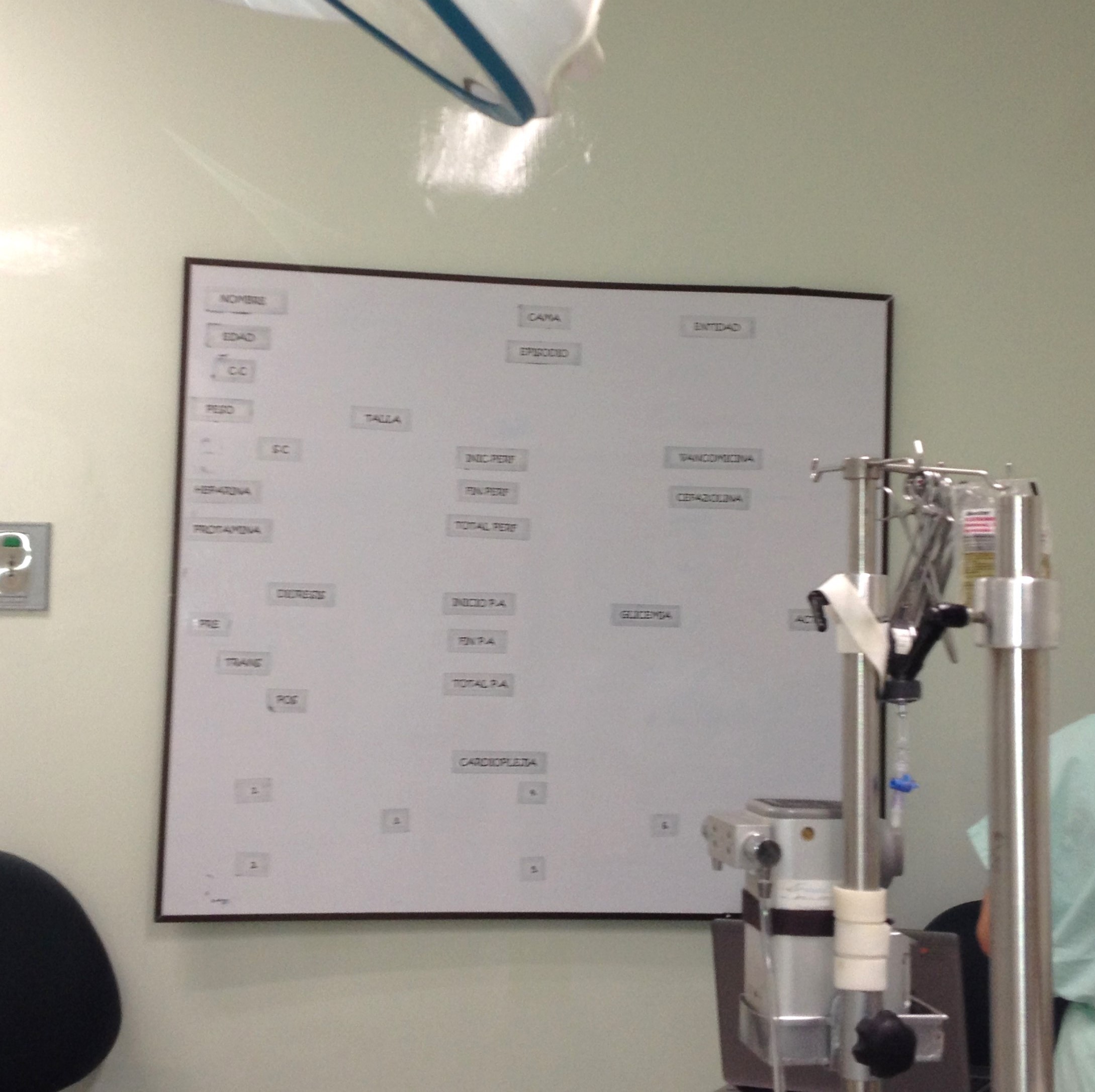
by then end of the case, this board will be full..

by the end of the case, this board will be full..

The staff attempts to anticipate every possible need and have it on hand ahead of time.  Whether it’s nitric oxide, blood, defibrillation equipment, or special medications – it’s already stocked and ready before the patient is ever wheeled in.

Most of these things are universal:

such as the principles of asepsis (preventing infection), patient safety and preventing intra-operative errors – no matter what hospital or country you are visiting (and when it comes to surgery – that’s the way it should be.)

Today was no exception..

In health care, we talk about “OR people” and “ER people”.. ER people are the MacGyvers of the world – people who thrive on adrenaline, excitement and the unexpected.  They are at their best when a tractor-trailer skids into a gas station, ignites and sets of a five-alarm fire that decimates a kindergarden, sending screaming children racing into the streets.. And God love them for having that talent..

But the OR.. that’s my personal area of tranquility.

This orderly, prepared environments is one of the reasons I love what I do.. (I am not a screaming, “by the seat-of-your-pants”/ ‘skin of your teeth’ kind of gal).  I don’t want to encounter surprises when it comes to my patient’s health – and I never ever want to be caught unprepared.   That’s not to say that I can’t handle an emergent cardiac patient crashing in the cath lab – it just means I’ve considered the scenarios before, (and have a couple of tricks up my sleeve) to make sure my patient is well taken care of (and expedite the process).

That logical, critical-thinking component of my personality is one of the reasons I am able to provide valuable and objective information when visiting hospitals and surgeons like Dr.  Urequi’s and Dr. Meza’s operating room at Hospital General de Medellin.

In OR #1 – cardiothoracic suite

As I mentioned in a previous post on Hospital General de Medellin, operating room suite #1 has been designated for cardiac and thoracic surgeries.  This works out well since the operating room itself, is modern and spacious (which is important because of the area needed when adding specialized cardiac surgery equipment like the CPB pump (aka heart-lung machine).  There are muliple monitors, which is important for the video-assisted thoracoscopy (VATS) thoracic cases but also helpful for the cardiac cases.  The surgeon is able to project the case as he’s performing it on a spare monitor, which allows everyone involved to see what’s going on during the case (and anticipate what he will need next) without shouting or crowding the operating room table.

Coordinating care by watching surgery

For instance, if the circulator looks up at the monitor and sees he is finishing (the bypasses for example), she can make sure both the instrumentadora and the anesthesiologist have the paddles and cables ready to gently defibrillate the heart if it needs a little ‘jump start’ back into normal rhythm..or collect lab samples, or double check medications, blood products or whatever else is needed at specific points during the surgery.

More on today’s case in our next post.
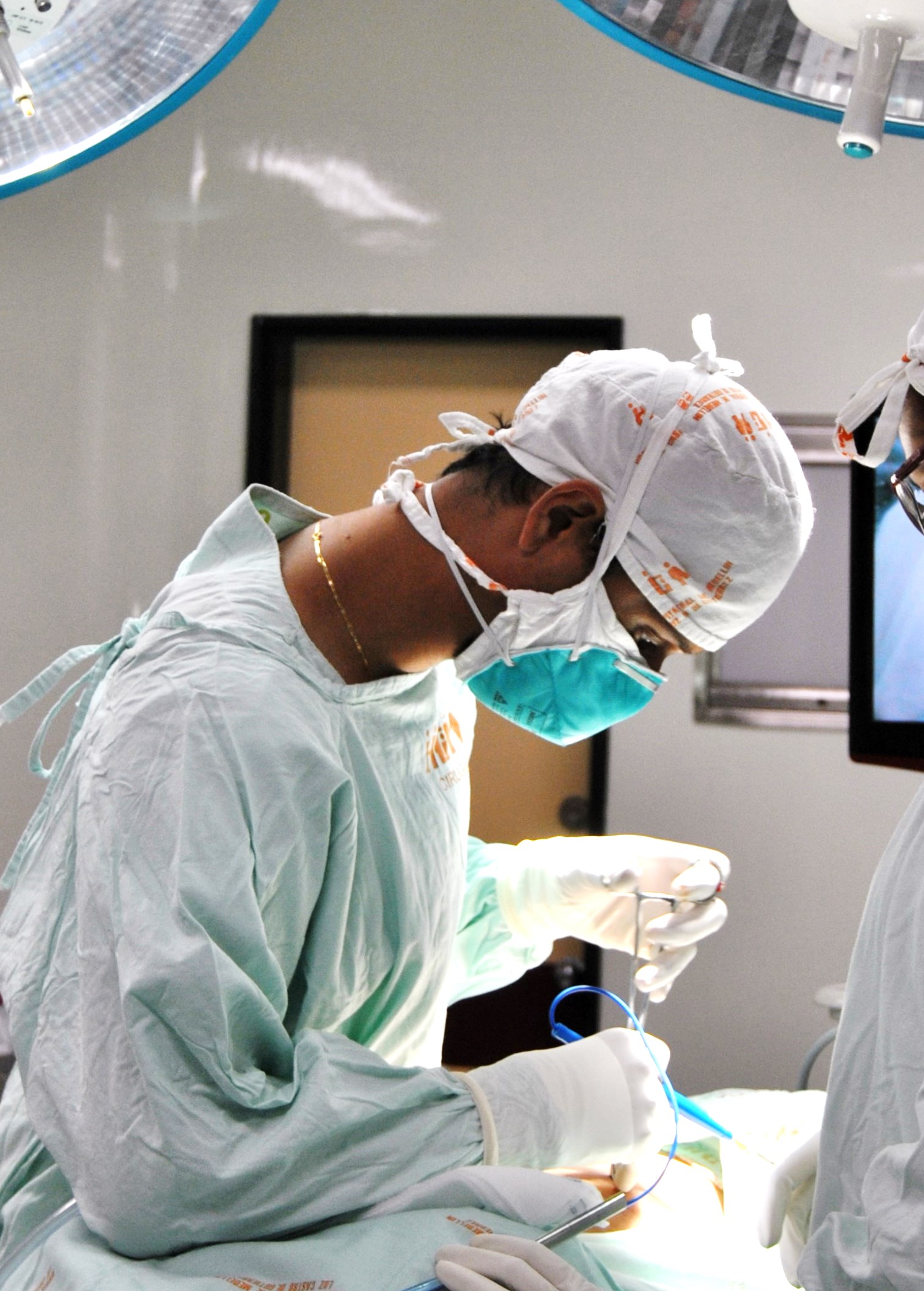
In the operating room with Dr. Wilfredy Castaño Ruiz


I am still working on several posts – but in the meantime, I wanted to post some photos from my visit to the operating room with Dr. Wilfredy Castaño Ruiz, one of the thoracic surgeons at Hospital General de Medellin.

Readers may notice that some of the content of my observations of the operating room have changed.. In reality, the reports haven’t changed – I have just chosen to share more of the information that I usually reserve for the books since I probably won’t get time for a “Medellin book”.  So, if you are squeamish, or if you don’t want to know – quit reading right about now…

It was a surprise to meet Dr. Wilfredy Castaño Ruiz because it turns out we’ve already met.  He was one of the fellows I encountered during one of my early interviews in Bogota, with Dr. Juan Carlos Garzon Ramirez at Fundacion Cardioinfantil.

Since then (which was actually back in the early spring of 2011), Dr. Castaño has completed his fellowship and come to Medellin.

Dr. Wilfredy Castaño Ruiz, thoracic surgeon at Hospital General de Medellin

Dr. Wilfredy Castaño Ruiz, thoracic surgeon at Hospital General de Medellin

Yesterday, I joined him in the operating room to observe a VATS decortication.  The case went beautifully.

Dra. Elaine Suarez Gomez, an anesthesiologist who specializes in cardiothoracic anesthesia managed the patient’s anesthesia during the case.  (This is important because anesthesia is more complicated in thoracic surgery because of such factors as double lumen intubation and selective uni-lung ventilation during surgery).

Anesthesia was well-managed during the case, with continuous hemodynamic monitoring.  There was no hypotension (low blood pressure) during the case, or hemodynamic instability.  Pulse oxymetry was maintained at 98% or above for the entire case.   Surgical Apgar: 8 (due to blood loss**)

Monitors at HGM are large and easily seen from all areas of the OR

Monitors at HGM are large and easily seen from all areas of the OR

Dr. Wilfredy Castaño Ruiz was assisted by Luz Marcela Echaverria Cifuentes, (RN, first assist*). The circulating nurse was a very nice fellow named Mauricio Lotero Lopez.

Enf. Luz Echaverria assists Dr. Wilfredy Castaño Ruiz during surgery.

Enf. Luz Echaverria assists Dr. Wilfredy Castaño Ruiz during surgery.

*”Registered nurse” is not terminology common to Colombia, but this is the equivalent position in Colombia, which requires about six years of training.)

** In this particular case, the surgical apgar of 8 is misleading.  The anesthesia was excellent, and the surgery proceeded very well.  However, due to the nature of surgical decortication (for a loculated pleural effusion/ empyema) there is always some bleeding as the thick, infected material is pulled from the lung’s surface.  This bleeding was not excessive for this type of surgery, nor was it life-threatening in nature.

Colombia as a medical tourism destination: my experiences & observations


I submitted an article on Colombia as a medical tourism destination to Yahoo! for publication.  The article discusses several of the factors I’ve mentioned before, and includes my observations from the last several months.  We’ll have to wait and see if they think it’s suitable for publication.. Of course, if they reject it – I’ll be sure to post it here, for all of you and your critiques..

In the OR with Dr. Mauricio Largacha, Orthopedic Surgeon


The rest of Bogota may be quiet for the Easter holidays (la semana santa) but the operating rooms were busy at Unidad Medica Cecimin.

Dr. Mauricio Largacha, Shoulder and Elbow surgeon

I spent an interesting and enjoyable morning in the operating room with Dr. Mauricio Largacha, MD for an arthroscopic Rotator Cuff Repair. Dr. Largacha is a natural teacher, and did an excellent job at explaining different aspects of the procedure, expected post operative outcomes, and specialized equipment – since I am less familiar with shoulder and elbow surgery than other surgical procedures. (Unsurprising since as I mentioned previously, he is an expert in this area, and the author of several chapters in multiple orthopedic surgery textbooks on elbow, shoulder and ankle surgery).

Dr. Mauricio Largacha (left) and author

Surgery went beautifully, and surprisingly quick.. No intraoperative complications.

Dr. Celso Bohorquez, plastic surgeon


When we first met Dr. Celso Bohorquez, he was donating his time and surgical skills for the repair of congenital facial malformations in Chia, Colombia as part of Operacion Sonrisa.

I went back, yesterday, to Clinica Shaio, to learn more about the man, and the surgeon that so generously contributes to improving the lives of the less fortunate.

Dr. Celso Bohorquez, plastic surgeon

We spent the day in the operating room, watching Dr. Bohorquez perform several techniques including a case with facial endoscopy as part of a face-lift. The results of the cases were striking.


In other news, we are discussing pre-operative and intraoperative risk reduction for peri-operative/ post operative MI (along with the high incidence of missed diagnosis) over at our sister site.

Dr. Ernesto Andrade, plastic surgeon


Dr. Ernesto Andrade is another one of Bogota’s celebrity plastic surgeons, of “Cambrio Extremo” fame.  (A latin television version of ‘Extreme Makeover’ that was popular here several years ago.)  Unfortunately, he was delayed today so I was unable to meet with him, but I did speak with a young doctor in his office, Dr. Eliana Garces.  She filled in a bit of Dr. Andrade’s biography.

I’m hoping to meet with Dr. Andrade himself  tomorrow after I get out of the operating room with Dr. Celso Bohorquez.  If you remember, I met Dr. Bohorquez out in Chia while he was volunteering his surgical skills as part of Operacion Sonrisa (Operation Smile.)

Dr. Mauricio Largacha, orthopedic surgeon


Dr. Mauricio Largacha is an orthopedic surgeon specializing in shoulder and elbow surgery including arthroscopy, rotator cuff repair and joint replacement.  I’ll be following him to the operating room this weekend – so check back in for more details..

For readers unfamiliar with orthopedic surgery – ankle and shoulder joint surgeries are a particular sub-specialty only practiced by a few orthopedic surgeons.  Luckily for readers here – Dr. Largacha is the author of several of the most heavily used textbooks (and chapters in American medical textbooks) on both ankle and shoulder surgery.

Dr. Fabian Emura, of the EmuraCenter


Dr. Fabian Emura, of the EmuraCenter

is a gastroenterologist and general surgeon here in Bogota, who specializes in the detection and treatment of digestive cancers.  Along with his clinic, he has also created two separate divisions; a foundation for promote the prevention and detection of digestive cancers, and a medical education division – which supports training physicians world-wide in the endoscopy techniques he currently uses.

Currently, Dr. Emura is the only physician outside of China, Korea and Japan (where gastric cancer is endemic, and accounts for 20% of all cancers) who is treating early stage (stage I) cancers with endoscopic surgery versus a more radical gastrectomy.  This procedure has already been well validated in Asia, where it has been used for over a decade.

Dr. Emura has also created and implemented a classification system for the grading and staging of digestive lesions.

By using chromography endoscopy (or chromoendoscopy) and a wax dye,  doctors such as Dr. Emura are better able to visualize lesions that might otherwise be missed.

His research has also focused on differentiating colon lesions endoscopically, (to prevent unnecessary surgery for benign lesions).

He is currently working on screening guidelines (particularly for populations with higher incidence of gastric cancers such as in Colombia) because one of the main problems that still exists – is that the majority of patients with stomach cancer – are diagnosed late – when treatment options are limited and noncurative.

The Doctors Luna at Clinica Shaio


Interviewed the father and son, Dr. Ruben Francisco Luna Romero and Dr. Ruben Daniel Luna Alvaro this morning, before following Dr. Luna (Alvaro) to the operating room. Dr. Luna was joined by the remaining doctor in the Grammo practice, Dr. Cesar Guevara.

Due to some technical issues – i will post photos later.

Update: 21 April 2011: Photos

Dr. Luna, general and transplant surgeon

Dr. Guevara (left) and Dr. Luna (right) during laparoscopic surgery

Dr. Cesar Guevara, Grammo

Hospital San Juan de Dios


Hospital San Juan de Dios, front view

from first glance – the majesty and history of this place is lost.. The newer 70’s era concrete edifice overshadows the older, more classic church and other buildings in this sprawling campus.. An iron fence, scattered trash, dirty, stained mattresses laying on the ground, broken windows, and overgrown grass keep the casual viewer from ever knowing what’s really inside. The lost letters on the tower building, add to the forlorn air that hangs around the old hospital.. A few bored looking guards patrol lazily, mainly smoking and chatting behind one of the buildings – not enough to keep out the many vagrants that are rumors to have taken up residence here.

It’s a sad and undignified end to a place that has given much to Colombia, and it’s capital city. For a facility with such a long and proud history (it was founded in 1723) – it seems unfair that is should be so unkept and unloved. While it was designated a national landmark in 2000, now it is more of an eyesore. For a place that witnessed the first surgery in Colombia (in 1926) and the development of the first malaria vaccine, and was home to much of the medical research of the 19th and 20th centuries – this is a tragedy indeed. I can almost picture Dr. Salomon Hakim, inside these halls, hard at work. Entire generations of physicians trained here, practiced here and retired from here before it’s closure in 1999. Inside this fence, these buildings are silent witness to hundreds of years of suffering, sickness, hope, faith and health.
But there are no plaques, no tour guides**, no monument or museum to mark its contributions.

Previous attempts have been made to re-open the hospital (200,000 besos campaign in 2008), and several local books and articles, but little to show the world, and outsiders like myself, all the wonderful contributions and history, behind the locked gates.

While this is quite the departure from my usual writing, I couldn’t help pondering all of this as I walked past the hospital the other day.

** There is an old article stating there are free tours on the last sunday of every month, by former nurses, so I’ll go by and see if that is still the case.

Back in the OR with Dr. Buitrago, and a visit with Dr. Andres Franco


National Cancer Institute –

Dont judge a hospital by the exterior sign..

The view from the fifth floor is less than inspiring – with the Bogota prison from one angle and the now decrepid Hospital San Juan de Dios from another..

The view from the operating room window, the now defunct Hospital San Juan de Dios

But the view from within the operating room is impressive!  Large operating rooms, in an all new facility, with brand new equipment.. This is a first class surgery facility..

 – and the surgery itself was wonderful.  I can’t divulge too many specifics other than it was a huge surgical resection that was the last chance for a heart-breaking patient..

Dr. Buitrago, Thoracic surgeon

 But the case went beautifully.

After spending all morning and part of the afternoon with Dr. Buitrago and his team – I went over to Hospital Santa Clara to interview a nice young thoracic surgeon, Dr. Jaime Andres Franco.  Dr. Franco is actually dually trained as both an Critical Care Medicine specialist and a thoracic surgeon – which is ideal because it means he is even more capable of handling any sort of crisis that may affect his surgical patients. 

I’m hoping to follow him to the operating room soon, so I can give you even more details..


In the OR with Dr. Martinez, Thoracic Surgery


Spent most of the day over at Hospital Santa Clara with Dr. Stella Martinez, thoracic surgeon.. Despite having three cases, Dr. Martinez apologized for the paucity of scheduled OR surgeries due to the upcoming religious holidays..  (Despite Bogota’s booming population – this is a familiar scene, repeated around the city – kind of like people putting off surgery until after Christmas..)

Dr. Martinez, in the OR

I’d been warned by several people about Hospital Santa Clara – it’s one of the poorer public facilities, but to be frank, despite the aging exterior, it beat out some of the homegrown facilities I’ve been to.. While it was obviously a less affluent facility; with a campus style layout, no CT scan, and a 1950’s feel; the hospital was clean,  all of the equipment worked, much of it was new – courtesy of a new administration..

Dr. Stella MArtinez, Thoracic surgeon

Dr. Martinez is impressive, both in and out of the operating room – with an extensive resume, and skill set.  She’s currently the Director of the thoracic surgery residency program at Hospital Santa Clara, and she takes resident training seriously.  She’s also interested, and active in research, and maintains a busy surgery practice at several facilities.  There’s a lot more to say about this talented surgeon , but you’ll have to wait to read the rest.

In the OR with Dr. Hakim


Had an interesting day with Dr. Fernando Hakim, Neurosurgeon, over at Santa Fe de Bogota, for a tumor resection.  A lot of the stereotypes are true; neurosurgery is a  precision-based specialty (not that the other specialties aren’t – but at least in most cases, there is a margin to work with**.) but some of them aren’t.. In this case, with a tumor pressing against the spinal cord – there is no margin to work with, no border area around the tumor, so to speak.. but then again this petty much describes a lot of neurosurgery.. requiring careful, painstaking process..something I would find inherently, and incredibly stressful – but Dr. Hakim and his team didn’t; they were focused, precise, but relaxed and well-coordinated with each other.. Definitely not the uptight, high stress stereotype.. (You’d think I would have known better – I’ve seen plenty of surgery, and some spine cases# before – but nothing of this magnitude, and as I’ve said before; neurosurgery is a bit of a final frontier)

(not to give you the wrong impression – surgery is always serious, this just wasn’t the melodrama that stereotypes/ stories sometimes suggest)

Dr. Fernando Hakim Daccach (left), neurosurgery

** ‘margin of tissue’ or area surrounding the tumor, not ‘margin of error’

# cartagena neuro cases were ‘back cases’ or spinal cases for chronic back problems..

Dr. Hakim, neurosurgeon using the OR microscope for precision work

To switch gears a bit, I met with Dr. Fabio Andres Mejia, a plastic surgeon specializing in rhinoplasty and breast procedures (augmentation/ reduction).  He’s a former fellow (and current member of the) Dr. Ralph Millard (Society) and has been in practice since 1998.
He’s no longer working three jobs or taking emergency plastic surgery calls all over the city – and is now focused solely on private practice (and having a livable schedule)

In the OR with Dr. Javier Maldonado


Dr. Javier Maldonado, cardiac surgeon

No southern accent, per say, just a gentle, relaxed way of speaking that reminds me of home.. Went to the operating room with Dr. Javier Maldonado at Clinica Colombia this morning, for a three vessel off-pump CABG.  Everything went smooth – textbook perfect..

I followed him to the Cardiovascular ICU  and then to his cardiac clinic to see patients..

After a productive and pleasant morning (and afternoon), I raced over to Clinica Shaio to catch the end of the minimally invasive cardiac surgery symposium, and to interview Dr. Barbosa, one of the first surgeons I interviewed for the Cartagena book..

Dr. Javier Maldonado

Cardiac surgeon, Fundacion Santa Fe de Bogota, Clinica Colombia

In the OR with Dr. Buitrago, in the dentist’s chair and more


Spent the morning at Shaio, in the operating room with Dr. Ricardo Buitrago.. Either my gringa accent is improving (doubtful) or I really have become a familiar face around there..  Observed Dr. Buitrago perform a couple of cases; the second was a VATS thymectomy, which definitely ranks above the traditional sternotomy.

Dr. Buitrago, thoracic surgeon

Ran into some strangely reticent native english speakers in the halls of Shaio today.. (Usually Americans, Brits and the like get real familiar with each other when we see another..) Didn’t introduce themselves even after I made a point of introducing myself.. Something’s up over at Clinica Shaio.. Is it a medical tourism company, or an impending branding agreement?  I’ll see what I can find out.

Next I checked in with Dr. Gamboa, DDS – for those of you reading from afar – dental evaluations are completely different – they require an actual patient visit (no observation here.)  Now that all of my family, friends, classmates and housemates have served as confederates for dental visits – I knew what was next when I cracked a tooth last week.. (Just so everyone knows how dedicated I am to my research – I had several dental repairs without anesthesia of any sort.. (no local, nada).   And truthfully, it went very well.. (and my teeth look / feel great..)

Dr. Gamboa, DDS

last, but certainly not least for today was Dr. Fabian Emura, MD, PhD.  He didn’t have a lot of time today, so I am going back Wednesday so I can tell you more about him, and the Emuracenter, which is doing a lot of interesting things for the diagnosis and treatment of gastric cancers..

Plans for the upcoming week..


While I am still finalizing some of my interviews for the week – it’s looking promising, so far..

Plans to go to the OR with Dr. Buitrago (thoracic surgeon) and Dra. Stella Martinez (thoracic surgeon)

To the operating room, and interview with Dr. Maldonado (cardiac surgeon) – and we’ll see if I was just imagining that southern accent..

Interview with Dr. Fabian Emura, gastric cancer specialist, and general surgeon.

Emailed several more orthopedic surgeons and neurosurgeons, so hopefully, I’ll hear back..

Thoracic surgery, Operation Smile, and a new perspective in Chia


Spent the morning in Chia with Dr. Osorio (thoracic surgeon) at Clinica Universitario Teleton.  Cases went smoothly, beautifully and quickly. Then we rounded on patients in another facility..


While I was in Chia, I had an opportunity to meet several members of Fundacion Operacion Sonrisa (Operation Smile to all my stateside readers).  I spoke with Pilar, one of the nurses on the surgical team, and Dr. Celso Bohorquez Escobar, plastic surgeon, who said they have sixteen cases planned for this weekend.  They come to Chia several times a year, and operate in multiple locations throughout Colombia.  For any of you unfamiliar with this organization (consisting of volunteer doctors, nurses and other medical staff), Operation Smile performs cosmetic repairs of facial deformities such as cleft palate for indigent patients and their families.

I also had a chance to (briefly) meet two urologists from Medellin that traveled to Chia to perform a urinary continence restoring surgery. I particularly like to see this sort of thing, (bringing care to patients in rural areas, or those who would otherwise go without) – because while neither of these procedures is arguably lifesaving, both procedures are dramatically life-altering, and contribute greatly to the enhancement of quality of life.

But, back to Dr. Osorio – I especially enjoyed talking to Dr. Osorio because as the Dean of Medicine for a medical school, he has different perspectives on the future of medicine, and Colombian medicine in general. He also shows a lot of insight, and open-mindedness to outside perspectives and opinions. Part of this comes from dealing with students and residents everyday, another part may be from his partnership with another physician in Chile (Dr. Claudia Suarez) and some of it undoubtably comes from experience.

I found it interesting and illuminating that Dr. Osorio is probably the first person to ask about my observations, and perspectives on surgery and medicine in Bogota, after being here three months, meeting numerous surgeons, and visiting multiple facilities.. And he seemed to actually be interested in the answers.. I think that any doctor who takes the time to consider the insights of foreign nurse, and asks for criticisms, is someone, who takes the time to look at the world differently, (and medicine needs that.)

Dr. Jairo Ramirez and Dra. Stella Martinez


My early morning surgery plan fell apart – so I will try again next week. Met with Dr. Jairo Ramirez, MD, FACS over at Santa Fe de Bogota this morning. Dr. Ramirez is a vascular and thoracic surgeon, and the Chief of Vascular Surgery (at SF de B) but he reports the majority of his practice is the treatment of venous disease such as varicosities and venous stasis ulcers.

This afternoon, I met with Dra. Stella Martinez Jaramillo, (thoracic surgeon) and she is a fascinating lady. We had a great chat – and scheduled a day for me to see her in action..I am definitely looking forward to it.

Spoke with Dr. Javier Maldonado, cardiac surgeon on the phone today to set up an appointment next week over at Clinica Colombia. Now, I thought he completed some of his training in the USA but I could swear I heard soft traces of a southern accent – and Cleveland is a far cry from my native Virginia.. There must be a story there – or my overactive imagination.. I’ll keep you posted.

Dr. Ricardo Buitago, Thoracic Surgeon


Spent an enjoyable afternoon with Dr. Miguel Ricardo Buitago, thoracic surgeon over at Hospital Simon Bolivar.  Dr. Buitago recently completed training in the United States on the DiVinci Robot, and plans to continue this training here in Bogota with Dr. DeLusky (not sure about spelling), so he can introduce Robotic thoracic surgery to Colombia.  Currently, the only DiVinci Robot in Bogota resides at Clinica Marly, where it is used for urologic and gynecologic surgeries.

Looking forward to meeting with Dr. Buitago again next week..

In the OR with Dr. Roosevelt Farjardo, General Surgeon


It’s been two months since my initial visits to see Dr. Fajardo, general surgeon and administrator at Santa Fe de Bogota, so I thought it was time to check back in (and check out the operating room). 

Dr. Roosevelt Fajardo, General Surgeon

Dr. Fajardo was assisted during the case by Dr. Carlos Felipe Perdomo, general surgeon. In addition to operating, Dr. Fajardo is responsible for several new and innovative programs at Santa Fe de Bogota, including a 14 specialty telemedicine service which brings specialty consultations to patients in remote areas of Colombia.

In the Operating Room with Dr. Andre Jimenez


Dr. Jimenez, Thoracic Surgeon

In the operating room with Dr. Jimenez, thoracic surgeon at Santa Fe de Bogota today. Despite having multiple co-morbidities, the case went well – according to protocols with no intra-operative complications.

In other news, I am sorry to disappoint my readers but I actually declined an opportunity to go to the operating room (gasp!) today. After contacting a surgeon (sorry, folks – not Camilo Prieto) several times over the last two months, I actually met him face-to-face in the operating room. I introduced myself, but he was quite visibly reluctant to talk to me. I brashly asked when I could visit him in the OR (I was hoping to break the ice – and show that I’ve relatively harmless, but I probably came off as obnoxious.)

So, I had the opportunity to try and interview him, and see him operating – and I declined, so as to respect his privacy. While the book is everything to me – it’s a voluntary project. So, my sincerest apologies..