Start here…


This is a page re-post to help some of my new readers become familiarized with Latin American Surgery.com – who I am, and what the website is about..

As my long-time readers know, the site just keeps growing and growing.  Now that we have merged with one of our sister sites, it’s becoming more and more complicated for first time readers to find what they are looking for..

So, start here, for a brief map of the site.  Think of it as Cliff Notes for Latin American surgery. com

Who am I/ what do I do/ and who pays for it

Let’s get down to brass tacks as they say .. Who am I and why should you bother reading another word..

I believe in full disclosure, so here’s my CV.

I think it’s important that this includes financial disclosure. (I am self-funded).

I’m not famous, and that’s a good thing.

Of course, I also think readers should know why I have embarked on this endeavor, which has taken me to Mexico, Colombia, Chile, Bolivia and continues to fuel much of my life.

Reasons to write about medical tourism: a cautionary tale

I also write a bit about my daily life, so that you can get to know me, and because I love to write about everything I see and experience whether surgery-related or the joys of Bogotá on a Sunday afternoon.

What I do and what I write about

I interview doctors to learn more about them.

Some of this is for patient safety: (Is he/she really a doctor?  What training do they have?)

Much of it is professional curiosity/ interest: (Tell me more about this technique you pioneered? / Tell me more about how you get such fantastic results?  or just tell me more about what you do?)

Then I follow them to the operating room to make sure EVERYTHING is the way it is supposed to be.  Is the facility clean?  Does the equipment work?  Is there appropriate personnel?  Do the follow ‘standard operating procedure’ according to international regulations and standards for operating room safety, prevention of infection and  overall good patient care?

I talk about checklists – a lot..

The surgical apgar score

I look at the quality of anesthesia – and apply standardized measures to evaluate it.

Why quality of anesthesia matters

Are your doctors distracted?

Medical information

I also write about new technologies, and treatments as well as emerging research.  There is some patient education on common health conditions (primarily cardiothoracic and diabetes since that’s my background).  Sometimes I talk about the ethics of medicine as well.  I believe strongly in honesty, integrity and transparency and I think these are important values for anyone in healthcare.  I don’t interview or encourage transplant tourism because I think it is intrinsically morally and ethically wrong.  You don’t have to agree, but you won’t find information about how to find a black market kidney here on my site.

What about hospital scores, you ask.. Just look here – or in the quality measures section.

Cultural Content

I also write about the culture, cuisine and the people in the locations I visit.  These posts tend to be more informal, but I think it’s important for people to get to know these parts of Latin America too.  It’s not just the doctors and the hospitals – but a different city, country and culture than many of my readers are used to.

Why should you read this?  well, that’s up to you.. But mainly, because I want you to know that there is someone out there who is doing their best – little by little to try to look out for you.

How the site is organized

See the sidebar! Check the drop-down box.

Information about surgeons is divided into specialty and by location.  So you can look in plastic surgery, or you can jump to the country of interest.  Some of the listings are very brief – when I am working on a book – I just blog about who I saw and where I was, because the in-depth material is covered in the book.

information about countries can be found under country tabs including cultural posts.

Issues and discussions about the medical tourism industry, medical safety and quality are under quality measures

Topics of particular interest like HIPEC have their own section.

I’ve tried to cross-reference as much as possible to make information easy to find.

If you have suggestions, questions or comments, you are always welcome to contact me at k.eckland@gmail.com or by leaving a comment, but please, please – no hate mail or spam.  (Not sure which is worse.)

and yes – I type fast, and often when I am tired so sometimes you will find grammatical errors, typos and misspelled words (despite spell-check) but bear with me.  The information is still correct..

Thank you for coming.

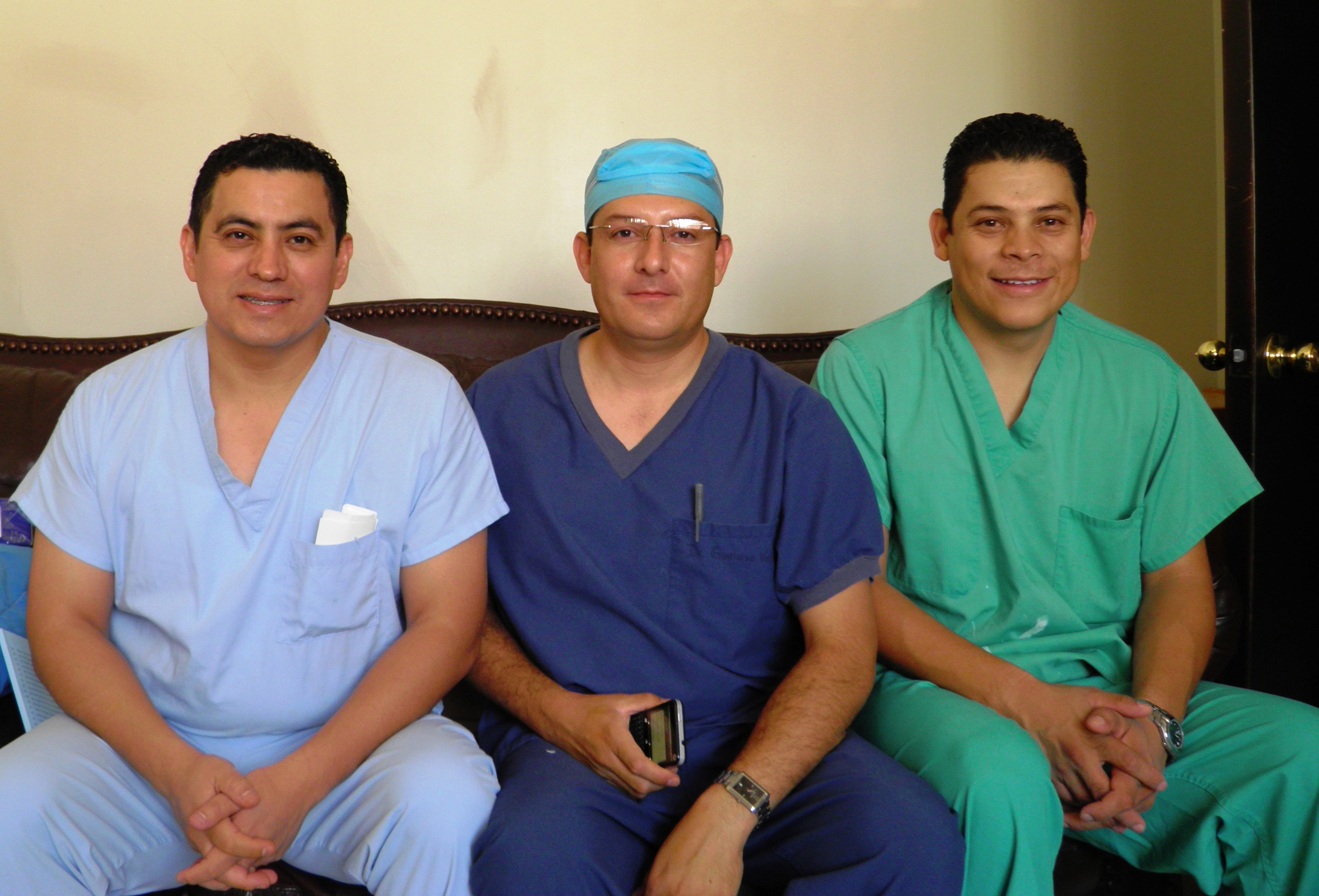
Dr. Ivan Santos

Just another reason for Latinamericansurgery.com


Dr. Ivan Santos

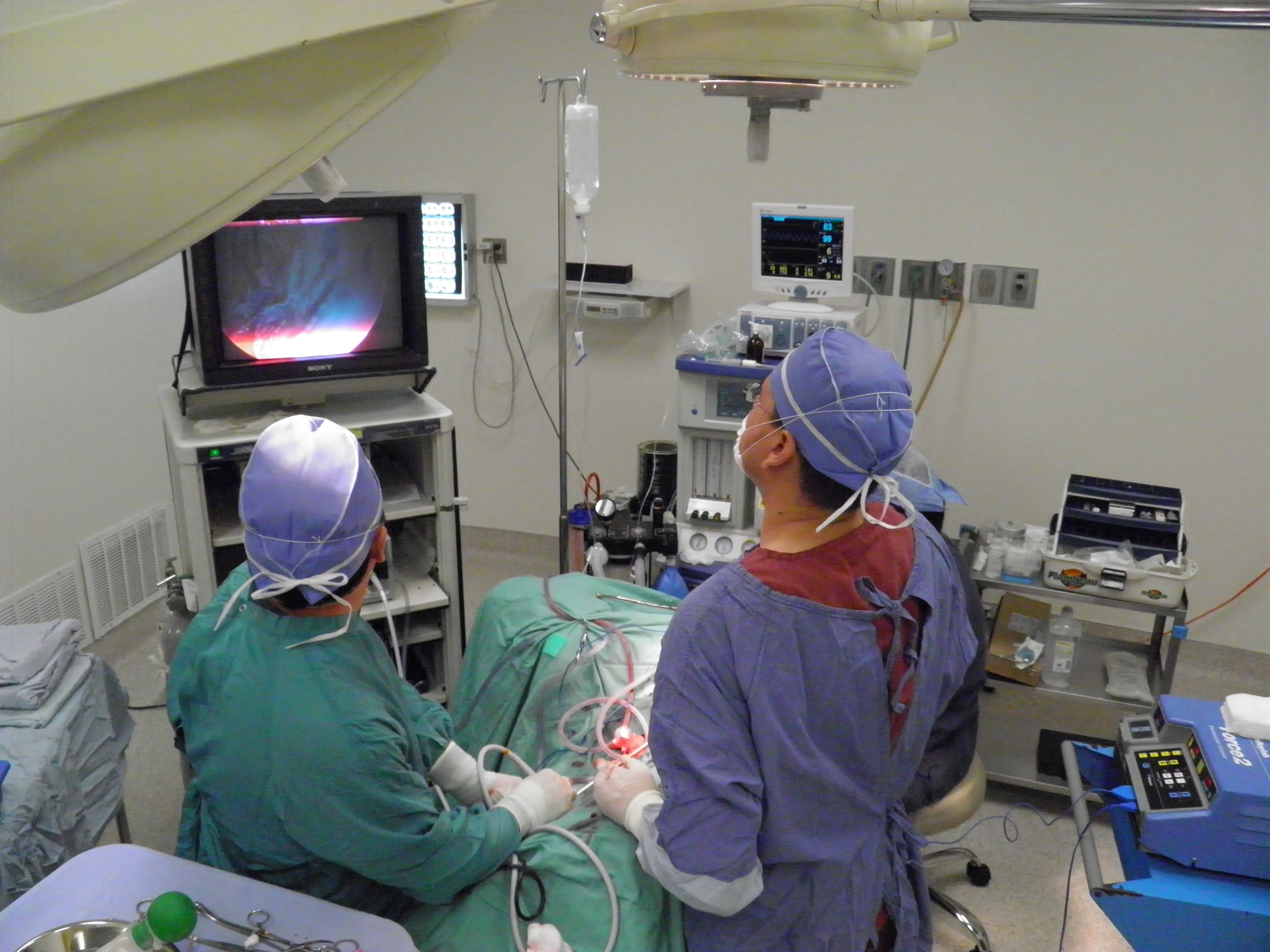
Colombian plastic surgeons operating

because you need someone who is objective (and informed) that is looking out for you, the patient..

In this article, at International Journal of Medical Travel, Kevin Pollard talks about the need for regulation of medical tourism in cosmetic surgery.  I wholeheartedly agree – in fact, Mr. Pollard and I conversed about this very topic in a series of emails last week.

After all – it is why I do what I do, and publish it here for my readers.  The industry does need to be regulated – medical tourism companies shouldn’t pick providers by “lowest bidder” and patients need to be protected (from unsanitary conditions, bad surgeons, and poor care).  But what form will this regulation take?

Will it be Joint Commission certification – which covers facilities and not the physicians (and their surgical practices themselves)?

Will it require facilities to pay a lot of money for a shiny badge?

Or will it be someone like me, low-key and independent, going into facilities at the behest of patients; interviewing surgeons and actually observing the process and talking to patients?

and who pays for this?  The beauty of what I do – is that I am independently (read: self) funded.  True, it hurts my wallet but I have no divided loyalties or outside interests in doing anything but reporting the unvarnished truth.

and ultimately – will this be done in a fair, open and honest way?  Or it is really a witch hunt led by disgruntled American and British plastic surgeons?  Will they bother to discriminate between excellent surgeons and incompetent ones who will it be by geography alone?

I guess we will just have to wait and see.

Is your ‘cosmetic surgeon’ really even a surgeon?


The answer is “NO” for several disfigured patients in Australia, who later found out that a loophole in Australian licensing laws allowed Dentists and other medical (nonsurgeons) professionals to claim use of the title of ‘cosmetic surgeon’ without any formalized training or certification in plastic and reconstructive surgery (or even any surgery specialty at all).

In this article from the Sydney Morning Herald, Melissa Davey explains how dentists and other nonsurgical personnel skirted around laws designed to protect patients from exactly this sort of deceptive practice, and how this resulted in harm to several patients.

As readers will recall – we previously discussed several high-profile cases of similar instances in the United States, including a doctor charged in the deaths of several patients from his medical negligence.  In that case, a ‘homeopathic’  and “self-proclaimed” plastic surgeon, Peter Normann was criminally indicted in the intra-operative deaths of several of his patients.  The patients died while he was performing liposuction due to improper intubation techniques.

But at least, in both of the cases above – the people performing the procedures, presumably, had at a minimum, some training in a medical/ quasi-medical field..

Surgeon or a handyman

More frightening, is the ‘handyman’ cases that have plagued Las Vegas and several other American cities – where untrained smooth operators have preyed primarily on the Latino community – injecting cement, construction grade materials and even floor wax into their victims.

How to protect yourself from shady characters?  In our post, “Liposuction in a Myrtle Beach Apartment” we discuss some of the ways to verify a surgeon’s credentials.  We also talk about how not to be fooled by fancy internet ads and the like.  (Even savvy consumers can be fooled by circular advertisements designed to look like legitimate research articles as well as bogus credentials/ or ‘for-hire’ credentials*. )

*We will talk about some of the sketchy credentials in another post – but the field is growing, by leaps and bounds..More and more fly-by-night agencies are offering ‘credentials’ for a hefty fee (and not much else.)

In the operating room with Dr. Victor Ramirez, MD, plastic surgeon


Frankly, I wasn’t sure what to expect when I returned to see Dr. Victor Ramirez.  I had enjoyed talking to him during the first interview back in November of 2011, but as most people know – a lot had happened since then.  It took me a couple of weeks to re-connect with the now somewhat wary and (media-weary) surgeon, but when I did – he didn’t hesitate to invite me to the operating room.  And then – after the first case, he immediately invited me back**.

Dr. Victor Ramirez, plastic surgeon

For readers unfamiliar with the concept of my work – let me tell you, this is usually an excellent prognostic indicator.  It’s certainly not fail-proof – but as a general rule; when a surgeon invites you to his operating room, he is generally confident because he is a good surgeon. 

You’ll notice a couple of things about the statement above – when the surgeon invites me, is important.  Often when I have to ask – it’s because the surgeons are hesitant to let me watch.  Most (but not all of the time) – there is a good reason that a surgeon doesn’t want an observer in their operating room.  (And there are a multitude of reasons – not just a poorly skilled surgeon.)

But there are certainly no absolutes.  I have met fantastic surgeons who initially were not crazy about the idea (but quickly warmed up to it) and I have met less than skilled surgeons who happily encouraged me to visit – and everything in-between.. I’ve visited great surgeons who were hampered by poor facilities, unskilled staff, or limited resources.  That’s why the on-site, operating room visit is so important.  Anything less, is well – less than the full picture.

But back to Dr. Victor Ramirez – in the quirofano (operating room) performing surgery.

Dr. Victor Ramirez, Dr. Perez and Ricardo (RN)

I observed Dr. Ramirez operating at two different facilities – Hospital Quirurgico del Valle, and the Bellus clinic.  Hospital Quirurogico is a private hospital – with excellent operating room facilities.  While there are only two operating rooms, both rooms are large, well-lit, new, and very well equipped.  There are three separate ‘big screen’ tv sized monitors for video-assisted procedures – so if you are looking for a facility for video-assisted procedures such as endoscopy, laparoscopy or thoracoscopy – this is the place.  All the equipment was modern, in new or ‘near-new’ condition.  As a facility specifically designed as a surgical hospital – with private rooms, patients are segregated from ‘medical patients’ with infectious conditions.  (The facility is not designed for pneumonia patients, and other medical type hospitalizations.)

Dr. Ramirez applied the sequential stockings himself (kendall pneumatic devices), and supervised all patient preparations.  Patients received a combination of conscious sedation, and epidural analgesia – so they were awake, but comfortable during the procedures.  (This eliminates many of the risks associated with general anesthesia – and reduces other risks.)  The anesthesiologist himself, Dr. Luis Perez Fernandez, MD was excellent – attentive and on top of the situation at all times.  There was no hypoxia or hemodynamic instability during either of the cases.  (I have been favorably impressed by several of the anesthesiologists here in Mexicali.)

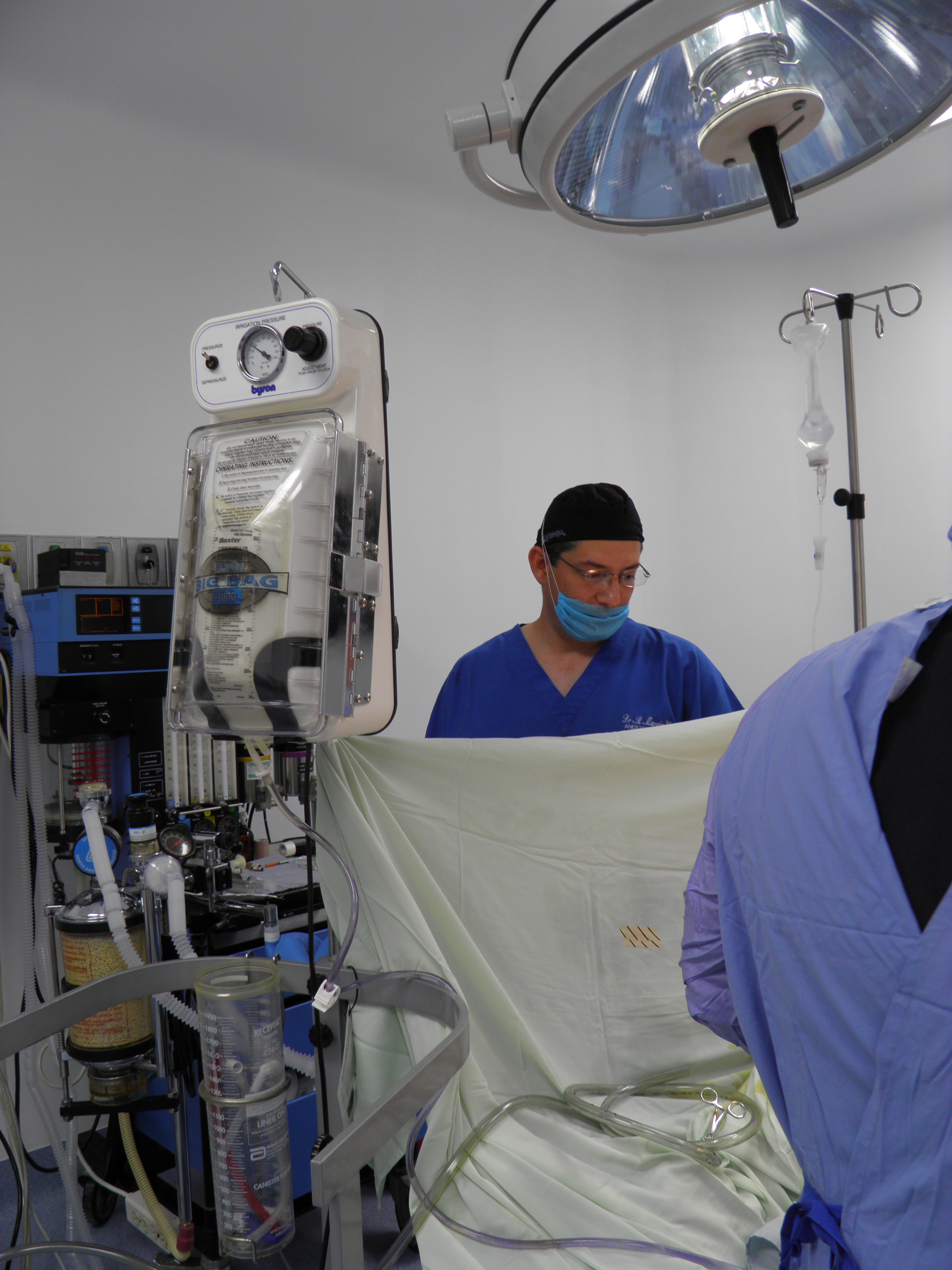
Dr. Perez monitors his patient closely

As for the surgery itself – everything proceeded in textbook fashion – sterility was maintained, and Dr. Ramirez demonstrated excellent surgical techniques.

For example – One of the signs of ‘good’ liposuction (and good preparation) is the color of the fat removed.  Ideally, it should be golden or light pink in color.  Over-aggressive liposuction or poorly prepped liposuction results in more bleeding.  As I watched fat being removed – the fat remained golden-yellow in the suction tubing, and even at the conclusion of the procedure, the accumulated suction canister contents remained just slightly tinged pink.

Results were cosmetically pleasing in both cases with minimal trauma to the patients***- but there will be more details forthcoming in the free book (since the post is becoming pretty long, and may be more detail than casual readers would like.)  I’ll have more information about the doctors, including the anesthesiologists, the clinics and the procedures themselves..

I did want to post some specifics – especially in this case, as the patient told me that her/his parent is a retired physician and had concerns about surgical conditions.

Mom, Dad – you don’t have to worry – Dr. Ramirez runs an excellent OR. Even in the tiny Bellus clinic, there is a full crash cart, a defibrillator and an emergency intubation cart – just in case.

**Given what I know about Dr. Ramirez, I am pretty confident – that if I wanted – I’d be there right now, and every day for a month, or until I said, “stop”..  That’s the kind of person Dr. Ramirez is.

*** In some liposuction cases – the patients appear as if they have been beaten (extensive bruising) due to the amount of trauma and force used during the procedure.

In the OR (and back again!)


It sounds awful to say but it’s a good thing my husband has been out-of-town this week – after all, considering my week in the operating room, he wouldn’t have seen much of me anyway!  But it always drives him a little crazy to see me racing from interviews to operating rooms – stumbling home late, with aching legs and a rumbling tummy, only to climb out of bed and the crack of dawn just to do it again.. then worry that I somehow won’t have time to write it all down – and round and round..  (That being said – he is phenomenal about understanding this driving motivation I have to interview, and to write – even when I’m not quite sure I understand myself.)

So he wouldn’t have complained about my whirlwind tours of the operating rooms this week – or the long days of back-to-back surgery but I would have felt bad about not seeing him all the same..

Instead with my husband thousands of miles away, I hear him smiling in the phone, laughing at my exploits, though I sometimes picture the wrinkle he gets in his brow when he thinks I’m not eating right, or getting enough sleep.. He currently serves as my remote editor for my articles at Examiner.com – calling to give feedback before submission.  He’ll be home soon – and he’ll be patient with me, as always.

Dr. Victor Ramirez, plastic surgeon

Had some great interviews and operating visits this week – including Dr. Victor Ramirez, and most of the plastic surgery community here in Mexicali – but to be fair, I will break it all up into a couple of posts.

Demonstration of techniques for breast reconstruction at Mexicali General

Back in my ‘home’ OR in thoracic surgery – which felt good.  I love meeting and seeing all the different specialties like bariatrics, urology and plastics, but it sure does feel good to come back home again..

back in thoracics (and trying to hang from the rafters)

I could wax some eloquent nonsense about the beauty of a muscle-sparing thoracotomy but then again – the good doc does almost everything minimally invasive, so I never see any.. (and you’ve heard me crow about dual port thoracoscopy.)

with more to come..

Kim Kardashian’s Mexicali secret.. (ads, that is)


Kim Kardashian on the red carpet – photo credit unknown

Looks like Dr. Victor Ramirez, the plastic surgeon in Mexicali that we previously interviewed here has ignited a firestorm of controversy by using the unauthorized likeness of Kim Kardashian (of reality television fame) to advertise his surgical skills.

While I don’t condone this behavior – the irony of the situation is unmistakable since Ms. Kardashian first shot to fame (and public attention) through public exposure of another sort entirelyIn fact, she along with Paris Hilton are two of the very ‘celebutards’ that popular media love to exploit while simultaneously decrying their actions.

Mexicali ad courtesy of Perez Hilton.com

Is the outrage against Dr. Ramirez, expressed by Kim Kardashian based on true or genuine anger or frustration against unwanted (and unpaid!) advertising, or just another slick publicity stunt in the wake of negative public sentiments regarding her highly profitable (yet amazing brief) marriage?  Even now, tales of her bickering and fighting over money with her ex still dominate the internet, tv and gossip columns..

Especially since the timing coincides nicely with the opening of her new lingerie line, the Kardashian Kollection..

Ms. Kardashian’s recent twitter pix,

Now, I’ve never met Ms. Kardashian, and I’m sure this situation might be aggravating, but at the same time – isn’t it just a bit flattering too?  That other people might choose to have a surgical procedure so that they can attempt to mimic your beauty?  If I were Kim – I’d sit down with Dr. Ramirez and work out some sort of agreement – for advertisements and endorsements..  But, wait..

Isn’t this the same woman who sued Old Navy for hiring a model for looking “too much” like her?

But then again – I’m just a nurse.

I’ve emailed Dr. Ramirez for his side of the story, (for more about the real Dr. Victor Ramirez – read our post here).

More on this story – elsewhere on the net

Fox News

Orange County Register

Dr. Fix-a-flat strikes again!


Syringe of unknown contents


Dr. Fix-a-flat (Oneal Morris) in Ft. Lauderdale, Florida has been re-arrested as more victims of his scam surgeries have come forward.

This arrest comes as other American cities, (most notably, Las Vegas) make a concerted push to protect consumers with a new campaign against fraudulent practices and unlicensed physicians.  However, these ‘campaigns’ are primarily informational commercials aimed at the Latino community.

There is a new statewide task force aimed at addressing these incidents, but as of yet – there have been no legislative changes to protect victims of these scams.  Equally disturbing, in at least one of these cases – one of the pretend doctors used his fake status to sexually assault his victims.

In another disturbing sidenote out of Nevada – Teva pharmaceuticals settled a case against them for the distribution of propofol outside of proper channels/ and in improper quantities.  (If you remember, this is how Dr. Conrad Murray obtained the anesthetic for use on Michael Jackson.)  As a result of this distribution of multi-use medications that should be exclusively used in hospital settings – several patients were inadvertently exposed to Hepatitis C (including the plaintiff who developed Hepatitis C as a result.)

[Multi-use vials mean that the same container of medication is used for multiple people – if the medication is drawn up using needles or other instruments that have already been exposed to patients – this places future patients in contact with blood and infectious agents.]   Multi-use vials are a cost-containment measure for many institutions.

I hope that someone takes issue with out-patient colonoscopies as a whole since this in itself can be a very dangerous practice – and the research proves it.  (The issue behind outpatient procedures such as colonoscopies is the use of unmonitored anesthesia.  Most patients aren’t on monitors, no anesthesiologist is present, and the doctors performing the procedure are often unprepared in the event that a patient loses his airway (or stops breathing.)  There was a landmark study several years ago – that showed that 70% of nonaesthesiologists underestimated the level of sedation in patients undergoing out-patient / office procedures.  [I will continue looking for the link to this source.]

Frighteningly, a related paper demonstrated similar findings in a pediatric population.  This South African paper voices similar concerns.

The case against ‘extreme makeovers’


While extreme plastic surgery makeovers (or multiple plastic surgery procedures at once) make for great television – they aren’t safe.  Prolonged (multi-hour, multi-procedure) surgeries place patients at greater risk of complications from anesthesia, bleeding, etc.  These ‘Mommy Makeovers’ sound like a good idea to patients – one surgery, less money and faster results – but the truth is – they just aren’t a good or safe idea.

Now an article by Laura Newman, [originally published  in Dermatol Surg. 2012;38:171-179] and re-posted at Medscape.com drives home that fact.

Combination Cosmetic Surgeries, General Anesthesia Drive AEs

February 9, 2012 — The use of general anesthesia, the performance of liposuction under general anesthesia, and a combination of surgical procedures significantly increase the risk for adverse events (AEs) in office-based surgery, according to reviews of statewide mandatory AE reporting in Florida and Alabama. More than two thirds of deaths and three quarters of hospital transfers were associated with cosmetic surgery performed under general anesthesia, according to an article published in the February issue of Dermatologic Surgery.

The study, derived from 10-year data from Florida and 6-year data from in Alabama, “confirms trends that have been previously identified in earlier analyses of this data,” write the authors, led by John Starling III, MD, from the Skin Cancer Center, Cincinnati, and the Department of Dermatology, University of Cincinnati, Ohio.

In a companion commentary, C. William Hanke, MD, from the Laser and Skin Surgery Center of Indiana, Indianapolis, presses for 3 patient safety practices: “(1) Keep the patient awake!… 2) Think twice before supporting a patient’s desire for liposuction that is to be done in conjunction with abdominoplasty under general anesthesia…. 3) “[B]e advocates for prospective, mandatory, verifiable adverse event reporting…[that] should include data from physician offices, ambulatory surgical centers, and hospitals to define and quantify problems that can be largely prevented and eliminated.”

The authors and editorialist are especially critical of liposuction performed under general anesthesia. The study revealed that although liposuction is perhaps one of the most common cosmetic surgical procedures, no deaths occurred in the setting of local anesthesia. “Liposuction under general anesthesia accounted for 32% of cosmetic procedure-related deaths and 22% of all cosmetic procedure-related complications,” the researchers write.

The researchers analyzed mandatory physician AE reports in ambulatory surgery submitted to their respective states, encompassing 10-year data in Florida and 6-year data in Alabama. A total of 309 AEs were reported during an office-based surgery during the 10-year period in Florida, including 46 deaths and 263 reportable complications or transfers to hospital. Cosmetic surgeries performed under general anesthesia accounted for the vast majority of deaths in Florida, with liposuction and abdominoplasty the most frequent procedures.

Six years’ worth of data from Alabama revealed 52 AEs, including 49 complications or hospital transfers and 3 deaths. General anesthesia was implicated in 89% of reported incidents; 42% were cosmetic surgeries. Pulmonary complications, including pulmonary emboli and pulmonary edema, were implicated in many deaths in both states.

Plastic surgeons were linked to nearly 45% of all reported complications in Florida and 42.3% in Alabama, write the researchers. Office accreditation, physician board certification, and hospital privileges all revealed no clear pattern.

One limitation acknowledged by the authors is that case logs of procedures performed under general and intravenous sedation are required in Florida, but are not public domain, and so were unavailable for analysis. In addition, investigators were not able to obtain data on the total number of liposuction procedures performed in either state. The lack of those data prevented them from calculating the overall fatality rate.

As readers of my previous publications know, the majority of surgeons I interviewed expressly do not perform multiple procedures during one surgery.  Also, many of them perform the majority of their procedures under conscious sedation with local anesthesia (which means you are awake, but you don’t care – and you don’t feel anything).

French implant update


More scary news for women around the globe – as the manufacturer, PIP discloses frightening information regarding their defective implants.  It has been discovered that the company knew that the implants were defective since 2005 – but continued to sell the implants for use world-wide, particularly in Latin America.

More disturbingly, this manufacturer did not use medical grade materials – instead opting for cheaper, construction grade chemicals including petroleum and fuel additives, components which have never been tested for [internal] human use.  The health effects of exposure to these materials is unknown.  The risks associated with the use of these materials is enhanced due to the high rate of rupture among this brand of implant.  These chemicals certainly have carcinogenic potential and the implications for thousands and thousands of women are terrifying.

French officials have urged women to have their implants surgically removed.

A preliminary search of PubMed and other published research shows mixed results – and primarily discusses the results of exposure to benzene (and other petroleum derivatives) via water contamination, or occupational exposure.   (In fact, only limited information is available regarding the safety of breast implants in general, and the material is fairly dated.)

As we stated in a previous story, while researching Bogota! and interviewing plastic surgeons – I investigated the types of implants used by the surgeons profiled in the book.  (None of the surgeons used this company’s implants at the time of my interviews in Winter/ Spring 2011).

Update:  In fact, the Colombian government has offered to pay for the removal of PIP implants.  More on this story here.

French Implants recalled


Hundreds of thousands of french made breast implants have been recalled – sending women all over the globe into a panic.  These implants which are no longer in use in France, have been linked to an increased rate of rupture, and possible increased incidence of cancer.

But good news for readers – as you may recall from my interviews with several of the surgeons (as written in the book) – none of the surgeons I interviewed used french implants.  The majority used FDA approved implants (only one brand currently FDA approved.)  Several others use german made implants*.. But this is an example of the details I’ve ferreted out for my readers..

* Brand information and other details are available in the book, “Bogota: a hidden gem guide to surgical tourism.”

More stories about fake docs including this one about a phony performing liposuction while smoking a cigar on AWAKE patients..

This guy was actually a doctor, but that didn’t stop ten of his patients from dying after bariatric procedures..

Questionable injections, and fake doctors at a Motel 6


In news out of Greensboro, North Carolina – another woman has been charged with several cases (dating back to 2007) of practicing medicine without a license.

Like the woman quoted in the article says, if you are going to a Motel 6 for a ‘medical procedure’ – what do you really expect?

This isn’t a way to skirt ‘the system’ or save money.. But it is a really good way to get hurt or killed.

Crimes of New York – another ‘butt-injecting’, superglue using phony kills patients in the Hispanic community in New York.

More Victims of the Fix-a-flat cement injecting fake doc.


Look at the facial deformities of one of the “Fix-a-flat” fake doctor’s earlier victims.  This story, which was picked up by multiple news outlets, is just one of the many stories authorities are hearing as more and more victims (aka ‘patients’) of the cement injecting doctor come forward.

I won’t insult readers by making snarky comments or mouthing sanctimonious “love yourself” type platitudes – those sort of attitudes certainly don’t help – nor encourage victims of this sort of fraudulent treatments to come forward.

Instead I will continue to post stories about these cases, along with advice to help people find qualified surgeons, and interviews of some of the many, many wonderful and talented surgeons out there.

Cement, Fix-a-flat & Superglue are not beauty aids..


In the latest horrifying story of unlicensed people performing plastic surgery – a man in Miami, Florida has been arrested for injecting a woman with a mixture of cement, superglue and ‘fix-a-flat’ as a part of a ‘homemade’ buttock enhancement procedure – performed in an apartment.

Hopefully readers can see the many, many things wrong with the above paragraph..  But what I find the most dismaying about the entire episode, is that the woman – who paid 700.00 for the procedure – refused to report this person to the authorities – despite having to seek emergency medical attention on two separate occasions for ‘severe’ complications from this quasi-procedure.

Update: 11/22/2011 – Now more patients with Cement Buttocks are emerging..

Another person has also been charged in this case.

A story in a UK paper suggests this fake doc may be a victim of a botched procedure himself.  (Take a look at these photos.)

Now it appears similar stories are emerging in other cities – including Las Vegas

Links to posts on similar stories on Cartagena Surgery:

Silicone injections & patient harm

LA woman disfigured and several more stories about unlicensed frauds harming patients – here, here & here.  Many of these stories are tragic.

Safety & Injectibles

Recent sentencing for doctor responsible for several deaths

We also give tips on finding qualified licensed personnel, as well as conducting our own interviews..

Interview with Dr. Victor Ramirez, Plastic Surgeon


Read about my visits to the OR with Dr. Ramirez here.)

Today, I interviewed the charming young plastic surgeon, Dr. Victor Manuel Ramirez Hernandez, 37.   Dr. Ramirez is well-versed in medical tourism – he tells me that 90% of his current practice are American patients.  He reports that many of these patients are from nearby areas in California and Arizona but that he has patients from across the United States.

Undoubtedly, these patients found Dr. Ramirez the same way I did – via the internet, thru his well-designed and attractive website, www.cirugiaplasticamexicali.com   Parts of the bilingual site are still under construction, so I contacted Dr. Ramirez directly to arrange for an in-person interview.  He also offers his services thru Costuco, a medical tourism agency that published their own medical tourism guide.  He is one of four local plastic surgeons listed in their recent publication advertising surgical services in the city called guia de cirugia en Mexicali.)

His office is located just a short walk from FCO (Francisco) Maduro, on Calle B – between Reforma and Obregon and across the street from Hospital Hispanol Americano.   (Interestingly enough – and coincidentally, his office is next to one of the thoracic surgeons I had previously contacted.)

He readily agreed – and with a minimum of fuss, we sat down together to discuss his practice.  He is friendly, polite and patient.  (I, myself, am surprisingly nervous – as much of my Spanish deserts me, the usually smoothly phrased questions becoming a jumbled, hurly burly mix.)  Luckily for me, Dr. Ramirez has arranged for his nephew, an Arizona native* to stand by and assist with translation as I try and gather my wits and compose myself.  Dr. Ramirez, who primarily speaks Spanish tells me that he often does this in order to facilitate communication with his English-speaking clientele.

As we talk, one of the things Dr. Ramirez and his nephew touch on is the importance of medical training and education, and the importance of being able to quantify the validity of this training in Mexico, where training standards and requirements are not standardized.

Dr. Ramirez himself received his medical education** in Morelia, which is the capital of the Mexican state of Michoacan (de Ocampo).  He attended the well- respected, and well-reputed Universidad de Michoacana de San Nicolas de Hidalgo***.  After graduating in 1997, he completed his general surgery residency (1997 – 2002) at Hospital Central Militar (which is a large military hospital – similar to Bethesda or other American VA facilities, located in Mexico City.)

He completed his plastic and reconstructive specialty surgery at the same facility in 2007 – 2008.   During his fellowship, he published several papers in a national medical journal, Revista Sanidad Militar (Military Health Magazine).

He completed additional training in microsurgery and breast reconstruction and received his board certification in plastic, esthetic and reconstructive surgery.

(As we’ve mentioned in previous posts, and in prior publications – not all countries require specialty surgeons such as plastic surgeons, cardiac surgeons etc. to have general surgery training.)

Since then, he has presented, and lectured at several national conferences (Mexican Association of Plastic, Esthetic and Reconstructive Surgery as an active member of this organization.)

He currently performs (on average of) four surgeries a week.   He performs a wide range of facial and body procedures including injectables, face-lifts, breast augmentation, abdominoplasties, and liposuction. (This is not an all-inclusive list.)  During his initial consultation, Dr. Ramirez performs a full medical evaluation.  If patients have uncontrolled diseases (such as diabetes) or are at high rick for surgical complications, Dr. Ramirez will refer patients for further medical evaluation and treatment before undergoing surgery.

For patients who live nearby (but outside Mexicali), Dr. Ramirez recommends a three-day stay with a return to Mexicali for a one week post-operative follow-up.  For medical tourists from greater distances, Dr. Ramirez recommends a one week stay in Mexicali.  He and his staff will assist in making hotel arrangements, and Dr. Ramirez has nurses that make house calls after surgery.

During my visit today, we also reviewed several of his cases – including before and after photographs.  Notably, in the photos viewed, post-operative photos, while showing dramatic differences, also showed natural appearing results.  The post-operative breast augmentation photos were particularly interesting – in all of the photos reviewed, the patients had elected for cosmetically appealing, natural looking results [versus dramatically endowed, ‘porn star’ breast implants].  (As discussed in Bogotá! – styles and fashions of plastic surgery may vary among cultures, geographic regions and the general public.)

*It turns out that his nephew, who is currently studying medicine is practically my neighbor, having been raised and attending school in Williams, AZ which is near Flagstaff (my current home.)

** In Mexico, like many countries, students do not attend a separate undergraduate program prior to medical school.  Instead, students undertake a six or seven year program that encompasses medicine and general studies.

*** This is one of the oldest universities in Mexico, originally founded as the colegio de San Nicolas de Higaldo in 1540. It became a university in 1917. It is also one of the largest public universities in Mexico. At the Universidad Michoacana – students may apply for the five-year medicine program after completing two years of general study.

Publications: (selected sample, not a full listing)

Percutaneous tracheostomy: Experience in the intensive care unit of the regional military hospital in irapuato, guanajuato.  (2005) full-text pdf download.

Ring injuries: case report and review of the literature. (2006).  full text pdf download

Clinical experiences in burns at Hospital Central Militar. (2007) full text pdf.

LA woman disfigured by unlicensed surgeon


LA headlines report the most recent and horrifying case of botched plastic surgery – by an unlicensed surgeon.  Not only did the surgeon horribly botch her breast implant procedure – he performed an unauthorized (and unasked for) eyelid procedure – and botched that too.

This story was picked up by Medical News Today – who also adds additional warnings and cautions consumers to check the credentials of their surgeon prior to surgery.  This echos the numerous warnings and stories here at Cartagena Surgery.

The American Society of Plastic Surgeons has jumped in with a statement of their own – encouraging patients to do their research.

Safety and injectables


While we have discussed plastic surgery safety here at Cartagena Surgery several times, (you can read more here, here and here), it’s time to talk about “less-invasive” and “mini-surgery” techniques such as Botox.

It seems like everyone is offering injectables these days.  In many countries, including the United States – these treatments are offered in multiple places outside the plastic surgeons’ office by a multitude of practitioners including non-specialty physicians, nurses* and high-end salons.  Do you really think that your dentist should be giving you Botox?  Or your hair salon?

These treatments including Botox (botulism toxin), Restylane, juvaderm and other dermal fillers are often used as ‘refresh’ and rejuvenate the face without surgery.  Fillers are used for lip plumping and filling out fine lines and wrinkles. (Note: Botox is also used for several other ‘off-label’ uses.)

However, I’d like to remind everyone to use caution when choosing to use these products.  While less radical than surgery – these treatments are medications and need to be used cautiously (just like any other medical or surgical treatment).   Botox, in particular, when used incorrectly has been linked to several deaths.  Unlicensed practitioners have also been caught using unapproved substances such as construction grade silicone – leading to serious health consequences (this is what happened to Priscilla Presley about fifteen years ago).

The other thing we should talk about beside potential health complications, is the reason injectable and non-surgical treatments are such popular options.  We all want to look good – so shouldn’t you see a specialty trained professional?  When seeking cosmetic results – the results should be cosmetically pleasing – by someone with the experience to perform this properly, not an eye doctor, a dentist or beautician.  A board certified plastic surgeon is the best option to ensure that a person has the best results – without looking artificial or ‘frozen.”  It may cost more (but not always), but aren’t natural, pleasing  and safe results worth it?

* For example, as a licensed nurse practitioner – for a 200.00 fee and a one day course, I could (but am not) be ‘certified’ to give Botox and other injectable.  It doesn’t matter whether I have previous experience in plastic surgery, acute care, neonatal, family medicine or even if I have experience giving injections.  Other nurses, doctors, and paraprofessional personnel are eligible to take this and similar ‘short-course’ training seminars for injectable, laser treatments and other ‘minor’ plastic surgery procedures.

More criminal malpractice, and patient deaths: in my own backyard…


Phoenix, Arizona –

In a case of criminal malpractice that sickens and horrifies health care personnel like myself – ‘self-proclaimed’ plastic surgeon, Peter Normann was able to delay sentencing after being found guilty earlier this summer in the deaths of three of his patients  – in three separate incidents.

The details of each of the cases are quite frightening, and highlight reasons why trained observers like myself are critical for objective and unbiased evaluations for potential patients.  In one case, another ‘homeopathic’ doctor working with Mr. Normann (not a licensed plastic surgeon) participated in a liposuction case that resulted in the death of a patient.  In two cases – patients died because Mr. Normann failed to intubate the patients correctly (and tore the esophagus of one of the patients.)

In all cases,  there was no intra-operative monitoring during cases – and Mr. Normann’s only assistant was a massage therapist (not an anesthesiologist, not a surgical nurse or trained surgical team.)  Horrifying – completely criminal, and unforgivable and unacceptable.

Additional Links on this case:

Homeopathy in Arizona covered for doctors’ mistakes

‘Homeopathic’ doctor kills patient performing liposuction.

The Times: Surgical Roulette

Another fraudulent surgery clinic


this time in Los Angeles, where several individuals were posing as licensed physicians.  A sting operation was conducted after several patient complaints – and injuries.  The story in the Manila paper is here. The LA Times initially broke the story.

Notably, the clinic operators had posted fake degrees and credentials on the walls.  (This is why it’s important to independently verify credentials with state licensure boards).  Anyone with a scanner, and basic computer literacy can print up and fake any document they want..

I’ll keep posting these stories as a reminder for people to use credible sources for information about their doctors (such as well researched books like mine) or licensure boards.

(While most of the stories appear to originate in the United States I think this is probably just a result of our media interests – and what makes national and international headlines.  There are frauds everywhere, who just want people’s money – they don’t care if people get hurt or die in the process.

Unfortunately, many of these people operate for years before they get caught, if ever.

In international news, the need for investigation and medical scrutiny of medical tourism is becoming more and more apparent.  (I told you that Cartagena Surgery was a trendsetter.)  Now, if only we could translate that into book sales.

Another sad story


of a preventable/ unnecessary plastic surgery death in a young woman in Massachusetts.  In this instance – yet again – the ‘surgeon’ performing the breast augmentation wasn’t a surgeon at all – he was a “family practitioner”.

He may be a doctor – but specialty specific training is an absolute must – along with board certification.  Medical doctors (in medicine specialties) as opposed to surgeons spend only a very limited time in the operating room during medical school, primarily as observers.  This is not adequate preparation!

Board certified specialty trained surgeons on the other hand, spend years training in the operating room – performing surgeries under the direct supervision of more experienced surgeons before completing their surgical residencies.

Please do your homework – as we’ve discussed in several previous posts; research your physician and evaluate all health claims.  Your life, health and well-being are a stake.


World Health Information & Patient Safety


As Bogotá Surgery readers know, we were just talking about the  relevance of hospital rankings, and scorecard criteria for patient safety and optimal patient outcomes.  In particular, we were talking about the use of this criteria  (along with Core Measures) as just one of the ways surgeons, hospitals and surgical programs are evaluated for Bogotá! a hidden gem guide to surgical tourism.

Now several news outlets have picked up the story under the headline, “Hospitals riskier than airplanes.”

Liposuction in a Myrtle Beach apartment


Another case of sketchy plastic surgery reported – this time in Myrtle Beach, South Carolina.   Yet again, I would like to caution readers about seeking ‘cheap’ plastic surgery on the internet.  (I’m not saying don’t look – please do!  But look smartly.)  This doesn’t only apply to plastic surgeons, but to all surgeons, physicians, and healthcare professionals.

‘The internet’ is not all the same – the grade of information can vary widely from scientific journals (highly reputable/ reliable) to fiery but heavily opinionated blogs (unreliable/ unscientific) to frankly fraudulent such as in this instance (in the story above).  People need to use caution, due diligence and common sense when researching anything, but particularly medical information on the internet.  You need to do your homework.

There are a few things to consider when researching medical information/ providers on the internet.

1.  Is the information independently verifiable?  (and by what sources?) 

As a medical writer – this is a huge portion of my job – verifying the information obtained during interviews, etc.  But when you are looking to purchase goods or services – you need to do a little investigative work yourself.  Luckily, once again – the internet makes this simple.

The first thing you should investigate is – the person making the claims/ and what their focus is.  Use this website for an example, if you like.  So take the following information (below) – that is easily available on the site..

(If this information isn’t readily available on the site – that should make you suspicious.  “Anonymous” blogs or hidden author websites are NOT reputable.  People with valid, truthful information have nothing to hide, and are not ashamed to stand by their work/ writings.)

so you’ve gathered the following information  from the site:

Author – XXXX   credentials claimed/ authority source:  Physician (MD/ DO etc.)

Product or service advertised on the site:  surgical procedure XX

Use this information to answer the following questions:

1. Who is this person?

2. How do they know this/ what special knowledge do they possess?  (for example – a hairdresser shouldn’t be giving medication advice)

3.  Can I verify this?

– Medical personnel can be verified thru state licensing boards. 

Some states make this easier than others, but ALL states have this information available to consumers.  So go to the website of the licensing board (medical board for doctors, nursing board for nurses) and look the person up.

In this example, I am currently licensed in several states – so pick one, and do an internet search for the board of nursing for that state.  (Tennessee is particularly easy since they post educational information, license violations etc. on-line).  If this licensing information isn’t easy to find on the website, call the board.**

If the website (ie. plastic surgery clinic) lists an address – use that state for your search.

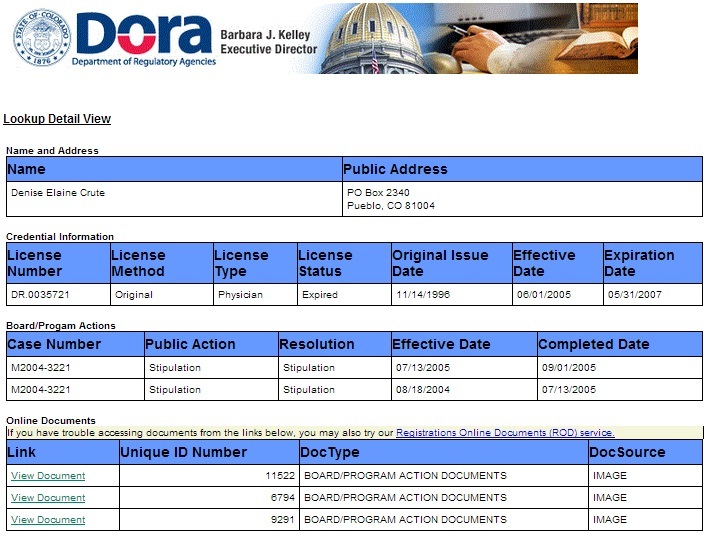
In another example – as seen below – we’ve looked up a surgeon at the Colorado Medical Board.

Looking up a medical license

Looking up a medical license

– All physicians should be licensed in the state of practice (where their clinic is.)  If they aren’t licensed in that state – STOP and find another provider.  Even if the doctor claims to be from another country, he or she is STILL required to have an active license in the state they are working in.**

Here is an example of physicians sanctioned by the Texas medical board (all of this information is freely available on the internet for your safety.)


Here is another example of a surgeon with multiple medical board actions against her.

licence details

license details

Many of the state medical boards will let you read the complaints, actions and disciplinary measures against physicians licensed in that state.  However, some states allow physicians under investigation to ‘surrender’ or inactive their license to avoid having disciplinary measures recorded.

– All surgeons, or specialty doctors should also be listed with specialty boards – such as the American College of Surgeons, or the American Society of Plastic Surgery(While membership is not mandatory, the vast majority of specialty trained surgeons maintain memberships in their specialty organizations.)  Other things to consider while investigating credentials:

Do the credentials match the procedure?  (Is this the right kind of doctor for this procedure?)

These credentials should match the procedure or treatment you are looking for: such as Plastic surgeons advertising breast augmentation.

This may sound obvious but it isn’t always the case.  (for example:  dermatologists shouldn’t be doing eyelid lifts or plastic surgery, primary care physicians shouldn’t be giving Botox injections, general surgeons shouldn’t be performing lung surgery etc.)
If you aren’t sure what procedures the doctor should be performing, look at the specialty surgery board – it should list the procedure.  i.e plastic surgery and liposuction.

4.  After verifying this information, it is time to do a basic internet search on the individual.  To do this – perform both a Yahoo! and Google search.   This should give you at minimum, 10 to 15 results.

These results should include several non-circular results.  “Circular results” are results that return you to the original website, or affiliated websites.   For example: Using the information from above – both Google and Yahoo! return several results that link directly to this website.  These results also return links for the sister sites.  All these of these are circular results – that return you to the starting point without providing any additional outside information.

However, if you scroll down the results:  outside links should appear.  These should include articles/ publications or scholarly work.  Other search results may include more personal information, social networking sites and other newsworthy articles.  This gives you a more comprehensive picture of the provider.

One of the things we should mention, is patient testimonials.  While many providers include extensive patient testimonials, I disregard these for several reasons:

– There is usually not enough information to verify the authenticity of these patient claims.  “I love my doctor. He’s a great surgeon.” – Gina S.  doesn’t really tell you anything.  In particular, there is no way to verify if there really is a Gina S. or if she is a fictitious creation of the website author.  (There have been several cases where people working for the doctors have created ficticious accounts including before and after photos talking about procedures that they never had).  Don’t be lulled into a false sense of security with patient testimonials.

– Some people use blogs, or message boards for the same purpose, and the same caveats apply.

– Another reason that patient testimonials are not useful in my opinion, is that patients (and their families) are only able to provide subjective information.  Several of the cases in the news recently (of fraudulent individuals posing as doctors) had several “happy patients’ to recommend them.  Patients, for the most part – aren’t awake and able to judge whether the surgery proceeded in a safe, appropriate fashion.  The testimonials are merely a comment on the physician’s charisma, which may give future patients a false sense of security.

I’ve finished my search – Now what?

   Use commonsense:

– Surgical treatments should be performed in an appropriate, sterile environment like a hospital or freestanding clinic.  A reputable surgeon does not operate in the back of a motor home, a motel room or an apartment.  (All of these have been reported in the media.)  If the setting doesn’t seem right – leave.  You can also investigate the clinic.

– Bring a friend.  In fact, most surgeons will require this, if you are having liposuction or another large procedure.  Doctors don’t usually drive their patients around (as was done in several recent cases.)  The exception to this rule is medical tourism packages.  These packages often include limousine transportation services but these services are provided by a professional driver (not the doctor, or ‘his cousin’).  Your friend/ companion is not just your driver – they are also there to help feel out the situation.  If something seems amiss – do not proceed.

– if the price is too cheap – be suspicious.  If every other provider in the same location charges a thousand dollars – why is this doctor only charging a hundred dollars? Chances are, it’s not a sale – and he/ she is not a doctor.

– Use reputable sources to find providers – Craigslist is not an appropriate referral source.

– Are the claims over-the-top?  Is the provider claiming better outcomes, faster healing or an ‘easier fix’ than the competition? (We will talk more about this in a future post on  “miracle cures’ and how to evaluate these claims.

I hope these hints provide you with a good start to your search for a qualified, safe, legitimate provider.  The majority of health care providers are excellent, however the internet has given criminals and frauds with an easy avenue to lure/ and trap unsuspecting consumers.

** The majority of cases that have been recently reported have taken place in the United States (Nevada, New Jersey, Florida and South Carolina.)  Many of the people perpetrating these crimes have posed as Latin American surgeons to capitalize on the international reputation of plastic surgeons from South America.  They also used these claims to try and explain away the lack of credentials.  A legitimate doctor from Brazil,  Argentina, Colombia, Costa Rica or another country, who is practicing in the United States WILL HAVE an American license.

Additional references/ stories on fraudulent surgeons.

(Hopefully this section will not continue to grow)

More on the Myrtle Beach story

Myrtle Beach – a nice article explaining why people should see specialty surgeons

Basement surgery

Article on unlicensed clinics in Asia (medical tourists beware!)

A truly bizarre story about unlicensed dentistry in Oregon

Additional references:

American College of Surgeons – lists doctors distinguished/ recognized as “fellows” in the academic organization, and provides a brief summary of specialties.