Introducing Trish Hutton, CRNFA


Today we are talking to one of my colleagues – Ms. Trisha Hutton.

Ms. Trisha Hutton, CRNFA

Ms. Trisha Hutton, CRNFA, ACNP (student)

Trisha is a certified registered nurse first assistant (CRNFA) .   She performs procedures in the operating room such as endovascular saphenous vein harvesting (EVH) for bypass surgery, and assists in other aspects of surgery, such as suturing, retraction and tissue dissection.

  Years in the operating room:   16

  Years working in cardiac surgery:  8

We’re talking to Ms. Hutton today about her current career and her developing role as an acute care nurse practitioner in cardiothoracic surgery.   Ms. Hutton is currently pursuing her master’s degree for certification in acute care, and will be part of a small but growing sub-specialty of acute care nurse practitioners in surgical practices.

As we’ve discussed during past posts; in the midst of a primary care crisis, advanced practice nurses such as nurse practitioners have moved to the forefront of the health care arena.  While NPs have worked (successfully) in this role since the creation of the specialty in the late 1960’s – the efforts of NPs in this (and other) roles are just now being recognized.

However, for nurses like Trisha Hutton, the increasing recognition (by surgeons) of the utility of nurse practitioners IN and OUT of the operating room is equally important.  So it’s important that nurses like Ms. Hutton receive the exposure to the public that may not always be aware of their role behind the scenes in caring for patients undergoing surgery.

What prompted you to return to school to become a nurse practitioner?

 “I felt like something was missing.  It was like chapters were missing from a book,” Ms. Hutton states, explaining that while she loves her current role, assisting and caring for patients in surgery – she wants to expand her role to encompass the care of patients outside of the operating room; from admission to discharge.

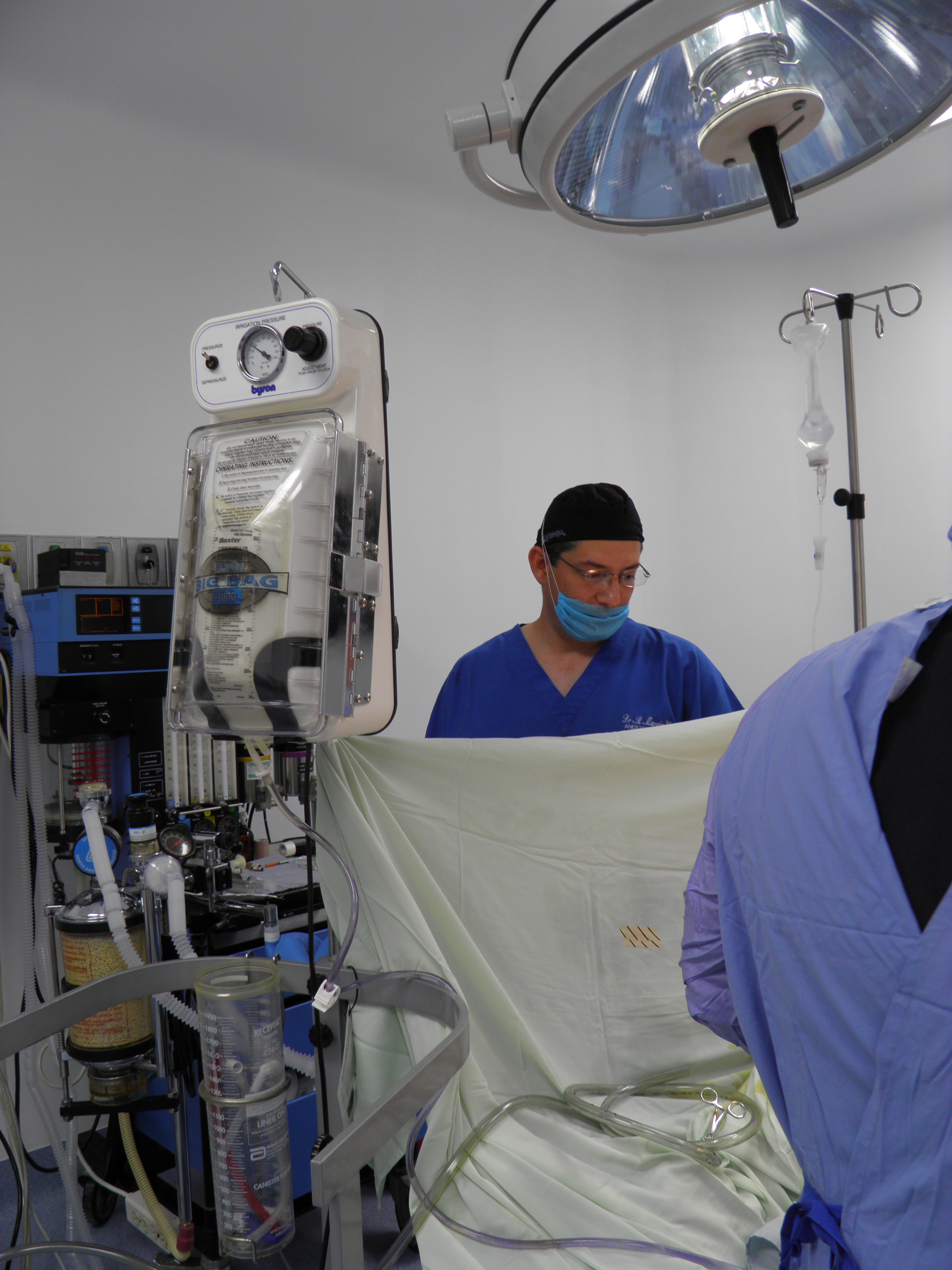
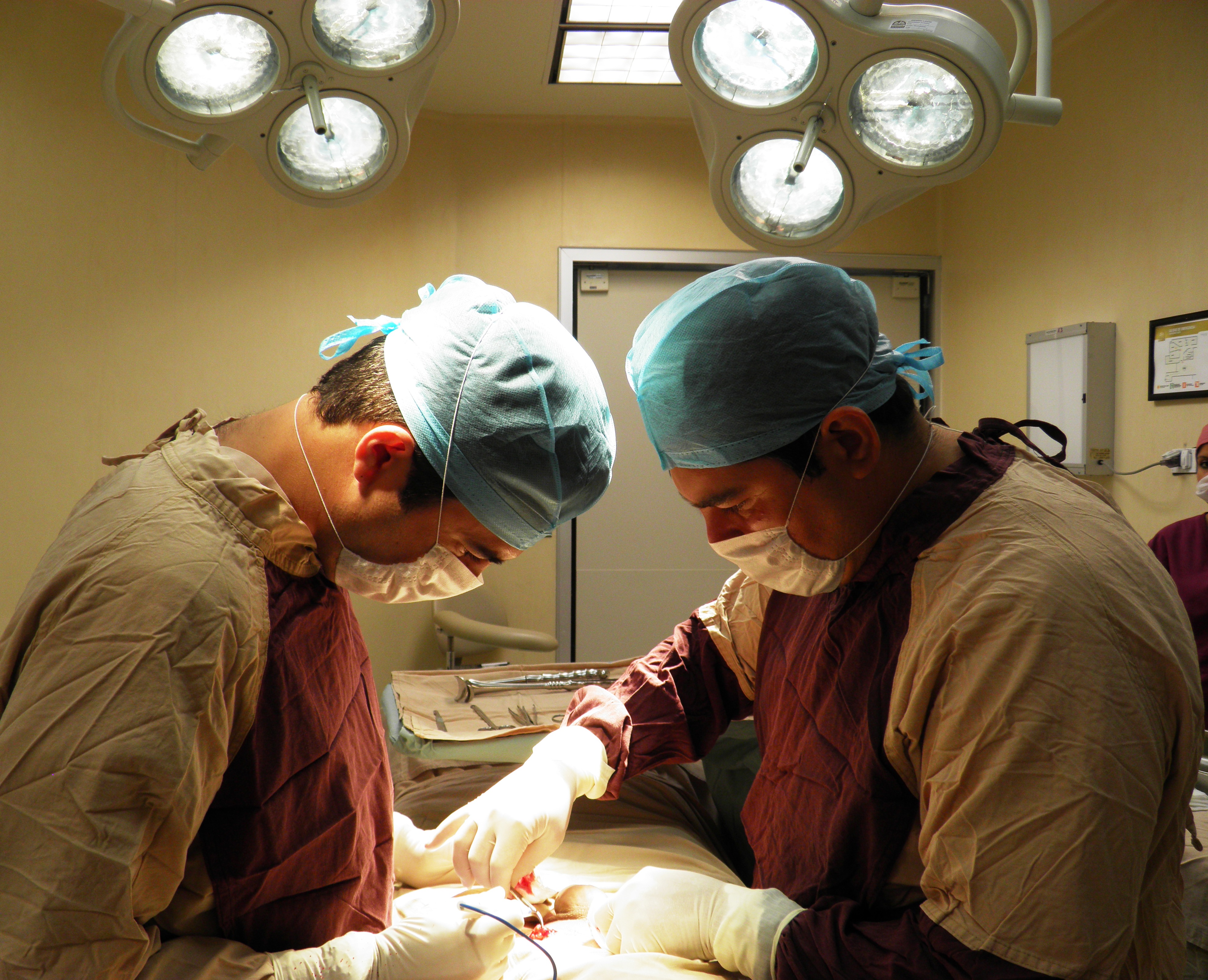
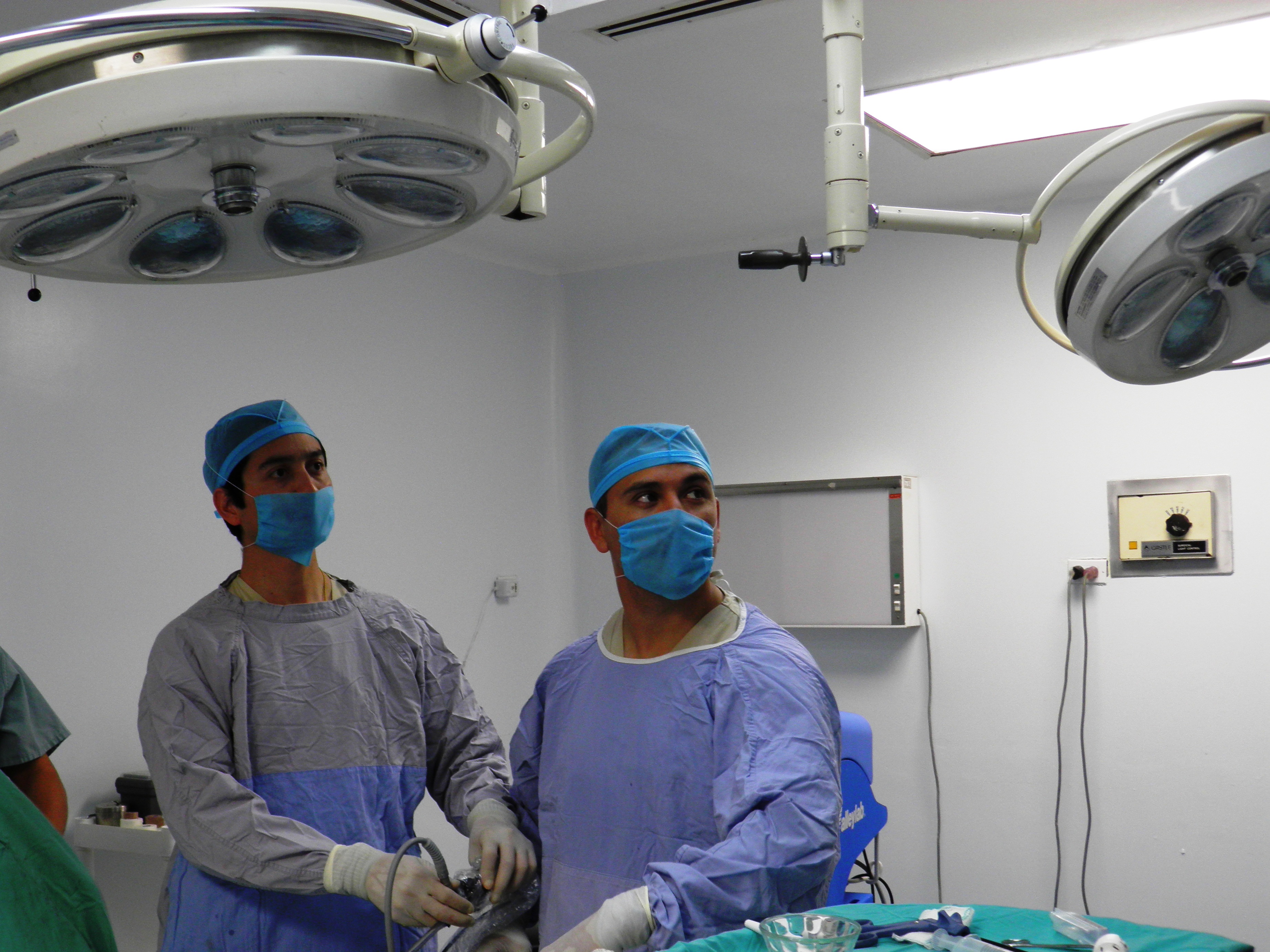
Ms. Hutton (pictured on the right) in the operating room

What drew you to cardiothoracic surgery, specifically?

I have always been interested in vascular surgery, and had been trained by and a vascular surgeon (Dr. Mark Donnelly) who I have worked closely with for many years.  When Flagstaff Medical Center started talking about beginning a heart program, I was immediately interested, and Donnelly encouraged me to be involved in it.  Also, because of our elevation (7000 ft), there was controversy about the success of our program, and that challenge excited me.

How do you see your role evolving after graduation?

To have the ability to continue my care to patients outside of the operating room.  I am looking forward to the opportunity to meet patients pre-operatively, participate in their diagnosis, operate on them, then continue their care through discharge.

Where do you see yourself in five years?

I hope to continue practicing within the CT and vascular specialty, and be comfortable within my expanded role.

Who are your role models?

I began as nurse in the operating room 16 years ago, and was instantly attracted to the vascular specialty.  I developed a relationship with a surgeon named Mark Donnelly, a very respected and talented General/Vascular surgeon.  When I decided to become a RNFA, he supported me, acted as my preceptor, and taught me how to operate.  As mentioned earlier, when word of a heart program started, he encouraged me to join the heart team.  That was a bitter-sweet decision for me….learning CT surgery has been a fantastic choice for me and has opened many doors, but it meant leaving a surgeon that I truly enjoyed operating and spending my day with.  He has been such an important role model for me and “life” coach (advice ranging from career to parenting!!), and I still miss working with him. More recently, our current heart surgeon Dr. Steve Peterson has been an important role model to me.  I joined cardiac surgery with good assisting skills, but he has pushed and challenged me even more.  He continues to test me daily, teaching me the finesse of cardiac surgery.  Without him I would not be  successful within this specialty, and I would never have considered continuing my education.  He has given me endless opportunities, pushed me to grow, and I am very grateful for him.

How do you see the nurse practitioner role in comparison to other peri-operative roles?  Do you think NPs provide any unique perspectives or contributions to surgical care?

NP’s absolutely offer unique contributions to surgical care!  Especially if they have had perioperative experience prior to becoming an advanced practice nurse.  I believe continuity of care is an important factor in delivering high quality care to our patients, and if the NP can follow her patient into the operating room, that continuity of care can be achieved.  They see and experience first hand what occurs during surgery, which can aid in their post op management.

For instance, if closing an aorta post AVR and the aortic tissue is particularly fragile, the NP will know that post op blood pressure management will be even  more critical. If a different practitioner had been operating, that concern may not be communicated adequately.  The surgeon who practices with a NP First Assistant can feel at ease knowing that both HIS needs and the patients’ needs will be met.  The NP who is familiar with the patient will know just what the surgeon will want in the operating room, will have appropriate equipment, supplies, support staff etc available, therefore making the patients’ surgical experience smooth and uneventful. A first assistant that does not have that relationship with the surgeon or patient (ie family practice MD or TechFA) cannot offer that unique service.

Nurse Practitioners in the operating room?  Current issues and controversies

While this seems like a natural and normal progression for many nurses and nurse practitioners within the field – it isn’t as obvious to people outside the profession.  Many people including human resources personnel, staffing companies and the surgeons themselves have pre-conceived notions that exclude nurse practitioners, even those with extensive operating room (peri-operative) experience from assisting in the operating room.  That role is often exclusively assigned to Physician Assistants, often to the detriment of our profession, our nursing colleagues and the patients.

In fact, in this recent statement and study on the role of surgical assistants (2011) only mentions nurses as assistants as a side note.  It fails to recognize the different levels of qualifications (ie. a certified registered nurse first assistant (RNFA) versus a surgical technician (with weeks to months of formalized training).

Now, with the adverse economy, and changes in medicare regulations, nurse practitioners face even more competition for the operating room; the disenfranchised primary care physician.  In several of the facilities where I have worked in the past; more and more of these physicians were taking an active role in assisting in surgery.  These doctors, often primary care doctors ‘moonlight’ in the operating room as a way to augment their salaries.  Conversely, while these physicians had the least amount of surgical training, they were afforded the most reimbursement for their intra-operative role.    This array of peri-operative assistants has led to a wide range of skill sets in this patient care role with little research or comparison of effectiveness of these positions.

Ideally, the best ‘surgical assistants*’ would be patient care roles that encompassed the entire patient surgical experience from pre-operative evaluation to patient discharge, which is the spectrum of both nurse practitioners and physician assistants.  But only nurse practitioners can bring a holistic, patient-centered approach to this

* The ‘surgical assistant’ title like surgical technician/ technologist has also been designated to another career entirely, with similar focus.  However, in this post, we are using the term generically to refer to any individual (NP, RNFA, PA , MD or technician) who acts as an assistant to the surgeon intra-operatively, and performs procedures under the supervision of the attending surgeon.

References/  Literature surrounding nurse practitioners in the Operating Room

Hodson D. M. (1998).  The evolving role of advanced practice nurses in surgery.  AORN J. 1998 May;67(5):998-1009. Erratum in: AORN J 1998 Jun;67(6):1102

Pear, S. M., & Williamson, T. H. (2009).  The RN first assistant: An expert resource for surgical site infection prevention.  AORN, 89(6); 1093 – 1097.  No free full text available.
Schroeder JL. (2008).  Acute care nurse practitioner: an advanced practice role for RN first assistants.  AORN J. 2008 Jun;87(6):1205-15.
Wadas T. M. (2008).  Expanding the scope of acute care nurse practitioners with a registered nurse first assist specialty.  AACN Adv Crit Care. 2008 Jul-Sep;19(3):261-3.

Wadlund D. L.  (2001).  Graduate education: the perioperative nurse practitioner.  Semin Perioper Nurs. 2001 Apr;10(2):77-9
Zarnitz P, Malone E.  (2006).    Surgical nurse practitioners as registered nurse first assists: the role, historical perspectives, and educational training.  Mil Med. 2006 Sep;171(9):875-8.   No free full text available.
More about the Registered Nurse First Assistant (RNFA) role from the Association of peri-Operative Nurses (AORN).

Mexico on my mind….and the city by the fence


Actually, it is on my mind quite a bit these days, as you can imagine.  But that’s also the title of the new website where I will be contributing to articles about life, and health care in Mexicali.  It’s a website designed for Americans and other extranjeros living in Mexico, so I thought it was the perfect place for some of my articles on medical emergencies and medical services.

I think that if you are an ex-pat living in a different country/ culture/ etc. even if you’ve been here for a while – if you become ill, it’s a little more frightening and confusing than it might be in your old hometown.  So, hopefully the addition of a fellow gringa to help navigate the system, so to speak, is more comforting and helpful to readers..

Of course, many of the readers of the site are living in different areas of the country, so this is also a chance for me to speak up and promote Mexicali – and after being here for a couple of months – I really think that Mexicali is often judged harshly.

Sure, I don’t want it to become the next Cabo San Lucas – where Spanish is drowned out by drunken teenagers hollering, puking and carrying on in English, and Mexican culture has been submerged beneath a sea of tacky shops, Starbucks, and the homogenous effect of chain restaurants and fast food.  But I also think that when people skip over Mexicali, they are missing a chance to see an interesting side of Mexico – a side that is often downplayed to tourists unless you are heading to Mexico City.

But first – let’s be sure to say what Mexicali isn’t.  It isn’t a quaint seaside resort, or charming village.  It also isn’t a crime-infested border city, as we’ve talked about before.

If you are looking for cute, charming and rural – this isn’t the place for you.

But that’s not to say that Mexicali is without its own considerable charms.  It is first and foremost – a city of industry.  While this contributes to wide areas of industrial blight (factories and their by-products aren’t particularly attractive) – it also means that there is a significant sector of skilled labor and a higher overall standard of living.  Some of this industry is medical, but much of it is more traditional – factories and companies who came here to take advantage of NAFTA.  Frito-Lay is here, Modelo brewing is here, as well as several juice distributors and machineries.  But there is also Intuitive Surgical – the makers of the DaVinci Robot, a two million dollar piece of extremely sophisticated medical technology.

street art in Mexicali

It is also the capital of Baja California, so there is a large contingent of government offices here too,  along with the Universities and educational facilities of higher learning.

But most importantly, it is a city of people.  These people are the true heart of ‘Mexican culture’, in a very real sense.  I am fortunate that as a student, in my daily activities – I get to encounter these people on a day-to-day basis – and the people of Mexicali have proven to be as friendly and welcoming as any city I’ve ever lived.  Despite the close proximity to the border, this is the real Mexico – and it hasn’t been diluted.  Spanish remains predominant, and real working class citizens populate the streets and buildings as opposed to the more touristy destinations where everything has been ‘Americanized’ for our comfort.

Want to learn Spanish?  Then come here.  You will get to practice every day.  People will help you, correct your grammar, offer you the occasional missing word – and they do it with patience and a smile, but they will expect you to speak Spanish all the same.

The charm is here – on the quiet, upscale streets in the different barrios of the city, in the music emanating from well-kept homes, in the kitchens of mom and pop restaurants serving native dishes, and in the way that residents still welcome outsiders like myself.

They have pride in their city, their way of life and take pains to encourage me to sample it – pieces of their culture, whether as part of traditional festivities for a national holiday, or a bite of food from a street vendor or even just directions to the best [blank] in town.

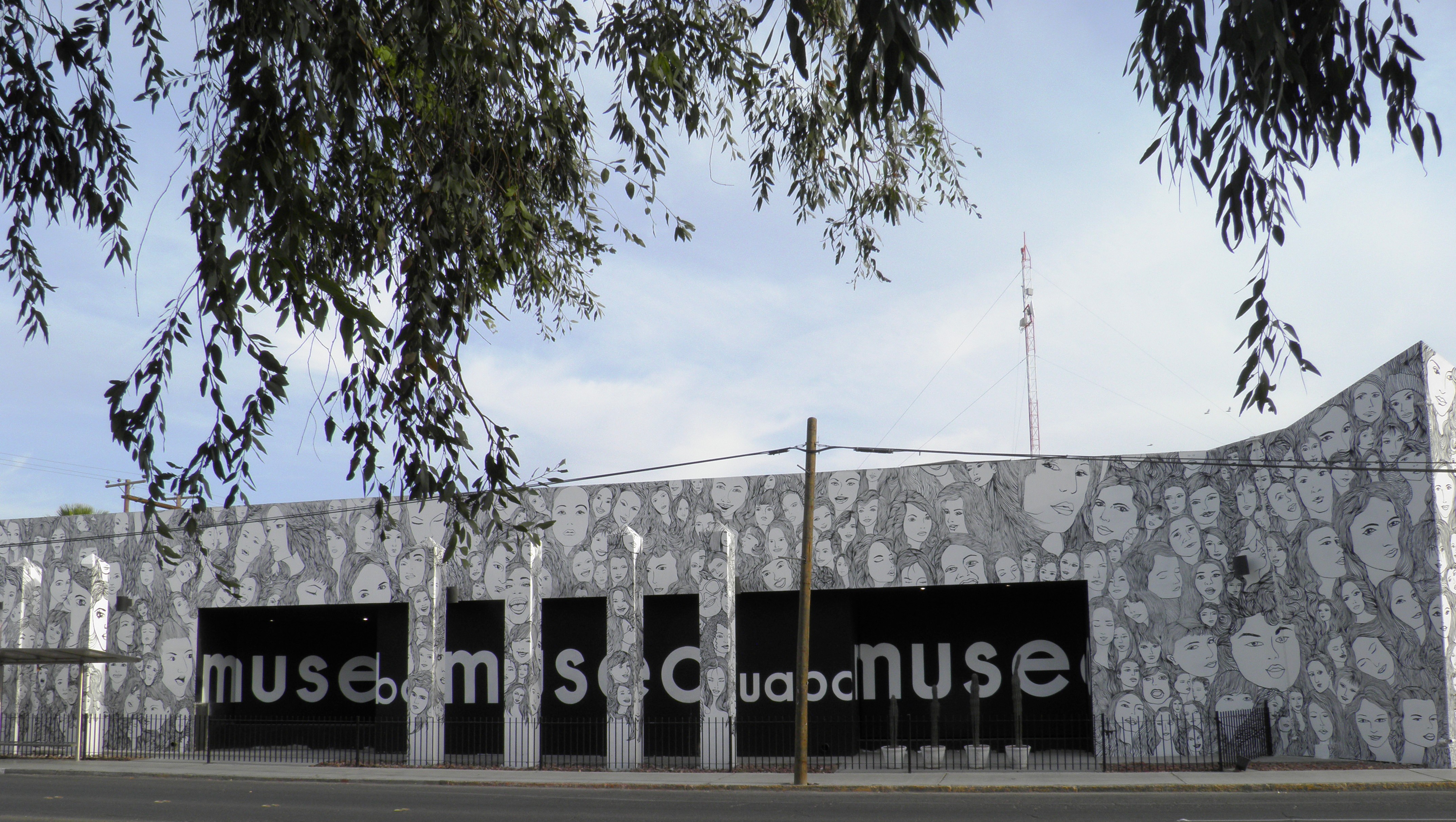
an art museum in Mexicali

It also has its own identity, distinct from larger Mexico.  Some of this comes from dealing with the heat – 120 degree days in the summer are not uncommon – on these dry, sun-baked and parched streets.. Some of it comes from the unique make-up of this city – which boasts a shared heritage with a large Chinese community who fled the states after building the railroads.  So, yeah – they probably have the best Chinese food in Mexico too.

So hopefully, as I write about the doctors, and hospitals of Mexicali, visitors to the city will see the other charms that make me appreciate this place a little more every day.

The dangers of Medical Tourism


A new press release from a law office in the United States – highlights the importance of what I do – and why I think it is a necessary and essential endeavor.  The author, James Goldberg has also written a book about the potential dangers of medical tourism due to a lack of regulation among brokers who are just looking for the cheapest providers (for higher profit margins).  As we all know – that’s not the right way to chose a surgeon (and it’s not fair to consumers who trust brokers to deliver high quality care.)

I just ordered it – so I’ll give a full ‘book report’ once it arrives.

Unfortunately, the more I continue on in my efforts to provide unbiased and object reviews, the more I become disheartened by the lack of interest on the part of the medical tourism industry itself.  For the most part, these travel agencies are just that – and hold themselves to no higher ethical or moral standards that the travel agencies of old – except now we are talking about more than missed flights or less than stellar hotel rooms.

The response from the surgeons themselves has been (for the most part) enthusiastic about being reviewed, but until consumers hold the vendors of these services to a higher standard – it will never happen on any sort of global scale.

For the time being – it looks like it’s just me – and my dwindling retirement fund.

In the operating room with Dr. Victor Ramirez, MD, plastic surgeon


Frankly, I wasn’t sure what to expect when I returned to see Dr. Victor Ramirez.  I had enjoyed talking to him during the first interview back in November of 2011, but as most people know – a lot had happened since then.  It took me a couple of weeks to re-connect with the now somewhat wary and (media-weary) surgeon, but when I did – he didn’t hesitate to invite me to the operating room.  And then – after the first case, he immediately invited me back**.

Dr. Victor Ramirez, plastic surgeon

For readers unfamiliar with the concept of my work – let me tell you, this is usually an excellent prognostic indicator.  It’s certainly not fail-proof – but as a general rule; when a surgeon invites you to his operating room, he is generally confident because he is a good surgeon. 

You’ll notice a couple of things about the statement above – when the surgeon invites me, is important.  Often when I have to ask – it’s because the surgeons are hesitant to let me watch.  Most (but not all of the time) – there is a good reason that a surgeon doesn’t want an observer in their operating room.  (And there are a multitude of reasons – not just a poorly skilled surgeon.)

But there are certainly no absolutes.  I have met fantastic surgeons who initially were not crazy about the idea (but quickly warmed up to it) and I have met less than skilled surgeons who happily encouraged me to visit – and everything in-between.. I’ve visited great surgeons who were hampered by poor facilities, unskilled staff, or limited resources.  That’s why the on-site, operating room visit is so important.  Anything less, is well – less than the full picture.

But back to Dr. Victor Ramirez – in the quirofano (operating room) performing surgery.

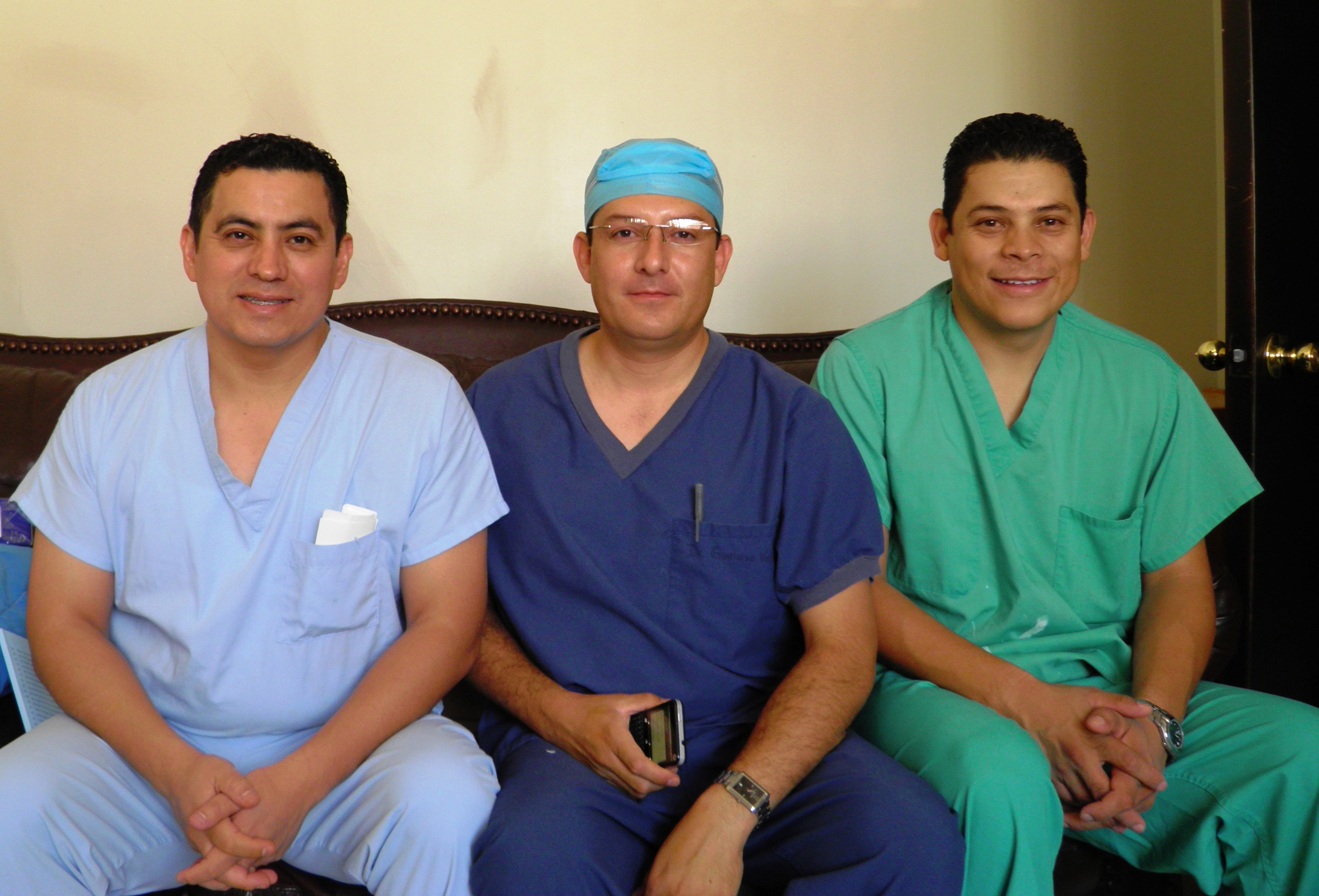
Dr. Victor Ramirez, Dr. Perez and Ricardo (RN)

I observed Dr. Ramirez operating at two different facilities – Hospital Quirurgico del Valle, and the Bellus clinic.  Hospital Quirurogico is a private hospital – with excellent operating room facilities.  While there are only two operating rooms, both rooms are large, well-lit, new, and very well equipped.  There are three separate ‘big screen’ tv sized monitors for video-assisted procedures – so if you are looking for a facility for video-assisted procedures such as endoscopy, laparoscopy or thoracoscopy – this is the place.  All the equipment was modern, in new or ‘near-new’ condition.  As a facility specifically designed as a surgical hospital – with private rooms, patients are segregated from ‘medical patients’ with infectious conditions.  (The facility is not designed for pneumonia patients, and other medical type hospitalizations.)

Dr. Ramirez applied the sequential stockings himself (kendall pneumatic devices), and supervised all patient preparations.  Patients received a combination of conscious sedation, and epidural analgesia – so they were awake, but comfortable during the procedures.  (This eliminates many of the risks associated with general anesthesia – and reduces other risks.)  The anesthesiologist himself, Dr. Luis Perez Fernandez, MD was excellent – attentive and on top of the situation at all times.  There was no hypoxia or hemodynamic instability during either of the cases.  (I have been favorably impressed by several of the anesthesiologists here in Mexicali.)

Dr. Perez monitors his patient closely

As for the surgery itself – everything proceeded in textbook fashion – sterility was maintained, and Dr. Ramirez demonstrated excellent surgical techniques.

For example – One of the signs of ‘good’ liposuction (and good preparation) is the color of the fat removed.  Ideally, it should be golden or light pink in color.  Over-aggressive liposuction or poorly prepped liposuction results in more bleeding.  As I watched fat being removed – the fat remained golden-yellow in the suction tubing, and even at the conclusion of the procedure, the accumulated suction canister contents remained just slightly tinged pink.

Results were cosmetically pleasing in both cases with minimal trauma to the patients***- but there will be more details forthcoming in the free book (since the post is becoming pretty long, and may be more detail than casual readers would like.)  I’ll have more information about the doctors, including the anesthesiologists, the clinics and the procedures themselves..

I did want to post some specifics – especially in this case, as the patient told me that her/his parent is a retired physician and had concerns about surgical conditions.

Mom, Dad – you don’t have to worry – Dr. Ramirez runs an excellent OR. Even in the tiny Bellus clinic, there is a full crash cart, a defibrillator and an emergency intubation cart – just in case.

**Given what I know about Dr. Ramirez, I am pretty confident – that if I wanted – I’d be there right now, and every day for a month, or until I said, “stop”..  That’s the kind of person Dr. Ramirez is.

*** In some liposuction cases – the patients appear as if they have been beaten (extensive bruising) due to the amount of trauma and force used during the procedure.

Talking with Dr. Jose Juan Durazo Madrid, MD about GI endoscopy


This post is long overdue since I interviewed Dr. Jose Juan Durazo Madrid, MD, FACS almost two weeks ago – but as readers know, things have gotten pretty busy lately.  I’ve seen Dr. Jose Juan Durazo a couple times since the initial interview – but alas! I still haven’t talked my way into his operating room.

Dr. Durazo, who is a fellow in the American College of Surgeons is a primarily Spanish-Speaking general surgeon specializing in gastroenterology (endoscopy, and capsule endoscopy) and general surgery procedures such as cholecystectomies, appendectomies, hemorrhoid surgery and Nissen fundaplication for GERD.  H also performs surgery for cancers of the GI tract.  He performs bariatric surgery but reports that this is only a small portion of his practice.

Dr. Durazo has been a surgeon for 22 years.  After attending UABC (Universidad Autonoma Baja California) here in Mexicali, he completed his general surgery residency in Hermosillo, Sonora.

He now serves as a professor of surgery for his alma mater, in addition to his private practice.  He primarily operates at Hispano – Americano, Hospital Almater, Hospital Quirugico de la Valle, and IMSS (government facility.)

Hopefully, I’ll be reporting back from the operating room one of these days.

You’ve come a long way, baby!


Wow..  a long couple of days – but I am sure not complaining!  Still having a blast – and as they teased me in the operating room, “Cristina, Cristina, Cristina!” I felt more like I belonged – instead of as a student, often lost/ confused.  Even more so – when I found myself irritated on rounds – irritated when the answers were obvious!!  Obvious – that’s certainly making progress..  (Irritated is such an improvement over clueless, I must say..) But the interns are a good bunch, even if they don’t love surgery like I do!

Residents at Mexicali General

The good doc gave me some homework – as we work on a ‘mystery diagnosis’ which I am enjoying.  Of course, it won’t be a mystery as soon as the pathology comes back, but I am surely enjoying the intellectual challenge (and kind of hoping that my preliminary leaps aren’t completely off-base..)  Of course – the doc is so smart – he probably already has it all figured out, and is just checking on the faculties of his student.  (He is secretly brilliant, and just hides it behind his braces and freckles.. Kind of scares me sometimes..)

Deceptively normal looking..

Bumped into Dr. Ramirez and Dr. Perez (the anesthesiologist) this morning, which reminds me that I still need to write about my visits to his operating room last week.  So I haven’t forgotten – expect it in just a couple of days..

It’s nice too when we run into people I know as we round at different hospitals around the city..  But then – as I glance at the calendar and realize that time is passing – I get a little sad.  Just as I am starting to understand things (Spanish, the hospital systems etc..) and I am enjoying it here so much, learning so much, yet time is flying, and before you know it – I will be returning home again (wherever that is!)

Gabriel Quadri de la Torre, will you marry me?


[I have used images obtained on the internet to illustrate this post – and have tried to give proper attribution to sources.]

Just kidding about the marriage proposal – but it seemed like a nice headline for today’s post, as I muse about Mexican politics.. I’m no political pundit, just a little gringa temporarily living in Mexico.

So I am spending today at home, trying to get a better understanding of Mexican politics in advance of the presidential elections this July but it’s a daunting task!

As I read and read, different articles about the candidates and the issues** – it becomes very clear that this is one of those things that makes you truly appreciate how complex a lot of the things we often take for granted are – such as a working knowledge of your ‘home’ political systems, and its domestic and foreign policy issues.

Of course, the basics are easy enough to understand – Presidents are elected for a one time only six-year term – (no re-elections here) and there are more than two major political parties.  But the intricacies of this process, the sentiments surrounding it – and the true impact, and importance of the issues facing this nation are certainly too deep for a short-time resident like myself to really understand and comprehend on a deeper level.

I know who the candidates are – I watched the televised debate a few weeks ago, (and understood much of it) but of course, I couldn’t catch the nuances, or comprehend much of the deeper meaning, the context or the history behind their statements.

At this point, as an outsider looking in – I think that Enrique Pena Nieto of the PRI party will winProbably not for the reasons that residents vote for him – but because even to a foreigner like myself, he presents a nice, polished picture of what we expect politicians to look like.  (Not always a good thing in my opinion – but people can look at him, his 1960’s gelled look and picture him as president – in a John Kennedy-esque way – he is young, well-groomed and certainly handsome.  He seems smooth enough in his speech the other night, though a recent article (in English) leaves me doubtful as to his actual capabilities to govern this troubled but beautiful country**.  I also have some misgivings about his party – they ran Mexico for a long time – (70 years) and I’m not convinced they did such a great job of it.

Despite being as ignorant as I am – I have my own favorite, Gabriel Quadri de la Torre of the New Alliance party  – which just goes to show that you don’t really have to understand anything to hold an opinion.  So, Mexicans take note, and be glad that they don’t let ignorant gringas like me vote..

But – as an outsider looking in, Gabriel Quadri de la Torre (from my very limited perceptions) seems a little less like a career politician and a little more like a college professor.  Many people would argue that this is a handicap since it means he would be less effective, and less knowledgeable about actually navigating the system so to speak, but to a ‘southerner’ like myself – who is quite disgusted with the Ted Kennedys, the Robert Byrds, and all these other dynasty senators – it’s refreshing.. (I know that both of those American politicians are now deceased – but the mold of being able to be in politics just because you’ve been there, getting re-elected over and over and over still exists – just ask California politician, Jerry Brown.)

Photo by NTX – obtained from Vertigo Politico website.

I like Gabriel Quadri de la Torre because he seems to be a man of science, a man of reason – not some oratory firecracker who just likes to stir people up – but then again – that’s probably why he’s trailing so badly in the polls.  His platforms on alternative energy are forward thinking (but then – I grew up on a windfarm outside of Tracy, California – so of course, I would think so.)   I was also interested in his position on Pemex, but frankly didn’t know enough about the situation to understand it – even after I asked several people here in Mexicali.. (I’m not sure they understood it either – they are in health care too – not analysts, not economists..) So I decided to ask one.

I asked an outside financial analyst & economist who specializes on oil and alternative energy resources for more input/ insight on the Pemex issue from both a national (Mexican) and international perspective.  I also specifically asked –Is privatization the best thing for Mexico or does it just benefit outside investors?  How does it impact the rest of the world? 

This was his response [edited for length only]:

Pemex is an incredibly poorly run state-run oil company (think of the postal service but drilling for oil)
 
Privatizing it would be the best thing for Mexico.  It wouldn’t make a big difference to people in my field [economics/ finance] but Mexico would find more oil which would be good for the whole world (especially Mexico).
The other reason I like Gabriel Quadri so much – is that he seems like someone who is smart enough to know that all of these issues are more complicated than they first appear – and he doesn’t offer any quick easy fixes.. I like that – even if other people have told me it makes him look indecisive.  He also took the time in the debates to explain his positions instead of wasting time attacking his fellow candidates..
We all heard about Pena’s ex-mistress whining on facebook – can we move on to the real issues that affect the 100+ million people who live here?  Mr. Quadri seemed to be the only one who was really able to do that..

But then, like I said – I’m not sure if someone like me can even really understand the issues..

Take crime for example -we all heard about the headless bodies on the side of the highway – and we all know that the escalating homicide rate, and rampant violence among drug gangs is a big issue in the coming election.  But can a foreigner like myself, (particularly one living in the relatively sheltered environment of Mexicali) really understand the impact of this runaway train of grisly murders that has gripped this nation during the course of President Calderon’s term? Of what it’s like to live in an area where people ‘go missing’?

Is it possible for me to grasp the intricacies of the candidates plans to address this issue – particularly in light of the history of corruption among Mexican police forces?  What about political corruption?

And that’s just the tip of the iceberg as far as issues are concerned.  Just the idea of trying to govern a place like Mexico City (D.F) would send me into a panic – and that’s not even getting into the Pemex investment issues, endemic poverty and social security issues, or trying to bring the rest of Mexico into a technological age to make it more competitive with the rest of Latin America, and the rest of the World. With so many foreign trade opportunities, Mexico can and should carve out a better place for itself in the world – but how?  (Maybe they will figure it out at the G-20 next month, who knows?)

My gringa criticisms of the other candidates are probably equally unfair, as they hinge on such limited (okay, absent) insight.

Josefina Vasquez Mota – National Action Party. I guess my main issue with her – is I find her a bit too Hilary Clinton and not enough Geraldine Ferraro.  Plus her views on some of the issues are a little too conservative for me – particularly if she’s using the ‘woman power’ platform..  I am an old-school type feminist, which means I want equality, not special preference – so you can’t get my support by saying, “I am a woman, so if you are a woman, you should support me.”  You can’t have it both ways – equality means an equal chance to fail.

If I want to be the best at something – I want to be the best person at it – not the best woman.. It’s kind of like all of those world records, and Amelia Earhart – she got a lot of ‘first woman’ but not a lot of first person..  That’s really second place.  I guess in the 1930’s it was a big deal for a woman to do any of it, and maybe that’s the case in Mexican politics today (and the USA, for that matter) – but I still don’t think she should trade on her ‘womanhood’ to try to win an election.

Just be the best candidate.  She certainly seems smart enough without all of that – but then again, maybe it’s inescapable.  After all – I don’t hear people speculating that the other candidates have an eating disorder..

As for Andrés Manuel López Obrador (party of the democratic revolution, or something like that) – well – I guess he’s my second choice.. Since it’s impossible for Quadri to win, I guess I’d feel a bit more comfortable if Lopez was at the helm, because he seems to really care about the Mexican people (from what I’ve read about his previous work but I guess he also has a bit of a shady past..The whole ‘Legitimate Presidency’ thing kind of reminds me of the hanging chads episode down in Florida.)

** Of course, another significant issue for English speakers like myself – is always the use of language, and translational biases.  It really hits home once you try to function in another culture and another language how strong semantics really are – and how easy it is to make a mistaken impression through incorrect word choice.  So when I read these English language articles, I have to question how much of the information was slanted simply by the words the writers chose to use – even when translating quotes and candidate statements.  Also some of the sources themselves for English language information  are a bit sketchy..Kind of like if you read this blog for your Mexican election info..

In the OR (and back again!)


It sounds awful to say but it’s a good thing my husband has been out-of-town this week – after all, considering my week in the operating room, he wouldn’t have seen much of me anyway!  But it always drives him a little crazy to see me racing from interviews to operating rooms – stumbling home late, with aching legs and a rumbling tummy, only to climb out of bed and the crack of dawn just to do it again.. then worry that I somehow won’t have time to write it all down – and round and round..  (That being said – he is phenomenal about understanding this driving motivation I have to interview, and to write – even when I’m not quite sure I understand myself.)

So he wouldn’t have complained about my whirlwind tours of the operating rooms this week – or the long days of back-to-back surgery but I would have felt bad about not seeing him all the same..

Instead with my husband thousands of miles away, I hear him smiling in the phone, laughing at my exploits, though I sometimes picture the wrinkle he gets in his brow when he thinks I’m not eating right, or getting enough sleep.. He currently serves as my remote editor for my articles at Examiner.com – calling to give feedback before submission.  He’ll be home soon – and he’ll be patient with me, as always.

Dr. Victor Ramirez, plastic surgeon

Had some great interviews and operating visits this week – including Dr. Victor Ramirez, and most of the plastic surgery community here in Mexicali – but to be fair, I will break it all up into a couple of posts.

Demonstration of techniques for breast reconstruction at Mexicali General

Back in my ‘home’ OR in thoracic surgery – which felt good.  I love meeting and seeing all the different specialties like bariatrics, urology and plastics, but it sure does feel good to come back home again..

back in thoracics (and trying to hang from the rafters)

I could wax some eloquent nonsense about the beauty of a muscle-sparing thoracotomy but then again – the good doc does almost everything minimally invasive, so I never see any.. (and you’ve heard me crow about dual port thoracoscopy.)

with more to come..

Coffee as a superfood round-up


Update:  New article published on MSNBC –  25 May –underscores health benefits of coffee –  and further proves premise of optimal coffee ingestion at five to six cups.  (Previous studies showed the majority of benefits at five cups/ day.)

Posting this for a friend, who wasn’t quite convinced by my arguments for coffee..  Added the video just for a light-hearted touch..and who doesn’t like David Bowie..

Happily,  the majority of people have gotten away from the incorrect notion that coffee is somehow harmful, the “I gave up cigarettes and coffee” mentality.. It always irks me a bit when coffee drinking is lumped into a group of unhealthy behaviors….Stay away from coffee… and crack cocaine, people… But seriously, this is one beverage that has been mislabeled over the years – undeservedly.

With so many honest – to-  goodness harmful food additives,  fast food and other ‘junk‘ we put in our bodies – misidentifying coffee is a tragedy (albeit, a small one.)  Admittedly, it is hard on my dental enamel – but otherwise, it is a welcome part of my daily routine.

So today, we are going to review some of our previous posts and the latest published information on coffee and it’s health effects..

For starters, we are going back to a post dated March 2011 – where I first reviewed my love of the hot, rich beverage, along with a summary of health benefits..

We talked about preliminary research suggesting coffee may be protective against strokes.. An additional study on this was actually just published last month, as reported in Medscape.com, Moderate coffee intake protects against stroke, (11 May, 2012) on a meta-analysis presented at the European Society of Hypertension (ESH) European Meeting on Hypertension 2012 by Dr Lanfranco D’Elia. 

Then – a year ago (May 2011) we brought you more information about coffee as a potent anti-oxidant, and potential implications for preventing cancer (and refuting claims that it caused cancer.)

Following that – in July of 2011 – we went as far as proclaiming ‘superfood status’ when preliminary research suggested coffee ingesters were less likely to have MRSA colonization.

We haven’t even touched on the diabetes, and pancreatic cancer angle today, but suffice to say that research shows that the pancreas has a definite affinity for coffee..

Now, on the heels of reports of the underdiagnosis and increasing incidence of fatty liver disease – comes a study in the Annals of Hepatology entitled, “High coffee intake is associated with lower grade nonalcoholic fatty liver disease: the role of peripheral antioxidant activity.”  Translated for readers, this small study by Gutierrez – Grobe, et. al (2012) suggests that high coffee intake is actual beneficial and may have a protective effect on the liver.  Now – don’t get too excited – since it was just a very small study, of 130 subjects – coffee and noncoffee drinkers, 73 without liver disease and 57 with liver disease.  So clearly, we need to look at this more closely..

But in the meantime, you can keep drinking your coffee.

Back in the OR with Drs. Ham & Abril, bariatric and general surgeons


My first case this morning with another surgeon was cancelled – which was disappointing, but I still had a great day in the operating room with Dr.  Ham and Dr. Abril.  This time I was able to witness a bariatric surgery, so I could report back to all of you.

Dr. Ham (left) and Dr. Abril

I really enjoy their relaxed but detail oriented style – it makes for a very enjoyable case.  Today they performed a sleeve gastrectomy** so I am able to report – that they (Dr. Ham) oversewed the staple line (quite nicely, I might add).  If you’ve read any of the previous books, then you know that this is an important step to prevent suture line dehiscence leading to leakage of stomach contents into the abdomen (which can cause very serious complications.)  As I said – it’s an important step – but not one that every doctor I’ve witnessed always performed.   So I was a pleased as punch to see that these surgeons are as world-class and upstanding as everything I’d seen already suggested..

** as long time readers know, I am a devoted fan of the Roux-en-Y, but recent literature suggests that the sleeve gastrectomy is equally effective in the treatment of diabetes.. Of course – we’ll be watching the research for more information on this topic of debate. I hope further studies confirm these results since the sleeve gives patients just a little less of a drastic lifestyle change.. (still drastic but not shot glass sized drastic.)

Dr. Ham

They invited me to the show this evening – they are having several clowns (that are doctors, sort of Patch Adams types) on the show to talk about the health benefits of laughter.  Sounds like a lot of fun – but I thought I better catch up on my writing..

I’ll be back in the OR with Los Doctores again tomorrow..

Speaking of which – I wanted to pass along some information on the anesthesiologist for Dr. Molina’s cases since he did such a nice job with the conscious sedation yesterday.  (I’ve only watched him just yesterday – so I will need a few more encounters, but I wanted to mention Dr. Andres Garcia Gutierrez all the same.

In the operating room with Dr. Marnes Molina, MD


with Dr. Marnes Molina, Urologist

Spent the day with Dr. Marnes Molina, MD, a urologist here in Mexicali.  I initially met Dr. Molina by happenstance – in the hallways of Mexicali General Hospital.  After a brief chat we arranged for a longer interview and operating room visit.

Today, I spent the entire day in Dr. Molina’s company – first in surgery at one of the private hospitals, then his office on Madero Avenue, and then at another facility for another surgery.

Talking to the fluent English-speaking physician was a delight and a treat.  Since I don’t usually spent much time in urology – I do admit that I spent yesterday as a cram session reading about J stents and the like  so I would even know what questions to ask.  (Urology has come a long way since your basic lithotripsy.)

Dr. Molina performs a wide range of procedures – from treatment of kidney stones and ureteral obstructions, BPH, prostate cancer as well as continence restoring surgeries such as vaginal tape, and treatment of varicocele that may be contributing to infertility issues in men.

Today, for both cases, patients received conscious sedation – and both patients looked comfortable during the procedures.  (This also means that the associated risks of general anesthesia are avoided.) Everything went well – and quickly!

Dr. Marnes Molina (left) and his nurse in the operating room

Dr. Marnes Molina also tells me that he is the only urologist in the Mexicali area utilizing the green laser for treatment of benign prostate hypertrophy as an option instead of traditional surgery.

Dr. Marnes Molina Torres

Urology/ endourology

www.urologiamexicali.com

Madero 1059

Col. Nueva

Mexicali, BC

Email: marnesm@urologiamexicali.com

Tele (686) 553 6989

Expect to hear more about Dr. Molina soon..

References on Lasers in Urology

Lasers in urology (Grasso & Schwartz), 2008 Medscape.com article

Another Medscape article courtesy of Reuters Health on Green Light laser technology entitled, “Latest green-light laser effective for large prostate volumes.”

the Weight of a Nation: the obesity epidemic


There’s a new series on HBO that is a collaboration between the Institute of Medicine, the CDC and the National Institute of Health (NIH) that begins airing tomorrow night.  This is a huge undertaking that took over three years to bring to the screen.

As many of you know – Obesity, diabetes and bariatric surgery are some of the topics that have been covered fairly extensively here at Cartagena Surgery.  In fact – it’s the heart of Cartagena Surgery – since the very first surgeon interview I ever performed back in 2010 was Dr. Francisco Holguin Rueda, MD, FACS, the renown Colombia bariatric surgeon.  (Shortly after that first leap – came Drs. Barbosa and Gutierrez – which is how we ended up here today.)

I’ve also been spending time, both last week and this week in the company of several bariatric surgeons here in Mexicali. MX and plan to go to several surgeries this week – so it seemed only appropriate to publish a few articles on the topic.

Talking with Dr. Horacio Ham – Bariatric surgeon, part 1

Talking with Dr. Ham, part 2

(I’m still transcribing notes from another one of my recent interviews – with Dr. Jose Durazo Madrid, MD, FACS).

I’d also like to encourage readers to take a look at HBO’s new mini-series (four episodes over Monday and Tuesday).

In the OR with Los Doctores, Dr. Ham & Dr. Abril


Haven’t had time to sit down and write about my trip to the operating room with Dr. Horacio Ham and Dr. Rafael Abril until now, but that’s okay because I am going back again on Saturday for a longer case at a different facility.  Nice surprise to find out that Dr. Octavio Campa was scheduled for anesthesia.  Both Dr. Ham and Dr. Abril told me that Dr. Campa is one their ‘short list’ of three or four preferred anesthesiologists.  That confirms my own impressions and observations and what several other surgeons have told me.

campa

Dr. Campa (left) and another anesthesiologist at Hispano Americano

That evening we were at Hispano – Americano which is a private hospital that happens to be located across the street from the private clinic offices of several of the doctors I have interviewed.  It was just a quick short case (like most laparoscopy cases) – but everything went beautifully.

As I’ve said before, Dr. Campa is an excellent anesthesiologist so he doesn’t tolerate any hemodynamic instability, or any of the other conditions that make me concerned about patients during surgery.

Dr. Ham  and Dr. Abril work well together – everything was according to protocols – patient sterilely prepped and draped, etc..

laparoscopy

laparoscopy with Dr. Ham & Dr. Abril

I really enjoy talking with the docs, who are both fluent in English – but I won’t get more of an interview with Dr. Abril until Saturday.

w/ Dr. Ham

with Dr. Horacio Ham in the operating room after the conclusion of a successful case

Then – on Wednesday night – I got to see another side of the Doctors Ham & Abril on the set of their radio show, Los Doctores.  They were interviewing the ‘good doctor’ on sympathetectomies for hyperhidrosis – so he invited me to come along.

Los Doctores invited me to participate in the show – but with my Spanish (everyone remembers the ‘pajina’ mispronunciation episode in Bogotá, right?)  I thought it was better if I stay on the sidelines instead of risking offending all of Mexicali..

Los Doctores

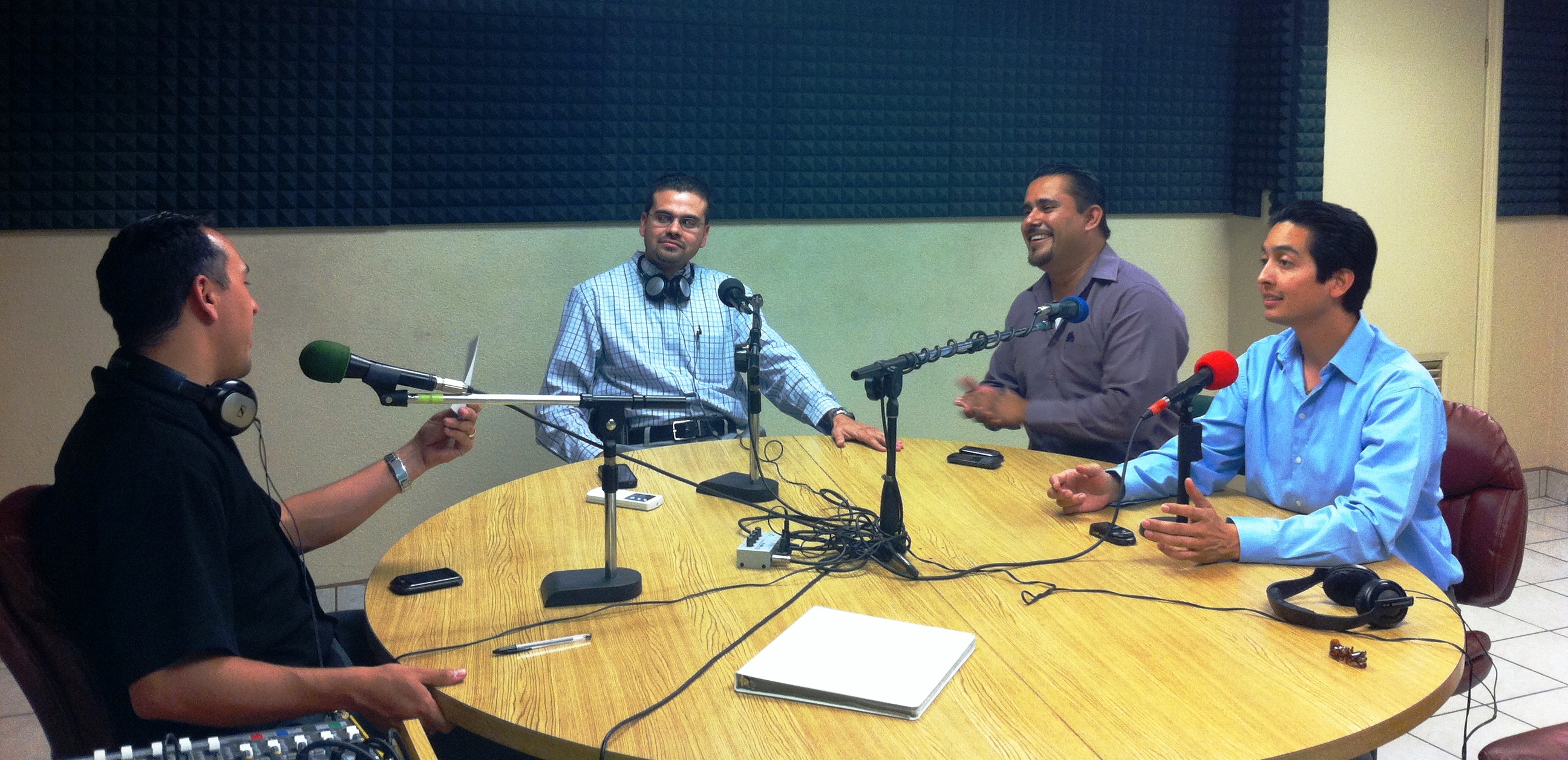
on the set of Los Doctores; left to right: Dr. Rafael Abril, Dr. Carlos Ochoa, Dr. Mario Bojorquez and Dr. Horacio Ham

It really wasn’t much like I expected; maybe because all of the doctors know each other pretty well, so it was a lot more relaxed, and fun than I expected.  Dr. Abril is the main host of the show, and he’s definitely got the pattern down; charming, witty and relaxed, but interesting and involved too.. (my Spanish surprises me at times – I understood most of his jokes…)  It’s an audience participation type show – so listeners email / text their questions during the show, which makes it interesting but prevents any break in the format, which is nice.  (Though I suppose a few crazy callers now and then would be entertaining.)

Dr. Ochoa did a great talk about sympathectomy and how life changing it can be for patients after surgery, and took several questions.  After meeting several patients pre and post-operatively for hyperhidrosis, I’d have to say that it’s true.  It’s one of those conditions (excessive palmar and underarm sweating) that you don’t think about if you don’t have – but certainly negatively affects sufferers.  I remember an English speaking patient in Colombia telling me about how embarrassing it was to shake hands -(she was a salesperson) and how offended people would get as she wiped off her hands before doing so.  She also had to wear old-fashioned dress shields so she wouldn’t have big underarm stains all the time..  This was in Bogota (not steamy hot Cartagena), which is known for it’s year-round fall like temperatures and incredibly stylish women so you can imagine a degree of her embarrassment.

It (bilateral sympathectomy) is also one of those procedures that hasn’t really caught on in the USA – I knew a couple people in Flagstaff who told me they had to travel to Houston (or was it Dallas?) to find a surgeon who performed the procedure..  So expect a more detailed article in the future for readers who want to know more.

Tomorrow, (technically later today) I head back to San Luis with the good doctor in the morning to see a couple of patients – then back to the hospital.. and then an interview with a general surgeon.. So it should be an interesting and fun day.

Update: Medicare to cover TAVI/ TAVR


In an update to a previous story here at Cartagena Surgery, in the attached article, “Medicare to pay for TAVI” from Medpage.com by Chris Kaiser, the guidelines for CMS payment for TAVI/ TAVR have been released.   These criterion include the restriction that only surgery ineligible patients be included and that implanting surgeons must participate in the TAVI registry.

More importantly, this criteria requires that TWO cardiac surgeons determine the patient’s suitability to withstand surgery versus TAVI.  This is a crucial requirement as we’ve discussed before, since only a surgeon can accurately decide/ predict how a patient might tolerate surgery.  (Multiple previous studies showed that primary care providers and cardiologists were poor judges of patient’s surgical risk. )  Also, the lack of this requirement in Europe has caused several ethical problems as interventional cardiologists began the widespread implantation of experimental technologies in lower risk patients (particularly in Germany.)

Dr. Horacio Ham, and Los Doctores


Just finished interviewing Dr. Horacio Ham, a bariatric surgeon with the DOCS (Diabetes & Obesity Control Surgery) Center here in Mexicali.  Later this evening, we’ll be heading off to surgery, so I can see what he does first-hand.

Tomorrow sounds like a jam-packed day for the young doctor, he’s being interviewed for a University television series on Obesity in addition to his normal activities (surgery, patients) and of course, the radio show.  Turns out his guest doctor tomorrow evening is none other my professor, the ‘good doctor.’

Sounds like a great show – so if you are interested it’s on 104.9 FM (and has internet streaming) at 8 pm tomorrow night..

I’ll report back on the OR in my next post..

Mexicali book update


The service is quiet so I am spending the day writing and working on the Mexicali book.  For new readers, I would like to explain that the Mexicali book is a little different from my previous offerings.  This is not an exhaustive compilation of surgeons and facilities in Mexicali, as frankly, I do not have the time or resources to accomplish such a task at this point in time.

Like all my books, it is a labor of love, but differs in that it highlights some of the best, and worst of Mexicali and medical tourism in this city.  So instead of interviewing and observing hundreds of surgeons, it highlights the limited number of physicians who agreed to participate in this project.

As such, no plans are being made to market this book commercially. Instead, I plan to offer it as a free pdf download for interested readers.  I will also be offering a full color soft-bound edition (at cost) for people interested in the many full color photographs of surgeons and surgery in Mexicali.  I will be placing the soft-bound edition on Amazon.com for interested persons.  Unfortunately, the cost of producing such a book (color photos) in limited runs is fairly expensive, so I apologize in advance to readers – but as I said – it’s a labor of love, and I won’t make a dime off of it.  I can only hope that if readers enjoy this book, they will consider purchasing one of my longer, more detailed books on medical tourism (such as the Bogotá book.)

More information will be forthcoming as I get further and further towards completion of this project.

New series of articles


I’ll be writing a new series of articles for the Examiner.com based on my experiences, interviews and observations here in Mexicali, MX and Calexico, California.  While the focus will be on serving the needs of the Calexico community (particularly now that there is a fast pass lane for medical travelers), I hope that all of my loyal readers will continue to support my work.

I have already published my first three articles  – and have added a new navigation section (on the side of this blog) for interested readers.

As part of this, I wrote a story about the good doctor and all of the work he is doing – including one of our recent ‘house calls’ to San Luis, in Sonora, Mexico.   It was probably one of the more difficult articles to write; due to space limitations and trying to present information in an objective fashion.  (It’s hard to present all the evidence to support your conclusions in just a few hundred words;  ie. He’s a good doctor because he does X, Y, and Z and follows H protocol according the P.”  Makes for wordy reading and not really what the Examiner is looking for.

Too bad, since readers over at Examiner.com haven’t had the chance to know that if the opposite is true (a less than stellar physician or treatment – that I have absolutely no reservations about presenting the evidence  and stating the facts about that either..)

Don’t worry, though – I will continue to provide that level of detail here at Cartagena Surgery – where the only limitations are my ability to type, and the (sometimes) faulty keys of my aging laptop.

The ‘Art of Medicine’ with Dr. Jose Mayagoitia Witron, MD, FACS


I should be finishing my readings in preparation for clinic this afternoon, but after reading most of the day yesterday (it was an international holiday for people living outside the USA), I guess I am entitled to spend some time writing.

Besides, I spent an illuminating morning with Dr. Jose Mayagoitia Witron, MD, FACS over at Mexicali General Hospital.  While he was telling me what he doesn’t do: (no uniport laparoscopic surgery, and not a huge amount of bariatric surgery), what I observed told a very different story.

Dr. Mayagoitia, MD, FACS

I didn’t follow Dr. Mayagoitia to the operating room.  Instead – I accompanied him to a teaching session with his medical students, who presented case studies – and I observed Dr. Mayagoitia instructing his students in the ‘Art of Medicine’.  This skill is fast becoming a lost one in today’s emphasis on the science of diagnostics, and laboratory testing.  But not here, not today – and not with Dr. Mayagoitia.

He believes strongly in the physical examination and all of the wealth of information that it provides.  He also believes it is an underutilized tool to connect doctors with their patients.  As he explains, too often doctors become too busy ordering tests – which separates the doctors from their patients – instead of listening to ‘the person in the bed’.  (My terminology not his).  So during his students case presentations – the emphasis is on the story (the clinical history), the patient’s life (background, social settings, diet, habits) and the clinical physical examination.  Students aren’t allowed to talk about, or ask questions about diagnostic results such as radiographs or serum analysis until the story and the physical findings have been throughly discussed and examined in detail.

Even then – he challenges them – to use more than their eyes – to engage their brains, and their other senses.. “What about the description of this surgical scar?  Does it seem a little large for an appendectomy?” he asks.. “What about it’s location?’ he challenges**..

“What about the differentials?  What other diagnoses should we consider? he asks.  “I know you think the diagnosis is obvious – but give me some alternatives,” he coaxes.  “What else could be going on?  Tell me why you don’t think that it’s X” he asks – making the students review and explore the other possible causes for this patient’s abdominal pain.  “Could it be Z?” he asks.. “Why not?  What else would we see?” he states in reply to a student’s mumbled answer..

Then, only then, do we review the labs, and the films – the more tangible aspects of the practice of medicine.  Those results that students can see easily, (maybe too easily) and tempt them into abandoning the ‘art’ of medicine and patient care.  But he doesn’t allow it – and quickly steers the conversation back to the displayed pathology to this pathophysiology and symptomatology of the patient in question.

As someone who still struggles with the physical skill of percussion – this entry into the art of medicine hits home.  It is an art, and a woefully underappreciated one.

** Please note – these quotes are my best approximation from my translations during the case presentation, and may miss nuances. 

About Dr. Jose Mayagoitia Witron

Dr. Mayagoitia is more than a clinical instructor – he is a respected professor of surgery at the Universidad Autonoma Baja California (UABC) and has been teaching medical students for over 20 years. He also teaches surgical residents and has been doing so for over fifteen years.  He gives lectures daily at the University, in addition to his busy schedule as the Supervising Surgeon for the Intensive Care Unit at Mexicali General, and private surgical practice (with evening clinic hours).

He speaks in clear, unaccented English (my southern accent is thicker than any accent he might possess) which may be as a result of his fellowship training in San Diego.   He completed his general surgery residency right here at Mexicali General after attending UABC).

He remains active in the research community as a supervisor for resident research projects including two ongoing projects worthy of note: a new study looking at the treatment of open abdomens, (from massive trauma, infection, etc.) and a study looking at the early initiation of enteral feedings versus delayed (72 hours or greater) in surgical intensive care patients.

He, along with his wife, Gisela Ponce y Ponce de León, MD, PhD (a family medicine physician and instructor at the UABC nursing school) recently presented a paper on obesity research in Barcelona, Spain.

He does all of this in addition to a steady diet of general surgery (cholecystectomies, appendectomies, bowel surgery (such as resections) and the occasional bariatric surgery.  As one of the lead surgeons at a major trauma hospital** – he also sees a considerable amount of emergency and trauma cases.

He reports that on the last – bariatric surgery, he has mixed feelings.  While it has become a popular staple for the treatment of obesity and obesity-related complications – he questions it’s role in a society that steadfastedly ignores the causes.  “I wonder if we will look back one day and realize that we [surgery] did a real disservice to our patients by doing so much of this.”  So, while he does perform some bariatric procedures, he is very selective in his patients.  “It’s not a quick -fix, and they are going to be dealing with this [changes from bariatric surgery] for the rest of their lives so they [patients] need to understand that it’s a lifelong endeavor.”  When he does perform bariatric procedures, he prefers the gastric sleeve, which he believes is more effective [than lap-band, and smaller procedures] but less devastating in terms of complications and dramatic life alterations.

Dr. Jose Mayagoitia Witron, MD, FACS

General surgeon, Fellow in the American College of Surgeons

Edificio Azahares

Av. Reforma 1061 – 6

Mexicali, B. C.

Tele: 686 552 2400

** He reports that Mexicali General, as a public facility, sees about 80% of all traumas in the area.

Blue Cross/ Blue Shield of Mexicali & Dr. Cuauhtemoc Vasquez Jimenez


Note:  I owe Dr. Vasquez a much more detailed article – which I am currently writing – but after our intellectually stimulating talk the other day, my mind headed off in it’s own direction..

Had a great sit down lunch and a fascinating talk with Dr. Vasquez.  As per usual – our discussion was lively, (a bit more lively than usual) which really got my gears turning.  Dr. Vasquez is a talented surgeon – but he could be even better with just a little ‘help’.  No – I am not trying to sell him a nurse practitioner – instead I am trying to sell Mexicali, and a comprehensive cardiac surgery program to the communities on both sides of the border..  Mexicali really could be the ‘land of opportunity’ for medical care – if motivated people and corporations got involved.

During lunch, Dr. Vasquez was explaining that there is no real ‘heart hospital’ or cardiac surgery program, per se in Mexicali – he just operates where ever his patients prefer.  In the past that has included Mexicali General, Issstecali (the public hospitals) as well as the tiny but more upscale private facilities such as Hospital Alamater, and Hospital de la Familia..

Not such a big deal if you are a plastic surgeon doing a nip/tuck here and there, or some outpatient procedures – okay even for general surgeons – hernia repairs and such – but less than ideal for a cardiac surgeon – who is less of a ‘lone wolf’ due to the nature and scale of cardiac surgery procedures..

Cardiac surgery differs from other specialties in its reliance on a cohesive, well-trained and experienced group – not one surgeon – but a whole team of people to look out for the patients; Before, During & After surgery..  That team approach [which includes perfusionists, cardiac anesthesiologists (more specialized than regular anesthesia), operating room personnel, cardiology interventionalists and specialty training cardiac surgery intensive care nurses]  is not easily transported from facility to facility.

just a couple members of the cardiac surgery team

That’s just the people involved; it doesn’t even touch on all the specialty equipment; such as the bypass pump itself, echocardiogram equipment, Impella/ IABP (intra-aortic balloon pump), ECMO or other equipment for the critically ill – or even just the infrastructure needed to support a heart team – like a pharmacy division that knows that ‘right now’ in the cardiac OR means five minutes ago, or a blood bank with an adequate stock of platelets, FFP and a wide range of other blood products..

We haven’t even gotten into such things such as a hydrid operating rooms and 24/7 caths labs – all the things you need for urgent/ emergent cases, endovascular interventions – things a city the size of Mexicali should really have..

But all of those things take money – and commitment, and I’m just not sure that the city of Mexicali is ready to commit to supporting Dr. Vasquez (and the 20 – something cases he’s done this year..) It also takes vision..

This is where a company/ corporation could come in and really change things – not just for Dr. Vasquez – and Mexicali – but for California..

It came to me again while I was in the operating room with Dr. Vasquez – watching him do what he does best – which is sometimes when I do what I do best.. (I have some of my best ideas in the operating room – where I tend to be a bit quieter.. More thinking, less talking)..

Dr. Vasquez, doing what he does best..

As I am watching Dr. Vasquez – I starting thinking about all the different cardiac surgery programs I’ve been to: visited, worked in – trained in.. About half of these programs were small – several were tiny, single surgeon programs a lot like his.. (You only need one great surgeon.. It’s all the other niceties that make or break a program..)

All of the American programs had the advantages of all the equipment / specialty trained staff that money could buy***

[I know what you are thinking – “well – but isn’t it all of these ‘niceties’ that make everything cost so darn much?”  No – actually it’s not – which is how the Cardioinfantils, and Santa Fe de Bogotas can still make a profit offering world-class services at Colombian prices…]

The cost of American programs are inflated due to the cost of defensive medicine practices (and lawyers), and the costs of medications/ equipment in the United States****

the possibilities are endless – when I spend quality time in the operating room (thinking!)

Well – there is plenty of money in Calexico, California** and not a hospital in sight – just a one room ‘urgent care center’.  The closest facility is in El Centro, California – and while it boasts a daVinci robot, and a (part-time?) heart surgeon (based out of La Mesa, California – 100 + miles away)– patients usually end up being transferred to San Diego for surgery.

Of course, in addition to all of the distance – there is also all of the expense..  So what’s a hard-working, blue-collar guy from Calexico with severe CAD going to do?  It seems the easiest and most logical thing – would be to walk/ drive/ head across the street to Mexicali.. (If only Kaiser Permanente or Blue Cross California would step up and spearhead this project – we could have the best of both worlds – for residents of both cities.. 

 A fully staffed, well-funded, well-designed, cohesive heart program in ONE medium- sized Mexicali facility – without the exorbitant costs of an American program (from defensive medicine practices, and outlandish American salaries.)  Not only that – but as a side benefit, there are NO drug shortages here..

How many ‘cross-border’ cases would it take to bring a profit to the investors?  I don’t know – but I’m sure once word got out – people would come from all over Southern California and Arizona – as well as Mexicali, other parts of Baja, and even places in Sonora like San Luis – which is closer to Mexicali than Hermasillo..  Then Dr. Vasquez could continue to do what he does so well – operate – but on a larger scale, without worrying about resources, or having to bring a suitcase full of equipment to the OR.

The Mexican – American International Cardiac Health Initiative?

But then – this article isn’t really about the ‘Mexican- American cross-border cardiac health initiative’

It is about a young, kind cardiac surgeon – with a vision of his own.

That vision brought Dr. Vasquez from his home in Guadalajara (the second largest city in Mexico) to one of my favorite places, Mexicali after graduating from the Universidad Autonomica in Guadalajara, and completing much of his training in Mexico (D.F.).  After finishing his training – Dr. Vasquez was more than ready to take on the world – and Mexicali as it’s first full-time cardiac surgeon.

Mexicali’s finest: Dr. Vasquez, (cardiac surgeon) Dr. Campa(anesthesia) and Dr. Ochoa (thoracic surgeon

Since arriving here almost two years ago – that’s exactly what he’s done.. Little by little, and case by case – he has begun building his practice; doing a wide range of cardiovascular procedures including coronary bypass surgery (CABG), valve replacement procedures, repair of the great vessels (aneurysm/ dissections), congenital repairs, and pulmonary thrombolectomies..

Dr. Vasquez, Mexicali’s cardiac surgeon

Dr. Cuauhtemoc Vasquez Jimenez, MD

Cardiac Surgeon

Calle B No. 248 entre Obregon y Reforma

Col. Centro, Mexicali, B. C.

Email: drcvasquez@hotmail.com

Tele: (686) 553 – 4714 (appointments)

Notes:

*The Imperial Valley paper reports that Calexico makes 3 million dollars a day off of Mexicali residents who cross the border to shop.

***In all the programs I visited  – there are a couple of things that we (in the United States do well..  Heart surgery is one of those things..)

**** Yes – they charge us more in Calexico for the same exact equipment made in India and sold everywhere else in the world..