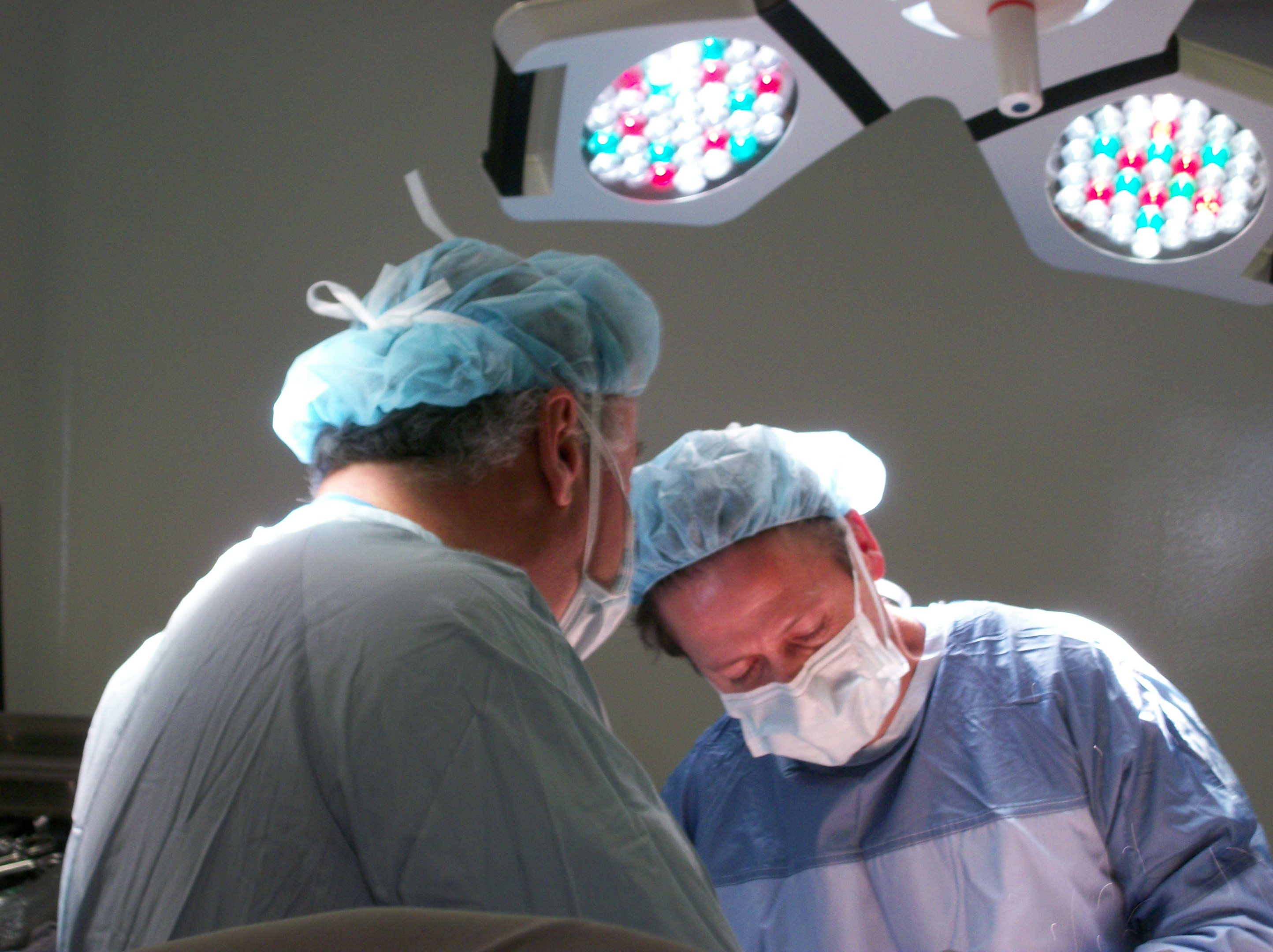
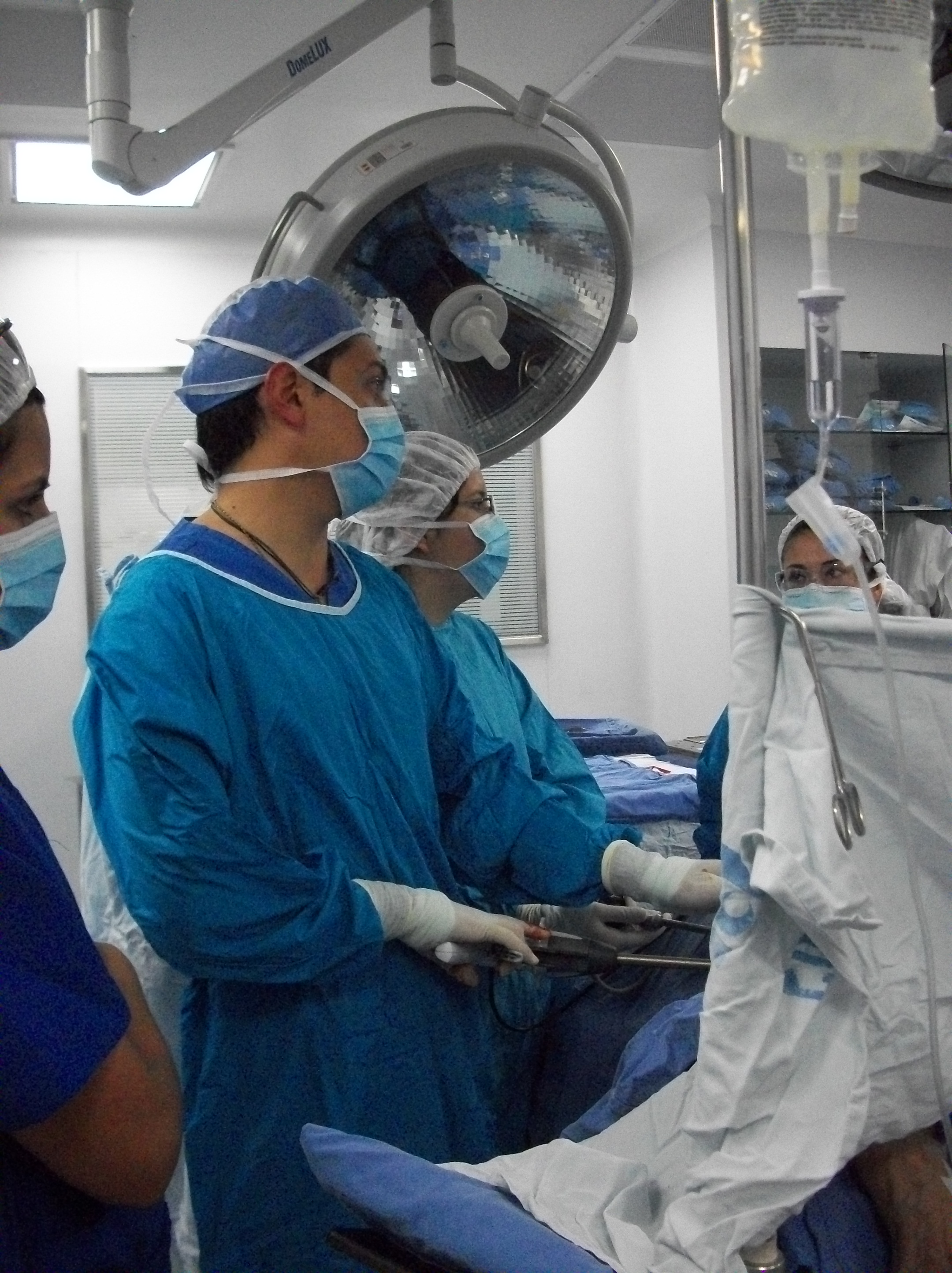
Dr. Ernesto Andrade, plastic surgeon


Dr. Ernesto Andrade is another one of Bogota’s celebrity plastic surgeons, of “Cambrio Extremo” fame.  (A latin television version of ‘Extreme Makeover’ that was popular here several years ago.)  Unfortunately, he was delayed today so I was unable to meet with him, but I did speak with a young doctor in his office, Dr. Eliana Garces.  She filled in a bit of Dr. Andrade’s biography.

I’m hoping to meet with Dr. Andrade himself  tomorrow after I get out of the operating room with Dr. Celso Bohorquez.  If you remember, I met Dr. Bohorquez out in Chia while he was volunteering his surgical skills as part of Operacion Sonrisa (Operation Smile.)

Dr. Mauricio Largacha, orthopedic surgeon


Dr. Mauricio Largacha is an orthopedic surgeon specializing in shoulder and elbow surgery including arthroscopy, rotator cuff repair and joint replacement.  I’ll be following him to the operating room this weekend – so check back in for more details..

For readers unfamiliar with orthopedic surgery – ankle and shoulder joint surgeries are a particular sub-specialty only practiced by a few orthopedic surgeons.  Luckily for readers here – Dr. Largacha is the author of several of the most heavily used textbooks (and chapters in American medical textbooks) on both ankle and shoulder surgery.

Hospital San Juan de Dios


Hospital San Juan de Dios, front view

from first glance – the majesty and history of this place is lost.. The newer 70’s era concrete edifice overshadows the older, more classic church and other buildings in this sprawling campus.. An iron fence, scattered trash, dirty, stained mattresses laying on the ground, broken windows, and overgrown grass keep the casual viewer from ever knowing what’s really inside. The lost letters on the tower building, add to the forlorn air that hangs around the old hospital.. A few bored looking guards patrol lazily, mainly smoking and chatting behind one of the buildings – not enough to keep out the many vagrants that are rumors to have taken up residence here.

It’s a sad and undignified end to a place that has given much to Colombia, and it’s capital city. For a facility with such a long and proud history (it was founded in 1723) – it seems unfair that is should be so unkept and unloved. While it was designated a national landmark in 2000, now it is more of an eyesore. For a place that witnessed the first surgery in Colombia (in 1926) and the development of the first malaria vaccine, and was home to much of the medical research of the 19th and 20th centuries – this is a tragedy indeed. I can almost picture Dr. Salomon Hakim, inside these halls, hard at work. Entire generations of physicians trained here, practiced here and retired from here before it’s closure in 1999. Inside this fence, these buildings are silent witness to hundreds of years of suffering, sickness, hope, faith and health.
But there are no plaques, no tour guides**, no monument or museum to mark its contributions.

Previous attempts have been made to re-open the hospital (200,000 besos campaign in 2008), and several local books and articles, but little to show the world, and outsiders like myself, all the wonderful contributions and history, behind the locked gates.

While this is quite the departure from my usual writing, I couldn’t help pondering all of this as I walked past the hospital the other day.

** There is an old article stating there are free tours on the last sunday of every month, by former nurses, so I’ll go by and see if that is still the case.

Dr. Constanza Moreno Serrano, Hand & Microsurgeon


Dra. Constanza Moreno is an orthopedic surgeon specializing in hand and microsurgery.  She specializes in the treatment of traumatic injuries such as digital and limb re-attachment, reconstructive surgery and correction of congenital deformities.  Next week she is traveling to Atlanta, Georgia to give a presentation at the International Hand and Composite Tissue Allotransplantation Society on the Hand Transplant Program she is developing at Santa Fe de Bogota.  Her aim is to restore limbs (and functionality) to the lives of Colombians affected by landmines. 

I hope to follow her to the operating room when she returns.. Look for more exciting news from this gracious physician in the future..

Colombia and Landmines

21 April 2011 – since I originally posted, I’ve received a lot of questions about hand tranplantation.. Here’s a Yahoo article discussing a recent hand transplant.

Writing, writing, writing


Spending the day (and much of the weekend) writing, transcribing notes from recent interviews, and working on an upcoming article. The article is a bit of a departure from my previous work, being a bit more light-hearted, and less academic than my previous writing. Hopefully, this will give it a broader appeal.   It’s also a nice way to call attention to some of the newer technologies, and techniques I’ve seen, and share a bit of the spotlight with the people doing all the hard work. (These guys don’t blow their own horns much – even when it’s well-deserved.) 

I have a few more interviews to conduct next week before I can finish it.. I am enjoying the change of style, but I will be happy to revert back to my usual writing.

Hoping to catch up with some more orthopedic surgeons, neurosurgeons, vascular surgeons, and just a few more thoracic surgeons in the next few weeks..(see my ‘Chasing Thoracics’ blog for more information).

Looks like the book cover is pretty much done – you can see it under the ‘book’ tab.  I find that completing the artwork helps keep me focused on the book, especially once I’ve past the mid-point..

Dr. Francisco Cabal, Dr. Jaime Rojas, Orthopedics


Dr. Cabal, (left) and Dr. Rojas, Orthopedic Surgeons

Good morning over at Clinica del Country with Dr. Francisco Cabal, and Dr. Jaime Rojas in an interesting orthopedic case this morning.. Everything was beautifully smooth – great anesthesia with Dr. Douglas Leal.. Attended a nursing lecture on orthopedic patients..

Interview with Dr. Edgar Prieto, General and Biliary surgeon this evening.. Clinica de la Mujer is reviewing my credentials before I check out their OR. Supposed to hear back this evening – in time for Dr. Prieto’s cases..

cardioinfantil


at Cardioinfantil

Another morning in the operating room theater at Cardioinfantil.. Always great to watch Dr. Garzon at work – smooth and effortless, every time.

Spent this afternoon interviewing a general surgeon, Dr. Joaquin Guerra Nino over at Clinica de la Mujer..

More time in the OR tomorrow with Dr. Cabal with interviews in the afternoon..
Finished a tenative cover design for the new book.. Going to get some feedback, and then I’ll post it for your review..

Pre & Post-operative Surgical Optimization for Lung Surgery


Update: 18 April 2011 – USAtoday published a nice new article on Shannon Miller (former Olympic gymnast) and how she’s using exercise to help recover from cancer.  The article really highlights some of the things we’ve been talking about here.

As most of my patients from my native Virginia can attest; pre & post-operative surgical optimization is a critical component to a successful lung surgery. In most cases, lung surgery is performed on the very patients who are more likely to encounter pulmonary (lung) problems; either from underlying chronic diseases such as emphysema, or asthma or from the nature of the surgery itself.

Plainly speaking: the people who need lung surgery the most, are the people with bad lungs which makes surgery itself more risky.

During surgery, the surgeon has to operate using something called ‘unilung ventilation’. This means that while the surgeon is trying to get the tumor out – you, the patient, have to be able to tolerate using only one lung (so he can operate on the other.)

Pre-surgical optimization is akin to training for a marathon; it’s the process of enhancing a patient’s wellness prior to undergoing a surgical procedure. For diabetics, this means controlling blood sugars prior to surgery to prevent and reduce the risk of infection, and obtaining current vaccinations (flu and pneumonia) six weeks prior to surgery. For smokers, ideally it means stopping smoking 4 to 6 weeks prior to surgery.(1) It also means Pulmonary Rehabilitation.

Pulmonary Rehabilitation is a training program, available at most hospitals and rehabilitation centers that maximizes and builds lung capacity. Numerous studies have show the benefits of pre-surgical pulmonary rehabilitation programs for lung patients. Not only does pulmonary rehabilitation speed recovery, reduce the incidence of post-operative pneumonia,(2) and reduce the need for supplemental oxygen, it also may determine the aggressiveness of your treatment altogether.

In very simple terms, when talking about lung cancer; remember: “Better out than in.” This means patients that are able to have surgical resection (surgical removal) of their lung cancers do better, and live longer than patients who receive other forms of treatment such as chemotherapy or radiation. If you are fortunate enough to have your lung cancer discovered at a point where it is possible to consider surgical excision – then we need you to take the next step, so you are eligible for the best surgery possible.

We need you to enhance your lung function through a supervised walking and lung exercise program so the surgeon can take as much lung as needed. In patients with marginal lung function,(3) the only option is for wedge resection of the tumor itself. This is a little pie slice taken out of the lung, with the tumor in it. This is better than chemotherapy or radiation, and is sometimes used with both – but it’s not the best cancer operation because there are often little, tiny, microscopic tumor cells left behind in the remaining lung tissue.

The best cancer operation is called a lobectomy, where the entire lobe containing the tumor is removed. (People have five lobes, so your lung function needs to be good enough for you to survive with only four.(4) This is the best chance to prevent a recurrence, because all of the surrounding tissue where tumors spread by direct extension is removed as well. Doctors also take all the surrounding lymph nodes, where cancer usually spreads to first. This is the best chance for five year survival, and by definition, cure. But since doctors are taking more lung, patients need to have better lung function , and this is where Pulmonary Rehab. comes in. In six weeks of dedicated pulmonary rehab – many patients who initially would not qualify for lobectomy, or for surgery at all – can improve their lung function to the point that surgery is possible.

Post-operatively, it is important to continue the principles of Pulmonary rehab with rapid extubation (from the ventilator), early ambulation (walking the hallways of the hospitals (5) and frequent ‘pulmonary toileting’ ie. coughing, deep breathing and incentive spirometry.

All of these things are important, where ever you have your surgery, but it’s particularly important here in Bogota due to the increased altitude.

One last thing for today:
a. Make sure to have post-pulmonary rehab Pulmonary Function Testing (PFTs, or spirometry) to measure your improvement to bring to your surgeon,
b. walk daily before surgery (training for a marathon, remember)

c. bring home (and use religiously!) the incentive spirometer provided by rehab.

ALL of the things mentioned here today, are things YOU can do to help yourself.

Footnotes:
1. Even after a diagnosis of lung cancer, stopping smoking 4 to 6 weeks before surgery will promote healing and speed recovery. Long term, it reduces the risk of developing new cancers.

2. Which can be fatal.

3. Lung function that permits only a small portion (or wedge section) to be removed

4. A gross measure of lung function is stair climbing; if you can climb three flights of stairs without stopping, you can probably tolerate a lobectomy.

5. This is why chest tube drainage systems have handles. (so get up and walk!)

Dr. Santos, Clinica Shaio


Dr. Hernando Santos, cardiac surgeon at Shaio

Spent the morning with Dr. Hernando Santos, Chief of Cardiac Surgery at Clinica Shaio for aortic valve replacement.

Got some great intra-operative photos (with patient’s permission, of course!) but I’ll spare the squeamish.

Cytoreductive surgery and hyperthermic intraperitoneal chemotherapy


I’ve been wanting to write more on this topic since I initially discussed it with Dr. Fernando Arias, MD but first, I had to educate myself more on the topic, before I could present it here. After some additional reading, and lots of additional questions for Dr. Arias – here we go…

When I first heard about this treatment being offered here in Bogota – I knew I had to tell you all about it: since this treatment is used to treat patients that are otherwise out of options.

Cytoreductive surgery and hyperthermic intraperitoneal chemotherapy (HIPEC) is used to treat patients with advanced abdominal cancers such as digestive or gynecological cancers that have spread inside the peritoneum (abdominal cavity). In many cases, these patients would otherwise receive either standard chemotherapy (not very effective) or palliative treatment only at this point – and had a very dismal** prognosis.
Now obviously, this isn’t some sort of miracle cure for everybody, and it isn’t easy, or complication-free – in fact, it is an intensive, radical approach with serious side effects, and potentially lethal complications
but it is a chance to try and aggressively pursue treatment for patients who would otherwise have little or no hope.

Some of the long term data have been very encouraging, showing significant five year survival benefits, but some of the reseach doesn’t. Some of the long term data is marred by changing techniques, administration and chemotherapy dosing.. A lot of the research, such as the Dutch trial showing 8 year follow up is plagued by small sample sizes, which limits our ability to draw strong conclusions about therapy. However, in a few of the articles I reviewed, the “c” word (Cure) was used selectively.

This treatment has been around for about ten years, but it isn’t widely available. It’s only offered at about 14 centers in the USA, a few in Europe and three in Latin America (one being here in Bogota).

So what is it? HIPEC or the short hand for this complex mouthful is surgery (laparoscopic surgery here in Bogota) to remove all visible of cancer tissue, while infusing HOT (hyperthermic) chenotherapy to kill all the cancer cells that are microscopic or not visible to the naked eye in surgery. The advantage of instilling chemotherapy right into the abdomen is that treatment is directed at the site of the disease. The warm solution promotes more effectively killing of cancer cells, and by combining surgery with chemotherapy, doctors are able to treat more advanced cancers with more effective treatment modalities (in cancer-speak: being able to surgically remove cancer is always more effective that treating it with drugs, but with standard treatments doctors could only treat limited disease (disease that had not spread). It sounds pretty simple, but it’s actually a fairly complex, drawn out process that takes multiple, multiple hours in the operating room and requires patients to be hospitalized for at least a week.

So far, Dr. Arias, and the oncologist he works with (sorry, I am blanking on the spelling of his name) started a program to offer this treatment in Bogota in 2009. Since then, they have performed over 30 cases (which if you look at the research, you’ll see is actually a fairly large number) since then.

** ‘dismal’ and ‘very dismal’ is not my editorializing; this language was used in several of the articles I read.

I’ve included some references for more information on this treatment for my readers, at the bottom of the page.

Additional References: (links to original research articles)

1. If you are only going to read one article; read this french one (in english) called:Hyperthermic Intraperitoneal Chemotherapy in Advanced
Gastric Cancer: The End of Skepticism?
It gives a good overview of WHO benefits from this treatment in regards to patients with gastric cancers.

2. Ten year’s experience of Cytoreductive Surgery with Hyperthermic Intraperitoneal Chemotherapy – San Guiseppe Hospital, Italy

3. Hyperthermic Intraperitoneal Chemotherapy – this is a technical article that explains the rationale of treatment, and the actual methods of treatment with discussion for other medical personnel.

4. A very small Dutch trial with 8 year outcomes

Dr. Sergio Abello and Dr. Felipe Roa


Met with Dr. Sergio Abello, an orthopedic surgeon specializing in foot and ankle surgery and Dr. Felipe Roa, plastic surgeon.. Dr. Roa is the son of Dr. Tito Roa, and they share a practice..

Planning to follow both of them to the OR tomorrow and next week..

Dr. Francisco Cabal, Orthopedics


Met with Dr. Francisco Cabal, orthopedic surgeon and international medical advisor (for Colombia) again, and he bids me to extend a warm welcome on his behalf to all North American patients coming to Colombia.  He also states that he is here to help ANY patient, interested in going to ANY city in Colombia for surgery including Medellin, Cali, Cartagena, Bogota and all parts in between.  I’ll be following him to the OR soon – more later.. 

Lest you think surgeons aren’t sympathetic to your discomfort – Dr. Cabal recently had ankle surgery, so he is definately walking a mile in your shoes..

Also met with Dr. Tito Tulio Roa, plastic surgeon, who has the distinction of having taught most of the plastic surgeons here in Colombia.

Filled up my date book with more interviews, and surgeries for the next few weeks..

Meeting with Mauricio Pelaez, Thoracic Surgeon later this afternoon, so I’ll post and let you know how that goes..

Rescheduled with the famous Dr. Hoyos – more on that next week.

Dr. Santos, almost Dr. Hoyos and Dr. Castro


Full day today – met with Dr. Hernando Santos at Clinica Shaio – and I’ll be heading to the OR with him on Monday..

 Dr. Hoyos – he was in surgery when I arrived for our appointment, so I’ll try again soon..

Spent the evening with Dr. (Jose) Felix Castro, a very nice general surgeon, on staff at Clinica del Country.. Followed him to the OR for a case –

Dr. Ivan Santos, plastic surgery


Dr. Ivan Santos

Dr. Ivan Santos, (right)

Spent time in the operating room at Shaio watching Dr. Ivan Santos operate this morning.  Operating rooms are large, clean, well-lit and all equipment is modern and fully functional.

Dr. Santos operates with a second surgeon assisting, Dr. Rudolfo Reyes.  Today’s case which was a combination of body and facial procedures was performed under a combination of local and conscious sedation.  Patient appeared comfortable during the procedure and all standardized intra-operative protocols were followed.  Sterility was maintained throughout the case.  (No intra-operative photos taken with patient in view – for privacy concerns.)

The particular case was more complex that average – patient was undergoing a revision after previous surgery several years ago (with another surgeon).  Dr. Santos was meticulous in attention to detail, calm and pleasant in demeanor, and aggressive in surgical management.  He has a good rapport with his OR team, who were able to anticipate his needs.

Going back on Monday for another case.

Note: Be careful when searching the internet for doctor information – there is a lot of disinformation out there (which is why I am writing a book).  Currently there is a doctor impersonating Dr. Ivan Santos – if you do a search for Dr. Santos – this doctor comes up, claiming to be in practice with him.  Please be careful everyone!)

More about Dr. Ivan Santos:

Back in the OR with Ivan Santos

Bogota’s celebrity surgeons

Bogota’s Hottest Surgeons

Dr. Ivan Santos and Clinica Shaio

Thoracics..


This will be a quick post this evening before I run back out to catch another case.

Spent most of the morning in the OR with Dr. Mario Andres Lopez Ordenez (Thoracic Surgery) over at Mederi.. Complex case but he handled it beautifully. (and I remembered to get photos, so I will post later when I have more time.)

Dr. Mario Andre Lopez

Dr. Mario Lopez, Thoracic Surgeon

Then I raced over to meet with Dr. Luis Jaime Tellez Rodriguez (Thoracic Surgery) over at Cardioinfantil.  He works with Dr. Garzon.   No surgery this afternoon, but just give me time!  To be fair – he’s a lot like Dr. Edgar Guiterrez, (Cartagena) and he sees patients at several facilities; Cardioinfantil, Clinica Colombia, Clinica Reina Sofia. 

Now I’m getting ready to head back over to see Dr. Fernando Arias at Santa Fe de Bogota.  I interviewed him this afternoon – he’s a real interesting guy so I’ll write more about him later – but now I am heading back to see him at work.

Dr. Fernando Arias

Dr. Fernando Arias, General & Oncology Surgeon