Why read Bogota and other hidden gem titles?


As readers of my sister site, Cartagena Surgery know, I am currently hard at work on my third title in the ‘Hidden Gem’ series – with the latest offering on Mexicali, Mexico.  But I continue to get comments from readers, friends, and everyone else asking, “Why bother?”

Why bother reading Hidden Gem?

People should read these titles because we can’t assume that all medical providers have been vetted, or that all medical facilities meet acceptable criteria for safe care.  It is a dangerous assumption to expect that ‘someone’ else has already done the research. [lest you think this could only happen in Sri Lanka, be forewarned.  With new legislation, the critical doctor shortage in the USA will only worsen.]

Medical tourism has the potential to connect consumers with excellent providers around the world.  It may be part of a solution to the long waits that many patients are experiencing when seeking (sometimes urgent) surgical care.  It also offers an opportunity to fight the runaway health care costs in the United States.

But..

But it also has the potential, if unchecked, unvetted, unverified and left unregulated to cause great harm.

Another reason to read Hidden Gem is to find out more about the surgeons themselves, their training, and many of the new, and innovative practices in the realm of surgery. Often the best doctors don’t advertise or ‘toot’ their own horn, so you won’t find them advertised in the pages of your in-flight magazine as “One of the best doctors in XXX” even if they are.  (Many people don’t realize those segments are paid advertisements, either.)

Why bother writing Hidden Gem?

Because ‘someone’ needs to.

I am that ‘someone’ who does the fieldwork to find out the answers for you.  I can never assume that it’s been done before, by someone else.  I have to start from ‘scratch’ for every book, for every provider and every hospital.

I also believe that the public should know, and want to know more about the people we entrust to take care of us during serious illness or surgery.  We should know who isn’t practicing according to accepted or current standards and evidence – and we should know who has/ and is offering the latest cutting edge (but safe and proven) therapies.


Read more about the doctor shortages:

NYT article on worsening doctor shortage  (and one of the proposed solutions is a loosening of rules governing the training and credentials of doctors from overseas – coming to practice in the USA).

In the operating room with Dr. Enrique Davalos Ruiz, Neurosurgeon


Dr. Enrique Davalos Ruiz, Neurosurgeon

Spent the morning in the operating room with Dr. Davalos.  As we discussed in a previous post, Dr. Davalos is one of just a few neurosurgeons here in Mexico to specialize in both adult and pediatric neurosurgery procedures.  He performs a wide range of procedures such surgery for cerebral tumors, spinal bifida, hydrocephalus, trauma, spinal surgery and epilepsy.  But one of the procedures he is best-known for here in Mexicali is the surgical repair of craniosynostosis.  However, if you’ve ever watched this intricate procedure – ‘repair’ really isn’t the word that comes to mind to describe the procedure.  ‘Rebuild’ is much more appropriate.

Craniosynostosis is a congenital cranial deformity caused by the premature fusion of the cranial sutures.  (These sutures allow for the babies head to be slightly compressed during natural childbirth).  Many new moms can attest that their neonate’s head was temporarily ‘squashed’ looking at birth, but normalize over the first few days as the bones relax into their natural position.  In normal development, these sutures (or ridges where the bones come together) are not yet fused  – and fuse over the first few months of life.

When the bones that comprise the skull fuse early, it can result in a significant cranial abnormality.  (Luckily, in most cases of [primary] craniosynostosis – the patient’s brain functions normally despite this.)

To treat this surgically, Dr. Davalos had to essentially rebuild part of the skull (the coronal sections of the parietal and frontal bones).   He did this by removing and reshaping the skull in separate sections and then rejoining the pieces to conform to a more natural shape.  (As a someone who sews, it reminded me of lacing a corset to get curved shaping).   In a child of this age – the bones should fuse/ heal within approximately six weeks – with no long term limitations for activities.

Sterility was maintained during the case, and everything proceeded in a rapid and appropriate fashion.  Anesthesia was proficient during the case, with excellent hemodynamic stability and oxygenation.

Dr. Davalos beveling a portion of the skull

Dr. Enrique Davalos Ruiz, MD

Pediatric and Adult Neurosurgery specialist

Calle B No 248

entre Av. Reforma and Obregon

Zona Centro

Mexicali, B. C.

In the OR with Dr. Ramos & Talking with Dr. Enrique Davalos Ruiz, Neurosurgeon


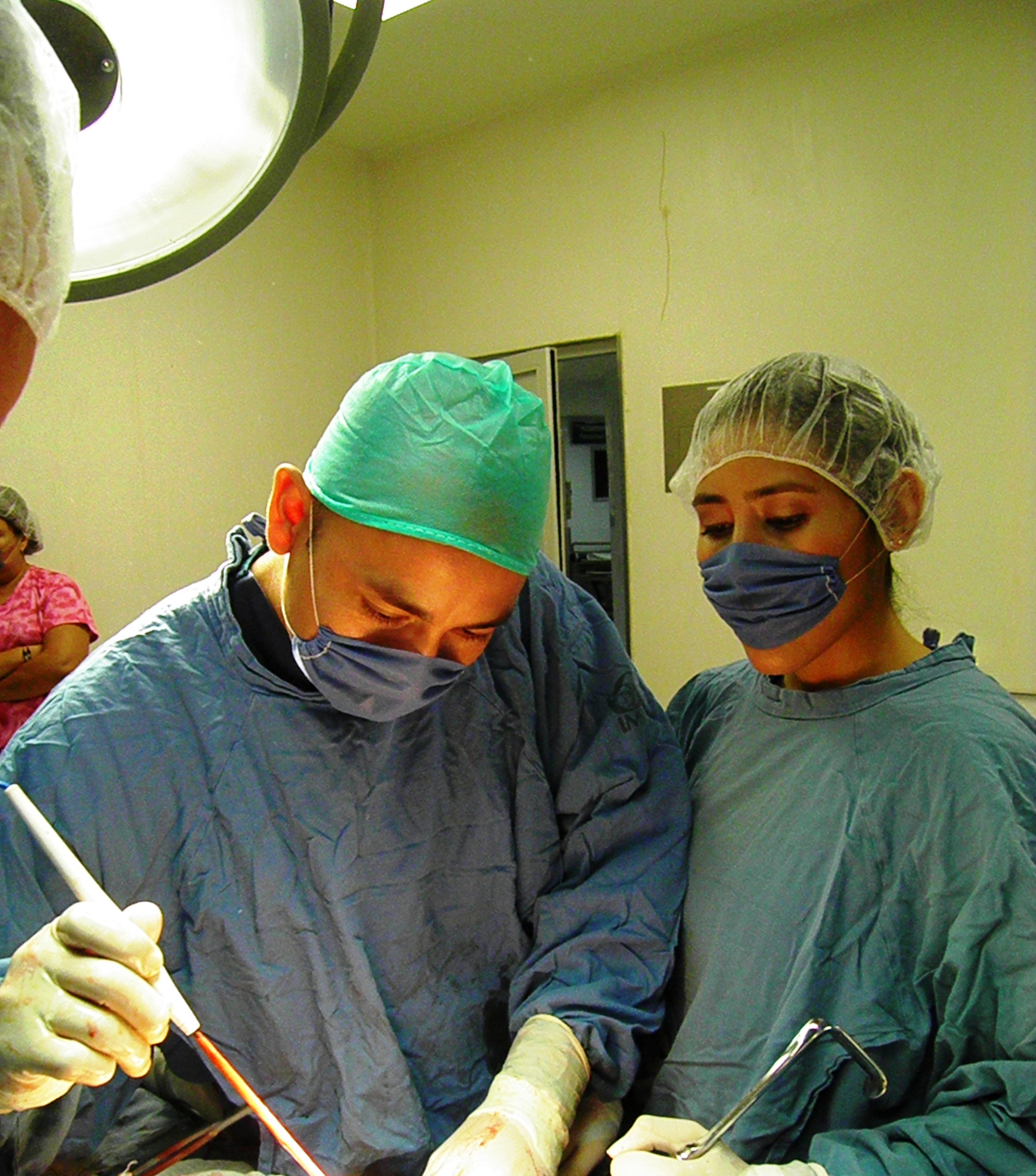
Interesting day today – as I travelled across a wide range of specialties in just a few short blocks.  I started out this afternoon in thoracic surgery with the good doc seeing patients in clinic, then off to IMSS to watch a Whipple procedure (pancreatoduodenectomy) with Dr. Gabriel Ramos.   (The Whipple procedure would be the ‘open heart’ surgery of the general/ oncology surgery specialty – it’s a complex, complicated and involved procedure – so, naturally, I loved every minute of it!)

Dr. Gabriel Ramos & Dr. Maria Rivera

Some of you will recognize the absolutely delightful Dr. Maria Rivera from one of our pictures last week (on facebook) – in which she was an absolute stunner.

Not an everyday photo – but then that case was pretty breathtaking too – (when I finish writing about it, I will post a link.)

Dr. Elias Garcia Flores, who I met briefly last week was there too.. (Of course, I didn’t recognize him since he had a mask on this time.)

Unfortunately, I couldn’t stay because I had a previous appointment to interview Dr. Enrique Davalos Ruiz, a local neurosurgeon.  He turned out to very charming and interesting..

He’s the only neurosurgeon specializing in pediatric and adult neurosurgeon for all of Baja California and Sonora.  (I’ll write more about him soon – I am hoping to head to the operating room with him next week.) He’s pretty busy working at IMSS and Hospital General de Mexicali, in addition to private practice but he didn’t seem to mind taking time to talk to me.

Mexicali book: New co-author


As much as I have adored working with my previous co-author, Dr. Albert Klein, PharmD on two previous editions – it just wasn’t practical for this title.  He’s now living and working in North Carolina, whereas – I don’t know when (and if) I’ll be returning to my beloved southern Virginia, which makes this sort of collaboration more difficult.  Also, Dr. Klein, (by the nature of his background) is more of an expert on Colombian history, culture and Bogotá life than the rest of Latin America.  (I always feel that the best way to get a glimpse of life is through the eyes of those who have lived it.)

But I do want to sincerely thank Albert for everything – (without him, I might not have been brave enough to publish at all!)  It’s been a pleasure working with him – both on the books and in the hospital, so hopefully we can collaborate again in the future (Medellin, perhaps?)

In the meantime, I have a new co-author for the latest book, the ‘mini-gem’ guide to Mexicali.  While it’s a more breezy style book compared to my other offerings, I still feel very fortunate to have enlisted some local assistance for the sections on culture, Mexicali life and local color.  The input has been invaluable for me during the writing process – and will prove to be the same for readers, (I hope!)

I am also hoping to get a few additional contributors for other sections of the book to talk about issues in their respective areas of expertise.  (It may be free but that doesn’t mean it shouldn’t be a quality product and a good read.)   It’s not a done deal – and it may be difficult due to everyone’s busy schedules etc – but I am hoping it all comes together.

Once I get all of the specifics nailed down  – I’ll post more about it here.

The rest of the book is going well – I am probably about 75% complete (and then the dreaded editing process!!)  Depending on how horrible editing is – and time limitations – determines whether or not the Mexicali book becomes a e-book.  (I find the e-book conversion process endlessly frustrating, particularly for a die-hard fan of footnotes like myself.)

In the operating room with Dr. Martin Juzaino


This post is a little overdue since I was out of town for a few days.. I missed the 115 degree temps and I missed Mexicali too..

Dr. Juzaino (left) and Dr. Rivera

Usually, I go to surgery after I’ve spoken to the surgeon, and talked to them for a while but in this case – I had heard of Dr. Juzaino (after all – he practices at Hospital General de Mexicali) but couldn’t find a way to contact him – he’s not in the yellow pages, and no one seemed to have his number..

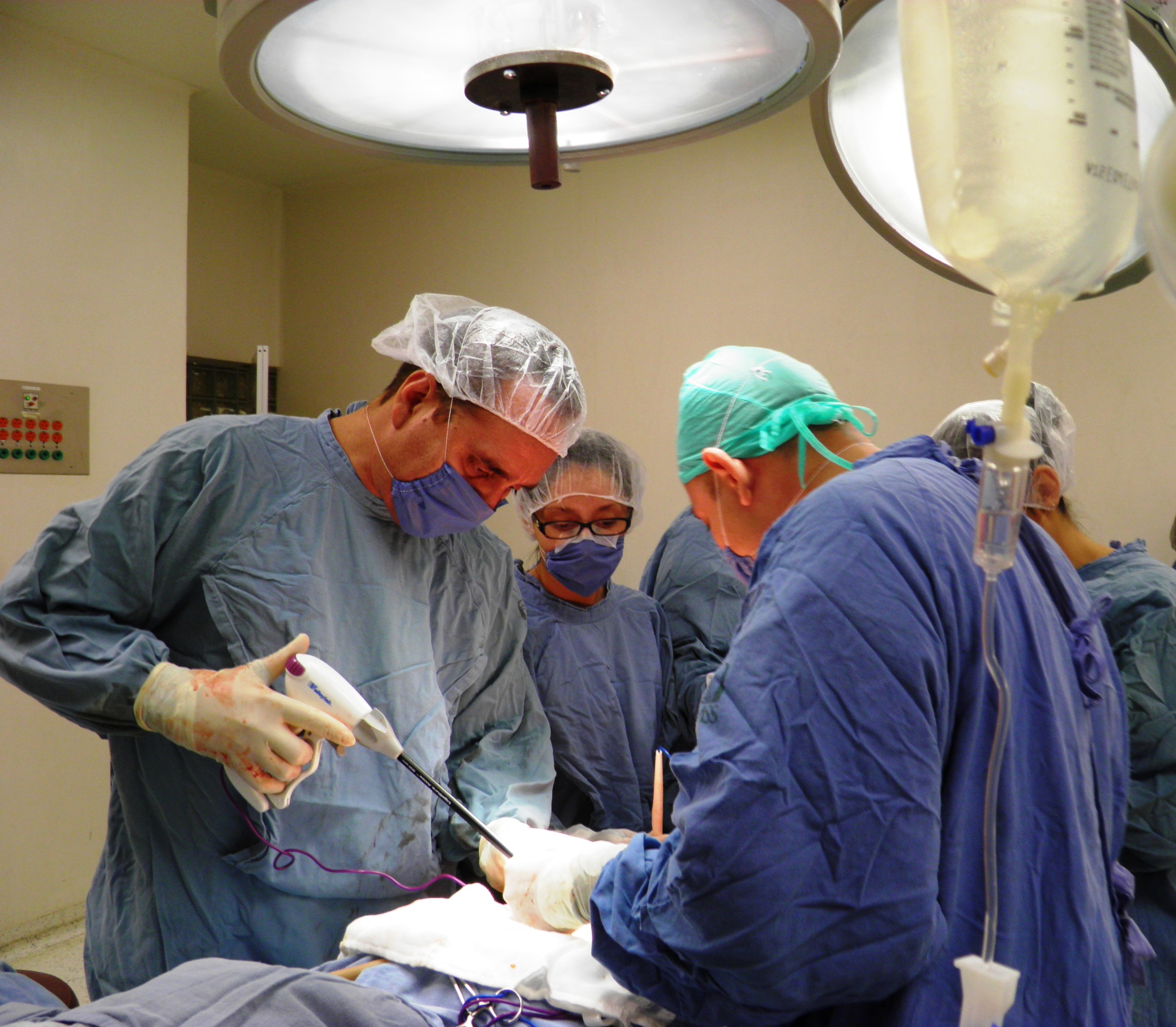
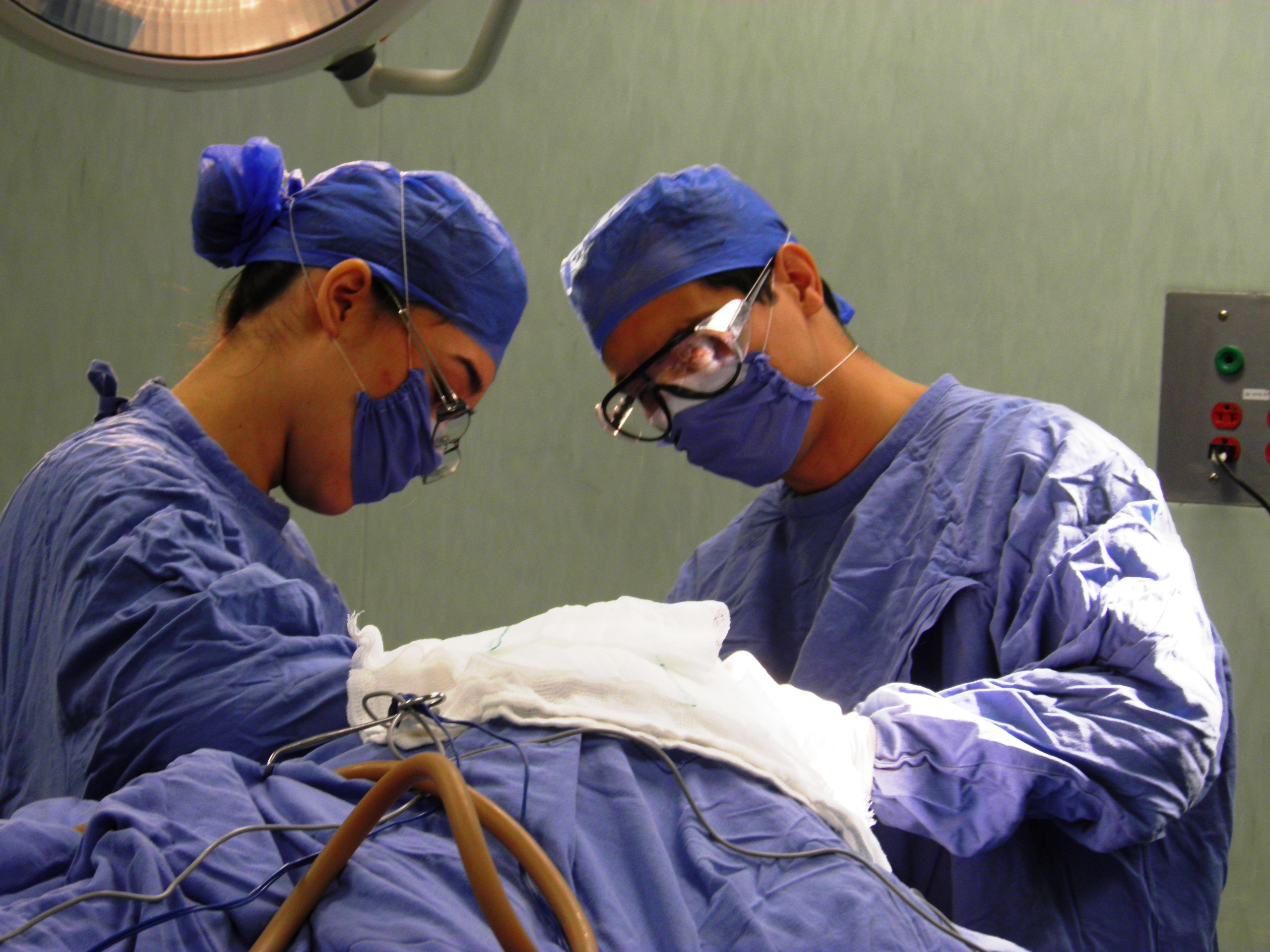
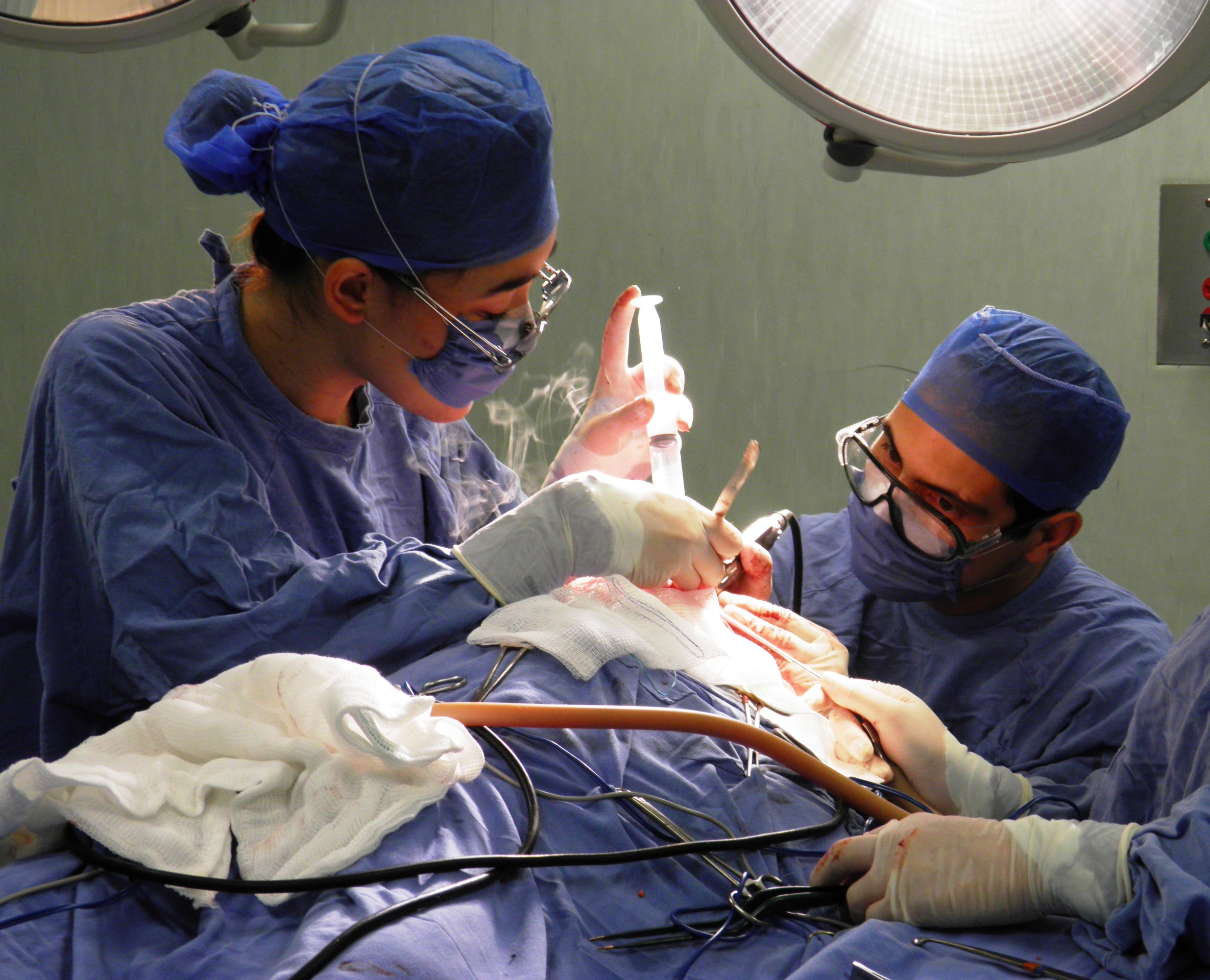
So I just hung out and waited for him when I saw his name on the surgery schedule. He was supernice, and invited me to stay and watch his femoral – popliteal bypass surgery.  Case went beautifully – leg fully revascularized at the end of the case.   Patient was awake during the case but appeared very comfortable.

intern during surgery

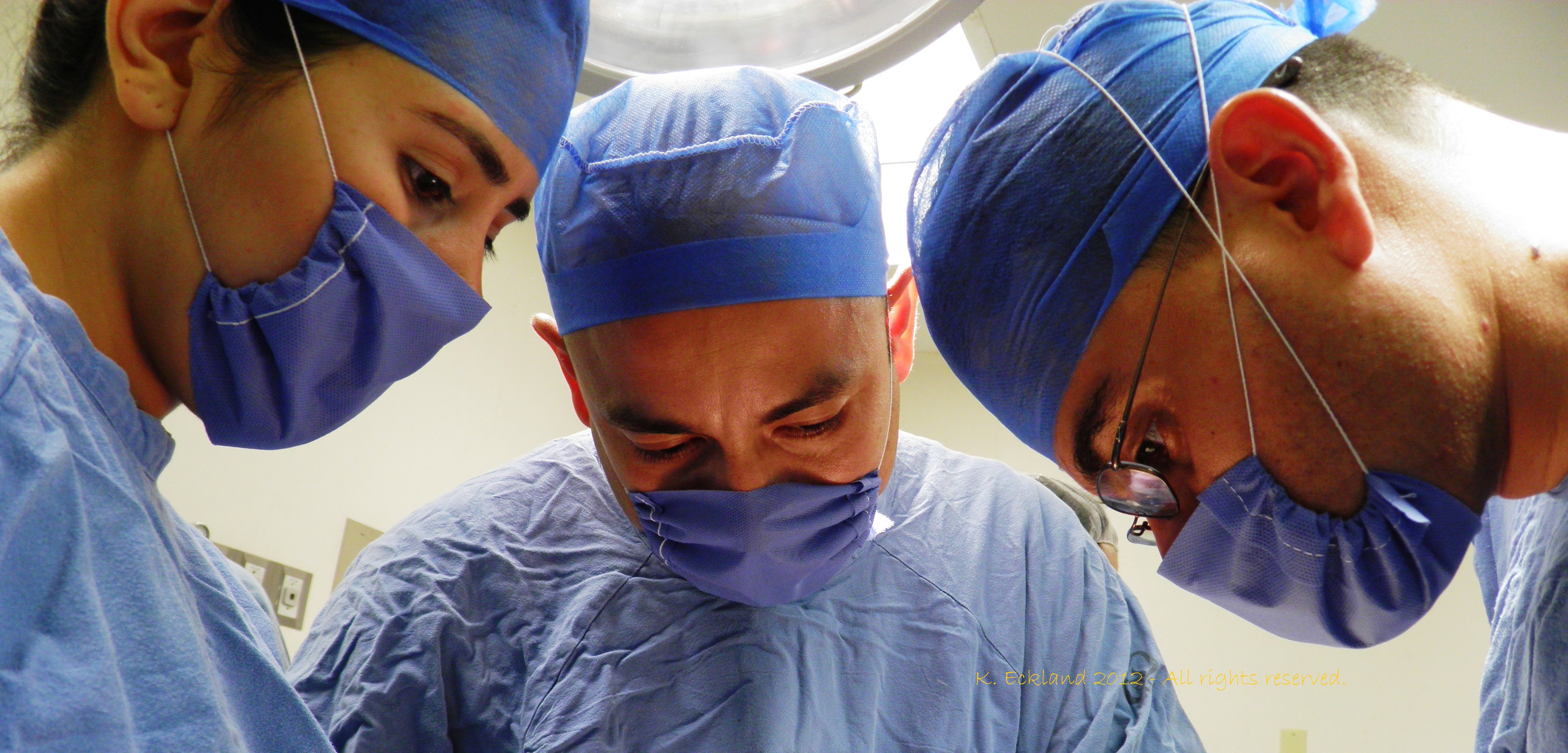
There was a beautiful intern in the surgery – her face was just luminous so I couldn’t resist taking a picture.  Unfortunately, I didn’t get her name, and no one recognizes her because of the mask – so I am hoping some one from the OR recognizes her here.. I’d like to send her a copy of the picture.. (and get permission to post it..)

Saw Lupita Dominguez – who in the role of nursing instructor that day.  She is always so delightful – I need to get a picture of her with out the mask so all of you can see her -besides being an outstanding nurse, and nursing instructor,  she is just the friendliest, sweetest person with cute freckles to boot.. (I am very envious of people with freckles..)

On another note entirely, here’s some more information about the ethical implications of transplant tourism for my interested readers as follow up to my Examiner.com article.  It’s a video of lectures by one of the leading ethicists and transplant surgeons, Dr. Delmonico.. (yes, like the steak.)

Canadians look towards medical tourism


In this story, several Canadian residents are suing the province of Alberta for the right to purchase private health insurance.  The Alberta resident who was interviewed in the story, explain that due to the prolonged wait times for medical treatment in his home country – he would like the right to pursue treatment in other countries.

One of the claimants explained that after being told that he would have to wait FIVE years for back surgery for debilitating back pain, he went to the United States for treatment.  On his return, his Canadian government refused to reimburse him for his medical treatment, stating that the treatment was available in Canada.

(BTW: the American price tag for surgery: $77,000)

Just another reason many North Americans are looking South for care.

Colombia to enter new trade agreement


Continued signs of the impending rise of Latin America and Colombia as the south american nation enters a new trade agreement with the European Union.  This comes just a few short months after Colombia and the United States finalized a new trade agreement expanding a safeguarding Colombian imports to the United States (among other things.)

With a wealth of resources including oil/ gas, emeralds, as well as an abundance of agricultural products such as coffee, flowers, bananas and other foodstuffs, Colombia has become a highly attractive market to investors now that FARC and other destabilizing forces are on the wane.

Good news for Colombia and good news for investors wise enough to take advantage of this country’s enormous potential.

Honesty and Transparency in Medicine


This week, Glaxo Smith Kline was fined three BILLION dollars for health care related fraud in falsely marketing several of their drugs.  Criminal charges would have been more effective, since the company had already put over 8 billion dollars away (in a rainy day legal fund) for just such an eventuality, (and they can always just pass any fees along to consumers in price hikes..)

The company had been falsely advertising the uses of several of their medications in direct-marketing campaigns to consumers as well as materials (bribes and gifts) to health care professionals.

This harkens back to the days of patent medicines and cocaine laced cough syrups were advertised as ‘cure all’ but it’s actually not the most disturbing part of the story.

This is.

Glaxo Smith Kline (GSK) was also caught paying celebrity physicians to endorse these medications for off-label or unapproved uses – including noted personality, Dr. Drew.  Now, this is nothing new, as we’ve stated.  In fact, several of Oprah’s personal gurus have been caught with their hands in the cookie jar, so to speak – but it is part of a disturbing larger trend of betraying public trust for personal gain.

Unfortunately, in this post-modern world of “Greed is good” and almost daily reports of corporate misdeeds – the fact that a huge company such as GSK would do this – is to most people, unsurprising.  A shrug, and a yawn – change the channel to ESPN.

Odious, I know that corporate responsibility has become such a joke, but even more disturbing is the lack of personal and professional responsiblity on the part of the health care providers that helped endorse these products.  

I don’t just mean Dr. Drew, and his equally contemptible counterpart, Dr. Phil – I include every single one of us – in our white lab jackets.  If we are in a position of public / patient trust – then we must take that very, very seriously and know that our integrity, our reputation and our ethics ARE NOT FOR SALE.

I write about medical tourism every day because my absolute conviction that someone needs to provide transparency , honesty, and objective information in this unregulated industry – but at the same time, I strive to ensure that my readers know EXACTLY where I am coming from.. All of these celebrity endorsers, and even our own family doctors need to so the same.

There was a recent bill passed that requires physicians to do exactly that; and the doctors I know back in the USA have been lamenting about disclosing the number of free lunches, and speakers fees that they receive every year because they think ‘it makes me look bad.’  If it makes you look bad – then maybe you should reconsider doing it.

Sometimes it really isn’t greed – its convenience.  Often drug companies provide dinners with speakers who have conducted research or written academic articles on hypertension, or cancer, or other various topics of interest.  [the new restrictions mean that drug companies aren’t supposed to just have speakers say – “hey, prescribe drug X to all your patients.” ]

So – you’ve worked 12 hours taking care of patients all day, and you are tired, but you read a bit about the study in the New England Journal of Medicine – and now you want to know more.. Having a bite to eat at the same time just makes sense, right?  But it’s about transparency.

So – if you really want to hear a presentation about a recent study in cardiology, go to the ‘dinner’ but pay your own way. 

This is why, in recent years – researchers and presenters have to disclose – whether or not they received money, gifts or other services to do their research study, or give the presentation..

In a larger sense – it means that celebrity endorsers and even people like me, (who are writing for a presumably larger audience who doesn’t always know these rules) that we have duties and obligations to the public: we have a duty to be transparent.

It’s not just that we shouldn’t take money to tout a product, or a service.  It’s also that we need to be willing to disclose our financial information, if needed, to demonstrate that.

It’s something I am fully willing to do – and have done, several times.  Embarrassing, yes – to admit to people:

a. I don’t make much – because I don’t receive, and have never received money from medical tourism companies, doctors, etc.. (and my book sales are less than stellar).

b. sometimes my parents have actually helped me – because as embarrassing as it may be as a thirty-something adult – I would rather take money from parents then sell my integrity.  Their money comes with less strings – they give it because they believe in what I am doing.  (Now before you get the idea that I am some sort of “trust-fund baby” – let’s clarify that right now).. if you saw my pathetic financial statements it wouldn’t be an issue, but transparency, right..

you’d see that I make the majority of my living as a nurse, working in short term positions.

my husband, a computer technican, contributes through his own short term work.  (Sometimes he repairs our neighbors’ computers too for a fee).

you’d also see that writing does not pay – or it pays a pathetic amount.. All the articles, books, etc. combined equal less than one paycheck as a nurse. (and Yes – it is humiliating to admit that I’m no best-seller, but readers deserve no less than the truth.)

(You’d also see a pile of student loan debts, that I am slowly, and steadily attempting to pay off, but that’s another issue.)

No huge sums.  No big payouts.  And no sneaky, sideways, or under the table dealings.

Now, Dr. Drew, Dr. Oz and every other ‘expert’ touting themselves on television to the public, under the guise of their medical credentials, or white coat and stethoscope needs to do the same.
Mexicali and Medical Tourism


As I mentioned in a post earlier this week, the New York Times article  by Jennifer Medina has really gotten Mexicali officials to sit up and take notice.  The NYT article was just one part of a ‘medical tourism plan’ outlined by the mayor of Mexicali and other government officials.

turismo medico

city of Mexicali

Right now the outline consists of several points:

1. Guide to medical services – they have published a book with the names and addresses of surgeons interested in participating in medical tourism.

2. Transportation – mainly by automobile and buses.  The medical tourism lane at the border was part of this.

3. A plan for a 32 block medical tourism zone.

A good start, and it shows forethought – but as I listened to their outline it prompted my own (humble) suggestions:

1. Medical guide – make this a ‘real’ guide not a phone book of surgeons and providers offering their services.  It should be comprehensive, and offer more than just names and addresses, ideally written as an independent review.. But then take the risk that maybe everything, and every service won’t come out shining..   (Admittedly, this is something I understand the best).

2. Transportation – consider approaching Volaris or another carrier to offer direct flights once or twice a week from Las Vegas, Dallas and Los Angeles.  Right now there are no direct flights from Mexicali to the United States.  By offering direct flights – Mexicali could be much more competitive with both Tijuana and Las Vegas (which is pursuing its own medical tourism strategy to make Las Vegas a medical tourism destination.)  This would play to Mexicali’s two biggest strengths:

1.  It’s proximity to the United States

2.  It’s reputation as a ‘safe’ destination in comparison to Tijuana and other border cities which have their own medical tourism ideas..

It would also open up Mexicali to a much wider market since both Dallas and Los Angeles is a hub for several American carriers serving Canada and the USA.

2. Consider changing the 32 block ‘medical tourism zone’ into one large facility offering dedicated service lines.  While all the small private hospitals in Mexicali will hate this idea – instead of fighting over patients, they would have the advantage of having one large facility with pooled resources.

This would also address the weaknesses of medical tourism in Mexicali: Right now each facility has five (or two) ICU beds, and just 10 or so post-operative beds.  It would also eliminate some of the waste caused by the costly duplication of services – since each hospital currently struggles to offer CT scans, cath facilities and other costly equipment.  As part of a long-range plan – this would better enable the providers and facilities in Mexicali to seek outside accreditation/ and certification of programs and service lines, which in turn would attract more patients.

In the meantime, participating hospitals could convert to specialty facilities (ie. an orthopedic hospital, and plastic surgery center etc.) while the new facility is being built.  This would also reduce the stress on doctors traveling all over town to see just one or two patients at each facility.. If medical tourism really gets going here – these doctors are going to need as much time as they can get; caring for patients..

The centralized large hospital would also enable people like Dr. Vasquez to really get his cardiac surgery program off the ground.  More specialized ancillary services like physical and rehabilitative services would also be pooled and would improve the quality of services in the city, for everyone, including the people of Mexicali who also suffer from the lack of large, comprehensive facilities.   This also brings me to my next point –

3.  Since the city and government of Mexicali is involved in the project – there needs to be a clear and comprehensive plan about how the revenue from this project is going to serve the people of Mexicali.  After all – their tax dollars are helping to fund this ingress into medical tourism, so they need to get something out of it.. Like a PET scanner or some other service that doesn’t currently exist in Mexicali.

4. Don’t forget the rest of Baja – there are an awful lot of retirees and such living in southern Baja – so make sure they know about what your city has to offer.  These people need hip replacements, heart surgery and a whole spectrum of services that are very limited in their geographic area.  Give them a reason to come to Mexicali instead of Ensenada or Tijuana by courting their business.

If anyone from Mexicali reads this post – I hope they can see my suggestions, in the spirit that they are given.  Mexicali has a lot of opportunity here, and the potential to be a great place for a wide range of medical tourism – not just bariatrics and plastic surgery, but they need more comprehensive, and long-range strategies to put their plans into action.

Today was a great example of how much the city has accomplished by working together – with a little more work, and a lot of vision – Mexicali could really go far, and provide great services to more than just a bunch of gringos..

Hospital ranks and measures: Medical Tourism edition?


It looks like Consumer Reports is the newest group to add their two cent’s worth about hospital safety, and hospital safety ratings.  The magazine has compiled their own listing and ratings for over 1,100 American hospitals.  Surprisingly, just 158 received sixty or greater points (out of a 100 possible.)  This comes on the heels of the most recent release of the LeapFrog results.  (Leapfrog is controversial within American healthcare due to the unequal weight it gives to many of its criterion.  For example, it is heavily weighed in favor of very large institutions versus small facilities with similar outcomes.)

Consumer Reports has a history providing consumers with independent evaluations and critiques of market products from cars to toasters since it’s inception in the 1930’s.  It’s advent into healthcare is welcome, as the USA embraces new challenges with ObamaCare, mandated EMRs, and pay-for-performance.

While there is no perfect system, it remains critical to measure outcomes and performances on both an individual (physician) and facility wide scale.  That’s why I say; the more scales, scoring systems and measures used to evaluate these issues – the better chance we have to accurately capture this information.

But – with all of the increased scrutiny of American hospitals, can more further investigation into the practices and safety at facilities promoting medical tourism overseas be far behind?

Now it looks like James Goldberg, a bioengineer that we talked about before, is going to be doing just that.  Mr. Goldberg, who is also an author of the topic of medical tourism safety recently announced that his firm will begin offering consulting services to consumers interested in knowing more about medical tourism – and making educated decisions to find the most qualified doctors and hospitals when traveling for care.  He may be one of the first to address this in the medical tourism industry, but you can bet that he won’t be the last..

If so, the winners in the international edition will be the providers and facilities that embrace transparency and accountability from the very beginning.

Meet Lupita Dominguez, surgical nurse


Had an amazing day yesterday – one of those days that reminds you how much we can do in medicine when we all work together.  I am hoping to write it up as a case study – if not – I will tell you more about it here.  (The patient was exceedingly gracious when I asked permission.)

But this morning, I was back in the operating room with Dr. Cuauhtemoc Vasquez.  (If he is tired of me – he sure doesn’t let on..)

I finally had the opportunity to get some of the pictures I’ve been trying to get on every visit to his OR – to show readers the heart, and the pulse of cardiac surgery..

There’s a running joke in Mexicali – if you need help in the operating room, any operating room, in any of the hospitals in the city; just holler for Lupita because she’s always there.

Introducing Lupita Dominguez, surgical nurse

All kidding aside on the popularity of the name “Lupita” among operating room personnel, there is just one Lupita that I would like to talk about today,  Lupita Dominguez, who is Dr. Vasquez’s surgical nurse.  In the months, and the numerous occasions that I have been a guest in Dr. Vasquez’s operating room, I’ve had the opportunity to observe and appreciate the hard-working Lupita.

Lupita Dominguez with Dr. Vasquez

Teacher, Coordinator and Mind-Reader

Most people don’t know it – but Lupita has the hardest job in the operating room, and probably (in Mexico) the most poorly paid.   They say a good scrub nurse has the instrument in the surgeon’s hand before he knows he needs it – and from what I’ve seen, that’s Lupita.  She’s here an hour earlier than the rest of the surgical team, getting everything ready, and she’ll be here after everyone else escorts the patient to the intensive care unit.

Here she is, a blur of motion as she takes care of everyone at the operating room table

As I watch again today, she is ‘running the table’ and anticipating the needs of not just one demanding cardiac surgeon, and an additional surgeon, but also one surgical intern, and another student.  With all of these people crowded at the table, she still has to follow the surgery, anticipate everyone’s needs and keep track of all the instruments and supplies in use.  In the midst of this maelström, the scrub nurse has to ensure that everyone else maintains sterility while preventing surgical instruments from being knocked to the floor, or otherwise misplaced (a difficult task at times).

Here she is demonstrating how to correctly load the needle, and pass sharp instruments

She’s forever in motion which has made taking the few photos of her a difficult endeavor; She’s shaving ice for cardioplegia, while listening to the circulator, adjusting the OR lights, and gently guiding the apprentices.  She’s so gentle in her teaching methods that the student doesn’t even realize she’s being led, and relaxes enough to learn.  This is no easy task, particularly since it’s just the beginning of the July, and while bright-eyed, pleasant and enthusiastic, the new surgical resident is inexperienced.  Her own student nurse, is two parts shy, but helpful enough that near the end of the case, (and the first time since I’ve known her), Lupita actually stops for a moment and flashes me a wave when she sees the camera faced in her direction.  I’m surprised, but I manage to capture it.

a very rare moment – Lupita takes a millisecond to say hello

She is endlessly busy, but ever uncomplaining – even when a scheduled surgery takes an unexpected turn and extends to twelve or even fourteen hours.  Bladder straining perhaps, baby-sitter calling, but Lupita never complains.  She’s not unique in that – scrub nurses around the world endure long hours, tired feet and legs, hungry bellies, full bladders, and aching backs as they complete their days in the operating room.  But she does it with good nature and grace.

Lupita assisting Dr. Vasquez during surgery

The surgical nurse

In the United States, this important job has been lost to nursing, a casualty of the ongoing shortage.  Positions such as scrub nurse and others like it have been frequently replaced with technicians who require less training and thus, less compensation that nurses.  Maybe the nursing profession doesn’t mourn the loss; but I do.

as you can see – here she is, ‘behind the scenes’ so to speak..

But in Mexico, and many other locations, this position remains the exclusive domain of the nurse.  Nurses such as Lupita, spend three years studying general nursing in college, before completing an (optional) additional year of training for a specialty such as the operating room.  After completing this training, these nurses spend yet another year in public service.

The idea of the public service requirement is honorable yet almost ironic (to me)  at times, since the majority of nurses in Mexico will spent their careers in public facilities, and by definition (in my mind at least), nursing is an occupation almost entirely devoted to the service and care of others.

Working conditions vary but some constants

Depending on the country, the culture, and the facility; conditions may vary; nurses may get short breaks, or be relieved during particularly long cases.   The only constant is the cold, and the hard floors, and rickety stepstools[1].  While the nurses here tell me that the workday is only seven hours long – I’ve been in the operating room with these ladies before, and watched a supposed ‘seven-hour’ day stretch to fifteen.   But it is just part of being a nurse.

[Usually I tell people when I am writing about them – but on this instance – there was never an opportunity.. but she (and all the nurses in the OR with Dr. Vasquez) certainly deserve mention.]


[1] Temperatures are set lower in cardiac surgery rooms.  Why the stepstools always seem rickety, I have no idea.

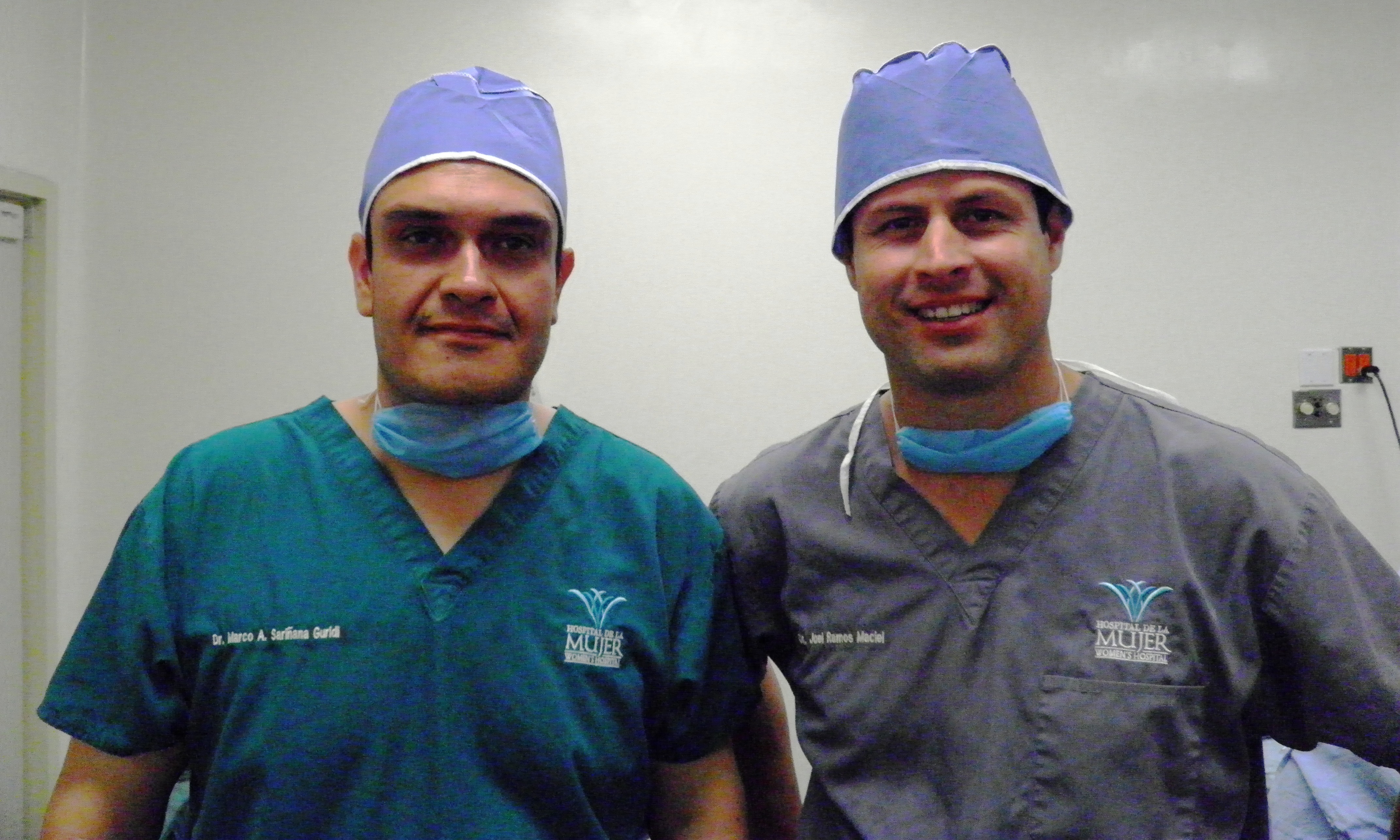
Dr. Marco Sarinana and Dr. Joel Ramos,Bariatric surgeons


Busy day yesterday – spent the morning shift with Jose Luis Barron over at Mexicali General..  Then raced over to Hospital de la Familia for a couple of general and bariatric cases.

The first case was with the ever charming Drs. Horatio Ham, and Rafael Abril (who we’ve talked about before.)  with the always competent Dr. Campa as the anesthesiologist.   (Seriously – Dr. Campa always does an excellent job.)

Then as we prepared to enter the second case – the director of the hospital asked if I would like to meet Dr. Marco Sarinana G. and his partner, Dr. Joel Ramos..  well, of course.. (Dr. Sarinana’s name has a tilde over the first n – but try coaxing that out this antique keyboard..)

So off to the operating room with these three fellows.  (This isn’t my usual protocol for interviewing surgeons, etc. but sometimes it works out this way.)  Their practice is called Mexicali Obesity Solutions.

Dr. Marco Sarinana and Dr. Joel Ramos, Bariatric surgeons

Dr. Alejandro Ballesteros was the anesthesiologist for the case – and everything proceeded nicely.

After that – it was evening, and time to write everything down!

Today should be another great day – heading to IMSS with Dr. Gabriel Ramos for a big case..

Radio Interview with Ilene Little


Interview with Ilene Little, “Know Before You Go”

Last month I completed a radio interview with Ilene Little, talking about Colombia, thoracic surgery, and issues in medical tourism.  I’ve been waiting for the archives to be published so I could provide a link here for interested readers.

Hope you enjoy. (You might recognize some of the names.)  For more print information on the interview – take a look at the article on my sister site.

Wrapping up and saying “Thanks!”


It’s a busy Sunday in Mexicali – presidential elections are today, so I am going to try to get some pictures of the nearest polling station later.. In the meantime, I am spending the day catching up on my writing..

a polling station in Mexicali

Lots to write about – just haven’t had the time..  Friday morning was the intern graduation which marks the end of their intern year – as they advance in their residencies.. Didn’t get a lot of pictures since I was at the back of the room, and frankly, unwilling to butt ahead of proud parents to get good pics.. This was their day, not mine and I was pleased that I was invited.

I did get a couple of good pictures of my ‘hermanito’ Lalo and Gloria after the event.  (I’ve adopted Lalo as my ‘kid’ brother.. Not sure how he feels about – but he’s pretty easy-going so he probably just thinks it’s a silly gringa thing, and probably it is..)

Dr. ‘Lalo” Gutierrez with his parents

Lalo’s parents were sitting in the row ahead of me, so of course, I introduced myself and said hello.. (They were probably a little bewildered by this middle-aged gringa talking about their son in atrocious Spanish) but I figured they might be curious about the same gringa that posts pictures of Lalo on the internet.. I also feel that it’s important to take time and tell people the ‘good things’ in life.  (Like what a great person their son has turned out to be..)

Same thing for Gloria.. She is such a hard-worker, and yet, always willing to help out.. “Gloria can you help me walk this patient?”  It’s not even her patient, (and a lot of people would say – it’s not our jobs to walk patients) but the patient needs to get out of bed – I am here, and I need some help (with IV poles, pleurovacs, etc.)  and Gloria never hesitates.. that to me – is the hallmark of an excellent provider, that the patient comes first .. She still has several years to go, but I have confidence in her.

She throws herself into her rotations.. When she was on thoracics, she wanted to learn.. and she didn’t mind learning from a nurse (which is HUGE here, in my experience.)

Dr. Gloria Ayala (right) and her mother

She wasn’t sure that her mom would be able to be there – (she works long hours as a cook for a baseball team) but luckily she made it!

Met a pediatric cardiologist and his wife, a pediatrician.. Amazing because the first thing they said is, “We want nurse practitioners in our NICU,” so maybe NPs in Mexico will become a reality.. Heard there is an NP from San Francisco over at Hospital Hispano Americano but haven’t had the pleasure of meeting her.  (I’d love to exchange notes with her.)

I spent the remainder of the day in the operating room of Dr. Ernesto Romero Fonseca, an orthopedic surgeon specializing in trauma.  I don’t know what it is about Orthopedics, but the docs are always so “laid back”, and just so darn pleasant to be around.  Dr. Romero and his resident are no exception.

[“Laid back” is probably the wrong term – there is nothing casual about his approach to surgery but I haven’t had my second cup of coffee yet, so my vocabulary is a bit limited.. ]  Once I finish editing ‘patient bits’ I’ll post a photo..

Then it was off to clinic with the Professor.

Saturday, I spent the day in the operating room with Dr. Vasquez at Hospital de la Familia. He teased me about the colors of the surgical drapes,(green at Hospital de la Familia), so I guess he liked my article about the impact of color on medical photography.  (Though, truthfully, I take photos of surgeons, not operations..)

Since the NYT article* came out a few days ago – things have changed here in Mexicali.  People don’t seem to think the book is such a far-fetched idea anymore.  I’m hopeful this means I’ll get more response from some of the doctors.  (Right now, for every 15 I contact – I might get two replies, and one interview..)

Planning for my last day with the Professor  – makes me sad because I’ve had such a great time, (and learned a tremendous amount) but it has been wonderful.  Besides, I will be starting classes soon – and will be moving to my next location (and another great professor.)

Professor Ochoa and Dr. Vasquez

But I do have to say – that he has been a great professor, and I think, a good friend.  He let me steer my education at times (hey – can I learn more about X..) but always kept me studying, reading and writing.  He took time away from his regular life, and his other duties as a professor of other students (residents, interns etc.) to read my assignments, make suggestions and corrections when necessary.    and lastly, he tolerated a lot with good grace and humor.  Atrocious Spanish, (probably) some outlandish ideas and attitudes about patient care (I am a nurse, after all), a lot of chatter (one of my patient care things), endless questions…  especially, “donde estas?” when I was lost – again.

So as I wrap up my studies to spend the last few weeks concentrating on the book, and getting the last interviews, I want to thank Dr. Carlos Ochoa for his endless patience, and for giving me this opportunity.  I also want to thank all the interns (now residents) for welcoming me on rounds, the great doctors at Hospital General..  Thanks to Dr. Ivan for always welcoming me to the ER, and Dr. Joanna for welcoming me to her hospital.  All these people didn’t have to be so nice – but they were, and I appreciate it.

* Not my article [ I wish it were – since I have a lot to say on the topic].